

First stop in a new series of retrospective pop culture reviews examines why Australia’s best female ensemble since Picnic at Hanging Rock disappeared almost without a trace…
IN THE OPENING scene of Bruce Beresford’s WWII epic Paradise Road (1997) the dignity of the Imperial Japanese Army is torn to shreds by privileged white plantation growers and their wives, chatting during a military ball at Singapore’s Raffles Hotel in February 1942.
Adrienne Pargiter (Glenn Close) and Topsy Merritt (Julianna Margulies) throw in a few reminders about the effectiveness of the attack on Pearl Harbour, yet even as bombs start interrupting the dancing, Western denial on the imminent fall of Singapore remains dangerously intact.
It’s an apt metaphor for a film that tanked at the global box office after critics swooped, leaving stakeholders baffled about exactly where Paradise Road failed to deliver.
The ingredients for success were all in place. Beresford had a proven track record on war movies like Breaker Morant (1980) and award bait such as Driving Miss Daisy (1989). Producer Sue Milliken had global success with period piece Sirens (1994).
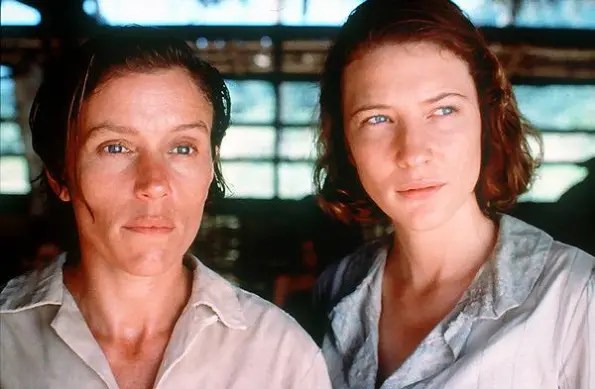
The Australian film industry’s strongest female ensemble since Picnic at Hanging Rock (1975) was headed up by multi Oscar-nominated Close and 1995’s best actress recipient for Fargo, Frances McDormand. Pauline Collins (Shirley Valentine), Margulies (ER), Jennifer Ehle (Pride and Prejudice), Elizabeth Spriggs (Sense and Sensibility) and a swag of established and emerging Australians (including Cate Blanchett in her feature debut) joined an international supporting cast working in four languages.
Production values were extremely high, particularly as a shipload of escaping women and children get scuttled by Japanese pilots and end up in a civilian internment camp in Sumatra. As they enter its barbed-wire gates, this band of socialites, plantation owners and nurses must cohabit with Dutch women, missionaries, nuns and Asians. Hard labour, starvation and brutal physical punishments await, as does the expectation to serve as “comfort women” for enemy officers.
After the hubris of Raffles, their dignity now lies in tatters.
But when Pargiter is overheard crooning a snippet of Elgar before lights out, British missionary Margaret Drummond (Collins, in a beautiful performance with her usual light touch) suggests a plan to raise morale with a vocal orchestra.
“It’s just humming,” complains the camp’s serial spoilsport and comic relief Mrs Tippler (Pamela Rabe), “anyone could do that.”
Which is the point. The pulsating, otherworldly voices make even the Japanese guards hold fire when ordered to break up the first performance of the fledgling ensemble, which requires no language to work its magic.
Wasn’t dinkum
The real shame of the film’s failure to connect with a wide audience is that the Women’s Vocal Orchestra of Sumatra was real. Pargiter was based on Singapore-born chorale conductor Norah Chambers (1905-1989), and Drummond on British missionary and poet Margaret Dryburgh (1890-1945), both interns of the civilian camp at Palembang, Sumatra. Yet even Close wasn’t sure why Beresford chose to fictionalise these characters.
Australian critics were lukewarm. There was a sense that the storyline, purported to be well-researched from intern diaries and interviews, just wasn’t dinkum, in part because of the atrocities it omitted.
International critics admired the “grandly messy” production but disliked the lack of narrative, pointing to the “predictable” aspects of the “sprawling” and “linear” story.

Yet revisiting it recently I finally discerned what’s at work in this deeply moving film. The key is in the conducting, not just Close’s determined and noble portrayal of orchestra leader Pargiter, but Beresford’s.
Unlike many of his contemporaries, he’s had a long career as a director of opera. Adapting the wealth of stories about real-life women caught up in war into a 120-minute screenplay required compressing facts into a grand lyrical narrative, in which the exotic setting feels operatic.
So war crimes are punctuated by hummed music and poetry, not big speeches; but when we get those, Close’s English accent is delivered almost as recitative. Emotional instrumental refrains run from Raffles right to the impenetrable jungle, where ever-increasing numbers of handmade crosses mark the lives cut cruelly short by war. Privileged women in reduced circumstances are like a chorus, with plenty of rueful pathos between the big arias, particularly in the hands of stalwarts Wendy Hughes and Penne Hackforth-Jones.
This is no Orange is the New Black (2013-2019), female-driven prisoner stories with 91 episodes to foreground the lives of every ensemble member; Paradise Road is high tragedy shaped by Beresford’s broad baton strokes.

In the release of death or liberation for the camp interns, he conducted a grace note that fell flat in the late 1990s, too close to real events to get away with anything but the complete truth. Watching it in an era that’s in need of all the grace we can get, the way this movie restores the dignity of sworn enemies with “just humming” is sublime.
Paradise Road is streaming on SBS On Demand, ABC iView, Apple TV and Amazon Prime.
Production stills by Jasin Boland.
 Michael Burge Media
How interesting Mike. I must dig this film out on Amazon Prime. What a cast! (And I think I remember Sue Millikin when she was doing continuity on something-or-other I did in Australia all those years ago).
It’s well worth watching for the cast alone. Not mentioned in my article by name are each member of the huge supporting cast, a genuinely international and multi-lingual ensemble. Enjoy!