All posts by Michael Burge

Journalist, author, artist

Barnaby Joyce does not own New England

AS I approached the polling station at the Tenterfield Memorial Hall on by-election day in December 2017, I suspected Barnaby Joyce would put in an early appearance.

If Mr Joyce was going to cover New England glad-handing and holding babies, finishing in triumph at Tamworth, he’d have to start early in this town at the far reaches of the electorate that had recently been stripped of its sitting member.

Despite being a local boy, Mr Joyce had been found by the High Court to be a dual citizen of New Zealand and dumped from parliament under the clear terms of our Constitution.

I was at Tenterfield to hand out how-to-vote cards for CountryMinded candidate Peter Mailler, and as I tied a couple of Pete’s signs onto the picket fence, Mr Joyce arrived to greet his ‘Barney Army’ in their yellow National Party shirts.

He settled his nerves by introducing himself to the competition. As he approached me, I was struck by his height. On television he never seems to carry his 1.85 metres, but he stood on eye level with me. I saw his elbow draw back and his hand flatten into a shape akin to an axe, signalling in a manly show that a handshake was expected.

“I’m Barnaby,” he announced.

I’ve long believed in the importance of meeting politicians, particularly those who represent us. Having recently moved from the South East Queensland electorate of Bowman, I’d spent years challenging sitting Liberal MP Andrew Laming about his inexplicable fence-sitting on marriage equality.

Barnaby Joyce and I have more in common that he realises. I’m slightly taller, he’s a bit older. We were both born in the New England region, me at Inverell and he at Tamworth. Our fathers were both graziers. We were both dual citizens of New Zealand by birth, until he revoked his in order to stand for election again.

The similarities seemed enough for him to feel safe with me, until I opened my mouth.

“If you win the seat today, and you’re back in parliament in time, how will you vote on marriage equality?” I asked, since the opportunity was unlikely to come again, and the people of New England had recently returned a result of 52 per cent in favour of allowing same-sex couples equal access to the Marriage Act.

Barnaby looked at his feet (I realised then why he often appears shorter), rolled his eyes, winced, and proceed to huff and puff.

“Look, I always said I’d never vote against the will of the people,” he said, scuffing his feet together like a schoolboy.

“That’s good to know,” I said. “Thanks,” I added. Then, the clincher: “What about religious exemptions?”

I didn’t see Barnaby signal to his security guard. All of a sudden a blob of a boy stood in my face, but I kept addressing Barnaby, who’d moved out of the brief common ground we’d created.

“I’m your constituent, Mr Joyce,” I said, even though technically at that point he wasn’t our MP. “I’m allowed to ask you questions, I believe?”

With a distinct look of fear, Barnaby retreated up the pathway to stand with the yellow T-shirts, before he and his crew swept south across the electorate he’d go on to win back that day.

New England voters were almost universally slammed on social media for backing Joyce, but we were acutely aware that progressives expected us to topple the Turnbull Government. The voters of Bennelong had the same experience just one week later.

Not all of us voted for Barnaby, of course. Just shy of 40,000 voters picked someone else or voted informally.

He might have won in a landslide, but in running away from scrutiny, Barnaby Joyce was heading inevitably towards defeat.

Sooky Chook

As it turned out, Barnaby abstained from the final vote that brought about marriage equality in Australia’s House of Representatives on December 7.

I should have noticed him telegraph his intention to betray LGBTIQ. Despite being a major architect of the divisive public vote on human rights, Barnaby Joyce, ‘family man’ was never going to get his fingerprints on a policy that made his marriage equal to ours. His immature blather to me had been code for abstention.

Yet the rumour about his extramarital affair and the pregnancy of his new partner had done the rounds at the polling station and the district on the ubiquitous Bush Telegraph. I witnessed the fallout when comments deemed defamatory were removed from Facebook threads under stories published by my former employer, Fairfax Regional Media. Commenters were unafraid to detail what they’d heard about Barnaby’s trashing of his own family values, and angry the local media was inexplicably protecting him. One comment labelled Barnaby a “sooky chook” if he needed such protection.

What was more concerning about the local pre-election vibe was the struggle other candidates had getting cut-through for their messaging. Sixteen alternatives threw their hats in the ring and despite being a more natural Greens voter, I decided to back the grain farmer from Boggabilla who was clear about his support for marriage equality. In places where the Greens don’t usually register high numbers of primary votes on election day, I have often voted strategically this way.

I’d met Pete years before while sub-editing his columns for FarmOnline, and knew him to be a progressive thinker. I also knew he stood for holding the Nationals to account after years of taking the country vote for granted. After Tony Windsor endorsed him, I took it on myself to contact several national political journalists in case they were writing stories about Barnaby’s competition. The trouble is, most of them weren’t.

And Barnaby was thumbing his nose at all of us by avoiding public forums, a decision that provided fertile ground for gossip.

A pub fracas with another local posing questions to him at Graman was reported. Mr Joyce had not been in the mood for providing answers, not even to his constituents when delivered in person. Instead, he claimed he was being stalked.

A sooky chook indeed.

Out of place

Barnaby had expert social media support during the by-election campaign. One of the most intriguing examples was the video of his visit to Bingara cemetery where his great-grandfather is buried.

Here, in the heart of Kamilaroi Country, he whined about being called into question for possible allegiance to a foreign nation, using a relative he’d never known as evidence. Clearly, he exuded, he was a hard-done-by Aussie to his bootstraps and all this talk about dual citizenship was bull-dust.

What really struck me in that clip was how very out of place Barnaby Joyce appears in this electorate.

Held for eight decades by the Nationals (many of those under their old Country Party permutation), New England could be considered their heartland and not the Kamilaroi’s, if only it weren’t so very different on the ground for those of us looking closely.

After forty years living in other regions both in Australia and overseas, in October 2017 I returned to live at Deepwater, a stone’s throw from the place of my birth and the region my parents farmed outside Delungra, on the way to Bingara.

My ancestors have lived in and around Inverell for as long as Barnaby’s, and I have a different take on the experience.

Ever since I was a child I have known of my mother’s connection to New Zealand. I’ll never forget seeing her cry as she revisited for the first time since she was a baby, on descent into Christchurch as we passed over the west coast of the South Island.

She told me when I was a child about the Myall Creek Massacre of 1838, which took place just a few kilometres from our farm. The crimes of settlers against Kamilaroi rang strongly throughout Bingara and Delungra families, and led to one of the country’s most enduring reconciliation projects, the annual Myall Creek Massacre memorial.

The day Richard and I moved into our new home, I drove the hire truck back to Glen Innes at dusk and saw the hundreds of wind turbines on the ridges. Since then, we’ve seen them in all directions, often situated with solar farms in upland valleys and ranges. Employment in renewables often tops the search engine results for jobs in the New England region, and plenty of farmers and greenies are allied in their desire to lock the gate against CSG exploration and mining.

In 2001, for the first time since 1922, the seat was won by independent candidate Tony Windsor, who was re-elected three times. Windsor’s incumbency broke the notion that the seat needs to be held by a deeply conservative National Party pollie in order for locals to be happy.

At the regional Farmers and Producers Market started at Tenterfield in late 2017, we’ve enjoyed working alongside African immigrants, also commonly sighted on the streets of Armidale. The resettlement program at nearby Mingoola has been an example of how refugee assistance can be mutually beneficial for remote Australian communities.

It seems out of character, but Barnaby has led the way.

Clearly, he is capable of being progressive when it suits him. It’s just one of many paradoxes about the man who once had a home base at Tamworth, but now seems to belong nowhere.

Border Country

Lately, I’ve encountered a few people who are shocked to hear that Barnaby Joyce comes from the New England region and not Queensland, where he entered politics as a senator in 2005.

Politically, he seems a more natural fit for the state that produced Joh Bjelke-Petersen. It’s not surprising, since the NSW New England region and Queensland’s Darling Downs are often blended into a kind of “border country”.

As kids at Delungra Public School we knew enough of Sir Joh to make up songs about this amusing old politician with a lyrical name. We used Queensland vernacular (“port” instead of “school bag” being just one example) and Brisbane was geographically closer than Sydney.

Queensland Nationals certainly claim New England. At Tenterfield polling station on by-election day Senator Matt Canavan and Toowoomba MP Trevor Watts put in hours handing out for Barnaby and posing for selfies with fans.

But where the pro-mining, ‘family values’ man who won’t countenance the Uluru Statement sits in the community of his birth, which is getting on with renewables investment, reconciliation and social progression regardless of him, is the question.

It’s firmly rural, New England, but it’s definitely not Sir Joh country. Quirindi-born Tony Windsor knows it. Pete Mailler knows it too. The Kamilaroi know it and I suspect even Sir Joh came to realise it. I doubt Barnaby Joyce has ever given it any thought whatsoever.

© Michael Burge, all rights reserved.

“I noticed your profession, so I know you’re scum”

“I was privy to the final gasp of the great newsmakers.”

A Writer introduces his latest book.

AFTER a career in publishing, marketing and other creative dalliances that was more like the verb (‘move swiftly and in an uncontrolled way’), I arrived relatively late to journalism.

A decade in, I received the comment in the title of this foreword from one of my social media readers. It was posted in reply to an appeal from me for the commenter to take in the whole of my 800-word piece before dissing the point I was trying to make.

The import was brutal. I was expected to step away from the debate about my own work. I was nothing more than the journalist who wrote it, not to be trusted on that basis alone. Had I persisted, the grab-bag of insults would surely have included ‘fake news’.

What on earth was I thinking, becoming a journalist in my forties?

Most of my journalism has taken place in the shadow of the social media’s rise at a time of enormous upheavals and fractures in the journalistic landscape. Nevertheless, I’ve managed to earn a living as a reporter and editor for almost ten years, usually taking positions that no one else wanted because the pay was terrible and the prospects of advancement zero.

My first full-time journalism contract was inexplicably based on the template for engaging a builder. A year-and-a-half later, the boss tried to dump me because advertising sales were gently drifting downwards and he thought it better to install an unskilled family member as the writer.

I held my nerve, cited my tradesman’s agreement in an assertive conversation, and tried to imbue my employer with courage when he cried and begged me not to make him honour it.

This strangest of arrangements lasted until the office locks were changed on me before my final pay arrived in the bank account, and the first gap in my journalism career opened wide.

I did what so many of us do: I started a blog and learned to publish online. The lure of the Publish Button was strong but it hadn’t quite found the sweet spot to kill the media just yet, because soon enough I was asked to interview for a position at Fairfax Media.

As one of the company’s last sub-editors I was privy to the final gasp of the great newsmakers, working with subs capable of taking the shoddiest copy and transforming it into double-page spreads with multiple lead stories, down-pages and briefs, all spell-checked and “legalled” in under 15 minutes.

It was an education like no other in a newsroom environment swiftly replaced by a landscape where news-making means almost nothing.

Along the way, my writing output increased to the point where I was often heard to confess that there’s no off switch.

This is undoubtedly due to the rise of digital and independent publishing tools which allow writers to reach a wider audience than ever before. Finding a readership is still the challenge it always was for wordsmiths, but securing our place in the flow of digital media is as easy as a username and password.

So it was a defining moment for me when seasoned journalist Margo Kingston, also formerly of the Fairfax stable, offered me the chance to write for NoFibs.com.au. The gig: a regular column. The subject: the Arts.

“The articles in this collection walk the indefinite line between politics, art, culture, identity and equality.”

Getting an encouraging green light from a respected commentator is rare. Doing the work for free, yet having editorial control, presented the perfect antidote to hours spent shaping the work of other journalists while still on deck as a paid, casual sub-editor at a Fairfax newsroom in Queensland.

The resulting output forms most of the articles in this volume, written over a four-year period (2013-2017) during which Tony Abbott’s brief prime ministership was played out then snuffed out, leaving Australians to endure the fallout.

The articles in this collection walk the indefinite line between politics, art, culture, identity and equality, traversing the period when journalism as we knew it went into its death throes and started to slide behind pay walls.

They also document the final, frustrating years of Australia’s journey to marriage equality; the belligerent delays, missteps and guesswork in delivering marriage equality to a community in which 60 per cent of voters continually told our representatives that we wanted a change to the law.

Here lies the key to understanding every long-form title I wrote across the same period, and why I often crossed over into activism in addition to journalism.

Any ‘scum’ still writing articles for general readership these days are either overstretched under a masthead, or still plugging away independently for very little return, more likely nothing. This book is dedicated to every one of them.

creating-waves-cover
BUY NOW

If you’re still reading this, just 800 words in with no digital bells and whistles to amuse you, your attention span is fit and you’ll probably make it to the end. If any of it leaves an impression, please take that incredibly rare action that is a gift to independent writers and a necessity if we want journalism to survive: share it.

An extract from Michael’s eBook Creating Waves: Critical takes on culture and politics.

Bad fairy at the wedding: the curse of marriage equality activism

I’D like to briefly hold your attention in this short period before marriage equality is legislated in Australia, because nobody will ever give a second thought to the years of struggle that led to this week’s resounding public vote for same-sex dignity.

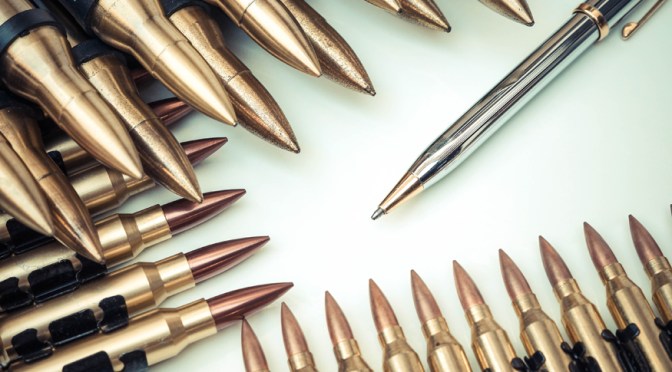
The concept of marriage equality first hit me like a bullet in 2004, in the moment I realised I’d been completely and utterly duped by this ‘lucky country’.

My partner Jono had died suddenly just weeks before, and I was struggling with acute, identity-killing grief.

I had no idea that this profound amputation would come to be treated as though it was a paper cut. Unbeknownst to me, Jono’s blood relatives had severed me from his death certificate and disenfranchised me from my rightful place as his next of kin.

Left to work this injustice out for myself, after avoidance from the funeral director and denial from the NSW Registry of Births, Deaths and Marriages, it dawned on me in a flash that Jono and I had innocently allowed our relationship to remain ephemeral.

“Human beings know when we are being treated like shit, and this bitter war has left none of its warriors with clean hands.”

Without the foundation of marriage, we were the same as every other gay couple in the country: easy to sweep aside in the legal processes. I desperately tried to recapture us, but there was no definitive moment to hold onto, nothing that had been formally witnessed or solemnised. Jono had been silenced and without him I was gagged.

Up until that point, my 34th year, I’d been a ‘good person’. I’d closeted myself when my sexuality became painfully obvious, duly distracted people from the truth, and disappeared to the other side of the world for a decade, part of which I spent in a relationship with a woman.

I’d returned home and dutifully come out, glossed over the profound disappointment that caused in my community, and thrown everything into my first gay relationship. All my hope, ambition, and love was wrapped up in it.

But the night Jono died it should have become apparent that I’d never really had a home to come back to. Australia was still brutally colonial in its complete lack of legal and cultural support for the same-sex bereaved.

I have come to learn that statement means almost nothing to those who have not experienced the death of a partner. Death is hard enough for most to countenance, but gay death places the bereaved right out on the margins.

And I nearly disappeared completely. As the denial of my relationship peaked, I calmly decided to kill myself in a manner that meant nobody would discover my body. Having been forced to take in the inglorious state of Jono’s lifeless form in the emergency room, I wanted to leave no trace.

The plan settled in me far too easily. Dangerously at a loose end without work and prospects of any kind, I refined it over a number of days.

But my ultimate exit was stolen from me. I was encouraged, through counselling, to choose to be a ‘good person’, again. Instead of self-obliteration I began to channel my rage into fixing the lies that had been wrought on Jono’s legacy and making this country a better place for LGBTIQ.

My anger found expression in a live submission to the Human Rights Commission’s Same Sex, Same Entitlements hearings, which were instrumental in overturning 100 pieces of discriminatory legislation for LGBTIQ; but I went the extra mile and, with a voice stymied by grief, reminded the gathering that marriage equality was the ultimate solution.

That was 2006, and despite my appeal having no visible impact whatsoever since it was outside the report’s tight frame of reference, I simply haven’t stopped talking about the critical need for LGBTIQ Australians to have the same relationship protections as the rest of the population.

Had anyone told me that would require more than a quarter of my life to date, I would have prepared myself better for fourteen long years in the wilderness.

Had anyone warned me that I was effectively hitting the pause button on the trajectory of my prime years and my career, I probably wouldn’t have listened.

Had anyone told me I would find love again even as my tears were still drying, I would have laughed until I’d cried once more, but I let it in despite all the risks.

Forced to take our relationship recognition far from home, my husband Richard and I married in New Zealand a decade ago. The noblest person I know, Richard has reached his arms around my pain and loss. He’s also a rabid equality agitator who takes it up to politicians and naysayers without fear.

We are not your classic ‘Marriage Equality Activists’.  

My activism emerged from extreme emotional pain, the kind that is not given much currency in Australia, even among LGBTIQ.

I’ve upset dinner parties, taken on social media trolls, and assisted bereaved LGBTIQ to get their deceased spouses’ death certificates altered, because, fuck it, if I didn’t show them how, no one else was going to!

I’ve marched in protests, lobbied politicians of all stripes, written letters, boycotted, played nice, played nasty, door-knocked, given up hope and stoked my cut-glass anger to keep going.

I’ve written hundreds of thousands of words about the need for reform, from the mainstream media to the grassroots, and I’ve read a million more written by others.

I’ve seen editors’ eyes gloss over with boredom about ‘another gay marriage article’, missed out on publishing deals because my work was deemed ‘too gay’, and thrown stuff at the tele when activists with perfect media currency landed inadequate blows on populists and let us all down.

I’ve lived in the outer reaches of LGBTIQ ‘safe’ territory, in places where democracy is dead and gay issues a low-level priority. I’ve spoken out against homophobic belligerence among local representatives and reminded a generation of politicians that we are watching.

I’ve been a harbinger in activism circles, a ‘bad fairy’ at the wedding talks, furiously reminding equality leaders that a critical part of having a relationship recognised is enshrining it effectively when one or both partners dies or becomes incapacitated.

To ameliorate my vengeful harpy lashes, I’ve also been a defender of Australia’s marriage equality poster boys and girls, many of whom remained deeply closeted when I was struggling in the wake of Jono’s death.

I have witnessed the reality behind their media-friendly masks, their exasperation, their power games, their u-turns, their fears, their failures and their white-hot rage, and I have reminded journalists and commentators that the truth is not just ‘love is love’ and holding hands under media-friendly glitter clouds on Oxford Street; it’s that human beings know when we are being treated like shit, and this bitter war has left none of its warriors with clean hands.

Bereaved same-sex spouses don’t feature on the panel shows or the media spotlight in our own right. The energy it takes to fight on top of enduring grief is too great for the gay widows I have come across. Usually, we’re trawled out as exhibits for why the laws need to change, before returning to the shadows. 

I admit to being a shadow, and I am jaded as all hell, but this week I have sensed the finish line of this painful emotional marathon my country subjected me to.

If I’m honest, I really don’t care about a few religious exemptions in the Marriage Act. If people of faith don’t get out and protest, we’ll know what’s delivered by this parliament contains inequality, but match-fit LGBTIQ will survive.

If Malcolm Turnbull and Liberal luminaries want to play at being statesmen and own the reform as their legacy, I don’t give a shit. Those of us who lashed all politicians before marriage equality was a popular choice for power-mongers will always know who actually got the reform over the line.

The day the legislation passes I will have carried an inconvenient truth for far too long, and I will set it down in territory that is finally safe, to rediscover whatever identity I have left.

This country-born boy who was well-behaved, thought of others far too much, had no role models for equal marriage and has nevertheless forged faithful love with another country-born boy, will have come home at last. 

creating-waves-cover
BUY NOW

We’re thinking of a Tenterfield wedding to renew our vows and give this country the second chance it undoubtedly doesn’t deserve.

Lifeline 13 11 14.

© Copyright Michael Burge, all rights reserved.

This article also appears in Michael’s eBook Creating Waves: Critical takes on culture and politics.