All posts by Michael Burge

Journalist, author, artist

Public opinion pulling the trigger in Bali

CHEERS MATE Schapelle Corby and her brother the day of her release on parole in February 2014.

A Writer on Aussies in Asia.

SINCE convicted drug smuggler Schapelle Corby’s parole from Bali’s Kerobokan Prison in Indonesia a year ago, speculation about the legal ramifications of her public behaviour has resulted in a long silence from the Corby family.

In contrast, a visibly desperate public relations campaign, underpinned by political and diplomatic representation, is hoping to sell a story of the reformation of the Bali Nine’s Australian ‘ringleaders’ Andrew Chan and Myuran Sukumaran, on death row in Corby’s former place of incarceration for their role in drug trafficking.

The collective public opinion of two sovereign nations are in play, and the outcomes of this legal and culture war are set to be devastating.

On the day of her release, the beers Corby and her brother thrust at the camera were seen as a symbol of Western excess. Not so in Corby’s native Queensland, where a beer in the hand is considered a human right in many quarters.
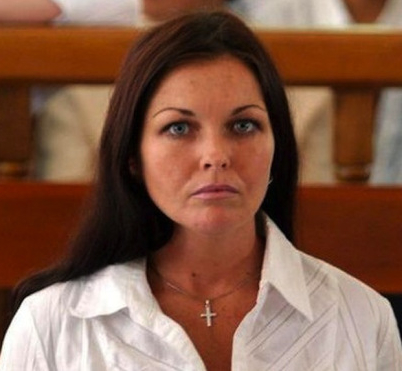
GANJA QUEEN Schapelle Corby.
‘GANJA QUEEN’ Schapelle Corby.

Victim. Villain. Money-hungry. Misunderstood. Everyone has a slant on the woman the Indonesian media dubbed ‘The Ganja Queen’. But how do Australians really see Bali, the tropical Indonesian island often dubbed ‘Perth’s Northernmost Suburb’?

Like Aussie jokes about the ‘Bangkok Hilton’, this one is only half funny. A large number of Australians would probably let themselves off the hook for thinking Bali is an unofficial Australian state.

It was there the terrorism of the Bali Bombings cut an unwelcome gash through the Australian psyche.

“Public opinion – Indonesia’s, primarily – is the strongest judge.”

We have deep connections to the Asian nations to our north. Some have become symbols of national pride or shame which can be referenced using only one word: Kokoda, Balibo, Changi.

Over time, a sense of ownership and entitlement has crept into our dealings with these sovereign nations, particularly Indonesia.

Nothing seems off-limits in this neighbourly relationship, from live export of Australian livestock to asylum seekers.

But when convicted drug smugglers like Corby, the Bali Nine, and Barlow and Chambers before them get caught up in Asian justice systems, many Australians take the tide of opposing public opinion in Asia personally.

These cases highlight that while foreigners are welcome to party in places like Kuta, and relax in regions such as Ubud, they are also expected to conduct themselves according to the laws and sentiments common within the world’s largest Muslim population.

Corby escaped life imprisonment and the death penalty, but her release into the Bali community is an ongoing test for her, and all Australians.

Chan and Sukumaran have lived with death penalties since 2006, and, if accounts are to be taken at face value, they have made a valiant go of their death row lifestyle, insofar as it’s possible to show their advocates and the authorities that they have been reformed while on the inside.

And it’s that difficult-to-impart message which may or may not save them from the firing squad, or see Corby return to Australia after a further two years’ parole.

Public opinion – Indonesia’s, primarily – is the strongest judge, prison guard and executioner for all of them.

The outcomes of both cases will challenge notions that Australians have about Indonesians, threatening the idea of a tourist-friendly population intent on pleasing us with the reality of a people who have opinions, thought and beliefs of their own, in addition to a thriving tourism industry.

In a sense, Corby is now having the Bali holiday which was so suddenly curbed in 2004, although it’s undoubtedly less of a beer-soaked boogie-board ride and more a mindful retreat from Australian public social mores.

If Indonesia permits her to come home, she might teach Aussies a thing or two about the real Bali.

Whether they survive or not, Chan and Sukumaran will do the same.

But none of them will ever escape public opinion.

© Michael Burge, all rights reserved.

Melba’s garden, at last

Caption caption.
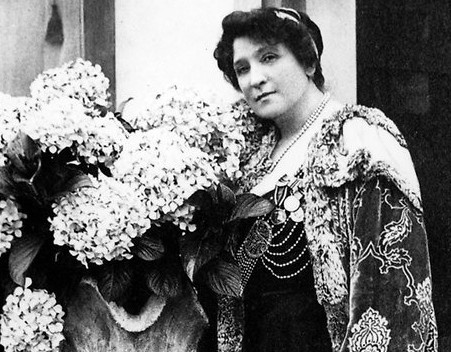
DAFFODIL DAME Nellie Melba (1861-1931).

A Writer hunts for daffodils at a diva’s estate.

I’M following my nose to Nellie Melba’s garden, a journey I have waited twenty-five years to take, now that Coombe, the Melba Estate – once known simply as Coombe Cottage – is open to the public.

Much has been made of what stood behind the tantalisingly thick, high cypress hedge that has enwrapped the property ever since it was purchased by Melba in 1909 and transformed from a dairy farm into a spreading garden by Victoria’s great garden designer William Guilfoyle.

The need for a significant boundary has become obvious over time, since it now shields the house and garden from two highways that meet at one corner of the sizeable estate, situated outside the township of Lilydale to Melbourne’s north-east.

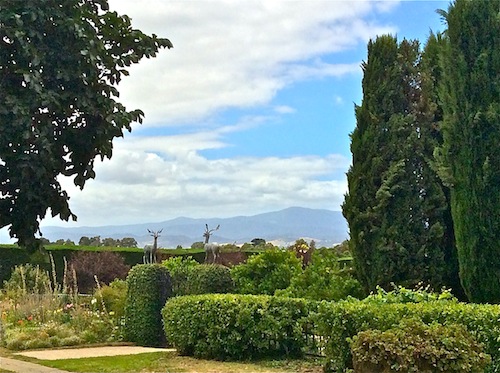
VALLEY VIEW The magnificent outlook from Melba's garden.
VALLEY VIEW The magnificent outlook from Melba’s garden.

From the car park, visitors enter Melba’s world through this green barrier, and throughout the twice-daily garden tours, it’s impossible to escape the concept of seclusion created by the woman who was, in her time, the world’s most famous.

For her entire life, Melba was inspired to deep patriotism by the distant blue hills glimpsed from the Coldstream region at the city’s edge, and despite its height the hedge offsets a panorama which much rank amongst the finest rural views from an Australian garden.

Although I have come in search of something I know I will not see that day.

By late summer, most signs of daffodils have withered and dried into something akin to straw, but in late 1911 or early 1912, 20,000 hybridised ‘G.S. Titheradge’ daffodil bulbs were given to Melba for her burgeoning new garden by a NSW daffodil farmer with a love of opera.

At a private estate – Coorah – some 900 kilometres to the north in the Blue Mountains town of Wentworth Falls, Melba gave an impromptu private performance and was offered this unconventional floral gift in return.

As the local legend goes, what caught the soprano’s eye were the thousands of golden Narcissus blooms growing across the hillside to the north of the house belonging to Robert and Marie Pitt, among the guarantors of Melba’s grand opera tour of Sydney and Melbourne that spring and summer.

It’s not just the Coombe Estate wine tasting I’ve just enjoyed that’s left me feeling a little heady – I have been tracing the veracity of that legend ever since I was told it in 1989, and my dream of standing in the place where Pitt’s bulbs may once have bloomed has finally manifested.

In 1993 I told the story to Melba’s grand-daughter Pamela, Lady Vestey, Coombe Cottage’s resident from the 1970s until her death in 2011. Her reply was polite but assertive – as far as she knew, there were no such daffodils in her garden, and she suggested the whole thing was probably nothing more than a myth.

She was right – it sounded far-fetched, but by the time the Royal Horticultural Society library in London yielded a primary source for the despatch of 20,000 bulbs from Wentworth Falls to Lilydale prior to 1914, this burgeoning journalist didn’t feel up to contradicting her.

But it is Lady Vestey I am thinking of as I pass through the garden’s heavy iron gates, with their ornate ‘M’ initial, when I realise how much has changed in the grounds of Coombe Cottage over its first century, and what a challenge ownership of such an iconic property must have been.

Guilfoyle’s major plantings are still intact, but some of the design elements that linked the house and garden – such as the wisteria-covered rooftop pergola – are long gone.

Tour guide Di Logg outlines what has been gleaned in the process of opening the estate, the establishment of a restaurant and a winemaking operation, and explains that there are renovation plans in the pipeline.

“We are hoping one day to reinstate it,” she says of the rooftop garden, from which the views of the valley must have been even better than they are from ground level.

Despite the open manner in which the garden is now being shared with visitors, its secrets seem subsumed by the understandable focus on the preservation of the house and its contents as opposed to the paradise that lay around it.

Of Melba’s bedroom, positioned to take in the expansive mountain view, Di says: “Pamela left it as though her grannie, as she used to call her, had just walked out the door, her Hermès riding boots still in the wardrobe.”

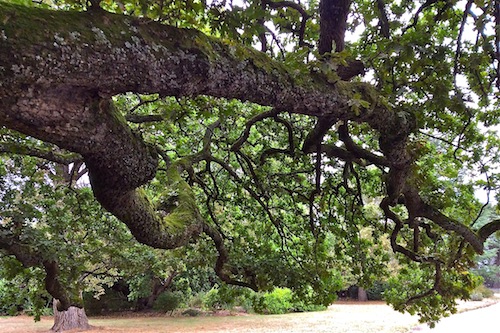
SACRED OAK The spreading tree which has stood on the estate for a reported 180 years.

But the garden was not left to its own devices. Di relates the story of one of the property’s icons – the 180-year-old oak which predated Melba’s purchase – which Lady Vestey apparently always said must stand even if it ends up knocking over the house.

Other structural garden elements – Victoria’s first swimming pool, iron gateways and ornamental focal points – are all still there and form the backbone of the generous garden tour.

The rest is in the process of being recovered from contemporary paintings (by the likes of Hans Heysen and Arthur Streeton) under the guidance of estate manager Dan Johnson and a combination of family and local memories, including a rose garden and the restored vegetable growing operation which complements the supply of fresh produce to the restaurant.

Hearing Di’s account of the clay soil around Coombe Cottage sets off my ‘daffodil radar’.

Robert Pitt transformed his scrubby hillside of sandy soils with manure and organic matter in the 1890s at Wentworth Falls. He also regularly ‘lifted’ his bulbs – the process of unearthing them after the flowers and leaves had died back and resting them in well-ventilated conditions until replanting in the autumn.

FLORAL FAVOURITE The daffodil has become one of the world's best loved cut flowers (Narcissus pseudonarcissus and Narcissus poeticus, gouache on vellum, in: Gottorfer Codex c.1659).
FLORAL FAVOURITE The daffodil has become one of the world’s best-loved cut flowers.

These farming techniques saw his Narcissus bulbs endure in abundance until long after his death in 1935, until they were eventually moved in the mid 1980s.

I ask gardener and writer Mary Moody about her knowledge of bulbs and clay.

“Bulbs – of all sorts – dislike clay soil because during the dormant period, if there are long rainy periods, the bulbs can easily rot,” she says.

“The reason for lifting bulbs is to thin them out when they self propagate. The bulbs overcrowd and flowering is reduced. This is unlikely to happen in clay soil because the bulbs will be struggling just to hold their own.

“That said, daffs are very tough and if there has been organic matter in the soil they will survive somehow.”

SSS
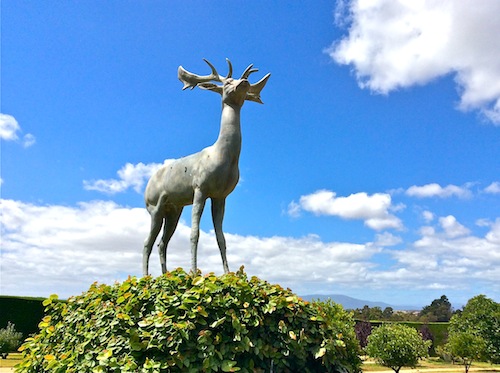
STATELY STATUARY Melba’s garden is punctuated by several iconic focal points.

Coombe Cottage garden tours end with a delicious afternoon or morning tea in the Melba Estate’s well patronised restaurant, and before I leave I promise to send Di a link to the story of Melba’s 20,000-bulb gift. She in turn commits to sending it on to Dan.

By the time I get home, Dan has recalled what a major part the Narcissus played at the funeral of Lady Vestey during peak daffodil season in September, 2011.

“We filled the small church and house here at Coombe with hundreds of bunches of daffodils, Lady Vestey’s favourite flower,” he said.

Like daffodils, this story is pushing its way to the surface in its own time.

© Michael Burge, all rights reserved. 
Stand up, citizen journalists

TRY
CALLING CARD Citizen journalism does not open every door.

IN May, 2014, a very simple tweet went out on the afternoon before Fairfax journalists agreed to strike in protest at the company’s plan to cut 80 jobs, mainly in production (layout and sub-editing) and photography.

Since the Independent Commission Against Corruption (ICAC) hearings would continue through the strike, a citizen journalist (CJ) asked whether any CJs were available to cover the following day’s ICAC events in lieu of Fairfax. After all, the hearings were only getting more interesting with every new day.

I was mentioned in the tweet, so got swept-up in the replies, but my tweeted suggestions that CJs and the MSM work together during the strike fell on many deaf ears.

“Stand down CJs,” one tweeter advised.

“Don’t cross the picket line,” another warned.

Which posed the question – are citizen journalists comrades of mainstream media journalists, or are we not?

When the Fairfax redundancy announcement was made, it didn’t register at my workplace – a Fairfax title in Queensland – where I was a part-time sub-editor, because we had our heads down meeting our deadline.

I say “we” about citizen journalists because my paid employment as a part-time sub was nothing like my unpaid output as a citizen journalist, which took up a huge chunk of my week as a sub-editor and writer for No Fibs, my own blogs and other sites.

No Fibs’ editor-in-chief, Margo Kingston, a former Fairfax employee, also identifies as a citizen journalist, most recently in her self-funded reports from the Leard and Bentley blockades, mainly via Twitter.

No Fibs ‘pages’ are filled with articles by academics, public servants, corporate employees, authors, carers, business people, welfare recipients, estate agents and many others who identify as CJs, and a few trained journalists.

We journos amongst them are a mish-mash of survivors from the wash-up of the mainstream media, the shipwreck of which occurred long before this week’s latest round of redundancies within Fairfax.

Which tempered my response to the strike. I empathised, but the axe has been hanging over my journalist’s head for years. It’s become almost impossible to secure gainful full-time work with my subbing skills, and I work alongside plenty of highly-skilled, under-employed journalists.

That day’s strike in the south barely registered up here.

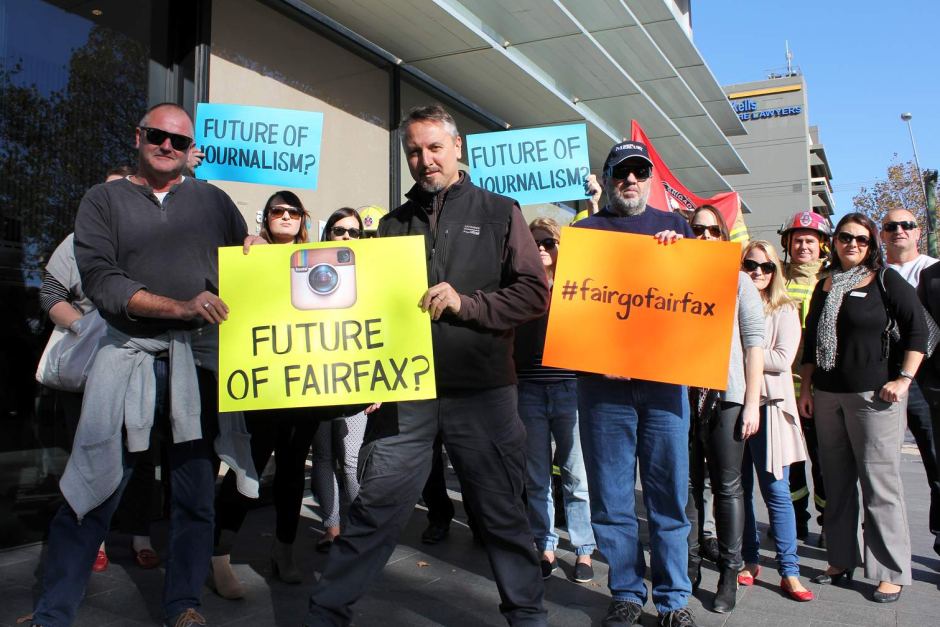
FAIRFAX STRIKE Photographer Kirk Gilmour and union representative Andy Zakeli lead editorial staff striking outside offices of the Illawarra Mercury in Wollongong, May 8, 2014.
FAIRFAX STRIKE Photographer Kirk Gilmour and union representative Andy Zakeli led editorial staff striking outside offices of the Illawarra Mercury in Wollongong, May 8, 2014.

Because many of those who were shocked by Fairfax’s job cuts placed the strike at the very centre of journalism as we know it, and, far more surreal, they were expecting readers to notice Fairfax journos wouldn’t be reporting that day.

I weighed into the Twitter debate about whether a CJ could be described as a rat for reporting from ICAC that day, citing lack of pay and lack of affiliation as reasons why it would not be the end of the world if one had.

In the process I was turned into some apologist for the ‘dark forces’ ending our careers, but it has not washed, that argument, ever since I came to terms with why I believe the media has been killed by every single user of the social media’s Publish Button. Journalism will survive, but the media as we knew it is already dead.

It’s very confronting, this moment of realisation, for all journalists – seasoned, emergent, and student. I feel most for the students about to begin a lifetime of HECS debt in return for a degree which will not sustain them with a career. They have been lied to by institutions out of touch with the reality of a dying industry. Savvy 18-year-old tweeters already have more of an audience than most media graduates.

Citizen journalists are perhaps more in touch with the point of journalism – as one tweeter pointed out, journalism is ultimately about communicating to an audience, without whom the job is a one-way street leading nowhere.

We know the role requires much more of individuals than mainstream journalism ever did – taking photographs in addition to writing; creating headlines in addition to stories; proofing our own work and not just writing it; and uploading it onto the largest distribution network the world has ever seen: the social media.

Many citizen journalists struggle with this workload, and there is very, very rarely a pay cheque at the end of weeks of research and/or travel.

Some mainstream journalists have taken to the social media via blogs to complain, and the plethora of spelling errors, layout mistakes and grammatical knots reveal an embedded reliance on production colleagues that may not find sympathy in the wider workplace. Journalists need to be match-fit and multi-skilled, not merely insightful writers.

There is also the issue of access: try blagging your way into a press conference without a mainstream media logo on your lapel, yet citizen journalists manage to get in and report.

For one of us to turn up at ICAC that day and live tweet would not be an onerous task. Twitter has provided easy access to our audience, and journalists of all stripes, including Fairfax staff, have rushed to capitalise on Twitter in a way which outstrips mainstream media circulation by an unlimited degree.

That mainstream journalists want the right to access that free distribution network through live tweeting, and get paid, opens them to accusations of having a foot in both the problem and the solution for journalists worldwide.

write-regardless-cover
BUY NOW

I defend my colleagues’ right to strike and I understand why they did so, but I will also defend any unpaid, unaffiliated citizen journalist who live tweets during a mainstream media strike, as long as they report the truth and they hashtag properly. Crorcet silplneg is oatpnoil.

And in the end, the only journo who crossed the picket line that day was a Fairfax employee.

An extract from Write, regardless!

© Michael Burge, all rights reserved.