All posts by Michael Burge

Journalist, author, artist

Gough Whitlam – Australia’s true Liberal

A Writer remembers a great Australian.

IT took me almost half my lifetime to work out what I owe Gough Whitlam.

The second son of a NSW grazier and a nurse from Sydney’s north shore who gave up her career to have kids, I was a five-year-old when Whitlam was dismissed. At twelve I was given a fearful lesson on what would happen if the Australian Labor Party ever got back into power, which consisted of a darkly uttered statement: They’ll spend all the money the country has, just like they did under Gough.

By then my family was a victim of the D-word (‘divorce’), a fate no other family seemed prone to, one that was uttered behind cupped hands. Mum still wore her wedding ring and kept her married name. It makes things easier, she said.

“Gough Whitlam got conservatives in Australia on the move in the late 1960s and they have never stopped running.”

At 18, I saw Gough and Margaret Whitlam enter a lecture hall at Sydney University. Not making for the stage, that practical pair equipped with a rug for both laps and a thermos, but for whichever spare seats they could find. A ripple of recognition ran through the capacity crowd, which turned into an electric standing ovation. Both acknowledged the accolade, and proceeded to dampen our enthusiasm with a few waves of their long arms, because they didn’t want to distract proceedings.

They seemed harmless, the instantly recognisable yet strangely anonymous Whitlams, portrayed as villains on both sides of my city-country family, so I started asking questions.

My parents didn’t vote for Gough, it just wasn’t done on the land, but mum did reveal when asked about life during the Whitlam era that when it came to the survey on changing Australia’s national anthem from God Save the Queen to Advance Australia Fair, two votes – hers and my father’s – were registered in the affirmative in our region. I turned this seed of progressive thinking in my family into a world of possibilities.

Soon after, I left Australia for six years. A political and economic dunce up to that point, the experience of living in another economy taught me everything that being a high achiever at private school never could.

In post-Thatcher Britain all the elements of an economic rationalist society were at work. Working alongside people who had families to feed for the same meagre weekly return as I managed, I started to realise how stacked the deck was. The cost of living was extortionate, the financial burden on the average family of a day trip to the coast so prohibitive that many I knew just stayed at home. What if that happened in Australia? I thought. A trip to the beach only for the very wealthy? Imagine how Australians would complain!

Returning home for breaks, I suddenly saw my country for the vibrant place it was, full of life, light and colour, whereas England was an economic web, waiting to trip you up if you didn’t feed the machine like you had to feed the electricity meter with pound coins. I decided to come home and embrace the land I was born in before it changed beyond recognition, and I only just got back before the damage really started. Ever since coming home I have despaired at the way Australia has bought the economic line of leaders intent on emulating Thatcher and her P-word (‘privatisation’) here.

Today, I feel like I have lost a family member. All day the media has covered reaction and response, from Prime Ministers past to an indulgent set of speeches in the House of Representatives, and I have tried to work out why.

FIRST COUPLE Gough and Margaret Whitlam at the apology to the Stolen Generations, 2008.

Walking the dogs after work it struck me how distracted we are by the loss of Gough, because he has become so ingrained in our nation’s consciousness. For progressives, he’s held in our hearts, but his actions are possibly most ingrained in the hearts and minds of Australian conservatives, those who live under the great Australian misnomer of ‘Liberal’, because Gough came to embody their greatest fear – that people are infinitely more important than economies.

We live in a world where a tsunami created by an earthquake can occur in front of our very eyes, live on television, and yet the commentary, response and analysis is not about the people dying on a screen in our living room, it is about whether the economy will survive, forget about the people. I feel this same lack of compassion in the Ebola and Iraq coverage and the lack of action it inspires in Australians.

Gough didn’t think that way, and he didn’t act that way – he simply gave us what we needed.

When my family found peace away from the expectations of ‘happy marriage’ for the childrens’ sake, and didn’t have to find someone at fault and someone to play the victim, that was Whitlam’s legacy.

When my mother needed to work and still had nursing up her sleeve, started at a local hospital as a casual and ended up being night supervisor for a decade, her self-determined life as a single mother was Whitlam’s legacy.

My presence in that lecture hall, a student at an Australian university, free of charge, that was Whitlam’s legacy. My right to vote that same year, my eighteenth, was probably far more significant, although I didn’t understand it at the time.

I hope he felt the greatest compassion for himself after the dismissal. When I consider how he never seemed bitter, I feel a strong life lesson about failure, because even in the midst of his ‘well may we say …’ speech, a wry smile that always reminded me of Dame Edna crept up his mouth and projected his profile out to the crowd. Bitterness could have taken him away much sooner after such a diminishing moment, but he lived almost forty more years after that speech – my lifetime.

Gough Whitlam got conservatives in Australia on the move in the late 1960s and they have never stopped running, afraid of debt and deficit and spending money on people or places where it’s needed, as though money is a thing of power that could do something positive while stashed away in a nation’s coffers. For a man who was so ingloriously dismissed, I loved the way Gough dismissed economically fearful Australians with such panache, and held to account those who think it’s okay to make huge money by doing nothing.

creating-waves-cover
BUY NOW

Instead of wishing he’d had more time, or wishing he’d not been dumped, I want to see the whole thing in reverse, just like Malcolm Fraser does. Australian conservatives have simply been reactionary, because progressive thinking has been in Australia’s driving seat ever since Menzies. It took losing Gough to see it.

© Michael Burge, all rights reserved.

This article appears in Michael’s eBook Creating Waves: Critical takes on culture and politics.
Orry-Kerry – the costume king from Kiama

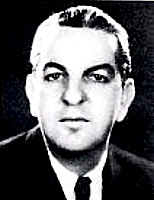
KING ORRY Australia's first Oscar winning costume designer Orry Kelly (1897-1964).
KING ORRY Australia’s first Oscar-winning costume designer Orry ‘Jack’ Kelly (1897-1964).

JUST about everyone I knew as a kid went to Kiama for the school holidays. Apart from its famous blow-hole, through which the ocean mysteriously forces a geyser-like spray to the delight of tourists, there is nothing extraordinary about this sleepy town which has all the caravan parks, bait shops and holiday rentals of every town on the south coast of NSW.

At the back of my mind on a nostalgic return trip a decade ago was Kiama’s most famous son, the three-time Oscar-winning costume designer, Orry-Kelly.

I half expected to see a worn plaque on an old civic building, or perhaps a statue. After all, it’s not every day an Australian from a small town wins three Academy Awards.

But there was nothing. I joked about the oversight with a lady at the well-stocked charity shop at the town centre, and she looked at me as though I was slightly unhinged.

The facts about Orry-Kelly (1897-1964) are undeniable. In his lifetime he became, like Adrian, a one-name icon of movie couture.

Barely a leading lady worth her salt would grace the screen without passing through his Hollywood fitting room from the 1930s until the 1960s.

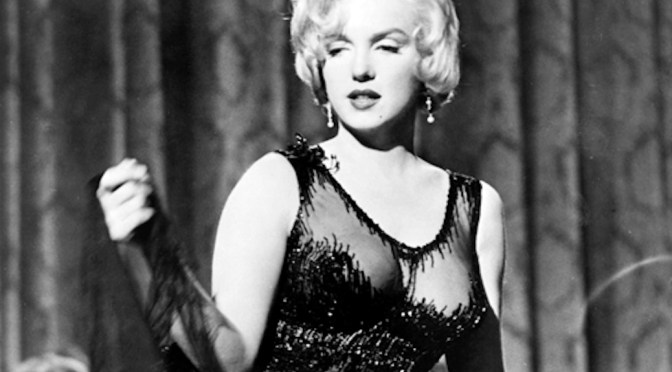
Responsible for some indelible movie outfits, like the fringed black number Marilyn Monroe’s shimmied so effectively in with her ukulele in Billy Wilder’s Some Like it Hot, Orry-Kelly was Hollywood royalty.

LITTLE BLACK NUMBER Designed by Kiama's forgotten son Orry-Kelly for Marilyn Monroe.
LITTLE BLACK NUMBER Designed by Kiama’s forgotten son Orry-Kelly for Marilyn Monroe in Some Like it Hot (1959).

In that era, a result of sodomy laws that were not repealed in California until 1962, Orry, or ‘Jack’ Kelly, as he was known to his friends, sat on one of the worst kept secrets in movies.

He was, like many a ladies’ costumier before and since, gay.

Although Kiama, and Australia, did not forget Orry-Kelly for that reason alone.

Since Australian Lizzy Gardiner won an Oscar for her costumes for The Adventures  of Priscilla, Queen of the Desert, and Catherine Martin broke Orry-Kelly’s fifty-year reign as our Oscar record-holder for her work on The Great Gatsby, in film and design industry circles, Kelly has been well-remembered.

But remembering Orry-Kelly comes with a pretty big Hollywood revelation, one which has undoubtedly contributed to his relative anonymity in the country of his birth, because Kiama’s forgotten son knew another Hollywood icon, loved and lived with him, long before they both made it big on the silver screen.

The young fellow was a British born vaudeville performer called Archie Leach, who Kelly met after leaving Kiama and heading for New York, when Jack was 24 and Archie was just 17.

The two shared an apartment with Charlie Phelps (an “hermaphrodite performer” under the stage name ‘Charlie Spangles’, according to writer W.J. Mann) and lived a rather romantic-sounding existence in the gay subculture of Greenwich Village.

Tall and handsome, Archie quickly got work in Broadway musicals. Jack wanted an acting career too, although his design skills were quickly employed on everything from movie titles to bathrooms.

The two were lovers, until Archie eventually headed for the west coast and changed his name, on the way to becoming one of Hollywood’s most enduring leading men: Cary Grant.

CARY ON Archie Leach, aka Cary Grant (1904-1986).

Jack followed, and reinvented himself as the hyphenated Orry-Kelly, costumier on over 200 movies, winning Oscars for An American in Paris, Les Girls and Some Like it Hot in the 1950s.

Among his truly iconic films was one of cinema’s greats – Casablanca.

The public difference between the two men’s careers remains Grant’s five marriages.

Nevertheless, their friendship remained deep enough for Grant to serve as one of Kelly’s pallbearers after his 1964 cancer-related death, alongside actor Tony Curtis and directors George Cukor and Billy Wilder.

His eulogy was delivered by movie mogul and friend, Jack Warner.

This was admiration indeed, but was it also simply necessary for friends to step-up in the absence of family half a world away in the southern hemisphere?

Despite the distance he put between himself and his home town, connections to Kiama ran deep for Orry-Kelly. Outfitting was in his blood – his father, William Kelly, a tailor from the Isle of Man, was a clothier in the coastal town.

After his father’s death, Orry-Kelly returned to Kiama briefly to his family home, which was above his father’s shop.

And his name was no Hollywood fake – ‘Orry’ was to remember the great Manx King Orry, a name which William Kelly, and Orry’s mother, Sydney-born Florence Purdue, gave not only their son, but also a hybridised Carnation flower.

Orry-Kelly’s life story is on the brink of taking its rightful place in our consciousness with the release of Director Gillian Armstrong’s documentary Women He’s Undressed, and the much-anticipated publication of Kelly’s ‘unpublishable’ autobiography.

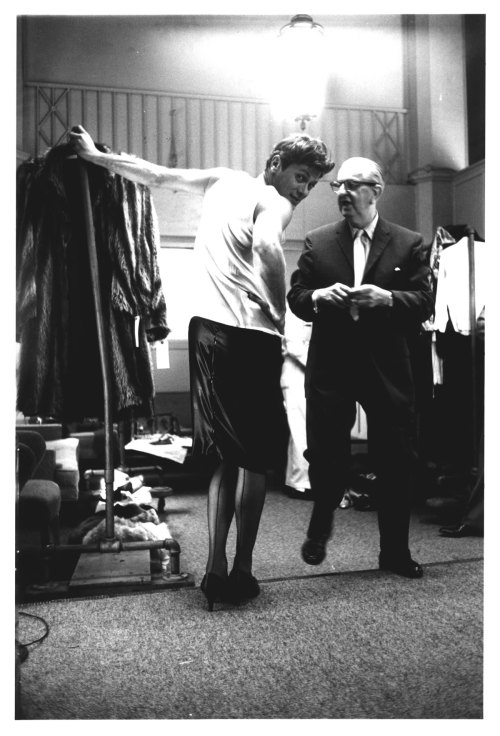
FITTING TRIBUTE The story of Orry-Kelly (pictured here with Tony Curtis in preparation for Some Like it Hot) is the subject of an upcoming Gillian Armstrong documentary.

Although the story of the making of the doco, to be released by Umbrella Entertainment, might prove to be as interesting as the documentary itself.

Telling Orry-Kelly’s story would have been a hollow exercise without his memoir to fill in the gaps between the many myths about his life, but access to it was a slow process for the filmmakers.

Lying uncatalogued in the Warner Brothers’ research library for five decades, the manuscript possibly came into that company’s hands after Kelly’s death, when certain of his personal items – including his three Oscars – were granted to Jack Warner’s wife, Ann.

But due to reported legal concerns expressed by the estate of Cary Grant, who died in 1986, the manuscript languished because it apparently detailed Kelly’s relationship with the screen idol.

Warner Brothers now owns some of Cary Grant’s most famous films, including The Philadelphia Story, one of his breakthrough ‘leading man’ roles.

Only one other copy of Kelly’s memoir came to light, after a long search within his remaining family in NSW, secreted in a pillowcase in Kelly’s great niece’s home in the Hawkesbury region north-west of Sydney.

Gillian Armstrong made light of the coincidental nature of both copies coming to her attention in the same week, during the period when financing the film that will out both Cary Grant and address a lingering omission in Australian history, was looking far from certain.

In Archie Leach’s birthplace, the English city of Bristol, a statue was unveiled in 2001 for the vaudeville performer who became Cary Grant, one of Hollywood’s most beloved idols who regularly features in the top five of ‘favourite movie stars of all time’ lists.

His widow, Barbara James, performed the unveiling.

pluck-cover
BUY NOW

Since my visit to Kiama, an art gallery remembering Orry-Kelly has opened it’s doors, but Kiama never had anything to worry about – their most famous son didn’t pretend to be anything he wasn’t.

This article appears in Michael’s eBook Pluck: Exploits of the single-minded

© Michael Burge, all rights reserved.

Critiquing basics for armchair critics

SINCE the dawn of blogging, a full spectrum of critics, from armchair experts to celebrities, has flocked to the free platforms allowing free-rein to quite publicly appraise, rate and critique popular culture.

But it’s a singular form of writing, the role of the critic, one in which angels should fear to dabble.

If anyone’s of a mind to heed a few tips on how to critique (and I am really not anticipating there are too many who will pause before hitting the publish button on their thoughts) here are my ideas on what makes good criticism.

If you don’t have anything nice to say…

Mother said it best – be nice. The best way to give something zero stars is to give it no oxygen whatsoever, but so often snippy critics will revel in blasting something which has every right to take its place in cultural history. Unless life (via some bizarre cultural Interpol) forces you to review something you don’t like, just forget it and move on to something you are more keen on.

Artists who can, do, artists who can’t, critique

Whilst an audience is an essential part of any creative process (art doesn’t exist in a vacuum, right?), being a reader or viewer does not necessarily qualify anyone to be a critic. Like cleaners, who routinely get the blame for office thefts, so critics are blasted for being amateurs who never ‘made it’. The smart critics know this and critique accordingly – either as an extension of their own arts practice (think Clive James) or from decades of experience in the field they’re critiquing (think David Stratton).  The first time I was required to review a play, the knowledge of the passion, time and energy required to ‘raise the curtain’ every night made me look for positives. Anything else would be hypocritical (note the appearance of ‘critic’ in that word).

Watch for spoilers

Critics need to adhere to this maxim more than the average punter. You might have loved the third-act turning point in the latest movie, but if you tell everyone the outcome, they ain’t gonna get a surprise when they go, are they now? If you’re a critic and you’re not sure what a third-act turning point is, read my post about the storytelling basics.

It’s not about liking it

So you didn’t like the play, the movie, the book, the whatever, that doesn’t mean others won’t love it. It’s my assertion that if you put your cultural dislikes into print, you’re only going to end up looking snippy and unhappy. To critique something means to put it in context, to observe what came before it, to attempt to see what makes it unique, even if it doesn’t succeed as a piece of art in your estimation.

They’re not hanging on your opinion

It’s tempting to emulate the great critics – those who could ‘close the show’ on Broadway. But that world is long gone, subsumed by the international opening weekend for new movies, the lack of geographic boundaries on the internet, and the end of paid work in the mainstream media for all but the big-name critics. The social media is where word of mouth, the oldest form of criticism, is happening. It’s free, fast and beyond the control of artists. If you get any attention in that mass of distraction, don’t flatter yourself that your opinion means anything. Try to leave the medium better than you found it, even just a little.

Critics also get rated

WRITE REGARDLESSBritish actress Diana Rigg compiled a collection of the most famous reviews given to actors, as far back as Ancient Greece, in her book No Turn Unstoned, which she subsequently turned into a one-woman show. Critic beware – you’re not immune from getting slated yourself.

An extract from Write, Regardless!

© Michael Burge, all rights reserved.