SINCE the dawn of blogging, a full spectrum of critics, from armchair experts to celebrities, has flocked to the free platforms allowing free-rein to quite publicly appraise, rate and critique popular culture.
But it’s a singular form of writing, the role of the critic, one in which angels should fear to dabble.
If anyone’s of a mind to heed a few tips on how to critique (and I am really not anticipating there are too many who will pause before hitting the publish button on their thoughts) here are my ideas on what makes good criticism.
If you don’t have anything nice to say…
Mother said it best – be nice. The best way to give something zero stars is to give it no oxygen whatsoever, but so often snippy critics will revel in blasting something which has every right to take its place in cultural history. Unless life (via some bizarre cultural Interpol) forces you to review something you don’t like, just forget it and move on to something you are more keen on.
Artists who can, do, artists who can’t, critique
Whilst an audience is an essential part of any creative process (art doesn’t exist in a vacuum, right?), being a reader or viewer does not necessarily qualify anyone to be a critic. Like cleaners, who routinely get the blame for office thefts, so critics are blasted for being amateurs who never ‘made it’. The smart critics know this and critique accordingly – either as an extension of their own arts practice (think Clive James) or from decades of experience in the field they’re critiquing (think David Stratton). The first time I was required to review a play, the knowledge of the passion, time and energy required to ‘raise the curtain’ every night made me look for positives. Anything else would be hypocritical (note the appearance of ‘critic’ in that word).
Watch for spoilers
Critics need to adhere to this maxim more than the average punter. You might have loved the third-act turning point in the latest movie, but if you tell everyone the outcome, they ain’t gonna get a surprise when they go, are they now? If you’re a critic and you’re not sure what a third-act turning point is, read my post about the storytelling basics.
It’s not about liking it
So you didn’t like the play, the movie, the book, the whatever, that doesn’t mean others won’t love it. It’s my assertion that if you put your cultural dislikes into print, you’re only going to end up looking snippy and unhappy. To critique something means to put it in context, to observe what came before it, to attempt to see what makes it unique, even if it doesn’t succeed as a piece of art in your estimation.
They’re not hanging on your opinion
It’s tempting to emulate the great critics – those who could ‘close the show’ on Broadway. But that world is long gone, subsumed by the international opening weekend for new movies, the lack of geographic boundaries on the internet, and the end of paid work in the mainstream media for all but the big-name critics. The social media is where word of mouth, the oldest form of criticism, is happening. It’s free, fast and beyond the control of artists. If you get any attention in that mass of distraction, don’t flatter yourself that your opinion means anything. Try to leave the medium better than you found it, even just a little.
Critics also get rated
British actress Diana Rigg compiled a collection of the most famous reviews given to actors, as far back as Ancient Greece, in her book No Turn Unstoned, which she subsequently turned into a one-woman show. Critic beware – you’re not immune from getting slated yourself.
BEING a WordPress blogger I was able to start work as a site editor on No Fibs immediately, with regular tips from site manager Tony Yegles. That got me right to the coal face of online news.
I decided to sub-edit in the same manner as I did at my day-job, meaning there was some risk citizen journalists would not understand why certain choices were made about shaping their work.
I also felt the headlines needed to differentiate facts from opinions.
So I began to operate under an ‘if they were there, they were reporting’ principle. A ‘report’ was an eyewitness account; a ‘comment’ was a bum-on-seat rumination. To publish any other way would confuse readers and writers.
Margo was also adamant the citizen journalist’s ‘voice’ should not be edited-out, and that meant lighter sub-editing rules allowing an original social media edge.
“It was far easier to imagine a mainstream media replete with lazy or biased journalists than to include ourselves in the blame.”
Kevin Rudd resigned, resulting in the Griffith by-election, and Jan Bowman started to write regularly about the line-up of candidates.
Because her subject was on the news cycle, Jan’s articles needed to take their place promptly and I needed to find ways to make No Fibs’ contributions stand out.
Jan was getting into press conferences and meeting all the candidates, and I was determined to match her commitment. We both had little time outside work, which meant filing and sub-editing at all hours.
As a team, No Fibs provided another voice in the first litmus test for the newly minted Abbott Government.
When Margo gave me a great gift by asking me to keep writing for the site as arts editor, I had never been given such a green light by an editor. She’d read a few of my arts-based pieces on my blog and knew I had a lot to say. I’d observed how her tweets about my articles increased my readership, and how the same phenomenon occurred on No Fibs.
I finally understood what an incredible shopfront Twitter was for journalism.
It’s a great feeling to be granted a small piece of online real estate to fill, but it also came with a commitment to posting articles on a regular basis.
I developed subject parameters, since art and politics didn’t seem to be such a natural blend, and I attracted fascinating interviewees, including Amanda Bishop, who impersonated Julia Gillard throughout the former Prime Minister’s term.
When I decided to compare journalism and art as career choices in one article I found something rather interesting: somehow, journalism had replaced art at the bottom of the ‘career scale’.
It was a shock to learn the industry I entered only five years prior as a means to survive as an artist was now more precarious than a career as an artist.
From that point I decided to include journalism as an art form within my #CreatingWaves column and explore what had brought it so low.
CLICK BAIT The mainstream media’s fight for attention is ugly.
The social media was one obvious culprit. Every time we hit the publish button (or post, or share, or like) we provide free content (and site statistics) to very large corporations in direct competition with the MSM for advertising revenue.
That was a dark moment for me – accepting that we journalists who weren’t quite buoyed-up by the MSM were partially to blame for its demise through nothing worse than the desire to communicate via the social media.
My article on this issue sparked debate from some who could not accept our blogging, tweeting and facebooking had an impact on the MSM. It was far easier to imagine a mainstream media replete with lazy or biased journalists than to include ourselves in the blame.
It dawned on me that many readers were unaware of how stretched newsrooms are – they expected top-notch news but they were not always willing to pay for it, or didn’t understand why media outlets needed to find increasingly inventive ways to remain viable.
Blaming the MSM came into very sharp focus during the national March in March (MiM) protests. I attended the Brisbane event, not intending to report, but when I saw the scale of proceedings I decided I was there, so I was reporting. Twitter took care of the rest.
The anger directed at the MSM for its lack of MiM coverage was partially assuaged by No Fibs.
A few of us had dived in and learned how to Storify – an immediate way to gather social media into one report.
With two No Fibs Citizen Journalists (Anne Carlin and Wayne Jansson) tweeting on the ground at the Canberra MiM, we were able to use Storify to remotely publish a moment no other news source managed – the presentation of the vote of no confidence that some 100,000 people had marched for, off the back of the broadest national coverage of the MiM protests reported by citizen journalists.
The site’s purpose hit home when we were offered a report on the creation of MiM by one of the organisers, Sally Farrell.
The tenor of the No Fibs pieces I was sub-editing went up a gear. Margo was attracting a very broad range of contributors, from academics to students and activists.
The first online journalism job I ever saw advertised was on Facebook, a position writing for a lifestyle website in north America. Anyone in the world could apply, so I posted it on my Facebook page as a milestone, wondering if it was an anomaly or the start of something new.
The Australian social media came under very public government analysis when a Twitter furore erupted about the Department of Immigration and Border Protection’s (DIBP) demand that a Facebook comment by an asylum seeker advocate be removed.
BOOK BURNING Another issue altogether in online media.
This led to a long cycle of reporting for me, way beyond the scope of the arts, simply because I did not see anyone else on an Australian political news site connecting the dots between passionate social media users, asylum seeker advocates, and the DIBP’s censorship.
Working in collaboration with other journalists and bloggers, No Fibs led the way to a clearer picture of exactly what had occurred, and why.
I tried for many weeks to get in touch with George Georgiadis, who made the Facebook comment the DIBP didn’t like. Patience and transparency got No Fibs a scoop in our extended interview with Georgiadis, which remains my most well-read piece and was an eye-opening experience to put together.
Sub-editing No Fibs citizen journalists, including Guinevere Hall in WA reporting on the West Australian Senate ‘rerun’, was reaching critical mass by April of 2014, but it was the work of four University of Technology journalism students that gave me an idea about changing the site’s approach to online publishing.
Their work on the #leardblockade committed to principles many journalists twice their age should take note of, but as I uploaded the stories I felt we were doing them a great disservice, because they will graduate into an industry without sub-editors.
A phrase I used to say as a joke – ‘journalist, edit thyself’ – had become a reality in the MSM.
So, I took another risk and suggested the core team behind No Fibs alter the way we processed submissions. We did not have to let go of sub-editorial control, but the process of preparing citizen journalists’ material had become far too time consuming for a small, overworked voluntary team.
In order to make the leap, No Fibs needed its contributors to file stories in a similar manner to MSM journalists. It also needed a style guide, so I wrote one.
This gave Margo an opportunity to revisit her vision for the website, from headlines to layout. A strong, Twitter-oriented style emerged.
We also needed a team of sub-editors, which we got by putting out a call on Twitter.
Our regular writers’ copy improved dramatically, and the rate of submissions did not significantly diminish by requiring citizen journalists to be self-sufficient.
Worlds collided for me when Fairfax announced in early May that around 80 production staff and photographers would be made redundant, and the social media arced-up about the potential for citizen journalists to cross the picket line of the resulting Fairfax strike.
STAND UP Citizen Journalists.
As both a part-time Fairfax employee and an independent citizen journalist, I was informed on both sides of the debate, and wrote an appeal for critics of citizen journalism to broaden their thinking.
I had vitriol aimed at me that day, particularly from journalists.
We are all struggling to build and maintain careers and earn livings – but the panic spilled over into attack at the very idea of citizen and mainstream journalists working in collaboration, primarily for the sake of the best news coverage for readers.
The only journalist who crossed the picket line that day was a Fairfax writer, possibly in fear of losing their job.
There was some good news for Fairfax staff – the company had increased readership in online news experiments at a regional weekly newspaper, and the process allowed the title to remain in print.
A consolidation of offices meant my workplace welcomed The Bayside Bulletin into the space left by long-redundant production staff, and Redland City got a new local paper when two weeklies amalgamated to form The Redland City Bulletin as part of Fairfax’s continued commitment to local news.
I now worked in the same environment as the other journos who’d tweeted from the #bowmanpol candidates‘ forum.
Having done my best to make myself more redundant as a sub-editor at No Fibs, I let go and went on a holiday. When I came home I saw a job advertised which was uncannily close to what I’d been doing for No Fibs.
I have rarely felt as confident applying for a position, especially one at the cutting edge of online news media. A few weeks into the job, for which I work at home most days, it’s amazing how close the basics are to the average blogging platform.
My year of growing with No Fibs as it expanded during a critical phase, with all its learning curves and voluntary hours, aided my transformation into a match-fit, self-sufficient, paid online writer.
I’d reached the new news world in the No Fibs lifeboat, only to find it is not defined territory that can be seen on a chart, it’s an energy I carry inside me across a growing number of sites and audiences.
BUY NOW
Journalists may have reached rock bottom, but if we grow and promote our self-sufficient currency, share our skills and work together, I believe we will start to rise. After all, you don’t get paid for passage in a lifeboat, you grab an oar and row like hell.
SUN CATCHER Don’t try it at home (Photo: thehairpin.com)
A Writer takes on daylight saving.
FADING our curtains and keeping the cows awake, who does the sun think it is? Naughty sun, back in your box.
Yes, it’s Daylight Saving Time (DST) again, when even well-educated people are prone to believe the sun allows a whole hour of its light to be shifted to the other end of the day in some states, and not others.
Here in Queensland, I can see why many don’t want DST. In this climate, it’s cooler to fit a whole day’s gardening in before heading off to work, if that’s your thing.
Living north of the border, I am reminded of growing up in rural northern NSW, where there has always been a competitive spirit around rising early.
“Good afternoon!” was the pleasantly delivered breakfast barb to anyone who stumbled out of bed at the incredibly late hour of 6.30am, instead of being up before the first rays.
Incurable early riser and builder, Britain’s William Willett, gave DST legs in around 1907, and it had everything to do with window coverings.
“DST suits organised economies, it has nothing to do with the time your body clock tells you to rise.”
As the story goes, whilst on his early morning horse rides, Willett noticed many of his neighbours still had their blinds drawn, a situation he took it on himself to change by writing his self-published book, The Waste of Daylight. The impending First World War saw Willett’s vision embraced by the government as a means of saving coal.
Others will tell you the Romans invented DST, and here is the key to its purpose: DST suits organised economies, it has nothing to do with the time your body clock tells you to rise from your bed.
I suspect there’s more than a little state of origin competition behind the Queensland/NSW divide on the issue. NSW likes the feeling of being ‘ahead’ for six months. Queenslanders consequently dig our heels in, and will not be told what to do about our very own daylight.
Which is forgetting the facts: if you want to rise with the sun, you can do it all year, you’ll just have to keep your early morning activities short in the summer, before the clock tells you to scoot off to work.
And if you like to sleep in, you’re going to have to get some very heavy curtains.
Just don’t blame the sun.
Blame Willett and his builder’s view of the working day, and remember, builders down tools at 3pm, it’s a conspiracy…

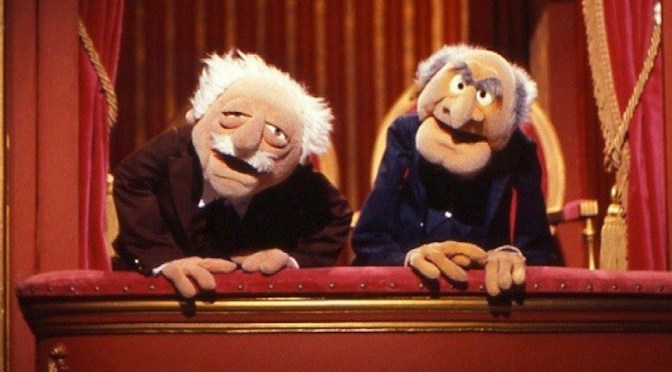
 British actress Diana Rigg compiled a collection of the most famous reviews given to actors, as far back as Ancient Greece, in her book No Turn Unstoned, which she subsequently turned into a one-woman show. Critic beware – you’re not immune from getting slated yourself.