All posts by Michael Burge

Journalist, author, artist

Miriam Dixson – the family iconoclast

IN LATE 1999 I joined my father at the launch of a new book, The Imaginary Australian, by social historian Dr Miriam Dixson.

The setting was Sydney’s Gleebooks, the turnout disappointing, but one familiar face lurked down the front – Bob Gould, activist and denizen of his own sprawling bookshop in nearby Newtown.

Dr Dixson spoke about her latest exploration of Australian identity, then Gould began to interrogate her and disseminate copies of his response. It was a confrontation between old socialist warlords and I took great delight in witnessing it.

Gould I’d once served as a regular customer of the cafe across the road from his bookshop, where he’d barked his usual order of chocolate cake and ice cream to we student waiters.

Dr Miriam Dixson I knew because she had been married to my father for two decades.

Our first meeting was surrounded by my father’s lies. I was nine, my brother Andrew 11, and my sister Jenny, five. Our parents had been separated for a few months, and we were on a Christmas access visit to Inverell.

Dad promised to take us to the coast, an exciting prospect for country kids who were now living with their mother in the Blue Mountains. But we didn’t head seaward, we headed south, as Dad told us of a new ‘friend’ he wanted us to meet. When we pulled up at a strange house in Armidale, we were introduced to Miriam.

At that time, Miriam Dixson was enjoying a certain notoriety in the wake of her 1976 publication, The Real Matilda, a feminist Australian history that labelled Australian women: “The doormats of the Western world”, a work the author curiously described as nothing more than a “temporary scaffolding”.

In the half light of Miriam’s office, where we lay awake on blow-up beds on that first night in her life, tall filing cabinets loomed on either side, the ends of the drawers labelled “Matilda”.

We were literally and emotionally within Miriam’s polemic.

Our second meeting came after my parents’ divorce was settled, and we went to Armidale for Dad and Miriam’s marriage.

I did what any gay boy would do: I ingratiated myself with Miriam by offering to make her a bouquet of flowers from the garden. She held the spring blooms as she made a short procession from the kitchen to the living room, where Dad waited for her.

We visited the school where Andrew and I had been booked into since birth for our secondary education. When Dad pointed out the dormitory from which he had shimmied down the drain pipes to get up to mischief, I imagined escaping down those same pipes to the railway station if I were ever incarcerated in such a Victorian establishment.

While we played, with his permission, at Dad’s lapidary table, I inadvertently discovered a letter on the top of his desk tray, confirming Andrew’s acceptance at that school. Seeing the inevitable coming, and without thinking, I screwed it up. Andrew panicked, then bravely tried to iron it flat, while Jen and I kept watch.

Dad found us out and clipped me around the ear. That probably should have been it, but Miriam had yet to start.

She leant over me, and took slow pleasure in delivering some devastating news: “Your mother went to court,” she said, “she was a thief.”

My mainstay was bulldozed in seconds, and Dad said nothing in her defence. Mum rang in the middle of the trauma, and I tearfully asked her to tell me the truth. Instead of an angry reaction, she just gave a simple confirmation: yes, three years before, she had been arrested on shoplifting charges. “Daddy and I said we’d tell you about it together, when you were old enough,” she said.

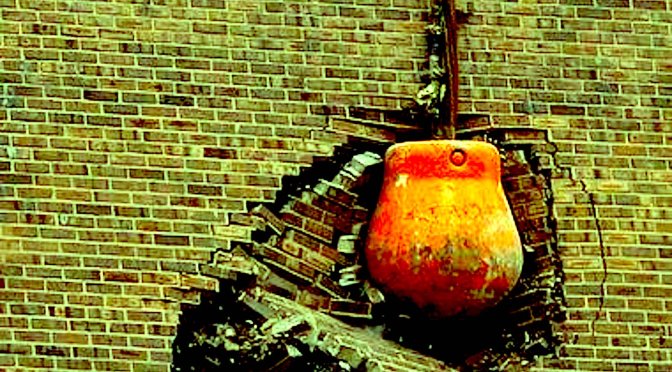
Wrecking Ball

Dr Miriam Dixson’s need to demonise my mother speaks volumes about the woman whom academics and journalists have been trying to define for decades.

Described as a feminist, a misandrist, a social historian, a communist, a progressive, and a conservative, the confusion has caused many leap to label Dixson a hypocrite. She’s been telling us for years that she’s an intellectual, but no commentator who’s met Miriam Dixson seems to think that’s quite apt.

Maxine McKew discovered the truth. “Ever the iconoclast,” she wrote in The Bulletin of her first impression of Dixson before the release of The Imaginary Australian.

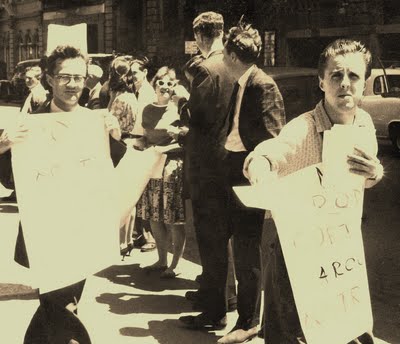
YOUNG COMRADES Bob Gould (far right) was a member of the Communist Party in Sydney with Miriam Dixson in the 1960s.
YOUNG COMRADES Bob Gould (far right).

Bob Gould also smelt a rat in his enlightening rebuttal, Interrogating Miriam Dixson, when he questioned why on earth his socialist comrade in 1960s Sydney had reinvented herself as a conservative?

When he observed how Dixson evolved her political ideology as she changed domestic partners, he almost got to the truth. Perhaps Gould assumed that Dixson had eschewed marriage in the wake of publishing The Real Matilda?

If only Bob had bumped into my father at Gleebooks, he would have come across the former grazier who was the significant spousal relationship of Dixson’s life, and discovered the reasons she remained more the academic feminist than the practising one, and had certainly been moving in conservative circles.

Gould described Dixson’s approach in The Imaginary Australian as: “A fast and loose psychological assault”, replete with “softening disclaimers”. He used the word “demolish” when he recalled Miriam’s modus operandi at socialist meetings: “Almost by clockwork, you would get a migraine around 9pm, after criticising the lot of us, and go to bed.”

In the light of others’ experience of Miriam Dixson, her ‘knockdown, rebuild’ vocabulary finally made sense to me. The woman driven to raise the scaffolding she called The Real Matilda was no mere intellectual, she was the wrecking ball who’d rushed to another room to listen in on that crucial trust-restoring phone conversation between me and my mother.

And her iconoclasm continued, aimed not at adult socialists, but children.

The next swing came during an access handover in Sydney, while Mum encouraged Jenny, aged six, to go for lunch with her brothers, father, and an enraged iconoclast.

“Daddy loves you too,” Mum said, as she encouraged Jenny to take her father’s hand.

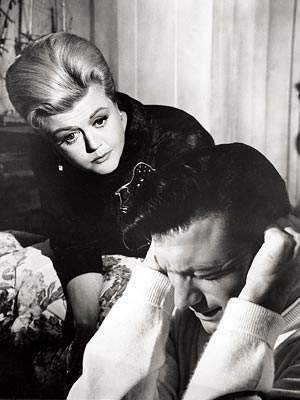
MIND GAMES Dr Dixson was convinced my mother was Mrs Iselin in The Manchurian Candidate - capable of reprogramming her son's mind.
MIND GAMES Mrs Iselin in The Manchurian Candidate.

In an unwelcome shot, Miriam said: “Oh, well programmed, Pat”.

The P-word stood out because it sounded powerful to children, and unsurprisingly the negative energy behind it saw Jen stay put in her mother’s arms.

At lunch, the ball swung again, this time at me.

A new world order was blasted into me by Dr Miriam Dixon and my father, a pair of squabbling control freaks, who contravened legal process by telling me without a court-appointed counsellor present that I was to be singled out for a solo access visit.

Once again, Miriam employed a builder’s vocabulary, asserting that if I was by myself, she and Dad would be able to “rebuild” parent-to-child “frameworks”.

I wasn’t happy, but I went to Armidale by myself and endured their experiment. When it was over, I just craved some peace, but in order to get it, I too needed to become an iconoclast.

I told anyone who would listen – including them – that I did not want to see my father or his wife. The only “programming” I could see going on were their enthusiastic attempts to alter my sense of security and denigrate my mother using the worst experience of her life.

That one swing from my wrecking ball saw their insubstantial “frameworks”, erected without the slightest emotional intelligence, come crashing down. No school in Armidale for me.

Debate

Jump forward two decades, just four years after the Gleebooks event, and my brother invited me and Jen to his second daughter’s christening.

Months before, my partner had died suddenly. Like many academics, Miriam was out of touch with the common marginalisation felt by feminists and LGBTQI, and greeted me by telling me how I was: “You’re alright. Yes, you’re alright,” she decided.

Prone in my grief to exhaustion in mixed company, I sat by myself at the dining table Mum proudly purchased after leaving Inverell. Andrew had inherited the suite after her cancer death a decade before. It was a familiar piece of furniture which evoked the woman we’d all loved.

It had been a long time between battles, so I put up no resistance when Dad quietly sat next to me, followed by Jenny, and I was able to enjoy watching them converse as adults.

Andrew offered drinks and finger food. The godparents joined us. We began to talk about our family’s heritage, and Dad outlined the great conundrum: were the Burges convicts or settlers?

Someone noted how silly it was to send people to the other side of the world for stealing something as insignificant as a loaf of bread. Everyone chuckled.

Everyone except Dr Miriam Dixson, that is. Finding herself on the edge of the scaffolding our family was gently erecting, Miriam said: “Michael, I’d like to sit next to Bruce please.”

Before I could answer, she continued with a diatribe straight from The Imaginary Australian about how none of us should question Georgian sensibilities and notions of criminality in Great Britain in the late 18th century, that none of us should make light of institutional decisions made in the past.

I acquiesced, because she placed herself between me and Dad, but as I did I said: “You like Gilbert and Sullivan, don’t you, Miriam?” remembering she and Dad singing along to their G&S favourites on my solo access visit all those years ago.

“Oh yes,” she replied.

“Well, enjoying satire like that is making light of the past,” I said.

Unexpectedly, Dad laughed, a brief insight into where his marriage had come to by then.

We all knew the wrecking ball was coming, so Jen gave me the let’s go look, and we said our goodbyes.

As I shook Dad’s hand, Miriam sidled up to me and said: “You’re wrong about what you said.”

“Don’t worry about it Miriam,” I replied.

“I don’t worry about it,” she said, “I only debate.”

Oh a debate, of course! Just what every disparate family needs at a christening. The wrecking ball glanced off my cheek and I just walked away.

Five years later, after nearly three decades together, my father left Dr Miriam Dixson and ran off with another woman. Everyone was well out of range by then.

This article appears in Michael’s eBook Creating Waves: Critical takes on culture and politics.

Playing the victim

JUST ACTING Petruchio victimises Katharina, played by Gabrielle DeCelis (Photo: The Acting Factory).
JUST ACTING Petruchio victimises Katherina, played by Gabrielle DeCelis (Photo: The Acting Factory).

IN independent theatre circles, there’s long been an urban myth that if you manage to attract a casting agent to see your production, you’re in with a chance of scoring an audition for something bigger and better.

Securing the attendance of a casting agent is no mean feat.

It takes a great deal of networking (read: bothering) and a heavy dose of self belief (read: ambition).

The only time I ever managed it was during a production of The Taming of the Shrew, part of the annual Shakespeare by the River in the Penrith Valley, produced by the Acting Factory.

I’d met an assistant at an agency in the city during a previous casting. She was young, very inexperienced, and she revealed that she was from Penrith, allowing me to casually mention Shakespeare by the River…

I bothered. She came.

Maybe it was karma, but playing Petruchio, Shakespeare’s misogynist shrew-taming victimiser, somehow suggested I’d be perfect for playing a victim.

Generally in the ‘fifty-worder’ zone (roles of fifty words or less, defining them in an Equity pay bracket), victim roles are notoriously difficult to cast, because no serious (read: ambitious) actor wants to play them.

But I didn’t know any better, when I leapt at the chance of a casting session for the role of David Begg in an episode of Australia’s hottest hospital drama of the day: All Saints.

I donned my regulation neutral black T-shirt, which ensured I looked as much like my headshot as possible. I arrived slightly ahead of time to avoid the waiting room nerves, which was a good thing, because the noises coming from inside the casting room sounded like I was waiting to see a doctor at an amputation clinic: Mr Begg was the victim of a machete attack by his wife.

Listening to actors emulate the pain levels of machete attack is a little like tuning-into your neighbours having sex. When the casting agent asks for the actor to “please do it again, but make the pain levels nine out of 10” the intimacy escalates and diminishes in an amusingly familiar cadence, because, as they say, there’s a fine line between pleasure and pain.

Casting sessions and auditions are artificial situations that most actors relate as agonising. They are a chance to show that you’re a directable actor (read: you listen), and an opportunity to secure that ten-second moment in which the casting agency staff make up their minds about you, regardless of the performance you’re about to give.

I told my agent I’d gotten a casting for All Saints, and asked her to look out for a call about the result. Yes, you read correctly – I got the casting session independently of my agent, and I was willing to give her ten per cent of the fee should I get the job. If you can work out why actors always do this, you’ll make a million bucks.

A week later, she called, which meant I’d got the job. Agents never call otherwise.

HAND IT TO HIM a prosthetic hand was matched to my real one.

A script followed. David Begg had five words (“Bitch cut my hand off”) and a maximum of 45 howls of pain, as he was wheeled into the Emergency ward of All Saints’ hospital, his hand-in-a-bag at his thigh, blood spraying everywhere.

At the read through early the next week, the familiar faces (read: stars) of All Saints sat on one side of the room, flanked by a wall of slightly familiar faces (read: guest stars), and a wall of nobodies (read: fifty-worders) by the door.

David Begg’s violent argument with his wife, of course, was background to looming hospital administration issues, and the sudden arrival of an emergency case was a way to see careworn and jaded hospital workers at their level best, but I spoke my lines (and expressed my pain) with the best of them.

A production assistant showed me to the props department, where my hand was matched with a latex dummy and an entire fake arm with a grisly stump wrist. The props team were having too much fun working out how to make an arterial spray.

Then the big day. Call sheets, early morning catering, quiet on the set, and plenty of waiting in the off-set zone of the studio, where I got chatting with the regular featured extras, those people you see in the background of the All Saints wards: nurses, doctors, and patients, none of them “serious” actors, but everyday people in well-paid regular work.

My call came and I was strapped onto the gurney with my good arm underneath me, in a position for which I would quickly become grateful for occasional yoga classes. The prosthetics were put into action and tested, and a nice, arterial spray was created by the props guy, cramped into the gurney below me.

No direction from the young director, then all of a sudden we were off …

Several takes of crashing through the plastic double doors resulted in a message from the director that there was “not enough blood!”. He put in a brief appearance and demonstrated to the prosthetics team, by wildly gesticulating, how he wanted the slaughter to appear.

They wheeled me back, the team tested a few angles, and we went through a few more takes.

Another message came through: my five words not being delivered clearly enough.

Now, I had my back story worked out. My imaginary wife had a name, and if you’d asked me anything about how we’d come to such a momentous argument, I’d have been able to tell you.

But, locked onto a gurney with my real arm numb below me, teams of creatives arguing about how to get the best out of the bloody stump, and me having to deliver my five words in the middle of the stars’ lines, I determined to go up a gear on the next take …

“That’s great!” the director yelled from his hidey-hole straight afterwards, “but MORE blood please!” he added.

The next take I sat up and grabbed the latex stump, aware of the proximity of the camera over the stars’ shoulders, and gave them all a liberal spraying.

“Better, but higher next time please,” was the response.

ALL STARS Some of the cast of medical drama All Saints (1998-2009).

We had to wait while they replaced surgical gloves and cleaned-up the spray from the stars’ hospital scrubs, then, emboldened by creative ambition, and also wishing to get it right so my real arm could get real blood supplied to it as quickly as possible, I sat up higher, shouted my words to the boom, and sprayed a wall of Logie award winners with as much fake blood as they were ever likely to cop outside of a hammer horror remake of the Brides of Dracula. Acting method went out the window.

“Got it!” came the cry from behind the flats. “Thankyou to Michael,” a production assistant encouraged. The stars clapped unenthusiastically while costume attendants saw to the fake blood dripping from their brows.

Friends and family waited with great anticipation for the broadcast of my ten-second appearance weeks later. I missed it, working at my day job across town, but also because I was waiting for another call from fostering effective relations with a casting agency. Perhaps next time I’d graduate to more than 50 words?

But I’m still waiting, which is, I suppose, why serious actors never play the victim.

© Michael Burge, all rights reserved.

Great stories come in threes

THREE'S A CROWD The climactic scene of Thelma & Louise (Production stills: Roland Neveu).
THREE’S A CROWD The climactic scene of Thelma & Louise (Production stills: Roland Neveu).

THE three-act structure is essential to the toolkit for that great misunderstood 20th century phenomenon: the Screenwriter.

Truncated to suit a 90- 120-minute session at a cineplex, the three-act storyline is undoubtedly the one most people are most accustomed to, so it’s probably in a writer’s interests to know how it works.

The good news is that it’s simpler in one way, because there is less to it. The bad news is that it’s reportedly much harder to get right, but we’ll look at why.

Act One

Broadly, this act must encompass an exposition (explaining who is who, particularly the relationship between the protagonist, or ‘hero’, and the antagonist, or ‘villain’), remembering that with screenwriting, dialogue must work effectively alongside onscreen action. Film is a visual and aural medium, so screenwriters must write what the viewer will see and hear.

This act generally also contains a point of no return, which propels the characters forward on their journey. Here’s where the 3-act structure differs from the five-act structure more commonly employed in novels, where the point of no return is generally in the second half of the story.

TURNING POINT Things escalate quickly in Thelma & Louise.

You can see where this difference arose – producers sitting in screening rooms, shouting: “Get to the point faster!”. Think Louise (played by Susan Sarandon) gunning down the rapist in the car park in Callie Kouri’s screenplay for Thelma and Louise, around 15 minutes into the movie.

Act Two

This act is the longest in the three-act structure, akin to the rising action of the five-act structure, where the protagonist struggles to rise above the point of no return, but often digs their way deeper into challenges set up by the antagonist.

Around the halfway point, or ‘midpoint’, something significant happens to the protagonist, which might be so sudden as to change the course of the story. In Thelma and Louise, this occurs with the appearance of Louise’s boyfriend, who might just convince her to give herself up, especially when he asks her to marry him. The protagonist’s response to the midpoint decides what happens for the rest of the story.

WHERE TO FROM HERE? One of the finest movie examples of a surprise ending.
WHERE TO FROM HERE? One of the finest screen examples of a surprise ending.

Act Three

Purportedly the hardest-fought scenes of every successful Hollywood screenplay, and the most difficult for writers to get right, this act contains the climax of the storyline, at a point significantly later than the five-act structure, where the tension comes to a head.

In Thelma and Louise, the climax is the most visually and emotionally dramatic scene of the movie, and the one where the protagonists commit their first willful crime – blowing up the truck driven by a hapless and offensive driver who has bothered them along their journey. Previously, they had committed crimes out of self defence or need. The climactic truck explosion signals their graduation into true outlaws.

No movie executive wants much time between the climax and the end of the film – everything has been said, seen and felt, and so the storyline must wrap up pronto. True criminals by then, Thelma and Louise drive to a speedy conclusion which could never be defined as a denouement, but rather a surprise ending.

The Verdict

Screenwriter Callie Khouri, who won an Oscar for her first screenplay, got it so right that the studio: “Didn’t come in and re-shoot four times” (Susan Sarandon, in a 1991 interview).

Khouri set this up with a coincidental moment, when Louise waits for Thelma to rob another gas station, and sees an old woman sitting at a window, a bundle of contained compromise and regret. In that fleeting moment, the writer foreshadows her ending without the need for a single word of dialogue. Another reading of the dramatic structure might place this moment as the climax.

Thelma and Louise works in three acts, and it works in five, depending on how deeply you want to analyse it. The three-act structure is, to me, just nifty shorthand for non-writers (e.g. producers) to define the ‘big moments’ they feel all scripts need.

WRITE REGARDLESSIf a writer can craft a five-act storyline, which hits these ‘big moments’ of the three-act structure, they’ll probably have an excellent script.

© Michael Burge, all rights reserved.

An extract from Write, Regardless!