All posts by Michael Burge

Journalist, author, artist

Back in town

Inverell Court House, built in 1886 (Photo: Cgoodwin).
DAY IN COURT Inverell Court House, built in 1886 (Photo: Cgoodwin).

A Writer returns to the scene of the crime. 

MORE than 20 years after my family moved away from the country town of Inverell, leaving behind failed dreams and a broken marriage, I returned on a rainy evening in late 2003 with some unfinished business.

I’d called ahead to my grandmother, who was still living there in a nursing home. Before taking her to lunch the next day, I dropped into the local courthouse, an imposing clock tower at the centre of town, where a helpful woman proceeded to assist me in finding my mother’s name in the court records.

The court staffer didn’t flinch when it quickly became apparent we were not looking for a plaintiff of any kind, but rather a defendant. Trouble was, I had no specific dates to search, only the barest clues from what I’d been told about mum’s appearance in the court on a shoplifting charge sometime in the 1970s.

That meant mum’s name was still on the police computer database, in which the dates became brutally clear: just before Christmas, 1977, the police had made their way to our property off the Bingara Road, with complaints from two Inverell shops that mum had stolen childrens’ clothing and kitchen implements.

All court records prior to 1980 were stored in the archives of the New England University at the nearby city of Armidale. Would I like them faxed over? I agreed to return to the police station adjacent to the courthouse when they were ready.

Next, I dropped into the council chambers with a request. I had in my possession a hand-sized flat stone which had been picked up off the driveway of our farm, a flint-like rock with a broad space for a thumb to hold the sharpened edge to use it for cutting – an aboriginal hand axe of indeterminate age.

I asked if there was any kind of Aboriginal cultural heritage centre, or perhaps a museum, which would be interested in taking this stone tool off my hands?

The council staffer held her gaze with an open, shocked mouth, and shook her head, muttering “no…,” and, “good luck with that,” before leaving.

The tourist information centre had the name of an Aboriginal elder who lived locally. I drove the streets of our old neighbourhood searching for the address, but there was no-one home, and the only Aboriginal public office was well and truly closed.

SHOW & TELL Aboriginal hand axes from Arnhem Land.

I began to wonder whether the stories I’d been told about this stone were true, or if they’d been elaborated into family myths? I had taken it to school for ‘show and tell’, with the family name written on it using thick black marker pen in my mother’s hand. She was interested in anthropology, and we had inherited all kinds of fossils and artefacts at her death at decade before.

But on returning to the riverside shopping centre to buy grandma a present, my doubts were allayed by the wall built of local stone at the gateway, the very same blue, brown and ochre basalt. The wall was all that remained of the department store built by my ancestors in the town. I knew then I had the right rock back in the right region.

Grandma was dressed and eager to get out and about, waiting for me outside the door of the nursing home. We laughed as I lifted her into the passenger seat of my four-wheel drive, me allaying any embarrassment she felt by reminding her of the hundreds of times she had lifted me into a car when I was a child.

We had a lovely lunch. She enjoyed the meal and hearing all my news about life in the big city. We’d corresponded about family stuff many times, and it seemed a waste of time to go over it all again – she and I had come to terms already. We loved one another, that’s all that mattered.

I dropped her home when she started to tire, and headed out of town, along a well-trodden road into the uplands south west of Delungra, where fields of wheat in black soil run for miles and miles under enormous skies.

I’d met the present owner a few years before, but I hadn’t come to see the house again. I’d picked-over the traces of my family’s dream many times before: the room where my baby brother died, and the hopeful imprint my parents had made on a property which was derelict when they moved there.

I looked over the stones on the driveway, and sure enough, scattered along the verges were more of those flinty fragments like the larger one in my pocket.

I was headed a few kilometres further west, to a lonely place on the Bingara Road, where a memorial had been built in the year 2000 to the Aboriginal men, women and children who were slaughtered on a hillside in 1838 at the hands of European settlers in what came to be known as the Myall Creek Massacre.

MASSACRE SITE: The Myall Creek Massacre Memorial (Photo: Department of Environment: Mark Mohell).

There, I walked along the trail which marks the gruesome milestones of this iconic event – the first time in Australia’s history that settlers were tried and hanged for the murder of Aboriginal people.

I took the Aboriginal axe, with our family name impossible to erase from it, and buried it at the site, not only out of respect for the Aboriginal lives lost, but also those in my own scattered family.

Night was falling when I arrived back at the Inverell police station, where a large envelope awaited me. At a motel out of town I pored over its contents, like some terrible play in which my parents were protagonists.

Buried deep in the court transcripts, describing in detail how mum was found guilty of multiple counts of theft, was the news of one shop owner who’d waived all charges in the light of the psychologist’s report, and the one who’d refused.

The sentence in Mulawa Womens’ Prison in Sydney, a day’s drive away from her children, detailed the number of days’ imprisonment resulting from the value of each item of clothing stolen.

The transcripts of friends who stood in the dock spoke of her good character.

The psychologists’ report itself – one clinical, succinct letter linked mum’s behavior to deep feelings of guilt and shame about the death of her third child, the result of Sudden Infant Death Syndrome (SIDS).

And then the suspended sentence – no jail time to be served, in exchange for a warrant of good behaviour.

I suddenly understood why mum did not put up a fight for her financial share of the marriage settlement. Buying her freedom had cost our family dearly, and walking away with nothing but a car and some furniture, she might have felt she’d repaid her dues.

I could also see why she eventually left town, allowing the myth to emerge that she’d left dad, not the truth, which was all the other way around. Our family name on ‘Burge Bros.’, an Inverell shopfront, speaks of our pedigree as descendants of proud local shopkeepers, which mum might have felt was brought into disrepute by a depressed city girl. Housed in the same precinct was the shop whose owner would not forgive her.

I remembered how mum recalled being interviewed by the police after my brother died. It was a matter of course, apparently, that the mother was the first subject of investigation after the death of a child who had been laid in his bed by her arms only hours before. Lindy Chamberlain was to face that same moment only seven years later.

And I remembered it was mum who told me about the Myall Creek Massacre. While the other adults were playing tennis at the courts near the creek, she pointed to the hillside and whispered to me about what had occurred. Whispered. Not to the other kids, or any of the white adults enjoying weekend sport, but just to me.

The Myall Creek Massacre memorial was eventually the subject of an Australian Story episode in which descendants of the settlers who committed the crimes reached out in reconciliation to the descendants of the Wirrayaraay people who were slaughtered.

SET IN STONE Plaque at the Myall Creek Massacre memorial.

But in its first decade, it endured vandalism. Not brainless destruction, but calculated censorship of the facts about the case and its impact on lives.

It’s a beautiful part of the world, the place I was born, but it can be a harsh place too.

The shock and grief wrought on one family in the wake of the sudden death of one baby tells us how magnified the same emotions would have been after the sudden slaughter of multiple defenceless women, children and old men at Myall Creek, but despite the well-known contributing factors of depression and grief-related kleptomania, there was little reconciliation or understanding on offer for my mother in the 1970s. The community was still coming to terms with what happened to the Wirrayaraay.

Mum got away from Inverell and made a new life. Grandma died in 2008 and we gathered in Inverell for her funeral, but no-one in our family lives there anymore.

I’ll go back to Myall Creek one June for the annual memorial service. Hearing the true story of the place probably marks the start of my journey to being a writer.

© Michael Burge, all rights reserved. 

The children of Coorah

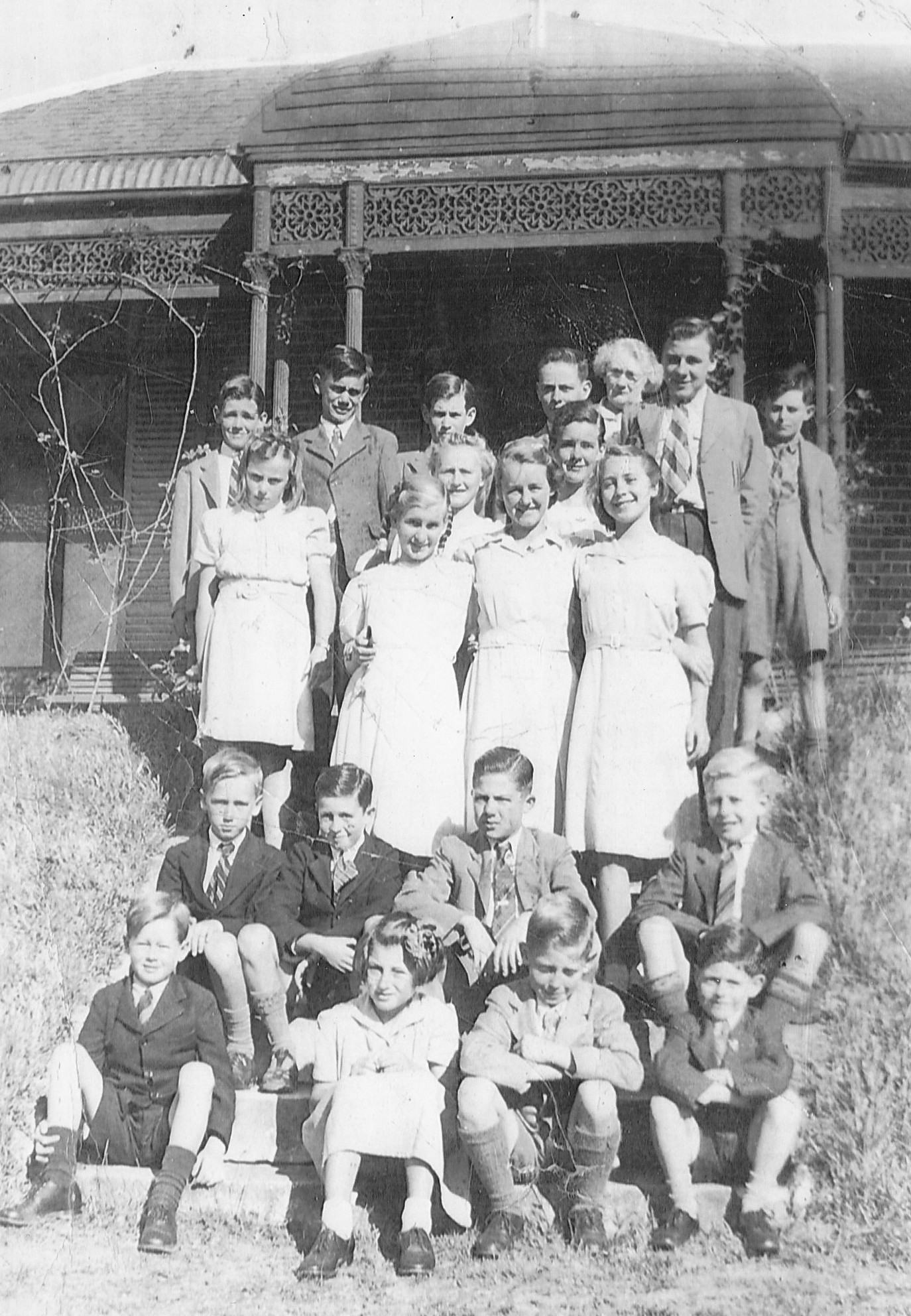
BRAVE FACES The children and staff at Coorah c.1942. Yvonne is first on the right in the girls' row.
BRAVE FACES The children and staff at Coorah c.1942. Yvonne is first on the right in the girls’ row.

Two Writers collaborate on a hidden story.

THE years of research I’d undertaken on the historic home Coorah in Wentworth Falls took an interesting turn in 1995 when I was contacted by the current owner of the house, the Blue Mountains Grammar School, about a visitor who’d returned to Coorah after fifty years.

Yvonne Waters lived at Coorah during WWII, after it was gifted to the Bush Church Aid Society by the estate of the home’s original owner, Robert Pitt. In these years, Coorah served as a children’s home, a period of the building’s history only previously recorded in Bush Church Aid Society records, which related rather saccharine stories about the ‘happy days’ of the residents.

Because of its personal nature, it took many years of ruminating to bring Yvonne’s story to a wider audience. Inspired by the journey to justice started by the national apologies to the Stolen Generations and the Forgotten Australians, Yvonne’s account of her time at Coorah, as told to me during a searching interview, was published in Blue Mountains Life magazine in 2011, and related a very different story to the church records.

It is published here with Yvonne’s permission, inspired by the honesty of those who are beginning to tell their stories to the Royal Commission into Institutional Responses to Child Sexual Abuse.

Family, Interrupted

Yvonne Waters on her time at a Blue Mountains childrens’ home.

During World War Two many of Sydney’s children were evacuated to the Blue Mountains in the wake of the 1942 Japanese attack, but writer Yvonne Waters and her brothers found themselves in a Wentworth Falls children’s home in the winter of 1942 in the midst of a different kind of war.

“As we set out to walk to school – I was eleven, my brothers eight and five – suddenly our dad, whom we hadn’t seen since he’d left home five months previously, darted from behind a corner,” Yvonne recalls.

“Herded into the back of dad’s car, we were driven to our paternal nana’s house. Later that afternoon mum arrived. She had been to work, and on finding us not at home with our great aunt she had guessed what had happened. After numerous court cases, the court had cowardly decreed that if dad could manage to take us from our mother, he could keep us. I will never forget my last glimpse of our mother crying, after being told she would never see us again.”

Yvonne’s parents had separated at a time when public interest in divorce resulted in a family’s trauma being played out in the tabloid media, and since both had settled with new partners, neither was granted custody of the children.

After being moved between the Central Coast and western Sydney, Yvonne says, “Dad informed us he had found vacancies in a children’s home. With tremendous relief he pointed out how lucky we were, as all the other homes were full.”

Recalling their arrival soon after, she says, “The pines in rows like soldiers guarded the red gravel driveway which curved suddenly, revealing a Victorian two-storey building. Dad pulled over to the entrance, and motioned for us to get out”.

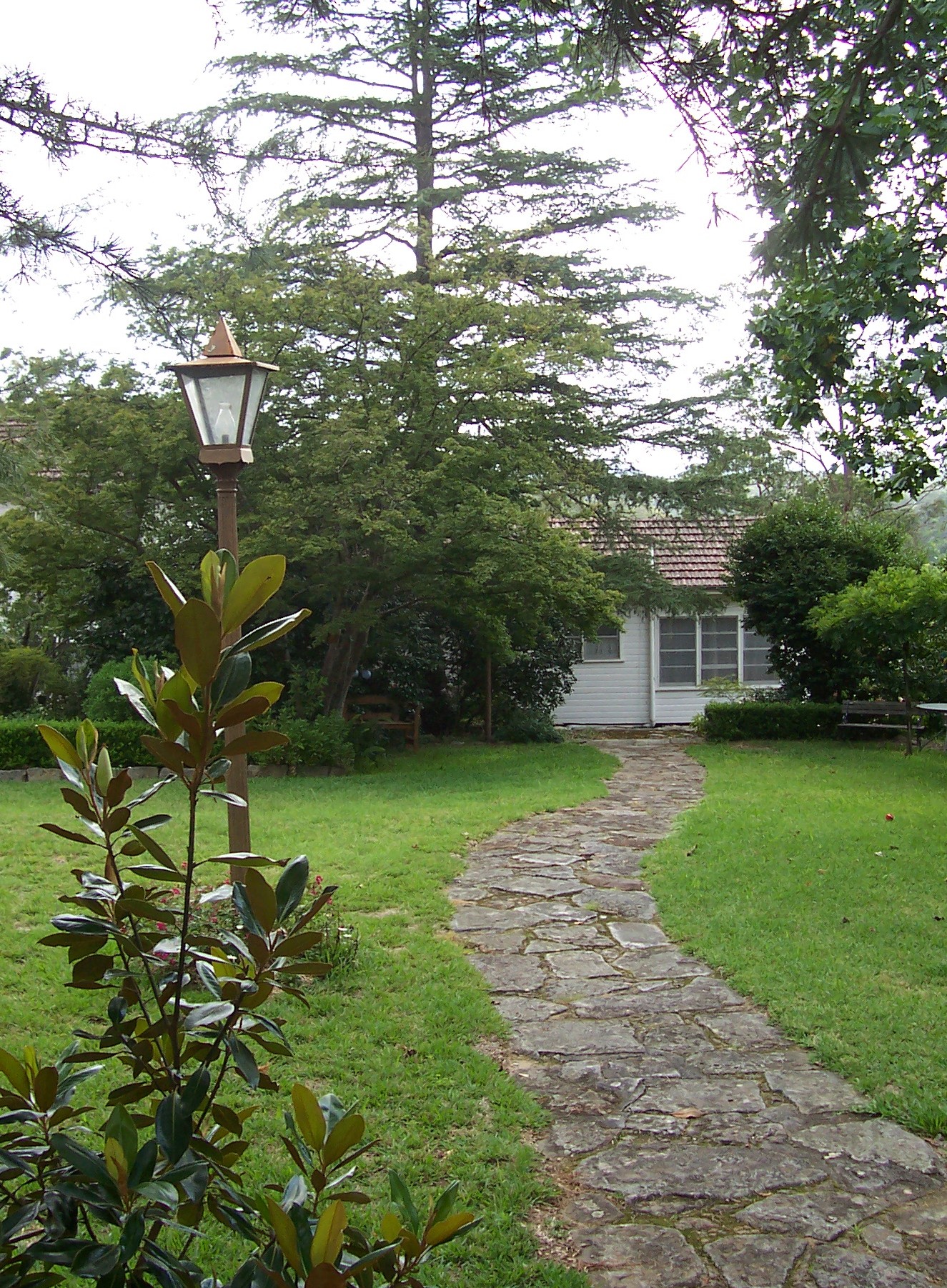
CHILDRENS' HOME Coorah, an historic home in Wentworth Falls, once a private home, a childrens' home, and now part of Blue Mountains Grammar School.
CHILDRENS’ HOME Coorah, an historic home in Wentworth Falls.

“He urged us up the nine stone steps to the verandah of the forbidding, silent building. Rattling the brass knocker on the huge oak door, he then turned to avoid seeing our stricken faces.

“Heavy footsteps on the other side signaled time was running out. A key turned in the lock. The door swung open to reveal a large, severe, grey-haired woman, dressed completely in black. She smiled, but the smile didn’t reach her eyes.

“‘Kiss your father goodbye!’ the woman we later knew as Matron ordered. The door was shut swiftly behind us and we were locked away from those we loved.”

The young trio had arrived at Coorah, an imposing home by the highway at Wentworth Falls. Once home to the Pitt family, the property was held by the Union Trustee Company after the death of Robert Pitt in 1935, with a stipulation that it be charitably gifted for the benefit of children.

The house was eventually given to the Bush Church Aid Society, an Anglican organisation which ran a number of children’s hostels, with a remit to provide accommodation for children living away from home for their education.

Just how three children in custody limbo (whose mother had no idea of their whereabouts) ended up at Coorah remains a mystery. Whatever the case, the shutting of the door changed Yvonne and her sibling’s lives forever.

Separated from her brothers on arrival, and forbidden to speak to them, even at meal times, Yvonne remembers, “We girls were allotted the job of kitchen chores and washing up after twenty-four children. The dining room floor would have to be scrubbed on hands and knees, and no girl would ever finish that mighty chore without reddened and bruised knees”.

“Twenty-four lunches had to be made before breakfast and Matron would stand behind me when it was my turn. Woe betide you if you tried giving anyone any extra.

“I think the teachers at the local school were aware of the conditions we lived in, as the headmaster asked me privately if we had enough food to eat.

“He’d witnessed one of our boys eating scraps from the school rubbish bin.”

Power struggles amongst resident children routinely resulted in abuse. “One frightening incident will never be erased from my mind,” Yvonne recalls. “An older boy in the home attempted to molest me. When I appealed to Matron for help, her answer shocked and hurt me.”

“‘You are a child of sin. You come from divorced parents. I would never believe your wicked lies!’ Today, I can still smell that boy’s dirty hands pressed against my mouth to stifle my screams. Only for the protection of a sympathetic older boy, I shudder to think what would have happened to me.

“I remember one boy was whipped with the buckle end of the strap, accused of laughing when saying grace. We were all still kneeling and I was opposite one of my brothers. Matron stood behind him and her temper seemed to be out of control. My look must have deterred her, so she moved on to the next victim.

“The feeling was high that evening. We all inspected the boy’s welted back. We were hurt and so angry.

“One girl and I retaliated to the cruelty by going on ‘strike’ and not doing the washing up. I’m amazed that we had the courage, for we were very afraid of the woman who controlled our lives. Arm-in-arm we ambled through the long grass to the edge of the paddock near the train line. We talked about the unfairness of everything and how we couldn’t wait to grow up and tell everyone about the treatment. Before we knew it, dusk was upon us! When we arrived at the back door, Matron had locked us out.

“Matron baffled and hurt us when she accused us of being with the boys. Her face was contorted with fury, and she was not at all interested in the truth.”

Yvonne believes the issue of boys and girls being housed together led to her eventual release from Coorah after eighteen months, when sent to an all-girl home in the Southern Highlands. Despite trying to write to them at Coorah, she lost touch with her brothers.

“I finally met them again before I was sixteen,” Yvonne recalls. “We smiled shyly at one another, but had nothing to say. It was a meeting between strangers.”

Fifty years after leaving Coorah, Yvonne was on a day trip to the Blue Mountains with her writing teacher, who encouraged her to pay a visit. The property had been owned by the Blue Mountains Grammar School since the 1950s.

“Not wanting to repeat the horrors recalled at that front door, I found a side door. A pleasant lady called Sandra answered my tentative knock. I suddenly couldn’t wait to look through my old dormitory window. The stairs were carpeted now and at the top we entered a room with computers and some workers.

“Everyone moved aside as I walked to where my bed had been. Standing in front of that window, I was eleven years old again, waiting for the sight of an occasional train and praying for my mother to find me. Those brightly lit carriages appeared to carry toy figures to their homes, and conjured up mine being a little closer to me.

“My thoughts raced back to a freezing day when a girl called up the stairs, ‘Yvonne, your Mother is here.’ I’d thought how cruel she was to joke.

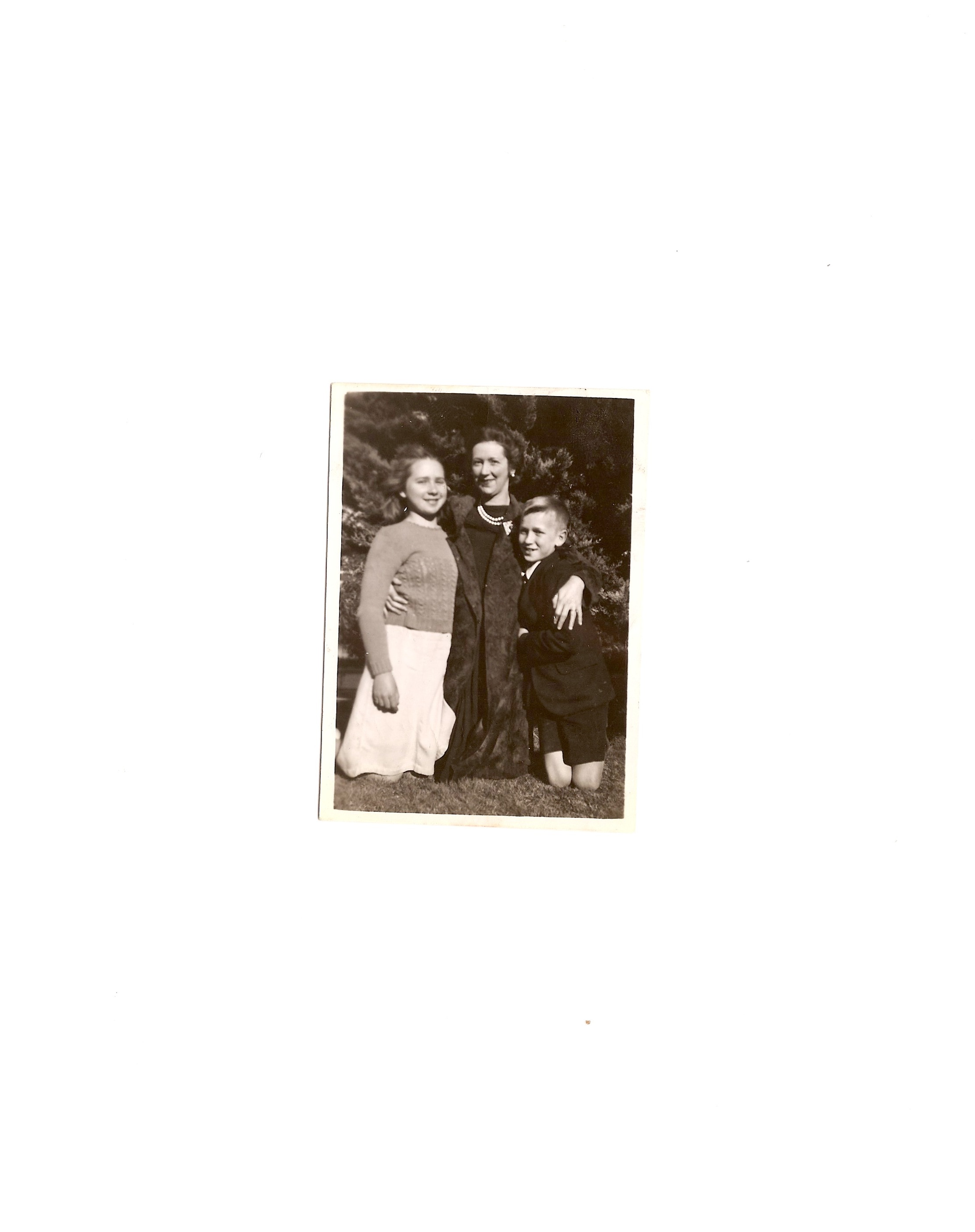
FAMILY REUNION Yvonne, her mother, and one of her brothers the day their mother found them at Coorah.
FAMILY REUNION Yvonne, her mother, and one of her brothers after their mother found them at Coorah.

“The ground was heavily carpeted with snow. There, at the side of the building, was my Mother. She smiled and held out her arms to me. I tried to reach her, but my feet sank in the mush and I collapsed. My frozen body was lifted, and she held me close inside her warm coat.

“Nearly blinded by tears, I turned to face the people in my room of memories. They were gathered silently in a corner, some wiping their eyes. I felt as though I had been released from a lifelong jail sentence.”

At a distance of seventeen years since she first revisited Coorah, Yvonne is philosophical about what happened to her family. Writing about the journey has helped lay some ghosts to rest, and also the recent acknowledgement of similar separations wrought on the Stolen Generations and Forgotten Australians. “I can really feel their hurt,” she explains.

“My story is not to seek anyone’s sympathy,” she adds, “only to tell the truth of what actually happened under the cloak of religion. Today we live in a more enlightened age. Thanks to the Family Law Act, no blame is attached to either party in a divorce case”.

“I believe I had to go through so much to learn, and I have been able to help people when they’ve been unable to talk about bad things that have happened in their lives.

“Returning to the ‘scene of the crime’ helped to release my pain,” Yvonne adds.

Yvonne’s recollection of her time at Coorah has links to other elements of the property’s story, particularly the acres of daffodils around the house, planted by the original owner Robert Matcham Pitt (1849-1935).

© Michael Burge, all rights reserved.

The ‘sh%t, click’ moment

WRITERS' ENEMY The remote control.
WRITERS’ ENEMY The remote control.

IF I don’t manage to write a brilliant novel, there is no telling what I might do.

Got your attention? Good, that was my aim. Have no fear, despite dwelling in my fair share of writer’s angst, I am not about to throw myself in front of a bus, I am only imparting more of what I am discovering about how to tell good stories, and, if you’re still reading, my first line seems to have snagged you.

Many years ago while at ARTTS International media college, television producer John Sichel sat and imparted some basics about writing, tips he’d picked-up working in the trenches of the BBC.

The one thing I recall vividly was John’s demonstration of what he called the ‘shit, click’ moment.

Leaning back in his chair, he mimed a remote control in one hand, turned on an imaginary television, and made us feel we were in the living room with him, about to sit down in front of the ‘next big thing’ on the box.

Only the opening scene of the program wasn’t that great, and John said “shit” as he “clicked” over to another channel.

His improvisation imagined a writer failing to engage their audience.

In storytelling parlance, the antidote to the ‘shit, click’ moment is called a narrative hook. Good use of the classic five-part dramatic structure is all very well, but whether writing a novel, a short story, a screenplay, a play, or telling a ghost story around a campfire, your story needs to avoid the ‘shit, click’ moment.

There are endless ways of writing hooks. One of the most often cited is Jane Austen’s opener for Pride and Prejudice – “It is a truth universally acknowledged, that a single man in possession of a good fortune, must be in want of a wife.”

PROUD OPENER Jane Austen's greatest work starts with one of the best narrative hooks.
PROUD OPENER Jane Austen’s greatest work starts with one of the best narrative hooks.

In only 23 words, Austen distills for her reader the energy behind every plot point of her best-known and best-loved novel, which continues to engage readers two centuries after its publication. Love her or hate her, Austen knew how to engage readers.

Austen does this by making an assertion which might be interpreted as both a joke and as deadly serious – she buries opposing forces deep within her hook. You might continue to read because you completely disagree with her, or because you’re nodding your head in assent.

In a screenplay, the narrative hook need not be dialogue, in fact in film and television they work far better as a purely visual moment, and can unfold across the entire opening scene.

Action movies and thrillers make great use of the narrative hook, indeed the example we were shown at college was the 1987 film Robocop (screenplay by Edward Neumeier and Michael Miner), the opening scene of which shows a semi-futuristic board meeting at which a prototype robot designed to police the streets is shown to a group of unwitting execs in suits (warning: the scene contains graphic violence).

GOOD SHIT, CLICK The opening scene of Paul Verhoeven's Robocop.
GOOD SHIT, CLICK The opening scene of Paul Verhoeven’s Robocop.

The unit is revealed as both aggressive and docile when it is ordered to be, but when the confident designer hands one of the execs a gun and asks him to wield it at the robot to demonstrate its police skills, things go horribly wrong and the exec is slain mercilessly by the prototype in moments of sheer terror.

I was instantly hooked, because I needed to know where that story went after such a scene of corporate horror.

Another excellent reason for having a great narrative hook is when submitting work for consideration. So often a publisher will want to see only the first few chapters, or an agent requests the first ten pages of a script for consideration.

If there is no narrative hook in those brief pages, the publisher or agent may not find what they are looking for, which is access to an entertained readership or audience. They need to make sales, not friends. Even if your novel or script has great material in part three of its narrative structure, they’ll probably only see your idea as a dud.

WRITE REGARDLESSSo, while “It was a dark and stormy night” might not cut it, and “once upon a time” has been done to death, writers need to seek great narrative hooks for our work.

© Michael Burge, all rights reserved.

An extract from Write, Regardless!