Category Archives: Artists

Boldly going nowhere: the inequality of Sci-Fi

SPACE PHENOMENON Patsy Trench (left) as Cadet Tina Culbrick in Phoenix Five.

A Writer explores the limits of the universe’s acceptance.

“WHEN I was nine years old Star Trek came on,” actress Whoopi Goldberg told Gene Roddenberry, creator of Star Trek, at a casting session for the show’s reboot in the early 1990s.

“I looked at it and I went screaming through the house: ‘Come here, mum, everybody, come quick, come quick, there’s a black lady on television and she ain’t no maid!’ I knew right then and there I could be anything I wanted to be, and I want to be on Star Trek.”

That ‘black lady’ was African-American actor Nichelle Nichols, in the role of Lieutenant Uhura, a character who inspired even Dr. Martin Luther King to follow the voyages of the Starship Enterprise.

Goldberg’s moment of validation and inspiration is now half a century behind us. In fifty years from now, will stories emerge about children today who saw themselves in the current crop of mainstream science fiction titles, or has Sci-Fi lost its edge within today’s asteroid belt of conservatism?

A bit of time travel might unearth some answers.

When George Lucas relaunched the Star Wars franchise in the late 1990s, he created a character whose name still draws ire across the geek chat rooms: Jar Jar Binks.

Designed to appeal to younger audiences in a similar manner to the Ewoks of Return of the Jedi, Jar Jar, a Gungan from the planet Naboo, with his exaggerated mannerisms and flamboyant voice, seemed to have the opposite effect, and he was subsequently toned down and written into the sidelines of two further prequels.

The fear of flamboyant space travellers and aliens was not always so keen. Doctor Zachary Smith in Lost in Space (played by Jonathan Harris) camped and shrieked his way through the series, defying any notion of being sidelined.
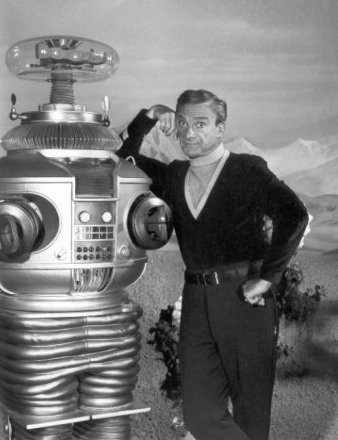
BUMBLING BOOBY! Jonathan Harris as Dr Smith in Lost in Space.

That he was a comically selfish villain, opportunistic in his attempts to get back to Earth, leaving the Robinson family behind, didn’t seem to matter. Flamboyant was fine, as long as you were the bad guy.

More recently the Doctor Who franchise (and its spin-off, Torchwood) experimented with alternate sexuality in the form of the bisexual Captain Jack Harkness (played by John Barrowman), but his intergalactic promiscuity, and the untimely death of his longest love, ensured audiences never had to countenance this high-profile non-heterosexual character in a relationship as progressive as a commonplace same-sex marriage.

Sci-Fi lesbianism is even more marginal, offering only a handful of onscreen same-sex kisses and a whole universe of subtext in everything from Alien: Resurrection to Xena Warrior Princess.

Here in Australia, TV producers were quick to jump on the bandwagon of popular TV series set in the future, with a crop of titles on our small screens by the end of the 1960s.

One of these was Phoenix Five produced by the Australian Broadcasting Corporation from 1968-69.

Amongst the show’s stars was Patsy Trench (now a London theatre guide) in the role of Cadet Tina Culbrick, the only female in a crew of three on the galactic space patrol ship of the show’s title, tasked with protecting the known universe from an evil humanoid and a rebel scientist in the year 2500.

“It was certainly not a progressive series, not in any sense,” Patsy said. “It made no social statements, it was just a series of adventures featuring three humans versus a number of weird aliens”.

“As for gender equality, the characters were all pretty well asexual. We wore identical clothing – a yellow tunic-type top (very cliché Sci-Fi) and very unflattering black ski pant-type trousers. There was absolutely no sense of sexual tension between the three of us and no sense of gender – equality or otherwise. Tina may have objected from time to time to being patronised by her male crew members, but that’s about as far as it went.

HIS AND HERS The key cast of Phoenix Five.
HIS AND HERS The key cast of Phoenix Five in their gender-neutral tunics (Clippings courtesy of Patsy Trench).

“Every single episode I had to say ‘space phenomenon ahead’, whatever that was supposed to mean.

“It became a running joke. I remember pressing a series of buttons without having a clue what they were or what I was supposed to be doing.

“Nowadays a director and actor might pay a bit of attention to that kind of detail, but not then.”

I asked Trench whether she believes Australia was capable in the 1960s of imagining a future that had racial/sexual equality?

“Probably not,” she said. “When I was living there in the late Sixties I did not get the impression the Aboriginal people featured much in people’s consciences, certainly not as they do now. I’m not sure when they were given full voting rights, but I think it was around that time, and I had no idea it had taken so long – the issue was never discussed.”

Does Trench think Sci-Fi has a role to play in imagining a more equal future?

“Of course, because the limits are as huge as our imaginations,” she said.

Territory upon which only the boldest equality explorers tread is one which has long been a source of some of Science Fiction’s most renowned characters: disability.

Few children of the Seventies will have missed the blind, wheelchair-bound Davros who first appeared in the 1975 Doctor Who ‘Genesis of the Daleks’ episodes, probably the most prominent example of a physically disabled humanoid character ever to feature on television screens in our living rooms at prime time.

In her enlightening feature ‘Disability in an alternative universe’ for the ABC’s Ramp Up disability discussion forum, Leah Hobson gets right to the point: “As a fan of science fiction and fantasy – genres which most often ask ‘what if?’ in more playful and profound ways – I notice the dearth of ‘good’ stories about disability”.

“If a character is portrayed with any sort of disability,” Hobson wrote, “a realistic depiction means you’re typically male, and you’re typically either bound to a bitter and/or evil existence with a good dose of sexual openness thrown in just to really show you’re evil.”

Exploring whether there is any positive purpose to depictions of Transhumanism (the human condition enhanced by technology) in Sci-Fi, Hobson found more questions than answers.

I started to enjoy Doctor Who when River Song (played by Alex Kingston) became a regular character, and, in geeky conversations at work about the future of the show, I threw in my view that the show’s producers might be grooming River Song to be the series’ first female Doctor.

And why not? She was riveting, charismatic, intelligent and kept taunting viewers on her backstory with her cheeky warning: “Spoilers, sweetie”.

During 11th Doctor Matt Smith’s unsuccessful regeneration in ‘The Impossible Astronaut’ episode, I hoped to see River’s signature curls emerge from the amniotic glow to be reborn as his replacement. Sure, she was standing right there watching, but this is Sci-Fi, anything could happen, right?

But The Doctor was killed (to tell you more would be a spoiler), along with all my hopes for River Song, who joined Amy, Rose, Martha, Tegan and Sarah Jane, playing second fiddle through time and space.

Dr King made a resounding point when he learnt that Nichelle Nichols wanted to leave the cast of Star Trek. As she recalled, he said: “Gene Roddenberry has opened a door for the world to see us. If you leave, that door can be closed, because, you see, your role is not a black role, and it’s not a female role, he can fill it with anything, including an alien.”
Until mainstream science fiction producers start opening a few more doors, and opening them wider than Roddenberry ever did, equality in Sci-Fi will remain far, far away.

This article appears in Michael’s eBook Creating Waves: Critical takes on culture and politics.

© Michael Burge, all rights reserved.
Long live The Yartz

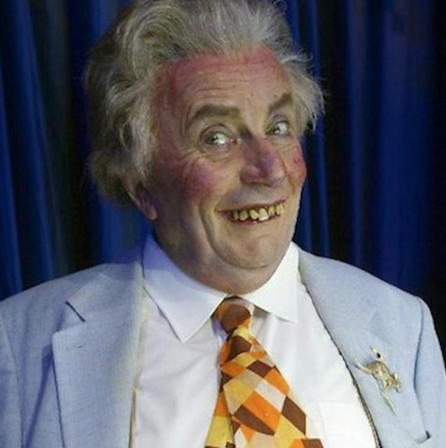
SIR LES Cultural attache and Minister for The Yartz.
SIR LES Cultural Attache and Minister for The Yartz.

A Writer’s first column.

WHEN Margo Kingston asked me to consider writing a regular arts column for No Fibs, I thought she was pulling my leg, simply because art and politics didn’t seem like a natural blend.

Aren’t artists a government’s greatest nightmare, grudgingly budgeted-for, the black sheep’s back on which Australia’s great nation couldn’t possibly be built?

The one time I was part of a policy discussion for a state election campaign, when we got around to considering the arts, someone reminded us of Sir Les Patterson, Cultural Attache and Minister for ‘The Yartz’.

We all had a laugh, and The Yartz got slotted under some other subheading, which is why I have come to the conclusion that the arts belongs on No Fibs somewhere between the black sheep and Sir Les. If you work out where that is, let me know.

Inspired by Margo, I’ve explored a 12-month plan of arty subject matter, and I’ll edit arts writing submitted by citizen journalists, which is what No Fibs is all about.

We’re calling the column ‘Creating Waves’, because we want it to push the envelope a bit, and I’m also looking forward to writing about the arts from an artist’s perspective.

I am an artist. There, I’ve said it. Roll the polemic, cue the manifesto.

Actually, this black sheep is not about to start bleating, he’s going to start dreaming. My only real beef is that artists have gotten into the habit of allowing others to speak for us, and in the social and new media, this stands to leave plenty of artists and their work behind.

“We are creating at a time when old media paradigms are shifting and reinventing themselves, which comes with plenty of economic pain and ego-bruising challenges.”

I have been a practising artist for three decades – an illustrator, designer, director, writer, producer, actor and now a journalist, because I believe there is an art to quality journalism.

Writing is probably my strongest suit, and it comes naturally, but for years I failed to get paid work as a writer. Waiting around led me into very strange country, primarily to shape corporate fantasies for big companies. Not art, not by a long shot.

In 2008, 21 years after I left a very expensive school which taught me little about being an artist, I finally learnt for myself that in order to be a writer, I just needed to start writing.

I figured that as an art form, writing was something nobody could stop me from doing. I just had to create great content. How it would get out there was a question I should no longer waste time answering. I had to trust that a pathway would become apparent as I was writing.

I started on a play and feature articles (some were picked-up by the mainstream print media), then added a novel to the mix, then another play, and landed a job as an editor required to write regular feature articles.

When that 2-year contract was not renewed due to a decline in advertising revenue, I started a blog, and committed to writing on it every week. The publish button has provided a great panacea for my need to be read, but I can’t help feeling there is a lot more to be had from online publishing.

We are creating at a time when old media paradigms are shifting and reinventing themselves, which comes with plenty of economic pain and ego-bruising challenges. Arts communities are making the same transitions, simply because audiences, readers and consumers are accessing art in an increasing number of platforms that traditional marketplaces cannot capitalise on unless they evolve.

When my first play went through the development process with a theatre company for more than three years, and it still didn’t make it onto the stage, I got frustrated enough to see if there was such a thing as YouTube for theatre.

Turns out there is, and it’s growing exponentially, using live streaming, a technique developed for corporate conferencing, but now distributing performing arts to the online community.

The real impact of this movement lies in the realisation that performing arts don’t need to be streamed from a traditional theatre venue.

Suddenly the world seemed a lot smaller; Australia’s theatre companies weren’t such powerful gatekeepers; the script-based content I’d been sweating over had a new platform; and an Australian playwright writing about foreign subject matter didn’t feel so isolated.

EBOOKS ANYONE? One of the greatest publishing revolutions.

Within a few short years, E-books have gone from an industry laughing-stock to a viable means of pursuing a career as a published author. While I edit my novel, the possibility of self-publishing hangs temptingly in my consciousness.

Not long after I started tweeting I stumbled into writing for No Fibs, which has shown what political writing can achieve in the hands of voters, not politicians and their mainstream media mouthpieces.

Now we have an opportunity to see what arts writing can achieve in the hands of artists.

I will be covering topics on all art forms – nothing is off the table. If you want to review plays, movies, exhibitions, or write about your own arts practice, check out the citizen journalism training drop-down menu for No Fibs submission guidelines, and please submit.

You’ll also need to be on Twitter, which is how you’ll contact me if you’ve written something you’d like No Fibs to consider publishing. Find me @burgewords

Arts practice, policy, access, and innovation are the main areas I’ll be covering.

Practice, because artists need to create art, no excuses (no fibs!).

Policy, to discover what the Abbott Government has in store for artists, since we designed the campaigns, but didn’t make it into any three-word slogans.

Access, because all artists want to be where the action is.

And innovation, because it’s already shaping the artists’ new world faster than you imagine.

This article first appeared in No Fibs.

© Michael Burge, all rights reserved.


Blue Movies

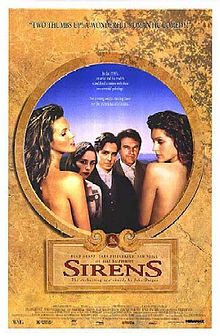
MAGIC MOUNTAINS Poster for John Duigan's feature film set it the Blue Mountains, Sirens
MAGIC MOUNTAINS Poster for John Duigan’s Sirens, a feature film set in the Blue Mountains, Australia.

A Writer’s fascination with a region’s cinematic heritage.

I lived in the Blue Mountains from late 1979 until late 2012, with stints of some years in Sydney and the United Kingdom.

Long before my family arrived there I knew of the region’s European cultural heritage – explorers, artists, and its use as the backdrop for film shoots.

Over the years I made a study of the many ways in which The Blue Mountains graced the big screen, and eventually published this feature in Blue Mountains Life magazine (Oct-Nov 2011).

Local Stars

The silver screen appearances of the Blue Mountains.

Since the advent of moving pictures, the natural beauty and evocative built environments of the Greater Blue Mountains have been captured in feature films. In the lead-up to the premiere of the latest locally shot feature film, Blue Mountains Life looks back at some of the filmmakers who have brought the area to the big screen.

January will see the international release of A Few Best Men, for which director Stephan Elliot (creator of Priscilla Queen of the Desert) has teamed-up with the producer and writer of Death at a Funeral for a Brit-Aussie comedy that promises to turn the traditional wedding on its head.

“Stephan was adamant that a perfect location could be found in the Blue Mountains, and we found it in Yester Grange,” Producer Antonia Barnard recalls.

“Period films in particular have been able to capitalise on the heritage feel of Mountains townships.”

Built as a private home c.1890 on a vast estate directly above the waterfall that lends it name to the township of Wentworth Falls, the view of the Jamison Valley from Yester Grange’s verandah probably ranks as one of the finest in Australia.

“Making A Few Best Men in the Blue Mountains was one of those great film experiences,” Barnard says. “The weather was perfect (if a little hot) for eleven straight days, which enabled us to achieve our wedding day as if it was all shot on one day.”

With a cast of emerging actors from Australia and Great Britain, A Few Best Men also features Olivia Newton-John and Jonathan Biggins as the bride’s parents, and will showcase the Blue Mountains before a new generation of international movie fans.

For the three decades since the resurgence of the Australian film industry in the 1970s this region has attracted location scouts. Period films in particular have been able to capitalize on the heritage feel of Mountains townships.

One-time Lawson resident Clytie Jessop’s Emma’s War (1986) is the semi-autobiographical story of a single mother (Lee Remick) who brings her young family (including Miranda Otto) out of Sydney during World War II. The casting of this coming-of-age story is notable as Remick’s final feature film role, and Otto’s screen debut. Terence Donovan, Mark Lee, and the late Dame Pat Evison also featured.

SWAN SONG Lee Remick's final screen appearance was in Emma's War, and Australian feature shot in the Blue Mountains.
SWAN SONG Lee Remick’s final screen appearance was in Emma’s War, an Australian feature shot in the Blue Mountains.

Filmed at Leura’s Everglades (which doubled as a Theosophists’ School), homes in Wentworth Falls and Katoomba, and the Megalong Valley, Emma’s War was Associate-Produced by long time Blue Mountains resident, award-winning filmmaker David Hannay.

Hannay’s film work in the Blue Mountains began after moving to the region in 1977, and a meeting with Scottish film director Bill Douglas at the 1979 San Remo Film Festival. “We became very close friends,” Hannay recalls, “and we created a film project to collaborate on.”

That collaboration was Comrades, based on the true story of the Tolpuddle Martyrs, a group of 19th century Dorset farm labourers who were transported to Australia after making a stand for fair wages, and ended-up creating Britain’s first trade union.

An epic story spanning Britain and Australia, the movie’s creation was a long-term and often complex venture. “It was essentially a British picture, so we needed a British Producer,” Hannay says, explaining how the search included location scouting in the Blue Mountains with Ismail Merchant (of Merchant Ivory Productions), whom Hannay recalls as the polar opposite of Bill Douglas in background and temperament.

The shoot for Emma’s War progressed in the Blue Mountains in 1984 while a more suitable producer for Comrades was found in the form of Simon Relph, “the pre-eminent British Film Producer of the time,” Hannay says.

The Australian location work for Douglas’ film was completed in 1985-6, using settings across NSW. Locally, the Grose Wilderness, the Megalong Valley, Hampton, and the creek at the top of Wentworth Falls were backdrops to the story of the Martyrs’ years within the penal system. The huge British and Australian cast included James Fox, Vanessa Redgrave, Robert Stephens, Arthur Dignam, Lynette Curran and John Hargeaves.

Comrades debuted at the 1986 BFI London Film Festival, where Douglas was awarded the Sutherland Trophy for the most original and imaginative feature of the year. It also screened in competition at the 1987 Berlin International Film Festival.

CELLULOID COMRADES Charles Hannah (Production Manager), Vanessa Redgrave and David Hannay (Associate Producer) on location in Hampton.

The enduring production force on Comrades was undoubtedly David Hannay, based on his conviction that the film could be completed as an international co-production, with the Blue Mountains as an integral location. “The region is just so accessible to Sydney,” Hannay says. “It’s the only city I know which is surrounded by a World Heritage National Park.”

On occasion, that accessibility has sparked controversy. In 2004 the Blue Mountains Conservation Society, the Colong Foundation, and environmental protesters successfully prevented the use of a location near Mount Hay (on the edge of the Grose Wilderness) for the production sci-fi action thriller Stealth. The NSW Land and Environment Court ruled that the planned shoot contravened the permitted use of a wilderness zone.

Predictions of a downturn in production companies using NSW for film locations were splashed throughout the media at the time. Despite these fears, in the seven years since the ruling, production companies have continued to film in the region (and indeed across the state), but the Stealth case has created an ‘environmental line’ which has so far not been crossed again.

The Blue Mountains is also home to movie fan and international critic David Stratton of the ABC’s At the Movies program. A former director of the Sydney Film Festival, Stratton is currently patron of the Blue Mountains Film Festival.

The region has hosted its own film festival in one form or another for the last decade, and the opportunity for local exhibition has encouraged a new generation of Mountains filmmakers. This year’s festival exhibited Last Ride, a feature directed by resident James Phillips. The story of a group of mountain bikers making their way through the Devil’s Wilderness, using accessible digital technology Phillips shot the film in one take from the point-of-view of the main character.

At the 2011 Australian International Movie Convention on the Gold Coast earlier this year, David Hannay caught an advance screening of A Few Best Men. In his opinion it was the “best received” movie by audiences of film exhibitors. “They just loved it,” he reports, “I think Stephan Elliot is really on form with this picture.”

Location Blue Mountains

1955 Jedda

Charles Chauvel’s last movie had an inadvertent need for a Blue Mountains location. This groundbreaking feature, the first Australian production to cast Aborginal actors in lead roles, was shot in the Northern Territory. When the last roll of film negatives was lost in a plane crash on its way to England for processing, Chauvel was forced to re-shoot close to the post-production office in Sydney. Magnificent Kanangra Walls was chosen as the backdrop for the dramatic ending of Jedda’s incredible journey.

BEYOND BLUE Mad Max encounters lost children in the Blue Mountains for his third instalment.

1985 Mad Max Beyond Thunderdome

The post-apocalyptic world of Mad Max continued to a third instalment with this movie, filmed in part at Mermaid’s Cave, just off the road to the Megalong Valley from Blackheath. Standing in for ‘Crack in the Earth’, the destination where Mad Max (Mel Gibson) encounters a group of orphaned children living in a desert oasis, Mermaid’s Cave is a classic Blue Mountains canyon with rainforest-like vegetation and a watercourse.

1993 Sirens

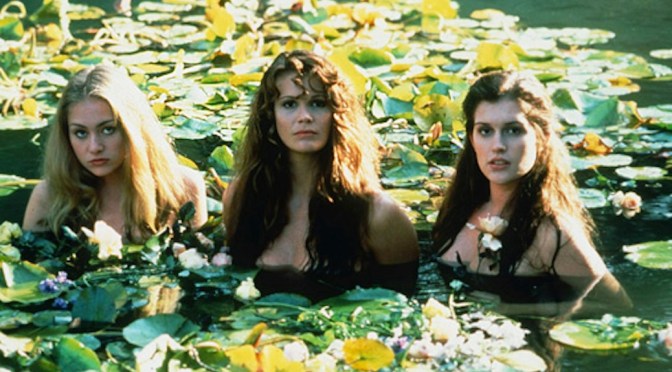
The controversial life and work of artist Norman Lindsay was the subject of John Duigan’s feature, filmed on location at the Lindsay’s home in Faulconbridge, now a National Trust property. Featuring Sam Neill and Pamela Rabe as Norman and Rose Lindsay, Sirens tells the whimsical tale of a straight-laced English pastor (Hugh Grant) and his wife (Tara Fitzgerald), drawn into the sexually liberated world of Lindsay and his models, played by Elle MacPherson, Kate Fischer and Portia de Rossi.

© Michael Burge, all rights reserved.