Category Archives: Books

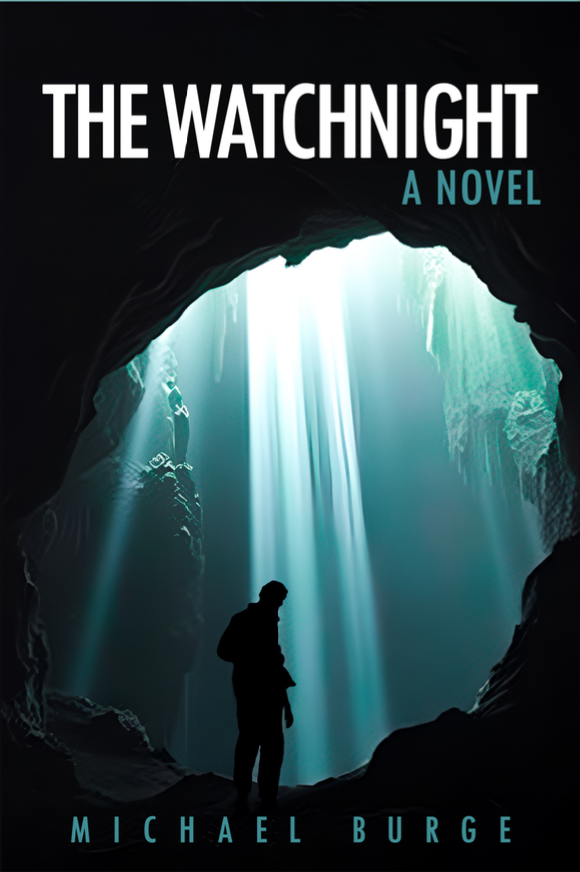
Shake the dread: a sample of The Watchnight

IN A REMOTE Methodist community of New South Wales in 1852, aspiring lay preacher Charles Muncey is tasked with recording the sins of every soul who signs up for a week-long revival.

He has plenty to work with. Pardoned convict Thomas Gunson knows the way through the wilderness and agrees to guide the faithful on a circuit of their struggling chapels, though he fears the company of people now that he’s out of his shackles. Irish emigre Oona Farry, recruited as a candlemaker, resents the devotion of the women during their ecstatic praising, convinced that God has abandoned her for her lustful secrets. Even righteous hosts Jacob and Anne Temple harbour transgressions they dare not voice.

But when Californian preacher Charisma Groom stirs up unbridled repentance during a watchnight on the edge of wild country, illicit sex and sudden death come to light. The congregation is ordered to hunt the devil through the ancient Fish River Caves, a dangerous underworld where raptures more powerful than faith are awakened.

With nothing but his fledgling moral compass, Muncey must see through blind faith to uncover which member of the flock is a callous killer.

This is a bold reimagining of the untold story of the Methodist settlers who colonised Australia’s renowned Jenolan Caves during the Frontier Wars.


The prologue of The Watchnight

Gunson thought about firing a potshot over the head of the kid who was dragging a pony up the spine of the treeless hogback, but there was no time to fish out his pistol. Besides, the white smears of the beast’s eyes told a story of near death. The lad must have forced his ride through the flooded gully below, and the way he aimed his own pale peepers right at the hut meant there was no hiding.

‘Creek up?’ Gunson shouted like a smartass.

The kid nodded between tight shoulders. ‘If you’re Thomas Gunson, I’m to go straight back to Mr. Temple with your answer,’ he said, holding out a damp envelope.

Judging by the dark sheen of his duds, the lad had worse weather at his heels. The last thing Gunson needed was someone stopping the night, but he lashed Lizzie’s reins to the post on the sheltered side of the hut, cranky that his mare would have to share the cramped space with a half-dead pony and shoved the door open.

‘Clothes over the chair,’ he said, throwing the lad a blanket and rattling up the fire inside the granite chimney.

Words on a page still dazzled him, so he poked the envelope onto a nail above the mantle, lit a candle in the iron cage hanging from the rafters, and threw bits and brats into the stew pot. By the time Gunson sat on the cot and peeled the letter open to see what his old master wanted of him, the kid had dozed off.

I hope this letter finds you home, friend, and not tempted to go digging for gold. We lost more souls to its baneful influence this spring, including a Reverend who preached his treachery to several stockmen and their women. All walked away from their places in our chapel, faces bereft of-

Jacob Temple had taught Gunson to read, and the memory of his old master’s turn of phrase usually helped unravel the scrawl that came off the ends of his preachy fingers, but the next word – a nest of curls and loops – stumped the pupil.

‘Speak this for me,’ Gunson said, loud enough to rouse the boy.

The lad squinted while sounding it out with chirps and hisses. ‘Ek-stay-see,’ he said.

‘Ecstasy!’ Gunson said, whipping the page back. ‘What does it mean?’

Faces bereft of ecstasy yet full of shameful greed.

‘Go back to sleep,’ Gunson said, recalling the mask of joy that Temple and his faithful wore. If yet another preacher had the sense to run off to the goldfields, good luck to him.

Our Savior replaced them with a young tutor from Cambridge, whose soul I saved on the banks of the Turon. He will make an excellent lay preacher, and is bringing his intended bride from Sydney this week. In addition, a devout widow straight off the boat from Ireland with a marriageable daughter and a lad fit for mustering.

More Irish living on Temple’s overpriced land because they’d fled the famine. Gunson felt for them, because soon enough they’d be indebted beyond their wildest dreams.

We want you back to guide the faithful of Fish River on a Circuit of our chapels. The Reverend Charisma Groom of California has disembarked in Sydney and is mak- ing his way here to lead our Revival. We would count your attendance on the first Friday of summer as a contribution to your capital for the land, and put you well ahead on your loan.

Gunson reached for the tin under the cot, knocked the lid off and sifted through the tobacco left from this month’s supply, adding up the days on dusty fingers. With a groan he calculated that he was expected in under a week.

Temple prided himself about walking his country, which was all very well along the well-trodden trail from Templevale to Cave Hill, but the way on to the chapel at Hampton was along steep-sided waterways that the men of the Burra Burra mob had shown Gunson years ago. Although he would never say it, Temple feared that route because it was not part of his kingdom.

Gunson had no grounds for refusal, not if he wanted peace in his new place.

It wasn’t the idea of guiding a party that left him feeling dead in his own skin, it was bitter experience that told him whenever the Bible thumpers from Fish River ventured beyond Cave Hill, at least one would lose their way in the dark. Temple’s new tutor, fresh Irish, and an American preacher sounded just like the type to tumble down a very deep hole.

Gunson held the letter up to the light for another look at the name of this Reverend.

Charisma.

He tried speaking it out but gave up after hearing the noises coming off his tongue. The lad had pulled his feet under the blanket and the fire was begging for a log. Hooves scraped under the belting gusts outside. Lizzie would have her head down against the door and be mostly out of the rain, the pony trying to keep behind her.

It was still early. Hours of night lay ahead. He’d eat, wake the lad and make him shove down a mouthful to warm his guts, then push him into the cot.

After struggling to rest while the candle burned, Gunson woke with a jolt, dazzlers at the edges of his sight, wondering where the fuck he was. Gaol? Ship? Cave? Harriet Dacre had been in his trance again, yammering about what he’d done to her. If it weren’t for the lad calling out to calm his shouting at the old bird, Gunson might have clawed through the rock wall for a glimpse of light.

Then he remembered: Temple wanted him back to lead lost souls through the wild country. It would be Gunson’s first time in a company of people since he’d become a free man. The rain had let up, but the gale seemed to bounce off his skull. Splinters slid under his nails as he grappled with the arms of the chair, trying to shake the dread.

© Michael Burge, all rights reserved.

Get in early for The Watchnight

HISTRIA FICTION., an imprint of Histria Books (US) has acquired global rights for The Watchnight, my second novel.

Described as a Gothic western, The Watchnight is a bold reimagining of the Methodist settlers who colonised Australia’s renowned Jenolan Caves during the Frontier Wars.

Three lost souls – an Irish settler, a pardoned convict, and a young tutor are recruited by a religious mission during Australia’s gold rush and get caught up in a wild ride of intrigue and murder in a brutal landscape.

Acquisitions manager Dana Ungureanu said the Histria Books team is always excited to find new stories that have not saturated the market. 

“That is the case with The Watchnight, an historical tale exploring places and themes that will be new for much of the world,” she said.

“Michael Burge blended crime, history, and religion into a page-turner, and we’re very glad to work with him to bring this book to our US and international readers.”

Early endorsements for The Watchnight have been effusive.

Poppy Gee, author of Bay of Fires and Vanishing Falls, said, “The Watchnight is a deeply empathetic literary thriller that explores the complexities of human relationships. Subtle, satisfying  and gorgeously atmospheric.”

“Pitch perfect,” said Suzanne Leal, author of The Deceptions and The Watchful Wife. “Written in prose that is at once forensic, visceral and lyrical, The Watchnight is a compelling mystery, a sharp character study and an ode to the land amidst the brutality of colonial NSW. I loved it.”

Thousands of Steps

Before settling on Ngarrabul Country at Deepwater in far northern inland New South Wales, I was a resident of the Blue Mountains for over three decades. This World Heritage site is the location of Jenolan Caves, where I worked as a tour guide from 2008-2012.

STORYTELLING STEPS: Author Michael Burge by Max S. Harding

This novel is a new direction for me, after the publication of Tank Water (MidnightSun Publishing, 2021), a work of contemporary rural noir exploring homophobia in a country town.

The Watchnight is a work of fiction that took years to shape from the thousands of steps I took through Jenolan’s caverns.

Inspired by real people and events, it cuts through 150 years of tourist tales to recreate a time when the caves sat on the colonial frontier, a place settlers viewed with suspicion, not wonder. 

What drove me were the stories few wanted to talk about, particularly the lives of Jenolan Caves’ traditional owners, the Burra Burra clan group of the Gundungurra people; the cattle farmers who gradually occupied the same countryside; the Wesleyan Methodist community of the nearby region once known as Fish River Creek, now Oberon, and the role of women in early cave exploration.

It has been a privilege to work with Gundungurra Traditional Owner Kazan Brown, who assisted me in depicting Indigenous characters in a way that respects Burra Burra history, place and cultural practice within the settings of this novel.

Tenderly Imagined

Like my debut novel, I created The Watchnight as a crime story that explores diverse themes in a dramatic context. In the case of Tank Water, that was the gay-hate crime wave of 1970-2010.

For The Watchnight, I set the story against the backdrop of Australia’s 19th century Frontier Wars, and included an unexpected love story between two central characters.

“Their connection is tenderly imagined, and I was utterly invested,” Poppy Gee said of this thread.

“Themes of LGBTIQA+ empowerment are not frequently portrayed in Australian literature of this era, and their relationship is delightful and heart wrenching,” she said.

The Watchnight is set for a September 2025 release.

New novel coming to light

ONE OF THE best day jobs I ever had was working as a tour guide at Jenolan Caves, the renowned limestone formation in the World Heritage-listed Greater Blue Mountains region of New South Wales, Australia.

Sixteen years since I earned my guiding boots, I’ve landed an international book deal for a novel that emerged from the thousands of steps I took through the tunnels and chambers of the oldest-known open cave system in the world.

Titled The Watchnight, this historical crime novel is inspired by real people and events and cuts through 150 years of tourist tales to recreate a time when the caves sat on the colonial frontier, a place settlers viewed with suspicion, not wonder. 

Extrapolating a story from this intriguing place has been a long-term challenge. When I trained as a guide in late 2008, there was little written material on hand for new recruits. I was left, like many before me, to glean the stories of the caves from my more experienced peers in the guides’ office.

CAVE FRONTIER Devil’s Coach-house, Fish River Caves, by Lucien Henry, 1883 (Art Gallery of NSW)

What drove me were the stories few wanted to talk about, particularly the lives of Jenolan Caves’ traditional owners, the Burra Burra clan group of the Gundungurra people; the cattle farmers who gradually occupied the same countryside; the Wesleyan Methodist community of the nearby region once known as Fish River Creek, now Oberon, and the role of women in early cave exploration.

Crime was never far from the colonial experience of this region. The massacres and random killings of Aboriginal people and reprisals against settlers, now referred to as Australia’s Frontier Wars, included widespread violence against women, both Indigenous and settlers. The occupation of the land was not possible without the importation of convicts to build roads and towns, a mounted police force to impose British law, and Christian missionaries to impose ethical standards.

It’s from within this volatile battleground that The Watchnight emerged.

Cave Girls

I undertook years of research as The Watchnight came together, and wrote a few articles along the way about my explorations into Jenolan’s past. The first saw me capture the many tales about a young cave explorer called Katie Webb (and her gang of ‘Cave Girls’), whose discovery of a chamber in the Chifley Cave in the 1880s has long been a source of speculation.

A never-before-published collection of letters by English crime writer Agatha Christie was a source of great delight when it appeared in 2013, since it detailed her visit to Jenolan in the 1920s. I published an article about the links between her world tour with husband Archie, their slightly fraught jaunt to Jenolan Caves, and her notorious 11-day disappearance in 1926 back in England.

My guiding days ended in 2012 when I moved interstate, but I was lucky enough to return in 2017 for a private tour of the Arch Cave with a former colleague, in search of historical signatures, including one of early female cave explorer Jane Falls.

The Watchnight’s heroine Oona Farry is inspired by Jane’s explorations, and those of other real-life figures in Jenolan’s history.

BUY

This story is unique because it explores crime, punishment and forgiveness in the context of charismatic faith; tackles stories of the Frontier Wars that don’t often get aired in fiction, particularly toxic masculinity, and emphasises female, LGBTIQ+ and Indigenous empowerment at a time when they were not afforded much agency.