
Category Archives: Day Jobs

An angel in a London rubbish skip

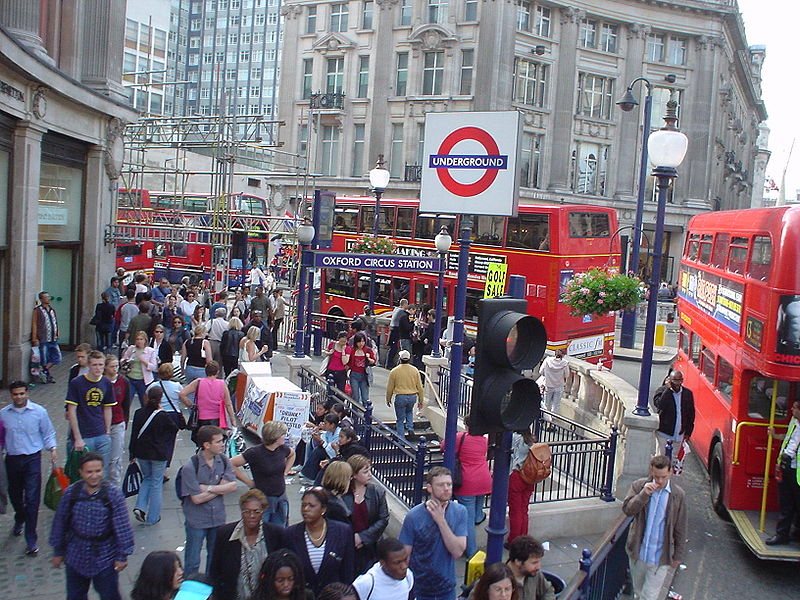
LONDON CALLING Commuting in Britain’s largest city has always been a challenging experience.

A Writer’s next day job.

SINCE I’d gotten to England on a one way ticket, once drama school came to an end I decided to try my luck in the entertainment industry over there.

Exactly where and how that industry operated remained a complete mystery while I polished my skills in the Yorkshire flatlands.

But with the last of the funds raised to send me to college in the UK, I boarded a train from York and headed south to London, home of the West End, Pinewood Studios, and the BBC.

Like thousands of others I tried to make my way through the front door of any number of institutions offering cadetships and assistance programs for graduates by dreaming-up fabulous ideas for TV shows and trying to encapsulate my potential on paper in the long-winded applications.

But none of these doors opened for me.

One door that did was that of the flat of an Australian friend who allowed me to sleep on her floor for a couple of weeks.

One of my grandfathers, Stanley Hamill Crawford (whom I never knew), was born in London, a quirk of ancestry which allowed me to stay in the UK indefinitely and work without a visa. But the paperwork took a few weeks to arrange via New Zealand (where Stanley’s only daughter, my mother Pat, was born), and I needed an income, so I just started working illegally.

Another friend got me onto the list at her temp agency, and being their only male client I was immediately employed by a major book publisher in Hammersmith to push the mail trolley across eight floors for a three-week stint.

So, in the early days of my first London Spring I joined the crowds on the Tube, minding the gap, rolling my eyes at the constant announcements of apology for late trains, and succumbing to the near silent buffering that is London commuting.

I missed most of the romance the city had to offer in the process.

In the mail room I spent my mornings sorting packages and committing their recipient’s names and office locations to memory – I still recall these names, because they seemed so literary and important.

Then, for the rest of the day, I delivered the packages, on occasion meeting the recipients – generally curt literary mavens.

Breaks were spent outside by a line of rubbish skips, and on day one I noticed the contents consisted solely of countless brand new books.

Since no-one really cared I explored the skips at great length, creating quite a collection of perfectly good editions of some of the greatest books of the year, and a wealth of 20th century classics.

Intrigued as to the reason for the abundance of free books, I asked if they were perhaps uncorrected proofs or remaindered mis-prints? Apparently not – they were just surplus to the needs of the company.

I was a boy whose only surviving grandfather had instilled in me a sense of adventure when it came to inspecting rubbish tips. Grandpa had worked his way into an old one down the hill from my Grandparent’s house in Inverell, and would often take me down to stand at the edge and catch any treasures he fished-out from underneath.

It was like a goldmine – antique hurricane lamps, china plates, enamel ware, and an assortment of vintage items came out of that tip. The deeper Grandpa got, the older and more interesting the treasures he unearthed.

ANTIPODEAN ANGEL Janet Frame in post-WW2 London.

So it was retired farmer and gentle man Gordon Burge who inspired me the day when I discovered about fifty copies of Janet Frame’s autobiography An Angel at my Table in the publisher’s skip during my last week.

One copy would do me – Frame’s account of her early life included an apt section about her first encounter with London, and I took a lot of heart from her survival of the strangeness of the city when one is used to the elemental expanses of the Antipodes.

It took travelling to London to learn what that term actually means – the diametric opposite of wherever you are on Earth. It has a deeper meaning in the UK, because growing-up on the other side of the world makes you different, apparently. You’ll have to ask the Brits why they call those of us from Australia and New Zealand ‘Antipodeans’, often with a ‘certain air’.

The rest of Janet’s autobiographies I decided to do something about, and, with my rose-coloured glasses firmly in place, I took them to one of the large Charing Cross Road bargain bookstores on my way home that evening, thinking that Helene Hanff would be proud of me for some kind of book-trade continuum.

The shop owner was very dubious. He inspected my booty and flicked through a few pages, marvelling that they were indeed brand new and perfectly saleable, but he would not take them off my hands, even for free.

Feeling slightly silly for trying to facilitate an act of recycling, I left them under one of the tables out the front of the shop.

Maybe he’d notice them and would just sell them? No-one would be the wiser – not the publisher, not the customers, not Janet Frame.

I never found out. My work permit came through and I ventured deeper into the West End with a resume under my arm, hoping, like Janet Frame and Helene Hanff before me, that somewhere in that romantic place a door would open on my dreams.

© Michael Burge, all rights reserved.
Overdosing on community spirit

WHERE NOW? Life after the death of a loved one does not always go as planned.

A Writer’s send-off.

THE morning of Mum’s death dawned like a new world, or at least a world in which the gloss that Pat Burge put on things was now gone.

Our home, which had been a hospice bustling with carers and visitors, became, almost overnight, a wasteland. Jen and I now lived in a museum, dedicated to our Mother.

It was to be open barely three months – I was booked on a flight to England to take up my one-year directing course, and Jen was to move around the corner to live with friends who’d generously agreed to Mum’s request to accommodate her.

The night before her funeral, one of our school teachers telephoned, as the light of the day was disappearing. Shocked that Jen and I were home alone, he decided to come over, indignant that we were facing that evening by ourselves. It was a generous action of support that prefaced a series of shocks that the world now held for us.

Because the gloss that Mum put on things had softened the realities of money and the shortcomings of people, and it was fading fast.

Money hit me across the face when I went to the school which had been an integral part of our lives for a decade, to get Mum’s funeral program photocopied. Naively, I didn’t ask anyone’s permission, and subsequently got the kind man who completed the job for us in trouble.

Remembering Mum’s upfront approach, I duly arrived at the Bursar’s office to ensure that the photocopying staff member was only acting on my request. Perhaps this man didn’t realise the hundreds of voluntary hours Pat Burge had given to the school?

With an awkward curtness, he informed me that the copying would have to be paid for. I looked him in the eye, and said: “Fine … send me the bill,” before politely excusing myself. It never came.

It is understandable that people rarely know what to do for the grieving, but amongst our community there were a few risk-takers who broke through their own grief to help us.

Sometimes it’s just the small things – the couple who told me to call, even in the small hours of the morning, if we needed them, and who arrived within 15 minutes when we did; the friend who sat with us and folded those funeral programs, not trying to ‘fix’ anything, but joining us in our quiet grief; and the florist who created glorious bouquets for Mum’s funeral at cost.

A common theme emerged amongst those that went into action for us – these were people who’d been touched by death and loss, and understood that there was almost nothing to say, but plenty to be done.

Another family friend really pulled out the stops for me in particular. Knowing that I didn’t really have enough money to get through the whole year of my course, since I’d been running our ‘home hospice’ for two months and not been able to work, Mary rallied our community to a fundraiser.

DINNER THEATRE The Clarendon Guest House Katoomba, donated for one night to raise funds for a local theatre practitioner.

Our local dinner theatre hosted the event, local chefs fed everyone sumptuously, and almost 100 people came along for a night to raise money for me.

It was quite overwhelming for a young man who really knew himself very little, and who still avoided the spotlight if he could. The issue of having enough money had been a burning little secret for me. The course notes underlined that nobody was going to have time to work during the year – it was going to be intensive.

My community certainly ensured I didn’t have to work for money that year. They gave me the chance to tilt at a dream, and I became determined to eventually find a way to pay them back for their generosity.

But the event also gave people a focus for their grief at losing one of their foundations. I recognised this right in the midst of proceedings, as a ‘celebrity auction’ added to the funds raised – people were having fun, letting off steam, and sending off one of their own in the best way they knew how.

Considering the way that year went, for Jen in particular, I would have given all the money back in exchange for just staying at home and keeping the home fires burning for another 12 months. I think we all needed that.

But things didn’t go that way. I packed-away the museum and said my goodbyes, staving off the inevitable moment when Jen was moved out of her home.

Turns out Mum had asked some of her friends to ensure I got on the plane, so I was assisted in leaving my sister in the hands of our community, and used my one way ticket to London. Our family was scattered to the four winds across two hemispheres. Nobody discussed how any of us were going to cope, we just went through with it.

On the other side of the departure gate, a wall of loneliness hit me. The numbing reality of being on my own, really on my own, for the first time ever.

© Michael Burge, all rights reserved.

Drama School Dream Factory – Act 2

HIGH STAKES DRAMA Thalia Theatre Hamburg’s production of Woyzeck.

A Writer’s first lesson in high stakes.

WHILE reading the paper one morning in a cafe during the summer break, I took-in a story about how the city’s best and brightest theatre professionals were being cut down by AIDS. One of the names was John, my NIDA design classmate.

I knew John sometimes struggled to keep up with the physical work, but I’d seen him only weeks before his death made the news, looking well, to all intents and purposes.

Back at NIDA, nobody seemed willing to talk about his death.

The start of my second year saw me in the most receptive space I was ever in while a student. We had a few weeks with industry designers Tom Lingwood and Kym Carpenter, workshopping designs for inspiring plays like Georg Büchner’s Woyzeck, and the Greek tragedy Oedipus.

I moved-in with other students, got myself a job at a local cafe (check out my day job in A Waiter’s Revenge Tragedy), and wasn’t such a slave to commuting as I’d been the previous year.

As a result of a little stability, my design skills began to flourish, and I found there was space to actually learn, from experts, how effective designs were executed. I felt stretched, challenged, and supported. Overcoming a few ‘mistakes’ was considered part of the learning process.

But design theory is one thing. Executing those designs on a living, breathing production is an entirely different process. The year’s idyllic start took a very different turn when the stakes started to get higher, and designers-in-training had to start proving our mettle.

As a direct result, a sense of competition began to creep its way into our classroom.

There were two schools of thought in our year. The first was heady, resisted limitations, aimed very, very high and was quite self-serving. The second was more rational, understood creative restrictions, was very grounded, but just a little puritanical.

I never saw myself as the champion of either of these energies, just a necessary participant in both. But battle lines had been set, and lasted until we all graduated, which actually we nearly didn’t, since every one of us was threatened with expulsion if we didn’t find a way to work together harmoniously.

Whether NIDA’s production schedule could have continued without an entire year of design students was dubious, but it was a timely real-world reminder to ‘keep the drama onstage’, as they say.

What was less clear (although this incident tells me it should have been startlingly obvious), was that the trainers at NIDA had a sharp eye on second year students in all disciplines, analysing who had the potential (in their view) to make good in a challenging industry, and who didn’t. The knives were out.

In the middle of this, my mother was having tests for some health problems. She laughed off the constant ambiguous results, was booked in for exploratory surgery, and on the afternoon her three children arrived simultaneously for a visit, she told us all she’d had a huge amount of cancer removed, with part of her bowel, one kidney and both ovaries.

GEEK’S TRAGEDY (L-R) Susan Prior, Annie Burbrook & Emily Russell in Rachel Landers’ production of Antigone, NIDA 1990 (Photo by Marco Bok).

The reality of this situation had no place in the ‘dream factory’ of NIDA. I think mum knew that – she was a keen supporter of the place, donating her original 1970s clothing to the wardrobe department for an Alan Ayckbourn play, and assisting me in scenic painting during an open day. She eschewed chemotherapy, and, as her children’s lives progressed in new directions, to all intents and purposes, nobody was sick.

But my attention was permanently split, from exactly half way through my course. When some of my classmates whined about their difficult personal lives, I wanted to shout at them to just get on with things … at least nobody had cancer.

I completed that year at NIDA designing a student director’s production of Antigone, Sophocles’ tale of a daughter for whom life’s stakes got very high indeed.

Hanging out at student parties, trying to find some way to fit in, still deeply closeted in a gay-friendly environment, I became the kind of person who got very angry if  anyone started to ask me the ‘wrong’ kind of questions.

The bad news about my family, and the stark realities about making a career in the theatre, had settled into my consciousness, just slightly beneath the surface.

Life was getting very ‘high stakes’, but the final act was yet to be played …

© Michael Burge, all rights reserved.