Category Archives: Performers

Melba’s garden, at last

Caption caption.
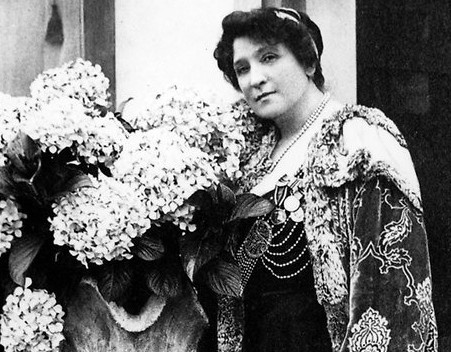
DAFFODIL DAME Nellie Melba (1861-1931).

A Writer hunts for daffodils at a diva’s estate.

I’M following my nose to Nellie Melba’s garden, a journey I have waited twenty-five years to take, now that Coombe, the Melba Estate – once known simply as Coombe Cottage – is open to the public.

Much has been made of what stood behind the tantalisingly thick, high cypress hedge that has enwrapped the property ever since it was purchased by Melba in 1909 and transformed from a dairy farm into a spreading garden by Victoria’s great garden designer William Guilfoyle.

The need for a significant boundary has become obvious over time, since it now shields the house and garden from two highways that meet at one corner of the sizeable estate, situated outside the township of Lilydale to Melbourne’s north-east.
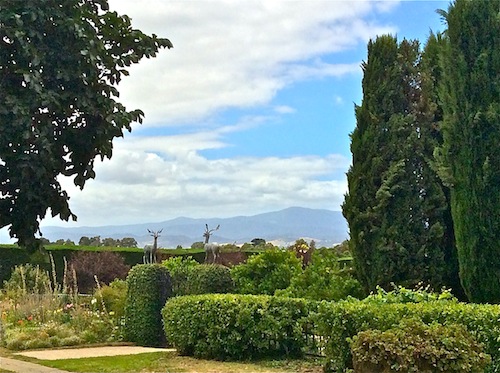
VALLEY VIEW The magnificent outlook from Melba's garden.
VALLEY VIEW The magnificent outlook from Melba’s garden.

From the car park, visitors enter Melba’s world through this green barrier, and throughout the twice-daily garden tours, it’s impossible to escape the concept of seclusion created by the woman who was, in her time, the world’s most famous.

For her entire life, Melba was inspired to deep patriotism by the distant blue hills glimpsed from the Coldstream region at the city’s edge, and despite its height the hedge offsets a panorama which much rank amongst the finest rural views from an Australian garden.

Although I have come in search of something I know I will not see that day.

By late summer, most signs of daffodils have withered and dried into something akin to straw, but in late 1911 or early 1912, 20,000 hybridised ‘G.S. Titheradge’ daffodil bulbs were given to Melba for her burgeoning new garden by a NSW daffodil farmer with a love of opera.

At a private estate – Coorah – some 900 kilometres to the north in the Blue Mountains town of Wentworth Falls, Melba gave an impromptu private performance and was offered this unconventional floral gift in return.

As the local legend goes, what caught the soprano’s eye were the thousands of golden Narcissus blooms growing across the hillside to the north of the house belonging to Robert and Marie Pitt, among the guarantors of Melba’s grand opera tour of Sydney and Melbourne that spring and summer.

It’s not just the Coombe Estate wine tasting I’ve just enjoyed that’s left me feeling a little heady – I have been tracing the veracity of that legend ever since I was told it in 1989, and my dream of standing in the place where Pitt’s bulbs may once have bloomed has finally manifested.

In 1993 I told the story to Melba’s grand-daughter Pamela, Lady Vestey, Coombe Cottage’s resident from the 1970s until her death in 2011. Her reply was polite but assertive – as far as she knew, there were no such daffodils in her garden, and she suggested the whole thing was probably nothing more than a myth.

She was right – it sounded far-fetched, but by the time the Royal Horticultural Society library in London yielded a primary source for the despatch of 20,000 bulbs from Wentworth Falls to Lilydale prior to 1914, this burgeoning journalist didn’t feel up to contradicting her.

But it is Lady Vestey I am thinking of as I pass through the garden’s heavy iron gates, with their ornate ‘M’ initial, when I realise how much has changed in the grounds of Coombe Cottage over its first century, and what a challenge ownership of such an iconic property must have been.

Guilfoyle’s major plantings are still intact, but some of the design elements that linked the house and garden – such as the wisteria-covered rooftop pergola – are long gone.

Tour guide Di Logg outlines what has been gleaned in the process of opening the estate, the establishment of a restaurant and a winemaking operation, and explains that there are renovation plans in the pipeline.

“We are hoping one day to reinstate it,” she says of the rooftop garden, from which the views of the valley must have been even better than they are from ground level.

Despite the open manner in which the garden is now being shared with visitors, its secrets seem subsumed by the understandable focus on the preservation of the house and its contents as opposed to the paradise that lay around it.

Of Melba’s bedroom, positioned to take in the expansive mountain view, Di says: “Pamela left it as though her grannie, as she used to call her, had just walked out the door, her Hermès riding boots still in the wardrobe.”
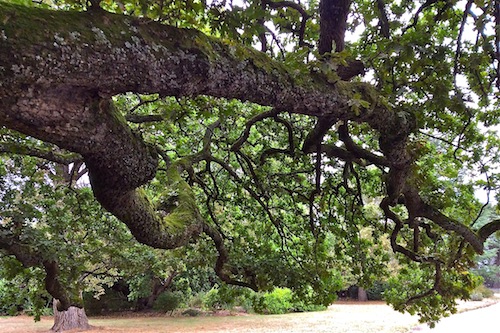
SACRED OAK The spreading tree which has stood on the estate for a reported 180 years.

But the garden was not left to its own devices. Di relates the story of one of the property’s icons – the 180-year-old oak which predated Melba’s purchase – which Lady Vestey apparently always said must stand even if it ends up knocking over the house.

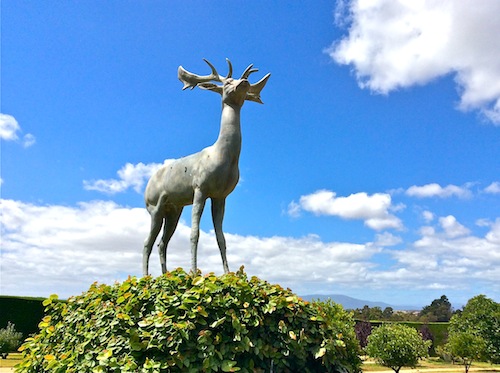
Other structural garden elements – Victoria’s first swimming pool, iron gateways and ornamental focal points – are all still there and form the backbone of the generous garden tour.

The rest is in the process of being recovered from contemporary paintings (by the likes of Hans Heysen and Arthur Streeton) under the guidance of estate manager Dan Johnson and a combination of family and local memories, including a rose garden and the restored vegetable growing operation which complements the supply of fresh produce to the restaurant.

Hearing Di’s account of the clay soil around Coombe Cottage sets off my ‘daffodil radar’.

Robert Pitt transformed his scrubby hillside of sandy soils with manure and organic matter in the 1890s at Wentworth Falls. He also regularly ‘lifted’ his bulbs – the process of unearthing them after the flowers and leaves had died back and resting them in well-ventilated conditions until replanting in the autumn.

FLORAL FAVOURITE The daffodil has become one of the world's best loved cut flowers (Narcissus pseudonarcissus and Narcissus poeticus, gouache on vellum, in: Gottorfer Codex c.1659).
FLORAL FAVOURITE The daffodil has become one of the world’s best-loved cut flowers.

These farming techniques saw his Narcissus bulbs endure in abundance until long after his death in 1935, until they were eventually moved in the mid 1980s.

I ask gardener and writer Mary Moody about her knowledge of bulbs and clay.

“Bulbs – of all sorts – dislike clay soil because during the dormant period, if there are long rainy periods, the bulbs can easily rot,” she says.

“The reason for lifting bulbs is to thin them out when they self propagate. The bulbs overcrowd and flowering is reduced. This is unlikely to happen in clay soil because the bulbs will be struggling just to hold their own.

“That said, daffs are very tough and if there has been organic matter in the soil they will survive somehow.”
SSS
STATELY STATUARY Melba’s garden is punctuated by several iconic focal points.

Coombe Cottage garden tours end with a delicious afternoon or morning tea in the Melba Estate’s well patronised restaurant, and before I leave I promise to send Di a link to the story of Melba’s 20,000-bulb gift. She in turn commits to sending it on to Dan.

By the time I get home, Dan has recalled what a major part the Narcissus played at the funeral of Lady Vestey during peak daffodil season in September, 2011.

“We filled the small church and house here at Coombe with hundreds of bunches of daffodils, Lady Vestey’s favourite flower,” he said.

Like daffodils, this story is pushing its way to the surface in its own time.

© Michael Burge, all rights reserved. 

Carbon Cate’s direct action on the cultural cringe

HEDDING OVERSEAS Hugo Weaving and Cate Blanchett in STC's Hedda Gabler.
HEDDING OVERSEAS Hugo Weaving and Cate Blanchett in STC’s Hedda Gabler.

WITH a second Academy Award under her belt, Australian-born actress Cate Blanchett joined an international cultural elite, and it was fascinating to watch the response of the Australian media to her accolade.

This was particularly true of News Corporation, which dubbed her ‘Carbon Cate’ when she joined a 2011 advertising campaign encouraging Australians to understand the benefits of the Labor government’s Carbon Tax.

But by the day of the Oscar ceremony, The Daily Telegraph had reverted to calling Blanchett “Our Cate”.

Within minutes of her award, tall poppy syndrome had kicked-in, and News Corp’s news.com.au was questioning Blanchett’s contributions to the Australian film industry over the past decade.

The day after her historic win, which marked the first time an Australian actor won two Oscars, they buried Carbon Cate in the entertainment news, which is probably where they believe she belongs.

“It seems the cultural cringe is still alive and well in Australia.”

In case we need a reminder, ‘cultural cringe’ is the tendency of a colony to question the relevance of its artists against its ‘motherland’. It’s a kind of inferiority complex, if you like.

But this anti-intellectual process doesn’t only apply to the Arts.

When Barnaby Joyce leapt onto the ‘Carbon Cate’ bandwagon, he was taking a dig at someone he accused of being out of touch with economic realities.

He also had an agenda, which was not just anti-Cate, it was anti-science, and he probably knew very well that coining an alliterative derogatory term for his target would be highly effective.

So, it’s time for a reminder on the facts about Blanchett’s commitment to Australian industries and solutions to climate change.

Cate Blanchett is a local, who has lived with her family in the Sydney suburb of Hunters Hill for almost a decade.

In 2013 she ended a six-year stint as to co-artistic director of the Sydney Theatre Company (STC), work she admits put a dent in the time she could commit to an international film career, yet led to a golden era in Australian theatre exports.

Yes, that’s correct: Australian theatre, exported.

Despite the level of Australian Government funding for National Institute of Dramatic Art (NIDA) and Australian Film, Television and Radio School (AFTRS) students, the local film, television and theatre industries they graduate into would not stand comparison with the reach and profitability of any other similarly funded Australian industry.

Australian theatre particularly does not even register against our worst-faring industries, such as agriculture and manufacturing. A decade ago, NIDA graduate and Australian actor Jeremy Sims quite rightly described our theatre industry as a “cottage industry”.

Before Cate Blanchett played the title role in Hedda Gabler for STC in 2004, Australian international theatre tours were few and far between. But in 2006, STC took the production to New York, where it played at the Brooklyn Academy of Music to a limited but sold-out season. It was not quite a Broadway experience for the company, but the touring cast and key creative crew were Australian.

The experiment was repeated and expanded with STC productions of A Streetcar Named Desire and Uncle Vanya touring to NYC and Washington; and Gross und Klein, which toured to France, Germany and the United Kingdom.

Like all good international trade, the experiment was a two-way street, including collaborations with America’s Artists Repertory Theatre, and international artist imports, including Philip Seymour Hoffman, William Hurt, and Isabelle Huppert, to work alongside local creatives.

With Blanchett’s star power attached, local and international sponsorship was attracted to match government funding.

Consequently hundreds of Australian theatre practitioners were employed in a viable industry which did more than break even, it made money.

And Blanchett was smart and generous enough to include Sydney Theatre Company in her Oscar acceptance speech this year, in front of one of the world’s largest live audiences.

It was a form of product placement which every fledging industry needs, and there was absolutely no inferiority about Blanchett’s description of STC as, “one of the great theatre companies in the world.”

AUSTRALIAN MAID Isabelle Huppert and Cate Blanchett in STC's The Maids.
AUSTRALIAN MAID Isabelle Huppert and Cate Blanchett in STC’s The Maids.

When STC’s production of The Maids, starring Blanchett and Isabelle Huppert, opened at New York’s Lincoln Center last August, the experiment moved from its start at the fringe of one of the largest theatre industries in the world, right to its heart.

Created in Sydney, and sold to the world, Australian theatre has never experienced such exposure, and it’s already had an effect on other Australian theatre companies, with the Melbourne Theatre Company (MTC) matching STC’s international touring record with something of a coup.

Instead of touring in an American or European classic, the way STC has done, MTC showcased an original Australian play – David Williamson’s Rupert – a bio about News Corp boss Rupert Murdoch.

CREATING A STIR Cate Blanchett in the controversial 2011 Carbon Tax ad campaign.

Which brings us neatly back to Carbon Cate’s record of direct action on climate change.

In 2010, Blanchett and Andrew Upton, her co-artistic director and husband, oversaw the conversion of STC’s power supply to solar.

By the time they flicked the symbolic switch, which would light the company stages with energy from the sun, Blanchett’s appearance in the “Say ‘Yes’ to the Carbon Tax” commercial was still months away.

Her appearance in the commercial has undoubtedly been blown out of proportion over time. Michael Caton (who could easily have been dubbed ‘Carbon Caton’ but missed out on any ire from the Coalition) took the main role.

Blanchett was the last of the actors to appear, and her only line was simply: “And finally, doing something about climate change.”

In the light of STC’s conversion to solar, at the time one of this country’s largest solar capture operations, and the steps she and Upton had taken to ‘green’ their own home, Blanchett had earned the right to claim to have done something about climate change.

PLUCK COVER copyThe irony is, her actions were as close to the Coalition’s ‘direct action’ as it gets, which only proves that many in Australia are not ready for an artist to show the way, even one at the top of her game internationally, with her feet, and her creative heart, firmly planted in home soil.

© Michael Burge, all rights reserved.

This article appears in Michael’s eBook Pluck: Exploits of the single-minded

Touring with Vivien Leigh’s black dog

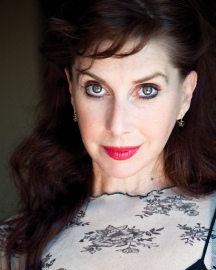
LINDEMAN’S LEIGH Australian actress Susie Lindeman as Vivien Leigh in ‘Letter to Larry’.

A Writer’s review.

BRITISH actress Vivien Leigh (1913-1967) may have felt rather independent when she toured to Australia in 1961 with the Old Vic theatre company.

Divorce from Sir Laurence (‘Larry’) Olivier the year before had seen her separated from the theatrical powerhouse she was one half of – the international stage and screen duo known as ‘The Oliviers’.

Australian actress Susie Lindeman recently returned home with her production of Letter to Larry, a play by Donald Macdonald which captures Vivien Leigh in this pivotal moment of her life and career, and has already been acclaimed in London, Paris and Los Angeles.

“I was attracted by the role, and Donald Macdonald’s script,” Susie says. “We knew we had something special from the response to the first reading – here and in London”.

“We always wanted to present the show during Vivien Leigh’s centenary year. The early London performances were previews, and then we created a new version as the world premiere season for Paris in 2013.

“From that we received interest from New York. It was our intention to play in places significant to Vivien, so I also performed as part of the 100th celebrations in London and took it to Hollywood.”

One of those places of significance in the life of Vivien Leigh is Sydney’s Independent Theatre, a venue she played in the late 1940s and in 1961 (recreated in the bookends of Macdonald’s play), and the venue where Letter to Larry played on February 23, 2014.

“It’s the sole surviving Sydney theatre that Vivien herself knew. She and Laurence Olivier used to dodge the press and send a decoy somewhere so they could enjoy seeing shows at the Independent. This was when Olivier was also scouting Australia for talent – actors whom he felt could form Australia’s first national theatre.

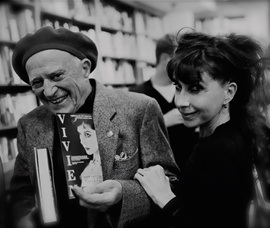
TREADING THE BOARDS Actor Trader Faulkner with Susie Lindeman.

“When Tyrone Guthrie, the legendary London director, came to scout also, he went to the Independent to see a show, and he discovered young Aussie actor, Trader Faulkner.

“Trader went on to work with John Gielgud and the Oliviers and many more, he was not only a co-star but also a friend to Vivien, and he will be with me sharing this performance.

“He is the show’s special guest and will stand again upon the stage of his 1947 triumph. He is a legend himself – he was a protégé of Peter Finch and wow, he has some great stories!”

Considering her acting career in mainstream theatre and film in Australia and Europe, I am keen to ask Susie how she approached the role of producer.

“I’m just an actress taking roles and opportunities when they present themselves,” she says. 

“As an Australian, social media has allowed me to retain my identity here as I work in other places. It’s all on a page, the whole world, we could be everywhere and anywhere.”

“However, when I think about it, I suppose that I also became an independent artist when I met Yasmina Reza, the great French writer, and through this personal and independent encounter, she entrusted me with the world rights for her play, Hammerklavier.

“Performing it internationally meant I performed independently; here, London, Edinburgh, Paris and even a performance in Singapore. Now, I guess I’m lucky enough to be asked to perform independently by several theatres themselves, rather than theatre companies as such.

“The decision was simply to be all I can be, to play Yasmina seemed a wonderful chance, and to make it happen I simply had to create it independently.”

What part does the social media play when independently producing a piece of theatre?

“It’s actually how I started using Facebook, I mean really using it, and for this show, we started to tweet,” Susie says. “But I think Letter To Larry having its own Facebook page is great to spread the word. Sometimes 600 people will like a status, which is wonderful, especially being such an indie creation”.

“As an Australian, social media has allowed me to retain my identity here as I work in other places. It’s all on a page, the whole world, we could be everywhere and anywhere.”

So where to from here for Letter to Larry?

“We want to have the Australian premiere season soon,” Susie says, “but I think because I’ve worked a lot in London and Paris, it seemed easier to get a theatre in those cities, so we do have the London premiere in the pipeline, a hoped-for season in New York, and a return to Hollywood”.

“But of course we’d love the chance to do an Australian season and tour, especially as the play opens and closes in the setting of Vivien’s 1961 Old Vic tour to Australia.”

I am interested in knowing how audiences respond to Susie’s interpretation of one of the world’s most beloved movie stars.

PLAYING PASSION Vivien Leigh as Blanche DuBois in A Streetcar Names Desire (1951).

“I was absolutely astonished at the love Parisians have for Vivien. I mean, I knew that in London we would have an audience, but I was swept off my feet by the passion of the public, and the press, for this show,” she recalls. “Every night after the show there would be people waiting to tell me their thoughts and memories of Vivien, and they truly lit up when speaking of her. That’s why its such a pleasure to play her, she has a magic and spirit which is still tangible in the world.”

In the five decades since Vivien Leigh’s death, a result of chronic tuberculosis, public attitudes to mental health have changed enough that her now widely known about manic depression, explored in Macdonald’s play, can emerge from the shadows. I ask Susie about this aspect of her interpretation of Leigh.

“Vivien was passionate and often cast in passionate roles, whether mad for her loss of Lord Nelson as Lady Hamilton, as Ophelia, or most searingly as Blanche DuBois in A Streetcar Named Desire,” Susie explains. “She never performed ‘madness’, she just felt so deeply the emotions and passion and loss”.

“Gielgud said: ‘The extremity of Vivien’s performance was extraordinary, and frightening. She elevated the text and the emotional intentions’ .

“It’s true that Vivien suffered with un-diagnosed bi-polar, and that her infinite energy and passion for life grew into manic phases,” Susie says. “In Letter to Larry I play Vivien from deep in her soul and heart, feelings magnified by her loss of Larry”.

“I believe there’s a fine line between insanity and inspiration. Vivien, as so many who knew her have told me, was such a free spirit, but also spiritual, so she was in touch with the source of sorrows as well. Someone said Vivien didn’t break down as much as stand up and fight back.”

INDEPENDENT ARTIST Actress, producer and director Susie Lindeman.

And what does Susie think are the main challenges for performing artists working in Australia?

“I think funding, and the swiftly sinking press coverage, oh and sometimes the celebrity culture, which means sometimes actors who are so right for a part don’t even get a chance to read.

“I know theatre is a risky business, so theatres need to be careful,” Susie says, “but being careful has never been a way to create.”

With a nod to one of Vivien Leigh’s most memorable roles, Susie says: “Art isn’t intrinsically commercial anyway, and knowing that after a show, so often the audience will buy you a drink, so if you’re not paid properly, there’s always the kindness of strangers!”

creating-waves-cover
BUY NOW

For further information follow the show on Twitter @LetterToLarry or check out the Facebook Page.

© Michael Burge, all rights reserved.

This article appears in Michael’s eBook Creating Waves: Critical takes on culture and politics.