Was Hollywood’s Merle Oberon a girl from Tassie, or was she from the streets of Calcutta? On the eve of screening her film ‘The Trouble With Merle’ at the Blue Mountains Short Film Festival, Marée Delofski spoke with Michael Burge.
DOWN a leafy laneway more reminiscent of a country town than the faded ‘honeymoon capital’ style of Katoomba’s main drag,Marée Delofski talks of her love for The Blue Mountains.
“I write best here,” she says, “I get very good mental space”. Such feelings are not uncommon amongst local artists escaping the speed of the city, so I ask if there is a deeper connection to the local landscape?
Like one of the many people interviewed in her hour-long award-winning documentary The Trouble With Merle, Marée is on the brink of a journey to answer a question that cannot be addressed in a minute. The real answer is about an hour and two cups of tea away.
Marée Delofski is a very open person – this must be how she extracts such personal depth from her subjects. Indeed, The Trouble with Merle is a personal journey to the heart of a mystery, the kind of mystery common in the Australian experience – the kind that may never be solved…
THE first time I met Katy Cropper and her champion Border Collie Trim, we were screen-testing both for a program about Katy’s dog training techniques.
With her slightly wild edge, Katy Cropper belongs to the outdoors, and is at her most focussed when working with a team of sheepdogs to lift a flock from the far edge of a field and bring it back, in a majestic manner, right to her feet.
She’s also got a winning smile, and, as a friend of mine who watched the screen test said, a “great set of pins”. So we edited the footage into a ten-minute clip, and played it on rotation at The Royal Show in Warwickshire in the summer of 1996.
The crowds that gathered to watch showed us we’d chosen a very popular subject, and so we got the green light to capture the story of Katy’s new trainee sheepdog – Splash – over the next two trialling seasons.
Scheduling eighteen months of filming with Katy turned out to be a great way to tour the rural counties of England, simply because this successful (and often controversial) shepherdess never stays in one place for very long.
The first woman to win the prestigious BBC sheepdog handling title One Man and His Dog, Katy led us on a merry chase through some of the most beautiful farmland between Yorkshire, the Lake District, Gloucestershire, and The Midlands.
The only time I was guaranteed of finding Katy where I expected her was for her scheduled appearance at the Royal Show the following year. At other times I would anticipate a call from wherever she was working at the time, and she would give me detailed directions to which field on which farm she’d be shepherding on which day.
True to form, Katy was always there waiting and ready, decked-out in her latest take on what I’ll call ‘sexy-tweed’. When asked about what she is really like (and I was asked a lot over the years), I came to describe Katy Cropper as a combination of Toad of Toad Hall, and Sarah Duchess of York – she’s got boundless energy to burn, she sometimes gets into a bit of a pickle, and she’s usually kitted-out a bit like a country gent.
Predictably, her indefinability has seen Katy cop plenty of flack over the years – anyone who enters a sheepdog trial with a three-legged border collie, or appears in a trialling event in a two-piece bikini, or who tilts at any male-dominated, traditionalist world like sheepdog handling, is going to be the butt of jokes and barbs.
But Katy struck me as a great survivor who has overcome a few hurdles that would have stopped many others. She is steeped in the hedgerows and country pubs of England’s heritage, using phrases like “crow pie” and “the sun always shines on the righteous”, and all the traditional sheepdog commands like “that’ll do” and “bide there”. She’s rarely seen without her shepherd’s crook, and has a great collection of hats.
At her Royal Show appearance, Katy also showed a touch of Madonna, with her wireless microphone and her showgirl streak.
She arrived with a horse float full of animals – dogs, ducks, turkeys, pigs, a pony, and sheep, of course. The dogs, not fully animal in Katy’s world, were up front in the truck, and they helped her set-up the routine.
At that time in her retirement, Katy’s most famous dog, the predominantly white-faced Trim, followed Katy around and checked on all the details of the hurdles and fences. If something wasn’t right quite right, Katy looked to Trim to let her know.
Katy’s performance is a mish-mash of herded ducks, a range of fine dog handling and herding techniques, and an over-reaching sense of fun, which is why I think some country traditionalists could take or leave Katy Cropper, whereas city folk can’t get enough of her.
Splash progressed through her monthly filming sessions into a contender for a range of nursery trials, and it was there that we got a first-hand look at how the whole sheepdog trialling world works. There are so many events throughout the country that you can enter one in the morning, then drive over the range for another one at lunch time.
In between, your dog (and you) can go from a loser to a winner, and that’s exactly what happened to Katy and Splash in our program One Woman and Her Dog.
I raved so much about the special energy of female Border Collies that eventually I was tipped-off about one which needed a home. Five years later, I saved another from the pound. Fifteen years on, both my girls are still with me, and have made me look like a great dog trainer, simply because Border Collies are just so intelligent.
The rest of my training tricks I learnt from Katy Cropper.
Mind you, even though I say “that’ll do” and “bide there” to my dogs, I’ve never unleashed them on a flock of sheep in a field the size of ten football ovals. Katy Cropper has, and despite what you think about her, she knows how to train sheepdogs to bring in the sheep.
One Woman and her Dog was released by United News & Media but is currently unavailable to buy. It is occasionally available on eBay and kept in the collection of Australia’s National Library.
CANDIDATE FOR SUCCESS Angela Lansbury in The Manchurian Candidate (1962).
AUSTRALIA has a dubious track record when it comes to visiting Divas. We hounded Judy Garland out of Melbourne in 1964, saw Marlene Dietrich off a decade later, and more recently had many an unkind word for Whitney Houston.
With Angela Lansbury touring here in Driving Miss Daisy, Alfred Uhry’s Pulitzer Prize winning play about a Southern Jewess and her African-American chauffeur, we might just be breaking our trend, because the reviews are great and, when I caught the show last week, the cast is enjoying standing ovations.
And Lansbury is making history. As a working actress performing eight shows a week, she is entering her 70th career year.
Neither the great English tragedienne Sarah Siddons (1755-1831), France’s ‘divine’ Sarah Bernhardt (1844-1923) or the once unsurpassable Katharine Hepburn (1907-2003) had longer careers on stage or screen.
The difference with Angela Lansbury is that she seems to have crept into this history-making position on the quiet.
FRESH FACE Angela Lansbury in her Hollywood years.
An escapee from London during the early years of WWII, this cockney-born daughter of Irish actress Moyna MacGill reached the United States, and, by the age of just 19, received an Oscar nomination for best supporting actress in her film debut, alongside Ingrid Bergman, in George Cukor’s Gaslight (1944).
She spent the rest of the decade in the supporting actress league, and by the 1950s graduated to what she described in her own words as a series of “Battleaxes”. It was interesting work, but the roles were very much on the sidelines.
All that changed in 1962 when Lansbury took on a role that no other actress in Hollywood seemed to want – Mrs. Iselin in John Frankeheimer’s Cold War polemic The Manchurian Candidate.
The nature of this role is hard to explore without giving away the entire plot – suffice to say Lansbury was an inspired choice. The Battleaxe had found her true edge of steel, you could say.
Despite critical acclaim, and award attention for Lansbury, The Manchurian Candidate was not popular with audiences in 1963, and quickly disappeared.
In a later interview Lansbury revealed that as a supporting actress, she’d whiled-away her spare time on the studio backlot bearing witness to the production of the great musicals of the 1940s and 50s. The experience fostered her own desire to take to the musical stage, a chance which did not manifest until the mid 1960s when she appeared in the brief run of Stephen Sondheim’s doomed musical Anyone Can Whistle, which played only nine performances on Broadway in 1964.
It’s probably that musical’s failure to launch that saw Lansbury having to audition multiple times for her next musical turn – the role of Auntie Mame in Jerry Herman’s smash hit of 1966, Mame.
While the producers deliberated over bigger names, eventually she put her foot down and said they’d had their chance to make up their minds – Angela Lansbury would audition for them no more.
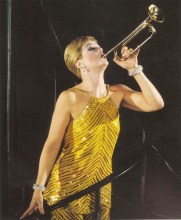
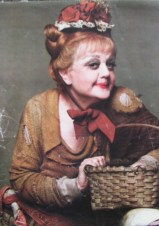
HER OWN TRUMPET Lansbury in the Broadway hit of 1966 – Mame.
In that moment, a star was well and truly born, because it was Mame that gave her a tilt at playing a lead.
But she had to change her approach to inhabiting a role. Reminiscing on the period, Lansbury cited seeing her name above the show’s title on the marquee (and the realisation that hundreds of peoples’ incomes depended on her carrying the show) as the wake up call she needed.
Based on Patrick Dennis’ 1955 book Auntie Mame, this is the story of another edgy woman who spends her life pushing the moral code in an outward direction, taking those close to her (including her young nephew) across the borderline.
What might have been a kind of museum piece, harking back to those musicals Lansbury watched from the backlot, became a hit at a time when social conventions were breaking down in the late 1960s.
And the production ended a long period in which Lansbury seemed unable to catch a break. For the title role in Mame, she won her first of five Tony awards, and completed her reinvention as a musical star.
Original footage of Lansbury’s Mame is extremely rare. Instead of a Battleaxe, Lansbury gives a stunning turn as a sexy, wide-eyed-but-knowing ingenue. Three years of performing musical theatre shaped her into a leggy bombshell.
She might have felt like burning her bridges in movies after missing out on the role of Mame in the Hollywood movie version to the tone-deaf Lucille Ball, but her delightful portrayal of an apprentice witch in Disney’s Bedknobs and Broomsticks (1971), and her knockout performance as romantic authoress Salome Otterbourne in Death on the Nile (1978) introduced her to my generation.
Then came the tour de force. Sweeney Todd: The Demon Barber of Fleet Street was one of those incredibly courageous musicals which brought the unthinkable to the stage in a way so experimental that you’re left wondering how it ever became a hit. Perhaps it had something to do with composer Stephen Sondheim having the sense to call Lansbury first?
The great musical role of Nellie Lovett allowed Lansbury the chance to take her cockney roots between her teeth and dive into the world of the sweet, amoral baker who carves her way into the heart of Sweeney Todd, and generations of musical lovers ever since.
Her blade was as sharp as Sweeney’s, and, as many forget, it was Nellie Lovett who came up with the rather unique filling for the pies that got them both in such brilliant trouble.
BLOODY BAKER Lansbury as Nellie Lovett in Sweeney Todd.
The role carried Lansbury until she was pushing sixty, but a brief stint in an unsuccessful revival of Mame in 1983 must have told her that it was time for another reinvention.
This time, Lansbury jumped genres again, and she took the upper hand when it came to casting. Rejecting initial offers of playing third fiddle, she put the hard word on her agent and anyone presenting television scripts – this lady was not going to be supporting anyone this time around.
Of the few female-oriented detective shows piloted in Hollywood in the early 1980s, Murder, She Wrote had all the hallmarks of a short-lived series.
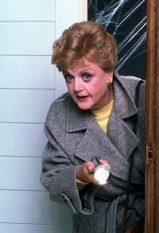
The central character was an amateur sleuth who writes detective novels, always turns up where she’s least expected, and sticks her nose, politely, into other peoples’ business. Jessica Fletcher was a very old-styled sleuth, totally unflappable and the kind of lady you’d love to sit next to on a plane, but she was no Cagney and Lacey, and this was a time when actresses of Lansbury’s vintage were expected to stick to The Golden Girls and not Moonlighting.
SUCCESS, SHE GOT Lansbury as amateur sleuth Jessica Fletcher.
But Murder, She Wrote became the longest-running detective show in television history, with a tele-movie life beyond the series that saw Lansbury through to her seventies.
At the 1987 New York Film Festival, The Manchurian Candidate was exhibited. Its popularity at that event saw its international theatrical release the following year. This time, the biggest name on the poster was not Frank Sinatra or Janet Leigh, but the actress who had become a household name – Angela Lansbury.
The role of Daisy Werthan in the current revival of Driving Miss Daisy has been in the hands of Vanessa Redgrave in the northern hemisphere. Apparently Lansbury jumped at the chance to step into the shoes of this rarest of lead roles for an older actress when Redgrave became unavailable.
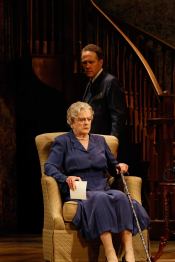
In this play, she ran the risk of simply exhibiting a relic of herself, slave to the constant reminder of her own theatrical heritage. But after the round of applause both leads simultaneously received on their entrance, Lansbury sank her teeth in and got on with the job of inhabiting the harsh, almost steely southern Battleaxe, only this time, she’s right at the centre of the story.
MISS DAISY’S DESTINATION Lansbury onstage in the Australian revival of Driving Miss Daisy.
But Miss Daisy’s journey is not just about her car trips, of course, and Lansbury beautifully negotiates the difficult choices Dairy Werthan is driven to, right to their stark end. It’s a beautifully written character arc and Lansbury gives it her own twist.
Seeing her side-lit in the cold reality of the character’s final destination, as opposed to the well-lit aura of Lansbury’s years at the peak of Hollywood’s golden age, I couldn’t help but be reminded what a journey this life-enlarging actor has taken.
And she revealed in an interview that she’s still looking for that signature movie role, the one which will cement her into cinema history.
If anyone can find that in her nineties, Angela Lansbury can.


 Was Hollywood’s Merle Oberon a girl from Tassie, or was she from the streets of Calcutta? On the eve of screening her film ‘The Trouble With Merle’ at the Blue Mountains Short Film Festival, Marée Delofski spoke with Michael Burge.
 209 of 1010 words. Unlock the rest of this article by purchasing Michael’s ebook Creating Waves: Critical takes on culture and politics.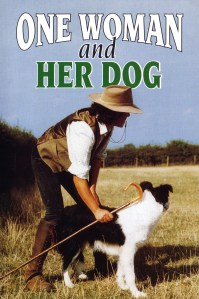



 Michael Burge Media