Category Archives: Performers

Annie Lennox – tarnished angel

ANGELIC ANNIE Lennox in full angel regalia for the music video Precious (Photo by ...)
ANGELIC ANNIE Lennox in full angel regalia for the music video Precious.

AMIDST the gloom of Yorkshire in the late English winter of 1992 when I arrived in the United Kingdom, two bright things stood out.

The first were the swathes of daffodils, bringing colour and joy to a colourless and often joyless landscape.

The second were the signs blazing from music shop windows – the enlarged signature of an artist I’d long admired, because at last she’d recorded her first solo album.

The thrill of seeing that name in iridescent red against the steely greys of Britain really sum-up for me the power and presence of Annie Lennox.

The pop-rock duo Eurythmics (comprising Lennox and David A. Stewart) had announced a sabbatical after over a decade of collaboration, and with no new album since 1989, word in the media was that it might be all over.

But when the British Music industry gathered to celebrate the life of Freddie Mercury at a tribute concert in early 1992, a duet of ‘Under Pressure’ with David Bowie and Annie Lennox was announced.

Apparently they made a pact to go all-out on their costumes. Bowie’s 1970s outfits had, after all, been a great inspiration to Lennox.

But Annie Lennox outdid Ziggy Stardust. He was rather reserved in a suit, while she appeared in a full-length tulle skirt, eyes masked with a spray of black, ginger hair slicked-back, a signature red-slash of lipstick … every bit the androgynous icon that made her name a decade before.

ANNIE UNLEASHED Annie Lennox and David Bowie perform Under Pressure (Photo by Kevin Mazur Archive/WireImage)
ANNIE UNLEASHED Annie Lennox and David Bowie (Photo by Kevin Mazur Archive/WireImage).

Hers was a weird, awkward, emotional performance that went right to the heart of loss. The loss of Freddie. The loss of a generation of artists to the AIDS epidemic. It took guts, and it brought the house down.

Duet aside, a solo career was born.

Annie Lennox first hit my consciousness in 1983, as Eurythmics’ album Touch carved its way through the charts with a string of video clips on Countdown. Lennox was a harpy, a romanticised heroine, a robot, a man, and she sang like the great gospel singers.

Nobody else I knew liked her or Eurythmics, but to me she was pop perfection – an intense, misunderstood butterfly in a constant state of metamorphosis.

The release of 1984 (For the Love of Big Brother), fronted by the single ‘Sex Crime’, in the same year I became aware I was gay, was almost too much.

ANGRY ANNIE The high-energy performance of Sex Crime.

For a closeted gay boy, Lennox’s thundering Orwellian vocal: “How I wish I’d been unborn, wish I wasn’t living here … Sex Crime” was a chant of affirmation.

But Eurythmics didn’t remain the beloved of nerdy closeted boys for long. From 1985 to 1989 they dominated the pop-rock scene, with a string of hits and world tours.

In a rare egalitarian moment, a large group of my school year put factions aside and made a booking to see the Eurythmics at the Sydney Entertainment Centre in early 1987. I already had all their albums, and knew the answers to everyones’ questions about the duo. For one week in summer I felt cool, accepted, in-touch and cutting-edge.

Although it wasn’t until Lennox’s solo career took off that I came to understand why I liked Eurythmics so much.

Of the Stewart-Lennox duo, she was almost exclusively the lyricist, and her words covered the human experience from unbridled joy to the deepest sorrow.

But the tone of the music was not dark. Stewart took Lennox’s poetry and placed it in an uplifting context, so that the result had a tension to it. What she sang about was dark, but it sounded up-beat.

Sometimes it worked the other way around – the words were uplifting, but the music that underscored them was moody.

Think ‘Sweet Dreams (Are Made of This)’ (a reminder that there is danger in joy); think ‘Love is a Stranger’ (a recognition that there is pain in romance); and think ‘Missionary Man’ (a warning that there is chaos in order) … Eurythmics’ writing was an ever-evolving exploration of opposites.

But on her own, without Dave Stewart’s musical lift, Annie Lennox seemed to revel in darkness on every track of Diva, her 1992 full-length solo debut.

Compared by critics to Carole King’s 1971 album Tapestry, yet much closer to the confessional power of Joni Mitchell’s BlueDiva is unfiltered pain made mainstream. The songs are a line-up of loss, regret, and loneliness.

ALONE ANNIE Inhabiting the soul of world weary showgirl in Diva.
ANNIE ALONE Inhabiting the role of a showgirl in Diva.

“Take this gilded cage of pain, and set me free. Take this overcoat of shame, it never did belong to me” (Lennox’s lyrics from Diva’s penultimate track ‘The Gift’) became an anthem for everyone living with feelings of guilt.

Across the Grammy-winning long-form video for Diva, in addition to her jaded showgirl persona, Lennox inhabits angelic imagery – modern urban angel; traditional decorative angel; healing and restorative angel.

By year’s end she’d countered all that with her turn as a grief-stricken vampire in her contribution to the soundtrack of Bram Stoker’s Dracula.

Unlike Joni Mitchell and Carole King, Annie Lennox’s Diva masquerade was complex and complete.

Another solo album, Medusa (1995), a Eurythmics reunion, another world tour, and then, in 2002, a detailed biography followed, which as an ardent fan I received as a birthday present and devoured.

There, in all its unauthorised glory, was Lennox’s rise to fame laid bare. Her early false starts, her breakthroughs, her burgeoning solo career, her achievements as a human being apart from her fame and fortune, and something else … the revelation that despite all her fame, which bred more fame and more opportunity, Annie Lennox regularly couldn’t see her own creative achievements.

After all that success, Annie Lennox got depressed!

By then I was at an age when my creative ambitions had not been fulfilled, knowledge that came with the stark realisation that they may never be. Around me I witnessed the pain of addiction; the hope of recovery; and the competitive process as drama school colleagues jostled for power and influence. Some of us gave up at that time, or changed-tack, went overseas, or, like me, returned.

That one of my creative heroes, who’d achieved about as much as it’s possible to achieve in her field, still felt the same feelings of depression and frustration that she’d felt before she became famous, was a devastating thought.

For this fan, the angel did indeed have a tarnished halo.

But Annie Lennox had much, much further to go with her music. During her return to collaborating with Dave Stewart, there had been an intriguing hint of what was to come in one unassuming track on their 1999 album Peace.

‘I’ve Tried Everything’ became the supreme example of crashing Lennox lyrics given wings on Stewart’s composition. The song begins in the upper reaches of her register, builds slowly through the poetry of someone telling themselves what a loser they are, before meeting at the bridge, where Lennox chimes: “I should be cool, but I’m burning hot. I should be good, but I fell apart. Don’t look at me now, don’t even start, ‘cos I’ve tried everything, yeah I’ve tried everything …” before the duo drives the song home to its relentless, inexplicable finish, joy and pain intertwined to the strains of Annie backing herself, repeating “loser, loser, loser.”

I asked anyone who would listen what they thought this darkest of songs was about. Few had the self awareness or the guts to respond.

It wasn’t until Annie Lennox released another solo album in 2003 that she stripped away the masquerade completely, allowing us to see more of her journey in everything from lyrics to  revelatory title: Bare.

The cover image references one of the most iconic photographs of the singer-songwriter – the sleeve shot of Eurythmics’ album Touch, released two decades prior. In the older image, Lennox sports her signature cropped carrot hair and bears her arms like a shield before her, wrists and palms together, a black mask framing her intense gaze.

On the cover of Bare, Lennox’s arms and wrists are similarly held together, and they draw the eye to her face, which bears no mask and is powdered to reveal the patina of age, eyes front, vulnerable not defiant. Despite the use of make-up, there is no hint of concealing the truth.

Lyrically, Bare is Lennox’s courageous right of reply about her mental health journey.

NO ANGEL
NO ANGEL Anne Lennox’s self portrait on the cover of her 2003 album ‘Bare’.

The opening lines of the first track: “Every day I write the list, of reasons why I still believe they do exist (a thousand beautiful things); and even though it’s hard to see the glass is full and not half empty (a thousand beautiful things),” set the scene for a deeper exploration than Lennox had ever publicly undertaken.

Sometimes she references well-worn mental health vocabulary (“tell it like it is, like it is, like it is ..”) and at others through desperate, lonely prayers (“Oh God, where are you now?”).

Lennox portrayed herself as nothing but human on Bare – there was no diva or angel, no music videos, only interviews in which she revealed that she was the photographer who shot her own cover image.

Appearing on Andrew Denton’s Enough Rope, when he questioned Lennox about the nature of her crisis, she said, simply: “Listen to my album. You can hear about my crisis.”

pluck-cover
BUY NOW

It had taken half my lifetime to realise this real place was always where the essential darkness of Eurythmics came from, and their essential joy. Below the surface of the 1980s celebrity, the tarnish was always there, we just hadn’t seen it.

© Michael Burge, all rights reserved.

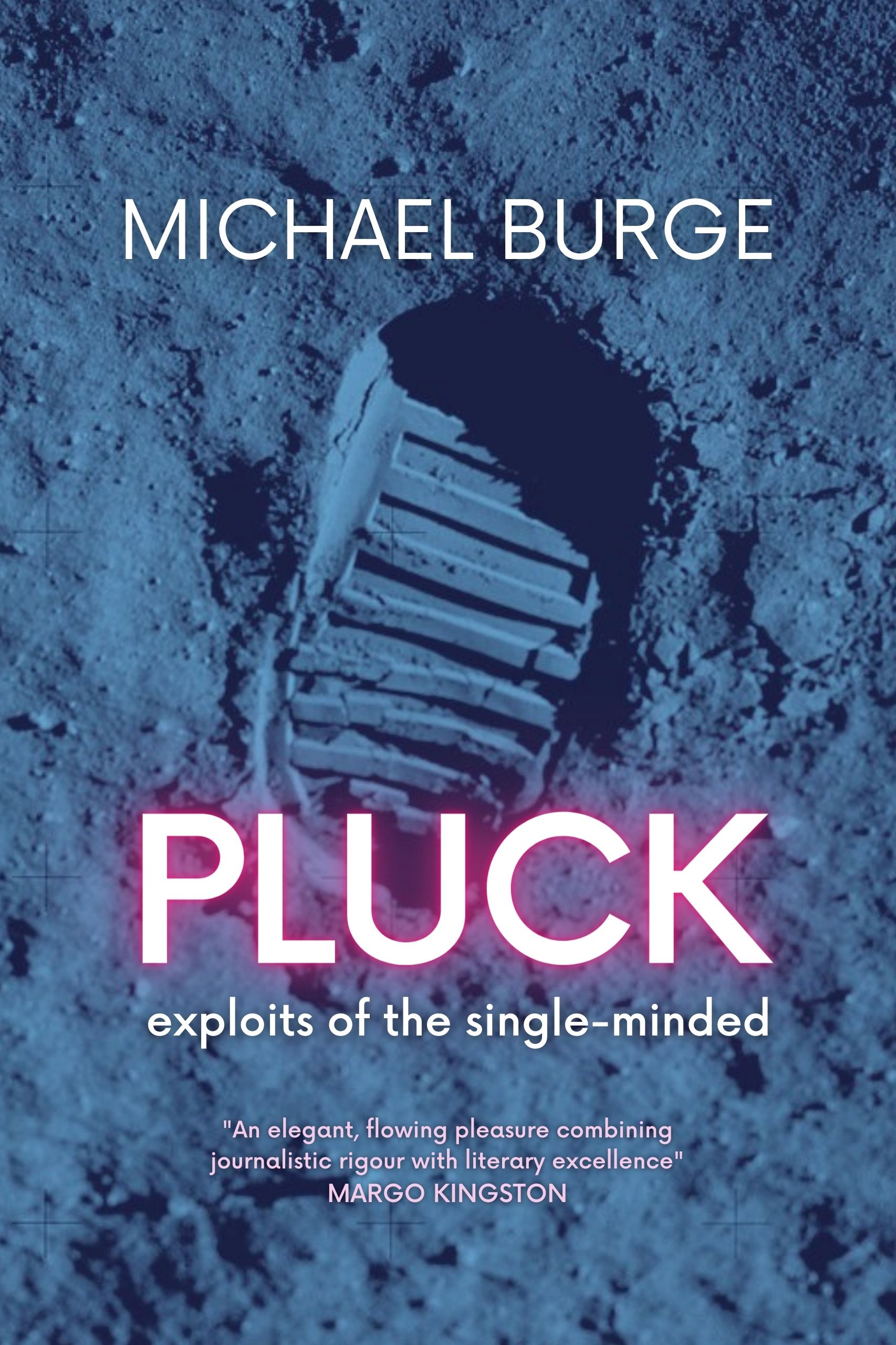
This article appears in Michael’s eBook Pluck: Exploits of the single-minded.

Don’t f**k with Judy Davis

LOVE or hate Judy Davis, chances are you’ve seen one of her acerbic, riveting onscreen meltdowns – they’re synonymous with the media-shy Australian actress who’s long been preceded by an offscreen ‘difficult’ tag.

Already a staple in period dramas by the time of Charles Sturridge’s 1991 production of E.M. Forster’s debut novel Where Angels Fear to Tread, Davis had breathed life into array of heroines on the brink of brave new worlds, and used a decidedly English voice to do so.

“Davis levelled the F-word at the director, and she hit a sore point.”

Her debut in Gillian Armstrong’s My Brilliant Career saw Davis as Sybilla Melvin quite matter-of-factly assert to her suitors that she will never marry. Her Adela Quested, when pressed on Doctor Aziz’s crime in David Lean’s A Passage to India, eventually and quite calmly enunciates the truth.

Perhaps it was Sturridge who saw something more in Davis than polite colonial girls when he cast her as the boorish Harriet Harriton, one of Forster’s best-drawn wowsers who will not be broken down by Italy’s disarming romantic freedom.

DON’T JUDGE JUDY Davis in Woody Allen’s Deconstructing Harry (Photo: John Clifford).

After admonishing the cheering crowd at the local opera as “babies”; banging around the pensione in tears and rage, and delivering the final devastation of Forster’s story, with this Harriet Harriton, 1991 became the year the Judy Davis ‘volcano’ was finally able to erupt on the screen.

She moved on to a comic romance as 19th century French author George Sand in James Lapine’s Impromptu. The best scenes are those in which Sand verbally explodes, elucidating how it might have felt to be a woman in the period without the filmmaker having to resort to all the usual corset-tightening symbolism.

But the shrewish screen potential of this actress was fully realised when Davis appeared in Woody Allen’s Husbands and Wives as the woman who finds true love by losing it, literally…

pluck-cover
BUY NOW

300 of 1266 words. Unlock the rest of this article by purchasing Michael’s eBook Pluck: Exploits of the single-minded.

© Michael Burge, all rights reserved.

Nellie Melba and the daffodil farmer

DAFFODIL DAZE One of the world’s favourite cut flowers, the daffodil.

A Writer unravels a local myth.

MY first glimpse of the Blue Mountains high school I attended was a hillside covered by a layer of golden daffodil blooms. I was in sixth class and a group of us was to play one of the high school teams in basketball, but we were late and had to run to the top of the hill to start the match.

The daffodils were so plentiful (over knee-deep in my memory) that running through them took some effort and created a kind of insane delight as we ascended, laughing and stumbling in their ridiculous golden abundance.

Many years later I took on the task of researching the history of the old house on the hillside, and learned about the man who was behind the daffodil plantation – Robert Matcham Pitt (1849-1935).

Throughout that process the most intriguing element of the home’s story was, for me, his daffodils. Primary sources and archives are all very well, but surviving blooms carefully raised by the long dead … now that was history brought to life.

Soon after moving to London I consulted the International Daffodil Registrar, at that time the wonderfully generous Sally Kington, at London’s Royal Horticultural Society. What Sally found shed a whole new light on the man who was amongst the first to bring the humble Narcissus to Australia.

I had the opportunity to publish a feature article on this horticultural history in the August-September 2010 edition Blue Mountains Life Magazine (Vintage Press). Typically, there’s always parts of a story which must be left out for publication, so I’ve included those at the end for posterity.

HOME GROWN OPERA Helen Porter Mitchell (aka Dame Nellie Melba 1861-1931).

A Diva’s Daffodils

Nellie Melba’s inspirational encounter with a Mountain Daffodil Farmer

For almost a century there was a tale told that Nellie Melba sang an impromptu recital in a private home in Wentworth Falls and received a rather unorthodox daffodil tribute in return. Now Ann Blainey’s award-winning biography I am Melba reveals the only time the soprano can be placed in the Blue Mountains during daffodil season, and why.

Melba’s journey to the Mountains began in 1909 when she purchased a property near the town of Lilydale outside Melbourne, with two plans in the pipeline – to renovate and landscape herself a sanctuary, and to bring grand opera to her home country.

Before sailing for performances across the northern hemisphere in 1910, Melba met with Australian theatre impresario J.C. Williamson. The soprano guaranteed fifty per cent of the opera project’s budget, leaving the producer to work his connections in the business sector.

The ‘Melba-Williamson Opera Company’ announced Sydney and Melbourne seasons for spring 1911.

On her return trip to Sydney from Europe that year, Melba went to inspect work on her as yet un-named new home, but rehearsals in Sydney beckoned when a boatload of international singers arrived in late August. The venture was launched before an eager public on September 2.

Overseeing fully staged versions of twelve operas, fifty-year-old Melba was also performing three times a week. “Although in some ways she was in her element, the pressure began to tell,” writes Ann Blainey. “By the end of September she was ill, with an aching ear and a sore throat … bronchitis set in, and she was ordered to rest in the mountain resort of Medlow Bath”.

Without Melba, audience numbers dropped, and rumours of her drinking resurfaced. Her letters from these critical weeks reveal a desire to conceal the extent of her vocal problems from the public. Between Williamson and he publicity agent Claude McKay, Melba’s escape to the Mountains was heavily stage-managed.

OPERA FANS Robert and Marie (‘Eugenie’) Pitt at Coorah.

Enter Robert and Eugenie Pitt, resident at their Mountain estate ‘Coorah’ in Wentworth Falls. A successful stock and station agent and one of J.C. Williamson’s guarantors, Robert and the immensely musical Eugenie may have been recruited to aid in the singer’s recovery. As a result of Melba’s secret convalescence in the Blue Mountains during daffodil season, a legend emerged.

It told that Melba arrived at Coorah by car and delighted in Pitt’s fields of daffodils. After dinner, she entertained her hosts by singing, after which Pitt offered Melba a gift. She expressed a desire for some of his daffodil bulbs for her fledgling garden. They were lifted and packed that very night, since the soprano was due to return to Sydney the next morning.

The facts about Coorah are well-known – the property was established in 1889 complete with water pumped from a local creek, a dairy, stables, and a nine-hole golf course. English style gardens and the bulb farm surrounded the late Victorian country house atop a hill overlooking distant blue ranges.

But horticulturists will tell you no serious daffodil hybridiser would lift flowering bulbs unless they were to be transplanted immediately. Legends, of course, are not infallible, and this one needed some unravelling.

Coorah’s centenary in 1989 unearthed how the property became a hostel for children and then the Blue Mountains Grammar School. Pitt’s daffodils were still returning every spring to the north-facing fields of the property, and stories about Melba’s visit persisted.

School parents related meeting Doris Pitt (youngest daughter of Robert and Eugenie) who revisited Coorah in the 1960s and recalled the night Melba sang in Coorah’s large central room.

A ‘below stairs’ oral history of the same event came from Arnold Gorringe. His mother Mary was Coorah’s housekeeper until 1919, and she had to move husband Arnold (head gardener) and two small boys into a cottage on the estate to make room for Melba’s stay.

Barbara Lamble recalled her grandfather Robert Pitt’s long association with opera funding – “Within the family at least he was known to have expressed a dislike for Melba and her money-raising methods,” she said.

BULBS FOREVER Blue Mountains Grammar School student Philip Parkinson in the surviving field of Pitt’s daffodil farm at Coorah in 1961.

Pitt’s daffodils held their own secrets. In 1993 Sally Kington (International Daffodil Registrar at the time for London’s Royal Horticultural Society) analysed photographs of the daffodils still flowering at Coorah. Since they could be seen to be derived from already existing varieties, Sally suggested they were Pitt’s hybrids. His daffodil creations included ‘Clive Pitt’, ‘Doris Pitt’ (two of his children) and those he registered with the RHS – ‘H.H.B. Bradley’ (noted horticulturist) and ‘G.S. Titheradge’ (actor and flower enthusiast).

DAFFODIL FARMER and pastoralist Robert Matcham Pitt (1849-1935). Photo courtesy of Libby White.

In the RHS library, the Daffodil Yearbook of 1914 yielded an essay by Titheradge in which the following appears – “Mr. Pitt is devoted to music, and when the great singer, Mme Melba was here, he, or some members of his family, went to the opera nearly every night. It was during the spring months, and Mr. Pitt used to send the ‘diva’ great quantities of daffodil blooms. One day he wrote and asked if he might be permitted to immortalise one of his seedlings by naming it after her”.

“She said she would be delighted, so he sent her some of his finest productions to choose from. Mme Melba happened to select the one called after me, so Mr. Pitt had to tell her it had already been appropriated by an artist in another branch of her profession, but when the time came for lifting the bulbs he made her happy by sending her about 20,000 for her place in Lilydale, Victoria.”

Actor George Sutton Titheradge (1848-1916).
MAN OF FLOWERS Actor George Sutton Titheradge (1848-1916).

Blainey writes that when Melba returned to Sydney from the Mountains, “she was cheered as she entered the stage”. The Melba-Williamson opera company moved on to Melbourne, where Melba had her sanctuary to nurture any lingering health problems. Audiences were not as keen on the event as Sydney had been. Despite a spectacular opening night, by November attendance dwindled.

Meanwhile, Pitt waited for his daffodils to die back, drawing nutrients into the bulbs. In December they were lifted and rested in sheds. Twenty-thousand bulbs dispatched to Melba sounds like a large amount, but in 1897 Pitt had advertised a stock of half a million bulbs.

In Autumn 1912, Melba busied herself with completing the transformation of the home she’d now called ‘Coombe Cottage’. The name remembered a property she’d rented while performing at Covent Garden, but it’s possible it also had echoes of her time at the similar ‘Coorah’.

There can be little doubt that Melba would have been inspired by Pitt’s achievements – they embodied the end result of the major changes she’d commission for her own estate.

She once said: “If you wish to understand me at all, you must understand first and foremost that I am an Australian. I shall always come back to the blue mountains in the heart of the vast deserted continent that gave me birth.”

Estates with distant blue horizons, not too far from the city life, were obviously close to this woman’s heart.

We are left to assume Pitt’s bulbs were planted at Coombe Cottage sometime during her first proper season there.

But well before they would have flowered the next spring, Melba was in Europe again. Blainey suggests the disappointing Melbourne reception of her grand opera season was the reason – “The company disbanded on a dismal note. Melba’s inclination was to leave almost at once …”

However, the diva’s association with daffodils was far from over. During the same northern autumn Melba arrived in Britain, Irish Plantsman William Hartland released a catalogue of bulbs advertising a new variety, listed as “new for 1912” and named ‘Madame Melba’.

Pitt had sourced much of his bulb stock from Hartland since the 1880s – was it he who suggested to Hartland that since she’d missed too many seasons at Covent Garden it was time for a ‘Melba’ daffodil?

Robert Pitt gardened until the 1930s at Coorah, but his daffodils outlasted almost everything else he planted. Bulbs which he gifted to his staff and others still appear every spring. Titheradge called him “one of the pioneers of the cult,” and the daffodil heritage of the greater Blue Mountains owes much to his mass plantings and hybridising at Coorah.

FEELING FOR FLOWERS “If I had only the money that has been spent in flowers for me and nothing else, I should still be a rich woman” Melba once said.

An anecdote from the Australian Women’s Weekly in 1970 links Pitt and Melba late in both lives – “For one of her farewell concerts he sent her thousands of daffodils from his daffodil farm. A flood of golden blooms flowed onto the stage … Melba announced she would personally sell the flowers in Martin Place the next day, in aid of Sydney hospital.”

Whether the daffodil farmer’s twenty thousand ‘G.S. Titheradge’ bulbs ever graced the diva’s garden remains a mystery.

The Story goes on …

In 2014 Melba’s garden at Coombe Cottage was opened to the public for the first time. I visited in February, 2015.

Since the publication of this article more has come to light about divas, daffodils and Coorah. My sister Jen happened-upon some fascinating photographs of another opera singer from the Melba-Williamson company (Austrian contralto Marie Voluntas-Ranzenberg) who visited Coorah on Sunday, October 15, 1911, was given lunch and garlands of flowers and had her photograph taken with the Pitt family. This at least proves the Pitt Family was in residence at the time of the legend about Melba’s visit. 

The day I arrived at the RHS library in 1993, Sally Kington showed me a card catalogue entry which simply said “R.M. Pitt?”. Sally said she found it fascinating to find a story associating Narcissus with opera, an industry abundantly supplied with flowers, but rarely daffodils, apparently.

In 1993 I corresponded with the resident of Coombe Cottage in Lilydale – the late Lady Pamela Vestey (grand-daughter of Melba) – she had no knowledge of twenty thousand daffodil bulbs on the property.

The design of Melba’s garden at Coombe Cottage was one of the last estates created by William Guilfoyle (1840-1912), the man responsible for several iconic gardens in the state of Victoria, including Melbourne’s Royal Botanic Garden.

Coombe, the Melba Estate, as it is now known, experienced many design changes over the years, including plans that were never realised by garden designer Edna Walling in the 1920s. The property remains a private home (under the ownership of the next generation) amidst a winemaking operation, with Melba’s garden open for tours

© Michael Burge, all rights reserved.

This article appears in Michael’s eBook Pluck: Exploits of the single-minded