Category Archives: Performers

The soul searching of Whitney Houston

WAITING TO EXHALE Whitney Houston in Los Angeles in 2009 (Photo: Michael Wright/WENN.com).

HER fans would have been forgiven for thinking it was all over for Whitney Houston in 2010. Garnering mixed reviews for her Nothing But Love world tour, and walk-outs from fans disappointed that she could no longer deliver the kind of live vocal energy that made her famous, Whitney kept a very low profile as her terrible year in the spotlight came to a close.

But deep in the glut of online forums, neither her fans nor her detractors would let her go. Between posting videos of her glory days and widespread speculation that the act described by Oprah as ‘The Voice’ had simply run out of steam, Whitney Houston was generally consigned to the status of drug abuse victim.

Anyone whoʼd been watching closely should not have been surprised.

Infamously defensive during her 2002 “Crack is Whack” interview with Diane Sawyer, Houston cited her marriage vows as an explanation for staying in what was widely understood to be an abusive relationship with R&B ʻbad-boyʼ Bobby Brown. Adding further to the dysfunctional picture was her confession that the abuse went both ways. I gave as good as I got, former ʻgood-girlʼ Whitney professed.

But all that seemed designed to distract from the Houston’s almost voiceless answers in the interview. Worse than hoarse, she explained her condition was the result of recent long-distance travel and the upheaval of moving house. The clearest statement she made to Sawyer was that within ten years, sheʼd be happy to have retired from the music scene.

And she seemed to stand by her word. For the next seven years, Whitney Houston released only one recording and rarely performed. It was an uncharacteristic silence from one of the highest selling recording artists in history.

Instead, shocking pictures of trashed rooms, alleged to have been taken in her home, were published throughout the tabloid media.

WHACKY WHITNEY During a seven year hiatus from recording, Houston's appearance often caused drug-abuse speculation.
WHACKY WHITNEY During a seven year hiatus from recording, Houston’s appearance often caused drug-abuse speculation.

Her co-operation in reality television show Meeting Bobby Brown (described by one reviewer as a “train-wreck”) made for awkward viewing. She appeared to be putting on a good show for the cameras, escorting her husband to court appearances. Mrs Bobby Brown was about as far away from her career as she could get.

And what a career it had been up to that point. Famously discovered by Arista Records’ Clive Davis at the age of nineteen, Houston started singing in church as a New Jersey teenager, and accompanied her mother Cissy Houston onstage touring in 1970s America.

The familyʼs performing pedigree was already the stuff of legend by the time Whitney first took to the stage. Cissy had sung back-up for the likes of Elvis Presley and Aretha Franklin, and Whitneyʼs cousin Dionne Warwick was already an international star.

Houston also had the kind of looks that superstars are made of. She was never going to stop at the benchmarks set by her role models. This was an altogether different kind of star, and she rose incredibly fast.

Her 1985 self-titled debut album broke sales records, and at the 1986 Grammy Awards, Warwick was selected to present her cousin with the first of countless accolades, in that instance for her breakout hit ‘Saving All My Love For You’.

WHO LOVES ME Houston in the video clip for her 1987 smash hit I Wanna Dance with Somebody.

Responding to the high-energy (and extremely high-pitched) dance and pop scene of the late 1980s, Houston and Davis collaborated on further albums in 1987 (Whitney) and 1990 (Iʼm Your Baby Tonight). The first of these spawned one of her all-time hits – ‘I Wanna Dance With Somebody (Who Loves Me)’ – in which Houstonʼs voice soars high above the instruments with a kind of euphoric energy matched only by her striking beauty in the video clip. Iʼm Your Baby Tonight was a more modest success, but it was just the calm before the storm.

Houston later recalled being surprised that anyone was interested in her to star in a movie, although her agent warned the one-time model to get used to film offers. Fresh from the widespread success of Dances With Wolves, Kevin Costner approached Houston to take on the role of superstar Rachel Marron in The Bodyguard. Clive Davis was her manager at the time, and so a soundtrack album was quite naturally part of the deal.

In what must be one of Hollywoodʼs finest examples of colour-blind casting, Whitney took to the role which in many ways drew on her own experiences – fronting massive crowds, leading a life protected by security, all whilst searching for true love.

The re-hashing of Dolly Partonʼs 1970s hit ‘I Will Always Love You’ for the final scene proved a marketing masterstroke. The song became Houstonʼs biggest selling single to date, overshadowing the movie which it underscores.

BODY OF WORK Houston's film roles in the 1990s created a new career for the singer, including the lead in Kevin Costner's The Bodyguard.
BODY OF WORK Houston’s film roles in the 1990s created a new career for the singer, including the lead in Kevin Costner’s The Bodyguard.

The combination of fabulous couture, stylishly staged musical numbers, and Houston’s singular beauty were topped-off by that voice, sliding up and down the scale with a beguiling lightness and a devastating power in turns.

Reaching number one on charts across the world, the song was played so much at funerals, weddings and in public places that it created a new career for Whitney. In the midst of the hype she married Bobby Brown and gave birth to their daughter Bobbi Kristina.

More films followed – Waiting To Exhale (1995) gave Whitney kudos within the African-American community. The Preacherʼs Wife (1996) teamed her with Denzel Washington, with a dose of the kind of gospel-inspired music sheʼd cut her teeth on back in New Jersey.

By the end of the millennium, Whitney Houston made music look and sound effortless. She reinvented her look countless times and backed-up the movie roles and high-end videos with sold-out world tours, and the vocally demanding ‘I Will Always Love You’ was on every song-list.

I recall hearing a radio news segment whilst living in Britain during the late 1990s in which it was reported that Whitney Houston had apologised to fans during a live show for not being able to reach the signature high note towards the end of that song.

It was odd not because an apology seemed so honest, but because it was Whitney Houston, ‘The Voice’. It showed a human side to this seemingly untouchable superstar, but in hindsight it was an indication that an extended silence was on its way.

Cut forward a decade, to the dawn of Oprahʼs 2009 season, when Winfrey managed to coax Houston back in front of the cameras at the end of her hiatus. Divorce from Bobby Brown in 2007, and stints in rehab, had left her unwilling to record or perform again for years. But, having released only two of her contracted seven albums, Houston and Davis finally had a highly anticipated product to tout – Whitney Houstonʼs first album in six years – I Look to You.

Houston appeared to be channeling the survivor-aura of Tina Turner. Certainly not as hoarse as she was with Sawyer seven years before, Houstonʼs speaking voice was nevertheless thin, but not out of character for a middle-aged singer whoʼd performed for three decades.

NOTHING BUT LOVE Houston after performing on Oprah in 2009.

Revealing some of the truths of her drug use and her ongoing recovery, Houston allowed Oprah to search for reasons why sheʼd reached the point of giving up her voice, described as a “National Treasure”. Levelled by the questioning, Whitney cited lack of personal freedom and loss of identity as she grew through her twenties and thirties.

She also performed live for the studio audience. The song was ‘I Didnʼt Know My Own Strength’, tailor-made by longtime collaborator Diane Warren as a survivor anthem which placed few demands on Houstonʼs diminished range.

The clip of this performance (and her rendition of the same song at the 2009 American Music Awards) have become YouTube sensations. Fully inhabiting the role of world-weary diva, while capitalising on her strong, deeper registers, Whitney Houston struck exactly the right note.

After a hiatus from Arista, Clive Davis was back on deck and Houston credited him as the reason she returned to music and did not carry out her threat to disappear with her daughter and set up a fruit juice stand on an island somewhere.

If Whitney had left things at that – a new album and some select live performances to promote it – then her comeback would have been assured. Whether it was Davis who signed Houston up for a world tour, or Houstonʼs decision alone, it is generally accepted that it was the worst move considering Whitney’s vocal abilities at the time.

COMEBACK TRAIL Whitney Houston performs live for the first time in years in Central Park, New York, in 2009.

The Nothing But Love world tour did not start well. She kept a crowd waiting in Central Park, New York, before hitting the stage for a live set of new and old songs which was quickly truncated after her voice gave out.

On the road across Europe and Australasia Houston was boo-ed, walk-out-on and reviewed negatively at every turn.

One understanding fan has since posted a compilation of the best performances of this tour on YouTube. In these, Whitney seems genuinely elated that her voice is working, and she reaches the notes without wavering.

Other unkind clips record only the wall of ambient sound and none of the real quality of the live audio, leaving one of the worldʼs best vocal talents sounding lost and exhausted.

Compare these clips with the videos that were produced to support I Look To You. The first, ‘Million Dollar Bill’ harks back to Whitneyʼs heyday, with its upbeat melody and memorable riffs.

The second, the title track from the album, is a very different experience. Whitney sits alone, delivering a gospel-inspired song written for her by R. Kelly a decade before.

LOOK LIKE YOU Whitney Houston's maturation reveals her striking resemblance to cousin DIonne Warwick.
LOOK LIKE YOU Whitney Houston’s maturation reveals her striking resemblance to cousin Dionne Warwick.

Less than a minute in, with her downturned face and her hair in a modest fall, Houstonʼs more mature appearance at age forty-six reveals the family facial structure – youʼd swear it was Dionne Warwick.

In the recording studio, Whitney explores the depths of her range in a manner suggesting a lot of soul searching. Her upper registers have narrowed, yes, but visual comparisons with Warwick should remind critics that Warwick’s career was not built on a powerhouse live voice, but a gentle, reaching quality on lighter ballads.

In the light of her live vocals, the question Whitney Houston fans are left asking is this – is ‘The Voice’ now damaged beyond repair?

The truth is not all bad news.

As 2011 dawned, she made what was to have been a low-key appearance at the BET (African-American Entertainment Network) Celebration of Soul in Los Angeles.

The exact number Houston was to perform in the line-up of established Soul and Gospel stars was kept under wraps.

Kim Burrell was introduced, embarking on a wonderfully husky rendition of Houstonʼs ‘I Look To You’. Beloved within the Gospel scene for her pastoral work and her vocal abilities, Burrell deserved a number all to herself, and seemed to be getting it, until the start of the second verse, when another voice came from behind the scenes.

It took a few moments for the crowd to recognise Whitney Houston. Up went the scrim, and a simply dressed, visibly nervous Whitney walked to Burrellʼs side, singing through the standing ovation she received, not quite able to grasp its magnitude.

SWAN SONG Whitney Houston's triumphant live performance at the 2011 BET Celebration of Gospel.
SWAN SONG Whitney Houston’s triumphant live performance at the 2011 BET Celebration of Gospel.

If 2010 had been a year for Houston fans to forget, 2011 started with this knockout duet. Burrell turned instant backing vocalist, encouraging Houston to let the performance grow. Together, they drew-out the energy of the song and lifted the roof off.

At one point, Burrell allowed Houston to take centre stage in a thrilling moment akin to the best live performances of Mick Jagger.

That her voice was husky was of no concern. She was pitch perfect, and her heart seemed to be in right place.

If someone ever makes a movie of Houstonʼs life, this should be the penultimate scene. It was her true comeback moment, wrapped in love.

In the twelve months since, her fans have been hitting the internet with this performance as evidence to silence the doubters and the detractors.

And the moment seems to have worked for Whitney in equal measure. Recent interviews from the set of her return to the big screen (a remake of the 1976 movie Sparkle) reveal a healthier, more centred woman. Notably, her speaking voice has recovered.

Generous with journalists, Whitney shared the story of how this project was shelved in the wake of the sudden death of its intended star Aaliyah in 2001. A decade on, American Idol winner Jordin Sparks has been cast in the lead, with Houston taking the role of mother to three aspiring singers in 1960s Detroit.

The parallels with her own upbringing, in the era where the young Whitney met Elvis, watched from the sidelines as Dionne became a legend, and was introduced to Aretha at the peak of her career, are obvious.

An upcoming documentary about Houstonʼs family and their musical roots will probably go a long way to cementing her links to Dionne Warwick, and possibly allow her reinvention to come full circle.

For Houstonʼs fans, there is plenty of new stuff on its way.

Sparkle is set for an August 2012 release. A sequel to Waiting to Exhale is also in the pipeline, penned by African-American author Terry McMillan, whom Houston admits has gently coaxed her into reprising her role as the lovelorn Savannah.

With Clive Davis on board for both projects, the soundtracks are likely to include new recordings from Houston.

PLUCK COVER copyHouston described her comeback in 2009 as “more of a come through”, and itʼs probably only fair to give her the last word. Ten years since she hoarsely told Diane Sawyer that sheʼd like to have retired within a decade, Whitneyʼs still here, and if you cut her a bit of slack, sheʼs in fine voice.

This article was written a week before Whitney Houston died.

© Michael Burge, all rights reserved.

This article appears in Michael’s eBook Pluck: Exploits of the single-minded.

 

M*A*S*H forever

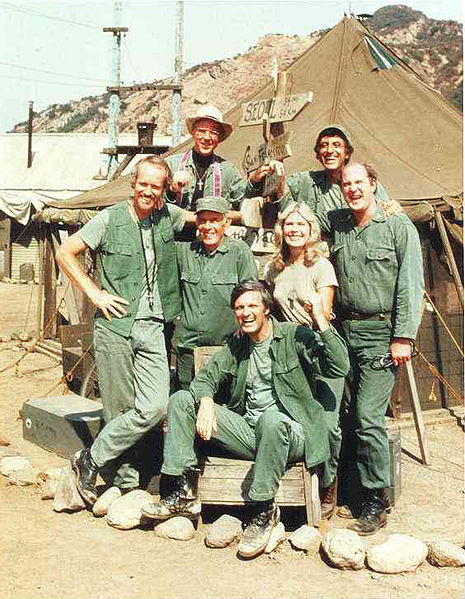
SERVING OF M*A*S*H The cast of the long-running TV sitcom during its 8th season.

A Writer’s first lesson in comic timing.

WHILST participating in a television interview, Cate Blanchett apologised for answering a question about acting using an American accent, explaining that to her, ‘American English’ is the language of comedy, after years of watching M*A*S*H.

Being of exactly the same generation, I can only agree with her.

This long running sitcom, set in a Mobile Army Surgical Hospital during the Korean War of the 1950s, was my very first ‘adult’ experience of television.

As the child of a nurse, it was considered appropriate viewing for my first years of staying up late.

“It’s a well-known maxim that all great comedy springs from the worst situations of human deprivation.”

The fun-filled yet desperate world the characters inhabited worked its way into the very fabric of my writer’s brain, just as it was in the process of forming.

When I am writing comedy, all the classic scenarios of M*A*S*H spring to mind, because between 1972 and 1983 the writers explored every comic angle they could think of. Thanks to syndication, the series has been playing across the world’s television screens for four times longer than it aired originally, and counting.

The secret of the comedy lay not in what was overtly funny, but rather in what was deadly serious about life for Americans stuck in Korea patching-up the wounded.

It’s a well-known maxim that all great comedy springs from the worst situations of human deprivation. Pathos tempers farce. Sadness frames wit. Laughing in the face of death is always more three-dimensional than laughing or crying alone. The two states are very close in the human experience.

M*A*S*H capitalised on those extremes, from the original book MASH: A Novel About Three Army Doctors by ‘Richard Hooker’ (a pseudonym for Dr. H. Richard Hornberger and W.C. Heinz), where the basics of the show’s characters were created, to Robert Altman’s 1970 satirical black comedy feature film M*A*S*H and the series it inspired.

But the TV series had the time and the following to explore the dynamic to its extremes, and evolved from slapstick (think ‘Hot Lips’ Houlihan and Frank Burns cavorting, as though no-one knew they were having an affair), to a kind of black comedy that was borderline drama by the time the show took its final curtain call in the feature-length series finale Goodbye, Farewell and Amen (1983).

For me, the array of three-dimensional male characters who joked, sported, laughed, cried, cross-dressed and generally expressed themselves in ways that it was rare to see men behave in the ‘real world’, were beautifully countepointed by one of my all-time acting heroes – Loretta Swit.

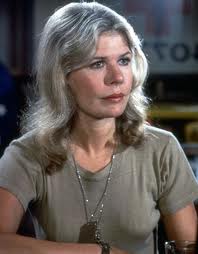
MAJOR HERO Loretta Swit, who played Major Margaret ‘Hot Lips’ Houlihan for the entire run of M*A*S*H.

Stunning, prickly, sympathetic, quick-witted, great at her nursing job, devoted to the army and her country, yet willing to take emotional risks at the drop of a hat, how could you not love Margaret Houlihan, the winning smile that lit up the khaki cloud of Korea?

Swit’s work as Major Houlihan ranks amongst the best-drawn television performances ever, but she had her work cut out for her. Alan Alda (who is the only actor to perform in more M*A*S*H episodes than Swit, as Captain ‘Hawkeye’ Pierce), paid tribute to her achievement in transforming the ‘sex bomb’ tag that the role was originally drawn with, by turning ‘Hot Lips’ Houlihan of 1972 into simply, ‘Margaret’, by the show’s end in 1983.

Interestingly, this change coincided with the women’s liberation movement, and remains one of Pop Culture’s best examples of the metamorphosis of a stereotype.

Apart from being the best education in comic timing I can think of, the series is also a great example of time economy in a script. Next time you watch an episode, notice how the half-hour format restricts the use of too much foreshadowing and requires simple, fast set-ups to every laugh.

If you’re re-writing a script and you need to touch-base with how it should be done, whether it’s a comedy or a drama, watch an episode of M*A*S*H.

© Michael Burge, all rights reserved.

The wilderness years of Meryl Streep

AT the age when society would have preferred I formed a teen crush on Arnold Schwarzenegger, I developed an addiction to the work of Meryl Streep.

It started with a video night for my mother and one of her nursing friends. The film was Sophie’s Choice (1982). I plonked myself down in a bean bag, thinking it would be a bit of a distraction. Then the magic began …

As the layers of grief were stripped away in this story, Streep took her flaying knife and removed the last of my outer shell, piece by piece, as she led me through the guilt of Holocaust survival.

In many ways, the experience opened my heart, and my willingness to allow this idea of pain to be planted in my consciousness came with the stark realisation that I was quite different to other boys.

But Streep’s work was always a great solace for that realisation, and I devoured it all, willingly.

By the time she played Sophie Zawitowski’s devastating journey, she’d already portrayed a few ‘difficult women’ – a terrible pop-culture term to describe complex female characters. Female protagonists, basically.

Think Joanna in Kramer vs. Kramer (1979), the mother who does the unthinkable and leaves not only her husband, but her child. Think Sarah Woodruff in The French Lieutenant’s Woman (1981), the governess who entraps a society gentleman in her web of melancholia.

Sophie Zawitowski was every bit as elusive, with her escapist surrender to the sensations of sex and play in the wake of her years in Auschwitz.

Soon after, Streep took on the role of Susan Traherne in the screen version of David Hare’s Plenty (1985) – perhaps one of the most ‘difficult woman’ characters in postmodern theatre. Perpetually dissatisfied, Susan tries to make herself happy through work, motherhood and relationships, but none of it matches the adrenalin rush of her years as a WWII resistance fighter in France.

This role was eclipsed by Streep’s turn as the more romantic Karen Blixen in Out of Africa (1985). Although Blixen was just a less abrasive ‘difficult woman’, with her corrupt marriage, her refusal to bend to colonial rules, and her devotion to a man who expressed little more than a transitory connection to her.

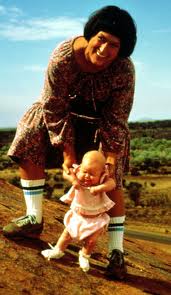
VILIFIED MOTHER Streep as Lindy Chamberlain (Photo: Vivian Zink).

Streep’s portrayal of Lindy Chamberlain, accused of fabricating the abduction of her baby by a dingo in the Australian desert in A Cry in the Dark (1988) was her most stunning transformation to that point. A woman of strong faith who disdained the role of victim, Chamberlain was vilified, tried, jailed and exonerated for the murder of her daughter Azaria.

By the end of the 1980s, Streep went on to play the intriguing role of sex queen Mary Fisher in She-Devil (1988), based on Fay Weldon’s novel about a ‘difficult woman’s’ revenge; and was the ultimate female control freak in her portrayal of President’s wife Eva Peron in Oliver Stone’s political musical masterpiece Evita (1989).

This unstoppable run continued with Streep’s turns as Miss Kenton, the housemaid who niggles at the heartstrings of the head butler in Mike Nichols’ production of Remains of the Day (1991); and as formidable poet Joy Gresham, who opens C.S Lewis’ heart in Shadowlands (1993).

Hang on … is that right? This writer’s got it wrong, hasn’t he? Check your facts, Mike! Meryl did chase the dingo from her tent, but you’re treading on the careers of Emma Thompson, Debra Winger and Madonna!

Okay, rewind …

To date there has been no comprehensive biography of Meryl Streep. If there ever is, to be complete, it must explore her ‘wilderness years’, where critics and film buffs rather generously describe her as experimenting with comedy and the action genre.

British film critic Barry Norman interviewed Streep in 1993 and asked her outright why she agreed to be part of She-Devil at all. Drawing him with one of her sharp stares, she put on a slightly comic voice and said: “Because I liked the one they did over here …”, referring to the BBC’s 1986 adaptation of Weldon’s novel, The Life and Loves of a She-Devil.

What might have attracted Streep was the original atmosphere, and climax, of the book and the TV series, which required the actress playing Mary Fisher to also play the very She-Devil herself. It was a plot twist like no other, and to have seen it in Streep’s hands would have been a real cinematic treat, but it was left out of the schlocky Hollywood version.

Streep’s preparation for the role of Eva Peron – singing and dancing rehearsals, and the recording of some of the musical’s tracks for Andrew Lloyd Webber’s approval – are well documented. A 1989 New York Times article cited security concerns about planned location work in Argentina, and an escalating budget complicated by Streep’s salary demands during delays in the doomed Oliver Stone production.

Mike Nichols was to direct Harold Pinter’s adaptation of Booker Prize winning novel Remains of the Day, and screen tested Jeremy Irons and Meryl Streep for the leads. In an incident which has had only cursory exposure, Nichols did not believe this casting would work. Why that might have been the case (especially since both appeared to widespread acclaim in The French Lieutenant’s Woman a decade before), is unknown. A 1994 New York Times interview with Streep outlined how nobody had the guts to inform her, and confirmed that she sacked her longtime agent as a result. The Nichols-Pinter version was shelved until Merchant Ivory picked up the material, with new leads.

So why did Meryl Streep – a two-time Oscar winner at this point – find it difficult to land the roles she wanted? Had demanding a ‘pay or play’ clause during production delays on Evita labelled Streep as ‘difficult’ as her characters?

In the absence of any objective analysis, we’ll have to wait until Streep opens up.

By the time Clint Eastwood was on board to direct and star in The Bridges of Madison County (1994), plenty of other actresses had been talked-up for the female lead, but Eastwood got Streep’s number from Carrie Fisher (screenwriter of Postcards from the Edge), circumvented any Hollywood agent protocols, and asked the actress if she was remotely interested?

Streep reportedly upped-sticks and arrived in Iowa for filming at the drop of a hat.

The role of farm wife Francesca Johnson does not seem like a ‘difficult woman’. At first glance, she appears anaesthetised by her circumstances, but she’s a kind of dormant volcano, much like I imagine Streep was at the time.

The movie gave her another chance at a slow flaying of the viewer’s hide, in the role of another European woman, seemingly exiled in America.

By the time she’s removing the last layers, the similarities between Sophie Zawitowski and Francesca Johnson are obvious. The emphasis on significant life choices for both characters was a reminder for audiences of Streep’s other great characterisation of a decade earlier.

The Bridges of Madison County was also a return to relatively low production budget for Streep, and she remarked on Eastwood’s relaxed shooting style, which relied less on rehearsals and post production and more on the ability to come prepared and turn on the skill for the cameras.

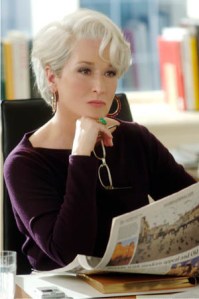
DIFFICULT DEVIL Streep in ‘The Devil Wears Prada’ (Photo: Barry Wetcher).

Over the next five years she worked her way through a series of more veiled ‘difficult women’ like Francesca – Kate Mundy in Dancing at Lughnasa (1998) stands out as the strongest of these.

But she broke through into her old territory as Roberta Guaspari in Music of the Heart (1999), another ‘won’t take no for an answer’ protagonist.

By The Devil Wears Prada (2006), audiences were responding in a way they hadn’t at the box office since Out of Africa two decades before. Streep recalls reaching a new male audience with this movie, playing magazine editor Miranda Priestly as a serenely powerful figure, who maintains control even when everything is crumbling around her.

The takings of this movie and the smash-hit Mamma Mia paved the way for Streep’s masterstroke as Margaret Thatcher in The Iron Lady (2011).

At last we got to see her claim a third Oscar for making us come to terms with the human being behind a Baroness who once ruled a nation.

As usual, not everyone was happy to see Streep shine – she’s always had her detractors. But despite not getting votes from film critic Pauline Kael (who always reserved a special kind of venom for Streep), and Katharine Hepburn (who claimed to hear the mechanics of technique ‘clicking’ with a Streep performance), legions of fans voted Streep’s role as Sophie Zawitowski into third place (and highest position for an actress) in Premiere Magazine’s poll ‘100 Greatest Movie Performances of All Time’.

This article appears in Michael’s eBook Pluck: Exploits of the single-minded