Category Archives: Plays

‘We love entertaining the local community’: Chris McIntosh makes directing debut at Deepwater

LONGTIME LOCAL CHRIS McIntosh has stepped up to direct the upcoming production of Deepwater Players, a raucous production that gets to the heart of family life in country towns, showing at Deepwater in October.

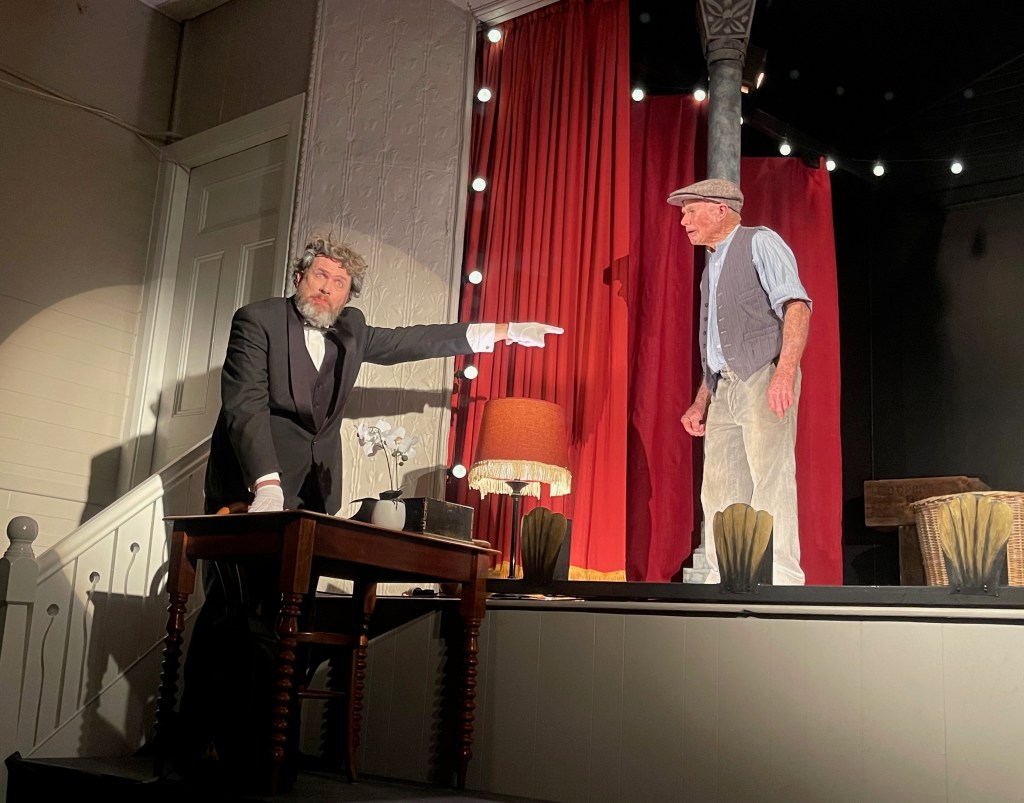
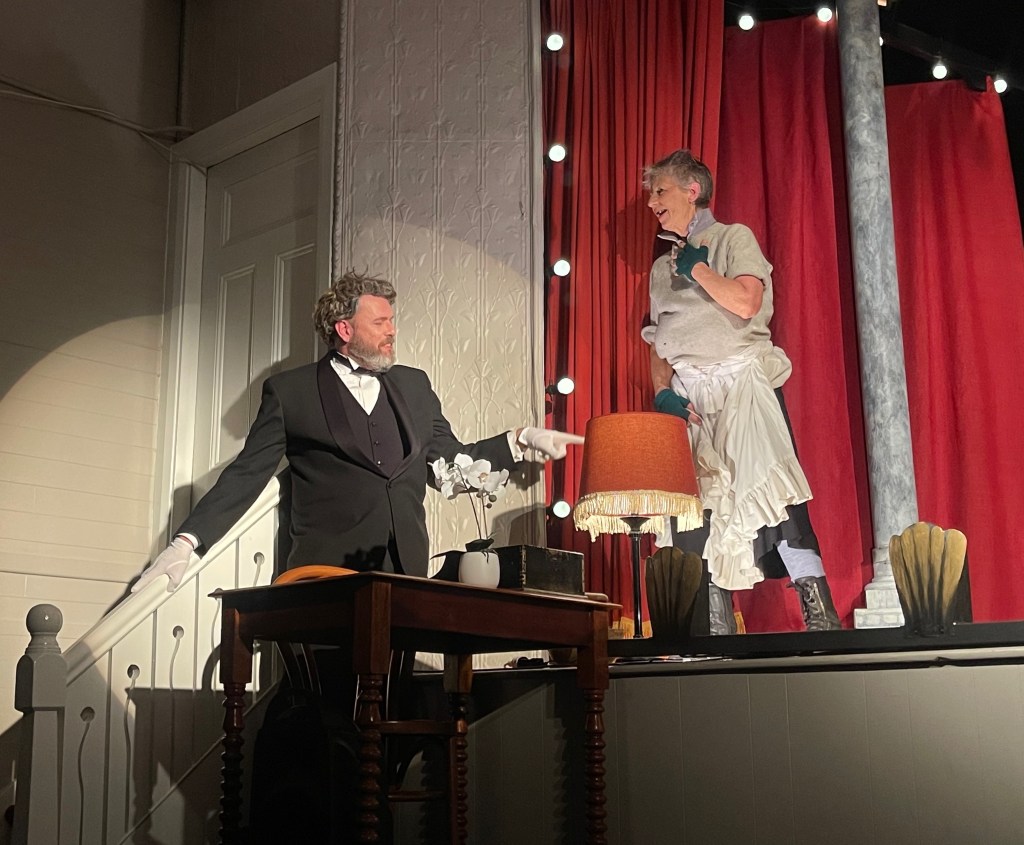
Uncle Jack is a comedy by Australian  playwright Judith Prior, with relatable characters who a lot of people will recognise or identify with,” McIntosh says, speaking from his home at Wellington Vale, west of Deepwater.

“I wanted to put on a play that felt right at home in the Deepwater Hall, for the audience to feel like the characters onstage could be people from their own lives or families. 

Uncle Jack is literally set in a hall in a small town, with very Aussie characters. It also covers some very real and relatable themes, so while there’ll be some laughs the audience will also have something to mull over after they leave.”

McIntosh describes the typical Deepwater Players performance as “an immersive experience”. 

“All shows include either supper, high tea, or a two-course seated dinner,” he says.

“Our dinner sessions include a licensed bar, available before the show and during intermission; and the plays themselves often feature singing, dancing and humour. 

“We don’t want our guests to just come and see a show, we want them to have a great night out.”

Creative energies

According to McIntosh, the Deepwater area is secretly a very creative community. 

“We have artists, craftsmen and designers of various kinds, jewellers, published authors and more,” he says.

“The Deepwater Players fit right in. We’re another avenue for local people to channel their creative energies into.

“The Deepwater plays have become a local icon, too. Most sessions sell out, and having 600-700 people through the doors – when the whole town only has 300-400 – is quite an achievement. We love entertaining the local community. People still talk about plays they came to ten or twenty years ago.”

A prominent fundraising aspect underpins the mounting of productions in the township, with a history stretching back more than four decades. 

“Proceeds from each play are distributed amongst a number of local charities, community groups and not-for-profit organisations,” McIntosh says.

“Recipients in the past have included the Deepwater Public School P&C, Red Cross, Royal Far West, our golf and tennis clubs, the Emmaville Pony Club, our local SES unit and the Westpac Rescue Helicopter.

“The first play was actually prompted by a local tragedy – a young boy died who could have been saved if the right medical equipment had been available in the town. 

“That first play was produced specifically to raise money for emergency medical equipment for the town. It was such a great success that the group decided to continue on the same model, producing shows every two years or so.”

McIntosh pays tribute to local high school teacher Jenny Sloman, who adapted and directed plays for most of the time the Players have existed.

“Although Jenny has now retired from that role, we still have a couple of the original cast members who have appeared in nearly every production here,” he says.

“We are also very welcoming of newcomers, including people who’ve never been on stage before. 

“Our last play [Phantom of the Music Hall, also penned by Prior] featured a 17-year-old schoolgirl from Dundee, who has since gone on to study acting in Wollongong.” 

Worked wonders

A veteran of three previous Deepwater productions, McIntosh says participating in the performing arts is “daunting but also really rewarding”.

“Being talked into getting on stage for the first time worked wonders on a much younger me. 

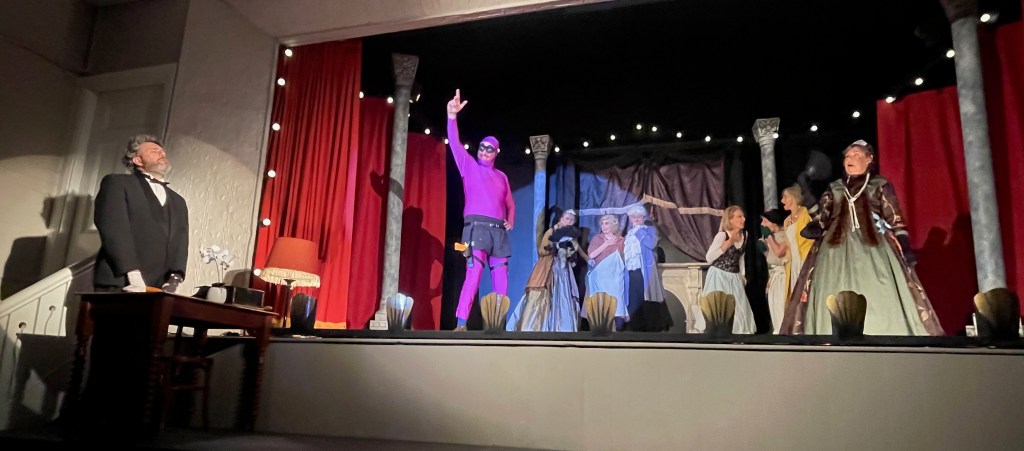
PERFORMING PHANTOM: (L-R) Cathy Wheatley, Chris McIntosh and Charlie Coldham in Deepwater Players’ 2021 production of ‘Phantom of the Music Hall’ by Judith Prior

“It was a real confidence builder,” he says.

“Acting can be very inward-looking, as you try to inhabit a specific character – to become someone who might be very different to you in every way.

“That can be difficult, even confronting, but also a lot of fun! You’re also literally in the spotlight, with a lot of attention on you and an audience giving you live feedback about your performance.”

He finds directing involves being more concerned about what everyone else is doing.

“There’s much less ‘I’ in this role,” he says.

“It’s a management role, it’s about people, relationships, organisation and logistics. 

“You’re still involved in the performance, but from the point of view of the audience, and you need to get into the minds of all of the characters, not just your own. It’s a very different experience.”

Another project McIntosh has been working on recently is the Welcome to Deepwater website. 

“This is a directory site listing practically everything in the town, designed as a resource for both locals and visitors,” he says.

“I realised some time ago that there were a lot of individual businesses, clubs and community groups with their own websites or social media, but there wasn’t really a single place to find all of that information.

“I started making my own list, and the site grew from there. 
“I’m hoping to support the Deepwater community, with this site acting as a one-stop place for information about our town and what it has to offer – whether you’re a long term local, new resident, visiting friends or family in the area, or a tourist or traveller just passing through.”

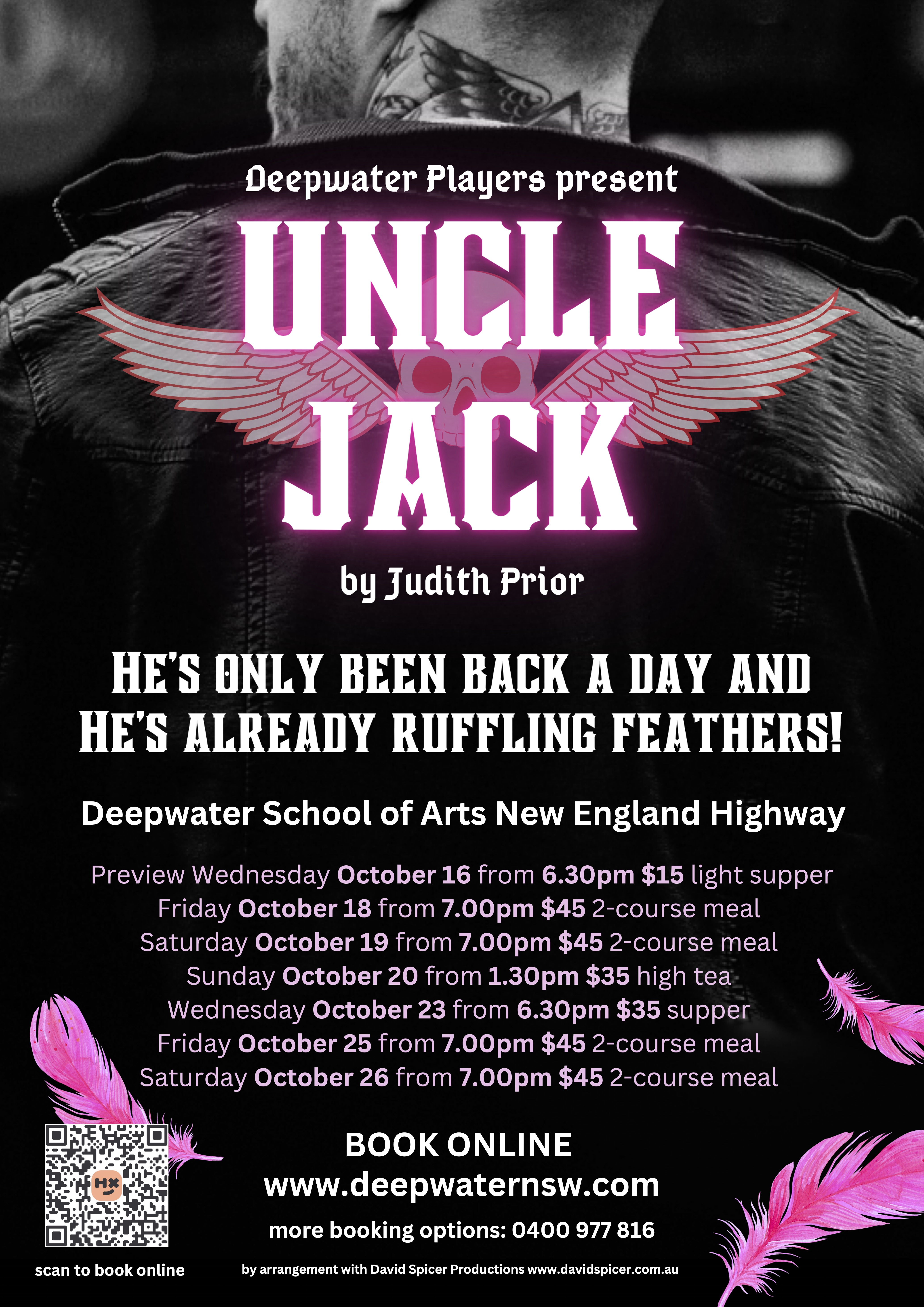
Uncle Jack by Judith Prior will be performed by Deepwater Players at the Deepwater School of Arts Hall from October 16-26. For all bookings head to www.deepwaternsw.com 

Live phantom caught on camera!

I RECENTLY FRONTED a music hall; an old-school, East-End-of-London line up of rollicking romance replete with all the requisite roister-doister of an era long gone.

How did this happen?

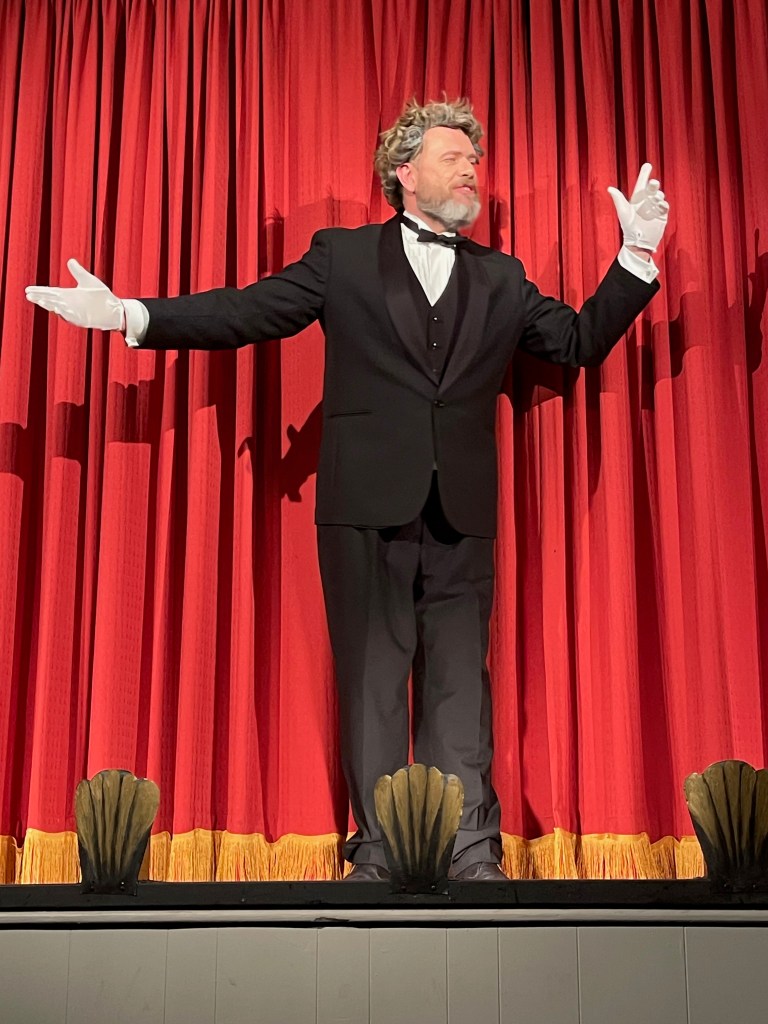
Well, truth be told I tried to get out of it. Twice. It had been fifteen years since I’d trodden the boards of any theatre and part of me wondered if I could still cut it in front of an audience. So I let it be known that the part of Eric von Schneider, master of ceremonies, was up for grabs… but no man in the Deepwater region of NSW would take on this pivotal role. It was up to me to play the lecherous ladies man!

The Deepwater Players have performed a piece of community theatre every couple of years since 1981, when much-needed funds for medical equipment could be raised in no other way. Across those decades, high-school teacher Jenny Sloman has directed the shows, and this year she handed over the reins to Richard Moon (who happens to be my husband… maybe that’s how I got the part?) to make his directorial debut.

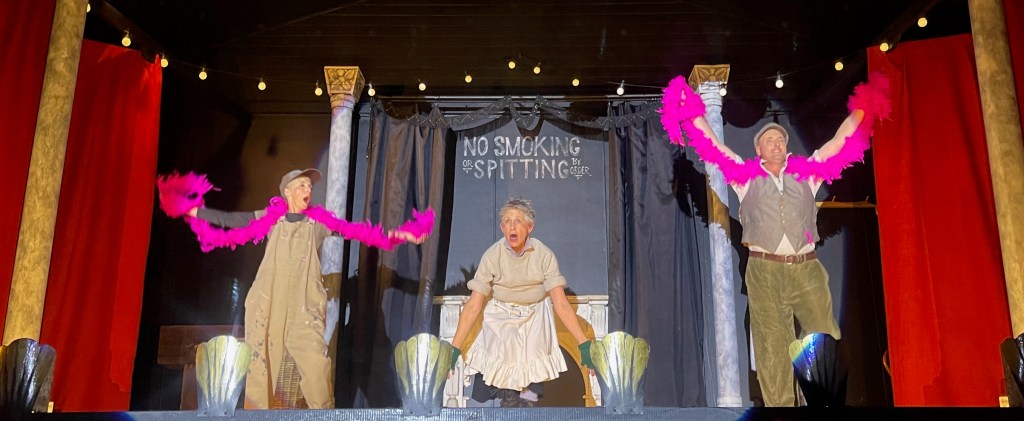
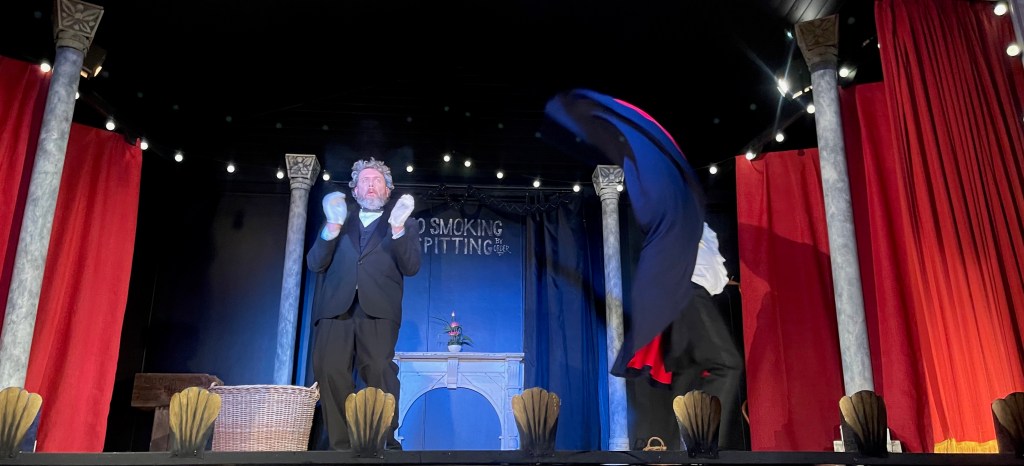
The troupe stages its work within the Deepwater School of Arts, a late-Victorian country hall with a proscenium stage that we transformed into the Whitechapel Music Hall Theatre. Community volunteers did everything from feeding audiences to performing the show!

People flocked from across the region. Some even came from Brisbane, Sydney, Byron Bay and the Gold Coast to see us sing, dance and move our way through music, lyrics and steps from Noel Coward to Lady Gaga and Kenny Rogers!

Thanks to Max S. Harding having a camera at a central table, images were captured (please note: despite wearing an extremely convincing wig, it’s not my real hair!).

Phantom of the Music Hall was written in 1996 by Australian playwright Judith Prior and is bursting with comedy of highly questionable political incorrectness. Nevertheless, it manages to say something about diversity.

It’s the story of a misunderstood Phantom (played by Chris McIntosh) who doesn’t like pantomime but stalks the wings of the Whitechapel Theatre, spooking the cast and crew.

Ambitious new owner Mrs Worthington (Katie Newsome) is convinced that pantomime is the way to make money, and is madly pushing actors with questionable abilities – because all of them are actually the backstage crew – including stage hands Charley and Fred (Cath Wheatley and Charlie Coldham), stage manager Arthur (Denis Haselwood), and wardrobe mistress Martha (Jen Lanz) to rehearse Cinderella. Her daughter Millicent Worthington (Monica Newsome) pluckily plays the lead role despite an early encounter with the Phantom that leaves her rather dazzled.

After Queen Victoria (Helen Grant) makes an appearance at the Whitechapel Theatre, things start to come undone like Millicent’s seams. Eric Von Schneider tries one too many moves on the talent – Daphne de Lace (Catie Macansh) – who refuses to go on if the dreaded Phantom makes an appearance.

The efforts required to convince this spectre that a fairytale is in fact a melodrama create a night of hilarous Cockney-themed comedy, proving that we all see things differently, even ghosts and queens!

If you were in the crowd, thanks for coming to support our show.

Phantom of the Music Hall, May-June 2021 by Deepwater Players
Deepwater School of Arts
Director: Richard Moon
Producer: Jen Lanz
Designer: Michael Burge
Choreographer: Lindy Alt
Stage Manager: Mari Grantun
Cast: Charlie Coldham, Helen Grant, Denis Haselwood, Jen Lanz, Catie Macansh, Chris McIntosh, Katie Newsome, Monica Newsome, Cath Wheatley, Michael Burge
Chorister and Soprano: Christine Davis
Featuring: Deepwater’s Cool Choir
Lights: Peter Sloman, Rob Wheatley, Jenny Sloman
Thanks to all behind-the-scenes, front-of-house, kitchen and bar staff and the Chapel Theatre Glen Innes for the loan of costumes, props and sets

‘It doesn’t have to be Shakespeare’

MERELY PLAYERS COVER PR (2)
Paperback | eBook | BUY NOW

WHEN a middle-aged boy player returns to London’s Globe playhouse during a terrible revival of Romeo and Juliet, she sets off a chain of events as great as any of Shakespeare’s entertainments, revealing a love story that lay hidden for decades, just beneath the lines of the script.

Centuries later, an out-of-work Sydney actor connects the dots of this drama and is inspired to write a play, bringing him face to face with big life lessons in the art and politics of storytelling.

The lives of these two unconventional players collide in a journey from Australia to England, from drama school to the professional stage, from male to female, from failure to success and back again, exploring the untold story of those who created the complete works of William Shakespeare.


An extract from Merely Players: Acting like Shakespeare really matters.

Masters, I have seen a man out of his clothes before, and not tried to make him mine.”

I go back to the place I have made for myself by the rack. Master Burbage sulks while the others begin to peel doublets over expanded bellies, revealing sweaty waists and backs. I notice Heminges undoing his hose on the other side of the rack, trying to conceal himself.

‘Masters, I have seen a man out of his clothes before, and not tried to make him mine, but if you’d be more comfortable hiding your glorious forms, I can wait upstairs,’ I say.

‘Nay, your place is down here with us. We’re not going to make a fuss about Master Tooley, now are we?’ Heminges asks.

Condell shakes his head.

‘Perchance you just sit by the steps and tell me if you can spot any printer’s boys in the crowd,’ Heminges adds.

‘You’re letting printers into the playhouse now?’ I ask, crossing to the stairs.

‘Much has changed since you were in the playhouse, Master Tooley. They’ll have real women playing soon enough,’ Condell says.

‘Don’t believe him, it will never happen,’ Master Burbage mutters into his lap.

‘And there’s never a rehearsal for the bit players, because there’s no lines apart from whatever you can drag up from within your receptacle,’ Condell adds, tapping the side of his head.

I search the ceiling by the stairs, where that larger crack allowed the light to fall onto my mirror when I arrived. Three steps up, the view of the stage reveals itself.

The sun has dipped below the highest gallery of the playhouse, where people sit talking and eating, some asleep against pillars or calling down to others in the pit.

I glance back into the darkness below, to see Condell rushing to get his wide arse back into a fresh pair of hose before I can see him.

‘It won’t be much of a play, without all the lines,’ I say, eyes back on the crowd.

‘We all know how the stories go, just follow the patterns,’ Condell says, ‘you enter, you wait and you listen, then you throw in a line or two which you think sounds right according to your part. Make it a rhyme, if you have the time. Keep it short, or have some sport … it doesn’t have to be Shakespeare.’

‘We don’t do too many old plays by Master Shakespeare,’ Heminges adds, emerging fully clothed from behind the rack, ‘not these days, because whenever we do, the printers send a pair of their pock-faced boys to sit up the back and scribble down our words as best they can. By the time they go to print with it, Will’s best poetry sounds like a madhouse ditty!’

Judging it safe to take my eyes from the stage, I say: ‘I might have been away from this playhouse for many years, Master Heminges, but I do recall you once had a grand plan to print all the plays of Master Shakespeare’s in the one book.’

“While you’re on the stage, duckie, perchance you work out what it is you did come back for.”

‘I did, but then one player of this playhouse took it upon himself to sell the contents of his receptacle to a printer, and when the little books of Master Shakespeare’s became so popular no printer was interested in paying for our plays anymore, they were only interested in stealing more of them. If I ever discover which player it was I’ll hang him by his balls from the top of this playhouse, but I could never catch him at it. I always thought it had to be a player who disappeared from our playhouse, and never dared show his face back here again,’ Heminges says.

I glance down at them, three pairs of eyes, looking into me.

Before I can say anything, a sudden round of trumpets announces the play. The crowd explodes into applause.

‘We’re off!’ Condell says.

‘No-one is listening to you prattle, Heminges, ready yourself,’ Burbage says.

‘I have, but where is my Lady Montague?’ Heminges asks, offering the hat and veil to me. I don them without thinking, and reach for the sliver of mirror in my basket, by the steps, the light from the stage falling across my aged face.

‘Oh dear … I am not ready for this,’ I say, pulling the veil tight and slipping it under my chin.

Heminges takes my arm in a strong grip. ‘You’ll soon be, duckie. A player who does not play has no place in a playhouse!’ he says, as we ascend into the light.


Performance rights for Merely Players are available via the ePlay rights page.

© Michael Burge, all rights reserved