Category Archives: Reviews

Take Another Look: Michael Apted’s ‘pleasantly endurable’ Agatha

The third in a series of retrospective pop culture reviews revisits the mystery movie that Christie fans love to hate-watch …


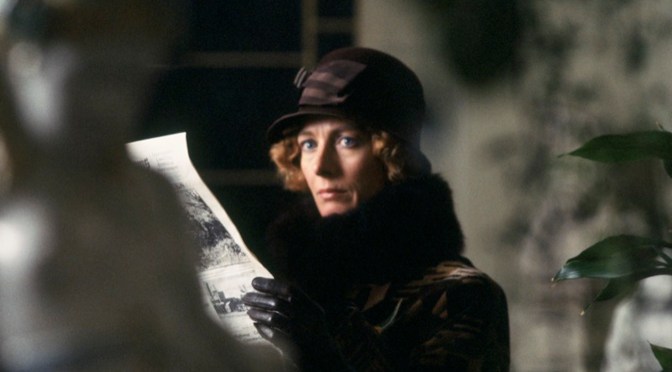
THERE’S AN EVOCATIVE scene in the big-screen adaptation of Kathleen Tynan’s novel Agatha when Vanessa Redgrave as Agatha Christie and Helen Morse as her new bestie Evelyn Crawley, languish in a steam room at Harrogate’s Royal Baths in 1926.

In this tranquil, white-tiled, female-only space, the conversation between two fictitious women (Agatha is at that point pretending to be Teresa Neele of Capetown, South Africa; Evelyn is an entirely made-up character) drifts from ageing to the changeability of men.

Evelyn confesses to being very choosy with her lovers, a concept that Teresa is slightly shocked about and attempts to counter with a rather limp argument for faithfulness.

“It hardly seems worth it,” Evelyn replies. “That’s why choosing’s important. We can’t just let things happen to us.”

Up to this point in the film, director Michael Apted (1941-2021) and story writer Kathleen Tynan (1937-1995) had played reasonably fair with the facts, exploring significant gaps between the dots about the infamous disappearance of Agatha Christie (1890-1976).

Her disintegrating marriage, her car crash in Surrey followed by a night train to Yorkshire’s spa town Harrogate, her adoption of a new persona: these are all known facts.

The rest of Agatha (1979) could only be described as a masterclass in how to get away with portrayals of real-life people, or a cautionary tale about what can go wrong when you try.

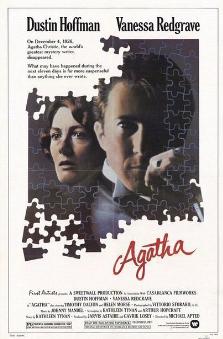
Unarguably, the time was right. The ‘Queen of Crime’ had died in early 1976 when her cult was at its peak. Her posthumously released autobiography made no mention of her disappearance, but Tynan’s book Agatha: The Agatha Christie Mystery (1978), with its pitch of “an imaginary solution to an authentic mystery”, captured the interest of American and British film producers.

CINEMA’S CHRISTIES: Timothy Dalton and Vanessa Redgrave.

Agatha’s exposition beautifully portrays a collapsing marriage in the home counties between the wars. Timothy Dalton drives the scenes as the well-mannered but hardline Archie, the jaded husband who ignites the hidden survival instinct in Redgrave’s crumbling Agatha.

But American Gumshoe Wally Stanton (Dustin Hoffman in full flight) sniffs out a story in the ruins of the marriage, and as the tension rises, Timothy West’s pragmatic police detective delivers the cynicism that underpins the massive manhunt for the crime writer when she goes missing.

By the midpoint, Historic Harrogate serves up all the flavour of the Roaring Twenties, a decade that had been recaptured so exquisitely and profitably on film throughout the Seventies.

Tynan’s vision for Agatha was bold, yet her book and the subsequent film have been largely forgotten, something only devoted Christie fans love to hate-watch.

Woman in Crisis

Film critic Vincent Canby of The New York Times made allowances for Agatha “given the few verifiable facts of the case”.

“The result is a handsome, rudder-less sort of movie that isn’t quite a mystery story, not quite a love story and certainly not a biography,” he wrote, concluding that the production felt “unfinished”, “aimless” and “pleasantly endurable”.

Pauline Kael of The New Yorker saw “the oddness of genius” in Redgrave’s portrayal, but believed the production team, “haven’t come up with enough for their sorrowful, swanlike lady to do.”

It wasn’t until 2020, in a broad-ranging article Re-writing the Past, Autobiography and Celebrity in Agatha by academic Sarah Street, that we got a thorough examination of what happened to Tynan’s story when it was committed to film.

Street concluded that Tynan’s adaptation of her own novel had a “sympathetic premise” towards Agatha Christie, but unearthed a movie production she described as “torturous”.

“Apart from exploiting intense public interest in Christie, the film involved conflict between other celebrities and professionals who in their different ways struggled to make sense of this puzzling event in Christie’s life,” Street wrote.

Given access to transatlantic film production archives, she was able to examine correspondence between key creatives, tussling over the narrative.

In a 1977 letter to Apted during hurried, late-stage rewrites, Tynan described the characters of Evelyn and Wally as catalysts for the personal growth of Agatha Christie, a “woman in crisis”.

In recent years, much has been written about the mental health struggles of Agatha Christie in the 1920s. But in the 1970s, Kathleen Tynan was one of the first writers to suggest the author’s flight to Harrogate played out a desire for reinvention.

Evelyn Crawley was the emotional guide Tynan gave her, through a reckoning that had been intended to play out in the hands of women.

The original casting for this glamorous, independent character also became apparent in the details unearthed by Street: Julie Christie, who pulled out of the film due to illness. Helen Morse deftly stepped in, but late screenplay rewrites supplanted Evelyn with Wally in the film’s second half. The gumshoe becomes the wayward crime writer’s love interest, something Tynan never intended, according to her archived correspondence.
The major consequence was the unravelling of the feminist thread in Agatha. There’s a trace of it in that steam room conversation, when Evelyn encourages Agatha about not letting things just happen to her. Like a moment of insight in a fever dream, it feels as close to the emotional truth as anything.

Hang onto it when you watch this problematic but gripping film, to make sense of what Agatha does next.

Agatha is streaming on Apple TV and Prime.

Kate Grenville’s cranky road trip to reconciliation

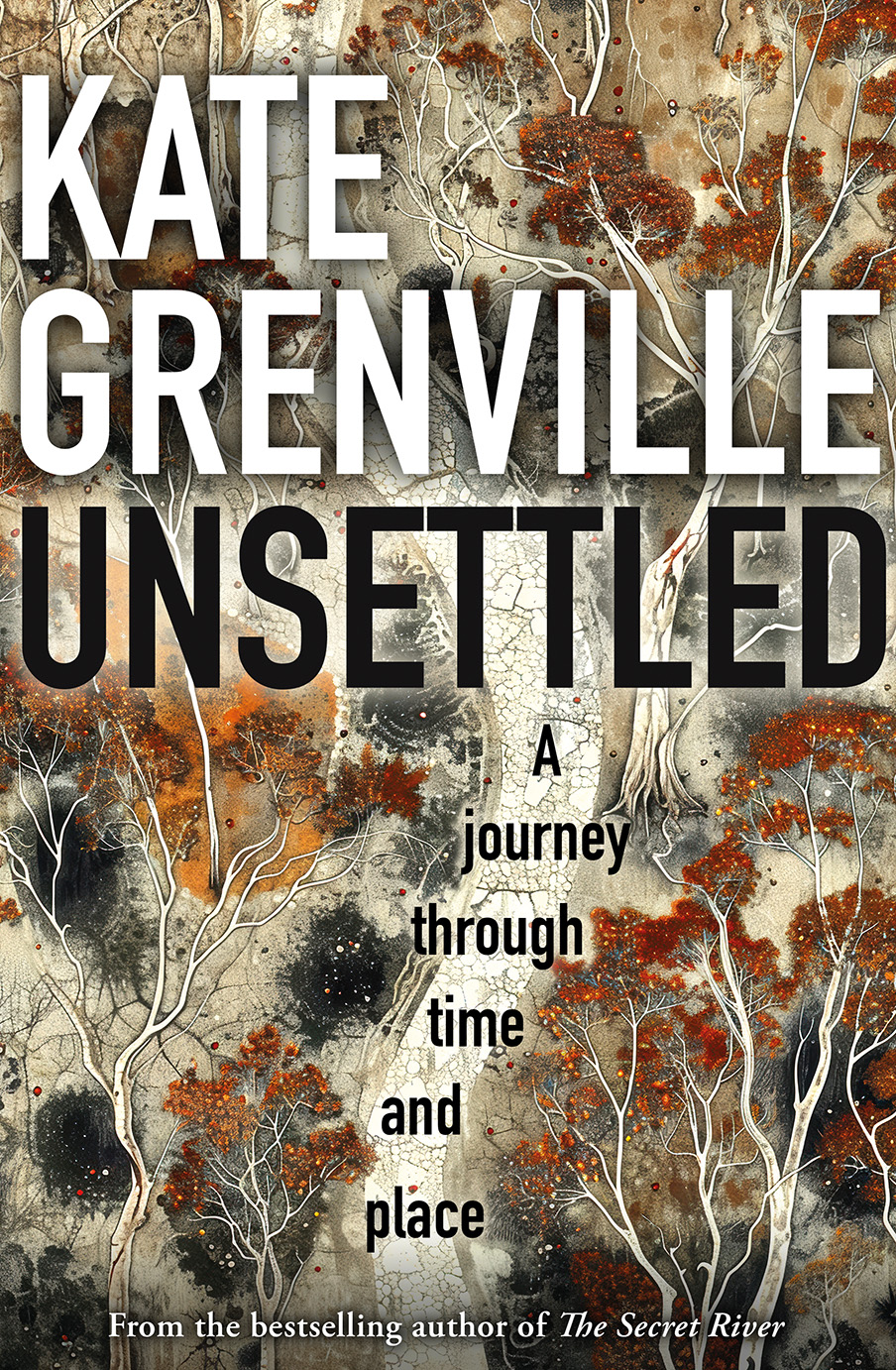
PROLIFIC HISTORICAL AUTHOR Kate Grenville’s latest book Unsettled: A journey through time and place (Black Inc.) documents her gutsy journey ‘up country’ into northern inland New South Wales, serving up excellent fodder for city slickers intent on reading about reconciliation between First Nations and settler Australians.

As she ruminates on colonial blindspots at country town memorials, pubs, farm gates and creeks, Grenville delivers her signature inner dialogue, heartfelt and tense; but as the discoveries about her ancestors mount up, she gets increasingly tetchy and judges the current locals at every step.

I found myself wincing at her portrayal of some who would be easily identifiable to residents of various towns. These scenes are replete with assumptions that require journalistic triangulation to achieve any objectivity, and the solution was always just a few interviews away.

Yet the author often describes accelerating away from encounters she finds fearful, such as a farmer wondering why she’s parked on his driveway. It makes the author’s road trip less about discovery (heck, he might have just been wondering if Grenville had a flat tyre) and more of a drive-by trolling, like the Greens bussing to Queensland’s mining heartland from Melbourne expecting to bring ideologies together.

The old saying about catching more flies with honey instead of vinegar applies, particularly in the country. Dialogue would have led the author to places where reconciliation grows beyond the libraries and the cenotaphs, driven by passionate people making a difference at the coalface. Instead, this book stands to alienate many in the regions Grenville travelled through.

Where Unsettled achieves for metro readers is its roadmap, literal and emotional. Still, I’m baffled about who Grenville hopes to inspire as she exhorts the reader to take up the necessary process of looking back, particularly at our forbears and finding out what they did. This is where the lasting message of this book (that when you know about something, you know) hits a roadblock, because who wants to replicate such a lonely rural getaway, chasing ghosts who very likely did bad things?

I do, and I recognise a lot of myself in Grenville, because I often haunt the landscapes of my ancestors. They are my heartlands, and they certainly saw Frontier War crimes. The driveway to the property where my parents farmed in the 1970s marks the eastern boundary of the Myall Creek district, site of the 1838 massacre of Indigenous people, infamous because some of its white perpetrators were tried and hanged.

My family didn’t settle there until long after the Gamilaroi people had been almost dispossessed of their country. We were among the many generations to benefit from the clearances, yet the crime and my knowledge of it since childhood has always been the source of my reconciliation actions.

Sometimes my efforts are public, such as campaigning for the Yes vote in the 2023 Voice Referendum. Sometimes they are private, but certainly they would have been invisible to Grenville on her quick turnaround in my region.

What I was expecting her to do in Unsettled is that thing most journalists dread: a death knock. This requires door-stopping people, raising awkward questions with those who likely don’t want to talk, yet listening without judgement.

Rural journos also know there is no point stopping halfway up any driveway. A few words leaning on a farm gate while you declare your intentions, or over a cuppa and a scone at the kitchen table, have the potential to bridge pretty big divides.

The death knocks for Myall Creek have been done across three centuries, predominantly by locals for locals. All that is left is for more Australians to listen, and had Grenville attended the annual Myall Creek Memorial weekend in June, instead of her solo walk at the site, her book would have undoubtedly been informed by this vibrant, living reconciliation action now in its 25th year. The sight of so many New Englanders showing up at the ceremony and simply listening is a quiet balm that must be experienced in person.

It should, by now, be inspiring more such rural events nationally. Instead, a growing city/country divide in this country sees more and more outsiders baffled by places like the New England, and Unsettled does little to build bridges.

Grenville deserves credit for attempting to see the colonised landscape for what it is and pushing against the lies within the language rural Australian in particular has used since the Frontier Wars. Her acts of quietly and privately thinking her way through the pervasive de-humanising that was wrought in Australia are extremely powerful, and in many ways justify the lonely nature of the trip.

She absolutely nails her strongest argument when she observes the jingoistic habit of professing love for a stolen country, and how the depth of that ardour can never erase the fact that it was stolen. In my travels, I see just as many signs of that in city suburbs as I do in the bush.

Unsettled is one of many journeys the author has taken following the trails of her ancestors, and her explorer’s observations are deeply meaningful to her. Whether Grenville unearthed any larger truths – the note that she reaches for at the end – is on the rest of us.

It takes more than one person visiting a place to settle anything about it.

Take Another Look: Maggie Smith is ‘Almost Too Good’ in The Lonely Passion of Judith Hearne

The second in a series of retrospective pop culture reviews examines the late actor’s overlooked triumph as an Irish spinster caught up in a crisis of faith…


WHEN A COMMUNION wafer gives genteel young Judith Hearne (Emma Jane Lavin) the hiccoughs and other girls in the congregation start giggling, a painful demonstration of Catholic self control is delivered by a pious aunt played by the formidable Wendy Hiller.

It’s the opening scene of The Lonely Passion of Judith Hearne (1987), and young Judith’s stoic face fades to that of middle-aged Maggie Smith (1934-2024) as she’s delivered to the door of a devout 1950s Dublin boarding house. 

Now so down-at-heel that she ascends to her latest shoddy digs with the resignation of a martyr, the question of why nothing appears to have changed for Judith in the intervening decades is masterfully explored in the big-screen swan song of British director Jack Clayton (1921-1995) .

Yet despite Smith winning the BAFTA for Best Actress, the role of hapless part-time piano tutor Judith Hearne was commonly overlooked in her obituaries, basically because hardly anyone got a chance to see it.

After portraying a series of upright matrons in the 1980s (most successfully as Charlotte Bartlett in Merchant Ivory’s A Room With a View), Judith Hearne offered Smith another “prime” akin to the global attention she garnered as Jean Brodie.

Miss Hearne exhibits all Miss Brodie’s blind passion, but where the schoolteacher used bravado to stave off scandal in a conservative society, the piano teacher is shamed into silence; and this exquisite production from the Handmade Films’ stable was similarly humiliated at the box office.

There had been warning signs. The source material – Brian Moore’s 1955 debut novel – was banned in the Republic of Ireland as anti-religious, and notorious for its unsatisfactory ending. Director John Huston optioned the material in the 1960s but failed to mount a production, even with Katharine Hepburn onboard as Judith. During Clayton’s shoot, no Irish church would permit a location crew into their altar to recreate the protagonist’s crisis of faith.

PASSIONATE PAIR: Bob Hoskins and Maggie Smith

Yet this lapsed-Catholic director and his screenwriter Peter Nelson saw great potential in the story’s quite ordinary setting. We wince with Miss Hearne as she nervously pokes her way into the breakfast room, but we cringe when she’s instantly attracted to fellow boarder James Madden (Bob Hoskins, a dose of American vigour in austere postwar Dublin). 

Once Miss Hearne’s delusion takes hold – that Madden’s hints about a business partnership are a reciprocation of her romantic availability – we want to look away.

But we cannot, especially once deadly sins start to boil up. Madden’s sister, the landlady (played with deviously good manners by Marie Kean) and her corpulent dilettante son, Bernie (pitch-perfect Ian McNeice) conspire to ruin Judy’s dreams by exposing the penniless truth about James.

Achingly, he can’t help but see money in Miss Hearne’s heirloom jewels as she prays at mass; an occasion she construes as a first date ahead of a brand new life as a hotelier’s wife.

Augmented by Georges Delerue’s heartbreaking score and a supporting cast that includes Prunella Scales as Judith’s indifferent school friend, this powder keg burns inevitably towards the exposure of the heroine’s real passion, and the unforgivable expression of Madden’s lust.

All in the wrists

Caught up in a financial dispute between producer Handmade Films and distributor Cannon, Clayton’s passion project had a limited US release in late 1987 before being shelved. Despite awards attention for Smith and Hoskins in 1988, the film disappeared into the wallpaper, much like its heroine.

Reviews were polarised. Janet Maslin described Smith as “almost too good” in the role, because her subtlety only highlighted the production’s “obviousness”. Yet Pauline Kael called the film “a phenomenal piece” and recognised Smith’s pioneering task: “There has probably never been another movie in which a woman rejected the Church fathers’ ready-made answers.” 

Long known for the ‘wrist acting’ that she admitted in a 2018 documentary was appropriated from her longtime friend, actor Kenneth Williams, Smith puts her fine joints to expert use when charting Judith Hearne’s inescapable weakness – her alcoholism.

Like voyeurs, we get a glimpse of how far Judith is likely to fall when Smith has her impersonating Hedy Lamarr, all hips, elbows and chin as she poses sensually on her bed after returning from what she believes was her second date with Madden.

This is the comfortable comic schtick of Smith’s matrons, yet something else emerges once the booze flows and Judith’s religious conflict bursts like a shockwave.

Her wrists aimed upwards like a drowning woman, Miss Hearne appeals for help from a priest. But when it’s apparent that he’s as doubting as she is, Smith has Judith slam a suddenly powerful, un-bent forearm into the stone font as though daring the holy water to cleanse her lack of faith.

Unsatisfied, she aims both wrists at the tabernacle and attempts to claw her way into grace.

After taking her passion right up to her god, it’s arguable whether Miss Hearne ever reconciles her addiction within the patriarchy she so powerfully bucks. Wrists ultimately manacled by nothing more than dressing gown pockets in the convent asylum for her last ‘date’ with Madden, Maggie Smith appears to recognise Judith’s ultimate surrender as a feminist triumph of self forgiveness, just for today.

Witnessing her inhabit that discovery – when Moore, Nelson and Clayton all seemed to overlook it – Smith’s work here is much more that “almost too good”. It’s unmissable.

The Lonely Passion of Judith Hearne is streaming on Amazon.