Category Archives: Reviews

Mary’s turn to fly: gripping new memoir unpacks family baggage 

PROVIDING A SAFE place to talk about problematic family dynamics is a hallmark of author Mary Garden’s current book tour, and her visit to Glen Innes on Saturday June 15 promises to be no different.

Garden’s latest book My Father’s Suitcase: A story of family secrets, abuse, betrayal and breaking free begins with a heartfelt exploration of growing up in New Zealand in the 1950s and ’60s in the shadow of her father Oscar Garden (1903-1997), a pioneering aviator who had an emotional ‘crash landing’ once his high-flying career came to an end.

BREAKING FREE Author and journalist Mary Garden

But it was Garden’s realisation that this dysfunction created fertile ground for sibling abuse which provides the centrepiece of her third work of non-fiction.

“I only became aware of the term a few years ago,” Garden, a freelance journalist, said. 

“It is the most common form of abuse in the context of family violence, yet it is the ‘forgotten’ abuse. 

“The problem is that sibling abuse is often dismissed as sibling rivalry, but they are very different. There is also this notion that you must get along with your siblings, they’re family, regardless of how they treat you.”

Described as, “a gripping tale of resilience and survival that offers hope to others who have experienced family violence and suffered at the hands of a sibling,” My Father’s Suitcase is Garden’s follow-up to her seminal biography of her father, Sundowner of the Skies.

But Garden’s latest book extends on Garden family dynamics, delving into the troubled relationship between Mary and her younger sister, Anna, who died in 2023. 

Garden confessed to be “very nervous” about sharing her story and the responses it might inspire.

“But I’m so relieved,” she said. 

“Every second or third person I talk to is either a victim survivor of sibling abuse or they know of someone who has experienced this kind of abuse. 

“I’ve had interviewers, photographers and readers share their experiences. A few have broken down in tears.”

‘Pretending everything was fine’  

Garden’s June 15 author morning tea at The Makers Shed will be her third visit to the Glen Innes region.

“I jumped at the chance to attend the High Country Writers Festival in 2020, and also again the next year, which was very exciting as my book, The Serpent Rising, won the High Country Indie Book Award,” she said. 

“I also love the area. Glen Innes is the kind of region I would have liked to have brought my children up in.”

In My Father’s Suitcase, Garden recounts the struggle she had attending the 2020 event, soon after her sister Anna released a second, secret biography of their father. 

“I had been looking forward to a holiday and being in my happy place, among writers and book lovers. How on earth was I going to cope with the long drive, then speaking at the festival, smiling and pretending everything was fine?” she wrote in her new book.

As is true of many literary events, putting writers together generates inspiration and insight, and it was memoirist Mary Moody who gave Garden clues about the true nature of her sister’s memoir, identifying it as a hagiography (a biography that treats its subject with undue reverence).

At this point in her narrative, My Father’s Suitcase becomes a gripping literary mystery as she peels back the layers in search of exactly how and why her sister embarked on a competing book so soon after her own.

It’s a searing journey, played out in the media, publishing and legal industries in Australia and New Zealand, yet Garden’s positive prose outshines every shadow in her search for the compelling truth.

Currently living at Chewton in regional Victoria, Garden has been resident of regional Australia for large parts of her life, and loves the affordability that comes with living outside major cities.

“I’m always hearing about full-time authors living in cities who are struggling to make ends meet,” she said.

“I can’t live in cities. I don’t even like visiting. They are too noisy. 

“I need peace and quiet to write.” 

Mary Garden in conversation with journalist Michael Burge on Saturday June 15 at High Country Books, The Makers Shed, Glen Innes. Book here.

My Father’s Suitcase is out now from Justitia Books.

(Another) year of independent reading

WHILE the world has been distracted by a pressing pandemic, a small group of readers in the northern NSW New England region committed to reading and discussing a range of independently-published books, and now they’re getting ready to announce the pick of the crop.

Trophy handmade by Richard Moon

This is the second year the High Country Book Club based in Glen Innes has awarded a literary prize. Across 2019 we read a broad range of titles published by readers in three continents and gave our first gong to Lady Bird & The Fox by Australian author Kim Kelly.

In 2020, our pool of choices was extended from indie authors to the publications produced by independent presses, those that don’t have huge marketing machines behind them and could do with a boost. Since we’re based at The Makers Shed, a destination for handmade, skill-sharing and artisanal products, our focus on indie titles is apt.

Our reading year kicked off with Jo-Ann Capp’s Four Hot Chips (published by Boogie Books). The true story of one family’s childhood cancer journey, this is a heartbreaking and ultimately uplifting short read, exploring relationship dynamics when loved ones are under pressure.

We continued with The Worst Country in the World by London-based Patsy Trench, which documents the author’s search for the reasons her ancestress Mary Pitt migrated from Dorset to New South Wales in 1801. Replete with fictionalised scenes where history remains undiscovered, this book is an eye-opener about colonial Australia.

In Hide (published by MidnightSun) we ventured into fiction. Penned by South Australian author S. J. Morgan, this thriller took us on a wild journey from Thatcher’s Britain to the Australian outback, via a chilling look into international bikie culture.

Staying with fiction, we read Kim Kelly’s Walking. Partly based on true events, this novel explores the world of orthopaedic surgery in the first half of the 20th century, through the eyes and experiences of patients, practitioners and their loves, lives and hopes.

You Had Me At Hola by Leigh Robshaw took us on a true-life South American odyssey, recreating the author’s 1990s adventures to find her heart’s desire in foreign lands. Scenes from this title are still regularly talked about in book club meetings months later!

We were visited by Yumna Kassab to kick off the second annual High Country Writers Festival with a discussion about her short fiction debut The House of Youssef (published by Giramondo). This acclaimed collection sheds light on lives in the Lebanese-Australian community.

Mary Garden’s Sundowner of the Skies (published by New Holland) was an external and internal adventure, documenting the 1920s England-to-Australia flight of Mary’s father Oscar Garden, and exploring what high achievers do when they give up their wings.

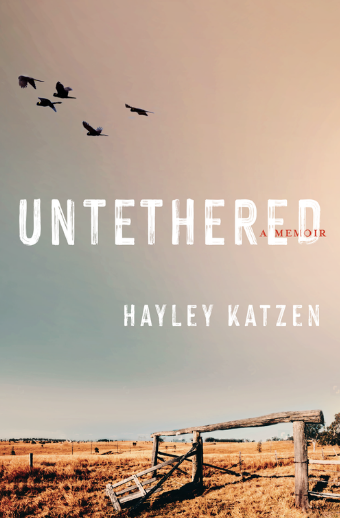
To complete the year, we read Hayley Katzen’s debut memoir Untethered (published by Ventura Press) and were delighted Hayley could join us for another writer’s festival session to chat about her search for a sense of belonging from academia to farm life in the Clarence Valley.

All High Country Book Club titles are available for purchase from The Makers Shed, and can be posted to readers within Australia. Browse our online bookshop.

Congratulations to all the finalists in 2020… we’ve been uplifted, challenged, thrilled, frightened, moved, angered, entertained and encouraged to keep reading by your engaging works of fiction and non-fiction.

The winner of the High Country Indie Book Award 2020 will be announced during the High Country Writers Retreat on Saturday October 24. Bookings essential! Join the High Country Book Club by attending The Makers Shed on the third Saturday of every month from 10am-12pm.

“I noticed your profession, so I know you’re scum”

“I was privy to the final gasp of the great newsmakers.”

A Writer introduces his latest book.

AFTER a career in publishing, marketing and other creative dalliances that was more like the verb (‘move swiftly and in an uncontrolled way’), I arrived relatively late to journalism.

A decade in, I received the comment in the title of this foreword from one of my social media readers. It was posted in reply to an appeal from me for the commenter to take in the whole of my 800-word piece before dissing the point I was trying to make.

The import was brutal. I was expected to step away from the debate about my own work. I was nothing more than the journalist who wrote it, not to be trusted on that basis alone. Had I persisted, the grab-bag of insults would surely have included ‘fake news’.

What on earth was I thinking, becoming a journalist in my forties?

Most of my journalism has taken place in the shadow of the social media’s rise at a time of enormous upheavals and fractures in the journalistic landscape. Nevertheless, I’ve managed to earn a living as a reporter and editor for almost ten years, usually taking positions that no one else wanted because the pay was terrible and the prospects of advancement zero.

My first full-time journalism contract was inexplicably based on the template for engaging a builder. A year-and-a-half later, the boss tried to dump me because advertising sales were gently drifting downwards and he thought it better to install an unskilled family member as the writer.

I held my nerve, cited my tradesman’s agreement in an assertive conversation, and tried to imbue my employer with courage when he cried and begged me not to make him honour it.

This strangest of arrangements lasted until the office locks were changed on me before my final pay arrived in the bank account, and the first gap in my journalism career opened wide.

I did what so many of us do: I started a blog and learned to publish online. The lure of the Publish Button was strong but it hadn’t quite found the sweet spot to kill the media just yet, because soon enough I was asked to interview for a position at Fairfax Media.

As one of the company’s last sub-editors I was privy to the final gasp of the great newsmakers, working with subs capable of taking the shoddiest copy and transforming it into double-page spreads with multiple lead stories, down-pages and briefs, all spell-checked and “legalled” in under 15 minutes.

It was an education like no other in a newsroom environment swiftly replaced by a landscape where news-making means almost nothing.

Along the way, my writing output increased to the point where I was often heard to confess that there’s no off switch.

This is undoubtedly due to the rise of digital and independent publishing tools which allow writers to reach a wider audience than ever before. Finding a readership is still the challenge it always was for wordsmiths, but securing our place in the flow of digital media is as easy as a username and password.

So it was a defining moment for me when seasoned journalist Margo Kingston, also formerly of the Fairfax stable, offered me the chance to write for NoFibs.com.au. The gig: a regular column. The subject: the Arts.

“The articles in this collection walk the indefinite line between politics, art, culture, identity and equality.”

Getting an encouraging green light from a respected commentator is rare. Doing the work for free, yet having editorial control, presented the perfect antidote to hours spent shaping the work of other journalists while still on deck as a paid, casual sub-editor at a Fairfax newsroom in Queensland.

The resulting output forms most of the articles in this volume, written over a four-year period (2013-2017) during which Tony Abbott’s brief prime ministership was played out then snuffed out, leaving Australians to endure the fallout.

The articles in this collection walk the indefinite line between politics, art, culture, identity and equality, traversing the period when journalism as we knew it went into its death throes and started to slide behind pay walls.

They also document the final, frustrating years of Australia’s journey to marriage equality; the belligerent delays, missteps and guesswork in delivering marriage equality to a community in which 60 per cent of voters continually told our representatives that we wanted a change to the law.

Here lies the key to understanding every long-form title I wrote across the same period, and why I often crossed over into activism in addition to journalism.

Any ‘scum’ still writing articles for general readership these days are either overstretched under a masthead, or still plugging away independently for very little return, more likely nothing. This book is dedicated to every one of them.

creating-waves-cover
BUY NOW

If you’re still reading this, just 800 words in with no digital bells and whistles to amuse you, your attention span is fit and you’ll probably make it to the end. If any of it leaves an impression, please take that incredibly rare action that is a gift to independent writers and a necessity if we want journalism to survive: share it.

An extract from Michael’s eBook Creating Waves: Critical takes on culture and politics.