Category Archives: Rural Childhood

Troubled waters: a Mystery Tour of Kippen Pool

The third stop in a series of literary excursions examines how the local baths in a fictitious country town became the perfect location for a crime sequel


SOMEWHERE IN NORTH-WEST New South Wales is a rural town I made up. Kippen, named by Celtic settlers who saw the hillsides and thought of the Highlands, sits astride a river gorge that separates flat country from uplands where graziers plough their luck into black soil.

At one end of the high street is a towering pub. At the other, a scrubby cemetery. Between them sits an authentic vintage milk bar, a classic seed-and-feed supplier, the Kippen council chambers, a retirement village, a caravan park, an old-school department store and the Federation cop shop that serviced locals for over a century before a decline set in at the turn of the millennium.

Right at the centre of town, straddling the stretch of flat, rocky ground between the main street and the river, Kippen’s Memorial Swimming Baths survived; but take a closer look beyond the blond-brick 1960s entranceway and the turquoise ripples and you’ll notice tensions just below the surface.

Watering Hole

As a regular lap swimmer in rural swimming pools since I was a kid, I’ve come to understand why these beloved community assets are struggling, and it’s not just crumbling infrastructure or cash-strapped councils. Seven decades on from the swimming boom after the Melbourne Olympics, it’s possible we’re a nation that just can’t play nice at the local watering hole.

FIT FACADE: Inverell Pool’s original entrance.

I learned to swim at Inverell pool in the NSW New England region, and was glad to see the place’s original vintage facade – an imposing temple raised to mid-century fitness – survived a recent $24.98m upgrade

But despite the advantages of this brand-new facility, it was the site of a flashpoint that raised the spectre of racism very close to the 60th anniversary of the Freedom Ride, which travelled to Moree in the 1960s to highlight racial segregation at the local swimming baths

Public pool tensions are not exclusive to my part of the state. At Orange in the NSW Central West, security guards were brought in halfway through the 2023/2024 swimming season after reports of sustained antisocial behaviour during a free-entry trial. Hoping that bigger spends at kiosks and aquatic classes would offset increased running and maintenance costs, Orange City wasn’t the only rural local council to drop fees then quickly reinstate them due to a spike in abuse aimed at pool staff, including death threats.

Anxieties about taking a dip run deep. I witnessed the echoes of the Freedom Ride during my Inverell swimming lessons in the 1970s, when adults in my community whispered slurs about Aboriginal kids jumping the fence. Two things told me that just wasn’t true: the height of the mesh topped by barbed wire, and the absence of anyone but whitefellas at those classes.

I didn’t set out to churn all that tension into my latest rural noir, but when I realised I could make something as apparently innocuous as the local swimming baths into a setting for crime, it was too delicious to ignore.

Underuse & Neglect

These days it’s actually me who doesn’t always pay to swim. Not because I’m squeezing through the old metal turnstile like many of us did as teenagers, it’s that I often go to pay my entry fee with spare change and there’s nobody around to take my money.

Yes, I could leave the coins on the counter, and I have the option of buying a season pass; but I regularly swim when I travel and I can’t afford season passes to every pool. Hunting out the one staff member on duty is possible, but I shouldn’t have to chase the person paid to monitor the door. I just want to get into the water, do my laps, and move on with my day. If I see someone staffing the desk at the exit, I’ll give my money to them as I leave. 

I’ve dived into rural and regional council pools from Queensland to Tasmania, from the coast to the ranges. Some I remember by the shock of cold water on an October day, the wind shear across grey ripples daring me to take the plunge. Others are memorable because I’m the only one carving up the water, as though the ratepayer-funded facility is my private pool. 

What I’ve observed over the decades is that community swimming culture appears to be on the decline. Aussie kids are learning to swim less, more households have their own backyard pools, and councils are outsourcing management of swimming centres in an attempt to prevent these de-facto local waterholes returning to nature as paint peels and concrete cracks.  

Many outdoor pools close throughout the colder months, meaning November and February see plenty of competition for lane swimming between school carnivals and private events. This occasionally cranky middle-aged fella sometimes can’t get into the pool because there’s little or no communication about access. It’s no use looking at social media for updates that rarely get posted, or calling a phone number that just rings out; which is another mark against buying any kind of season pass.

But it’s this blend of underuse, neglect and decay that makes a country town pool lonely enough to be the perfect setting for a thriller.

Sorry For The Inconvenience

According to Royal Life Saving Australia general manager R J Houston, around 500 council swimming baths across the country are in need of repair or replacement

“By 2030, about 40% of public pools will be too old to use properly, and we will need about $8 billion to replace them,” he said.

“Communities across Australia need to use these pools as much as they can.”

Well, I’m trying, but getting my weekly swim has become a case of pot luck. Since I live 30-40km from my closest public pools, and have often arrived to see private functions have the place closed (“sorry for the inconvenience” signposted at the entranceway) or weather-related closures that have not been posted on social media, it can be a completely wasted trip.

Tensions in Orange were also managed around public/private access to the same swimming facility, when the number of entrants was limited to an indoor pool while the outdoor pool hosted the January, 2024 Swimming NSW Country Championships. For an inland city, it’s a big ask to keep the public out of the water at the height of summer.

Swimmers in the NSW Central West Cabonne Shire may be onto something with a new way of managing public pools, one which stands to provide sustainable solutions to all the trouble of the state’s swimming centres.

According to the council, the combined cost-per-swimmer at Molong pool was reduced from $40 to $15 during a trial of unsupervised access for swimmers between 6am and 7pm. Pool attendants are rostered part of the day, but outside those times users must only attend the facility in pairs, undertake an induction and crisis training, and are subject to CCTV monitoring. The experiment was so successful that Cabonne Shire tripled the sales of annual season passes.

Residents have reported more social cohesion as a result. If this approach calms things at the watering hole, lets me swim when I prefer, and gets the council closer to breaking even, I’d buddy up with someone and dive in all year.

But it’s too late to clean up Kippen Pool. It is implicated in my new rural crime thriller Dirt Trap, (out now from MidnightSun Publishing), and the locals are probably going to hate me.

Kate Grenville’s cranky road trip to reconciliation

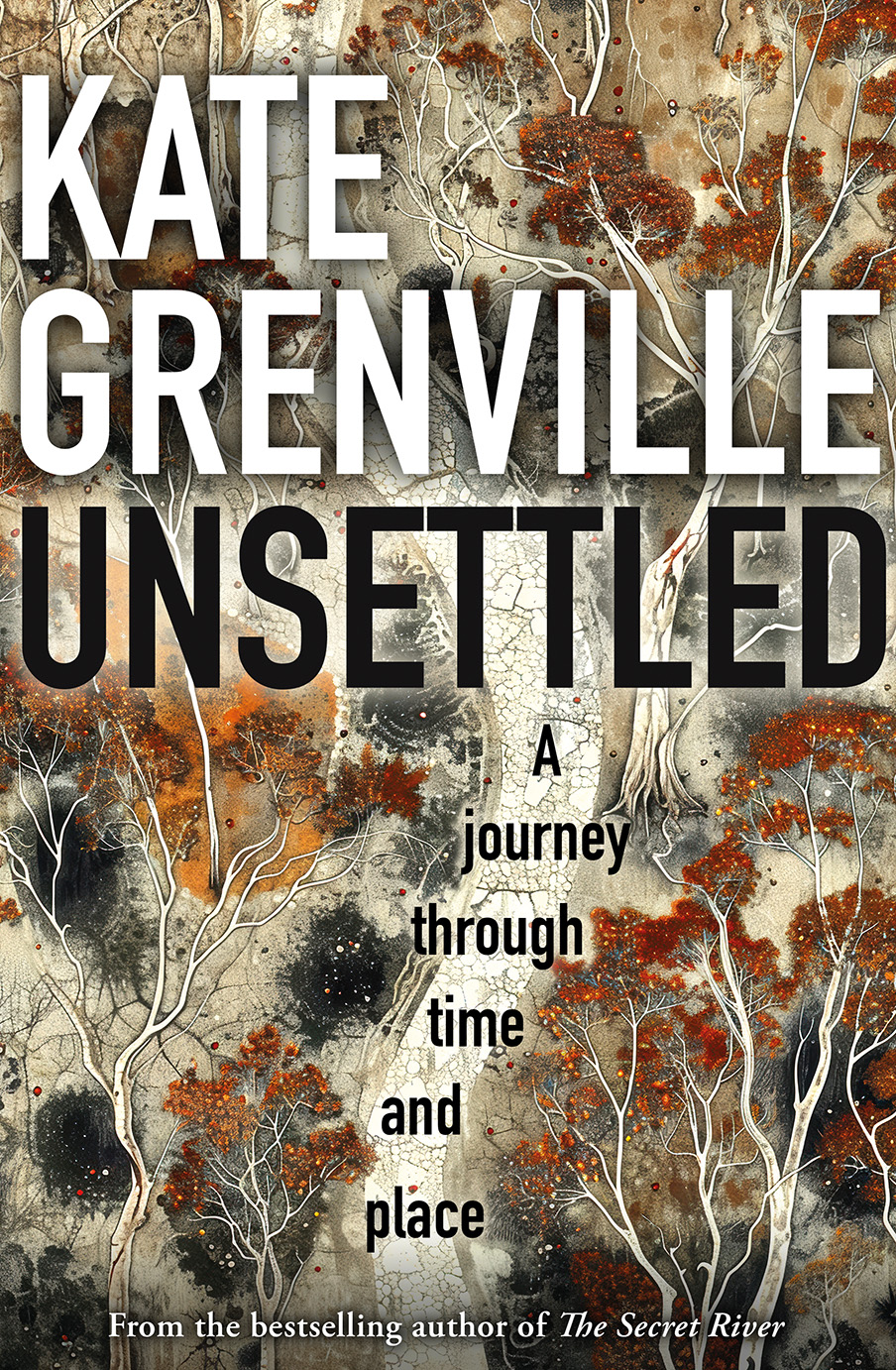
PROLIFIC HISTORICAL AUTHOR Kate Grenville’s latest book Unsettled: A journey through time and place (Black Inc.) documents her gutsy journey ‘up country’ into northern inland New South Wales, serving up excellent fodder for city slickers intent on reading about reconciliation between First Nations and settler Australians.

As she ruminates on colonial blindspots at country town memorials, pubs, farm gates and creeks, Grenville delivers her signature inner dialogue, heartfelt and tense; but as the discoveries about her ancestors mount up, she gets increasingly tetchy and judges the current locals at every step.

I found myself wincing at her portrayal of some who would be easily identifiable to residents of various towns. These scenes are replete with assumptions that require journalistic triangulation to achieve any objectivity, and the solution was always just a few interviews away.

Yet the author often describes accelerating away from encounters she finds fearful, such as a farmer wondering why she’s parked on his driveway. It makes the author’s road trip less about discovery (heck, he might have just been wondering if Grenville had a flat tyre) and more of a drive-by trolling, like the Greens bussing to Queensland’s mining heartland from Melbourne expecting to bring ideologies together.

The old saying about catching more flies with honey instead of vinegar applies, particularly in the country. Dialogue would have led the author to places where reconciliation grows beyond the libraries and the cenotaphs, driven by passionate people making a difference at the coalface. Instead, this book stands to alienate many in the regions Grenville travelled through.

Where Unsettled achieves for metro readers is its roadmap, literal and emotional. Still, I’m baffled about who Grenville hopes to inspire as she exhorts the reader to take up the necessary process of looking back, particularly at our forbears and finding out what they did. This is where the lasting message of this book (that when you know about something, you know) hits a roadblock, because who wants to replicate such a lonely rural getaway, chasing ghosts who very likely did bad things?

I do, and I recognise a lot of myself in Grenville, because I often haunt the landscapes of my ancestors. They are my heartlands, and they certainly saw Frontier War crimes. The driveway to the property where my parents farmed in the 1970s marks the eastern boundary of the Myall Creek district, site of the 1838 massacre of Indigenous people, infamous because some of its white perpetrators were tried and hanged.

My family didn’t settle there until long after the Gamilaroi people had been almost dispossessed of their country. We were among the many generations to benefit from the clearances, yet the crime and my knowledge of it since childhood has always been the source of my reconciliation actions.

Sometimes my efforts are public, such as campaigning for the Yes vote in the 2023 Voice Referendum. Sometimes they are private, but certainly they would have been invisible to Grenville on her quick turnaround in my region.

What I was expecting her to do in Unsettled is that thing most journalists dread: a death knock. This requires door-stopping people, raising awkward questions with those who likely don’t want to talk, yet listening without judgement.

Rural journos also know there is no point stopping halfway up any driveway. A few words leaning on a farm gate while you declare your intentions, or over a cuppa and a scone at the kitchen table, have the potential to bridge pretty big divides.

The death knocks for Myall Creek have been done across three centuries, predominantly by locals for locals. All that is left is for more Australians to listen, and had Grenville attended the annual Myall Creek Memorial weekend in June, instead of her solo walk at the site, her book would have undoubtedly been informed by this vibrant, living reconciliation action now in its 25th year. The sight of so many New Englanders showing up at the ceremony and simply listening is a quiet balm that must be experienced in person.

It should, by now, be inspiring more such rural events nationally. Instead, a growing city/country divide in this country sees more and more outsiders baffled by places like the New England, and Unsettled does little to build bridges.

Grenville deserves credit for attempting to see the colonised landscape for what it is and pushing against the lies within the language rural Australian in particular has used since the Frontier Wars. Her acts of quietly and privately thinking her way through the pervasive de-humanising that was wrought in Australia are extremely powerful, and in many ways justify the lonely nature of the trip.

She absolutely nails her strongest argument when she observes the jingoistic habit of professing love for a stolen country, and how the depth of that ardour can never erase the fact that it was stolen. In my travels, I see just as many signs of that in city suburbs as I do in the bush.

Unsettled is one of many journeys the author has taken following the trails of her ancestors, and her explorer’s observations are deeply meaningful to her. Whether Grenville unearthed any larger truths – the note that she reaches for at the end – is on the rest of us.

It takes more than one person visiting a place to settle anything about it.

The (lost) road to Sheep Station Creek

THERE MUST BE a hundred or more Sheep Station Creeks in Australia. The one I know is in Kamilaroi Country, and I recently went back to find it because I’m working on a novel about a town that disappeared.

My exploration was a reminder of just how quickly such a thing can happen.

As a kid I regularly traversed the black soil lands west of Delungra, and I recall being told that Dufty’s Lane, on which our farm ‘Paxton’ stood, once ran between the Bingara Road and another place deeper in these blue hills, decades before we moved in.

That destination was Sheep Station Creek, a generous watercourse that often flooded, according to the oral history, cutting off residents of the village with the same name once too often.

Their solution was to head up into our valley along Dufty’s Lane, which runs straight to the Bingara Road crossing creeks close enough to their source to let most of the water get away. From there, it’s a short run into Delungra where there was a railway station, school and post office.

Armed with a map and memories of landmarks (there’s no phone signal out there) I headed west from Delungra to Kaloona. Here, I turned south onto Reserve Creek Road where Gragin Peak sits distinctly almost directly to the north.

After slowly and subtly dropping into a valley, a crusty signpost pointing to Sheep Station Creek greeted me not far south of where Reserve Creek flows into it. The water was flowing beautifully, creating wide, shaded pools as it winds through the district. With plenty of properties along the way, it seems the perfect place to put down roots; but there’s little sign this was once a place with a name.

‘This little spot’

It seems the closest Sheep Station Creek ever got to being recognised was in century-old reports. One, published in The Inverell Times three weeks after the Australian Imperial Forces’ landing at Gallipoli in 1915, called the region “this little spot” in “the corners of Inverell, Warialda and Bingara districts”.

The write up reads as though it was penned by a local, speaking of a rifle club and tennis meets; and thousands of sheep, cattle and horses agisted in the valley during a “recent dry spell”.

The annual minutes of the local “F&S Club” branch were reported, mentioning the arrival of the telephone service, a rise in rates, the plan for a local polling booth, and various road repairs.

“The Shire Council has effected an agreement with St Clair Bros, in regard to the road through their properly, which, though not final, puts residents, on a more satisfactory footing,” the report reads.

The St Clairs were Percival and Harold, second joint owners of Paxton. A 1916 report in the Tamworth Daily Observer mentions the success the brothers were having in the cultivation of various grains on Paxton, with a particular focus on Sudan Grass, a highly nutritious fodder sorghum they were selling as seed. Harold was also doing well out of breeding horses for the track.

The writer of that report didn’t mention Dufty’s Lane by name. They called it “the Road to Sheep Station Creek”.

It certainly sounded like a place that was burgeoning, so what happened?

A changed world

The day I passed though. the weather-beaten pointer to Sheep Station Creek was hidden in the shadow of a signpost to a place with a more notorious name.

I followed it and soon ended up at the old Myall Creek Hall, where, with my siblings and friends, we once played on the swings and performed on the raked wooden stage at Christmas. I’d arrived at this place by another route in 2015 for the annual memorial of the Myall Creek Massacre.

A local volunteer was mowing the lawns, so I got to have a slow look inside.

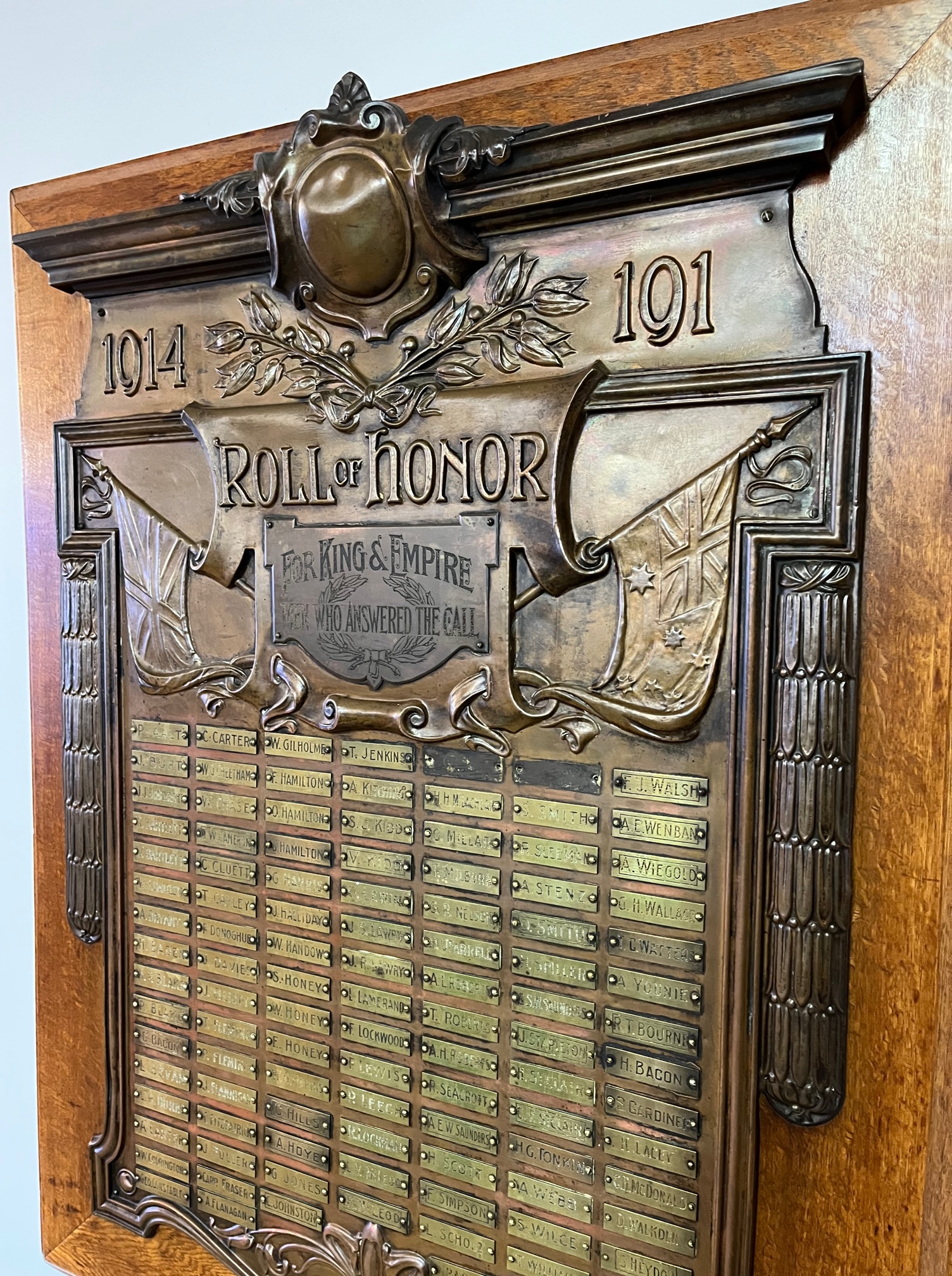
In the dusty light, I noticed an honour roll, which likely goes some way to explaining the disappearance of Sheep Station Creek. Two of the four St Clair brothers – Harold and Christoper – appear on it. After enlisting late in a war that no-one knew would end soon (a similar board at Delungra was embossed “1914-191_‘), Harold returned but his younger brother did not.

The weekly papers of the New England region are filled with the lists of the war dead and wounded across these years. Harold St Clair’s bushman’s skills were exploited in Palestine, not the racetrack. He returned to a changed world in 1919.

If the residents of Sheep Station Creek – just getting a foothold on their lands in 1916 – were impacted at the same rate of loss as the rest of the New England community, is it any wonder the hopes in those branch minutes were blown away like sorghum seeds no-one was around to harvest?

Out of place

I continued on the Myall Creek Massacre memorial site, taking the short walk to remind myself of the story of the Wirrayaraay women, children and old men whose lives ended so brutally at the hands of colonial settlers in 1838.

The Wirrayarray’s custodianship of Myall Creek was forever interrupted by this episode of Australia’s Frontier Wars. It’s not clear what the residents of Sheep Station Creek knew or understood of the massacre, although I was told about it as a child while playing at the Myall Creek Hall in the 1970s.

War stories tend to get handed down the generations. The loss of large parts of some generations due to conflict is something all cultures have in common. Hopefully we can remember all the fallen on the one honour board before long, by including the Frontier Wars in our ceremonies.

Despite my hunt along every rut, track and open gate, the road down to Sheep Station Creek from Dufty’s Lane appears to be long gone.

Perhaps Sheep Station Creek survives in other memories and family stories? These remote hills and valleys are filled with place names that exist only on maps, or remnant signposts standing by old roads to nowhere, travelled by dreamers like me who are drawn by legends and century-old meeting news clippings.

In that sense, the fictitious town that disappears in the manuscript I’m currently reworking is hardly out of place. It’s just another bend in another creek somewhere.