Category Archives: Rural Childhood

Dearborn, death & American dreams

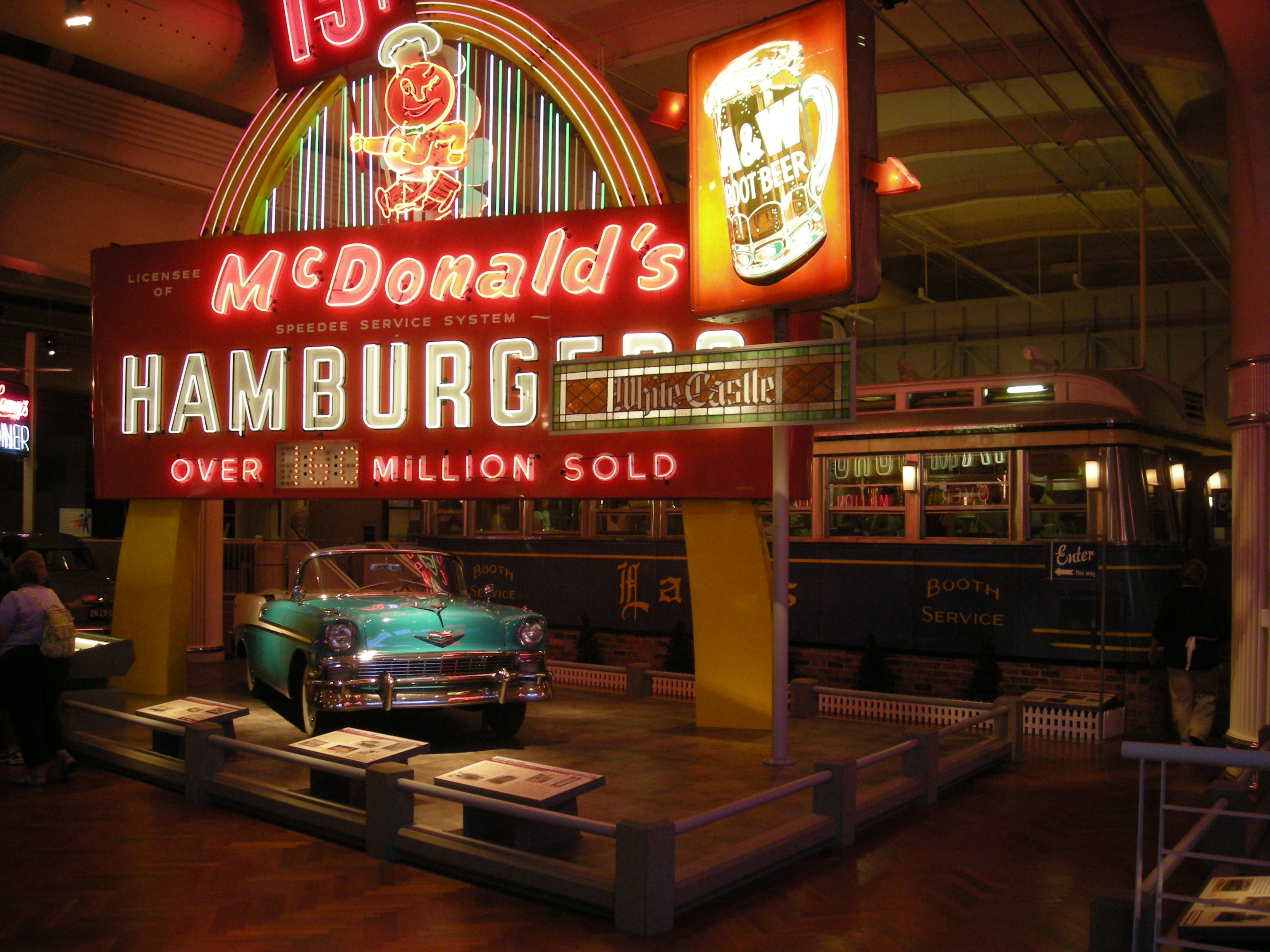
NEON DREAMS The Henry Ford Museum, Detroit.

A Writer’s Midwestern adventure.

SEEKING the childhood haunts of farming icon Henry Ford, on arrival in the great city of Detroit, we (me, a cameraman and a presenter) headed not for Motown (unfortunately) but to the city fringe and the Dearborn area.

There, the Motor City puts on a veneer of rural respectability, but on the many occasions we got lost in our hired Buick, street upon street of homely clapboard stoops in everyday neighbourhoods revealed themselves, where no-one cared much for Ford and the quiet revolutions he spearheaded.

All that is on ostentatious display at the Henry Ford Museum, our first port of call.

It would be hard to name a more complete exhibition anywhere in the world. As an entrée to life in the American heartland, this place is the veritable cherry on the pie.

Acres of halls burst with memorabilia on a huge scale – the neon sign display must be the world’s best, and there’s an entire Holiday Inn which was moved brick-by-brick as an homage to the original American road trip.

A Museum staffer showed us to another building on the far side of the exterior exhibition (filled with entire villages – Ford loved the whole brick-by-brick thing), where he pulled-up a garage door and trundled a rather strange looking machine into the daylight.

This was Henry Ford’s 1907 ‘Automotive Plow’ – the prototype for the mass-produced Fordson tractor.

This tractor changed farming practices dramatically after centuries of hard labour and heavy horses. Ford didn’t invent it, but he made it affordable for most.
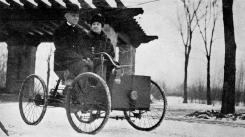
MAN OF EXTREMES Henry Ford and his wife in his first car.

A documentary shown at the Museum detailed Ford’s deep regret that his vehicle production technologies helped inspire the military tank, which tore through troops in the slaughter that was WW1.

Turns out Henry Ford (1863-1947) was not just a farmer and industrialist – he was also a pacifist and a vegetarian. Now that got me interested.

As we left the Museum, a formal line of Presidential vehicles revealed itself, from beautiful carriages to limousines. The last one was roped-off, because people respectfully leant across to touch the rear right passenger door.

I wanted to see why, but the sign explained the patently obvious – this was the car in which President John F. Kennedy was killed. Surprisingly, it had been remodelled and used by other presidents for many years after the assassination.

Quite close by, the upholstered chair in which President Abraham Lincoln was shot to death is also on display.

Such a strange, endearing collection of dreams, death and the pinnacle of farming achievements. The dichotomy says much about the man behind the collection, loved and reviled in equal measure. Say what you want about Henry Ford: he was a collector like no other.

Ford’s early tractors were manufactured the world over, and many have become collectors’ items, so we hit the road in search of them, heading south into the great farming state of Ohio, on the very edge of America’s Midwest.

As we embarked, another journey was just beginning in California. Young high flier, 7-year-old student pilot Jessica Dubroff’s ‘Sea to Shining Sea’ flight was going to rewrite history and make her the youngest person to fly across the United States, assisted by her pilot trainer and her father. The Ohio and Michigan media were anticipating seeing Jessica cross their skies any day now.

Passing through the endless city limits of mighty Cleveland, I checked our itinerary, and realised a colleague back in Suffolk, England, had booked us to do an interview in east Ohio, then travel a day and a half back to Michigan, only to turn around and drive back south into Ohio again. The English have no idea about distances! I grumbled, before calling and asking for the dates to be changed.

Meanwhile, we visited affluent farms where Ford tractors that had not tilled the soil for decades were stored like precious objects in huge, pristine sheds.

We interviewed farmers who ran thousands of head of cattle on prairie-like pastures. Here, my vegetarianism was something even I questioned, since these cows lived a life of liberty, with just their ears tagged before they were set free to graze the hills until it was time to bring them in for slaughter.

We met an Amish man who ran a sawmill entirely without electricity, just a pair of heavy horses who he treated like the precious commodity they were.
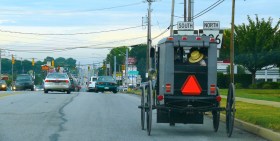
LAND OF EXTREMES A traditional Amish buggy makes its way into town (Photo: Ad Meskens).

The sight of Amish carriages crossing the landscape in the distance was an eerie link with America’s past. The culture of the Plain People contains the last vestiges of a rural romanticism that every country child can relate to.

In Ohio’s land of abundance, everything was larger than I had ever experienced. To reach the arms of the chairs in restaurants, you needed to put your arms out wide!

Then the nation awoke to terrible news that Jessica Dubroff’s plane had gone down shortly after takeoff from Cheyenne in the state of Wyoming. A brief life cut short. A dream broken in this land of big, record-breaking dreams.

Thankfully our itinerary had been adjusted, but we were asked not to delay – the subjects of our interview back in Michigan were heavily pregnant, due any day now. They couldn’t guarantee what we’d be greeted with. So we completed a long night drive across the border into Portland, Indiana, then back up to Michigan to the city of Flint, home of another great American, film maker Michael Moore.

Flint, and in fact that whole section of Michigan, was emerging from a harsh winter. Nevertheless it’s not just the climate that caused a certain down-at-heel quality.

Unlike the vasty fields of Ohio, that part of Michigan seemed rather poverty-stricken. The farmers were less welcoming and more suspicious of travellers. We got lost a few times, and the idea of knocking on doors and asking for directions was more than a little frightening.

This was long before Michael Moore’s films pricked the conscience of the western world – we were only there to interview a goat breeder.

Her flock of Boer goats was in the process of birthing its next generation, so we waited patiently while the mothers bleated. New life within a toughened landscape brought all the cheer we needed to feel better about Henry Ford’s macabre collection, about Jessica Dubroff’s life cut short, and about ourselves in the midst of a thawing state of disbelief … and more beautiful footage of brand new kids has rarely been captured, I’m sure.

© Michael Burge, all rights reserved.

The black soil in my blood

A Writer’s birthright.

I WAS born in the Northern Tablelands of New South Wales and I spent the first years of my life living on my parents’ farm between the crossroads village of Delungra and the town of Bingara.

The countryside consisted of rolling uplands, the last vestiges of the black soil country before they give way to Queensland’s Darling Downs.

Some of my earliest memories are of the soil, often baked hard into cracked clay beds, or sluiced with water into acres of mud, but always black. Black against the yellow straw grass that covered the hills.

‘Paxton’, the property where I spent my childhood, was salvaged by my parents from a derelict state. Despite a few years of success, death and divorce saw my rural childhood disappear like spinifex on the wind.

Nights of blazing stars. Days of grey skies over blue hills. Hailstorms and wind that blew the corrugated sheds around like leaves… all were replaced by the disturbing lights of cars in urban streets crossing my bedroom wall in town, of houses that seemed insanely close together, and people living right up against one another.

My family bridged a great divide. The country half were tall, Germanic, Presbyterian stock in great numbers, who, by the time I was born, lived with a fading sense of entitlement based on achievements past.

The other half were a small band of establishment city dwellers with a dose of very English mores.

An attempt was made to combine these energies in my parents’ marriage, but it failed miserably.

I left the country, and in many ways I have been running from it my whole life.

But when I left London to take up a job offer in Suffolk, barely an hour from the city, it was to work for a rural media company.

In my application, I evoked the country of my childhood to get the job. I didn’t need to pretend, I’d lived in and around a mixed crop and stock farm, and I knew a bit about how they operated.

Despite feeling like a complete sellout, I used my trump card – being of strong country bloodlines – and I could see the eyes of one of my interviewers misting over. There is a great camaraderie, and a willingness to help-out their own, amongst families who have worked the land.

I was a farm boy who had video production and communication skills, and I got the job.

Forget that I thought agriculture in general had lost its way, that I was vegetarian, and an animal liberationist who had little interest in farm machinery. I needed a good income, and an opportunity. Farming Press offered me that, and I took it, wondering when my secrets would be discovered.

BURGE'S BURGH The windmill tower on the hillside of the hamlet of Burgh, Suffolk (photo: Barry Hughes www.geograph.org.uk/photo/41986).
BURGE’S BURGH The windmill tower on the hillside of the hamlet of Burgh, Suffolk (Photo: Barry Hughes).

So I packed-up my room in a shared flat in London’s leafy Lewisham Park, and rented another in a tiny row of cottages in the charming little hamlet of Burgh, up a hill past a windmill from the even more charming village of Grundisburgh, just north of Ipswich, Suffolk’s historic county town.

With barely three days to prepare myself, I had to pack for a flight to Detroit, Michigan, to document the traditional skills of farming people across three states.

In the rush I didn’t get much of a chance to meet my new colleagues or my housemate, or settle into the Farming Press offices on the edge of Ipswich, a typical English company with some friendly faces, wanting to know this Australian who was going to work in the video department downstairs.

My first week’s pay was more than I would have earned in a month of cinema shifts. The Suffolk countryside was blossoming into a gorgeous spring. I got a touch of hay fever. I became lost on country lanes trying to find my way home. I was cornered by inquisitive cows. I bought my first ever car and was able to traverse the country without the crippling cost of train travel.

England had opened itself to me a little… and then I had to leave her in a rush of camera equipment and travelling instructions. America’s rural heartland was waiting.

© Michael Burge, all rights reserved.

An angel in a London rubbish skip

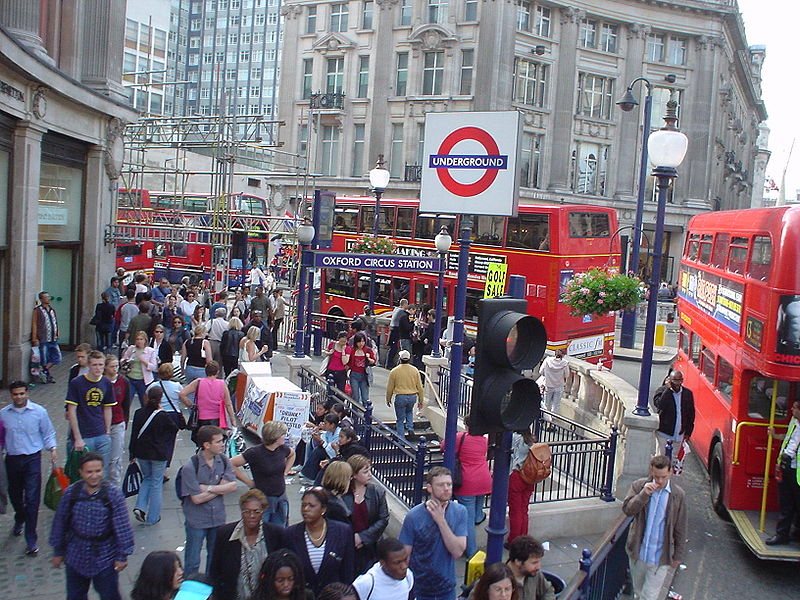
LONDON CALLING Commuting in Britain’s largest city has always been a challenging experience.

A Writer’s next day job.

SINCE I’d gotten to England on a one way ticket, once drama school came to an end I decided to try my luck in the entertainment industry over there.

Exactly where and how that industry operated remained a complete mystery while I polished my skills in the Yorkshire flatlands.

But with the last of the funds raised to send me to college in the UK, I boarded a train from York and headed south to London, home of the West End, Pinewood Studios, and the BBC.

Like thousands of others I tried to make my way through the front door of any number of institutions offering cadetships and assistance programs for graduates by dreaming-up fabulous ideas for TV shows and trying to encapsulate my potential on paper in the long-winded applications.

But none of these doors opened for me.

One door that did was that of the flat of an Australian friend who allowed me to sleep on her floor for a couple of weeks.

One of my grandfathers, Stanley Hamill Crawford (whom I never knew), was born in London, a quirk of ancestry which allowed me to stay in the UK indefinitely and work without a visa. But the paperwork took a few weeks to arrange via New Zealand (where Stanley’s only daughter, my mother Pat, was born), and I needed an income, so I just started working illegally.

Another friend got me onto the list at her temp agency, and being their only male client I was immediately employed by a major book publisher in Hammersmith to push the mail trolley across eight floors for a three-week stint.

So, in the early days of my first London Spring I joined the crowds on the Tube, minding the gap, rolling my eyes at the constant announcements of apology for late trains, and succumbing to the near silent buffering that is London commuting.

I missed most of the romance the city had to offer in the process.

In the mail room I spent my mornings sorting packages and committing their recipient’s names and office locations to memory – I still recall these names, because they seemed so literary and important.

Then, for the rest of the day, I delivered the packages, on occasion meeting the recipients – generally curt literary mavens.

Breaks were spent outside by a line of rubbish skips, and on day one I noticed the contents consisted solely of countless brand new books.

Since no-one really cared I explored the skips at great length, creating quite a collection of perfectly good editions of some of the greatest books of the year, and a wealth of 20th century classics.

Intrigued as to the reason for the abundance of free books, I asked if they were perhaps uncorrected proofs or remaindered mis-prints? Apparently not – they were just surplus to the needs of the company.

I was a boy whose only surviving grandfather had instilled in me a sense of adventure when it came to inspecting rubbish tips. Grandpa had worked his way into an old one down the hill from my Grandparent’s house in Inverell, and would often take me down to stand at the edge and catch any treasures he fished-out from underneath.

It was like a goldmine – antique hurricane lamps, china plates, enamel ware, and an assortment of vintage items came out of that tip. The deeper Grandpa got, the older and more interesting the treasures he unearthed.

ANTIPODEAN ANGEL Janet Frame in post-WW2 London.

So it was retired farmer and gentle man Gordon Burge who inspired me the day when I discovered about fifty copies of Janet Frame’s autobiography An Angel at my Table in the publisher’s skip during my last week.

One copy would do me – Frame’s account of her early life included an apt section about her first encounter with London, and I took a lot of heart from her survival of the strangeness of the city when one is used to the elemental expanses of the Antipodes.

It took travelling to London to learn what that term actually means – the diametric opposite of wherever you are on Earth. It has a deeper meaning in the UK, because growing-up on the other side of the world makes you different, apparently. You’ll have to ask the Brits why they call those of us from Australia and New Zealand ‘Antipodeans’, often with a ‘certain air’.

The rest of Janet’s autobiographies I decided to do something about, and, with my rose-coloured glasses firmly in place, I took them to one of the large Charing Cross Road bargain bookstores on my way home that evening, thinking that Helene Hanff would be proud of me for some kind of book-trade continuum.

The shop owner was very dubious. He inspected my booty and flicked through a few pages, marvelling that they were indeed brand new and perfectly saleable, but he would not take them off my hands, even for free.

Feeling slightly silly for trying to facilitate an act of recycling, I left them under one of the tables out the front of the shop.

Maybe he’d notice them and would just sell them? No-one would be the wiser – not the publisher, not the customers, not Janet Frame.

I never found out. My work permit came through and I ventured deeper into the West End with a resume under my arm, hoping, like Janet Frame and Helene Hanff before me, that somewhere in that romantic place a door would open on my dreams.

© Michael Burge, all rights reserved.