Category Archives: Screen

Take Another Look: Bruce Beresford’s ‘grandly messy’ Paradise Road

First stop in a new series of retrospective pop culture reviews examines why Australia’s best female ensemble since Picnic at Hanging Rock disappeared almost without a trace…


IN THE OPENING scene of Bruce Beresford’s WWII epic Paradise Road (1997) the dignity of the Imperial Japanese Army is torn to shreds by privileged white plantation growers and their wives, chatting during a military ball at Singapore’s Raffles Hotel in February 1942. 

Adrienne Pargiter (Glenn Close) and Topsy Merritt (Julianna Margulies) throw in a few reminders about the effectiveness of the attack on Pearl Harbour, yet even as bombs start interrupting the dancing, Western denial on the imminent fall of Singapore remains dangerously intact.

It’s an apt metaphor for a film that tanked at the global box office after critics swooped, leaving stakeholders baffled about exactly where Paradise Road failed to deliver.

The ingredients for success were all in place. Beresford had a proven track record on war movies like Breaker Morant (1980) and award bait such as Driving Miss Daisy (1989). Producer Sue Milliken had global success with period piece Sirens (1994). 
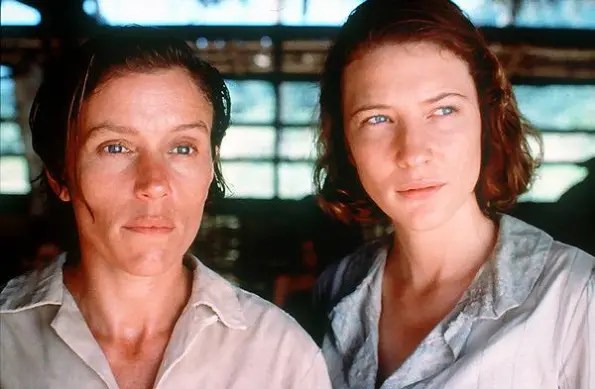
ENSEMBLE EFFORT Frances McDormand (left) and Cate Blanchett

The Australian film industry’s strongest female ensemble since Picnic at Hanging Rock (1975) was headed up by multi Oscar-nominated Close and 1995’s best actress recipient for Fargo, Frances McDormand. Pauline Collins (Shirley Valentine), Margulies (ER), Jennifer Ehle (Pride and Prejudice), Elizabeth Spriggs (Sense and Sensibility) and a swag of established and emerging Australians (including Cate Blanchett in her feature debut) joined an international supporting cast working in four languages.

Production values were extremely high, particularly as a shipload of escaping women and children get scuttled by Japanese pilots and end up in a civilian internment camp in Sumatra. As they enter its barbed-wire gates, this band of socialites, plantation owners and nurses must cohabit with Dutch women, missionaries, nuns and Asians. Hard labour, starvation and brutal physical punishments await, as does the expectation to serve as “comfort women” for enemy officers.

After the hubris of Raffles, their dignity now lies in tatters.

But when Pargiter is overheard crooning a snippet of Elgar before lights out, British missionary Margaret Drummond (Collins, in a beautiful performance with her usual light touch) suggests a plan to raise morale with a vocal orchestra.

“It’s just humming,” complains the camp’s serial spoilsport and comic relief Mrs Tippler (Pamela Rabe), “anyone could do that.”

Which is the point. The pulsating, otherworldly voices make even the Japanese guards hold fire when ordered to break up the first performance of the fledgling ensemble, which requires no language to work its magic. 

Wasn’t dinkum

The real shame of the film’s failure to connect with a wide audience is that the Women’s Vocal Orchestra of Sumatra was real. Pargiter was based on Singapore-born chorale conductor Norah Chambers (1905-1989), and Drummond on British missionary and poet Margaret Dryburgh (1890-1945), both interns of the civilian camp at Palembang, Sumatra. Yet even Close wasn’t sure why Beresford chose to fictionalise these characters.  

Australian critics were lukewarm. There was a sense that the storyline, purported to be well-researched from intern diaries and interviews, just wasn’t dinkum, in part because of the atrocities it omitted.

International critics admired the “grandly messy” production but disliked the lack of narrative, pointing to the “predictable” aspects of the “sprawling” and “linear” story. 

CLOSE CONDUCTING Glenn Close (centre) as orchestra leader Adrien Pargiter

Yet revisiting it recently I finally discerned what’s at work in this deeply moving film. The key is in the conducting, not just Close’s determined and noble portrayal of orchestra leader Pargiter, but Beresford’s.

Unlike many of his contemporaries, he’s had a long career as a director of opera. Adapting the wealth of stories about real-life women caught up in war into a 120-minute screenplay required compressing facts into a grand lyrical narrative, in which the exotic setting feels operatic.

So war crimes are punctuated by hummed music and poetry, not big speeches; but when we get those, Close’s English accent is delivered almost as recitative. Emotional instrumental refrains run from Raffles right to the impenetrable jungle, where ever-increasing numbers of handmade crosses mark the lives cut cruelly short by war. Privileged women in reduced circumstances are like a chorus, with plenty of rueful pathos between the big arias, particularly in the hands of stalwarts Wendy Hughes and Penne Hackforth-Jones.

This is no Orange is the New Black (2013-2019), female-driven prisoner stories with 91 episodes to foreground the lives of every ensemble member; Paradise Road is high tragedy shaped by Beresford’s broad baton strokes.

In the release of death or liberation for the camp interns, he conducted a grace note that fell flat in the late 1990s, too close to real events to get away with anything but the complete truth. Watching it in an era that’s in need of all the grace we can get, the way this movie restores the dignity of sworn enemies with “just humming” is sublime.

Paradise Road is streaming on SBS On Demand, ABC iView, Apple TV and Amazon Prime.

Production stills by Jasin Boland.
No country for older women

“The strategy behind the casting of younger women will take some explaining.”

IN February, Foxtel and Fremantle Media Australia announced the casting of an eagerly anticipated television adaptation of Picnic at Hanging Rock, Joan Lindsay’s 1967 Australian novel about a group of schoolgirls and their governess who go missing at a local rock formation on Valentine’s Day, 1900.

This fictional story was hauntingly filmed in 1975 by director Peter Weir, a production often credited with putting Australian movies back onto international screens after a decades-long hiatus.

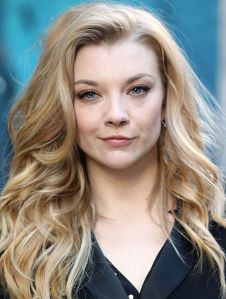
CASTING COUP? Natalie Dormer

I stumbled on the casting announcement late and immediately sought reactions in the media about one quirk in the production that is currently filming: there are no older actresses in the series.

But nobody seems to have commented that the producers are taking considerable licence with Joan Lindsay’s characters.

Cast as the widowed, expatriate English headmistress of the young ladies’ college that is central to the story, Natalie Dormer plays Mrs Appleyard, described by Lindsay as sporting a: “…high-piled greying pompadour”.

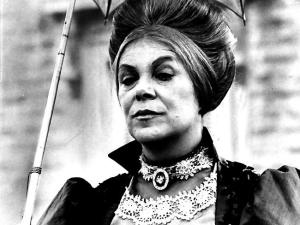
AGE APPROPRIATE Rachel Roberts

The character was portrayed by British actor Rachel Roberts in Weir’s film, suitably coiffed and in her late forties at the time, whereas Dormer checks in at just 35.

Slightly more surreal is the casting of Australian actor Anna McGahan as mathematics mistress Greta McGraw, since McGahan is just 28, playing a character penned as having “coarse greying hair”.

Hair colour and texture would not specifically denote middle age had Lindsay not stated the teacher’s years at the time of the fateful picnic at 45. English-born Australian actor Vivean Gray took on the role for Peter Weir in her 50th year.

Australian actor Sibylla Budd has been cast in a role that was cut from the 1975 production, that of Miss Valange, mistress of art and literature.

Screen shot 2015-10-27 at 3.22.34 PM
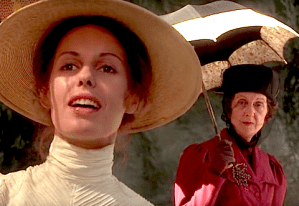
WHAT DO YOU KNOW? Helen Morse as Mlle de Poitiers and Vivean Gray as Miss McGraw

At approximately forty years of age, Budd seems to be the matriarch of Appleyard College in Foxtel’s new vision of female hierarchy on Australia’s Colonial frontier.

Does age matter when it comes to schoolteachers in the final gasp of the Victorian era? Well, for this literary diehard, it certainly does, at least in the case of Miss McGraw.

Joan Lindsay put barely a stroke wrong in constructing her mystery, and specifically identifying McGraw’s age, leaving those of the other teachers as euphemistically middle-aged, or slightly older than the senior college students, was without doubt a deliberate plot point.

When editors took apart the original manuscript ahead of publication, lopping off the final chapter that explains the mystery, a crucial scene involving Miss McGraw was kept from readers. By identifying her age, and why she might have been more obsessed by the calculation of time than the other mistresses, Lindsay placed a clue that has rarely been noticed in half a century of analysis.

Even if the younger-than-written casting is designed to accommodate back-stories in the six 60-minute episodes, it is already working against the grain of the novel.

According to Foxtel’s head of drama Penny Win, the new adaptation: “… will take viewers on a new and in-depth journey into this incredibly iconic Australian story”.

LINDSAY
LADY LINDSAY Author Joan Lindsay (1896-1984).

Where the staff of Appleyard College are concerned, it’s apparent that vision is considerably younger than Peter Weir’s, and Joan Lindsay’s.

The original story also offers the opportunity for that rarest of beasts – the screenplay with multiple female roles, including a higher-than-usual number of women over the age of forty. For that reason alone the strategy behind the casting of younger women will take some explaining.

Imagining the impact of Hanging Rock passing across impossibly youthful faces – instead of those whose dignity has been achieved through the attainment of years – already disappoints this viewer.

The television series, due for release later in 2017, has not been without controversy. After an evocative protest, an Australian female director was hired in December 2016 to address a perceived imbalance in the recruitment of local screen talent of both genders.

To date, there’s been no commentary on what might well turn out to be ageism in the casting.

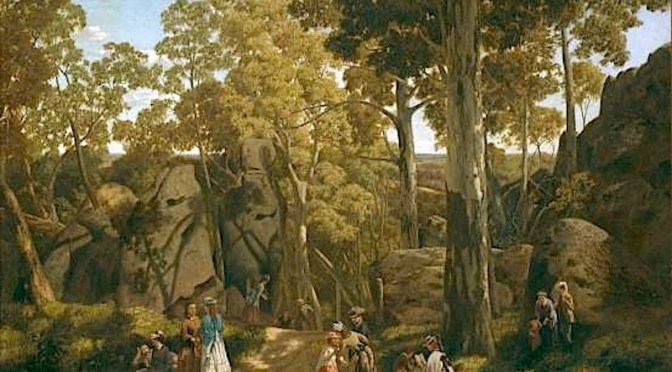
© Michael Burge, all rights reserved. Main image: ‘At the Hanging Rock’ by William Ford (1875), in the collection of the National Gallery of Victoria.

Blue Movies

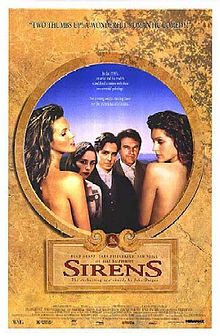
MAGIC MOUNTAINS Poster for John Duigan's feature film set it the Blue Mountains, Sirens
MAGIC MOUNTAINS Poster for John Duigan’s Sirens, a feature film set in the Blue Mountains, Australia.

A Writer’s fascination with a region’s cinematic heritage.

I lived in the Blue Mountains from late 1979 until late 2012, with stints of some years in Sydney and the United Kingdom.

Long before my family arrived there I knew of the region’s European cultural heritage – explorers, artists, and its use as the backdrop for film shoots.

Over the years I made a study of the many ways in which The Blue Mountains graced the big screen, and eventually published this feature in Blue Mountains Life magazine (Oct-Nov 2011).

Local Stars

The silver screen appearances of the Blue Mountains.

Since the advent of moving pictures, the natural beauty and evocative built environments of the Greater Blue Mountains have been captured in feature films. In the lead-up to the premiere of the latest locally shot feature film, Blue Mountains Life looks back at some of the filmmakers who have brought the area to the big screen.

January will see the international release of A Few Best Men, for which director Stephan Elliot (creator of Priscilla Queen of the Desert) has teamed-up with the producer and writer of Death at a Funeral for a Brit-Aussie comedy that promises to turn the traditional wedding on its head.

“Stephan was adamant that a perfect location could be found in the Blue Mountains, and we found it in Yester Grange,” Producer Antonia Barnard recalls.

“Period films in particular have been able to capitalise on the heritage feel of Mountains townships.”

Built as a private home c.1890 on a vast estate directly above the waterfall that lends it name to the township of Wentworth Falls, the view of the Jamison Valley from Yester Grange’s verandah probably ranks as one of the finest in Australia.

“Making A Few Best Men in the Blue Mountains was one of those great film experiences,” Barnard says. “The weather was perfect (if a little hot) for eleven straight days, which enabled us to achieve our wedding day as if it was all shot on one day.”

With a cast of emerging actors from Australia and Great Britain, A Few Best Men also features Olivia Newton-John and Jonathan Biggins as the bride’s parents, and will showcase the Blue Mountains before a new generation of international movie fans.

For the three decades since the resurgence of the Australian film industry in the 1970s this region has attracted location scouts. Period films in particular have been able to capitalize on the heritage feel of Mountains townships.

One-time Lawson resident Clytie Jessop’s Emma’s War (1986) is the semi-autobiographical story of a single mother (Lee Remick) who brings her young family (including Miranda Otto) out of Sydney during World War II. The casting of this coming-of-age story is notable as Remick’s final feature film role, and Otto’s screen debut. Terence Donovan, Mark Lee, and the late Dame Pat Evison also featured.

SWAN SONG Lee Remick's final screen appearance was in Emma's War, and Australian feature shot in the Blue Mountains.
SWAN SONG Lee Remick’s final screen appearance was in Emma’s War, an Australian feature shot in the Blue Mountains.

Filmed at Leura’s Everglades (which doubled as a Theosophists’ School), homes in Wentworth Falls and Katoomba, and the Megalong Valley, Emma’s War was Associate-Produced by long time Blue Mountains resident, award-winning filmmaker David Hannay.

Hannay’s film work in the Blue Mountains began after moving to the region in 1977, and a meeting with Scottish film director Bill Douglas at the 1979 San Remo Film Festival. “We became very close friends,” Hannay recalls, “and we created a film project to collaborate on.”

That collaboration was Comrades, based on the true story of the Tolpuddle Martyrs, a group of 19th century Dorset farm labourers who were transported to Australia after making a stand for fair wages, and ended-up creating Britain’s first trade union.

An epic story spanning Britain and Australia, the movie’s creation was a long-term and often complex venture. “It was essentially a British picture, so we needed a British Producer,” Hannay says, explaining how the search included location scouting in the Blue Mountains with Ismail Merchant (of Merchant Ivory Productions), whom Hannay recalls as the polar opposite of Bill Douglas in background and temperament.

The shoot for Emma’s War progressed in the Blue Mountains in 1984 while a more suitable producer for Comrades was found in the form of Simon Relph, “the pre-eminent British Film Producer of the time,” Hannay says.

The Australian location work for Douglas’ film was completed in 1985-6, using settings across NSW. Locally, the Grose Wilderness, the Megalong Valley, Hampton, and the creek at the top of Wentworth Falls were backdrops to the story of the Martyrs’ years within the penal system. The huge British and Australian cast included James Fox, Vanessa Redgrave, Robert Stephens, Arthur Dignam, Lynette Curran and John Hargeaves.

Comrades debuted at the 1986 BFI London Film Festival, where Douglas was awarded the Sutherland Trophy for the most original and imaginative feature of the year. It also screened in competition at the 1987 Berlin International Film Festival.

CELLULOID COMRADES Charles Hannah (Production Manager), Vanessa Redgrave and David Hannay (Associate Producer) on location in Hampton.

The enduring production force on Comrades was undoubtedly David Hannay, based on his conviction that the film could be completed as an international co-production, with the Blue Mountains as an integral location. “The region is just so accessible to Sydney,” Hannay says. “It’s the only city I know which is surrounded by a World Heritage National Park.”

On occasion, that accessibility has sparked controversy. In 2004 the Blue Mountains Conservation Society, the Colong Foundation, and environmental protesters successfully prevented the use of a location near Mount Hay (on the edge of the Grose Wilderness) for the production sci-fi action thriller Stealth. The NSW Land and Environment Court ruled that the planned shoot contravened the permitted use of a wilderness zone.

Predictions of a downturn in production companies using NSW for film locations were splashed throughout the media at the time. Despite these fears, in the seven years since the ruling, production companies have continued to film in the region (and indeed across the state), but the Stealth case has created an ‘environmental line’ which has so far not been crossed again.

The Blue Mountains is also home to movie fan and international critic David Stratton of the ABC’s At the Movies program. A former director of the Sydney Film Festival, Stratton is currently patron of the Blue Mountains Film Festival.

The region has hosted its own film festival in one form or another for the last decade, and the opportunity for local exhibition has encouraged a new generation of Mountains filmmakers. This year’s festival exhibited Last Ride, a feature directed by resident James Phillips. The story of a group of mountain bikers making their way through the Devil’s Wilderness, using accessible digital technology Phillips shot the film in one take from the point-of-view of the main character.

At the 2011 Australian International Movie Convention on the Gold Coast earlier this year, David Hannay caught an advance screening of A Few Best Men. In his opinion it was the “best received” movie by audiences of film exhibitors. “They just loved it,” he reports, “I think Stephan Elliot is really on form with this picture.”

Location Blue Mountains

1955 Jedda

Charles Chauvel’s last movie had an inadvertent need for a Blue Mountains location. This groundbreaking feature, the first Australian production to cast Aborginal actors in lead roles, was shot in the Northern Territory. When the last roll of film negatives was lost in a plane crash on its way to England for processing, Chauvel was forced to re-shoot close to the post-production office in Sydney. Magnificent Kanangra Walls was chosen as the backdrop for the dramatic ending of Jedda’s incredible journey.

BEYOND BLUE Mad Max encounters lost children in the Blue Mountains for his third instalment.

1985 Mad Max Beyond Thunderdome

The post-apocalyptic world of Mad Max continued to a third instalment with this movie, filmed in part at Mermaid’s Cave, just off the road to the Megalong Valley from Blackheath. Standing in for ‘Crack in the Earth’, the destination where Mad Max (Mel Gibson) encounters a group of orphaned children living in a desert oasis, Mermaid’s Cave is a classic Blue Mountains canyon with rainforest-like vegetation and a watercourse.

1993 Sirens

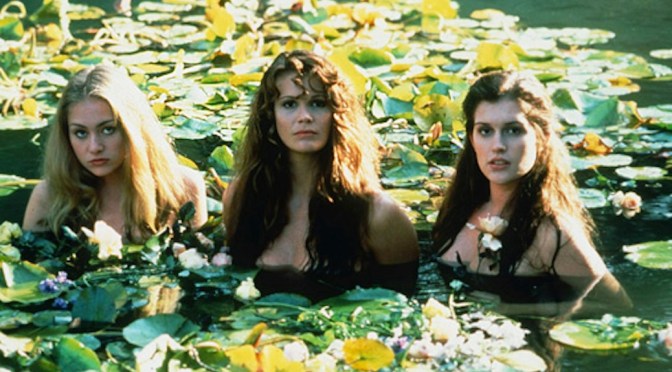
The controversial life and work of artist Norman Lindsay was the subject of John Duigan’s feature, filmed on location at the Lindsay’s home in Faulconbridge, now a National Trust property. Featuring Sam Neill and Pamela Rabe as Norman and Rose Lindsay, Sirens tells the whimsical tale of a straight-laced English pastor (Hugh Grant) and his wife (Tara Fitzgerald), drawn into the sexually liberated world of Lindsay and his models, played by Elle MacPherson, Kate Fischer and Portia de Rossi.

© Michael Burge, all rights reserved.