Was Hollywood’s Merle Oberon a girl from Tassie, or was she from the streets of Calcutta? On the eve of screening her film ‘The Trouble With Merle’ at the Blue Mountains Short Film Festival, Marée Delofski spoke with Michael Burge.
DOWN a leafy laneway more reminiscent of a country town than the faded ‘honeymoon capital’ style of Katoomba’s main drag,Marée Delofski talks of her love for The Blue Mountains.
“I write best here,” she says, “I get very good mental space”. Such feelings are not uncommon amongst local artists escaping the speed of the city, so I ask if there is a deeper connection to the local landscape?
Like one of the many people interviewed in her hour-long award-winning documentary The Trouble With Merle, Marée is on the brink of a journey to answer a question that cannot be addressed in a minute. The real answer is about an hour and two cups of tea away.
Marée Delofski is a very open person – this must be how she extracts such personal depth from her subjects. Indeed, The Trouble with Merle is a personal journey to the heart of a mystery, the kind of mystery common in the Australian experience – the kind that may never be solved…
LOCAL SUPPORT Shane Porteous in What to do When I’m Dead (Photo: Tracey Schramm).
A Writer gets a screenplay produced, finally.
AFTER a few failed attempts to secure funding in Australia with original screenplays, I decided to wait no more and go into production on a short feature of my own.
Like all aspiring filmmakers, I craved experience, which meant getting something in the can without any financial backing whatsoever, and keeping the costs way down.
I have always looked upon such circumstances as a creative challenge, and came up with a concept which I could produce within the resources I had at my fingertips living in the town of Katoomba in the Blue Mountains.
With the support of skilled friends, family, and a smattering of recruited professionals, What to do When I’m Dead was shot over four very long days in November 1999.
The low budget meant using the relatively new medium of digital video, and we pushed this medium … in hindsight a little too much. But atmosphere was what I was after, and it’s what I got.
Our acting team was nothing short of miraculous. I wrote the central role of ‘Jane’ for friend and established actor Jennifer Kent. Always encouraging local writers, Mountains-based television icon Shane Porteous agreed to play ‘Paul’ after a read of an early draft.
Josh Quong Tart’s agent suggested he get some screen experience by taking on the role of ‘Matthew’, and we were extremely lucky to have Celia Ireland play the small role of ‘Anne-Marie’, a real estate agent who drops-in with comic results.
Most of the crew, myself included, were rather more emergent – our sound recordist Michelle Irwin was the most experienced amongst us, and she respectfully kept things on track, with the guidance of my friend Judy Keogh, an experienced stage manager who came up from Melbourne to line produce for me.
Filming took place in my home, which at the time I shared with a friend, who let us take over her bedroom for four days and have people pretend to be a dead body in her bed. An emerging writer at the time, Eden bravely wrote an article to promote the premiere screening of the finished film. Her first draft was a bit tame, so I encouraged her to write the awful truth. Her second try was so sharply-observed and hilarious that the local newspaper published it word-for-word.
When the finished result was ready, I managed to get access to two venues for charity screenings – the Scenic Cinema at Katoomba’s Scenic World, and the bistro at the Dendy Cinema in Sydney.
Keen to repay the community which had sent me off to England to learn filmmaking, I donated all the proceeds from these events to the Blue Mountains Palliative Support Network, a local group supporting people to die in their own homes.
At thirty minutes long, What to do When I’m Dead was classed as a short feature, not a short film, and therefore difficult to place in most film festivals. Nevertheless, it was selected to screen at the 2000 Watch My Shorts festival in Melbourne.
A further screening was offered at a palliative care conference at Leura’s Fairmont Resort, where the projection facilities gave the film its best ever technical conditions. Picture, sound and everything else came together so beautifully that day, with a non-media-industry crowd of quite a few hundred conference attendees.
SIBLING RIVALRY Jennifer Kent and Josh Quong Tart in What to do When I’m Dead (Photo: Tracey Schramm).
Subsequently, What to do When I’m Dead was offered distribution on video by Healthcliff Distribution, through which it found an unexpected audience – healthcare staff seeking insights into the issues faced by families who choose to have their loved ones die in the home.
My film was very simple in the storytelling sense, but I am pleased to reflect that I was heading in the right direction with my screenplay, a distillation of my own experiences immediately after the death of my mother seven years prior.
What I tried to articulate was the difficult relationship between two siblings in the wake of tragedy, and the small yet courageous ways they find to reach out to one another, with the help, both intentional and inadvertent, from others. I had a clear protagonist and antagonist, who ‘did battle’, a climax that was a bit weaker than it should have been, and a dénouement which I remain quite proud of.
The errors I made with video capture could have been made into wins had I gone for a ‘video capture look’, as many other filmmakers were doing at the time. We achieved this only in parts of the finished film.
What to do When I’m Dead polarised viewers. Perhaps it’s one measure of success that this small, ambitious film full of flaws had praise heaped on it by some (an agent was so impressed by digital video that she wanted to know more), and also got its share of critical dumpings (my flatmate’s mother said she could have done a better job).
But the sound recordist said she’d work with me again. There can be no greater compliment from someone who really knows what they’re doing.
I kept a realistic head in the wake of What to do When I’m Dead, and, encouraged by the experience I’d been given by my generous collaborators, I just kept on writing despite the critics.
BOTH SIDES NOW Stephen Harrison, Master Waller, instructing on one of his courses.
A Writer’s encounter with Britain’s boundaries.
ON the property where I grew up, porous volcanic rocks covered a little peak near the farm-house, the hundreds of holes in their sides the perfect dwelling place for the fairies we imagined lived there. Hours of exploration ensued on that hillock, from which the edges of the wider world could be seen, but not yet explored.
For exiled Europeans living in the pastoral dream of New South Wales, stone boundaries and homes were a link to the lands we had come from. The Northern Tablelands are scattered with flints, shales, and granite boulders. In parts, where the scrubby trees are scarce, and the skies large, you could swear you were on the Yorkshire Dales.
So when the opportunity to produce a program about dry stone walling came up, I leapt at the chance. The directive included the name of artist Andy Goldsworthy, who could be credited with taking the ancient craft and making it into a fine art.
This was the dawn of the reality show era, and it was suggested that we find a television presenter to send on one of these courses, to ‘throw them in the deep end’. We approached Dylan Winter, a country-based broadcaster. He was willing, we set a date in the Dales’ village of Settle, and went to build walls.
Cameraman Alan James got to ride in a hot air balloon filming the network of walls across part of the Dales. We went to an all-day walling competition. The whole thing was so much fun it hardly felt like work!
The true art of dry stone walling is in the word ‘dry’ – Stephen showed us places on the high ridges of the Pennines where walls had been built and maintained over centuries which you could kick and not make a dent in, yet they stood without a trace of binding mortar.
Very often there is little sign of human habitation, apart from the walking track, and then you’ll crest a hillock and suddenly see lines of stone – barriers – running across everything in their path for miles and miles.
The beauty of stone walls belies terrible times in the nation’s past – Hadrian’s Wall in the north might not technically be mortar-free, because it was built to keep people out of England, but dry stone walls are also evidence of a great ‘keeping out’ movement.
CLOSING-UP An English enclosure notice of the 18th Century.
It was almost four centuries of EnclosureActs that fenced-off the shared common lands of the countryside, starting in and around villages, but extending over time across every patch of farmland. Eventually the entire landscape was owned by someone, and it was walls (or hedgerows, where stone was scarce) which marked where the boundaries were deemed by law to be.
Men and women who once worked common land found themselves fenced out of it. Many eked-out new livings on the crews who built the walls. It’s a skill which has been handed down through generations.
Sourcing archival images and footage of walling crews at work in the early 20th century proved an adventure in itself, but between the libraries of the Lake District, and private collectors, we unearthed some very unique footage for our program. The interesting thing about the photographs in particular is how they revealed walling was a family pastime – men, women and their children were taught to wall in certain communities.
Stone is an effective barrier – if used correctly it can halt flood or fire, it looks better than barbed wire, and it’s not hard to work with.
Which is the message Stephen Harrison and the Yorkshire Dales Field Centre were keen to spread to city slickers like us. Dylan made some classic errors in his section (or ‘stint’) of wall, but, as Stephen pointed out, even a flawed wall will outlast most modern wire fences.
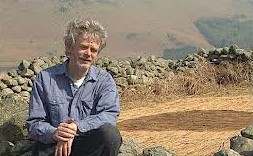
ART OF STONE Andy Goldsworthy at one of his Cumbrian Sheepfold projects.
We travelled to Cumbria to meet Andy Goldsworthy’s assistant at an agreed time in a remote pub car park. She led us up into the foothills nearby, to a sheepfold – a square or round enclosure of stone designed to pen sheep. Andy was nowhere to be seen, but his work, on that occasion an arrangement of straw on the ground inside the stone enclosure so that it would catch the light from different angles, was incredible.
We all drew breath. Someone said “wow”. I noticed a scrap of woolly grey from behind the wall at the far side, and thought perhaps it was a stray Herdwick sheep, but when the sheep stood up it revealed itself as the artist.
“Good reaction,” he said, before I told him I thought he had Herdwick-coloured hair. He laughed, and within the stunning setting of a Cumbrian valley, we interviewed Andy Goldsworthy about his work with dry stone walling, and dry stone wallers, particularly on the long-term Sheepfold Project of the 1990s.
Stephen Harrison is one of a group of British wallers who regularly work with Andy Goldsworthy on art projects both in Britain and North America, but the boundary between artist and waller is invisible. Goldsworthy started out a farm boy, after all, and Harrison is very much an artisan in his own right.
Very often they build stone structures (not always walls) in art galleries. More regularly they’ll work in farm land, or in the wilderness.
In addition to Cumbria and Yorkshire, we interviewed wallers in Wales, Scotland (where walls are known as ‘drystane dykes’), and Derbyshire. In each region the stone varies in colour and density – in parts of Wales you can chop it with your hand, in some places around Scotland you can barely break it with a hammer.
I can’t think of a more accessible way to participate in ongoing heritage than to repair or build your own dry stone walls. As soon as I had my own garden I started, and I learnt that if you follow a few simple guidelines, anyone can seem like they’ve been walling for years.
Dry Stone Countryis distributed on DVD by BecksDVDs.


 Was Hollywood’s Merle Oberon a girl from Tassie, or was she from the streets of Calcutta? On the eve of screening her film ‘The Trouble With Merle’ at the Blue Mountains Short Film Festival, Marée Delofski spoke with Michael Burge.
 209 of 1010 words. Unlock the rest of this article by purchasing Michael’s ebook Creating Waves: Critical takes on culture and politics.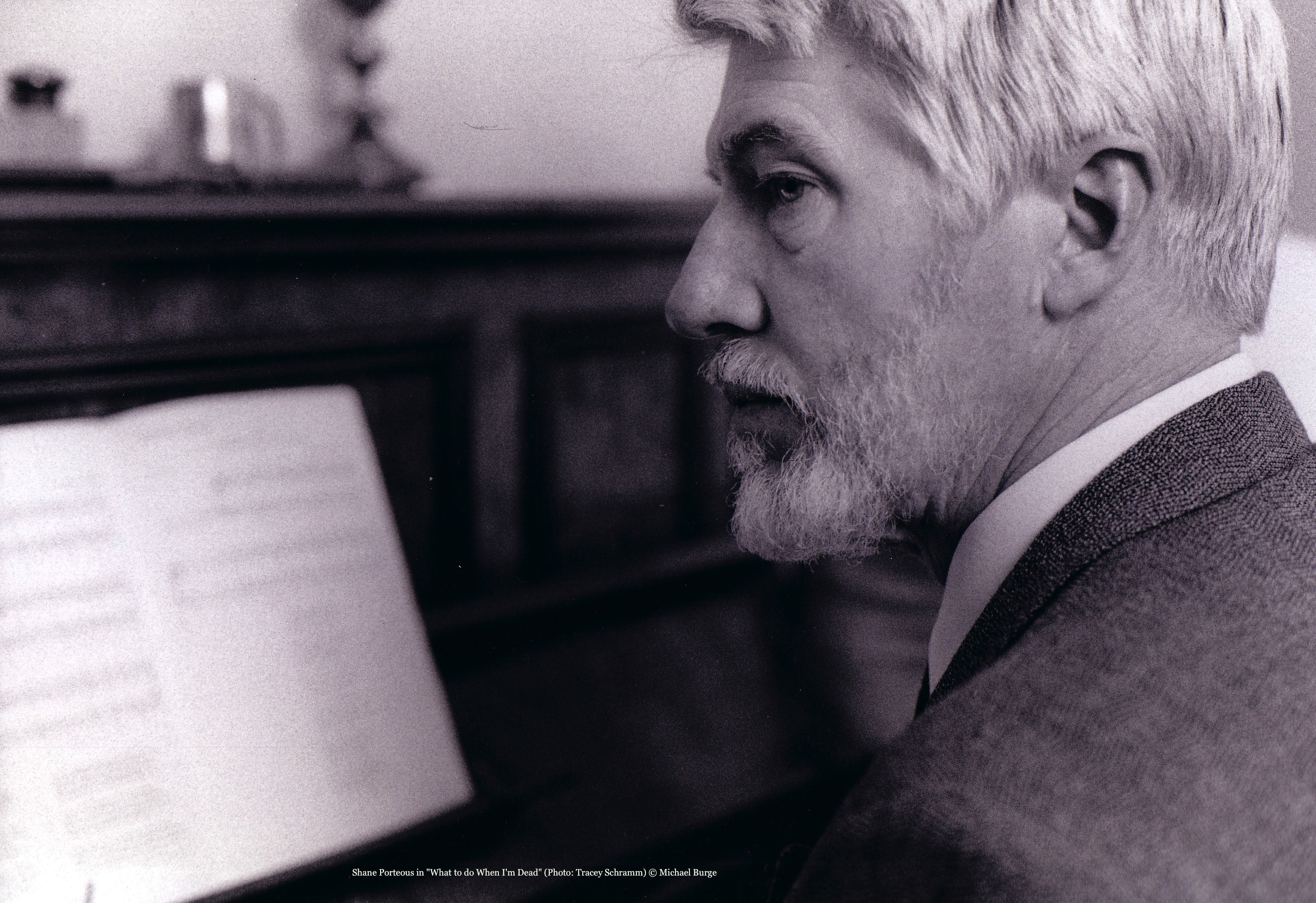



 Michael Burge Media