Category Archives: Screen

On the Board at Fox Studios

Hi res Fox Colour_0How a Writer’s op-shop jacket got him cast in a commercial.

Towards the end of my acting training my class appeared in The Legend of King O’Malley by Bob Ellis and Michael Boddy. In preparation for the title role, I scoured the local op-shops for weeks in search of my costume.

Having been an inveterate op-shopper for years, I knew the chances of finding anything my size were slim, so when I discovered a light green plaid jacket, the sleeves of which covered my long arms right to my knuckles, I rushed to pay the hefty $5.

But hey, I had an outfit that didn’t pinch me in the shoulders or make me look like Frankenstein, wrists exposed from cuffs halfway up my forearms. I felt able to play the man (“The King”) who had such an impact on the formation of modern Australia.

About a fortnight after the show, I was rehearsing for a production of The Popular Mechanicals by Keith Robinson, Tony Taylor and William Shakespeare, at Penrith’s Q-Theatre, when I got a call from the only agent I’ve ever had (who recruited models and actors through letterbox drops), asking me to attend a casting session for a car commercial at Fox Studios in Sydney. “Dress corporate,” she said.

My only smart jacket was King O’Malley’s. Matched with a business shirt (I had to fork out another $2), I looked about as corporate I was ever going to get, and plonked myself down in the casting office waiting room, surrounded by people in black and grey.

We were seen in groups, seated in a mock boardroom complete with a whiteboard, and launched into a board meeting improvisation. I was asked to stand and play the boss, whiteboard marker in hand.

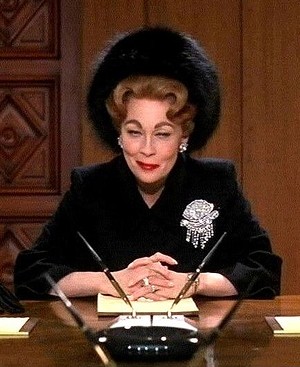
BOARDROOM BITCH Faye Dunaway as Joan Crawford in Mommie Dearest.

Having spent months in theatre training, I was used to playing to the car park, so I was drawn to channel Faye Dunaway playing Joan Crawford in the Pepsi Cola scene in Mommie Dearest, (“Don’t f#%k with me fellas!”), and launched into sacking the whole lot of my motley staffers.

A note from the big wigs in the shadows, behind the camera, asked me to “Do it again, but tone it down.”

So I changed gears, made it quieter, colder, figuring they might be framing my head and shoulders. My fellow actors looked back at me with fear. Before I knew whether they were acting or not, we were shuffled out.

At the callback we had to imagine, on cue, a wonderful new car driving past our meeting, which was so innovative and attractive that it stopped us, and all our corporate musings, in shock. The result was several rounds of dreadful face pulling, and a bit of inappropriate chuckling.

But I got the gig!

Marched before the director at the costume fitting, “The Board” all looked at me when he asked “Where’s your green jacket?”.

“At home,” I muttered, feeling like I’d worn the wrong gear to sports class. “Can you bring it to the shoot? Can he bring it to the shoot?” he asked, not allowing me to say anything to the first part of his question. The costume designer looked at me with daggers in her eyes, nodded, and marched us out.

There was me thinking it was my well-honed acting skills which got me the job!

On the day, “The Board” waited in a bland green room at Fox Studios, where we worked out very quickly that only one of us could be defined as a “proper” actor – the NIDA graduate cast in the role of “The Boss”. The rest of us were ring-ins, really – a film festival producer, an accountant, an ad sales-rep – all earning far more in one day than we’d ever get in our day jobs.

If we made the final cut, that is. Word got around the set that the director was speculating on too many scenes for his Asian-screened commercial, and if we got cut we might get nothing.

No-one said it, but everyone on “The Board” thought “Don’t f#%k this up, people”.

We were fetched by a man with five mobile phones on his belt, seated in front of a blue screen with a small black track across it, given two quick rehearsals to aid in focussing on the fluorescent taped mark as it sped by (indicating where the “car” would be keyed-in by the editors) and then we were on.

I was seated with my back to the “car”. After the first take, they asked us to take our cue from the NIDA graduate, who was to take his from the director. We were all to be amazed by the “car” at different moments.

After a few more takes, a message came through to the NIDA graduate that he needed to do his turn, his “discovery” of the “car”, “less Broadway, please”. Everyone chuckled, because he had, actually, been having far too much fun with it.

A few more takes later, I shoved some papers off the table, on purpose. “Upstager!” I imagined the NIDA graduate say under his breath. But they liked it, “Keep the papers falling, please.”

A few takes later, they asked for me to take my green jacket off and put in behind me on the chair and roll up my shirt sleeves. No problem, it was getting warm anyway.

Then things started to go a little awry. The NIDA graduate was turning early, which put us all off. The message came through to “Stick to the cue, please”.

Bemused, sweat trickling down his temples, the NIDA graduate looked as though he really was earning his extra dollars for being slightly more featured in this commercial than us ring-ins. While they reset the marker, he leant across to me and whispered: “What’s my cue again?”

“When the director says ‘action’,” I whispered, as reassuringly as I could.

A few more takes later and it was all over. “The Board” was marched off the set to loud applause from the clients, clustered around a mock living room at the edge of the sound stage.

THE BORED MEMBERS Corporate grey is good, but green is better.
BORED MEMBERS Corporate grey is good, but green is better.

“When do you think we’ll get paid?” one of “The Board” asked back in the green room. “Don’t be so cynical,” the guy with five mobile phones said, calling-in the two models cast in the scene where the secretary gets ravished on the photocopier by some random office guy, after seeing the “car”, or course.

We cynical non-actors laughed, exchanged business cards, raided the fabulous leftover catering, and departed.

I drove back to Penrith for the technical rehearsal of The Popular Mechanicals, which was to open in only a few days. After all the blood, sweat and tears that goes into putting anything onto the stage, we played to some houses comprising fewer people, showing less enthusiasm, than the ad execs after “The Board’s” gripping performance at Fox Studios.

And we got paid nix. Welcome to Showbusiness, Mike.

I kept the green jacket for a few more years, but ditched in a hurried move, and I have never acted since I gave it up. Maybe it was my Good Luck Jacket?

© Michael Burge, all rights reserved.

Merle Oberon – ours, or theirs?

3628cWas Hollywood’s Merle Oberon a girl from Tassie, or was she from the streets of Calcutta? On the eve of screening her film ‘The Trouble With Merle’ at the Blue Mountains Short Film Festival, Marée Delofski spoke with Michael Burge.

DOWN a leafy laneway more reminiscent of a country town than the faded ‘honeymoon capital’ style of Katoomba’s main drag, Marée Delofski talks of her love for The Blue Mountains.

“I write best here,” she says, “I get very good mental space”. Such feelings are not uncommon amongst local artists escaping the speed of the city, so I ask if there is a deeper connection to the local landscape?

Like one of the many people interviewed in her hour-long award-winning documentary The Trouble With Merle, Marée is on the brink of a journey to answer a question that cannot be addressed in a minute. The real answer is about an hour and two cups of tea away.

Marée Delofski is a very open person – this must be how she extracts such personal depth from her subjects. Indeed, The Trouble with Merle is a personal journey to the heart of a mystery, the kind of mystery common in the Australian experience – the kind that may never be solved…

CREATING WAVES209 of 1010 words. Unlock the rest of this article by purchasing Michael’s ebook Creating Waves: Critical takes on culture and politics.

© Michael Burge, all rights reserved.


What to do when I’m dead

LOCAL SUPPORT Shane Porteous in What to do When I'm Dead (Photo: Tracey Schramm).
LOCAL SUPPORT Shane Porteous in What to do When I’m Dead (Photo: Tracey Schramm).

A Writer gets a screenplay produced, finally.

AFTER a few failed attempts to secure funding in Australia with original screenplays, I decided to wait no more and go into production on a short feature of my own.

Like all aspiring filmmakers, I craved experience, which meant getting something in the can without any financial backing whatsoever, and keeping the costs way down.

I have always looked upon such circumstances as a creative challenge, and came up with a concept which I could produce within the resources I had at my fingertips living in the town of Katoomba in the Blue Mountains.

With the support of skilled friends, family, and a smattering of recruited professionals, What to do When I’m Dead was shot over four very long days in November 1999.

The low budget meant using the relatively new medium of digital video, and we pushed this medium … in hindsight a little too much. But atmosphere was what I was after, and it’s what I got.

Our acting team was nothing short of miraculous. I wrote the central role of ‘Jane’ for friend and established actor Jennifer Kent. Always encouraging local writers, Mountains-based television icon Shane Porteous agreed to play ‘Paul’ after a read of an early draft.

Josh Quong Tart’s agent suggested he get some screen experience by taking on the role of ‘Matthew’, and we were extremely lucky to have Celia Ireland play the small role of ‘Anne-Marie’, a real estate agent who drops-in with comic results.

Most of the crew, myself included, were rather more emergent – our sound recordist Michelle Irwin was the most experienced amongst us, and she respectfully kept things on track, with the guidance of my friend Judy Keogh, an experienced stage manager who came up from Melbourne to line produce for me.

Filming took place in my home, which at the time I shared with a friend, who let us take over her bedroom for four days and have people pretend to be a dead body in her bed. An emerging writer at the time, Eden bravely wrote an article to promote the premiere screening of the finished film. Her first draft was a bit tame, so I encouraged her to write the awful truth. Her second try was so sharply-observed and hilarious that the local newspaper published it word-for-word.

When the finished result was ready, I managed to get access to two venues for charity screenings – the Scenic Cinema at Katoomba’s Scenic World, and the bistro at the Dendy Cinema in Sydney.

Keen to repay the community which had sent me off to England to learn filmmaking, I donated all the proceeds from these events to the Blue Mountains Palliative Support Network, a local group supporting people to die in their own homes.

At thirty minutes long, What to do When I’m Dead was classed as a short feature, not a short film, and therefore difficult to place in most film festivals. Nevertheless, it was selected to screen at the 2000 Watch My Shorts festival in Melbourne.

A further screening was offered at a palliative care conference at Leura’s Fairmont Resort, where the projection facilities gave the film its best ever technical conditions. Picture, sound and everything else came together so beautifully that day, with a non-media-industry crowd of quite a few hundred conference attendees.

SIBLING RIVALRY Jennifer Kent and Josh Quong Tart in What to do When I'm Dead (Photo: Tracey Schramm).
SIBLING RIVALRY Jennifer Kent and Josh Quong Tart in What to do When I’m Dead (Photo: Tracey Schramm).

Subsequently, What to do When I’m Dead was offered distribution on video by Healthcliff Distribution, through which it found an unexpected audience – healthcare staff seeking insights into the issues faced by families who choose to have their loved ones die in the home.

My film was very simple in the storytelling sense, but I am pleased to reflect that I was heading in the right direction with my screenplay, a distillation of my own experiences immediately after the death of my mother seven years prior.

What I tried to articulate was the difficult relationship between two siblings in the wake of tragedy, and the small yet courageous ways they find to reach out to one another, with the help, both intentional and inadvertent, from others. I had a clear protagonist and antagonist, who ‘did battle’, a climax that was a bit weaker than it should have been, and a dénouement which I remain quite proud of.

The errors I made with video capture could have been made into wins had I gone for a ‘video capture look’, as many other filmmakers were doing at the time. We achieved this only in parts of the finished film.

What to do When I’m Dead polarised viewers. Perhaps it’s one measure of success that this small, ambitious film full of flaws had praise heaped on it by some (an agent was so impressed by digital video that she wanted to know more), and also got its share of critical dumpings (my flatmate’s mother said she could have done a better job).

But the sound recordist said she’d work with me again. There can be no greater compliment from someone who really knows what they’re doing.

I kept a realistic head in the wake of What to do When I’m Dead, and, encouraged by the experience I’d been given by my generous collaborators, I just kept on writing despite the critics.

© Michael Burge, all rights reserved.