Category Archives: Writers

Mrs Christie would kill for a holiday

THE CHRISTIES Agatha and Archie.

WHEN Agatha Christie abandoned her car by a quarry in Surrey late on December 3, 1926, she couldn’t have imagined igniting a mystery so intriguing it is still being dissected a century later.

Married society girls did not walk alone at night, no matter how capable. They certainly were not expected to disappear, which is exactly what Mrs Christie did that evening.

Was the whole event a publicity stunt, or a nervous breakdown brought on by Archie’s request for a divorce on the day of her disappearance? The 36-year-old English author appeared on the cover of The New York Times only days after her green Morris Cowley was discovered. Police mobilised multiple counties into a hunt for the crime writer – or her body – while an international press pack pursued Agatha’s husband Archie.

agatha-christie-1926-disappearanceBooks, films and articles have explored everything between these two extremes, but the seeds of Agatha Christie’s escape may well have been planted years before.

The first way to understand the incident is to apply a bit of context.

Agatha Christie the ‘Queen of Crime’ did not exist in 1926. After serving their country in World War One – Agatha as a voluntary nurse, Archie in the Flying Corps – the couple produced a daughter and settled into civilian life.

“I had written three books, was happily married, and my heart’s desire was to live in the country …” Agatha wrote in her autobiography, “and then something completely unforeseen came up.”

This was an offer for the couple to join delegates on a ‘grand tour’ of the world while drumming up participation for the British Empire Exhibition.

In June, 1922, on a weekend escape from meeting dignitaries, Archie and Agatha made a dash to Australia’s largest cave system – Jenolan Caves in the Blue Mountains of NSW.

Agatha wrote home about the one-night trip to the remote holiday resort. “So we started in style, much to Archie’s annoyance. He hates motoring in the cold, and much prefers going by train any day,” she guilelessly joked, indicating it wasn’t all plain sailing.

“Our car went well until we started climbing miles from anywhere when it proceeded to turn nasty. We induced it to go on for a bit but it broke down about six times and eventually we arrived at the Jenolan Caves at 6pm instead of 2.30, freezing cold and dead tired.

“After a meal we were taken as a ‘special party’ around the Orient Cave which is supposed to be the best. It really is wonderful, you go for two miles through the bowels of the earth, up and down steps (1500 in all – and you know it the next morning!) twisting in and out through labyrinths and coming to the different chambers.

REMOTE RESORT Caves House, Jenolan Caves, NSW, Australia.

“We were up early the next morning and did some of the open air caves. The Hotel (or Cave House as it is called) is right in the heart of the mountains.

“They rise up all round it, and to get to it the road zig zags down and seems to end, but really it is a great natural arch through the mountain itself.

“We had to start back at 2 o’clock unfortunately. I could have spent a week there quite happily.”

This and countless other letters languished in family hands for ninety years until they were published in 2012 by the Christies’ grandson Matthew Prichard, revealing glimpses of the marriage that crumbled so swiftly less than four years after the tour.

Settling back into their home life a second time saw a typical divide quickly develop. Her burgeoning writing career kept Agatha in the city and his struggle to get a foothold in the corporate world drew Archie away from it to the Christie’s Berkshire home and its adjacent golf course.

Into this fertile ground came a rival for Archie’s affections – a younger woman called Nancy Neele – who worked as a clerk in London but frequented the same country house parties as the couple.

A trial separation and reconciliation ensued, until Archie’s December, 1926, divorce demand. 

HAPPY HOLIDAY Timothy Dalton as Archie Christie and Vanessa Redgrave as Agatha Christie in Agatha, a film adaptation of the mystery released in 1979.
HAPPY HOLIDAY Timothy Dalton as Archie and Vanessa Redgrave as Agatha in ‘Agatha’, a film adaptation of the mystery released in 1979.

When Agatha ran from her marital home on the back of such life-changing news, dumped the car and walked to a nearby railway station, she slipped back into holiday mode and headed for a place just like Jenolan Caves – a classic resort in the Belle Époque tradition.

The name she used to check into Harrogate’s Swan Hotel – Teresa Neele – not only bore the surname of Archie’s mistress, but her fictitious character was from South Africa.

In a sense, she killed-off her old life with that fake signature, as surely as she would have if she’d put her foot down and stayed longer at Jenolan Caves.

“The fiction that began when Agatha signed the hotel register was only just beginning.”

Agatha’s Harrogate holiday lasted slightly longer than the week she yearned for at Jenolan. When a band member took a punt and identified her, the eleven-day ruse was over. Archie hurried to Yorkshire to collect his wife, who, it was announced to the press, was suffering a bout of amnesia.

Reality closed in fast. A year later the Christies divorced and Archie married Nancy.

But the fiction that began when Agatha signed the hotel register was only just beginning. She entered a cycle of imagination that would transform her career, and as she began to polish her oeuvre, she was far from settling on her primary detectives.

By the time of Agatha’s disappearance, many of her famous sleuths had been created – Hercule Poirot, Tommy and Tuppence Beresford, and regulars Colonel Race, Superintendent Battle, Inspector Japp and Arthur Hastings.

Marriage over, Christie’s experimentation continued, with spinster Miss Marple’s appearance in a 1927 short story collection. Two single young female detectives were trialled in the early 1930s. Ariadne Oliver, Christie’s mystery author alter-ego, married but with no husband to account for, also appeared. Harley Quin got a run, as did another detective by the name of Parker Pyne.

Parker Pyne Investigates is a rumination on troubled marriages, kicking off with The Case of the Middle Aged Wife, in which a husband runs around with a mistress called Nancy – a clear reference to the new Mrs Christie – leaving his wife to seek help from Mr Pyne to win him back.

Christie turns the focus onto Archie in The Case of the Discontented Husband, where a different couple is challenged by his love of golf and hers of the arts. 

Parker Pyne’s common sense marriage advice is so benign it suggests Agatha had undergone some kind of counselling after her disappearance, or at least listened to loved ones about what she may have contributed to the demise of her marriage.

Agatha’s confidante may well have been her new love Max Mallowan. The couple married in 1930 after meeting while she was on another holiday, this time at Mesopotamian dig in modern-day Iraq.

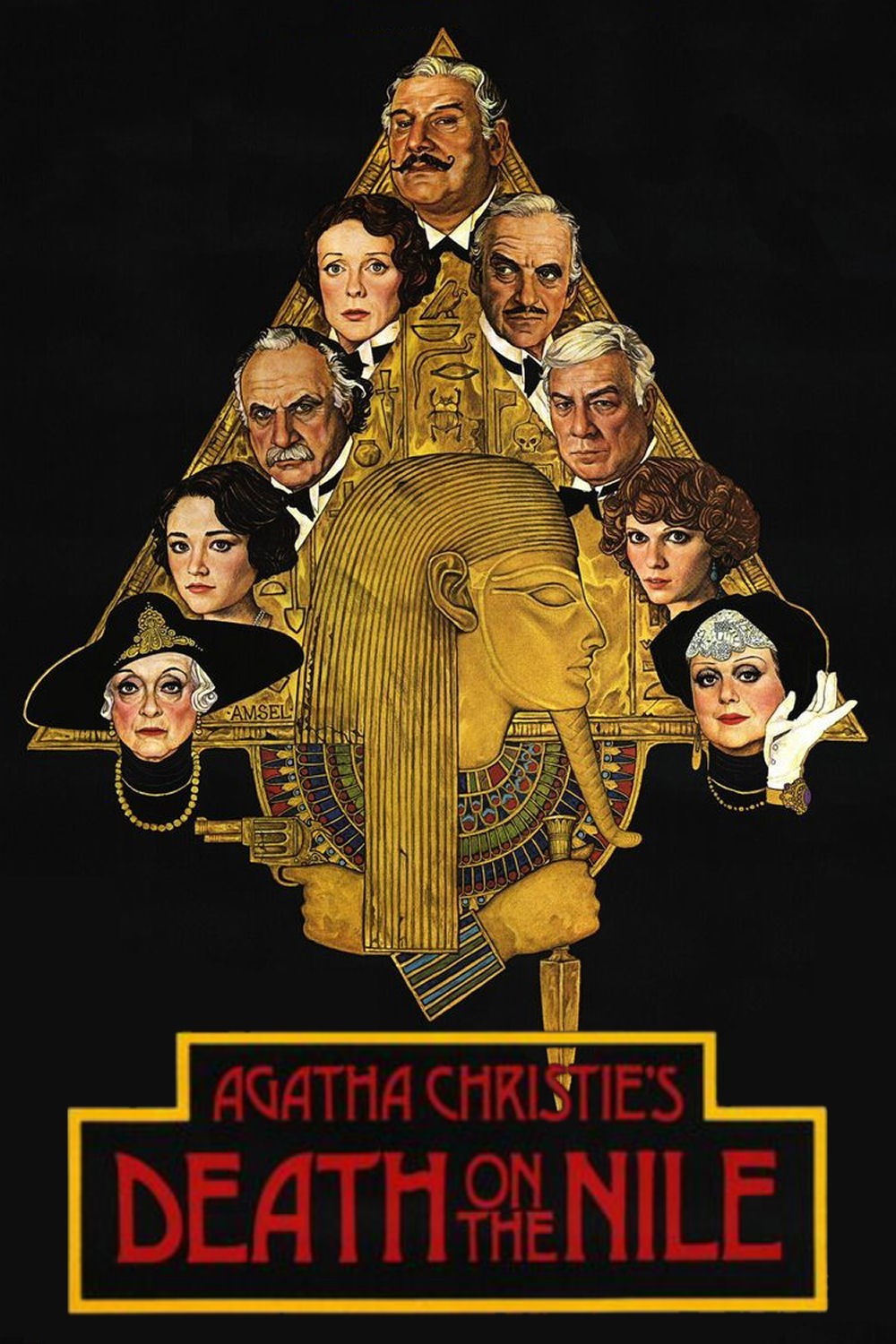
death-on-the-nile.10902After joining Mallowan’s digs throughout the Middle East, trains, boats, islands, archaeological digs and isolated resorts emerged with indelible force in Christie’s work, replacing the stately homes, villages, and coastal towns she’d limited herself to.

Readers can see the transformation taking place across the Parker Pyne collection, in which Agatha Christie combined exotic locations with marriage fallouts, but it made for pleasant distraction more than gripping crime drama, and was possibly not enough to placate her damaged heart.

It wasn’t until she located an array of scheming lovers – with no patience for divorce – right within her great ‘destination crime’ cycle that she found the winning combination.

These shameless paramours do away with hapless wives far from home, but they never quite get away with it. Christie delivers justice in the form of a funny little Belgian with a penchant for travel, and forever challenges her readers to guess who life’s real villains are.

pluck-cover
BUY NOW

The author who never had an exotic honeymoon when she married Archie Christie on the eve of war had finally flown the coop for good, and in doing so she became the Queen of Crime.

© Michael Burge, all rights reserved.

This article appears in Michael’s eBook Pluck: Exploits of the single-minded


Alan Bennett – the mystery boy

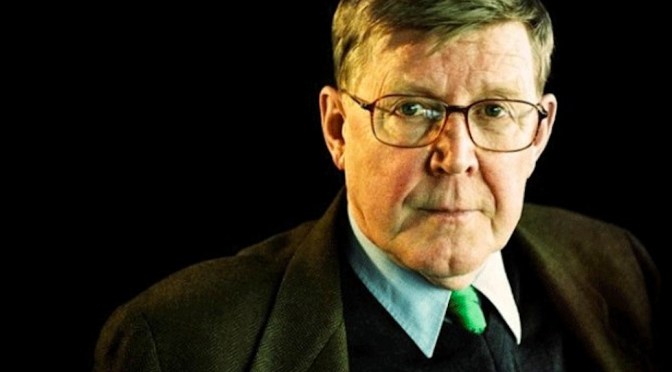
KEEPS THEM GUESSING Writer Alan Bennett.

OVER many late nights during my last year of drama school, overworked head full of theatre productions, closeted young body starved of sex, I came across Alan Bennett on the television screen.

Volume down very low so that my grandmother (with whom I lodged) would not be disturbed, I encountered Patricia Routledge, Maggie Smith and Julie Walters in their now iconic episodes of Bennett’s first Talking Heads series.

Bennett remained the cursory sketch of the opening credits until the episode in which he appeared – A Chip in the Sugar.

The tale of the hapless Graham Whittaker living with his ‘Mam’ in Yorkshire drew me into its closeted fold, where I recognised absolutely everything about the character’s world, right down to the old woman sleeping in the room next to mine.

“Alan Bennett keeps explaining what’s behind his writing style, it’s just that no one’s really been listening.”

A month after I was born, the great writer E. M. Forster died publicly closeted despite reaching the era in which homosexuality was decriminalised in England. His gay-themed writing was entrusted to friends and took time to come to light.

He’s rarely comfortable admitting it, but Alan Bennett is something entirely different. Yes, the first thirty-six years of his life were lived under laws against homosexual acts between men, but these days he’s a right here, right now gay writer and actor, infinitely closer to generations of men easing our way out of the closet than Forster ever was.

Although back in the 1980s, nobody seemed to question Bennett’s ability to create characters on a scale E. M. Forster only dreamt of.

The most infamous query came from Ian McKellen, who asked the playwright publicly whether he was gay or bisexual at an event raising funds to fight Thatcher’s homophobic Section 28 regulations in June 1988.

Fifty-four at the time, Bennett’s answer left him rather begrudgingly out of the closet ever since.

But that news didn’t reach Australia, not in my world anyway. It did not need to – I could tell by the ‘takes one to know one’ method that Bennett was not just acting like a gay man in A Chip in the Sugar.

Although that realisation meant that I was going to have to do some clever acting of my own to put people off the scent of the truth.

Writing this now I feel of a kind of rage that a gay drama school student did not feel validated by Bennett’s achievements.

Instead, it left me afraid, with the sense that there was nowhere to hide; that all gay men were bound to the apron strings by the kind of fear which Graham Whittaker manifested as mental illness. It offered little hope for those men who did not stay silent.

Perhaps that’s why I disconnected from Alan Bennett for a decade, during which I lived in England and did my level best to become a theatre and film-maker. ‘Gay’ was kept at arm’s length, and I got certain very specific signs that I needed to keep it there.

The most direct of these came during my year of drama training in Yorkshire (Alan Bennett ‘country’) when I was taken aside by one of the pivotal staff members and told that I needed to curb myself or the work I would get on graduation would be “limited”.

His admonishing tone about my natural demeanour came, as it always seems to, with the “I’m only saying this to you because I know plenty of gay people” lie.

By the time I’d gathered the courage to go home to Australia and come out, six years later, Alan Bennett made another appearance in my life, in the form of his memoir Writing Home.

The book was given to me with an unusual amount of sadness by one of the many male friends I’d made in England who were soon to come tumbling out of the closet in the wake of my own coming out.

Bennett’s book helped me realise that being openly gay would not necessarily be an issue, but it would probably leave me more prickly than ever.

I have paid much closer attention to Alan Bennett ever since, but it’s taken another decade to understand the writer who constantly tells us that he does not want to be understood.

You see, Alan Bennett keeps explaining what’s behind his writing style, it’s just that no one’s really been listening.

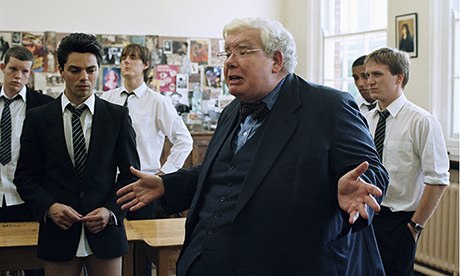
MAKING HISTORY Richard Griffiths headed the cast of Alan Bennett's 'The History Boys'.
MAKING HISTORY Richard Griffiths headed the cast of Alan Bennett’s ‘The History Boys’.

One of his recent plays – The History Boys – is also one of his most popular, regularly featuring at the top of ‘Britain’s Favourite Play’ lists.

The story of a group of school boys preparing for their university entrance examinations, Bennett instilled this play with a major theme in his writing – authenticity versus artifice.

Ever since his own entrance into Oxford in the 1950s, Bennett has employed a writing technique which he used when answering examination questions.

He calls it “taking the wrong end of the stick”, a journalist’s approach to ‘the facts’. In entrance examination answers it can be utilised to impress with a new ‘out there’ angle on a subject that has been ‘done to death’; an attention-grabber, if you like.

This is also the key to the pathos in all Bennett’s work. His characters show pluck in the face of diversity. They laugh when it might be more appropriate to cry. They see obstacles as opportunities.

Good use of pathos is funny, not in the side-splitting sense but in the chuckling one. It’s right up the other end of the stick from turgid, and it totally avoids the branch of melodrama.

It took maturity, and an understanding of pathos,  for me to realise that Gordon Whittaker’s salvation came with his mother’s admission that she had found his hidden gay pornography.

It is the great power shift in A Chip in the Sugar, when Graham’s ‘chip’ is seen as considerably smaller than Mam’s, giving the viewer hope that the result is a more accepting future for Graham.

There is some proof of this in Bennett’s recent writing. In A Life Like Other People’s (published in 2005 as Untold Stories) Bennett let slip that the mental illness he imbued Graham Whittaker with in Talking Heads (1987) was actually that endured by his real-life mother years before.

In the early 1970s, Bennett (‘Graham’) was torn away from a healthy same-sex life in London to care for his mother (‘Mam’) in Yorkshire.

Art stood in for life until Bennett ‘came out’ about the true nature of his family’s struggles with mental illness, thirty years after the fact.

So, ‘Graham Whittaker’ wasn’t in the least bonkers and went on to live a successful life as one of England’s finest playwrights and found love with a man. Phew.

PLUCK COVER copyAlan Bennett has published enough about himself for people to leave him alone about his sexuality, although in recent interviews he’s hinted at posthumous diaries which may come to rival E. M. Forster’s.

He’s also managed to avoid the tag ‘gay playwright’ by taking the wrong end of the stick whenever one is offered.

© Michael Burge, all rights reserved.

This article appears in Michael’s eBook Pluck: Exploits of the single-minded

Mary Moody – growing like Topsy

MARY'S Mary Moody with some of Glenray Park's geese.
MARY’S WAY Mary Moody with some of Glenray Park’s geese.

Another encounter with a great gardener.

MARY Moody told her friends she’d never dig another perennial garden bed.

After a decade presenting the ABC’s popular Gardening Australia series, the penning of respected gardening titles, and with horticultural credentials ranking amongst the country’s greenest, it seemed as though Mary didn’t have time to garden anymore.

Geography had a lot to do with it.

Mary had fallen in love with the way of life in south-west France, and relocated there for a good portion of every year.

Her family also moved its Australian base from the Blue Mountains to Yetholme (nestled in the ranges east of Bathurst) and took-on the degraded Glenray Park farm.

But, it seems, you can’t keep a good gardener down … this article was published in Blue Mountains Life (Sep-Jan 2012).

The constant gardener

Mary Moody’s been letting her garden grow … again.

“The garden in Leura had become a millstone around my neck,” Mary remembers. “I’d created what I’d call a collector’s garden, and I was absolutely besotted with alpine perennials. It was a constant job just keeping on top of everything, not to mention expensive.”

Glenray Park attracted Mary with its century-old homestead, complete with great bones for a classic Australian home yard, but, on moving in, Mary’s love of gardening had to be left fallow. With her writing expanding into best-selling memoirs; her media appearances focussing more on Mary’s life than her gardening pursuits; and time in France and Nepal leading tour groups, the verdant lawns of Glenray Park got mown, and veggies were grown, but that was about it.

When asked if there was a tipping-point that got her back into her ‘nice’ gardening gloves, Mary laughs: “It was insidious. I created a small garden bed off our verandah, for a few of my favourite plants, and they just started to self-seed. It grew like topsy, and eventually I needed to create wider beds to accommodate everything”.

“I have to admit that nothing I’ve done since in the garden was very difficult – it just can’t be. I mulched the beds very deeply to keep the weeds down while I was away, and when I came home I returned to my weeding duties quite naturally.”

THE GROWING KIND Gardener and writer Mary Moody with some of her grandkids.

In the lead-up to Bathurst’s annual Spring Spectacular, a weekend of the district’s finest show gardens, Mary leads me though the gate near her now much-expanded ‘new’ garden.

Covered by the fallen pink petals of a flowering cherry, the plantings occupy a sunny strip between the house replete with euphorbias, cat mint, bulbs and classic country favourites like pansies and Dutch irises, and plenty of dominant roses.

“I did have a moment when I thought ‘you are mad, you’re going to have 1000 people look at your gardening mess’.

“But there’s nothing like a deadline. My son Ethan has been helping me one day a week, and we’re almost ready,” Mary says.

Mary’s ‘new’ garden is a natural extension of the house itself, with a beautiful, uncomplicated structure, and everywhere you look you’re reminded that Glenray Park is a working farm.

Fences and gates give way to fields and enclosures for chickens, goats, geese and alpaca, meaning that Mary’s garden is a home yard indeed – if it extended any further most of it would end up as feed for the animals.

A new project – a classic potager – has been developed with garden designer Nicole Clout and is situated behind a sturdy fence in sight of the chickens. Mary is hosting gardening workshops for kids this weekend, and her garden has already been tested by regular visits from her swag of grandchildren.

This part of her ‘new’ garden is a clue to what got Mary into gardening in the first place – creating organic produce for the family table. It’s been just over three decades since Mary and her filmmaker husband David Hannay took their young family away from the city, enough time for her gardening fame to bury the basic truth that gardening was always a means to a gourmet end for Mary.

GREAT GARDEN BONES Glenray Park, Yetholme, a home yard with garden potential.

But at Glenray Park, Mary has plans reaching way beyond her farm garden.

“I’m starting to plan something we’re calling ‘Sustainable Bathurst’ as a working title,” Mary reveals.

“This region was one of the first food producing districts in modern Australia, but over time crop  and stock production has become predominant. We are hoping to bring the market gardens back.”

And Mary’s decade in France has inspired the creation of a network of ferme auberge (‘farm restaurants’). “The whole idea of eating local food in season, grown here and prepared in the home, is very inspiring. I recently had a go at making sheep milk brie and goat feta.”

With a network of four other local farms already on board, the gourmet potential of Glenray Park seems about to burst. But this new direction has been built on solid organic principles, and not just in the garden.

“When we arrived, the farm was overgrown. After years of stock getting into the waterways, everything was fairly degraded. Ethan’s worked hard on the environmental farm management of Glenray Park, with the creation of a wildlife corridor and contained stock fields. He’s my back-up for the farm.

“Our creek is called Frying Pan Creek, because travellers from Lithgow would stop here for the night where a frying pan was literally nailed to a tree for everyone to use. Over time willows were planted, and they sucked the creek dry, but we have removed it all. There were once platypus here and we hope to have them back one day.

“Ethan reminds me that the ornamental garden must not enroach on the natural environment beyond the fence,” Mary says. “As long as the plants don’t jump the fence, everything will be in balance.”

© Michael Burge, all rights reserved.