Category Archives: Writers

The desecration of story

WE'RE WATCHING but we're sick of waiting. Smaug's eye from The Desolation of Smaug.
WE’RE WATCHING but we’re sick of waiting. Smaug’s eye from The Desolation of Smaug.

MASTER storytellers don’t come along very often. You’d think by now we’d have learnt to respect their work.

Mess with the canon of any of these literary icons, and you’ll spark a reaction of such magnitude that it could, in at least one case, cause a war. You see them at the top of the ‘Most Popular Books of All Time’ lists – Charles Dickens, Jane Austen, William Shakespeare, the various authors of The Bible, Homer, Agatha Christie, and, usually scoring two spots for his seminal fantasy titles – John Ronald Reuel Tolkien (1892-1973).

Yet all of these writers’ works have been the subject of translations, adaptations, mash-ups, and spurious references in Doctor Who. It seems there is no end to re-imagining plots that have already proven themselves popular with readers.

The latest on our screens is Peter Jackson’s production of Tolkien’s The Hobbit, the 1937 children’s fantasy which spawned one of the most beloved literary cycles of the 20th century – The Lord of the Rings (1954-55).

Like countless others, I devoured these works in my childhood, so it was strange when I found myself dragging my feet to see The Desolation of Smaug at the cinema.

But that wonderful shot of Smaug, unfurling his great wings, the hapless Lake Town in his sights far below, was every inch the Tolkien moment I was seeking.

Yet before we could ride the crest of the roller coaster, the credits rolled, and, with news that we’d have to wait until Boxing Day a year hence for the third instalment, I heaved a sigh of annoyance.

This was not storytelling. This was commercially delayed gratification.

Peter Jackson’s Hobbit movies will never escape the criticism of taking a simple childrens’ tale and padding it into a three-part prequel to The Lord of the Rings.

We cannot blame Tolkien, of course, but it is worth noting that he created many of his early stories for his children. Imagine what the kids would have thought had Dad told the tale in three episodes, a year between each: they would have lost interest, thought their father a very mean and boring man for withholding, and revolted!

SCRIPT SPOILERS Gandalf and Radgast in search of Sauron.
SCRIPT SPOILERS Gandalf and Radagast in search of Sauron.

About half way through The Desolation of Smaug, with Gandalf off tomb raiding, my sister, not a Tolkien reader, turned to me and asked whether the disembodied shadow of Sauron was actually ‘in’ Smaug the dragon?

It was a good question, considering Gandalf and Radagast were looking for something that Bilbo already seemed to have found.

Tolkien knew how to construct a plot, and he took his time doing it. Not for him the publishing schedule of Harry Potter.

There was a very good reason why Sauron does not appear in The Hobbit: because when Tolkien wrote that childrens’ book, he was unaware how far his mythology would evolve in its sequel.

Tolkien’s collected letters reveal that at the behest of his publishers, the rise of Sauron (known as ‘The Necromancer’ in The Hobbit) was only published in an interesting appendix in The Return of the King.

Writing to a reader of The Lord of the Rings in 1964, Tolkien revealed how he connected the two books with the One Ring.

“The magic ring was the one obvious thing in The Hobbit that could be connected with my mythology. To be the burden of a large story it had to be of supreme importance. I then linked it with the (originally) quite casual reference to the Necromancer [in The Hobbit], end of Chapter. vii and Ch. xix, whose function was hardly more than to provide a reason for Gandalf going away and leaving Bilbo and the Dwarves to fend for themselves, which was necessary for the tale.”

Mythology, which runs through the works of all the writers mentioned, is the archetypal source for all tale-telling. Twist mythological rules, and everything from The Odyssey to Pride and Prejudice is at risk of being deemed, well, boring.

When Jackson and his writing team were coerced by the distributors into three Hobbit films, they needed to pad-out Tolkien’s mythology with endless sequences of Legolas slaying orcs; extensions of famous scenes, such as the dwarves’ escape from the Elven King in barrels down a river; and Gandalf the Grey sniffing his way around graves and towers with Elrond and Galadriel in search of Sauron.

DRAGON VISION Tolkien's own depiction of Bilbo's comversation with Smaug.
DRAGON VISION Tolkien’s own depiction of Bilbo’s comversation with Smaug.

I can accept Legolas, a character who never appeared in The Hobbit, and I can even buy his love interest Tauriel, a totally new creation re-addressing Tolkien’s inherent plot-misogyny, because Jackson and his writers are doing what Shakespeare did with great stories: shaking them around to find stronger, fresher ideas to engage new audiences.

But two master villains – Sauron and Smaug – in the same story is akin to having Moses and Jesus in the same telling of Exodus, or Romeo and Juliet and Mercutio. It’s too crowded to pack a real punch.

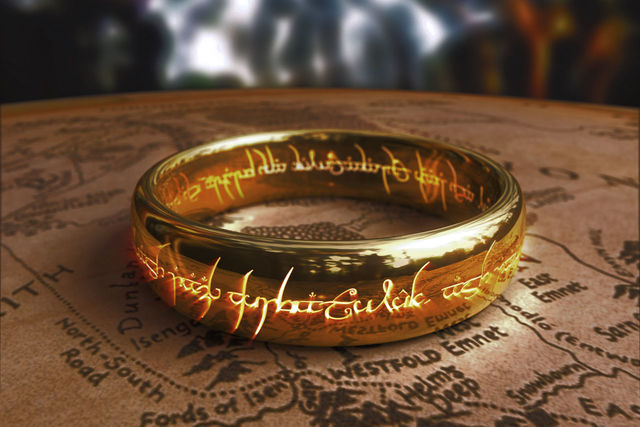
ONE RING TWO STORIES Tolkien's One Ring as it appeared in Peter Jackson's films.
ONE RING, TWO STORIES Tolkien’s One Ring as it appeared in Peter Jackson’s films.

Audiences who watch the six-movie Lord of the Rings cycle consecutively will be denied the great tension which Tolkien builds up in The Fellowship of the Ring.

They’ll miss a storyteller’s masterstroke, the linkage of Bilbo’s journey with Frodo’s through the secretion of Middle Earth’s most powerful implement, that plot device of “supreme importance” – in a place no one, not even Gandalf, ever thought to look.

To know the power and significance of the ring above being a handy trick for a hobbit engaged as a burglar, and to know the extent of Bilbo’s real enemy long before he does, is a terrible case of spoilers.

Money people don’t trust writers. They never have, and they probably never will, which is one reason why none of the Lord of the Rings movies ranks anywhere near the top of the Favourite Movies of All Time list, whereas Tolkien’s books rank second only to the stories we rely on to explain our own world’s creation.

creating-waves-cover
BUY NOW

Messing with Middle Earth might not spark a war, but it’s testament to the power of Tolkien’s writing that audiences will pay to see the butchering of his work at the hands of New Line Cinema and Metro Goldwyn Mayer.

© Michael Burge, all rights reserved.

This article appears in Michael’s eBook Creating Waves: Critical takes on culture and politics.

Miriam Dixson – the family iconoclast

IN LATE 1999 I joined my father at the launch of a new book, The Imaginary Australian, by social historian Dr Miriam Dixson.

The setting was Sydney’s Gleebooks, the turnout disappointing, but one familiar face lurked down the front – Bob Gould, activist and denizen of his own sprawling bookshop in nearby Newtown.

Dr Dixson spoke about her latest exploration of Australian identity, then Gould began to interrogate her and disseminate copies of his response. It was a confrontation between old socialist warlords and I took great delight in witnessing it.

Gould I’d once served as a regular customer of the cafe across the road from his bookshop, where he’d barked his usual order of chocolate cake and ice cream to we student waiters.

Dr Miriam Dixson I knew because she had been married to my father for two decades.

Our first meeting was surrounded by my father’s lies. I was nine, my brother Andrew 11, and my sister Jenny, five. Our parents had been separated for a few months, and we were on a Christmas access visit to Inverell.

Dad promised to take us to the coast, an exciting prospect for country kids who were now living with their mother in the Blue Mountains. But we didn’t head seaward, we headed south, as Dad told us of a new ‘friend’ he wanted us to meet. When we pulled up at a strange house in Armidale, we were introduced to Miriam.

At that time, Miriam Dixson was enjoying a certain notoriety in the wake of her 1976 publication, The Real Matilda, a feminist Australian history that labelled Australian women: “The doormats of the Western world”, a work the author curiously described as nothing more than a “temporary scaffolding”.

In the half light of Miriam’s office, where we lay awake on blow-up beds on that first night in her life, tall filing cabinets loomed on either side, the ends of the drawers labelled “Matilda”.

We were literally and emotionally within Miriam’s polemic.

Our second meeting came after my parents’ divorce was settled, and we went to Armidale for Dad and Miriam’s marriage.

I did what any gay boy would do: I ingratiated myself with Miriam by offering to make her a bouquet of flowers from the garden. She held the spring blooms as she made a short procession from the kitchen to the living room, where Dad waited for her.

We visited the school where Andrew and I had been booked into since birth for our secondary education. When Dad pointed out the dormitory from which he had shimmied down the drain pipes to get up to mischief, I imagined escaping down those same pipes to the railway station if I were ever incarcerated in such a Victorian establishment.

While we played, with his permission, at Dad’s lapidary table, I inadvertently discovered a letter on the top of his desk tray, confirming Andrew’s acceptance at that school. Seeing the inevitable coming, and without thinking, I screwed it up. Andrew panicked, then bravely tried to iron it flat, while Jen and I kept watch.

Dad found us out and clipped me around the ear. That probably should have been it, but Miriam had yet to start.

She leant over me, and took slow pleasure in delivering some devastating news: “Your mother went to court,” she said, “she was a thief.”

My mainstay was bulldozed in seconds, and Dad said nothing in her defence. Mum rang in the middle of the trauma, and I tearfully asked her to tell me the truth. Instead of an angry reaction, she just gave a simple confirmation: yes, three years before, she had been arrested on shoplifting charges. “Daddy and I said we’d tell you about it together, when you were old enough,” she said.

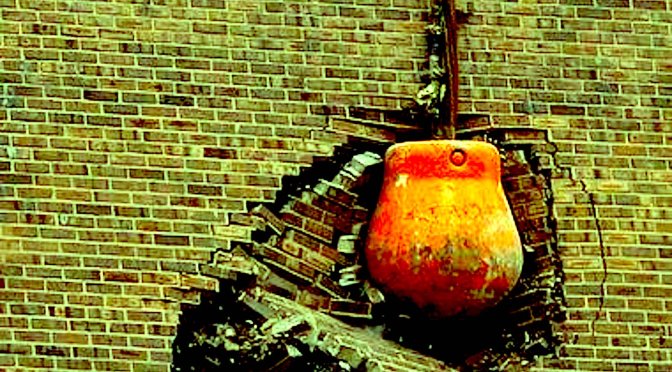
Wrecking Ball

Dr Miriam Dixson’s need to demonise my mother speaks volumes about the woman whom academics and journalists have been trying to define for decades.

Described as a feminist, a misandrist, a social historian, a communist, a progressive, and a conservative, the confusion has caused many leap to label Dixson a hypocrite. She’s been telling us for years that she’s an intellectual, but no commentator who’s met Miriam Dixson seems to think that’s quite apt.

Maxine McKew discovered the truth. “Ever the iconoclast,” she wrote in The Bulletin of her first impression of Dixson before the release of The Imaginary Australian.

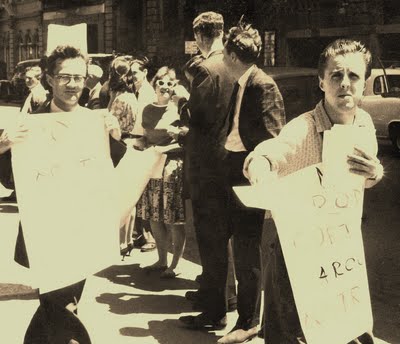
YOUNG COMRADES Bob Gould (far right) was a member of the Communist Party in Sydney with Miriam Dixson in the 1960s.
YOUNG COMRADES Bob Gould (far right).

Bob Gould also smelt a rat in his enlightening rebuttal, Interrogating Miriam Dixson, when he questioned why on earth his socialist comrade in 1960s Sydney had reinvented herself as a conservative?

When he observed how Dixson evolved her political ideology as she changed domestic partners, he almost got to the truth. Perhaps Gould assumed that Dixson had eschewed marriage in the wake of publishing The Real Matilda?

If only Bob had bumped into my father at Gleebooks, he would have come across the former grazier who was the significant spousal relationship of Dixson’s life, and discovered the reasons she remained more the academic feminist than the practising one, and had certainly been moving in conservative circles.

Gould described Dixson’s approach in The Imaginary Australian as: “A fast and loose psychological assault”, replete with “softening disclaimers”. He used the word “demolish” when he recalled Miriam’s modus operandi at socialist meetings: “Almost by clockwork, you would get a migraine around 9pm, after criticising the lot of us, and go to bed.”

In the light of others’ experience of Miriam Dixson, her ‘knockdown, rebuild’ vocabulary finally made sense to me. The woman driven to raise the scaffolding she called The Real Matilda was no mere intellectual, she was the wrecking ball who’d rushed to another room to listen in on that crucial trust-restoring phone conversation between me and my mother.

And her iconoclasm continued, aimed not at adult socialists, but children.

The next swing came during an access handover in Sydney, while Mum encouraged Jenny, aged six, to go for lunch with her brothers, father, and an enraged iconoclast.

“Daddy loves you too,” Mum said, as she encouraged Jenny to take her father’s hand.

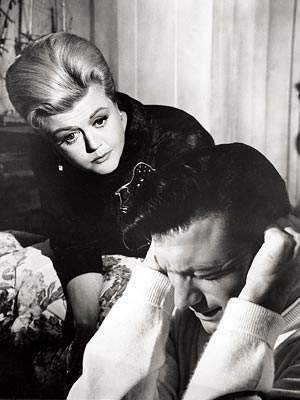
MIND GAMES Dr Dixson was convinced my mother was Mrs Iselin in The Manchurian Candidate - capable of reprogramming her son's mind.
MIND GAMES Mrs Iselin in The Manchurian Candidate.

In an unwelcome shot, Miriam said: “Oh, well programmed, Pat”.

The P-word stood out because it sounded powerful to children, and unsurprisingly the negative energy behind it saw Jen stay put in her mother’s arms.

At lunch, the ball swung again, this time at me.

A new world order was blasted into me by Dr Miriam Dixon and my father, a pair of squabbling control freaks, who contravened legal process by telling me without a court-appointed counsellor present that I was to be singled out for a solo access visit.

Once again, Miriam employed a builder’s vocabulary, asserting that if I was by myself, she and Dad would be able to “rebuild” parent-to-child “frameworks”.

I wasn’t happy, but I went to Armidale by myself and endured their experiment. When it was over, I just craved some peace, but in order to get it, I too needed to become an iconoclast.

I told anyone who would listen – including them – that I did not want to see my father or his wife. The only “programming” I could see going on were their enthusiastic attempts to alter my sense of security and denigrate my mother using the worst experience of her life.

That one swing from my wrecking ball saw their insubstantial “frameworks”, erected without the slightest emotional intelligence, come crashing down. No school in Armidale for me.

Debate

Jump forward two decades, just four years after the Gleebooks event, and my brother invited me and Jen to his second daughter’s christening.

Months before, my partner had died suddenly. Like many academics, Miriam was out of touch with the common marginalisation felt by feminists and LGBTQI, and greeted me by telling me how I was: “You’re alright. Yes, you’re alright,” she decided.

Prone in my grief to exhaustion in mixed company, I sat by myself at the dining table Mum proudly purchased after leaving Inverell. Andrew had inherited the suite after her cancer death a decade before. It was a familiar piece of furniture which evoked the woman we’d all loved.

It had been a long time between battles, so I put up no resistance when Dad quietly sat next to me, followed by Jenny, and I was able to enjoy watching them converse as adults.

Andrew offered drinks and finger food. The godparents joined us. We began to talk about our family’s heritage, and Dad outlined the great conundrum: were the Burges convicts or settlers?

Someone noted how silly it was to send people to the other side of the world for stealing something as insignificant as a loaf of bread. Everyone chuckled.

Everyone except Dr Miriam Dixson, that is. Finding herself on the edge of the scaffolding our family was gently erecting, Miriam said: “Michael, I’d like to sit next to Bruce please.”

Before I could answer, she continued with a diatribe straight from The Imaginary Australian about how none of us should question Georgian sensibilities and notions of criminality in Great Britain in the late 18th century, that none of us should make light of institutional decisions made in the past.

I acquiesced, because she placed herself between me and Dad, but as I did I said: “You like Gilbert and Sullivan, don’t you, Miriam?” remembering she and Dad singing along to their G&S favourites on my solo access visit all those years ago.

“Oh yes,” she replied.

“Well, enjoying satire like that is making light of the past,” I said.

Unexpectedly, Dad laughed, a brief insight into where his marriage had come to by then.

We all knew the wrecking ball was coming, so Jen gave me the let’s go look, and we said our goodbyes.

As I shook Dad’s hand, Miriam sidled up to me and said: “You’re wrong about what you said.”

“Don’t worry about it Miriam,” I replied.

“I don’t worry about it,” she said, “I only debate.”

Oh a debate, of course! Just what every disparate family needs at a christening. The wrecking ball glanced off my cheek and I just walked away.

Five years later, after nearly three decades together, my father left Dr Miriam Dixson and ran off with another woman. Everyone was well out of range by then.

This article appears in Michael’s eBook Creating Waves: Critical takes on culture and politics.

Dymphna Cusack & Florence James – literary chicks

YARN SPINNERS Dymphna Cusack and Florence James (Photo: University of Melbourne Archives).
YARN SPINNERS Dymphna Cusack and Florence James, working at Dymphna’s dictaphone (Photo: University of Melbourne Archives).

A Writer has another look at an Australian classic.

LITERARY analysis of the Blue Mountains in NSW tends to focus, perhaps a little too much, on the works of Eleanor Dark and Norman Lindsay, the enduring foundation for writers which bears her name, and the iconic gallery featuring his.

Other writers’ works also emerged from the cool climate heights of the region, in fact one of Australia’s most popular and enduring novels was written in the tiny town of Hazelbrook, in a home which never became a writers’ retreat.

The story behind its creation is the story of two women, their daughters and niece, who escaped the wartime city in order to live and write, and in doing so, created a literary milestone…

This article was published in the June-July 2011 edition of Blue Mountains Life.

Come Home Spinner

The Hazelbrook tenants who created Australian Chick Lit.

In the aftermath of the Japanese attack on Sydney Harbour in May-June of 1942, Sydneysiders woke-up to the reality of imminent attack, and many headed for the Blue Mountains to ‘see out’ the war.

With two generations of men fighting in Europe, job opportunities for women were on the increase, and the city was flooded with American troops. Right in the thick of this changing world, two writers — Dymphna Cusack (1902-1981) and Florence James (1902-1993) — rekindled the friendship they’d started as undergraduates at Sydney University in the 1920s.

Florence had been ‘caught by the war’ in Sydney with daughters Julie and Frances while on a visit from London, and Dymphna was living with her sister and family at Coogee. In spring, 1944, the women hatched an escape plan of their own: to write full-time in the sleepy Blue Mountains village of Hazelbook.

Dymphna had retired early from teaching, suffering with multiple sclerosis. Florence needed a place to live while her husband Pym served in Europe. Combining Cusack’s small pension and periodic literary grants with Florence’s ‘allotment’ from Pym, in January, 1945, the families moved to ‘Pinegrove’ on the south side of Hazelbrook.

In this unassuming fibro cottage with views to the Sydney basin, James’ and Cusack’s ruminations on literature and social justice gave birth to the first international bestseller to present contemporary Australian women to the world.

They started with a children’s book — Four Winds and a Family — created in autumn, 1945.

An allegorical telling of the adventurous episodes of the Pinegrove residents, complete with writers Tess and Topsy (Florence and Dymphna), and youngsters Fan (Frances), Jay (Julie) and Dee (Dymphna’s neice, also called Dymphna), and various cats, goats and other animals, the book maps their ever-growing world of friendly neighbours and unfriendly school teachers.

NAN KNOWLES
FAMILY PICTURES Nan Knowles’ illustrations show an allegorised Florence and Dymphna.

They commissioned Nan Knowles to illustrate and sent the manuscript to a publisher the same year. Knowles’ work included a naive map (eventually the front endpaper) illustrating the part-real part-fantasy realm of Four Winds. It’s an enduring symbol of the secure world mother and aunt sought for daughters and niece at Pinegrove.

Emboldened by their success in juvenile fiction, Florence and Dymphna soon embarked on their magnum opus, the book they’d been talking into existence ever since leaving the city: Come in Spinner.

“We picked everyone’s brains,” Florence recalled when interviewed by Marilla North (editor of Yarn Spinners – A Story in Letters the letters of Dymphna Cusack, Florence James and Miles Franklin).

“Everyone” included local cleaning help Mrs Catherine Elliot (who regaled the authors about the realities of working as a barmaid in the inner city); and Blue Mountains Mayor Tom Walford (who explained the rules of popular gambling game ‘Two-Up’ in which ‘Come in Spinner’ is the call ending all bets before two pennies are spun).

Through the author’s letters, Marilla North was able to pinpoint the exact day that work on Come in Spinner began at Hazelbrook – Monday July 30, 1945, only a fortnight before the end of the Pacific War.

“Addressing issues like abortion, rape and prostitution, Cusack and James’ second collaboration placed female protagonists in the real world.”

“It took us two-and-a-half years to write,” Florence explained, “we didn’t write by each exclusively developing one character’s story. If one of us had an inspiration about it then she’d do that bit of the writing. Then everything had to be interwoven”.

“We worked five days a week when the kids were at school. At the weekends we had friends up and kept in touch with what was going on in Sydney. We went down there occasionally and very reluctantly…” Florence said.

In order to write without causing pain to her hands, Dymphna made use of a dictaphone she nick-named ‘Delphi’ (probably a reference to the Delphic Oracle in ancient Greece into which prayers were whispered). Tom Walford arranged for local typist Joan Gray to produce manuscripts from Cusack’s reels.

The story of a trio of resident beauticians at the fictitious Marie Antoinette salon of the Hotel South Pacific, Come in Spinner explores their lives and relationships against a cross section of Sydney’s working and elite classes.

Seen objectively, beauticians Deb, Claire and Guinea are the natural evolution of the three girls in Four Winds and a Family, placed in a world much less secure, with no map to guide them save whatever moral compass their upbringing had given them.

Each of the women takes a journey through wartime Sydney, juxtaposed against the innocence that came before shortages and the black market, and a new world of gaining an advantage by any means.

In Four Winds and a Family the breeze is never strong enough to blow the girls into too much trouble, whereas Come in Spinner suggests life’s fortunes can be decided in a gamble. Addressing issues like abortion, rape and prostitution, Cusack’s and James’ second collaboration placed female protagonists in the real world, making it hot property even before publication.

Entered anonymously into The Daily Telegraph’s novel prize of 1946, the families remained at Pinegrove while the authors edited their manuscript. In 1947, the cottage was sold, meaning eviction by June, even as editing continued.

Florence and her daughters sailed for England to be with Pym. A separation of almost a decade (apart from occasional leave visits) saw the marriage unable to survive the reunion. Dymphna moved back to Sydney and continued work on other novels, sailing for Europe herself in 1949.

HOME SPUN First edition cover (1951).

Come in Spinner eventually won The Daily Telegraph award but was never granted the promised publication, considered too controversial for Australian release. The authors were awarded the thousand-pound prize, but had to extricate their work from the newspaper for Florence to offer it to publishers in the United Kingdom.

The William Heinemann company published Come in Spinner in 1951. It proved an instant international bestseller after a series of rave reviews in the United Kingdom and has never been out of print.

With its cast of female protagonists, and its omission from most literary criticism (despite an enduring popularity), the novel ranks amongst the first true examples of Chick Lit in the world.

In deference to regular Pinegrove visitor and the author of My Brilliant Career, Come in Spinner was dedicated to the woman whom Dymphna Cusack described as the godmother of the collaboration – Miles Franklin (1879-1954).

The drawn-out publication and success of Come in Spinner has tended to overshadow the other works which came out of Pinegrove. Two other novels by Dymphna Cusack (Say No to Death, exploring the affliction of tuberculosis, researched in part at Bodington TB sanatorium in Wentworth Falls where one of Dymphna’s friends was a patient; and Southern Steel, set in the industrial city of Newcastle) were substantially written while at Hazelbrook.

Another collaboration of sorts was Caddie – the story of a Barmaid written by the woman who came once a week for laundry and chat – Catherine Elliot. It was Dymphna and Florence who suggested to Elliot that she write her memoir in her own ‘voice’. Dymphna edited the manuscript, assisted Elliot in finding a publisher, and wrote the forward for the novel which became a classic and a popular movie in 1976.

In her capacity as an editor and literary agent, Florence James encouraged two further generations of female Australian authors, including Mary Durack and Nancy Phelan.

Unknown
Justine Clarke and Rebecca Gibney in the ABC’s production of Come in Spinner (1989).

Come in Spinner was adapted as a mini series by the ABC in 1989. Times had changed enough for an unabridged version of the novel to be published in Australia by Angus and Robertson.

Dymphna had died in 1981, after spending three decades travelling and writing, mainly abroad, which meant Florence was tasked with editing controversial sections of the collaborative work which were removed before publication in the 1950s.

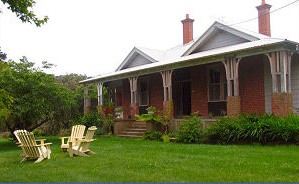
Pinegrove still stands at Hazelbrook, although its original acre is somewhat diminished by development and many of its pines are gone. It was renamed ‘Four Winds’ after becoming the home of Sheryl and Geoff Smith three decades ago.

There are traces of the literary hotbed the home was in the 1940s – the wall where Florence and Dymphna pinned-up a plan of the plot, characters and eight-day storyline of Come in Spinner is still there, off the sizeable living room which attracted the women to the house for their growing girls. The same room inspired Geoff and Sheryl to buy the house on first inspection.

The autumn weekday afternoon of my visit comes with an almost complete silence which must have been a godsend for a pair of writers, nestled as the place is away from the highway and railway.

Sheryl shares with me a copy of Four Winds and a Family given to her son by Florence James herself, who revisited the home for the making of a documentary not long before her death. On the fly leaf, a dedication reads: “A happy life at ‘Pinegrove’ – where Dee, Jay and Fan used to live – also did Tess – Florence James.”

‘Tess’ had come home, but what about ‘Topsy’?

pluck-cover
BUY NOW

“Why oh why did we leave Pinegrove?” Dymphna wrote to Florence, on the brink of an international career which took off in a cottage in Hazelbrook. It is not known if she ever returned.

Extracts from Yarn Spinners – A Story in Letters edited by Marilla North (published with the permission of University of Queensland Press). Now available in a collector’s edition.

© Michael Burge, all rights reserved.

This article appears in Michael’s eBook Pluck: Exploits of the single-minded