Category Archives: Writers

Branwell Brontë – literature’s never-was

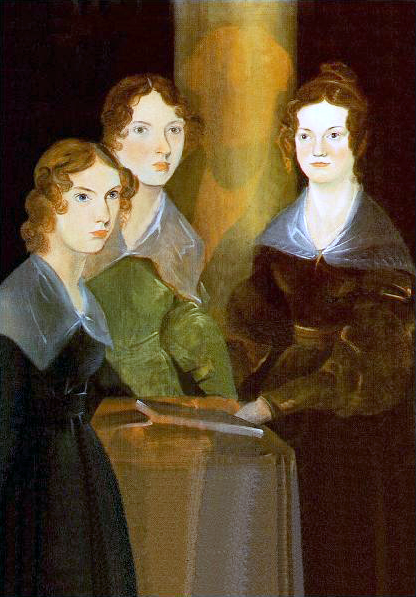
GHOST WRITER? Does this portrait of Anne, Emily and Charlotte Brontë include an erased self portrait of their brother Branwell?

DESPITE being the product of the same tiny Yorkshire parsonage as his successful sisters Charlotte, Emily and Anne, Patrick ‘Branwell’ Brontë (1817-1848) will forever be remembered as one of England’s greatest dilettantes.

The story of how a well educated, ambitious young man was left in the shade of his sisters’ literary success remains a knot of mystery biographers and historians have tried to unravel ever since a string of untimely deaths cut the Brontës’ output short in 1855.

The truncation of four literary careers has always drawn the focus from the siblings’ few books to their abundant juvenilia, which reveals great imaginary empires with characters not unlike some of the sisters’ later heroes and heroines. Branwell was an inherent part of the tight-knit creative cluster that created these unique fantasy worlds.

Although harsh realities eventually came to dominate childhood musings. In a parson’s family with multiple mouths to feed, where a mother had died young, and daughters outnumbered sons three to one, expectations weighed heavily on Branwell’s shoulders from a very young age.

No doubt he welcomed the attention, and while his sisters were sent away for their schooling, he was educated by his father at home, with the aim of getting him accepted into Oxford or Cambridge.

“Small early successes may have seemed too much like baby steps for Branwell.”

But the hoped-for pathway to university never materialised, possibly because Branwell had other ideas. Many of his young adult years were spent in the pursuit of success as a visual artist, particularly as a portraitist servicing the pre-photography tradition of upwardly mobile families having their likenesses recorded as an expression of their gentility.

His early enthusiasm and promise seemed to be flooded by his other enthusiasm – alcohol-soaked carousing with friends. After several failures at an array of careers, by his very early twenties, just like his sisters, Branwell ended up tutoring the children of the rich in private homes.

For Charlotte, Emily and Anne, the drudgery of governess work proved great fodder for their adult fiction, and drove them to seek other forms of income; whereas Branwell escaped the high level of responsibility that tutoring required into a surprising occupation for a creative young man – the management of a new railway line, part of the network that was being rolled-out across the north of England in the 1840s.

The income was good, although giving up his prospects as a portraitist, poet, and scholar must have weighed very heavily on this entitled young man. Without critical rewards, Branwell soon neglected his post and took to drinking, got sacked due to missing funds, and backtracked into tutoring.

He lasted two years, a good effort compared with his sisters’ governess work, but the stability didn’t last. Something happened in the home where Branwell tutored, something later described in Elizabeth Gaskell’s biography of Charlotte as ‘bad beyond expression’.

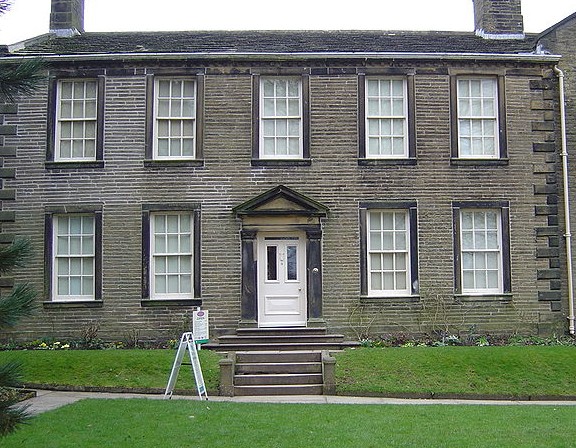
LITERARY HOTBED The Bronte Parsonage Museum, Haworth, Yorkshire.

It’s long been assumed that Branwell had an affair with the wife of his employer. Letters to his friends and his poetry hints at an unrequited yearning for Lydia Robinson, but to the present day a full-blown affair remains only an assumption.

Whatever the truth, Branwell was sacked in 1845 and he really had only one place to go.

If he expected to return as some missing hero to the literary hotbed his childhood home had become, he certainly was an entitled fool. In his absence, the once invisible door to creative collaboration with his sisters had been firmly closed.

He may have been the one to shut it, when he took a bunch of childhood tales and tried to adapt them into new forms for publication. Whether this disconnect was a direct result of Branwell’s attitude, his addictions, his ambitions, his guilt, or all of the above, he swiftly declined under the same roof as his sisters’ ascent.

There is very little evidence that Branwell was ever capable of applying himself to creativity long term, although it’s routinely overlooked that he was the first of his siblings to have work published, albeit under a false name – ‘Northlangerland’ – in local newspapers.

Having unsuccessfully pestered the editors of Britain’s prestigious Blackwoods magazine for years, these small early successes may have seemed too much like baby steps for Branwell, and without the perspective of sobriety, he probably never saw his own worth.

At the Brontë Parsonage Museum in Haworth there is still a wealth of atmosphere to be experienced, although the closeness of the quarters is striking.

Without a hint to the outside world (or the world within), it was here that Branwell’s sisters wrote their poetry and their first trio of novels, and where the path to publication under pseudonyms began in 1846.

The sisters’ writing sessions must have been executed in espionage-like conditions to keep the truth from Branwell, but there is no way anyone could have hidden a well-developed drinking habit in this intimate setting.

Although their output was immune to whatever fuss they feared from their brother, Charlotte, Anne and Emily could not escape a far more deadly interference.

Branwell’s addictions probably masked consumptive symptoms, and he’s a handy source of blame for giving his sisters one of the 19th century’s deadliest killers – tuberculosis (TB).

This chronic condition is highly contagious, and before the advent of antibiotics almost a century later, it could be a swift killer. Despite his death certificate listing bronchitis and emaciation, Branwell succumbed to TB in September 1848. Emily died of it by December the same year. Anne tried convalescing at Scarborough on Yorkshire’s coast, but died in May 1849.

Charlotte may have thought she’d escaped, but, after ‘coming out’ as a female novelist, tasting London society for a brief time, marrying, and writing more novels, she too died of the disease in 1855.

While it’s clear Branwell frittered-away his life on booze and opium, he may not have been the source of the Brontë family TB. In 1825, two elder sisters – Maria and Elizabeth – contracted it while away at school. All the Brontë siblings may have been infected when both girls were brought home to Haworth to die, and subsequently carried the disease into adulthood.

Despite the extreme sense of failure that surrounds Branwell, we have him to thank for the only known portraits of the elusive Emily Brontë, the woman who wrote Wuthering Heights, one of the most passionate and enduring stories about human relationships; and one of only a few likenesses of Anne Brontë, writer of the first English novel in which a woman slams a door in the face of her husband – The Tenant of Wildfell Hall.

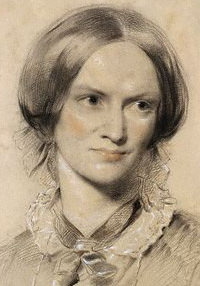
WRITER'S FACE Charlotte Brontë by George Richmond.
WRITER’S FACE Charlotte Brontë by George Richmond.

The power of these womens’ imaginations can only be fully appreciated when we remember that neither is known to have had romantic relationships, and both had witnessed plenty of bad behaviour among the men in their patriarchal world.

Charlotte Brontë’s striking features were captured by a man whose career Branwell would have aspired to – artist George Richmond – in a portrait revealing the essence of an emergent participant in the English literary scene.

Richmond’s skill only highlights Branwell’s shortcomings. In her brother’s earlier work, painted when he was a teenager, Charlotte is merely estimated as a two-dimensional bystander to another’s glory.

Much has been made by writers and historians about the mysterious ‘ghost’ in Branwell’s group portrait of his sisters – was it a self-portrait, painted-over in a fit of pique at his sisters’ success?

It’s a tempting theory, since the figure was once the focus of the composition, surrounded by sisters gathered like acolytes. Unfortunately the painting had access to too many hands after Branwell’s death (many who might have blamed him for the family’s demise) for us to be sure it was him who erased the central figure.

BAD BOY Branwell Brontë's self portrait.
BAD BOY Branwell Brontë’s self portrait.

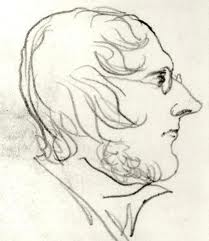
Branwell’s only surviving self portrait (apart from his self-effacing cartoons) is a quick sketch of his profile. It’s as immediate and sinuous as a Matisse sketch, undoubtedly his finest single piece of creative expression, and could only have been executed using two mirrors.

This once-removed quality may have allowed him to see himself, truly, for long enough to create a lively, almost modern likeness.

In the light of his three-decade attempt to express himself through poems, essays, portraits and fiction, Branwell Brontë’s self portrait reveals a flash of genius amidst a wealth of failure. He remains a champion of the fine line between the two.

© Michael Burge, all rights reserved.

PLUCK COVER copyThis article appears in Michael’s eBook Pluck: Exploits of the single-minded.

Sumner Locke Elliott – loved us but left us

PINK EXPAT Novelist, Screenwriter & Playwright Sumner Locke Elliott (main photograph by Lorrie Graham).

WHEN Australians challenge progressive thinkers to pack up and leave if we don’t love what’s happening politically in our country, it brings to mind the ones who actually depart as a form of protest.

With his intriguing, genderless, triple-barrelled name, novelist, screenwriter and playwright Sumner Locke Elliott (1917-1991) remained almost unknown in the country of his birth for much of his life, because he left it early and rarely returned.

I am sure many Australians still have never heard of the writer of the iconic Australian novel Careful, He Might Hear You.

Heavily autobiographical, this riveting debut tells the story of a boy who is fought over by a pair of aunts in post-Depression Sydney. Despite being steeped in the matters of Australians between the wars, it was written in New York.

But it was Elliott’s last book – Fairyland – published in 1990 that really bookended his life.

“Expats often get a bad name, especially when they heed the bogan’s call to ‘love’ or ‘leave’ our shores, but Elliott had the courage to do both.”

Having only experienced gay characters in E.M. Forster’s Maurice up to that point, here was something very thrilling for a closeted Australian man in the year he reached his twenty-first birthday. 

Elliott’s swan song gave me a silent credibility as an Australian who found himself in similar circumstances (minus the conscription).

A product of the theatre community in Sydney during and after WWII, Sumner Locke Elliott made his name with his 1948 play Rusty Bugles, the story of a group of army recruits stuck in the outback, produced at Sydney’s Independent Theatre before an extensive national tour.

But Elliott never saw a single performance of what became the first Australian play to be staged simultaneously in two states. He was, by its opening night, in New York.

The great mystery of Elliott’s life remains why, after this dramatic relocation and eventual re-identification (he became an American citizen in 1955), did he turn to writing in such detail, across many novels, about the country he turned his back on?

Long before turning to fiction after the age of forty, Elliott rode the early wave of screenwriting in America. His New York Times obituary credits him with the role of lead writer on more than thirty live television broadcasts during the 1950s.

At least one of these dealt with an Australian subject. Televised in November 1948, (when the Sydney media noted Elliott was ‘visiting’ the USA) his Australian play Wicked is the Vine (also set in the outback) was broadcast on WNBT New York.

But the patriotic fervour ended there, at least for American television audiences. Elliott continued to write for the small screen, including scripts for Kraft Television Theatre, Westinghouse Studio One, and later, Playhouse 90. As the names suggest, these series were heavily advertiser-focussed, and therefore tended to present palatable classics, but the work put Elliott in the pathway of many of America’s producing, directing and acting luminaries.

Most of the scripts required ingenious adaptations of well-known storylines (such as Jane Eyre and Little Women) for the fast-paced live television machine.

The pay for writers was not huge. The secret to success seemed to be sheer prolificacy. Writer and New York denizen Helene Hanff (author of 84, Charing Cross Road) also wrote for the New York television industry.

In her first book Underfoot in Show Business (1961), Hanff describes how the once flourishing East Coast TV behemoth collapsed almost overnight and decamped to Hollywood in the early 1960s, leaving many of its writers behind.

Elliott had as many failed Hollywood and Broadway dreams as Hanff, but the most documented of these was his failure to land the screenwriter’s job for a highly anticipated film – Breakfast at Tiffany’s (1961).

Elliott took Truman Capote’s characters – the nameless gay protagonist and the prostitute Holly Golightly – and created a screenplay that by all accounts was faithful to the eccentricities of the original.

Lengthy Paramount studio memos, however, reveal grave concerns about the overt effeminacy of the male lead, and anything that got in the way of a conventional love story between he and Holly. On advice, Elliott and his screenplay were quickly dumped from the production.

Like Hanff, Elliott used what might have been a disappointing turn of events into a new writing identity, by turning his typewriter to recording his own experiences.

CUSTODY BATTLE Poster for 1983's 'Careful, He Might Hear You'.
CUSTODY BATTLE Poster for 1983’s ‘Careful, He Might Hear You’.

Careful, He Might Hear You was published to great acclaim in 1963, winning that year’s Miles Franklin Award.

After an intense fifteen-year period adapting the work of other writers for the small screen, this novel unleashed Elliott’s true voice.

He had a lot to say, and until his death, he wrote a novel every two to three years.

Among this crop of titles, Eden’s Lost (1969) and Water Under the Bridge (1977) stand out as explorations of the Australian identity, from the perspective of an expat looking objectively back at his homeland during the morally repressed inter-war years.

Expats often get a bad name, perhaps because they heed the bogan’s call to ‘love’ or ‘leave’ our shores, but Elliott had the courage to do both. He wrote about this country with an objective explorer’s courage, and a deep understanding.

Eventually, middle Australia caught-up with Sumner Locke Elliott, when Water Under the Bridge was adapted for television in 1980; followed by the sumptuous big screen version of Careful, He Might Hear You in 1983; and capped-off by an ABC mini-series of Eden’s Lost in 1991.

Elliott’s coming-of-age dramas landed like a surprise in the thick of Australian popular culture, taking a swag of Australian Film Institute awards and finding him a new home-grown audience.

However, he eschewed complex family drama for his next, and last, novel, Fairyland. A smattering of reviews explained that the author was ostensibly coming out with this piece, written from the perspective of a boy who grew to become a successful writer and moved to New York.

Protagonist Seaton Daly explores the homosexual underclass of the Sydney amateur dramatic scene, the army, and, after coming to dubious terms with his sexuality, ultimately encounters the most devastating form of prejudice a gay man can face, far from home.

Fairyland was an extremely courageous move for a writer who’d hidden his sexuality for so long, was well known for plundering his own life story for fictional source material, yet lived long enough to reach a time when homosexuality was no longer illegal in his homeland.

It placed Elliott’s legacy way out in front of gay Australian writers like Patrick White, whose literary award Elliott had been awarded in 1977. The cranky established modernist and the cautious emerging popular writer met, late in both lives, but found little in common.

pluck-cover
BUY NOW

They moved in different worlds, and in Fairyland, the boy who bore his mother’s middle name had, in a sense, finally come home in a way that Patrick White never managed to despite returning decades earlier, and I like to think that the success of Sumner Locke Elliott’s books on home turf encouraged the man to finally come out.

© Michael Burge, all rights reserved.

This article appears in Michael’s eBook Pluck: Exploits of the single-minded.

Agatha Christie – drama queen

KEPT THEM GUESSING Dame Agatha Christie (1890-1976), author of over 100 crime titles.

A Writer’s first lesson in dramatic tension.

WHEN I was around six years old, mum bundled me and my siblings into the back of our station wagon and took us to the Inverell drive-in cinema. We were already asleep, so I don’t remember the start of the movie.

Much later I woke up, not because there was a particularly loud scene up on the big screen, but because it had gone uncharacteristically quiet. To a high-pitched, menacingly subtle soundtrack, figures, in the half-darkness, were focussed on some terrible task.

The movie was Sidney Lumet’s 1974 production of Agatha Christie’s iconic 1934 mystery novel Murder on the Orient Express. The onscreen figures were an array of 1970s movie stars. Silent. Deadly. Determined.

It was a powerful dose of dramatic tension for my young mind.

At the end of my final school exams, I picked up a Christie novel for the first time. It was By the Pricking of my Thumbs (1968). What attracted me was the cover illustration by Tom Adams – a cracked doll’s head with only one staring eye – an image dripping with the same dramatic tension.

Written very late in Christie’s career, this book is one of her ‘Tommy and Tuppence’ Beresford stories, the married amateur spies who aged with the author, and whom she used to give voice to much of the change her own generation faced across the 20th century.

They were never as famous as Hercule Poirot or Miss Marple, but the Beresfords took readers on adventures in the 1920s, through the espionage-rich 1940s, and featured in the last mystery story Christie ever penned – Postern of Fate (1973).

Heavy on atmosphere, By the Pricking of my Thumbs is a spooky page turner with plenty of sins of the past coming back to haunt the residents of a hidden-away village in England.

After months of research for exams, a murder mystery was exactly what I needed. It suited my propensity to dig up the past in my own home town, exploring the attics of old homes and the secrets they evoked.

COVER STORY Tom Adams’ cover illustration for Agatha Christie’s 1968 mystery By the Pricking of my Thumbs.

I began to spot Adams’ Magritte-like covers in the second-hand shops and book markets, and soon had quite a collection. There have been plenty of Christie cover artists, but I don’t think any have become quite so renowned for the job. Adams’ covers are masterpieces of illusion, with painterly, stylistic references running throughout.

Agatha Christie was a great exponent of plot, probably one of the greatest. Her use of the ‘slow reveal’, particularly in her most famous storylines (And Then There Were None in particular) became an intriguing hallmark in works that were never particularly long.

She undoubtedly suffered from over-exposure and publishing fatigue – for most of her career her work was sold annually as a ‘Christie for Christmas’. The sheer volume of her storytelling (well over 100 titles altogether) saw her create an oeuvre which has so far been unmatched in the crime genre.

Christie’s own life held mysteries of its own. In December 1926 she disappeared, leaving clothing and her car at a lonely place near her home in Berkshire. A nearby lake was searched to find her body. The newspapers were all over the inexplicable story of the popular crime writer who seemed to be the victim of foul play.

Eleven days later she was discovered at Harrogate Spa in Yorkshire, a great distance for someone who’d left her transport and spare clothes. Whether the entire incident was a publicity stunt or the result of a nervous breakdown linked to her husband’s infidelity has never been fully explained. Christie herself never wrote about it.

“She’ll always be remembered for leaving us wanting more about those 11 mysterious days, where dramatic tension left the realm of fiction for a fortnight.”

Vanessa Redgrave played Agatha Christie in the movie Agatha (1979), based on this affair. Redgrave’s performance goes a long way to unravelling the truth of a woman faced with abandonment and loss, who just goes away for a while to sort her head out. Dustin Hoffman played the newspaper-man who helps her do so. It’s an artful script by screenwriters Kathleen Tynan and Arthur Hopcraft, assisted by the complete absence of Christie’s own account of the same events.

What I really admire about Christie’s work is how well her dramatic tension translates to the screen. In the right hands, the results are iconic – Murder on the Orient Express (screenwriter Paul Dehn) and Death on the Nile (screenwriter Anthony Shaffer) are perennially popular big screen productions, renowned for their ingenious plots and memorable characters played by screen giants. The original books have sustained more than one screen adaptation, none of which cancels-out the others.

But sometimes, the results are only passable. Stewart Harcourt’s adaptation of By the Pricking of my Thumbs became a kind of unintentional mash-up under the banner of the Marple ITV series in 2006, when Miss Marple was planted into the storyline to assist Tuppence Beresford unravel the mystery.

It was a great shame, not only because Tuppence was rendered a rather lacklustre detective’s assistant (despite the excellent casting of Greta Scacchi and the fact that Tommy and Tuppence had starred in their own ITV series in the past – Partners in Crime in 1983), but also because Christie’s storyline was unrecognisable in the second half.

The lesson is this: don’t muck around with plot when adapting for the screen. Nuances can be altered, of course, but the course of events? Never. Christie’s skills in atmosphere and dramatic tension rarely wavered, even in her less popular works. They are a gift to screenwriters.

And the ultimate lesson she left for posterity? Well, that’s easy – she’ll always be remembered for leaving us wanting more about those 11 mysterious days, where dramatic tension left the realm of fiction for a fortnight, and possibly transformed an emerging writer into a storytelling giant. Perhaps her publishers always suggested she stay silent on the subject?