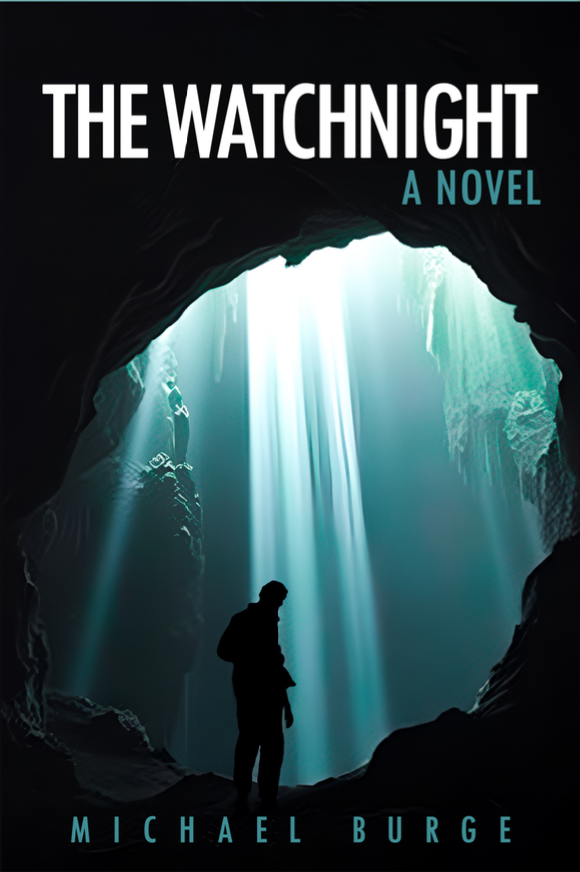
HISTRIA FICTION., an imprint of Histria Books (US) has acquired global rights for The Watchnight, my second novel.
Described as a Gothic western, The Watchnight is a bold reimagining of the Methodist settlers who colonised Australia’s renowned Jenolan Caves during the Frontier Wars.
Three lost souls – an Irish settler, a pardoned convict, and a young tutor are recruited by a religious mission during Australia’s gold rush and get caught up in a wild ride of intrigue and murder in a brutal landscape.
Acquisitions manager Dana Ungureanu said the Histria Books team is always excited to find new stories that have not saturated the market.
“That is the case with The Watchnight, an historical tale exploring places and themes that will be new for much of the world,” she said.
“Michael Burge blended crime, history, and religion into a page-turner, and we’re very glad to work with him to bring this book to our US and international readers.”
Early endorsements for The Watchnight have been effusive.
Poppy Gee, author of Bay of Fires and Vanishing Falls, said, “The Watchnight is a deeply empathetic literary thriller that explores the complexities of human relationships. Subtle, satisfying and gorgeously atmospheric.”
“Pitch perfect,” said Suzanne Leal, author of The Deceptions and The Watchful Wife. “Written in prose that is at once forensic, visceral and lyrical, The Watchnight is a compelling mystery, a sharp character study and an ode to the land amidst the brutality of colonial NSW. I loved it.”
Thousands of Steps
Before settling on Ngarrabul Country at Deepwater in far northern inland New South Wales, I was a resident of the Blue Mountains for over three decades. This World Heritage site is the location of Jenolan Caves, where I worked as a tour guide from 2008-2012.
STORYTELLING STEPS: Author Michael Burge by Max S. Harding
This novel is a new direction for me, after the publication of Tank Water (MidnightSun Publishing, 2021), a work of contemporary rural noir exploring homophobia in a country town.
The Watchnight is a work of fiction that took years to shape from the thousands of steps I took through Jenolan’s caverns.
Inspired by real people and events, it cuts through 150 years of tourist tales to recreate a time when the caves sat on the colonial frontier, a place settlers viewed with suspicion, not wonder.
What drove me were the stories few wanted to talk about, particularly the lives of Jenolan Caves’ traditional owners, the Burra Burra clan group of the Gundungurra people; the cattle farmers who gradually occupied the same countryside; the Wesleyan Methodist community of the nearby region once known as Fish River Creek, now Oberon, and the role of women in early cave exploration.
It has been a privilege to work with Gundungurra Traditional Owner Kazan Brown, who assisted me in depicting Indigenous characters in a way that respects Burra Burra history, place and cultural practice within the settings of this novel.
Tenderly Imagined
Like my debut novel, I created The Watchnight as a crime story that explores diverse themes in a dramatic context. In the case of Tank Water, that was the gay-hate crime wave of 1970-2010.
For The Watchnight, I set the story against the backdrop of Australia’s 19th century Frontier Wars, and included an unexpected love story between two central characters.
“Their connection is tenderly imagined, and I was utterly invested,” Poppy Gee said of this thread.
“Themes of LGBTIQA+ empowerment are not frequently portrayed in Australian literature of this era, and their relationship is delightful and heart wrenching,” she said.
The Watchnight is set for a September 2025 release.
NOT FAR FROM genteel St Mary Mead where Miss Marple resides, less than two hours by car from Hercule Poirot’s London pad, is an essential crime readers’ destination that even staunch fans of Agatha Christie have probably forgotten about.
As the name suggests, Market Basing is a typical English market town. The wide central square is the main clue about that, although a slow tractor on any road approaching the place will likely be your first encounter with local farmers.
But Market Basing is no backwater: Christie delved into the district regularly throughout her oeuvre.
Poirot and his sidekicks Captain Hastings and Inspector Japp took a short break there in the 1920s; and Poirot and Hastings returned in the 1930s. Superintendent Battle worked a case linked to the town in 1929. Miss Marple probably never went, but she did know of a bus conductor who serviced the St Mary Mead to Market Basing service in the 1950s; and amateur spy duo Tommy and Tuppence Beresford got embroiled in a scandal there a decade later.
SALES SQUARE: Shrewsbury, an English market town
With its growing outer-urban population, the town has a general hospital (which features in Crooked House, 1949). There’s a police command (called upon in The Secret of Chimneys, 1925); a thriving high street (which inspired a shopping trip in The Seven Dials Mystery, 1929), and Hellingforth Film Studios (a key location in The Mirror Crack’d from Side to Side, 1962) is just six miles away.
But the town’s perennial industry is real estate, and the streets are replete with busy agents offering desirable farms, manor houses for rent or purchase, and large tracts of land.
Some reckon Market Basing is Christie’s stand-in for Basingstoke in Hampshire, or an homage to her final home in the Oxfordshire village of Wallingford; but true fans know full well the township is actually in the county of Melfordshire, and if you don’t know where that is you have some reading to do.
Nobody Knows Us
Start with Christie’s 1923 short story The Market Basing Mystery (published in Poirot’s Early Cases, 1974) in which Poirot, Hastings and Japp take a weekend away from the London rat race.
The story opens with a hearty pub breakfast while Japp celebrates the benefits of a gents’ country break in a place where, “Nobody knows us and we know nobody,” he says. Hastings is narrator and he makes deft observations about men, appetites and rabbits before the renowned sleuths are called on to investigate a local locked-room mystery.
Most of the action in Dumb Witness (1937) takes place in Market Basing after local spinster Emily Arundell writes to Poirot, apparently after her death. The Belgian detective recruits Colonel Hastings to drive him out to the town on the scent of a clever poisoner Poirot refers to as a rabbit.
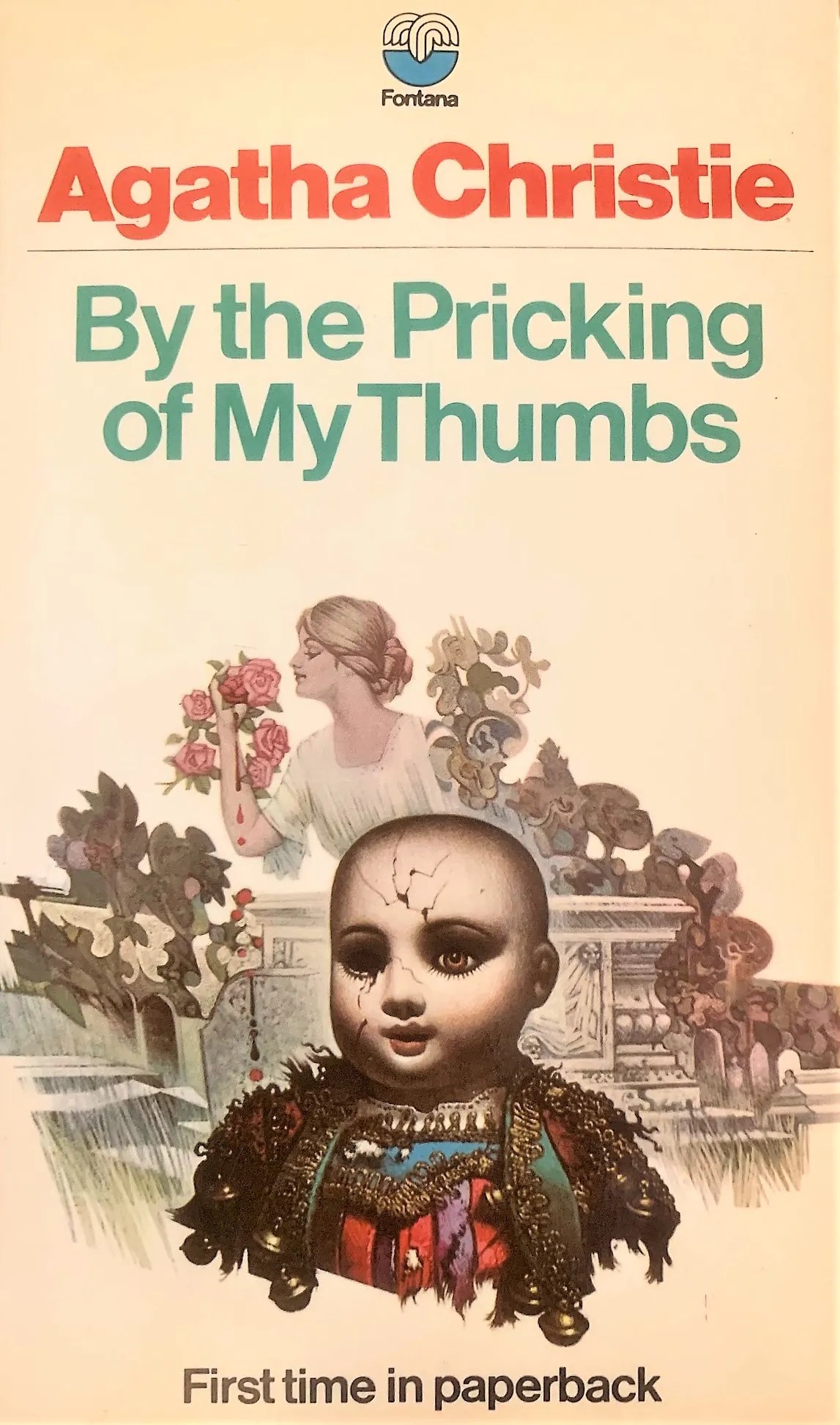
A generation after World War Two, the progress of Market Basing can be observed by joining Tommy and Tuppence Beresford in By the Pricking of My Thumbs (1968), an intriguing chase that begins in a nursing home and leads back to Market Basing, flushing out several hares responsible for missing women, jewel heists and derelict houses.
It’s here, in the last decade of Christie’s life, that she may have left clues about a rather brazen rabbit hole at the core of English country life.
Ending Nowhere
Analysis of Christie’s massive literary output often draws accusations of lacklustre storytelling. Crime author Robert Barnard’s review of By the Pricking of My Thumbs is one example:
“Half-realised plots and a plethora of those conversations, all too familiar in late Christie, which meander on through irrelevancies, repetitions and inconsequentialities to end nowhere (as if she had sat at the feet of Samuel Beckett).”
I suspect Barnard missed the point of a novel that employs meandering, memory loss and ageing as major themes; but love or loath her work, Christie was a shrewd observer of English society and documented what she perceived as its decline in the late 20th century.
She was careful to add a new county name – Melfordshire – for the setting of By the Pricking of My Thumbs, considering the changes she witnessed under the Local Government Commission in the mid-1960s; and the threat of a dormitory town being built on major landholdings in the Market Basing district in that novel.
But the Queen of Crime could be accused of a major plot hole in her collected works when she gives Poirot and Hastings absolutely no recollection of their 1923 weekend in Market Basing when they revisit the place in 1937.
Did Dame Agatha simply forget her earlier work, or are we supposed to take this crime fiction author as she presents herself, alleged ‘errors’ and all?
Rather deliciously, if we do take her at her word, Market Basing becomes even more sinister than it first appears.
Awful Things
Let’s start with a fact: Hercule Poirot rarely, if ever, forgets.
Since neither he nor Hastings refer to their 1923 weekend in Market Basing while revisiting the town twice during 1937 in Dumb Witness, they must be avoiding the memories for a reason.
RABBIT HOLE: Collection of Rabbits and Hares, 1897
Could it be embarrassment, an “I won’t mention it if you don’t” pact? Clues lie in Hastings’s 1923 pub brekky musings from a Belle Époquepoem with suggestions of depravity.
“That rabbit has a pleasant face, His private life is a disgrace. I really could not tell to you The awful things that rabbits do.”
At first glance, Hastings, upstanding gentleman that he is, appears to be comparing Market Basing’s residents to randy, big-eared, four-legged herbivores. But the depravities he euphemistically refers could be those of the men around the table.
Read the opening page of The Market Basing Mystery through this lens and the hearty breakfast devoured after a night in a town where “nobody knows us” has the vibe of the morning after a boys’ night out.
None of the men reacts to Hastings’s rabbit reference. Japp actually changes the subject back to the food. The trip was all his idea because he’s “an ardent botanist” able to reel off the botanical names of “minute flowers”.
But what if Japp’s botany is a way for a Scotland Yard gumshoe to describe his weekend predilection for plucking specimens of the two-legged variety?
If so, it’s hardly a surprise that Poirot and Hastings never again mentioned their lost weekend in Market Basing.
Specimens in the Hedgerows
Four decades on from this short story, Christie returns to the botany of Market Basing in By the Pricking of My Thumbs when Tuppence Beresford meets the vicar of Sutton Chancellor (a village in the parish) who is searching for a lost headstone in the churchyard in 1968.
At that stage, the novel is shaping up to be a beguiling, sinister tale with references to clandestine outdoor trysts, pretty young women visiting strangely empty houses and “getting into trouble”, and a serial killer who attacks girls in the woods.
So when Tuppence asks about one particular house, just like Japp in 1923 the vicar changes the subject: “… you can find quite rare specimens. Botanical, I mean,” he says.
Tuppence refuses to be fobbed off by botany, but all the talk of flowers in the hedgerows along the lonely roads around Market Basing in the 1960s might be coded language from a devout man warning Tuppence of local “goings on”.
Masterful Illusion
Rabbits and hares, flowers and hedgerows… if it all sounds like a mare’s nest, that’s because it’s supposed to.
Read Christie’s three major Market Basing stories in sequence and you’ll see the masterful illusion she wove around this district. There are no spoilers to be had (Christie took great care in that regard), but you’ll be one step ahead of Tuppence Beresford in the 1960s throughout By the Pricking of My Thumbs when you’ve had a taste of the town’s depravity from the 1920s in The Market Basing Mystery.
It’s now over half a century since Market Basing last cropped up in crime fiction. Since then it’s no doubt been absorbed into another county, the hedgerows have been bulldozed, and several dormitory towns raised and renovated many times over.
But you can still enjoy the botanical ‘specimens’ and ‘wildlife’, now you know what you’re looking for.
Main image: A Hare in the Forest, Hans Hoffmann, c.1585 (Getty Museum)
WHEN A COMMUNION wafer gives genteel young Judith Hearne (Emma Jane Lavin) the hiccoughs and other girls in the congregation start giggling, a painful demonstration of Catholic self control is delivered by a pious aunt played by the formidable Wendy Hiller.
It’s the opening scene of The Lonely Passion of Judith Hearne (1987), and young Judith’s stoic face fades to that of middle-aged Maggie Smith (1934-2024) as she’s delivered to the door of a devout 1950s Dublin boarding house.
Now so down-at-heel that she ascends to her latest shoddy digs with the resignation of a martyr, the question of why nothing appears to have changed for Judith in the intervening decades is masterfully explored in the big-screen swan song of British director Jack Clayton (1921-1995) .
Yet despite Smith winning the BAFTA for Best Actress, the role of hapless part-time piano tutor Judith Hearne was commonly overlooked in her obituaries, basically because hardly anyone got a chance to see it.
After portraying a series of upright matrons in the 1980s (most successfully as Charlotte Bartlett in Merchant Ivory’s A Room With a View), Judith Hearne offered Smith another “prime” akin to the global attention she garnered as Jean Brodie.
Miss Hearne exhibits all Miss Brodie’s blind passion, but where the schoolteacher used bravado to stave off scandal in a conservative society, the piano teacher is shamed into silence; and this exquisite production from the Handmade Films’ stable was similarly humiliated at the box office.
There had been warning signs. The source material – Brian Moore’s 1955 debut novel – was banned in the Republic of Ireland as anti-religious, and notorious for its unsatisfactory ending. Director John Huston optioned the material in the 1960s but failed to mount a production, even with Katharine Hepburn onboard as Judith. During Clayton’s shoot, no Irish church would permit a location crew into their altar to recreate the protagonist’s crisis of faith.
PASSIONATE PAIR: Bob Hoskins and Maggie Smith
Yet this lapsed-Catholic director and his screenwriter Peter Nelson saw great potential in the story’s quite ordinary setting. We wince with Miss Hearne as she nervously pokes her way into the breakfast room, but we cringe when she’s instantly attracted to fellow boarder James Madden (Bob Hoskins, a dose of American vigour in austere postwar Dublin).
Once Miss Hearne’s delusion takes hold – that Madden’s hints about a business partnership are a reciprocation of her romantic availability – we want to look away.
But we cannot, especially once deadly sins start to boil up. Madden’s sister, the landlady (played with deviously good manners by Marie Kean) and her corpulent dilettante son, Bernie (pitch-perfect Ian McNeice) conspire to ruin Judy’s dreams by exposing the penniless truth about James.
Achingly, he can’t help but see money in Miss Hearne’s heirloom jewels as she prays at mass; an occasion she construes as a first date ahead of a brand new life as a hotelier’s wife.
Augmented by Georges Delerue’s heartbreaking score and a supporting cast that includes Prunella Scales as Judith’s indifferent school friend, this powder keg burns inevitably towards the exposure of the heroine’s real passion, and the unforgivable expression of Madden’s lust.
Reviews were polarised. Janet Maslin described Smith as “almost too good” in the role, because her subtlety only highlighted the production’s “obviousness”. Yet Pauline Kael called the film “a phenomenal piece” and recognised Smith’s pioneering task: “There has probably never been another movie in which a woman rejected the Church fathers’ ready-made answers.”
Long known for the ‘wrist acting’ that she admitted in a 2018 documentary was appropriated from her longtime friend, actor Kenneth Williams, Smith puts her fine joints to expert use when charting Judith Hearne’s inescapable weakness – her alcoholism.
Like voyeurs, we get a glimpse of how far Judith is likely to fall when Smith has her impersonating Hedy Lamarr, all hips, elbows and chin as she poses sensually on her bed after returning from what she believes was her second date with Madden.
This is the comfortable comic schtick of Smith’s matrons, yet something else emerges once the booze flows and Judith’s religious conflict bursts like a shockwave.
Her wrists aimed upwards like a drowning woman, Miss Hearne appeals for help from a priest. But when it’s apparent that he’s as doubting as she is, Smith has Judith slam a suddenly powerful, un-bent forearm into the stone font as though daring the holy water to cleanse her lack of faith.
Unsatisfied, she aims both wrists at the tabernacle and attempts to claw her way into grace.
After taking her passion right up to her god, it’s arguable whether Miss Hearne ever reconciles her addiction within the patriarchy she so powerfully bucks. Wrists ultimately manacled by nothing more than dressing gown pockets in the convent asylum for her last ‘date’ with Madden, Maggie Smith appears to recognise Judith’s ultimate surrender as a feminist triumph of self forgiveness, just for today.
Witnessing her inhabit that discovery – when Moore, Nelson and Clayton all seemed to overlook it – Smith’s work here is much more that “almost too good”. It’s unmissable.
The Lonely Passion of Judith Hearne is streaming on Amazon.






 Michael Burge Media