Margaret Betts – tree planter

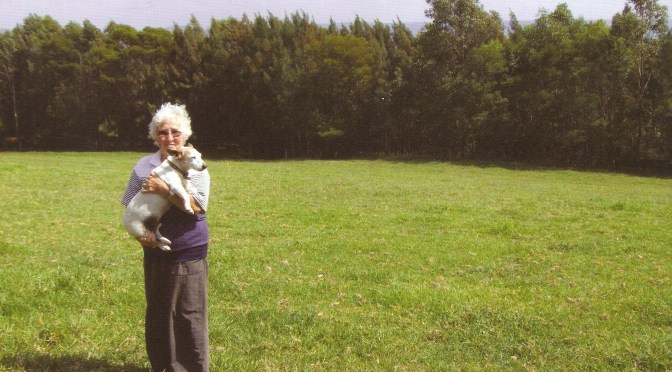
SHE-OAK Hawkesbury cattle farmer Margaret Betts (Photo
SHE-OAK Hawkesbury cattle farmer Margaret Betts (Hawkesbury Gazette).

A Writer’s encounter with a rural rebel

MY two decades of research on the descendants of Mary Pitt eventually led me to the Hawkesbury Valley, where many of Australia’s first settlers were granted land for the purposes of contributing to the survival of the fledgling colony by farming.

With their indelible link to their benefactor Lord Nelson, the two Pitt family farms were named, at different times, ‘Nelson’ and ‘Trafalgar’, in the wake of Nelson’s great 1805 maritime victory at the Battle of Trafalgar.

Finding these original land grants took time.

Nelson Farm had gone by another name for many years, but, as I was to discover, it was still under the stewardship of an indefatigable woman. This feature was published in Blue Mountains Life in June-July 2010.

Out on a Limb

How Margaret Betts reforested an original Hawkesbury farm

On Nelson Farm near Agnes Banks stands a house known as Bronte, with uninterrupted views of the Blue Mountains.

Even before this region became the cradle of modern Australian agriculture, the fertile river flats yielded food for generations of Aboriginal people.

The house is positioned on an 1802 hundred-acre grant of land to Thomas Pitt. Originally called Nelson Farm, the property was amalgamated with adjacent land granted to Thomas’ mother Mary Pitt and renamed Bronte.

This name remembers British naval hero (and Mary’s benefactor) Lord Horatio Nelson, first Duke of Bronte.

022-cropped1
HAWKESBURY HOUSE Bronte on Nelson Farm (Photo: Mary Matcham Pitt family history website).

Mary Pitt’s land grant was eventually sold off, although Bronte remained in the family until 1919.

The impressive mid-Victorian building is not the original, but from Castlereagh Road, the giveaway stands of hoop pine (Araucaria cunninghamii) and bunya trees (Araucaria bidwillii) reveal traces of the original settlers’ use of the land.

Many Hawkesbury heritage properties are open to the public or have become public places, but Bronte on Nelson Farm has always been in private hands, and a working farm since 1802.

The current owner, Margaret Betts, has lived there since 1998, and her parents William and Mary farmed the land since 1955.

“Dad did the hard work and Mum did the reading,” Margaret says, recalling her parents’ years as dairy farmers at Bronte. “They were both from logging country, so they were both what you’d call ‘old school’ farmers,” Margaret relates. “Trees, to them, were just something that sapped-up the goodness out of the soil.”

Mary Betts’ wariness about trees on dairy country became particularly pertinent in 1998, when an enormous oak tree came down in the westerly wind the night after she died, an event which made the local news.

Margaret recalls many such nights taking their toll on the few trees left on the property, and she realised “that if we didn’t do something about it, there’d be nothing left.”

Margaret knew the farm’s history, including the years when her father leased acreage to vegetable farmers with a strict stipulation to leave the stands of Casuarina running down the spine of the property towards the river. “They killed the lot,” Margaret remembers, “and they were original trees on the property.”

For someone who spent her career teaching music and in school administration, continuing her parents’ work at Bronte seems like a totally new angle for Margaret, but I get the feeling she sees farming as something in her genes, and that common sense counts for more than experience.

Margaret had a plan to develop beef production at Bronte, with very different needs to dairy farming, and certainly requiring a lot more shade than vegetable fields provided.

“I could have counted the remaining trees on one hand,” she recalls, “and I needed to do my research,” Margaret stresses.

“This region is part of the Cumberland Plain, in terms of its vegetation. If I was going to plant a large amount of trees I needed to know they were going to be viable.

BUNYA PINE Araucaria bidwillii (Photo: Bidgee)

“We’ve had hoop pine and bunya growing here for well over a hundred years. The settlers planted those, and even though they’re not native to this region, they’ve done well.

“At one stage the bunyas at Bronte were described as the largest stand in the western suburbs, but they’ve very much diminished in recent decades.

“I propagated seedlings from ours and they came up no problem.

“Hoop pines need shelter to get established, but the bunya trees just take off. There were also a few Kurrajong trees (Brachychiton populneus), and quite a few local gum trees which I assumed would do well.”

“But I also remembered the Casuarinas, which are local,” Margaret says. “In my research I found they were one of the only trees which soak up pesticides.”

With high use of pesticides on all sides of her property, Margaret had stumbled on a natural solution to an age-old problem.

The planting of trees did nothing for relations with her neighbours, particularly the vegetable farmers. “They thought I was destroying good farming land,” Margaret says, “so I got a lot of abuse. I still do, only last week one of them was shouting at me over the fence. I just wave back,” she laughs.

“I taught many of them, so they know what I’m like,” she hastens to add, illustrating how her resolve to reforest Bronte has never wavered.

After failed attempts to establish Landcare groups in the area, Margaret realised that if she was going to succeed then she needed to take action on her own. She also discovered that the tree problem was not just apparent above ground – the local water table was severely degraded.

After generations of development, the original reservoirs and lagoons of the Agnes Banks region had become choked with weeds (including water hyacinth and alligator weed), and polluted with litter and sewerage.

Insufficient drainage and water retention from nearby farms meant the water supply for Bronte was contaminated, and that affected Margaret’s cattle with outbreaks of salmonella.

The water problem only seemed to sharpen Margaret’s resolve. “At one stage I was planting around thirty trees a day, I must’ve planted thousands of them over twelve years,” she recalls.

“If you looked out here in 1998,” she says, throwing an arm out to the vista above the nearby Hawkesbury River and distant Yarramundi Lane, which is her western border, “there were only these trees close to the house and little else.”

Now, in a great green belt below Bronte is a reforested barrier of green, mainly Casuarina (river she oak, and swamp she oak), looking more like the glimpses of natural bush at the foot of the Mountains across the river. Twelve years seems like barely enough time for this result.

“The cows love the shade, they’re up here under the trees by seven o’clock on a hot day. The trees have also brought the birds back,” Margaret adds, which surely must annoy the vegetable farmers, I suggest.

“Birds are a natural pesticide,” Margaret replies.

“The water table has been improved so much with those trees,” she indicates, and indeed there are shallow lakes at intervals along the lowest points of the property.

“It’s made me more conscious of water,” Margaret says, “but we need clean water,” she adds, explaining that drainage problems caused by the use of poultry litter as fertiliser on higher-set nearby farms, combined with ineffective Council drainage along the road, contributes to the continual pollution of Bronte’s water table.

The solution was to drill a bore. “Dad was an excellent water diviner,” Margaret recalls. “He found the old wells on the property that way,” illustrating how Bronte’s past has once again become a part of its future.

The Department of Environment and Climate Change Cumberland Plain Recovery Plan draft document of November 2009 suggests private land holders like Margaret are on the right track: “Conservation of the rich biodiversity of the Cumberland Plain in western Sydney is one of the most challenging issues facing natural resources management in New South Wales,” the introduction states.

“Extensive loss and fragmentation of vegetation has occurred, land values are high, and competing land uses are placing extraordinary pressures on the remaining areas of bushland in the region.”

“You’ve really got to take care of your patch, and keep at it,” Margaret says. “I won’t see most of what I’ve planted come to anything, but others will,” she adds, indicating the hoop pine saplings she propagated and planted, trees which will stand long after their parents have fallen.

© Michael Burge, all rights reserved.

This article appears in Michael’s eBook Pluck: Exploits of the single-minded


On the Board at Fox Studios

Hi res Fox Colour_0How a Writer’s op-shop jacket got him cast in a commercial.

Towards the end of my acting training my class appeared in The Legend of King O’Malley by Bob Ellis and Michael Boddy. In preparation for the title role, I scoured the local op-shops for weeks in search of my costume.

Having been an inveterate op-shopper for years, I knew the chances of finding anything my size were slim, so when I discovered a light green plaid jacket, the sleeves of which covered my long arms right to my knuckles, I rushed to pay the hefty $5.

But hey, I had an outfit that didn’t pinch me in the shoulders or make me look like Frankenstein, wrists exposed from cuffs halfway up my forearms. I felt able to play the man (“The King”) who had such an impact on the formation of modern Australia.

About a fortnight after the show, I was rehearsing for a production of The Popular Mechanicals by Keith Robinson, Tony Taylor and William Shakespeare, at Penrith’s Q-Theatre, when I got a call from the only agent I’ve ever had (who recruited models and actors through letterbox drops), asking me to attend a casting session for a car commercial at Fox Studios in Sydney. “Dress corporate,” she said.

My only smart jacket was King O’Malley’s. Matched with a business shirt (I had to fork out another $2), I looked about as corporate I was ever going to get, and plonked myself down in the casting office waiting room, surrounded by people in black and grey.

We were seen in groups, seated in a mock boardroom complete with a whiteboard, and launched into a board meeting improvisation. I was asked to stand and play the boss, whiteboard marker in hand.

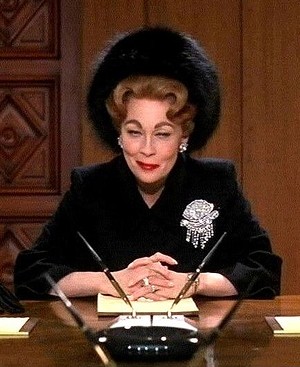
BOARDROOM BITCH Faye Dunaway as Joan Crawford in Mommie Dearest.

Having spent months in theatre training, I was used to playing to the car park, so I was drawn to channel Faye Dunaway playing Joan Crawford in the Pepsi Cola scene in Mommie Dearest, (“Don’t f#%k with me fellas!”), and launched into sacking the whole lot of my motley staffers.

A note from the big wigs in the shadows, behind the camera, asked me to “Do it again, but tone it down.”

So I changed gears, made it quieter, colder, figuring they might be framing my head and shoulders. My fellow actors looked back at me with fear. Before I knew whether they were acting or not, we were shuffled out.

At the callback we had to imagine, on cue, a wonderful new car driving past our meeting, which was so innovative and attractive that it stopped us, and all our corporate musings, in shock. The result was several rounds of dreadful face pulling, and a bit of inappropriate chuckling.

But I got the gig!

Marched before the director at the costume fitting, “The Board” all looked at me when he asked “Where’s your green jacket?”.

“At home,” I muttered, feeling like I’d worn the wrong gear to sports class. “Can you bring it to the shoot? Can he bring it to the shoot?” he asked, not allowing me to say anything to the first part of his question. The costume designer looked at me with daggers in her eyes, nodded, and marched us out.

There was me thinking it was my well-honed acting skills which got me the job!

On the day, “The Board” waited in a bland green room at Fox Studios, where we worked out very quickly that only one of us could be defined as a “proper” actor – the NIDA graduate cast in the role of “The Boss”. The rest of us were ring-ins, really – a film festival producer, an accountant, an ad sales-rep – all earning far more in one day than we’d ever get in our day jobs.

If we made the final cut, that is. Word got around the set that the director was speculating on too many scenes for his Asian-screened commercial, and if we got cut we might get nothing.

No-one said it, but everyone on “The Board” thought “Don’t f#%k this up, people”.

We were fetched by a man with five mobile phones on his belt, seated in front of a blue screen with a small black track across it, given two quick rehearsals to aid in focussing on the fluorescent taped mark as it sped by (indicating where the “car” would be keyed-in by the editors) and then we were on.

I was seated with my back to the “car”. After the first take, they asked us to take our cue from the NIDA graduate, who was to take his from the director. We were all to be amazed by the “car” at different moments.

After a few more takes, a message came through to the NIDA graduate that he needed to do his turn, his “discovery” of the “car”, “less Broadway, please”. Everyone chuckled, because he had, actually, been having far too much fun with it.

A few more takes later, I shoved some papers off the table, on purpose. “Upstager!” I imagined the NIDA graduate say under his breath. But they liked it, “Keep the papers falling, please.”

A few takes later, they asked for me to take my green jacket off and put in behind me on the chair and roll up my shirt sleeves. No problem, it was getting warm anyway.

Then things started to go a little awry. The NIDA graduate was turning early, which put us all off. The message came through to “Stick to the cue, please”.

Bemused, sweat trickling down his temples, the NIDA graduate looked as though he really was earning his extra dollars for being slightly more featured in this commercial than us ring-ins. While they reset the marker, he leant across to me and whispered: “What’s my cue again?”

“When the director says ‘action’,” I whispered, as reassuringly as I could.

A few more takes later and it was all over. “The Board” was marched off the set to loud applause from the clients, clustered around a mock living room at the edge of the sound stage.

THE BORED MEMBERS Corporate grey is good, but green is better.
BORED MEMBERS Corporate grey is good, but green is better.

“When do you think we’ll get paid?” one of “The Board” asked back in the green room. “Don’t be so cynical,” the guy with five mobile phones said, calling-in the two models cast in the scene where the secretary gets ravished on the photocopier by some random office guy, after seeing the “car”, or course.

We cynical non-actors laughed, exchanged business cards, raided the fabulous leftover catering, and departed.

I drove back to Penrith for the technical rehearsal of The Popular Mechanicals, which was to open in only a few days. After all the blood, sweat and tears that goes into putting anything onto the stage, we played to some houses comprising fewer people, showing less enthusiasm, than the ad execs after “The Board’s” gripping performance at Fox Studios.

And we got paid nix. Welcome to Showbusiness, Mike.

I kept the green jacket for a few more years, but ditched in a hurried move, and I have never acted since I gave it up. Maybe it was my Good Luck Jacket?

© Michael Burge, all rights reserved.

The call to action

UNCLE SAM WANTS you to get out of your comfort zone, for the sake of a good story (J.F. Flagg's 1917 poster).
UNCLE SAM WANTS you to get out of your comfort zone (J.F. Flagg’s 1917 poster).

THERE’S a nifty three-act dramatic structure, generally used by screenwriters (but drawn from the older five-act dramatic arc), which gets a plot moving a bit faster than a novel and contains a great plotting tool – the Call to Action.

One of the reasons we go to the movies, or distract ourselves by reading, is because we want to step outside our lives, temporarily, for entertainment.

It might sound incredibly obvious, but this distraction requires writers to create work so deliciously escapist that the reader/viewer is taken beyond the sphere of their own lives for a short time.

Writers don’t have to create an alternate universe (although some do, to great effect), we just need to suspend the reader’s disbelief. Even getting them a centimetre off the ground can be enough.

To achieve this disbelief, writers need to have their main character – the protagonist – step outside their world. The protagonist’s ‘call to action’ is the trigger for this step.

Situated at the heart of a plot’s exposition, the protagonist is going about the business of what seems like an average day, when something happens (an old friend calls with some unusual news; a car crashes into their front room; a stranger turns up at their door … it can be anything).

Those of us who live the average Western life, where most of our needs are taken care of, do not get wake-up calls like this, but we love to imagine what we would do if we did.

It’s this attractive energy that publishers, agents and eventually audiences crave, and it’s even become a marketing tool. It’s why we buy the book, or the movie ticket.

Now, I hear a bunch of literary fiction writers screaming: “Nooo, it’s all about the Art!”. Well, as a fan of literary fiction myself, I say let ’em scream: literary fiction writers need a call to action for their protagonist every bit as much as Agatha Christie did.

Would Nick Guest, the protagonist in Alan Hollinghurst’s The Line of Beauty, have gone on such a compelling emotional journey had he simply moved out of the Fedden family’s house the minute their daughter Cat started cutting herself? (he wanted to).

Would Stevens, the Butler of Darlington Hall in Kazuo Ishiguro’s The Remains of the Day, have decided to take a car trip to visit Miss Kenton, the former Housemaid, had his new boss Mr Farraday not ordered him to take some time off ? (he didn’t want to).

Of course they wouldn’t. Had Nick moved out, and Stevens never gone away, both storylines would simply peter out. Neither piece of ‘Art’ would have garnered the critical and financial successes of their Booker Prize wins.

The protagonist’s call to action is linked to a plotting device covered in my posts on the dramatic structures of two films – Guess Who’s Coming to Dinner, and The Sum of Us. This is the compelling question needed in every plot’s exposition, in fact, they are almost one and the same: if you get the protagonist’s call to action right, a compelling question will naturally be posed.

CROSSING THE LINE Protagonist Nick Guest in the television adaptation of Alan Hollinghurst's The Line of Beauty
CROSSING THE LINE Protagonist Nick Guest in the TV adaptation of The Line of Beauty (Photo: Nick Briggs).

By keeping Nick Guest in the Fedden’s home, exposing him to family secrets, and relying on his character’s already-established empathy, Hollinghurst poses the compelling question of his plot: When will the Feddens and their British upper class friends discover the reason for Nick’s empathy is his homosexuality?

By sending Stevens (who we already know is staid and a little unreliable in his recollections of his employment history) out into the world, Ishiguro poses his: Is Stevens so deluded he actually believes he can revive a stunted love affair that barely even began twenty years before?

Some authors, particularly crime writers, bury their protagonist’s call to action in mystery – a murder in the exposition is a particularly effective trigger for the most common of all plot questions – Whodunnit?

It’s for this reason that Miss Marple and Hercule Poirot are Christie’s great antagonists – they foil her murderers (read: protagonists) at each and every turn, showing how antagonists are also locked into the plot by the protagonist’s call to action.

WRITE REGARDLESSHead spinning? Just remember that plotting isn’t meant to be a formulaic set of rules. Stretching and manipulating these conventions, in interesting ways, is the real ‘Art’ of writing.

© Michael Burge, all rights reserved.

An extract from Write, Regardless!