NEW WORLD Luke Skywalker takes the news of his parentage badly in the classic turning point of The Empire Strikes Back.
SOME call it the mid-point, some the climax, others the reversal of fortune. Whatever you label it, what every great storyline needs is a point of no return.
As writers, we need to take our protagonists and antagonists, and place them in an environment where nothing is the same as it was at the start of the story.
Seeing how they fare in the aftermath makes for gripping storytelling.
In the film Gone With the Wind (1939) screenwriter Sidney Howard (and an uncredited team of extra writers) used the same mid-point as the original novel’s author, Margaret Mitchell, in the scene where the southern city of Atlanta is burnt to the ground.
Filmed almost two months before principal photography began, and long before famous names were cast as the leads, the scene was shot when the old sets of the 1930s King Kong movie were sent up in flames. Such was the need for a spectacular climax to this epic story of the American Civil War.
BURNING BRIDGES Atlanta goes up in smoke in Victor Fleming’s Gone With the Wind (1939).
In the wake of their escape from the city, no character in this story is the same – their world has turned upside down.
The formerly privileged Scarlett O’Hara needs to eke out an existence in the ruins of the war, and it is her climb back to wealth which occupies the central storyline from that point on.
In the original Star Wars (1977), Luke Skywalker is unwilling to leave his home planet Tatooine and travel with Obi-Wan Kenobi to support the rebel forces in their quest to overthrow Darth Vader and the Empire, that is, until he returns home to find that Imperial stormtroopers have killed his remaining family.
In one of this weighty science fiction franchise’s few moments of real pathos, Luke realises there is nothing for him at home anymore. His life will never be the same again, so he has nothing to lose in embarking on an interplanetary journey with powerful strangers.
And in Shakespeare’s Hamlet, self-doubt and hesitation become all too real in Shakespeare’s brilliant climax, when the tortured young prince lashes out at a silent observer behind a curtain, running it through with his sword, only to kill the earnest old courtier Polonius.
This grave error sets a tragic course for the rest of the play, and, after so much angst and inaction, is a devastating action which seals the fate of all the characters.
In a sense, attempting to write anything without a climax is always going to result in unresolved issues in a plot. Without the crucial mid-point, our protagonists remain untested and static.
The term ‘mid-point’ is often used for this moment because a climax should generally occur in the midst of proceedings, after the characters have been established in the audiences’ or readers’ minds, once we’ve formed opinions and loyalties about them, and experienced their pathways ignited by the ‘rising action’ of the plot.
Place a climax too early, and we risk having nowhere to go in a storyline. Place it too late, and we risk losing the interest of the audience or reader.
A point of no return need not be some sudden sequence where our characters survive a nuclear event (although action movies regularly place their protagonists in such external extremes, to great effect), it could be an internal crisis – an upsetting diagnosis, a letter containing bad news, or a guilty verdict in the dock.
Burn your character’s bridges, cast them loose in undiscovered country, and record their responses to the shock. It can feel cruel, especially if you’ve travelled with them for some time, but go on, it’s make believe after all, and if the point of no return unsettles you, it’s bound to make your audience feel something too.
A Writer examines the home life of an Australian media pioneer.
SINCE the release of the Paper Giants franchise on Australian television screens, audiences have been exploring the stories of groundbreaking women in the print media.
But long before Ita Buttrose, Nene King and Dulcie Boling, a country woman who was good with words and had great visual flair was selected to spearhead a brightly coloured revolution in home decorating for a new magazine: Australian House and Garden.
Her name was Beryl Guertner. Behind her stellar career was the story of community-minded women who wanted to make a home for themselves in the leafy streets of Warrimoo.
As a tribute to a local magazine pioneer, this feature was first published in Blue Mountains Life in June 2010.
SITTING PRETTY Guertner at home.
Life with Beryl
The Warrimoo community remembers Beryl Guertner, Australian magazine pioneer and community woman.
Soon after WWII, residents of sleepy Florabella Street in Warrimoo noticed two women camping on a double block.
Ex-local Bruce Patman recalls: “The two ‘girls’ were befriended by our parents. On seeing them struggling with the elements, they were invited to sleep out on our verandah. There was a spare shed on our property which we cleaned-out. Beryl Guertner and Terri Margetts moved into that while they planned their house. Beryl was a journalist and she travelled to the city to work each day, while Terri (who I believe had garden nursery experience) grew gladioli flowers for market”.
COMMUNITY WOMAN Beryl Guertner dancing with a neighbour at a local 21st birthday party, Warrimoo, 1958.
“No doubt as a result of the war, we had a number of women sharing homes in the village whom we regarded as ‘old maids’, Bruce adds. “Beryl and Terri were largely regarded as two girls pooling their resources for a dream of building a sandstone block house. I remember helping out at weekends with stonework in the gardens, and some of the heavy lifting.”
“Beryl got her first job when she settled here in the shed … with New Idea,” long-term local Elizabeth Leven recalls. “Then this opportunity came up to be editor of Australian House and Garden, and she applied for it.”
“I don’t think she was that confident she would get it,” Bruce’s brother Barry Patman reflects.
The new Australian House and Garden magazine opened its doors on Young Street, Sydney, in late 1947. The brainchild of publisher Ken Murray, the popular publication aimed to deliver low-cost décor to the average household, including monthly architects’ plans for small homes. Murray gave Beryl sixteen weeks to create the first edition from scratch.
“They were very excited when Beryl was accepted as the founding editor,” Bruce remembers. “Beryl was very enthusiastic with exciting ideas, and on occasion, she related them to us. She was very clever in her field.”
“I remember painting bottles with Christmas designs and making a lamp stand out of wine bottles as projects for the magazine,” Barry recalls.
AUSTRALIAN STYLE Early cover of Australian House & Garden magazine.
From such humble roots, Beryl Guertner became widely known in the Australian media for spearheading the home design revolution of the 1950s. The continued popularity of home makeover media owes much to the groundbreaking vision of Beryl and her contemporaries.
Born in Sydney in 1917 to Eugene and Maude, Beryl was raised and schooled at Wagga Wagga. By the outbreak of the war she’d returned to the city and embarked on a series of journalism and public relations jobs for companies like The Daily Telegraph and Paramount Pictures.
Beryl’s German father Eugene was interned at Liverpool for most of the war. Whether it was the whole family, or just Beryl, who adopted ‘Guertner’ from ‘Gürtner’ is not clear. It remained her professional name throughout her lengthy career.
Why Beryl chose Warrimoo remains a bit of a mystery. The semi-rural community was the vision of property developer Arthur Rickard, whose advertisements in the Sydney media for his satellite suburbs on the city’s fringe cannot have escaped Beryl’s attention in the 1930s and 40s.
The pressures of putting a new magazine together while commuting seems to have put an end to Beryl and Terri’s vision for a sandstone house. It may also have ended their relationship. “Terri worked very hard on the start of the sandstone house, but then there came a split between them and Terri moved away. We were very sorry for her after all her hard work,” Bruce recalls.
Other locals remember how Beryl met Catherine (‘Kate’) Warmoll, a fellow commuter who worked as an accountant for Cinzano, on the train. The two eventually moved in together and completed the first stage of their home around 1949-50. In the process, Beryl and Kate became integral members of the Warrimoo community.
Elizabeth Leven still lives in Florabella Street – “We used to laugh about Beryl,” she relates. “She had quite a few men under her as editor, and I remember her telling me one day that she used the filthiest language when she was talking to them … because that was the language the men understood. She and Kate used to walk to the station, but they would walk in old shoes and carry their good shoes.”
Bronwyn Kilner grew up at Warrimoo and remembers: “Beryl was very blond, and very pretty, she always wore gorgeous clothes, floral patterned skirts and looked lovely. Kate wore jeans and shirts, and dungarees, but the two of them made a great couple.”
Elizabeth Leven’s daughter Margaret states, with a fond smile, that Beryl was: “Always overdone for Warrimoo.”
Over time Kate and Beryl expanded their home from a one-room cottage to include a second bedroom, garage, stylish ‘crazy paving’ chimney, patios hewn from local stone, a verandah overlooking the valley, and a stone bridge in the front garden.
Their garden in particular left its mark in local memories. “Beryl always reckoned we were in the tropical belt,” Barry Hickey recalls. “She had a map showing the different climatic regions, and she reckoned Warrimoo was a place you could grow almost anything.”
Neighbours to Beryl and Kate since 1958, Barry and Joan Hickey remember how keen the couple were on the red-flowered ‘Coral Trees’, which many believe they introduced to the region.
Warimoo endured regular bushfires in the 1950s and 60s, and Beryl and Kate were members of the bushfire brigade. “It was Beryl who got me into the brigade,” Barry recalls. “She never rode the fire truck of course, but it was important that the community support the brigade.”
Artist and ex-local Donna Hawkins recalls: “Sometime in the late 1960s I had the good fortune to spend an evening in Beryl Guertner’s beautiful home. I went there with my Brownie pack to learn about cake decorating and how to make marzipan fruits. Compared to my simple home on the other side of the railway track, Beryl’s home was quite exotic – the lush entry graced with tree ferns and garden lights, the elegant lamps in the lounge room created a warm atmosphere. Our little group felt welcome and important”.
ICING QUEEN One of Beryl’s many books on cake decorating.
“We crowded around the table and followed her lead, shaping marzipan into tiny bananas, oranges and apples, then painting them with food colouring. It was an evening of creativity I will never forget … to discover that food could be a work of art was inspiring.”
Bronwyn Kilner remembers her mother asking Beryl’s design advice for their newly completed home. “I recall that the main living area of the house, and the hallway, had very light oyster grey walls, with chartreuse ceilings!” Bronywn says. “There was green ivy-patterned wallpaper in the dining room and the entry foyer. The spare bedroom had grey walls, almost a gun-metal grey, and the ceiling was painted a tomato soup red!”
Beryl and Kate sold their home in the early 1970s to fellow commuter Jack Maddock. Nita Maddock’s first response, when Jack suggested they look at the house, was to say: “I’m not living in Warrimoo!”
However, once she saw Beryl and Kate’s home, she decided they should buy it immediately. “It was just the happiest house,” Nita remembers.
Beryl and Kate retired to the Central Coast, where Beryl continued to write and edit in her field until her cancer-related death in 1981.
I recently visited Beryl and Kate’s home on Florabella Street, the residence of John and Sue Cottee for the past thirteen years. I asked Sue when she became aware of the designer heritage of her home.
“It was a local who said to me one day: ‘You know you’re living in the party house?’” Sue recalls.
When the Hickey’s stroll in from next door, Joan and Barry both recall what sounds like the biggest party of them all – an event for the magazine – possibly the twentieth anniversary in 1968, with “magazine people up from the city,” Joan remembers. An electrician by trade, Barry tells us: “I floodlit the trees for the night.”
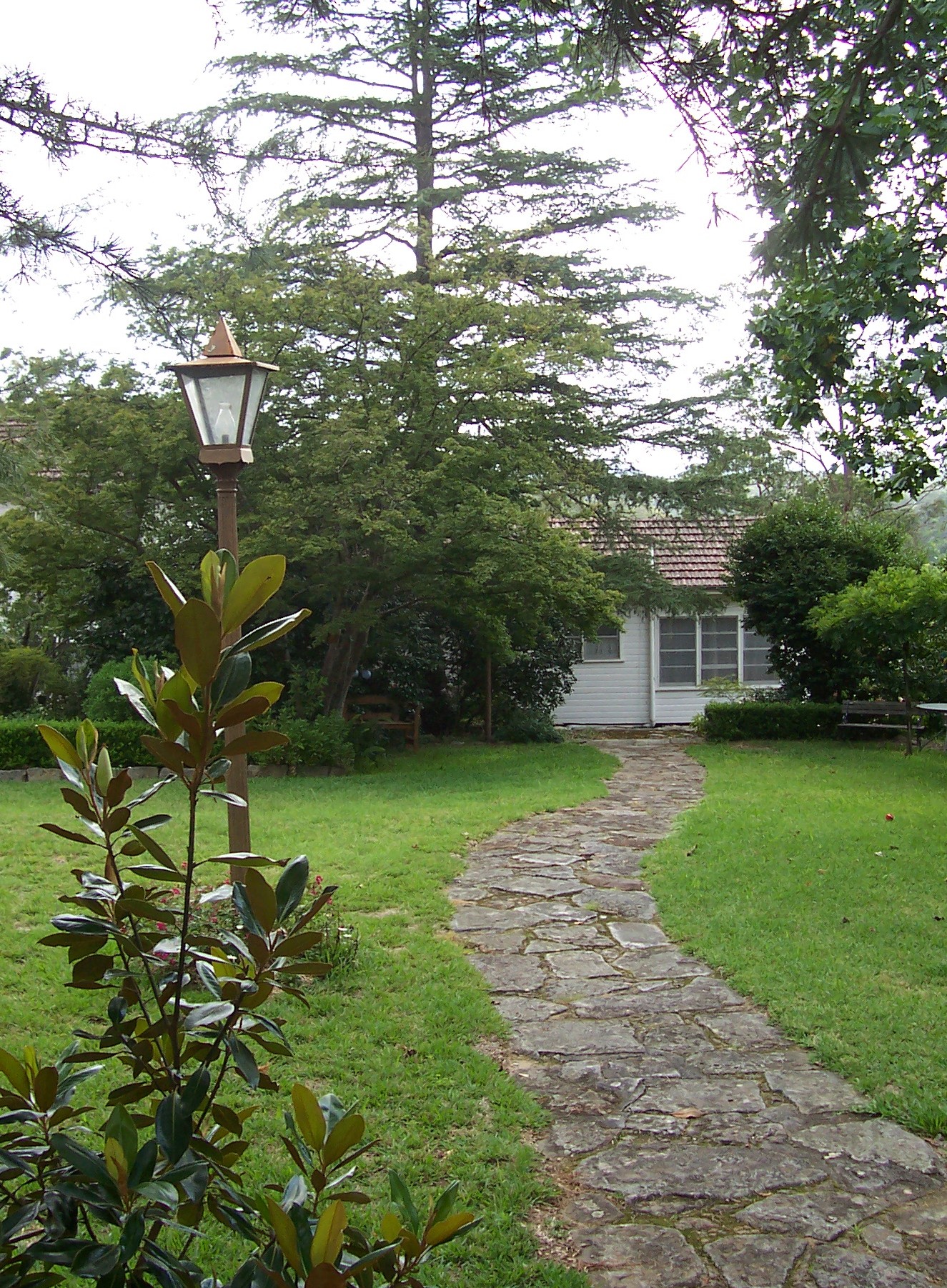
BERYL’S WAY Beryl Guertner’s house in Florabella Street, Warrimoo.
The Levens join us in the front garden for coffee, amongst the surviving stonework patios, pathways, bridge and pond designed by Beryl, Kate and Terri.
“There was a time when I was welcome in every home on this street,” Elizabeth Leven recalls, and it’s clear from this gathering of long-term Warrimoo residents that Beryl and Kate were too. “Generous people”, “arty and flamboyant”, “involved in the community” are common terms the locals use when remembering the couple.
John Cottee shares the plan for expanding and renovating the house, which has been altered extensively since Beryl and Kate left.
“We want to preserve the surviving stone work in the garden,” John outlines.
I get the feeling that Beryl would very much approve of the 21st century renovation of a house and garden that has been evolving ever since she came to Warrimoo. After all, it was her life’s work to empower Australians to transform their own homes, and she herself had started life on the same block in nothing but a tent.
DAY IN COURT Inverell Court House, built in 1886 (Photo: Cgoodwin).
A Writer returns to the scene of the crime.
MORE than 20 years after my family moved away from the country town of Inverell, leaving behind failed dreams and a broken marriage, I returned on a rainy evening in late 2003 with some unfinished business.
I’d called ahead to my grandmother, who was still living there in a nursing home. Before taking her to lunch the next day, I dropped into the local courthouse, an imposing clock tower at the centre of town, where a helpful woman proceeded to assist me in finding my mother’s name in the court records.
The court staffer didn’t flinch when it quickly became apparent we were not looking for a plaintiff of any kind, but rather a defendant. Trouble was, I had no specific dates to search, only the barest clues from what I’d been told about mum’s appearance in the court on a shoplifting charge sometime in the 1970s.
That meant mum’s name was still on the police computer database, in which the dates became brutally clear: just before Christmas, 1977, the police had made their way to our property off the Bingara Road, with complaints from two Inverell shops that mum had stolen childrens’ clothing and kitchen implements.
All court records prior to 1980 were stored in the archives of the New England University at the nearby city of Armidale. Would I like them faxed over? I agreed to return to the police station adjacent to the courthouse when they were ready.
Next, I dropped into the council chambers with a request. I had in my possession a hand-sized flat stone which had been picked up off the driveway of our farm, a flint-like rock with a broad space for a thumb to hold the sharpened edge to use it for cutting – an aboriginal hand axe of indeterminate age.
I asked if there was any kind of Aboriginal cultural heritage centre, or perhaps a museum, which would be interested in taking this stone tool off my hands?
The council staffer held her gaze with an open, shocked mouth, and shook her head, muttering “no…,” and, “good luck with that,” before leaving.
The tourist information centre had the name of an Aboriginal elder who lived locally. I drove the streets of our old neighbourhood searching for the address, but there was no-one home, and the only Aboriginal public office was well and truly closed.
SHOW & TELL Aboriginal hand axes from Arnhem Land.
I began to wonder whether the stories I’d been told about this stone were true, or if they’d been elaborated into family myths? I had taken it to school for ‘show and tell’, with the family name written on it using thick black marker pen in my mother’s hand. She was interested in anthropology, and we had inherited all kinds of fossils and artefacts at her death at decade before.
But on returning to the riverside shopping centre to buy grandma a present, my doubts were allayed by the wall built of local stone at the gateway, the very same blue, brown and ochre basalt. The wall was all that remained of the department store built by my ancestors in the town. I knew then I had the right rock back in the right region.
Grandma was dressed and eager to get out and about, waiting for me outside the door of the nursing home. We laughed as I lifted her into the passenger seat of my four-wheel drive, me allaying any embarrassment she felt by reminding her of the hundreds of times she had lifted me into a car when I was a child.
We had a lovely lunch. She enjoyed the meal and hearing all my news about life in the big city. We’d corresponded about family stuff many times, and it seemed a waste of time to go over it all again – she and I had come to terms already. We loved one another, that’s all that mattered.
I dropped her home when she started to tire, and headed out of town, along a well-trodden road into the uplands south west of Delungra, where fields of wheat in black soil run for miles and miles under enormous skies.
I’d met the present owner a few years before, but I hadn’t come to see the house again. I’d picked-over the traces of my family’s dream many times before: the room where my baby brother died, and the hopeful imprint my parents had made on a property which was derelict when they moved there.
I looked over the stones on the driveway, and sure enough, scattered along the verges were more of those flinty fragments like the larger one in my pocket.
I was headed a few kilometres further west, to a lonely place on the Bingara Road, where a memorial had been built in the year 2000 to the Aboriginal men, women and children who were slaughtered on a hillside in 1838 at the hands of European settlers in what came to be known as the Myall Creek Massacre.
MASSACRE SITE: The Myall Creek Massacre Memorial (Photo: Department of Environment: Mark Mohell).
There, I walked along the trail which marks the gruesome milestones of this iconic event – the first time in Australia’s history that settlers were tried and hanged for the murder of Aboriginal people.
I took the Aboriginal axe, with our family name impossible to erase from it, and buried it at the site, not only out of respect for the Aboriginal lives lost, but also those in my own scattered family.
Night was falling when I arrived back at the Inverell police station, where a large envelope awaited me. At a motel out of town I pored over its contents, like some terrible play in which my parents were protagonists.
Buried deep in the court transcripts, describing in detail how mum was found guilty of multiple counts of theft, was the news of one shop owner who’d waived all charges in the light of the psychologist’s report, and the one who’d refused.
The sentence in Mulawa Womens’ Prison in Sydney, a day’s drive away from her children, detailed the number of days’ imprisonment resulting from the value of each item of clothing stolen.
The transcripts of friends who stood in the dock spoke of her good character.
The psychologists’ report itself – one clinical, succinct letter linked mum’s behavior to deep feelings of guilt and shame about the death of her third child, the result of Sudden Infant Death Syndrome (SIDS).
And then the suspended sentence – no jail time to be served, in exchange for a warrant of good behaviour.
I suddenly understood why mum did not put up a fight for her financial share of the marriage settlement. Buying her freedom had cost our family dearly, and walking away with nothing but a car and some furniture, she might have felt she’d repaid her dues.
I could also see why she eventually left town, allowing the myth to emerge that she’d left dad, not the truth, which was all the other way around. Our family name on ‘Burge Bros.’, an Inverell shopfront, speaks of our pedigree as descendants of proud local shopkeepers, which mum might have felt was brought into disrepute by a depressed city girl. Housed in the same precinct was the shop whose owner would not forgive her.
I remembered how mum recalled being interviewed by the police after my brother died. It was a matter of course, apparently, that the mother was the first subject of investigation after the death of a child who had been laid in his bed by her arms only hours before. Lindy Chamberlain was to face that same moment only seven years later.
And I remembered it was mum who told me about the Myall Creek Massacre. While the other adults were playing tennis at the courts near the creek, she pointed to the hillside and whispered to me about what had occurred. Whispered. Not to the other kids, or any of the white adults enjoying weekend sport, but just to me.
The Myall Creek Massacre memorial was eventually the subject of an Australian Story episode in which descendants of the settlers who committed the crimes reached out in reconciliation to the descendants of the Wirrayaraay people who were slaughtered.
SET IN STONE Plaque at the Myall Creek Massacre memorial.
But in its first decade, it endured vandalism. Not brainless destruction, but calculated censorship of the facts about the case and its impact on lives.
It’s a beautiful part of the world, the place I was born, but it can be a harsh place too.
The shock and grief wrought on one family in the wake of the sudden death of one baby tells us how magnified the same emotions would have been after the sudden slaughter of multiple defenceless women, children and old men at Myall Creek, but despite the well-known contributing factors of depression and grief-related kleptomania, there was little reconciliation or understanding on offer for my mother in the 1970s. The community was still coming to terms with what happened to the Wirrayaraay.
Mum got away from Inverell and made a new life. Grandma died in 2008 and we gathered in Inverell for her funeral, but no-one in our family lives there anymore.



 Burn your character’s bridges, cast them loose in undiscovered country, and record their responses to the shock. It can feel cruel, especially if you’ve travelled with them for some time, but go on, it’s make believe after all, and if the point of no return unsettles you, it’s bound to make your audience feel something too.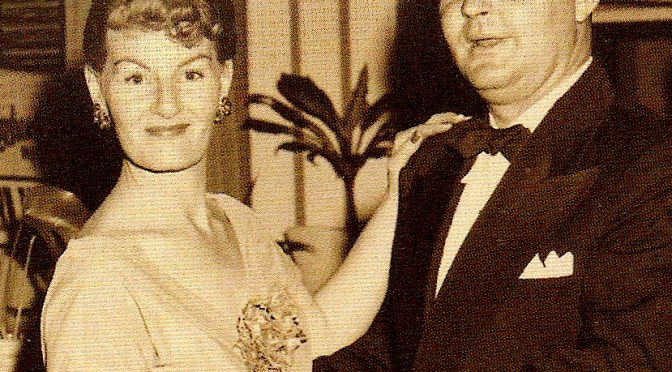




 Michael Burge Media