Was Hollywood’s Merle Oberon a girl from Tassie, or was she from the streets of Calcutta? On the eve of screening her film ‘The Trouble With Merle’ at the Blue Mountains Short Film Festival, Marée Delofski spoke with Michael Burge.
DOWN a leafy laneway more reminiscent of a country town than the faded ‘honeymoon capital’ style of Katoomba’s main drag,Marée Delofski talks of her love for The Blue Mountains.
“I write best here,” she says, “I get very good mental space”. Such feelings are not uncommon amongst local artists escaping the speed of the city, so I ask if there is a deeper connection to the local landscape?
Like one of the many people interviewed in her hour-long award-winning documentary The Trouble With Merle, Marée is on the brink of a journey to answer a question that cannot be addressed in a minute. The real answer is about an hour and two cups of tea away.
Marée Delofski is a very open person – this must be how she extracts such personal depth from her subjects. Indeed, The Trouble with Merle is a personal journey to the heart of a mystery, the kind of mystery common in the Australian experience – the kind that may never be solved…
LOCAL SUPPORT Shane Porteous in What to do When I’m Dead (Photo: Tracey Schramm).
A Writer gets a screenplay produced, finally.
AFTER a few failed attempts to secure funding in Australia with original screenplays, I decided to wait no more and go into production on a short feature of my own.
Like all aspiring filmmakers, I craved experience, which meant getting something in the can without any financial backing whatsoever, and keeping the costs way down.
I have always looked upon such circumstances as a creative challenge, and came up with a concept which I could produce within the resources I had at my fingertips living in the town of Katoomba in the Blue Mountains.
With the support of skilled friends, family, and a smattering of recruited professionals, What to do When I’m Dead was shot over four very long days in November 1999.
The low budget meant using the relatively new medium of digital video, and we pushed this medium … in hindsight a little too much. But atmosphere was what I was after, and it’s what I got.
Our acting team was nothing short of miraculous. I wrote the central role of ‘Jane’ for friend and established actor Jennifer Kent. Always encouraging local writers, Mountains-based television icon Shane Porteous agreed to play ‘Paul’ after a read of an early draft.
Josh Quong Tart’s agent suggested he get some screen experience by taking on the role of ‘Matthew’, and we were extremely lucky to have Celia Ireland play the small role of ‘Anne-Marie’, a real estate agent who drops-in with comic results.
Most of the crew, myself included, were rather more emergent – our sound recordist Michelle Irwin was the most experienced amongst us, and she respectfully kept things on track, with the guidance of my friend Judy Keogh, an experienced stage manager who came up from Melbourne to line produce for me.
Filming took place in my home, which at the time I shared with a friend, who let us take over her bedroom for four days and have people pretend to be a dead body in her bed. An emerging writer at the time, Eden bravely wrote an article to promote the premiere screening of the finished film. Her first draft was a bit tame, so I encouraged her to write the awful truth. Her second try was so sharply-observed and hilarious that the local newspaper published it word-for-word.
When the finished result was ready, I managed to get access to two venues for charity screenings – the Scenic Cinema at Katoomba’s Scenic World, and the bistro at the Dendy Cinema in Sydney.
Keen to repay the community which had sent me off to England to learn filmmaking, I donated all the proceeds from these events to the Blue Mountains Palliative Support Network, a local group supporting people to die in their own homes.
At thirty minutes long, What to do When I’m Dead was classed as a short feature, not a short film, and therefore difficult to place in most film festivals. Nevertheless, it was selected to screen at the 2000 Watch My Shorts festival in Melbourne.
A further screening was offered at a palliative care conference at Leura’s Fairmont Resort, where the projection facilities gave the film its best ever technical conditions. Picture, sound and everything else came together so beautifully that day, with a non-media-industry crowd of quite a few hundred conference attendees.
SIBLING RIVALRY Jennifer Kent and Josh Quong Tart in What to do When I’m Dead (Photo: Tracey Schramm).
Subsequently, What to do When I’m Dead was offered distribution on video by Healthcliff Distribution, through which it found an unexpected audience – healthcare staff seeking insights into the issues faced by families who choose to have their loved ones die in the home.
My film was very simple in the storytelling sense, but I am pleased to reflect that I was heading in the right direction with my screenplay, a distillation of my own experiences immediately after the death of my mother seven years prior.
What I tried to articulate was the difficult relationship between two siblings in the wake of tragedy, and the small yet courageous ways they find to reach out to one another, with the help, both intentional and inadvertent, from others. I had a clear protagonist and antagonist, who ‘did battle’, a climax that was a bit weaker than it should have been, and a dénouement which I remain quite proud of.
The errors I made with video capture could have been made into wins had I gone for a ‘video capture look’, as many other filmmakers were doing at the time. We achieved this only in parts of the finished film.
What to do When I’m Dead polarised viewers. Perhaps it’s one measure of success that this small, ambitious film full of flaws had praise heaped on it by some (an agent was so impressed by digital video that she wanted to know more), and also got its share of critical dumpings (my flatmate’s mother said she could have done a better job).
But the sound recordist said she’d work with me again. There can be no greater compliment from someone who really knows what they’re doing.
I kept a realistic head in the wake of What to do When I’m Dead, and, encouraged by the experience I’d been given by my generous collaborators, I just kept on writing despite the critics.
SPEAKING OF US Jack Thompson and Russell Crowe in The Sum of Us (Photos: Jimmy Pozarik).
WHEN Hal McElroy, one of Australia’s most prolific film producers, read the play script The Sum of Us by David Stevens, he described it as “absolutely irresistible” – the two words every aspiring playwright wants to hear from a producer after just one read.
The desire to create a film of Stevens’ script was so firmly implanted that it took only four years to bring the work to the screen as one of the iconic Australian films of the 1990s.
Inspired by my first post on dramatic structure (a breakdown of the plot of William Rose’s Guess Who’s Coming to Dinner), I embarked on an analysis of The Sum of Us, not by watching the film, but by reading its screenplay, to see how closely it follows the classic five-part story arc widely purported to be the key to all good storytelling.
With flashbacks that shed light on the family which is the centre of the story, and regular breaking of the ‘fourth wall‘ (the imaginary barrier between a character and their audience), The Sum of Us presents as a less linear story than my first subject, and great fodder to observe how another writer might have bent ‘the rules’ in interesting ways.
Here’s what I found … beware, there are spoilers.
Exposition – “He hasn’t been this excited for ages”
The exposition must introduce us to the characters and show who is the protagonist (the hero) and the antagonist (the anti-hero, or ‘villain’); and the protagonist must be called to action, posing a question so interesting that we are gripped.
At the age of 24 Jeff Mitchell remembers his grandmother fondly as a woman with boundless love and energy for her grandchildren. He’s a plumber who lives in suburban Sydney with his widowed father Harry, a ferry captain. Jeff (the protagonist) is getting ready to go out, with the strong chance of meeting that someone special at the pub that night. In the most loving, accepting manner, it’s Harry (the antagonist) who spills the beans that his son’s ‘someone special’ will be a man, not a woman. The call to action is Jeff’s memory of his grandmother’s great love for her partner, Mary; posing the big question: How did this obviously straight, typical Australian father become so accepting of his gay son?
Rising Action – “How can you be too bloody domestic?”
The rising actions are those the antagonist uses to thwart the protagonist and show us who both of them really are.
On his way to meet Greg, a gardener, at the local gay-friendly pub, Jeff reminds the audience that his Grandmother was a lesbian in a very long-term relationship with his “Aunt Mary”. Their kind of love is something he aspires to. Harry, meanwhile, calls Joyce, whom he met through a dating agency, and arranges to meet her for lunch. Jeff and Greg get on like a house on fire and make their way home, but Harry proceeds to make Greg so welcome that a night of passion becomes a scene of domestic normality, the likes of which Greg, with his homophobic father, has never experienced. Jeff’s date is ruined by his well-meaning but overbearing Dad.
RISING ACTION Russell Crowe and John Polson get close.
Climax – “If only you’d been honest”
The climax must be the start of a battle between the protagonist and the antagonist, and a turning point after which there is no going back for either.
Harry and Joyce’s relationship develops so easily it puts Jeff and Greg’s false start into sharp perspective. Jeff is staying at home, depressed. Harry reveals his relationship with Joyce and declares he will marry her only if she and his son get on, although he has not yet told her that Jeff is gay. Jeff is thrilled for his father, but when Joyce visits, she innocently stumbles across the gay magazines Harry bought for Jeff, is affronted by the presence of homosexuality in the family she was seriously considering becoming a part of, and leaves. As the city celebrates New Years Eve, a deeply disappointed Harry has a stroke while watching the fireworks from the porch.
Falling Action – “I didn’t have the guts”
The falling action must play out the battle between the protagonist and the antagonist, allowing one of them to win. The winner defines the piece as a comedy or a tragedy.
When Harry wakes up in hospital, Jeff is there to comfort him, and immediately steps up to the plate as his father’s primary carer. Greg, meanwhile, gets thrown out of home for participating in Sydney’s Gay Mardi Gras. Despite being neutralised by his inability to speak or walk, Harry causes a scene at the supermarket in order that Jeff and Greg meet again. Joyce comes to visit Harry at home, and is confronted by the love the Mitchell family have for one another, and she leaves, acknowledging to herself that she has missed out on sharing in it. Harry ponders what it is to lose love, once it has been made.
Dénouement – “How do you say thankyou for love?”
The dénouement (“to untie”) must unravel all the conflict and bring everything to a sense of resolution. In a comedy, the protagonist is better off than when they started. In a tragedy, this is reversed. The big question posed in the exposition must be left answered.
Reminiscing on the core love of his family, Harry recalls the day that he and his brother separated his mother and her long-term partner Mary, in their old age, wondering what they would have said to one another the night before they knew they would never see one another ever again. On a day trip to the botanic gardens, Harry notices Greg is working there, and ensures the two men meet yet again. Jeff and Greg talk. Both men have been set free from the expectations and fears of their fathers, and there is a great sense that they’ll continue growing the love of the Mitchell family together
FATHER OF THE CENTURY Harry Mitchell is a hard-to-pick anti-hero.
The Verdict
Picking the antagonist and protagonist in this screenplay was difficult – most of the characters are affable and it was hard to position one of them as an anti-hero. But it is Harry Mitchell, Jeff’s father, who unwittingly places the obstacles in the way of his son’s happiness, by being so very keen for his son to experience the joys of love as he defines it.
Jeff is not a classic protagonist either – in the climax he remains almost neutral and does not seem to ‘do battle’ with his father in the relationship stakes. This is because ‘the battle’ is a lot deeper in this plot than usual.
This is a story about relationships in the one family – there is Gran and Mary, separated tragically after forty years; there is Harry and Joyce, trying to rebuild love after losing it to death and divorce; and there is Jeff and Greg, attempting to start a relationship from scratch under conditions that are not favourable.
But these moments of guilt and inspiration are played-out through the father-son relationship of Jeff and Harry, and it’s the lessons that Gran taught these men which make the flashbacks in the script essential (especially the placement of Jeff’s boyhood recollection of Gran and Mary’s love right in the exposition), because they ultimately see Jeff and Harry through their own battle.
And it’s that discovery which answers the big question posed in the Exposition: it was Gran Mitchell’s courageous love that caused her son Harry to accept his son so unconditionally, and made him capable of taking emotional risks out of love for his son.


 Was Hollywood’s Merle Oberon a girl from Tassie, or was she from the streets of Calcutta? On the eve of screening her film ‘The Trouble With Merle’ at the Blue Mountains Short Film Festival, Marée Delofski spoke with Michael Burge.
 209 of 1010 words. Unlock the rest of this article by purchasing Michael’s ebook Creating Waves: Critical takes on culture and politics.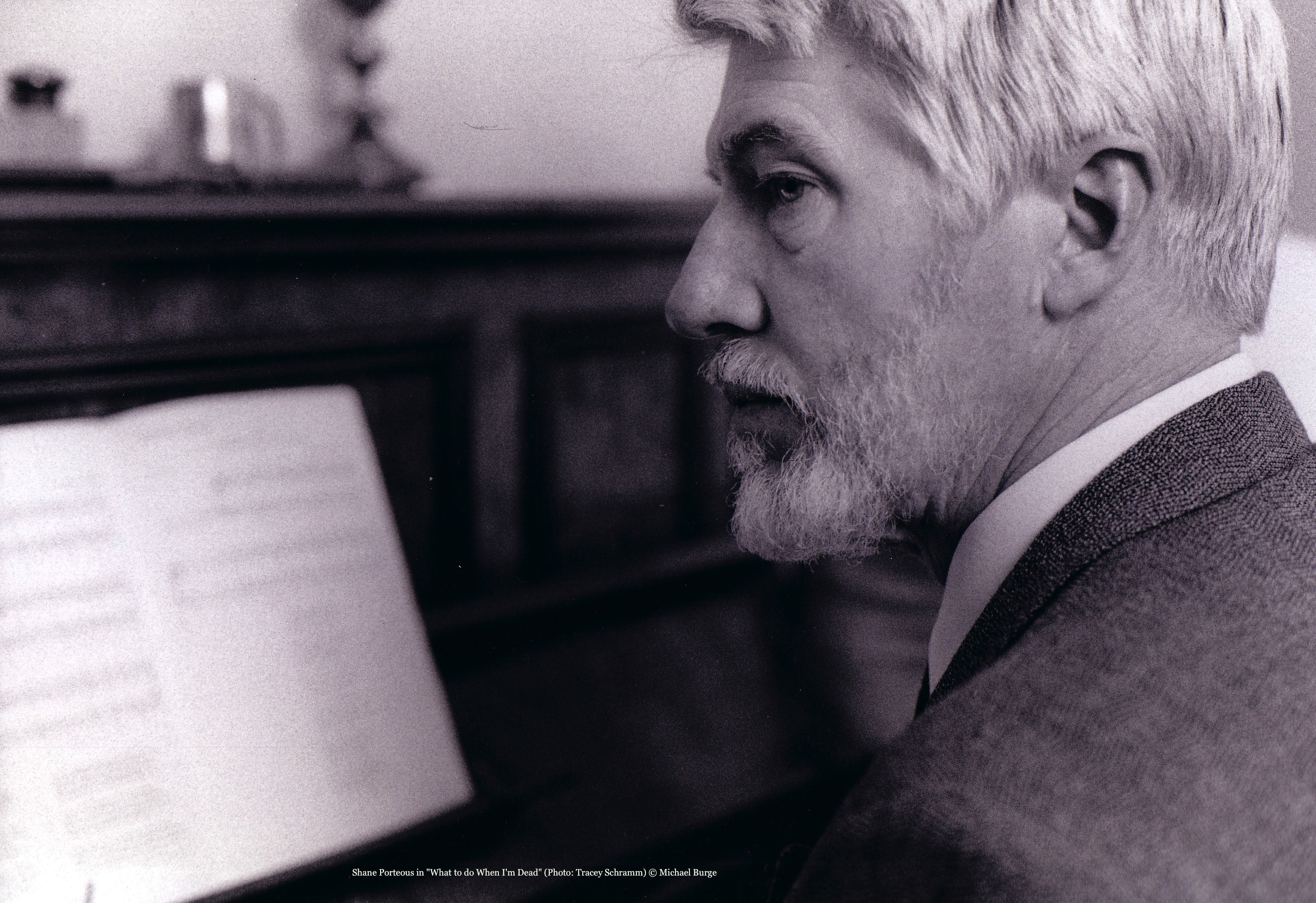


 And it’s that discovery which answers the big question posed in the Exposition: it was Gran Mitchell’s courageous love that caused her son Harry to accept his son so unconditionally, and made him capable of taking emotional risks out of love for his son.
 Michael Burge Media