
Tag Archives: Book Review

Bloodletting basics with Helen Macdonald

A Writer’s review of Helen Macdonald’s ‘H is for Hawk’.

“Macdonald courageously takes herself, and us, beyond our traditional blinkering on cruelty, hunting and killing.”

WHEN I closed this book, I felt free. Helen Macdonald can write. She can write the bejesus out of life, but this read left me like I imagine her goshawk Mabel felt: attached by a string while tamed to her mistresses’ arm, listening for her cues.

Much of this taming comes from the way Macdonald argues her case for weaving the bulk of her story into that of author T. H. White, also a falconer who wrote about similar stresses in his pursuit of the sport.

H-is-for-HawkAs soon as she mentioned White, I thought: Oh no, another writer who overlooked his homosexuality, but it’s in there, although Macdonald (like many other writers before her) completely avoids the fact that for his entire life, acting on homosexual desires was a criminal act in the places White called home, and writing about them would have led to the kind of notoriety that ended Oscar Wilde’s career.

White was a genuinely tortured literary closet case like W. Somerset Maugham, Henry James, Joe Ackerley, William Plomer, Christopher Isherwood and E. M. Forster. Let’s not forget they had their closets built for them by proactive buggery legislation that saw thousands blackmailed, attacked, jailed and subjected to electro and chemical aversion therapies.

Their natures cannot be left un-analysed at ‘cruel’. To do so is to join the terrible tradition of casting stereotypically evil, sibilant villains.
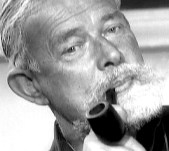
WHITE
HAWKISH WRITER English author Terence Hanbury “Tim” White (1906-1964).

White was always tethered to society’s arm, on a very short string, fed tasty morsels that never satiated the lust for hunting in the woods for his heart’s desire.

Macdonald observes how this caused White pain, but still she made him into her unwitting antagonist, without exploring how legislation and culture contributed to his battle against his nature. This renders her book, and some of her arguments, instantly questionable.

Helen Macdonald did strange things in her grief. We all do, although I feel sure she didn’t write about the bulk of them in this book. We hear snippets about her falling for a man in the wake of her father’s death, failed jobs and difficult house moves, but these potentially interesting storylines are buried under her attention to White.

By the time she puts into words what one of her friends says – that White was just a “silly man” – it’s too late, her book is almost over.

As an observation of Macdonald’s grief after the death of her father, it makes for interesting storytelling. Macdonald grieves for the man who taught her to love wildness and wild places, and the loss of British innocence in the wake of its wars.

Escaping her pain, Macdonald’s childhood attraction to falconry sees her pursue a father figure – White – into the forest, where she loses herself almost entirely.

Her descriptions of place and emotion are incredible, they made me want to laugh with recognition of human frailty and cry for our endless recklessness and our ultimate vulnerability when it comes to our fragile grasp near the top of the food chain.

And her reticence around falconry, its context of killing and its anachronisms, are as strong and replete as her appeals for its place in human evolution.

“She leaves falconry hanging in the air as a paradox, for us and her.”

What H is for Hawk does best, I believe, is call into question our relationship with all creatures, domesticated and wild. It’s not possible to read without analysing the projections and limitations we place on companion and working animals, from dogs and cats through to kept birds. Macdonald courageously takes herself, and us, beyond our traditional blinkering on cruelty, hunting and killing.

The title it reminded me of most was Alice Walker’s The Chicken Chronicles, a memoir that revealed the journey Walker took, via her chooks, to better understanding the need to be loving in her relationship with her daughter.
creating-waves-cover
BUY NOW

Macdonald could never succeed in building similar bridges: her father, and T. H. White, are dead. She leaves falconry hanging in the air as a paradox, for us and her. Avoiding the sentimentality of her childhood literary favourites, like Watership Down, not even Mabel’s story is resolved, and the titular hawk’s ultimate fate is left to a footnote.

That is exactly what grief is like. It makes no sense, and follows no patterns. In this regard, Macdonald’s book deserves attention.

© Michael Burge, all rights reserved.

This article also appears in Michael’s eBook Creating Waves: Critical takes on culture and politics.
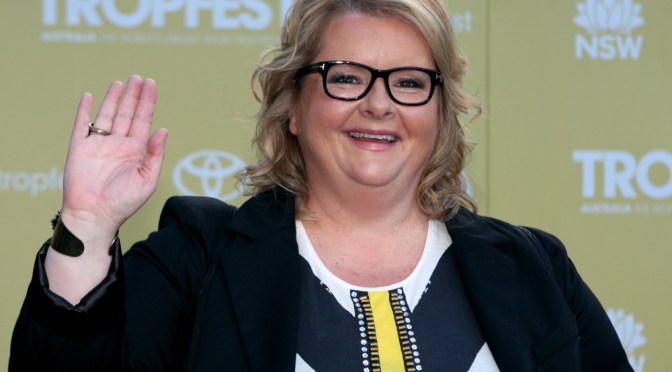
Magda’s (not so) funny bits

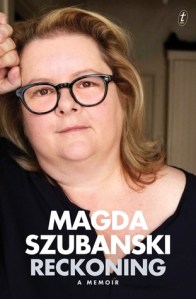
A writer’s review of Magda Szubanksi’s ‘Reckoning’.

WHEN they say that all great comedy emerges from tragedy, they’re talking about books like Magda Szubanski’s Reckoning.

Audiences are often perplexed when commentators explore the comic-tragic paradox, a place where there are no easy absolutes. But it’s something Australian creators do particularly well. Think of the suicide of Muriel’s mother in Muriel’s Wedding, one of Australia’s greatest laugh-out-loud screen experiences, in which a near-silent housewife, whose name nobody can remember, kills herself at the turning point of the tragic B-story in the plot.

25875588It’s this layer of dysfunction that Szubanski courageously mines.
The narrative of Reckoning pivots around her success in show-business and her fascination for the scars etched into her family by European wars.

Szubanski’s exploration is driven by the very energy that fuels performers – seeking responses written on the face. The little girl who couldn’t interpret Holocaust images in a taboo book in her Father’s collection begins a lifetime journey of bearing witness to the facial reactions of those around her.

And no one gets off the hook, not living relatives or the long dead in photographic records of ancestors, or the family legends about personalities that Szubanski brings to vivid life through her powerful imagination. The little Jewish boy given sanctuary in her grandparent’s Warsaw home during Nazi occupation is perhaps the best example of this evocative, pain-filled cauterising of deep emotional wounds.

Recounting her rise to stardom, the author learns to read the faces of her show-business contemporaries and the characters she created. Even the primates she starred alongside in Babe: Pig in the City are scanned for responses to human frailty, for understanding and forgiveness.

“Like the best memoirists, she avoids painting herself as a saint surrounded by sinners.”

Actors require a response in order to re-act, something that is especially critical for screen actors where nothing can be hidden from the camera. It’s this record of Szubanksi’s journey from the inner reactions of a deeply closeted child, to the outer courage it took for a beloved celebrity to come out – regardless of the world’s response – which I found the most telling.

Yet by the time Magda knew what she wanted to read in her Father’s face, after finally construing what she’d always needed to ask him, he was long gone.

Reckoning is, then, as simple and as complex as the glance between performers: Father and daughter, channelling the echoes of war, failure, culture, desperation and survival.

As an LGBTI icon who came out publicly in mid-life, Szubanski has fast-tracked her way from second-wave feminist to courageous marriage equality campaigner, and Reckoning also charts her journey to understanding how championing marriage can sit comfortably within the same vessel as female self-determination.

Like the best memoirists, she avoids painting herself as a saint surrounded by sinners, because not all wars are external, and not all courage is written on the face.

creating-waves-cover
BUY NOW

Szubanski’s account of the experience of being same-sex attracted and closeted, and the unravelling of the veneer, are some of the most well-placed for Australian audiences to finally come to terms with what our culture does to LGBTI. They have already created a legacy for Szubanski that stands to become as courageous as that of her father.

© Michael Burge, all rights reserved.

This article also appears in Michael’s eBook Creating Waves: Critical takes on culture and politics.

Stroke of brilliance behind Aussie crawl

“There are not enough great international novels about failure. This is one of them.”

A Writer’s review of Christos Tsiolkas’ Barracuda.

AN Australian book tackling the mask of bravado worn by the successful Aussie sportsman was well overdue by the time Christos Tsiolkas’ Barracuda was published in 2013.

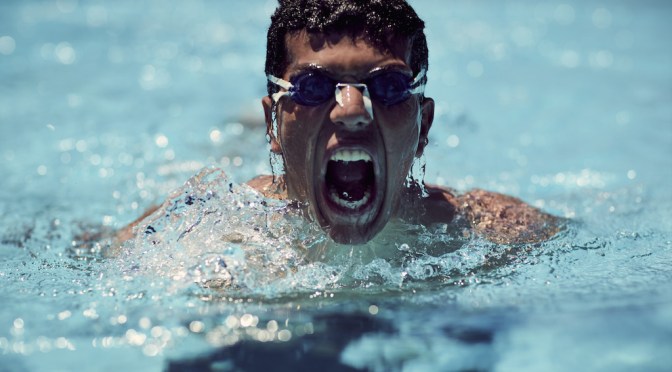
The author could have chosen from a multitude of codes and team pursuits, but focussing on competitive swimming was an exquisite selection. An individual pastime that traps the practitioner in a world broken down into opposing elemental forces – wet and dry, fast and slow, breath and suffocation, diving in and getting out – it also polarises the story’s hero into a gripping battle between himself and others.

barracudaYoung Danny’s wilful ascent to the pinnacle, assisted by the affirmation of a scholarship to a sports-connected Melbourne private school, is told with relentless energy. While he is an outwardly defiant creature who carries important secrets, Danny’s inner voice reveals truths he cannot escape from. Tsiolkas lets us see him within and without, a technique that breaks all the rules yet rounds-out his hero’s lies and hidden pain so effectively.

With his quick, sharp stabs, Tsiolkas is a writer who gets under the skin, but his blade is just in this ripping tale of ambition and competition and their devastating impact on families.

The way the author toys with time challenges the reader’s sense of hope for Danny. Swapping between future, past and present events always gave me hope – too much of it – that somehow Danny would find redemption in his climb to the heights of Olympic fame.

But Tsiolkas’ montage style does a lot more than that. His frenzied, fast-moving juxtapositions underpin the speed at which I was able to read this work. I have not felt so enlivened by a book since Tim Winton’s page-turning, problematic work of genius, The Riders.

In the late 1990s, when Tsiolkas’ first book Loaded was filmed as Head On, I read an interview with Tsiolkas in which he challenged the very idea of the ‘Aussie Battler’, and my life being what it was at that time – in a process of great upheaval as I was coming out – I could do nothing but cheer for his indictment of old-fashioned notions of what constitutes an Australian family.

Barracuda is a deeper exploration of similar territory, although since Head On, Tsiolkas’ work has become far more expansive, taking more prisoners along the way.

In The Slap he was accused of padding out a powerful if repetitive story, but Barracuda pulls off this style in a more life-enlarging way, as Danny’s journey plays out unexpectedly well beyond school and the swimming pool.

His journey back from the brink charts classic recovery territory, but it also breaks new ground.

BIG FISH Australian author Christos Tsiolkas.

Danny is another of Tsiolkas’ living, breathing gay protagonists, and the choices he faces about loving relationships are written with a resounding ring of truth. The visceral sex scenes, underpinned by gripping descriptions of the desires behind the mechanics, speak to much more than the act itself. They go to the heart of identity, just another tool in Danny’s arsenal of choices, like winning races, remaining his family’s hero, and the role of men in society.

In the dénouement, I wondered whether the amount of expression Danny and his family achieve was realistic – it’s the kind of resolution many yearn for in real life, particularly those who have not lived up to the expectations they’ve put on themselves, or had placed on them by others.

But Tsiolkas’ fractured style allows us to see the untruths and the emotional shortcomings his protagonist does not see in himself. In some ways this puts us, and Danny, back at square one, but it feels apt.

creating-waves-cover
BUY NOW

With Danny’s second chance, Tsiolkas is asking the reader to wonder if life is possible without some degree of lying to oneself.

There are not enough great international novels about failure. This is one of them.

© Michael Burge, all rights reserved.

This article also appears in Michael’s eBook Creating Waves: Critical takes on culture and politics.