Tag Archives: Creating Waves

Gough Whitlam – Australia’s true Liberal

A Writer remembers a great Australian.

IT took me almost half my lifetime to work out what I owe Gough Whitlam.

The second son of a NSW grazier and a nurse from Sydney’s north shore who gave up her career to have kids, I was a five-year-old when Whitlam was dismissed. At twelve I was given a fearful lesson on what would happen if the Australian Labor Party ever got back into power, which consisted of a darkly uttered statement: They’ll spend all the money the country has, just like they did under Gough.

By then my family was a victim of the D-word (‘divorce’), a fate no other family seemed prone to, one that was uttered behind cupped hands. Mum still wore her wedding ring and kept her married name. It makes things easier, she said.

“Gough Whitlam got conservatives in Australia on the move in the late 1960s and they have never stopped running.”

At 18, I saw Gough and Margaret Whitlam enter a lecture hall at Sydney University. Not making for the stage, that practical pair equipped with a rug for both laps and a thermos, but for whichever spare seats they could find. A ripple of recognition ran through the capacity crowd, which turned into an electric standing ovation. Both acknowledged the accolade, and proceeded to dampen our enthusiasm with a few waves of their long arms, because they didn’t want to distract proceedings.

They seemed harmless, the instantly recognisable yet strangely anonymous Whitlams, portrayed as villains on both sides of my city-country family, so I started asking questions.

My parents didn’t vote for Gough, it just wasn’t done on the land, but mum did reveal when asked about life during the Whitlam era that when it came to the survey on changing Australia’s national anthem from God Save the Queen to Advance Australia Fair, two votes – hers and my father’s – were registered in the affirmative in our region. I turned this seed of progressive thinking in my family into a world of possibilities.

Soon after, I left Australia for six years. A political and economic dunce up to that point, the experience of living in another economy taught me everything that being a high achiever at private school never could.

In post-Thatcher Britain all the elements of an economic rationalist society were at work. Working alongside people who had families to feed for the same meagre weekly return as I managed, I started to realise how stacked the deck was. The cost of living was extortionate, the financial burden on the average family of a day trip to the coast so prohibitive that many I knew just stayed at home. What if that happened in Australia? I thought. A trip to the beach only for the very wealthy? Imagine how Australians would complain!

Returning home for breaks, I suddenly saw my country for the vibrant place it was, full of life, light and colour, whereas England was an economic web, waiting to trip you up if you didn’t feed the machine like you had to feed the electricity meter with pound coins. I decided to come home and embrace the land I was born in before it changed beyond recognition, and I only just got back before the damage really started. Ever since coming home I have despaired at the way Australia has bought the economic line of leaders intent on emulating Thatcher and her P-word (‘privatisation’) here.

Today, I feel like I have lost a family member. All day the media has covered reaction and response, from Prime Ministers past to an indulgent set of speeches in the House of Representatives, and I have tried to work out why.

FIRST COUPLE Gough and Margaret Whitlam at the apology to the Stolen Generations, 2008.

Walking the dogs after work it struck me how distracted we are by the loss of Gough, because he has become so ingrained in our nation’s consciousness. For progressives, he’s held in our hearts, but his actions are possibly most ingrained in the hearts and minds of Australian conservatives, those who live under the great Australian misnomer of ‘Liberal’, because Gough came to embody their greatest fear – that people are infinitely more important than economies.

We live in a world where a tsunami created by an earthquake can occur in front of our very eyes, live on television, and yet the commentary, response and analysis is not about the people dying on a screen in our living room, it is about whether the economy will survive, forget about the people. I feel this same lack of compassion in the Ebola and Iraq coverage and the lack of action it inspires in Australians.

Gough didn’t think that way, and he didn’t act that way – he simply gave us what we needed.

When my family found peace away from the expectations of ‘happy marriage’ for the childrens’ sake, and didn’t have to find someone at fault and someone to play the victim, that was Whitlam’s legacy.

When my mother needed to work and still had nursing up her sleeve, started at a local hospital as a casual and ended up being night supervisor for a decade, her self-determined life as a single mother was Whitlam’s legacy.

My presence in that lecture hall, a student at an Australian university, free of charge, that was Whitlam’s legacy. My right to vote that same year, my eighteenth, was probably far more significant, although I didn’t understand it at the time.

I hope he felt the greatest compassion for himself after the dismissal. When I consider how he never seemed bitter, I feel a strong life lesson about failure, because even in the midst of his ‘well may we say …’ speech, a wry smile that always reminded me of Dame Edna crept up his mouth and projected his profile out to the crowd. Bitterness could have taken him away much sooner after such a diminishing moment, but he lived almost forty more years after that speech – my lifetime.

Gough Whitlam got conservatives in Australia on the move in the late 1960s and they have never stopped running, afraid of debt and deficit and spending money on people or places where it’s needed, as though money is a thing of power that could do something positive while stashed away in a nation’s coffers. For a man who was so ingloriously dismissed, I loved the way Gough dismissed economically fearful Australians with such panache, and held to account those who think it’s okay to make huge money by doing nothing.

creating-waves-cover
BUY NOW

Instead of wishing he’d had more time, or wishing he’d not been dumped, I want to see the whole thing in reverse, just like Malcolm Fraser does. Australian conservatives have simply been reactionary, because progressive thinking has been in Australia’s driving seat ever since Menzies. It took losing Gough to see it.

© Michael Burge, all rights reserved.

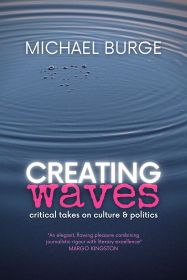
This article appears in Michael’s eBook Creating Waves: Critical takes on culture and politics.

Voyage to the new news world – part two

JOURNALISTS AT SEA Grab an oar and row like hell.

BEING a WordPress blogger I was able to start work as a site editor on No Fibs immediately, with regular tips from site manager Tony Yegles. That got me right to the coal face of online news.

I decided to sub-edit in the same manner as I did at my day-job, meaning there was some risk citizen journalists would not understand why certain choices were made about shaping their work.

I also felt the headlines needed to differentiate facts from opinions.

So I began to operate under an ‘if they were there, they were reporting’ principle. A ‘report’ was an eyewitness account; a ‘comment’ was a bum-on-seat rumination. To publish any other way would confuse readers and writers.

Margo was also adamant the citizen journalist’s ‘voice’ should not be edited-out, and that meant lighter sub-editing rules allowing an original social media edge.

“It was far easier to imagine a mainstream media replete with lazy or biased journalists than to include ourselves in the blame.”

Kevin Rudd resigned, resulting in the Griffith by-election, and Jan Bowman started to write regularly about the line-up of candidates.

Because her subject was on the news cycle, Jan’s articles needed to take their place promptly and I needed to find ways to make No Fibs’ contributions stand out.

Jan was getting into press conferences and meeting all the candidates, and I was determined to match her commitment. We both had little time outside work, which meant filing and sub-editing at all hours.

As a team, No Fibs provided another voice in the first litmus test for the newly minted Abbott Government.

When Margo gave me a great gift by asking me to keep writing for the site as arts editor, I had never been given such a green light by an editor. She’d read a few of my arts-based pieces on my blog and knew I had a lot to say. I’d observed how her tweets about my articles increased my readership, and how the same phenomenon occurred on No Fibs.

I finally understood what an incredible shopfront Twitter was for journalism.

It’s a great feeling to be granted a small piece of online real estate to fill, but it also came with a commitment to posting articles on a regular basis.

I developed subject parameters, since art and politics didn’t seem to be such a natural blend, and I attracted fascinating interviewees, including Amanda Bishop, who impersonated Julia Gillard throughout the former Prime Minister’s term.

When I decided to compare journalism and art as career choices in one article I found something rather interesting: somehow, journalism had replaced art at the bottom of the ‘career scale’.

It was a shock to learn the industry I entered only five years prior as a means to survive as an artist was now more precarious than a career as an artist.

From that point I decided to include journalism as an art form within my #CreatingWaves column and explore what had brought it so low.

CLICK BAIT The mainstream media's fight for attention is ugly.
CLICK BAIT The mainstream media’s fight for attention is ugly.

The social media was one obvious culprit. Every time we hit the publish button (or post, or share, or like) we provide free content (and site statistics) to very large corporations in direct competition with the MSM for advertising revenue.

That was a dark moment for me – accepting that we journalists who weren’t quite buoyed-up by the MSM were partially to blame for its demise through nothing worse than the desire to communicate via the social media.

My article on this issue sparked debate from some who could not accept our blogging, tweeting and facebooking had an impact on the MSM. It was far easier to imagine a mainstream media replete with lazy or biased journalists than to include ourselves in the blame.

It dawned on me that many readers were unaware of how stretched newsrooms are – they expected top-notch news but they were not always willing to pay for it, or didn’t understand why media outlets needed to find increasingly inventive ways to remain viable.

Blaming the MSM came into very sharp focus during the national March in March (MiM) protests. I attended the Brisbane event, not intending to report, but when I saw the scale of proceedings I decided I was there, so I was reporting. Twitter took care of the rest.

The anger directed at the MSM for its lack of MiM coverage was partially assuaged by No Fibs.

A few of us had dived in and learned how to Storify – an immediate way to gather social media into one report.

With two No Fibs Citizen Journalists (Anne Carlin and Wayne Jansson) tweeting on the ground at the Canberra MiM, we were able to use Storify to remotely publish a moment no other news source managed – the presentation of the vote of no confidence that some 100,000 people had marched for, off the back of the broadest national coverage of the MiM protests reported by citizen journalists.

The site’s purpose hit home when we were offered a report on the creation of MiM by one of the organisers, Sally Farrell.

The tenor of the No Fibs pieces I was sub-editing went up a gear. Margo was attracting a very broad range of contributors, from academics to students and activists.

The first online journalism job I ever saw advertised was on Facebook, a position writing for a lifestyle website in north America. Anyone in the world could apply, so I posted it on my Facebook page as a milestone, wondering if it was an anomaly or the start of something new.

The Australian social media came under very public government analysis when a Twitter furore erupted about the Department of Immigration and Border Protection’s (DIBP) demand that a Facebook comment by an asylum seeker advocate be removed.

BOOK BURNING Another issue altogether in online media.

This led to a long cycle of reporting for me, way beyond the scope of the arts, simply because I did not see anyone else on an Australian political news site connecting the dots between passionate social media users, asylum seeker advocates, and the DIBP’s censorship.

Working in collaboration with other journalists and bloggers, No Fibs led the way to a clearer picture of exactly what had occurred, and why.

I tried for many weeks to get in touch with George Georgiadis, who made the Facebook comment the DIBP didn’t like. Patience and transparency got No Fibs a scoop in our extended interview with Georgiadis, which remains my most well-read piece and was an eye-opening experience to put together.

Sub-editing No Fibs citizen journalists, including Guinevere Hall in WA reporting on the West Australian Senate ‘rerun’, was reaching critical mass by April of 2014, but it was the work of four University of Technology journalism students that gave me an idea about changing the site’s approach to online publishing.

Their work on the #leardblockade committed to principles many journalists twice their age should take note of, but as I uploaded the stories I felt we were doing them a great disservice, because they will graduate into an industry without sub-editors.

A phrase I used to say as a joke – ‘journalist, edit thyself’ – had become a reality in the MSM.

So, I took another risk and suggested the core team behind No Fibs alter the way we processed submissions. We did not have to let go of sub-editorial control, but the process of preparing citizen journalists’ material had become far too time consuming for a small, overworked voluntary team.

In order to make the leap, No Fibs needed its contributors to file stories in a similar manner to MSM journalists. It also needed a style guide, so I wrote one.

This gave Margo an opportunity to revisit her vision for the website, from headlines to layout. A strong, Twitter-oriented style emerged.

We also needed a team of sub-editors, which we got by putting out a call on Twitter.

Our regular writers’ copy improved dramatically, and the rate of submissions did not significantly diminish by requiring citizen journalists to be self-sufficient.

Worlds collided for me when Fairfax announced in early May that around 80 production staff and photographers would be made redundant, and the social media arced-up about the potential for citizen journalists to cross the picket line of the resulting Fairfax strike.

STAND UP Citizen Journalists.

As both a part-time Fairfax employee and an independent citizen journalist, I was informed on both sides of the debate, and wrote an appeal for critics of citizen journalism to broaden their thinking.

I had vitriol aimed at me that day, particularly from journalists.

We are all struggling to build and maintain careers and earn livings – but the panic spilled over into attack at the very idea of citizen and mainstream journalists working in collaboration, primarily for the sake of the best news coverage for readers.

The only journalist who crossed the picket line that day was a Fairfax writer, possibly in fear of losing their job.

There was some good news for Fairfax staff – the company had increased readership in online news experiments at a regional weekly newspaper, and the process allowed the title to remain in print.

A consolidation of offices meant my workplace welcomed The Bayside Bulletin into the space left by long-redundant production staff, and Redland City got a new local paper when two weeklies amalgamated to form The Redland City Bulletin as part of Fairfax’s continued commitment to local news.

I now worked in the same environment as the other journos who’d tweeted from the #bowmanpol candidates‘ forum.

Having done my best to make myself more redundant as a sub-editor at No Fibs, I let go and went on a holiday. When I came home I saw a job advertised which was uncannily close to what I’d been doing for No Fibs.

I have rarely felt as confident applying for a position, especially one at the cutting edge of online news media. A few weeks into the job, for which I work at home most days, it’s amazing how close the basics are to the average blogging platform.

My year of growing with No Fibs as it expanded during a critical phase, with all its learning curves and voluntary hours, aided my transformation into a match-fit, self-sufficient, paid online writer.

I’d reached the new news world in the No Fibs lifeboat, only to find it is not defined territory that can be seen on a chart, it’s an energy I carry inside me across a growing number of sites and audiences.

creating-waves-cover
BUY NOW

Journalists may have reached rock bottom, but if we grow and promote our self-sufficient currency, share our skills and work together, I believe we will start to rise. After all, you don’t get paid for passage in a lifeboat, you grab an oar and row like hell.

© Michael Burge, all rights reserved.

This article appears in Michael’s eBook Creating Waves: Critical takes on culture and politics.

Touring with Vivien Leigh’s black dog

LINDEMAN’S LEIGH Australian actress Susie Lindeman as Vivien Leigh in ‘Letter to Larry’.

A Writer’s review.

BRITISH actress Vivien Leigh (1913-1967) may have felt rather independent when she toured to Australia in 1961 with the Old Vic theatre company.

Divorce from Sir Laurence (‘Larry’) Olivier the year before had seen her separated from the theatrical powerhouse she was one half of – the international stage and screen duo known as ‘The Oliviers’.

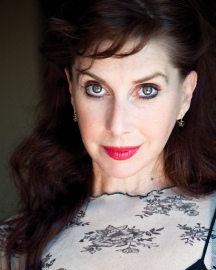
Australian actress Susie Lindeman recently returned home with her production of Letter to Larry, a play by Donald Macdonald which captures Vivien Leigh in this pivotal moment of her life and career, and has already been acclaimed in London, Paris and Los Angeles.

“I was attracted by the role, and Donald Macdonald’s script,” Susie says. “We knew we had something special from the response to the first reading – here and in London”.

“We always wanted to present the show during Vivien Leigh’s centenary year. The early London performances were previews, and then we created a new version as the world premiere season for Paris in 2013.

“From that we received interest from New York. It was our intention to play in places significant to Vivien, so I also performed as part of the 100th celebrations in London and took it to Hollywood.”

One of those places of significance in the life of Vivien Leigh is Sydney’s Independent Theatre, a venue she played in the late 1940s and in 1961 (recreated in the bookends of Macdonald’s play), and the venue where Letter to Larry played on February 23, 2014.

“It’s the sole surviving Sydney theatre that Vivien herself knew. She and Laurence Olivier used to dodge the press and send a decoy somewhere so they could enjoy seeing shows at the Independent. This was when Olivier was also scouting Australia for talent – actors whom he felt could form Australia’s first national theatre.

TREADING THE BOARDS Actor Trader Faulkner with Susie Lindeman.

“When Tyrone Guthrie, the legendary London director, came to scout also, he went to the Independent to see a show, and he discovered young Aussie actor, Trader Faulkner.

“Trader went on to work with John Gielgud and the Oliviers and many more, he was not only a co-star but also a friend to Vivien, and he will be with me sharing this performance.

“He is the show’s special guest and will stand again upon the stage of his 1947 triumph. He is a legend himself – he was a protégé of Peter Finch and wow, he has some great stories!”

Considering her acting career in mainstream theatre and film in Australia and Europe, I am keen to ask Susie how she approached the role of producer.

“I’m just an actress taking roles and opportunities when they present themselves,” she says. 

“As an Australian, social media has allowed me to retain my identity here as I work in other places. It’s all on a page, the whole world, we could be everywhere and anywhere.”

“However, when I think about it, I suppose that I also became an independent artist when I met Yasmina Reza, the great French writer, and through this personal and independent encounter, she entrusted me with the world rights for her play, Hammerklavier.

“Performing it internationally meant I performed independently; here, London, Edinburgh, Paris and even a performance in Singapore. Now, I guess I’m lucky enough to be asked to perform independently by several theatres themselves, rather than theatre companies as such.

“The decision was simply to be all I can be, to play Yasmina seemed a wonderful chance, and to make it happen I simply had to create it independently.”

What part does the social media play when independently producing a piece of theatre?

“It’s actually how I started using Facebook, I mean really using it, and for this show, we started to tweet,” Susie says. “But I think Letter To Larry having its own Facebook page is great to spread the word. Sometimes 600 people will like a status, which is wonderful, especially being such an indie creation”.

“As an Australian, social media has allowed me to retain my identity here as I work in other places. It’s all on a page, the whole world, we could be everywhere and anywhere.”

So where to from here for Letter to Larry?

“We want to have the Australian premiere season soon,” Susie says, “but I think because I’ve worked a lot in London and Paris, it seemed easier to get a theatre in those cities, so we do have the London premiere in the pipeline, a hoped-for season in New York, and a return to Hollywood”.

“But of course we’d love the chance to do an Australian season and tour, especially as the play opens and closes in the setting of Vivien’s 1961 Old Vic tour to Australia.”

I am interested in knowing how audiences respond to Susie’s interpretation of one of the world’s most beloved movie stars.

PLAYING PASSION Vivien Leigh as Blanche DuBois in A Streetcar Names Desire (1951).

“I was absolutely astonished at the love Parisians have for Vivien. I mean, I knew that in London we would have an audience, but I was swept off my feet by the passion of the public, and the press, for this show,” she recalls. “Every night after the show there would be people waiting to tell me their thoughts and memories of Vivien, and they truly lit up when speaking of her. That’s why its such a pleasure to play her, she has a magic and spirit which is still tangible in the world.”

In the five decades since Vivien Leigh’s death, a result of chronic tuberculosis, public attitudes to mental health have changed enough that her now widely known about manic depression, explored in Macdonald’s play, can emerge from the shadows. I ask Susie about this aspect of her interpretation of Leigh.

“Vivien was passionate and often cast in passionate roles, whether mad for her loss of Lord Nelson as Lady Hamilton, as Ophelia, or most searingly as Blanche DuBois in A Streetcar Named Desire,” Susie explains. “She never performed ‘madness’, she just felt so deeply the emotions and passion and loss”.

“Gielgud said: ‘The extremity of Vivien’s performance was extraordinary, and frightening. She elevated the text and the emotional intentions’ .

“It’s true that Vivien suffered with un-diagnosed bi-polar, and that her infinite energy and passion for life grew into manic phases,” Susie says. “In Letter to Larry I play Vivien from deep in her soul and heart, feelings magnified by her loss of Larry”.

“I believe there’s a fine line between insanity and inspiration. Vivien, as so many who knew her have told me, was such a free spirit, but also spiritual, so she was in touch with the source of sorrows as well. Someone said Vivien didn’t break down as much as stand up and fight back.”

INDEPENDENT ARTIST Actress, producer and director Susie Lindeman.

And what does Susie think are the main challenges for performing artists working in Australia?

“I think funding, and the swiftly sinking press coverage, oh and sometimes the celebrity culture, which means sometimes actors who are so right for a part don’t even get a chance to read.

“I know theatre is a risky business, so theatres need to be careful,” Susie says, “but being careful has never been a way to create.”

With a nod to one of Vivien Leigh’s most memorable roles, Susie says: “Art isn’t intrinsically commercial anyway, and knowing that after a show, so often the audience will buy you a drink, so if you’re not paid properly, there’s always the kindness of strangers!”

creating-waves-cover
BUY NOW

For further information follow the show on Twitter @LetterToLarry or check out the Facebook Page.

© Michael Burge, all rights reserved.

This article appears in Michael’s eBook Creating Waves: Critical takes on culture and politics.