Tag Archives: Creating Waves

Voyage to the new news world – part one

ON THE JOB reporting the news cycle like an old school journo.

A WEEK after the 2013 federal election I was driving to my casual sub-editing job on a Fairfax weekly newspaper when I let a brilliant photo opportunity go.

During the campaign I’d had to pass a vast billboard of our electorate’s returned sitting member, Andrew Laming, along that route.

But on that day, Laming’s face was burning into black ash as a farmer torched his latest crop’s stubble. It was one of those moments when your mind takes the shot, writes the story and formulates the headline in a flash.

‘Laming wins, Redland City loses’ was my angle, with the remnant of that smiling, burning face front and centre, while Redlanders settled in for another stint of terrible representation because our federal member had no currency in Canberra.

Laming’s team, the Coalition, had won the election, but after representing the people of Bowman, Queensland, for almost ten years, he’d sent inappropriate tweets that put us on the map for all the wrong reasons. Word was he wouldn’t be getting a promotion in the Abbott Government.

“Having an opinion is not reporting. Reporting is getting off your bum, taking a few risks and meeting people.”

It was a scorching week. Parts of the nation were ablaze. At work there were half-hearted jokes about not mentioning the D-word – drought – for fear of scaring-off advertisers.

Up to my ears sub-editing, I sorely missed my stint as a citizen journalist for No Fibs.

I stumbled into No Fibs following a Twitter conversation on the Peter Slipper fallout and was immediately drawn to its fresh interface.

The election was just weeks away and my gut told me marriage equality would be a hot issue, but when I tried to find the subject on the site I came up with nothing.

I mentioned that to editor Margo Kingston and she immediately suggested I write it.

NOT SHORT of an opinion: Mia Freedman of Mamamia (Photo: Anthony Johnson).

My opinion piece was published the week that tweeters were bitching about lack of pay for online journalists.

Mia Freedman of Mamamia was praised for finally paying some of her contributors, but slammed for suggesting most of what she published was opinion so shouldn’t attract a high dollar value.

I tended to agree. Having an opinion is not reporting. Reporting is getting off your bum, taking a few risks and meeting people in order to flush out the truth. But it was clear a generation of hungry media graduates blogging in their pyjamas expected their musings to garner a living wage.

“Can’t pay the rent with a by-line,” one tweep fired-off.

“That’s where the day job kicks in,” I fired back.

My young tweep admitted she had a day job that kept her in the flow of human experience that will never be replaced by the internet, but wanted to blast down the doorways of media companies to create entry-level positions.

What would she have found if she had?

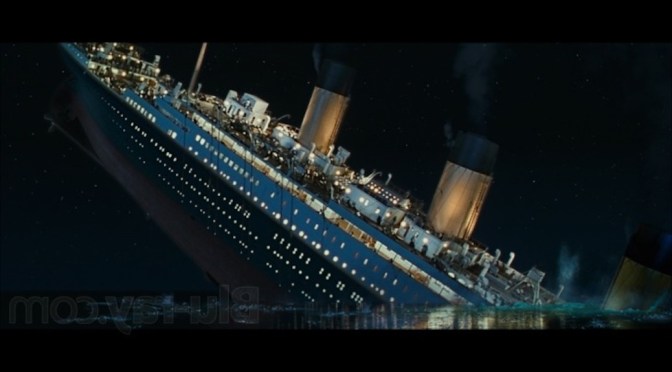
At my workplace she’d have felt the fear of cutbacks, amalgamations and redundancies, like standing on the deck of a ship when a list starts to show, and someone’s just noticed there are not enough lifeboats.

It was an extremely bleak landscape for journalists. No wonder a reporting stint on the No Fibs election project was so attractive to me.

It didn’t matter that Bowman was safe Coalition territory. I wanted to meet the candidates and decide where my preference votes should go. I also wanted to flex my journalistic muscles.

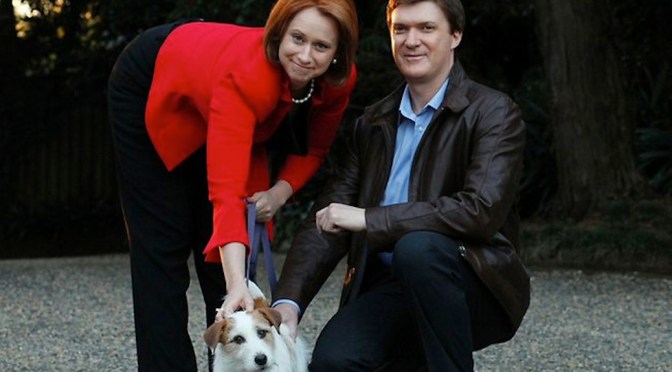
HE WINS WE LOSE Andrew Laming and family.

Not for me the ease of press conferences. Here in Bowman, otherwise known as Redland City, politicians need flushing-out.

Most Australians don’t know where the region is and many locals like it that way. It’s a blind spot perfect for parachuting any political aspirant into.

I lined-up interviews with candidates from the Palmer United PartyLabor and The Greens and netted thousands of words of material in three hours’ work, knowing none of it was going to make an ounce of difference to sitting member Andrew Laming’s 10.4 per cent margin.

As I published, a few savvy heads popped up on Twitter – critical thinkers dotted across greater Brisbane, grateful for more than the coverage in the local paper, The Bayside Bulletin.

Andrew Laming said he’d talk to me once the election was called, then reneged. Knowing that nothing I’d offered him was different to what every other candidate had agreed to, I got despondent, wrote my wrap-up piece and sat back to watch the reporting on the neighbouring divisions.

One day later, a breaking story on campaign cheating landed in my lap, with a great editorial photograph (taken not by a journo, but one of the candidates), and a social media audience urging me to file it with No Fibs, so I did!

A week later I read The Bayside Bulletin was hosting a candidates’ forum. No one could recall if they’d been held before, but the perception was they were ineffective.

So I called the editor, Brian Hurst. Before I’d finished saying “No Fibs” I got put through to him. He’d read my work, heard Margo interviewed, and was more than happy for me to tweet from the event.

“We made a tiny scratch on the surface of the area’s democratic future.”

I sat up the back, all thumbs on my phone while The Bayside Bulletin’s journos had luxurious tablets, but I got as many tweets out to my audience, who were glad I was providing a less-constrained voice on Bowman’s newly minted hashtag #bowmanpol.

Brian generously gave No Fibs permission to publish his paper’s photographs with my article on the event.

The election came and went and I struggled to settle back into sub-editing and blogging, because I acknowledged to myself I should have taken that photograph of Laming’s poster burning – it’s just in my nature to report.

I’d been part of nudging the mainstream media (MSM) into a brief communion with the social media, and we made a tiny scratch on the surface of the area’s democratic future.

But a scratch can become the infected wound which brings down a sizeable political animal like Sophie Mirabella, a process that was unfolding at the other end of the country in the division of Indi.

The No Fibs election project had excellent, strong rowers, skilled navigators who knew the currents, and the courage of explorers charting new territory. I just couldn’t let it go, so I decided to take a risk and stay on the lifeboat.
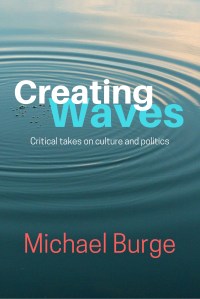
creating-waves-cover
BUY NOW

It felt buoyant enough for a journo wanting to join the great reader migration to the new news world.

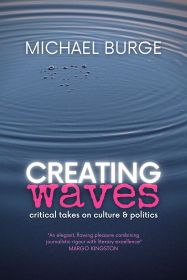
This article appears in Michael’s eBook Creating Waves: Critical takes on culture and politics.

© Michael Burge, all rights reserved.

Breaking heartland in August: Osage County

BROKEN HEARTS Julia Roberts and Meryl Streep.

A Writer’s review.

SIX decades ago, great American playwrights like Arthur Miller, Eugene O’Neill and Tennessee Williams only ever alluded to addiction, sexual diversity, mental health and suicide, or portrayed them in the hands of villains who always ‘got it’ at the end.

These days, there’s a growing number of storytellers courageous enough to begin where their antecedents left-off, helped by more relaxed censorship laws and a broader understanding of the human condition.

Tracy Letts’ play, and now screenplay, August: Osage County, is one of those, and has already become a benchmark in 21st century storytelling.

There are no spoilers in revealing that Violet Weston (played by Meryl Streep) opens this film with a frank revelation of her pill popping and her mental maladies in the kind of scene Eugene O’Neill could only have dreamt about including in Long Day’s Journey into Night (published in 1956).

Streep marks out a battlefield within a crumbling, overheated Oklahoma country house, and proceeds to destroy every member of the family who steps inside it in the wake of the disappearance of her husband (played by Sam Sheppard).

With a sister, three daughters, their partners, a Native American housekeeper and a granddaughter, she has plenty of adversaries, and she goads them until they all bite ferociously back.

Just who takes it up to her, and why, is the story of this film, revealing the life changing consequences of staring-down and surviving addiction.

It’s a bitter conflict, with violence, assault, and enabling wrapped into every scene. Letts’ greatest achievement is that not one character, not even Streep’s, could be described as either purely hero or villain.

“This is Roberts’ most controlled, and most out of control performance.”

They are all as bad, and as good, as one another, an unthinkable concept in 20th century drama, where every protagonist had to battle with their equivalent antagonist, so that the audience knew who to barrack for, and who won or lost.

On this score, it’s hard to know if August: Osage County is a comedy or a tragedy.

Streep has never climbed higher in an entirely convincing portrayal, a tribute to her risk taking. It will be hard to topple this performance, which spills off the screen like vomit.

Yet Violet has grace. She has you hating her and sympathising with her in turns, never revealing anything ultimately honest, yet claiming to be the “truth teller” of the family. Nothing about Streep’s Weston is absolute, apart from her total inability to be saved.

Julia Roberts as Violet’s eldest daughter Barbara wears the family angst as a barely concealed boxing glove which she is not afraid to wield. There is little that can be said about the role and the performance which will not reveal the plot, just know this is Robert’s most controlled, and most out of control performance.

In the midst of the family intrigue, it’s easy to forget the isolation and hardship of the American heartland (and remote communities everywhere), but Letts reminds us now and again that we are not in the city, we are in dangerous country, stolen from Native Americans, fought over by settlers, and reminisced in the poetry of Violet’s husband.

This is a universally rural story about the experiences of country souls, those that escaped and those who got left behind. In the final scene, with Julia Roberts caught at an emotional crossroads, this reality becomes a painful reminder of what can go wrong when great, unsustainable dreams are created in farming regions.

CREATING WAVESAugust: Osage County is a heartbreaking elegy to all broken heartlands and the souls they failed to nurture.

This review first appeared on NoFibs.

© Michael Burge, all rights reserved.

This article appears in Michael’s eBook Creating Waves: Critical takes on culture and politics.


Amanda Bishop – the UnReal Julia Gillard

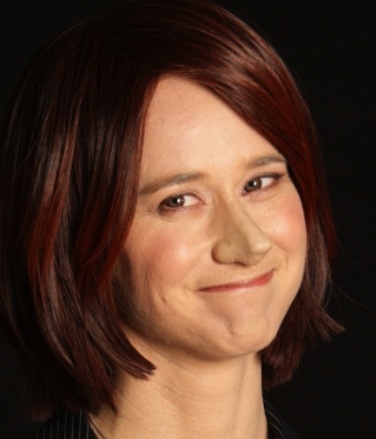
REAL JULIA? Amanda Bishop performs The Habanera, as Australia's first female prime minister.
REAL JULIA? Amanda Bishop performs The Habanera, as Australia’s first female prime minister.

A Writer’s encounter with a political impersonator.

AS Julia Gillard made her way through parliamentary ranks before, during and after Kevin07, the political satirists of Sydney Theatre Company’s Wharf Revue recognised they’d need to find an actress to portray the woman who would become Australia’s first female prime minister.

From her knockout live performances, to her starring and co-writing roles in the controversial At Home With Julia on the ABC, actress Amanda Bishop has become synonymous with the role of Julia Gillard.

Bishop spoke with No Fibs this week about what it takes to succeed in satire, and the consequences of your subject being a politician, prone to the whims of voters and internal party tactics.

“Audiences would cheer at the first two spoken words!” Bishop said of her early stints as Julia Gillard for the 2008 Wharf Revue. “They seemed to both delight and cringe at the sound, and we knew we were onto something. They enjoyed her humour”.

“When I auditioned for the revue, Julia was the Deputy Leader of the Labor Party and Kevin Rudd had just won the election for Labor. The female in the revue plays many roles and the writer/directors (Jonathan Biggins, Drew Forsythe and Philip Scott) had their eyes on the lady with the interesting voice, coming up through the ranks of the ALP.

“The Revue that year was called Waiting For Garnaut and Julia appeared as ‘Sister Gillard’ a novice of the abbey, in a musical scene called ‘The Sound Of Rudd’. She sang her version of ‘The Lonely Goatherd’, all on one note.”

Amanda Bishop as Julia Gillard.

So what was it like to impersonate a politician who’s in power?

“I love this question because it has never happened for a female in the European history of Australia,” Bishop says. “It was exhilarating to play a female who had to be listened to by, well, by the country, for three years, and her male colleagues. It was genuinely interesting because the real Julia endured so much criticism with grace”.

“In the Wharf Revue, both sides of politics are covered, so I still play her now, I’m lucky. It’s only when that ‘character’ leaves politics altogether that an actor needs to let go!”

What kind of loyalty does Bishop feel towards Julia Gillard when portraying her?

“I have great respect for her, and I probably feel warmer about her than if I hadn’t played her, but not because of what she did. Rather, I think I got to see just how thick-skinned she was to have continued serving while dealing with undesirable media attention, public criticism and being the first female in the position.

“Naturally, she confronted many sensibilities, whether we wish to admit it or not.

“Every time something happened that was all over the media, we’d put it in the show, such as the shoe coming off outside the Parliament House café when she was whisked away by the security guards. Such a small thing, publicised ridiculously.

“That was a gift in the end, we often highlighted the triviality that characterised her treatment and juxtaposed it with her seriously heavy hitting political mind and activities, and her sense of calm.

Has Bishop ever met her subject?

“Many journalists attempted to organise it, but apparently she was busy running the country or something. I certainly don’t demand attention on that front, and I’d love to meet her if the opportunity arose. In a strange way it feels like we’ve already met.”

Over its ten years, The Wharf Revue at the Sydney Theatre company has become a theatrical institution which has satirised four Prime Ministers and five cabinets (when we count KRudd twice). Amanda Bishop has been an integral part of that team for six years.

“I enjoy working with the Revue creators. I learn enormous amounts from them, as they’ve been doing it for longer than me. They are hilarious to work with too, a mix of the cerebral and the silly,” she says. “When I first get their scripts, I’m googling madly in my lunch breaks to understand the many, many, well-informed historical and current references, be they political, cultural or just downright funny.”

What preparation did Bishop undertake to nail such a pivotal role in her career?

“Lots of watching her in question time, I find it’s where we see our politicians at their most theatrical. I drew her, I also listened to her a great deal.

JULIA
Amanda Bishop as Julia Gillard.

“We can do an exact replica, or we can take elements of ‘impersonation’ and then build a character from there,” Bishop says, explaining the basic challenge of satire.

“The reason we build a character is because often we actors play a real person in situations they may not normally be in.

“For example, Julia sings Carmen’s ‘Habanera’ in this year’s revue, so we have to transition from a typical press conference situation, and, using the elements that are most strongly recognised (voice, hand gestures, stance, costume) take them into the world of make believe.”

Bishop’s work as Julia Gillard has also translated to the small screen in a number of incarnations.

“In television, I learnt a great deal from Paul McCarthy, who played Kevin Rudd, Tony Abbott, and Malcolm Turnbull in the series we did called Wednesday Night Fever recently on the ABC. He is an incredibly generous peer and his transformations are exquisite.”

Now that Julia Gillard has moved on from politics, what does Bishop think is in store for satirists?

“I actually think it’s another interesting time. We have Tony Abbott, who’s been in the public eye for some time now, but with him on his front bench, there’s much newer blood: Joe Hockey and Christopher Pyne, and in Labor, well, there’s been so many changes, they’re all new. There’s so much fun to be had, discovering the politicians through art as much as we discover them through their own work.

And what’s next for Amanda?

“I’m still performing Julia until Christmas. Then I’m going to New York to work, and so is Julia, apparently. Poor thing, I hope I don’t bump into her in a bad mood! I hope I get to thank her for the education she gave us.”

Thanks to Lisa Mann Creative Management and Sydney Theatre Company for their assistance in facilitating this interview and images.

This article appears in Michael’s eBook Creating Waves: Critical takes on culture and politics.

© Michael Burge, all rights reserved.