Tag Archives: Crime Fiction

It takes a village to solve a mystery

THE OPPORTUNITY TO speak about my crime novels in the libraries of the New South Wales New England region has very special meaning to me. I was born at Inverell and became an enthusiastic book borrower at the town library as a child, hunting out the inspiration that opened up new worlds to a farm kid. It was there that I started to find my feet as a storyteller.

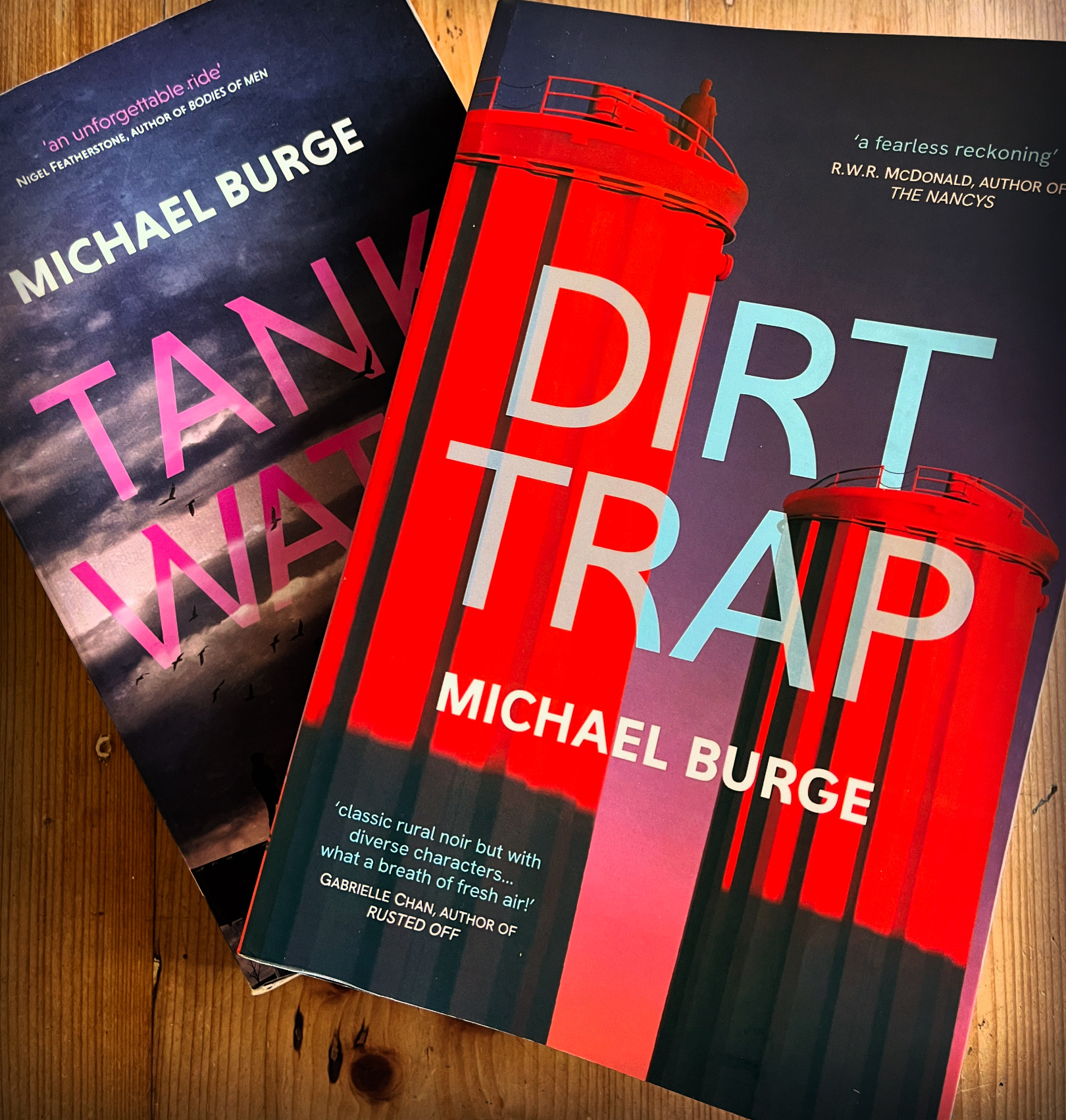
Since Tank Water was released by Adelaide’s MidnightSun Publishing in 2021, I’ve been regularly asked whether I set that book and its sequel Dirt Trap (2025) in any of the places I lived as a child in the 1970s: Myall Creek, Delungra, and Inverell.

The truth is complicated, since I never set out to write crime fiction, let alone create a region with a violent past like the fictitious towns in my novels. 
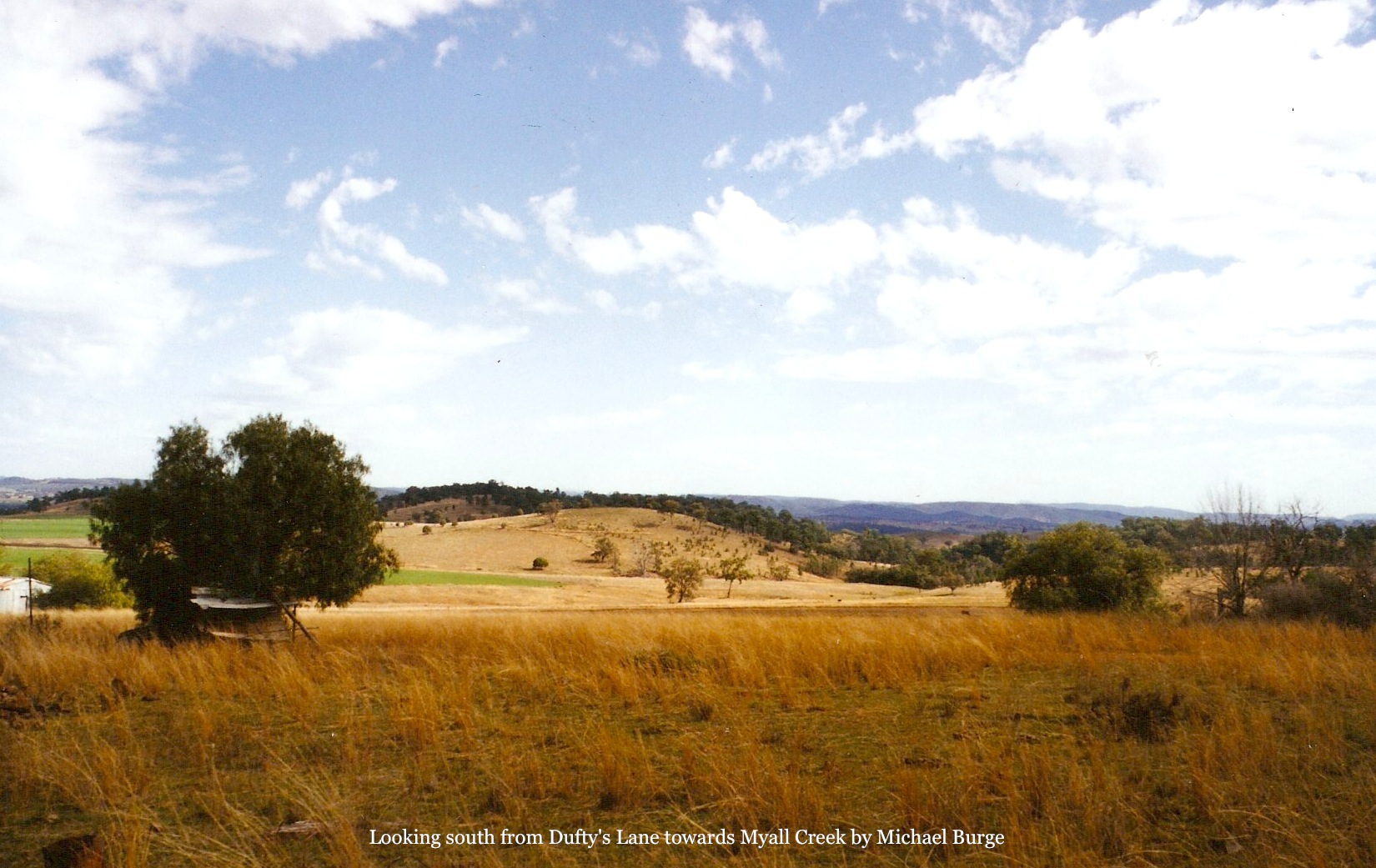
CHILDHOOD LANDSCAPE Looking south from Dufty’s Lane towards Myall Creek.

Despite my immediate family moving to the Blue Mountains when I was nine, the landscape of my childhood – the fertile upland valleys between Delungra and Bingara – never left me.

After living in Sydney, the United Kingdom and Brisbane for many years, I moved back to the New England in 2017. Accepting that the relocation would put a big dent in opportunities to work as a journalist, my plan was to co-build my partner’s home-based jewellery business while I rewrote an existing novel manuscript. That story was my years-long attempt to explore the conflicts within a rural family who had LGBTIQ+ members and worked the same black soil as mine had, but it was missing an overarching theme that linked the past with the present. 

In that year, the state of NSW was still coming to terms with its epidemic of hate crimes against the LGBTIQ+ community. The NSW Police had been pressured into conducting internal case reviews, but there was a push for an independent inquiry into historical cold cases.

My journalistic interest was piqued the day I took a look at the interactive online map of those cases published by SBS. As I scrolled through the sorry history of under-investigated deaths, the locator suddenly moved north from Sydney. Very few of these men had died in rural regions, but there, staring back at me, was a suspicious death that had taken place in the district where half my family had lived and worked since the 19th century: Inverell, my hometown.

That was the tragic death of 33-year-old Russell Payne, whose body was found in his unit in February 1989, the broken end of a television antenna in his urethra. The report that underpinned the SBS map was written by Rick Feneley, and it pieced together the little that was known about Russell’s case. Criminologist Steve Tomsen and researcher Sue Thompson suggested there was a “less compelling” case for him being the victim of a gay-hate crime, but his death revealed hallmarks that may have pointed to hatred and/or bias. Another critical detail was that no coronial notes for Russell could be retrieved by the NSW Police.

The weight of mystery began to plague me as I walked daily through the scrub near our home at Deepwater. I felt the responsibility of being an ‘Inverell boy’ who now lived close enough to the scene to do some footwork, because I suspected that the tyranny of distance had allowed the death of another possibly gay son of my hometown to languish without further investigation. 

And that just wasn’t good enough.

Not for the Faint-hearted

That same week, I realised I could position historical gay-hate crimes in the fictitious country town of my manuscript, and have them investigated by a character closer to the present day. It felt like a big leap to impose a risky new theme to my years of work, but as far as I could tell, this subject had rarely been attempted in fiction, if ever.

The inspiration was so strong that I completed a new version of the novel within months, words leaping off the ends of my fingers at the keyboard as each stage of my research was completed. This was not Russell Payne’s story – I was determined for the sake of surviving families to avoid portraying any real-life case – but an original, fictional mystery.

To help fund my writing, I picked up a part-time regional arts job, and once the manuscript was completed, I took another risk. Anna Solding of MidnightSun Publishing was a guest editor at a manuscript pitching event run by New England Writers’ Centre in September 2018. Despite the whole event sounding as challenging as speed dating, I booked my 10-minute session. Afterwards, I was very hopeful when Anna asked me to send her the manuscript.

A month later, I gave a paper at a queer-themed Newcastle University conference. Having long abandoned academia, I’d taken yet another risk and agreed to present my growing body of research on the rural gay experience. There was a chance that the collective presentations would be published.

A month after that, my partner and I took a huge risk by opening a creative business – The Makers Shed – on the high street.

Its growing success through most of 2019 bought me time to submit my manuscript to every agent and publisher I could get it to. As the months stretched out, I waited and wondered if all my writing efforts would pay off. Meanwhile, the longest and harshest drought in living memory parched the New England.

I got a strong bite from one agent, who gave helpful feedback but dropped my manuscript after claiming that the Rural Noir sub-genre was over. Soon after, I submitted the novel to a publisher I’d met a few years prior, when she’d considered publishing my earlier memoir. She made very positive noises while spending two hours with me on the phone, but ultimately that interest turned out to be another mirage. My dreams of being published seemed to evaporate into the dust that blew daily through our property.

One random afternoon between bushfires, a call came from Anna Solding of MidnightSun thirteen long months since we’d met at that pitching session, asking whether my manuscript was still available because she wanted to publish it.

I nearly fell off my chair.

While I waited for a contract, the New England burned through the hell of Black Summer.

Not long after I signed it, the rains came, at last.

Then Covid hit.

Tank Water had been scheduled for release a year hence, and I sensed that I’d eventually be doing a lot of public speaking about gay-hate crimes. So, with time on my hands I set out to fact check Russell Payne’s case, hoping to meet his family, if indeed they’d ever lived locally.

Sniffing around your hometown after what could be an unsolved mystery might sound like a jaunt in a Christie novel, but it’s not for the faint-hearted. If it turned out that Russell Payne had been murdered, his killer had never been brought to justice. My gut told me to tread very carefully, because this was going to be the biggest risk of all.
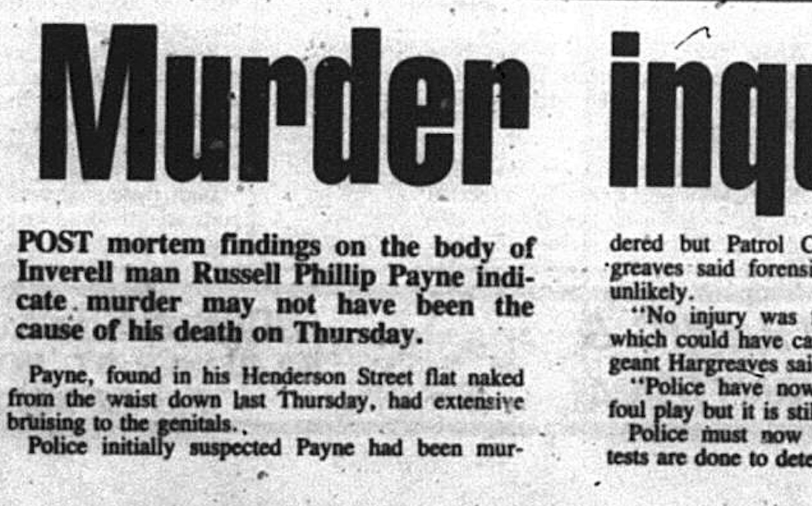
INVERELL INVESTIGATION Clipping from the Inverell Times, February 7, 1989

First stop was Inverell Library, soon after the first pandemic lockdown ended in 2020, to look at the archive of The Inverell Times for a report on Russell’s death. There was no missing the word ‘Murder’ splashed across the front page a few days after his body was found. I hunted for more, but the masthead never appeared to publish any further coverage and the story just disappeared from the town’s collective memory.

So librarian Sonya Wilkins guided me to the Inverell District Family History Group, based at the library. Within minutes, the volunteers had sourced Russell’s place of death and the site of his burial at Inverell Cemetery.

I raced around there in the car, spotting my own family plot in the distance as I hunted for Russell, only to be confronted by a completely bare grave. All that marked the place was grass, and that felt incredibly wrong in a country town that supposedly cared for its own.
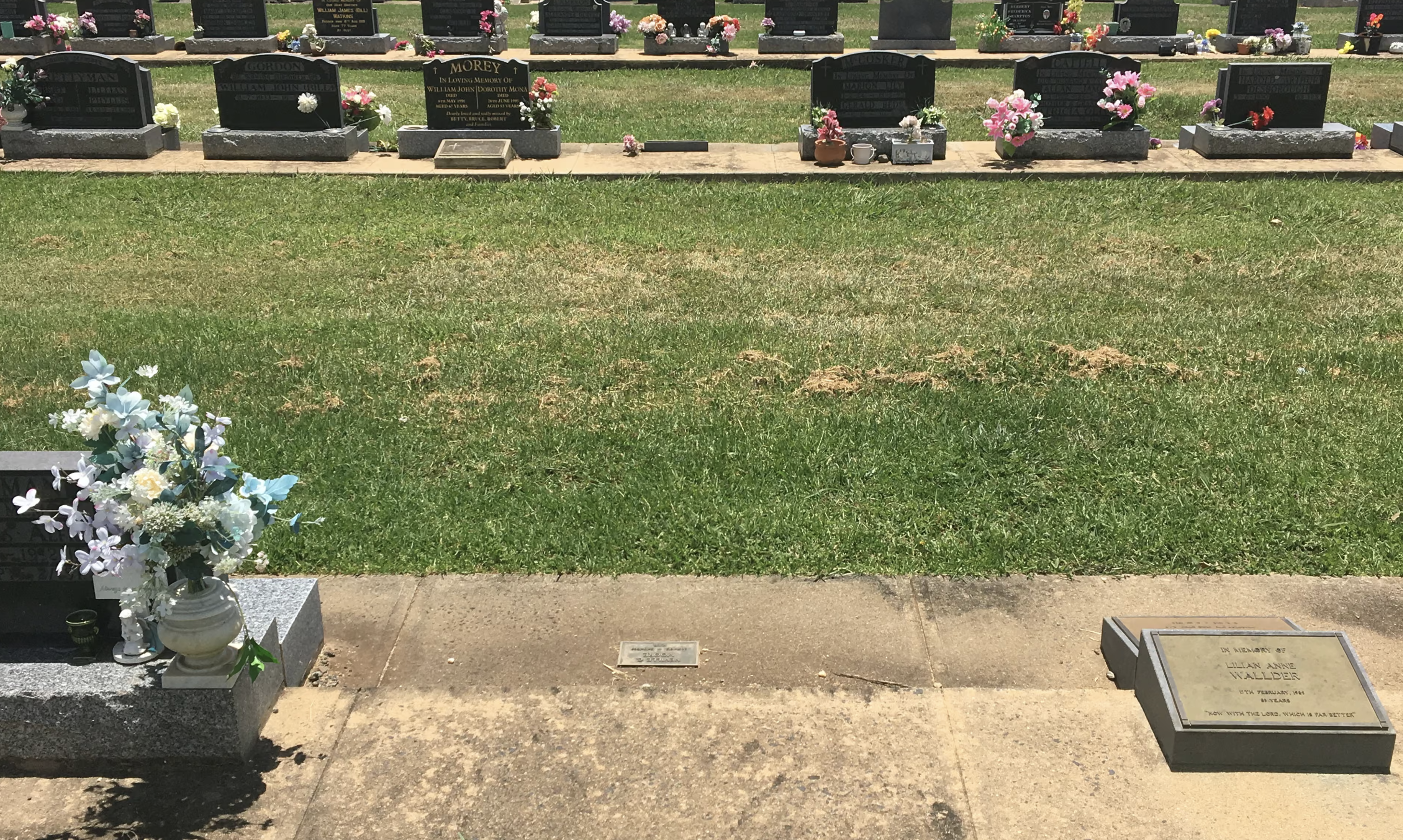
BARE BURIAL The grave of Russell Phillip Payne (1956-1989) in Inverell cemetery

But I pushed on, going through the long application process for coronial notes on his death via the Inverell Court House. While I waited, I interviewed the landlord of the property where Russell had lived and died, gleaning a sense of the enduring mystery that hit the town so suddenly in early 1989.

I also contacted Sue Thompson and Steve Tomsen, who’d worked for many years on the list of suspected historical gay-hate crimes. They generously shared the information they’d collated, but I’ll never forget Sue’s exhortation, “Please don’t give up on Russell.”

The NSW Police eventually produced the death-scene paperwork, because a state parliamentary inquiry into historical gay-hate crimes was in the wind. These documents made for grisly reading. Russell’s had very likely been a painful and lonely death, and investigating police in the late Eighties had made their disdain for the victim’s lifestyle clear, using archaic and judgemental terms instead of treating Russell with dignity. 

Journalistically, I had a strong story in my hands, so I started to pitch it to news editors. Russell’s name was on the long list of suspected cold cases set for the judicial inquiry; but from the country’s biggest mastheads to its newest rural publications, not one newsmaker was even remotely interested.

Tank Water was released on October 1, 2021, and my world changed.

Rural Noir was most certainly not over, it was simply diversifying. Suddenly invited to literary events, particularly for crime writing panels, I was grateful to have the facts of the historical gay-hate crime wave at my fingertips, especially the rural cases. The high-profile Scott Johnson case was in the news cycle, giving audiences and readers a handle on the whole issue.

But a much bigger wave was rising in the form of the The NSW Special Commission of inquiry into LGBTIQ+ Hate Crimes (1970-2010), which started calling for submissions in late 2021.

It was time to find Russell Payne’s family, and a receipt from the records of the local funeral director identified them. I was determined because the most important aspect of Russell’s inclusion on the list of possible gay-hate cold cases was to find out if anything was known about his sexual orientation. Evidence collected by the police at the scene of his death that may have shed light on that issue was missing; but his loved ones might have known.

Death Knock

Having given up on journalism after moving away from the city, I was bowled over by a call from Gabrielle Chan, editor of the new Guardian Australia Rural Network. The brief of this desk was to publish rural news by journos living in the bush, and when I pitched a bunch of stories to Gabi, the one she picked was Russell Payne’s.

When it was published in November 2021, I hoped his family might be alerted. Meanwhile, that story landed this Inverell boy a job as an editor and reporter for Guardian Australia.

It was a big 12 months for getting work about historical hate crimes in front of even bigger audiences. Aspects of bias in the coronial notes about Russell’s case proved very useful in my 2022 essay published internationally in The Journal of Australian Studies, Backwards to Bourke: Bulldust about Gays in the Bush, which sprang from that earlier conference paper and pushed back against centuries of rural homophobia.

But the search continued for Russell’s family. I eventually stumbled on his sister under her married name in a local online newsletter in another town altogether, and sent a message via the local post office, asking if she’d like to meet to chat about her brother.

When the call came, I realised in a rush that I’d instigated an old-school death knock, although instead of taking place in the days or weeks after a death, it was 33 years since this family had received the unexpected news of Russell’s untimely demise.

It was a great privilege to sit with his relatives one sunny winter morning in 2022 and go through the records. They courageously broached the critical point: that Russell had come out to his former brother-in-law just weeks before his death. They also spoke about the pain and confusion of never having follow-up from police despite their many unanswered questions. The reason for Russell’s bare grave is not my story to tell, but I came to understand.

By the time The NSW Special Commission of inquiry into LGBTIQ+ Hate Crimes (1970-2010) began lengthy hearings in 2023, all this footwork had resulted in a far more thorough and understanding picture of Russell Payne than had ever been captured since his death. 

To inform the commissioner Justice John Sackar, a forensic pathologist took another look at post mortem documents for Russell. However, like the vast majority of the 88 names on the list of cold cases, his death was not recommended for further investigation. 

Yet in his final report, Sackar stated that the language in the 1989 coronial notes for Russell, “might be characterised as prurient or contemptuous in relation to diverse sexual practices … It may be that one of the reasons Mr Payne did not seek medical assistance was because he was embarrassed or concerned about a hostile or humiliating experience if he did so.”

Still, thanks to local records and volunteers at a well-resourced library, and the memories of his family, Inverell had been pivotal in providing an accurate and dignified picture of one of our own.
Which is the reason that I never mind if people assume my novels are set there. What I hope to have captured in fiction is the way rural families and many in the community are willing to dig deep for the sake of their LGBTIQ+ loved ones, and there is a greater emotional truth in that.

Michael Burge, Sophie Masson and Brydie O’Shea in conversation with D’Arcy Lloyd at Tamworth Library on Saturday April 11, 2pm. Book here

Michael Burge, Brydie O’Shea and Narelle Fernance in conversation with Sonya Wilkins at Inverell Library on Wednesday May 13, from 2.30pm. Contact the library on 0267 288 130.

Troubled waters: a Mystery Tour of Kippen Pool

The third stop in a series of literary excursions examines how the local baths in a fictitious country town became the perfect location for a crime sequel


SOMEWHERE IN NORTH-WEST New South Wales is a rural town I made up. Kippen, named by Celtic settlers who saw the hillsides and thought of the Highlands, sits astride a river gorge that separates flat country from uplands where graziers plough their luck into black soil.

At one end of the high street is a towering pub. At the other, a scrubby cemetery. Between them sits an authentic vintage milk bar, a classic seed-and-feed supplier, the Kippen council chambers, a retirement village, a caravan park, an old-school department store and the Federation cop shop that serviced locals for over a century before a decline set in at the turn of the millennium.

Right at the centre of town, straddling the stretch of flat, rocky ground between the main street and the river, Kippen’s Memorial Swimming Baths survived; but take a closer look beyond the blond-brick 1960s entranceway and the turquoise ripples and you’ll notice tensions just below the surface.

Watering Hole

As a regular lap swimmer in rural swimming pools since I was a kid, I’ve come to understand why these beloved community assets are struggling, and it’s not just crumbling infrastructure or cash-strapped councils. Seven decades on from the swimming boom after the Melbourne Olympics, it’s possible we’re a nation that just can’t play nice at the local watering hole.

FIT FACADE: Inverell Pool’s original entrance.

I learned to swim at Inverell pool in the NSW New England region, and was glad to see the place’s original vintage facade – an imposing temple raised to mid-century fitness – survived a recent $24.98m upgrade

But despite the advantages of this brand-new facility, it was the site of a flashpoint that raised the spectre of racism very close to the 60th anniversary of the Freedom Ride, which travelled to Moree in the 1960s to highlight racial segregation at the local swimming baths

Public pool tensions are not exclusive to my part of the state. At Orange in the NSW Central West, security guards were brought in halfway through the 2023/2024 swimming season after reports of sustained antisocial behaviour during a free-entry trial. Hoping that bigger spends at kiosks and aquatic classes would offset increased running and maintenance costs, Orange City wasn’t the only rural local council to drop fees then quickly reinstate them due to a spike in abuse aimed at pool staff, including death threats.

Anxieties about taking a dip run deep. I witnessed the echoes of the Freedom Ride during my Inverell swimming lessons in the 1970s, when adults in my community whispered slurs about Aboriginal kids jumping the fence. Two things told me that just wasn’t true: the height of the mesh topped by barbed wire, and the absence of anyone but whitefellas at those classes.

I didn’t set out to churn all that tension into my latest rural noir, but when I realised I could make something as apparently innocuous as the local swimming baths into a setting for crime, it was too delicious to ignore.

Underuse & Neglect

These days it’s actually me who doesn’t always pay to swim. Not because I’m squeezing through the old metal turnstile like many of us did as teenagers, it’s that I often go to pay my entry fee with spare change and there’s nobody around to take my money.

Yes, I could leave the coins on the counter, and I have the option of buying a season pass; but I regularly swim when I travel and I can’t afford season passes to every pool. Hunting out the one staff member on duty is possible, but I shouldn’t have to chase the person paid to monitor the door. I just want to get into the water, do my laps, and move on with my day. If I see someone staffing the desk at the exit, I’ll give my money to them as I leave. 

I’ve dived into rural and regional council pools from Queensland to Tasmania, from the coast to the ranges. Some I remember by the shock of cold water on an October day, the wind shear across grey ripples daring me to take the plunge. Others are memorable because I’m the only one carving up the water, as though the ratepayer-funded facility is my private pool. 

What I’ve observed over the decades is that community swimming culture appears to be on the decline. Aussie kids are learning to swim less, more households have their own backyard pools, and councils are outsourcing management of swimming centres in an attempt to prevent these de-facto local waterholes returning to nature as paint peels and concrete cracks.  

Many outdoor pools close throughout the colder months, meaning November and February see plenty of competition for lane swimming between school carnivals and private events. This occasionally cranky middle-aged fella sometimes can’t get into the pool because there’s little or no communication about access. It’s no use looking at social media for updates that rarely get posted, or calling a phone number that just rings out; which is another mark against buying any kind of season pass.

But it’s this blend of underuse, neglect and decay that makes a country town pool lonely enough to be the perfect setting for a thriller.

Sorry For The Inconvenience

According to Royal Life Saving Australia general manager R J Houston, around 500 council swimming baths across the country are in need of repair or replacement

“By 2030, about 40% of public pools will be too old to use properly, and we will need about $8 billion to replace them,” he said.

“Communities across Australia need to use these pools as much as they can.”

Well, I’m trying, but getting my weekly swim has become a case of pot luck. Since I live 30-40km from my closest public pools, and have often arrived to see private functions have the place closed (“sorry for the inconvenience” signposted at the entranceway) or weather-related closures that have not been posted on social media, it can be a completely wasted trip.

Tensions in Orange were also managed around public/private access to the same swimming facility, when the number of entrants was limited to an indoor pool while the outdoor pool hosted the January, 2024 Swimming NSW Country Championships. For an inland city, it’s a big ask to keep the public out of the water at the height of summer.

Swimmers in the NSW Central West Cabonne Shire may be onto something with a new way of managing public pools, one which stands to provide sustainable solutions to all the trouble of the state’s swimming centres.

According to the council, the combined cost-per-swimmer at Molong pool was reduced from $40 to $15 during a trial of unsupervised access for swimmers between 6am and 7pm. Pool attendants are rostered part of the day, but outside those times users must only attend the facility in pairs, undertake an induction and crisis training, and are subject to CCTV monitoring. The experiment was so successful that Cabonne Shire tripled the sales of annual season passes.

Residents have reported more social cohesion as a result. If this approach calms things at the watering hole, lets me swim when I prefer, and gets the council closer to breaking even, I’d buddy up with someone and dive in all year.

But it’s too late to clean up Kippen Pool. It is implicated in my new rural crime thriller Dirt Trap, (out now from MidnightSun Publishing), and the locals are probably going to hate me.

The Golden F**king Light: a sample of Dirt Trap

JOURNALIST James Brandt lives in a brittle truce with his partner Dylan and his family, never talking about the homophobic attacks he exposed in his rural hometown, including the brutal death of a beloved cousin twenty years ago.

But this illusion of peace is ripped apart by the start of the state’s historical gay-hate crime inquiry, and the reappearance of the Joneses, who waltz back into Kippen professing to be queer allies. Yet when one of that notorious dynasty is found dead at a local water tower, it is James who stands accused.

With an under-resourced sergeant and a tech-savvy podcaster on his heels, James refuses to trust in a police force that has proven its inadequacy with gay-hate crime. In order to clear his name and flush out which member of this remote community took justice into their own hands, he will need to expose every secret, including his own.

The gripping and heartbreaking sequel from the author of Tank Water.


The prologue of Dirt Trap

Daniel knew his own name but not much else. Somehow, he’d ended up leaning against the top gate, out of the heat with the butcher birds. Their chatter in the trees above his head made the view of the old homestead down the hill seem much less lonely.

That must be home. While he waited until he was sure, Daniel pulled out a hanky and dabbed the sore spot on his forehead where he must have hit the ground after he blacked out, but there wasn’t much blood on the white cloth with the soil and bits of wheat stubble.

‘You’re a duffer,’ he muttered, Father’s turn of phrase coming back to him.

He didn’t know what day it was yet, but Daniel had walked this stretch between Bill’s place and home a thousand times. His brother’s property was called Deloraine, and home, down the hill, was The Mulgas. A bit closer to the head of Brandt Lane was Glen Alpine, where Father and Mother lived. As little boys, the Brandt brothers had been drilled on the location of the three homesteads down the one lane, just in case they ever got lost.

But what was Bill doing leaving the wheat stubble when it should be burned off? 

Something red was catching the sunlight from one of the furrows. Rubbish blowing in from Bill’s shed, no doubt, so Daniel followed his own bootprints back into the heat to fetch it. Through the dusty haze, the sight of his brother’s place worried him. The cars between the house and the sheds were all wrong. Where was Bill’s old Ford? And whose was that expensive looking petrol guzzler parked by Deloraine’s home yard gate?

Daniel nearly stumbled again when it all came back.

He was old. Older than Father ever got to; and Bill was long gone.

Shit. It was Christmas, and his brother’s widow Doris had spent the whole of lunch suffering in silence because she’d been turfed out to live in the manager’s cottage while her daughter Yvonne did all the cooking. Brandt family get togethers weren’t like the old days when all the kids were happy. Yvonne and her husband Pete were pushing fifty and Daniel’s middle boy Jamie was even older, sitting there with his husband, mouths full of vegetarian muck while Jamie carried on about that dead poofter inquiry coming up in Sydney, trying to get someone to watch it with him on the internet.

The only young ones were Yvonne’s two girls, dragged home for the holidays so  everyone could pester them about what they were up to in the big city. They’d gawped at their phones while their mother and grandmother gave the men the silent treatment, not one of them prepared to talk about Tony, their dead son, brother and uncle. So Jamie had offered to drive Daniel home in that fancy European car still taking up space on Deloraine’s driveway, but he’d had enough of his middle boy’s drama for one day.

The red rubbish in the wheat stubble was his bag of gifts, and now he remembered  slipping a beer into it before heading home. He just needed a bit of fizz under all the gravy and pudding in his guts, then he’d come good.

But the bottle was empty, as though someone had pilfered his presents while Daniel had lain there, out cold. He glanced up and down the parched field, trying to spot whoever it was in the scrub while he patted his pockets looking for his old police notebook. When he came up with nothing, he panicked, tipped the whole lot out and saw the dark little book drop onto the black soil with the new socks and hankies. 

Relieved, Daniel shoved everything back in. ‘There’s no one watching, you old fool,’ he muttered, scanning the shadows stretching across the wheat stubble, half expecting Father had walked down from Glen Alpine to criticise all these crooked furrows. 

Yvonne’s husband was too cowardly to torch the straw like everyone used to, but Pete wasn’t a Brandt, he’d only married one and been handed Deloraine’s five thousand acres on a plate. What the place needed was Tony. The Brandt farms had a future when Daniel’s fine young nephew had walked the best cleared black soil for a hundred miles, pulling in the cheekiest crops in the district and marrying the prettiest bird, all right here down Brandt Lane. But Tony had been put in the family plot years before his father and anyway there was no point wishing.

By the time he was back at his top gate, Daniel could see traces of cloud drawing in from the south. That could mean a storm, so he stumbled down the driveway to get ready.

The big iron tank that once stood against the homestead was always cool to the touch when there was water inside, but this modern plastic replacement needed drumming to tell how much was left. Habit made Daniel slap a hand on the side, one ear against it to hear the hollow boom. If the top inlet was blocked by even the slightest bit of muck the rain would just bounce out, so he threw the bag of pointless presents into the long grass, ignored the pain in his belly as he hoisted up a ladder and took to the rungs.

The view from the top made him pause. Always the golden fucking light on granite-covered slopes, beautiful until a long wait for rain made it a harsh, dry joke. Daniel turned away and flopped his trunk onto the faded plastic top of the tank, scattering the butcher birds up the driveway. A few of them swooped overhead, took to the peak of the roof, then turn their heads to stare as he stretched one hand towards the tank hole.

The end of his fingers brushed something, so he shoved his body forwards, frustrated at the weakness of his arms after twenty years’ retirement. This bloody inquiry wasn’t helping. The best police work was always achieved on the quiet, and the last thing Daniel needed was the whole country seeing his mistakes in Tony’s case. Once they got out, Jamie, the one journalist in a family of farmers, would lead the charge against his own father all over again. 

‘The trouble with you journos is you just don’t trust experienced investigators,’ Daniel said, aiming his lecture at the closest bird as though it were his son. 

Just like Jamie, it fluffed its feathers and croaked out some back chat.

‘Smart arse,’ Daniel said, even though Jamie had been proven right about the police turning a blind eye to Kippen’s dead gays. Daniel had witnessed all three broken bodies in his time on the force, and he’d never get over his nephew Tony being one of them. 

He groaned and stretched one hand into the tank hole, getting wrist-deep in muck. But Daniel’s secret weapon was the old tin dirt trap he’d pulled out of the family rubbish dump in the gully down the hill. Round and deep like Mother’s trifle dish, its rim sat proud of the surface and dipped down to a thousand nail holes that worked better than any modern sieve. Daniel’s fingernails found them now, remembering how Father had made him punch out every one with an iron tack, back when sons stuck around. Not like Daniel’s three, one long dead, one lost to the city and Jamie living up the road with Dylan, making house at Father and Mother’s old place. 

A dead something came out with the first scrape, drowned bird or crispy frog. He threw it upwards and it spattered across the roof irons before the birds dived for it.

Daniel sat up and saw Tony down below, leaning against a verandah post. He laughed when he realised it wasn’t his dead nephew, just some other hairy head in the golden fucking light. ‘Thought you were someone else,’ he said, turning his back. 

But he spun too fast. Grabbing for the ladder, the muck on his hand made it slip and hit the top of the tank, the rumble spooking the birds. 

‘Hold this thing for me, mate?’ Daniel added over his shoulder.

The unexpected visitor lifted one boot onto the bottom rung and looked up.

Daniel couldn’t believe his eyes, because this was the bloke he’d been searching for.

‘Didn’t think I’d see you so soon,’ he said, chuckling because his knack of flushing out murder suspects was still spot on, even after those twenty years off the force. ‘I’ll get us a beer, then you can tell me why you hung up on me last week.’

But the boot swung, and a heavy jolt sent the ladder out from underneath him. 

A cry burst out of Daniel’s gob. His arms flapped but he dropped too fast to do anything about going off headfirst. The crunch of landing winded him, like falling under the scrum in footy, then all he saw were birds squawking off into the golden fucking light.

© Michael Burge, all rights reserved.