
Tag Archives: Crime Fiction

Get in early for The Watchnight

HISTRIA FICTION., an imprint of Histria Books (US) has acquired global rights for The Watchnight, my second novel.

Described as a Gothic western, The Watchnight is a bold reimagining of the Methodist settlers who colonised Australia’s renowned Jenolan Caves during the Frontier Wars.
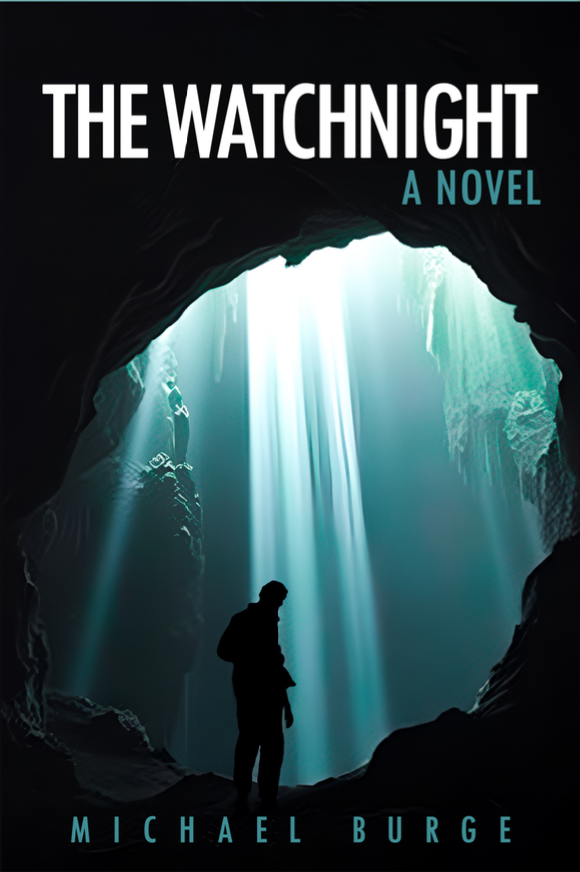
Three lost souls – an Irish settler, a pardoned convict, and a young tutor are recruited by a religious mission during Australia’s gold rush and get caught up in a wild ride of intrigue and murder in a brutal landscape.

Acquisitions manager Dana Ungureanu said the Histria Books team is always excited to find new stories that have not saturated the market. 

“That is the case with The Watchnight, an historical tale exploring places and themes that will be new for much of the world,” she said.

“Michael Burge blended crime, history, and religion into a page-turner, and we’re very glad to work with him to bring this book to our US and international readers.”

Early endorsements for The Watchnight have been effusive.

Poppy Gee, author of Bay of Fires and Vanishing Falls, said, “The Watchnight is a deeply empathetic literary thriller that explores the complexities of human relationships. Subtle, satisfying  and gorgeously atmospheric.”

“Pitch perfect,” said Suzanne Leal, author of The Deceptions and The Watchful Wife. “Written in prose that is at once forensic, visceral and lyrical, The Watchnight is a compelling mystery, a sharp character study and an ode to the land amidst the brutality of colonial NSW. I loved it.”

Thousands of Steps

Before settling on Ngarrabul Country at Deepwater in far northern inland New South Wales, I was a resident of the Blue Mountains for over three decades. This World Heritage site is the location of Jenolan Caves, where I worked as a tour guide from 2008-2012.

STORYTELLING STEPS: Author Michael Burge by Max S. Harding

This novel is a new direction for me, after the publication of Tank Water (MidnightSun Publishing, 2021), a work of contemporary rural noir exploring homophobia in a country town.

The Watchnight is a work of fiction that took years to shape from the thousands of steps I took through Jenolan’s caverns.

Inspired by real people and events, it cuts through 150 years of tourist tales to recreate a time when the caves sat on the colonial frontier, a place settlers viewed with suspicion, not wonder. 

What drove me were the stories few wanted to talk about, particularly the lives of Jenolan Caves’ traditional owners, the Burra Burra clan group of the Gundungurra people; the cattle farmers who gradually occupied the same countryside; the Wesleyan Methodist community of the nearby region once known as Fish River Creek, now Oberon, and the role of women in early cave exploration.

It has been a privilege to work with Gundungurra Traditional Owner Kazan Brown, who assisted me in depicting Indigenous characters in a way that respects Burra Burra history, place and cultural practice within the settings of this novel.

Tenderly Imagined

Like my debut novel, I created The Watchnight as a crime story that explores diverse themes in a dramatic context. In the case of Tank Water, that was the gay-hate crime wave of 1970-2010.

For The Watchnight, I set the story against the backdrop of Australia’s 19th century Frontier Wars, and included an unexpected love story between two central characters.

“Their connection is tenderly imagined, and I was utterly invested,” Poppy Gee said of this thread.

“Themes of LGBTIQA+ empowerment are not frequently portrayed in Australian literature of this era, and their relationship is delightful and heart wrenching,” she said.

The Watchnight is set for a September 2025 release.

Beyond every dead body

I NEVER SET out to be a crime writer, it was something that crept up on me like the growing awareness of the killer in a whodunnit, and it all started with my early love of Agatha Christie novels.

The prospect of my debut novel Tank Water being consigned to the crime section of major bookshops was a little unsettling; but considering I was a debutante at the age of 51, I had little time to dissemble and embraced my place in one of the world’s highest-selling genres.

Crime has opened doors, not least the invitation to join the board of BAD Sydney, the writer’s festival that platforms journalists, academics, podcasters, broadcasters, film-makers and a myriad of professionals from the justice system.

It’s also led to reporting one of the more heinous crime waves that gripped the suburbs of Newcastle, Sydney and Wollongong from the 1970s to the 2010s, an era known as the Gay-hate Decades.

I’m often asked whether I struggle with the brutality of murder when reporting or writing fiction in which the body count mounts up. Consideration around this is so common (and empathic) that I thought it wise to put myself through a challenge a few years ago, to check if I was becoming desensitised.

Pain and trauma

I sought the most disturbing real-life crime I could find, and it didn’t take long to land on Helter Skelter, the seminal book on the Sharon Tate and La Bianca family murders in California in 1969, said to be the highest-selling true-crime publication ever.

Written by trial prosecutor Vincent Bugliosi and Curt Gentry, this incredible work lays bare the sad and sordid case in a manner that did spark anxiety in me, mainly because the killers – the so-called Manson family – had been part of the popular hippie counterculture of the era.

But I got through it intact, in some ways relieved that I was still able to be shocked by exploring shocking crimes, yet not stymied in my own work.

What drives my interest in crime writing and interviewing crime authors, is that crimes – murders in particular – rarely exist in a vacuum without other themes of grief and justice.

Dead bodies do more than throw up murder suspects, they cause pain and trauma to loved ones and communities. For me, the best crime writing delves into this territory with sensitivity and courage, because it can lift a crime novel’s significance above mere entertainment.

The exploration of grief in crime novels is rare, and although they say order needs to be restored by the end of a classic whodunnit, life is rarely as neat.

I’m also captivated by those aspects of victim/survivor’s lives that show resilience and endurance, where the hope of justice can sometimes be stronger than justice itself, posing the question: is justice ever really attainable?

It’s a fascinating concept, justice, a word with almost no effective synonym, one that means different things to different people.

It meant something to Doris Tate, Sharon Tate’s mother, who worked tirelessly to ensure the voices of surviving families were heard in the Californian judicial system. Her statements during the parole hearings for the convicted former members of the Manson family stand as a critical enduring addendum to Helter Skelter.

Restoring order

Agatha Christie loved a little order restoration at the conclusion of her books, although she didn’t always wrap things up neatly. In her works, lovers survive death and destruction while impatient philanderers get their just desserts. Family members are reunited even while others are split asunder. Most baddies get it in the neck, but some get off scot-free.

This tension between crime and punishment is one of the hallmarks that drives BAD Sydney, the festival that explores what crime can tell us about ourselves.

For this year’s event I’m delighted to be hosting two sessions: Bush Justice and Queer Crossroads, both explorations of how law and due process have been lacking in some of Australia’s marginalised and remote communities.

See you there!

BAD Sydney takes place at the State Library of NSW from August 11-14, 2024. Book now.

New novel coming to light

ONE OF THE best day jobs I ever had was working as a tour guide at Jenolan Caves, the renowned limestone formation in the World Heritage-listed Greater Blue Mountains region of New South Wales, Australia.

Sixteen years since I earned my guiding boots, I’ve landed an international book deal for a novel that emerged from the thousands of steps I took through the tunnels and chambers of the oldest-known open cave system in the world.

Titled The Watchnight, this historical crime novel is inspired by real people and events and cuts through 150 years of tourist tales to recreate a time when the caves sat on the colonial frontier, a place settlers viewed with suspicion, not wonder. 

Extrapolating a story from this intriguing place has been a long-term challenge. When I trained as a guide in late 2008, there was little written material on hand for new recruits. I was left, like many before me, to glean the stories of the caves from my more experienced peers in the guides’ office.

CAVE FRONTIER Devil’s Coach-house, Fish River Caves, by Lucien Henry, 1883 (Art Gallery of NSW)

What drove me were the stories few wanted to talk about, particularly the lives of Jenolan Caves’ traditional owners, the Burra Burra clan group of the Gundungurra people; the cattle farmers who gradually occupied the same countryside; the Wesleyan Methodist community of the nearby region once known as Fish River Creek, now Oberon, and the role of women in early cave exploration.

Crime was never far from the colonial experience of this region. The massacres and random killings of Aboriginal people and reprisals against settlers, now referred to as Australia’s Frontier Wars, included widespread violence against women, both Indigenous and settlers. The occupation of the land was not possible without the importation of convicts to build roads and towns, a mounted police force to impose British law, and Christian missionaries to impose ethical standards.

It’s from within this volatile battleground that The Watchnight emerged.

Cave Girls

I undertook years of research as The Watchnight came together, and wrote a few articles along the way about my explorations into Jenolan’s past. The first saw me capture the many tales about a young cave explorer called Katie Webb (and her gang of ‘Cave Girls’), whose discovery of a chamber in the Chifley Cave in the 1880s has long been a source of speculation.

A never-before-published collection of letters by English crime writer Agatha Christie was a source of great delight when it appeared in 2013, since it detailed her visit to Jenolan in the 1920s. I published an article about the links between her world tour with husband Archie, their slightly fraught jaunt to Jenolan Caves, and her notorious 11-day disappearance in 1926 back in England.

My guiding days ended in 2012 when I moved interstate, but I was lucky enough to return in 2017 for a private tour of the Arch Cave with a former colleague, in search of historical signatures, including one of early female cave explorer Jane Falls.

The Watchnight’s heroine Oona Farry is inspired by Jane’s explorations, and those of other real-life figures in Jenolan’s history.

BUY

This story is unique because it explores crime, punishment and forgiveness in the context of charismatic faith; tackles stories of the Frontier Wars that don’t often get aired in fiction, particularly toxic masculinity, and emphasises female, LGBTIQ+ and Indigenous empowerment at a time when they were not afforded much agency.