Tag Archives: Hercule Poirot

Mystery Tour of Market Basing, Agatha Christie’s Mare’s Nest

The first stop in a new series of literary excursions explores how the Queen of Crime created a rural rabbit hole to augment her oeuvre


NOT FAR FROM genteel St Mary Mead where Miss Marple resides, less than two hours by car from Hercule Poirot’s London pad, is an essential crime readers’ destination that even staunch fans of Agatha Christie have probably forgotten about.

As the name suggests, Market Basing is a typical English market town. The wide central square is the main clue about that, although a slow tractor on any road approaching the place will likely be your first encounter with local farmers.

But Market Basing is no backwater: Christie delved into the district regularly throughout her oeuvre.

Poirot and his sidekicks Captain Hastings and Inspector Japp took a short break there in the 1920s; and Poirot and Hastings returned in the 1930s. Superintendent Battle worked a case linked to the town in 1929. Miss Marple probably never went, but she did know of a bus conductor who serviced the St Mary Mead to Market Basing service in the 1950s; and amateur spy duo Tommy and Tuppence Beresford got embroiled in a scandal there a decade later.

SALES SQUARE: Shrewsbury, an English market town

With its growing outer-urban population, the town has a general hospital (which features in Crooked House, 1949). There’s a police command (called upon in The Secret of Chimneys, 1925); a thriving high street (which inspired a shopping trip in The Seven Dials Mystery, 1929), and Hellingforth Film Studios (a key location in The Mirror Crack’d from Side to Side, 1962) is just six miles away.

But the town’s perennial industry is real estate, and the streets are replete with busy agents offering desirable farms, manor houses for rent or purchase, and large tracts of land.

Some reckon Market Basing is Christie’s stand-in for Basingstoke in Hampshire, or an homage to her final home in the Oxfordshire village of Wallingford; but true fans know full well the township is actually in the county of Melfordshire, and if you don’t know where that is you have some reading to do.

Nobody Knows Us

Start with Christie’s 1923 short story The Market Basing Mystery (published in Poirot’s Early Cases, 1974) in which Poirot, Hastings and Japp take a weekend away from the London rat race.

The story opens with a hearty pub breakfast while Japp celebrates the benefits of a gents’ country break in a place where, “Nobody knows us and we know nobody,” he says. Hastings is narrator and he makes deft observations about men, appetites and rabbits before the renowned sleuths are called on to investigate a local locked-room mystery.

Most of the action in Dumb Witness (1937) takes place in Market Basing after local spinster Emily Arundell writes to Poirot, apparently after her death. The Belgian detective recruits Colonel Hastings to drive him out to the town on the scent of a clever poisoner Poirot refers to as a rabbit.
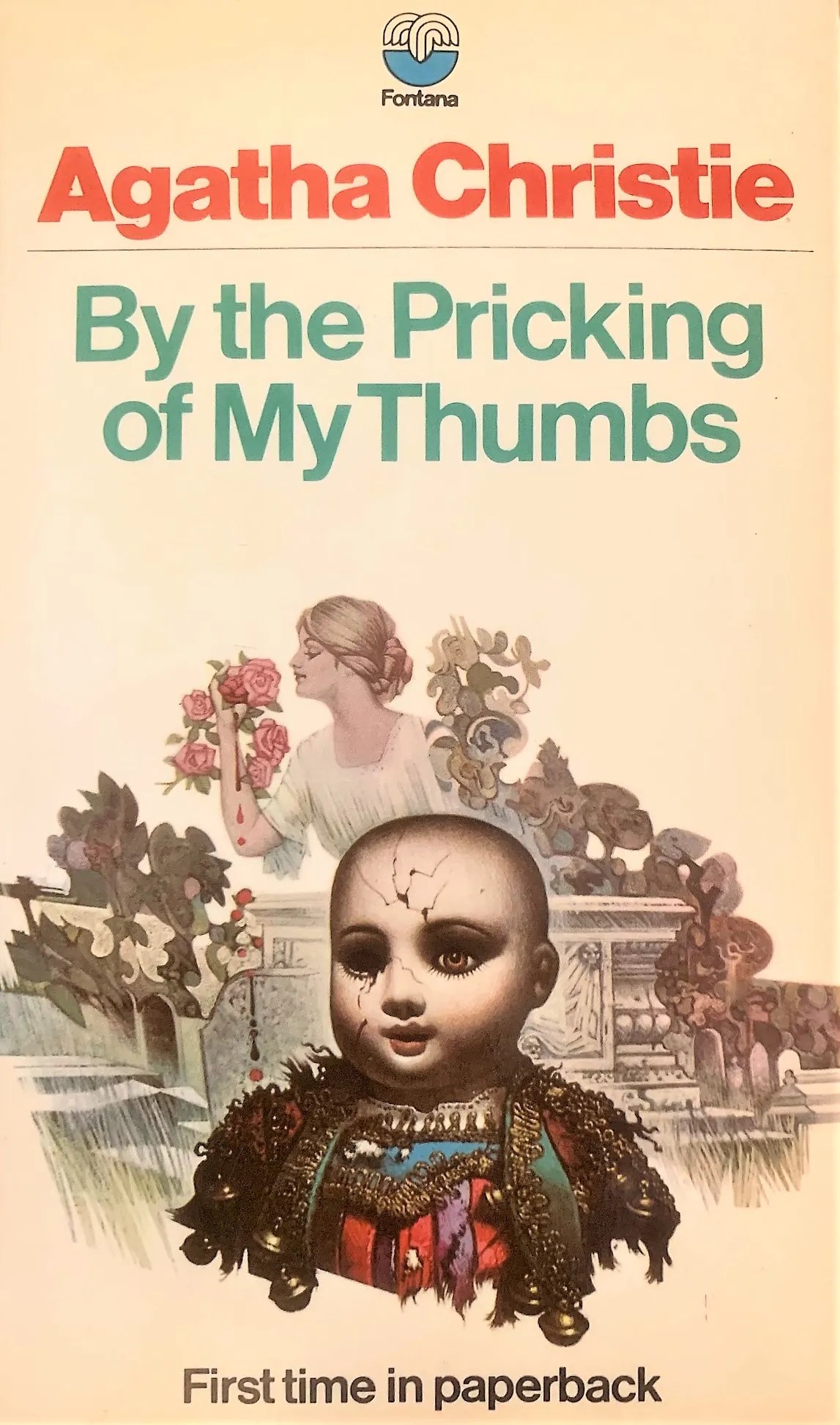
A generation after World War Two, the progress of Market Basing can be observed by joining Tommy and Tuppence Beresford in By the Pricking of My Thumbs (1968), an intriguing chase that begins in a nursing home and leads back to Market Basing, flushing out several hares responsible for missing women, jewel heists and derelict houses.

It’s here, in the last decade of Christie’s life, that she may have left clues about a rather brazen rabbit hole at the core of English country life.

Ending Nowhere

Analysis of Christie’s massive literary output often draws accusations of lacklustre storytelling. Crime author Robert Barnard’s review of By the Pricking of My Thumbs is one example:

“Half-realised plots and a plethora of those conversations, all too familiar in late Christie, which meander on through irrelevancies, repetitions and inconsequentialities to end nowhere (as if she had sat at the feet of Samuel Beckett).”

I suspect Barnard missed the point of a novel that employs meandering, memory loss and ageing as major themes; but love or loath her work, Christie was a shrewd observer of English society and documented what she perceived as its decline in the late 20th century.

She was careful to add a new county name – Melfordshire – for the setting of By the Pricking of My Thumbs, considering the changes she witnessed under the Local Government Commission in the mid-1960s; and the threat of a dormitory town being built on major landholdings in the Market Basing district in that novel.

But the Queen of Crime could be accused of a major plot hole in her collected works when she gives Poirot and Hastings absolutely no recollection of their 1923 weekend in Market Basing when they revisit the place in 1937.

Did Dame Agatha simply forget her earlier work, or are we supposed to take this crime fiction author as she presents herself, alleged ‘errors’ and all?

Rather deliciously, if we do take her at her word, Market Basing becomes even more sinister than it first appears.

Awful Things

Let’s start with a fact: Hercule Poirot rarely, if ever, forgets.

Since neither he nor Hastings refer to their 1923 weekend in Market Basing while revisiting the town twice during 1937 in Dumb Witness, they must be avoiding the memories for a reason.

RABBIT HOLE: Collection of Rabbits and Hares, 1897

Could it be embarrassment, an “I won’t mention it if you don’t” pact? Clues lie in Hastings’s 1923 pub brekky musings from a Belle Époque poem with suggestions of depravity.

“That rabbit has a pleasant face,
His private life is a disgrace.
I really could not tell to you
The awful things that rabbits do.”

At first glance, Hastings, upstanding gentleman that he is, appears to be comparing Market Basing’s residents to randy, big-eared, four-legged herbivores. But the depravities he euphemistically refers could be those of the men around the table.

Read the opening page of The Market Basing Mystery through this lens and the hearty breakfast devoured after a night in a town where “nobody knows us” has the vibe of the morning after a boys’ night out.

None of the men reacts to Hastings’s rabbit reference. Japp actually changes the subject back to the food. The trip was all his idea because he’s “an ardent botanist” able to reel off the botanical names of “minute flowers”.

But what if Japp’s botany is a way for a Scotland Yard gumshoe to describe his weekend predilection for plucking specimens of the two-legged variety?

If so, it’s hardly a surprise that Poirot and Hastings never again mentioned their lost weekend in Market Basing.

Specimens in the Hedgerows

Four decades on from this short story, Christie returns to the botany of Market Basing in By the Pricking of My Thumbs when Tuppence Beresford meets the vicar of Sutton Chancellor (a village in the parish) who is searching for a lost headstone in the churchyard in 1968.

At that stage, the novel is shaping up to be a beguiling, sinister tale with references to clandestine outdoor trysts, pretty young women visiting strangely empty houses and “getting into trouble”, and a serial killer who attacks girls in the woods.

So when Tuppence asks about one particular house, just like Japp in 1923 the vicar changes the subject: “… you can find quite rare specimens. Botanical, I mean,” he says.

Tuppence refuses to be fobbed off by botany, but all the talk of flowers in the hedgerows along the lonely roads around Market Basing in the 1960s might be coded language from a devout man warning Tuppence of local “goings on”.

Masterful Illusion

Rabbits and hares, flowers and hedgerows… if it all sounds like a mare’s nest, that’s because it’s supposed to.

Read Christie’s three major Market Basing stories in sequence and you’ll see the masterful illusion she wove around this district. There are no spoilers to be had (Christie took great care in that regard), but you’ll be one step ahead of Tuppence Beresford in the 1960s throughout By the Pricking of My Thumbs when you’ve had a taste of the town’s depravity from the 1920s in The Market Basing Mystery.

It’s now over half a century since Market Basing last cropped up in crime fiction. Since then it’s no doubt been absorbed into another county, the hedgerows have been bulldozed, and several dormitory towns raised and renovated many times over.

But you can still enjoy the botanical ‘specimens’ and ‘wildlife’, now you know what you’re looking for.

Main image: A Hare in the Forest, Hans Hoffmann, c.1585 (Getty Museum)

Mrs Christie would kill for a holiday

THE CHRISTIES Agatha and Archie.

WHEN Agatha Christie abandoned her car by a quarry in Surrey late on December 3, 1926, she couldn’t have imagined igniting a mystery so intriguing it is still being dissected a century later.

Married society girls did not walk alone at night, no matter how capable. They certainly were not expected to disappear, which is exactly what Mrs Christie did that evening.

Was the whole event a publicity stunt, or a nervous breakdown brought on by Archie’s request for a divorce on the day of her disappearance? The 36-year-old English author appeared on the cover of The New York Times only days after her green Morris Cowley was discovered. Police mobilised multiple counties into a hunt for the crime writer – or her body – while an international press pack pursued Agatha’s husband Archie.

agatha-christie-1926-disappearanceBooks, films and articles have explored everything between these two extremes, but the seeds of Agatha Christie’s escape may well have been planted years before.

The first way to understand the incident is to apply a bit of context.

Agatha Christie the ‘Queen of Crime’ did not exist in 1926. After serving their country in World War One – Agatha as a voluntary nurse, Archie in the Flying Corps – the couple produced a daughter and settled into civilian life.

“I had written three books, was happily married, and my heart’s desire was to live in the country …” Agatha wrote in her autobiography, “and then something completely unforeseen came up.”

This was an offer for the couple to join delegates on a ‘grand tour’ of the world while drumming up participation for the British Empire Exhibition.

In June, 1922, on a weekend escape from meeting dignitaries, Archie and Agatha made a dash to Australia’s largest cave system – Jenolan Caves in the Blue Mountains of NSW.

Agatha wrote home about the one-night trip to the remote holiday resort. “So we started in style, much to Archie’s annoyance. He hates motoring in the cold, and much prefers going by train any day,” she guilelessly joked, indicating it wasn’t all plain sailing.

“Our car went well until we started climbing miles from anywhere when it proceeded to turn nasty. We induced it to go on for a bit but it broke down about six times and eventually we arrived at the Jenolan Caves at 6pm instead of 2.30, freezing cold and dead tired.

“After a meal we were taken as a ‘special party’ around the Orient Cave which is supposed to be the best. It really is wonderful, you go for two miles through the bowels of the earth, up and down steps (1500 in all – and you know it the next morning!) twisting in and out through labyrinths and coming to the different chambers.

REMOTE RESORT Caves House, Jenolan Caves, NSW, Australia.

“We were up early the next morning and did some of the open air caves. The Hotel (or Cave House as it is called) is right in the heart of the mountains.

“They rise up all round it, and to get to it the road zig zags down and seems to end, but really it is a great natural arch through the mountain itself.

“We had to start back at 2 o’clock unfortunately. I could have spent a week there quite happily.”

This and countless other letters languished in family hands for ninety years until they were published in 2012 by the Christies’ grandson Matthew Prichard, revealing glimpses of the marriage that crumbled so swiftly less than four years after the tour.

Settling back into their home life a second time saw a typical divide quickly develop. Her burgeoning writing career kept Agatha in the city and his struggle to get a foothold in the corporate world drew Archie away from it to the Christie’s Berkshire home and its adjacent golf course.

Into this fertile ground came a rival for Archie’s affections – a younger woman called Nancy Neele – who worked as a clerk in London but frequented the same country house parties as the couple.

A trial separation and reconciliation ensued, until Archie’s December, 1926, divorce demand. 

HAPPY HOLIDAY Timothy Dalton as Archie Christie and Vanessa Redgrave as Agatha Christie in Agatha, a film adaptation of the mystery released in 1979.
HAPPY HOLIDAY Timothy Dalton as Archie and Vanessa Redgrave as Agatha in ‘Agatha’, a film adaptation of the mystery released in 1979.

When Agatha ran from her marital home on the back of such life-changing news, dumped the car and walked to a nearby railway station, she slipped back into holiday mode and headed for a place just like Jenolan Caves – a classic resort in the Belle Époque tradition.

The name she used to check into Harrogate’s Swan Hotel – Teresa Neele – not only bore the surname of Archie’s mistress, but her fictitious character was from South Africa.

In a sense, she killed-off her old life with that fake signature, as surely as she would have if she’d put her foot down and stayed longer at Jenolan Caves.

“The fiction that began when Agatha signed the hotel register was only just beginning.”

Agatha’s Harrogate holiday lasted slightly longer than the week she yearned for at Jenolan. When a band member took a punt and identified her, the eleven-day ruse was over. Archie hurried to Yorkshire to collect his wife, who, it was announced to the press, was suffering a bout of amnesia.

Reality closed in fast. A year later the Christies divorced and Archie married Nancy.

But the fiction that began when Agatha signed the hotel register was only just beginning. She entered a cycle of imagination that would transform her career, and as she began to polish her oeuvre, she was far from settling on her primary detectives.

By the time of Agatha’s disappearance, many of her famous sleuths had been created – Hercule Poirot, Tommy and Tuppence Beresford, and regulars Colonel Race, Superintendent Battle, Inspector Japp and Arthur Hastings.

Marriage over, Christie’s experimentation continued, with spinster Miss Marple’s appearance in a 1927 short story collection. Two single young female detectives were trialled in the early 1930s. Ariadne Oliver, Christie’s mystery author alter-ego, married but with no husband to account for, also appeared. Harley Quin got a run, as did another detective by the name of Parker Pyne.

Parker Pyne Investigates is a rumination on troubled marriages, kicking off with The Case of the Middle Aged Wife, in which a husband runs around with a mistress called Nancy – a clear reference to the new Mrs Christie – leaving his wife to seek help from Mr Pyne to win him back.

Christie turns the focus onto Archie in The Case of the Discontented Husband, where a different couple is challenged by his love of golf and hers of the arts. 

Parker Pyne’s common sense marriage advice is so benign it suggests Agatha had undergone some kind of counselling after her disappearance, or at least listened to loved ones about what she may have contributed to the demise of her marriage.

Agatha’s confidante may well have been her new love Max Mallowan. The couple married in 1930 after meeting while she was on another holiday, this time at Mesopotamian dig in modern-day Iraq.

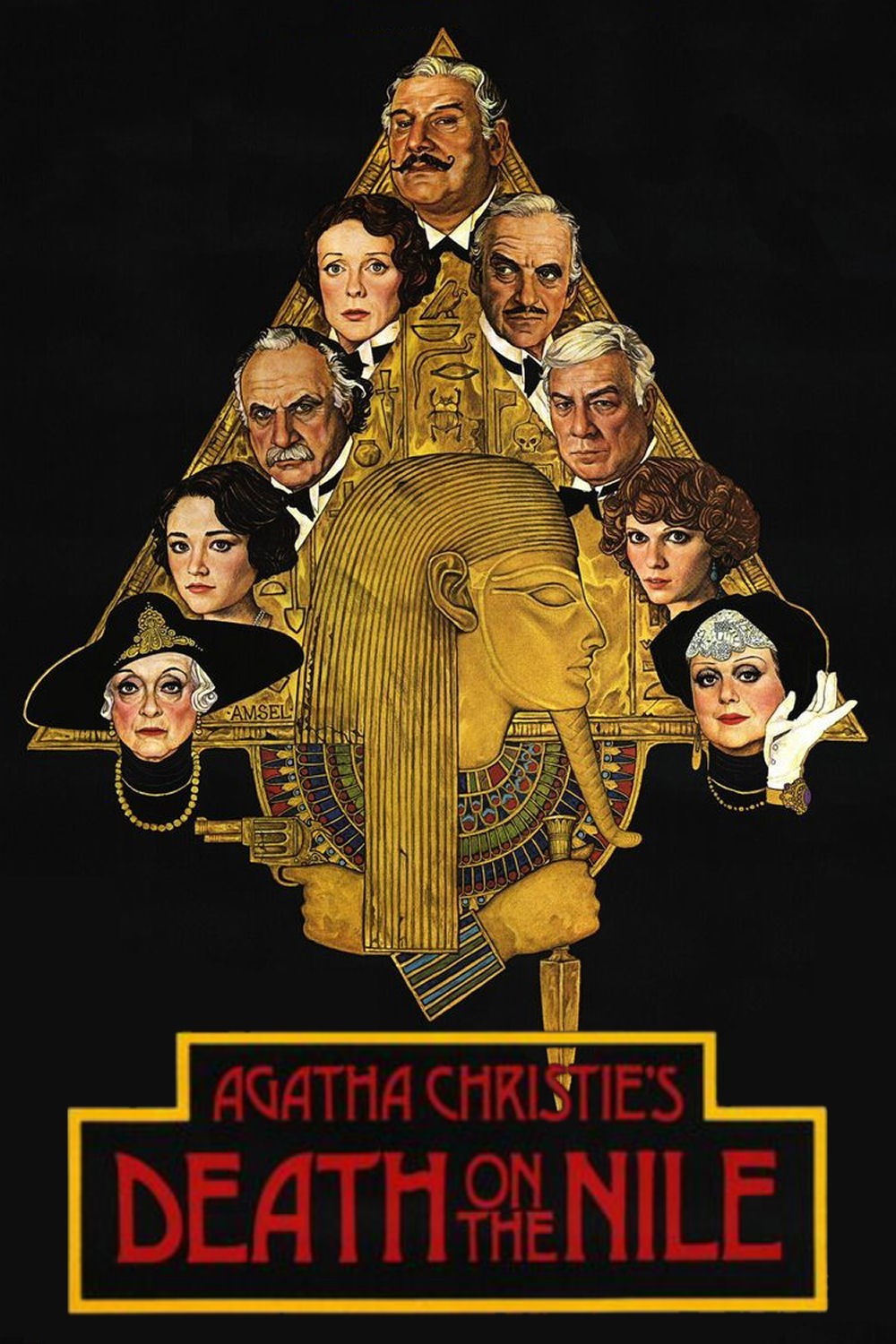
death-on-the-nile.10902After joining Mallowan’s digs throughout the Middle East, trains, boats, islands, archaeological digs and isolated resorts emerged with indelible force in Christie’s work, replacing the stately homes, villages, and coastal towns she’d limited herself to.

Readers can see the transformation taking place across the Parker Pyne collection, in which Agatha Christie combined exotic locations with marriage fallouts, but it made for pleasant distraction more than gripping crime drama, and was possibly not enough to placate her damaged heart.

It wasn’t until she located an array of scheming lovers – with no patience for divorce – right within her great ‘destination crime’ cycle that she found the winning combination.

These shameless paramours do away with hapless wives far from home, but they never quite get away with it. Christie delivers justice in the form of a funny little Belgian with a penchant for travel, and forever challenges her readers to guess who life’s real villains are.

pluck-cover
BUY NOW

The author who never had an exotic honeymoon when she married Archie Christie on the eve of war had finally flown the coop for good, and in doing so she became the Queen of Crime.

© Michael Burge, all rights reserved.

This article appears in Michael’s eBook Pluck: Exploits of the single-minded