Tag Archives: LGBT equality

Tony and Bern Sutton – equality people

PROUD PARENTS Bernadette and Tony Sutton, of PFLAG Central Tablelands.
PARENTAL PRIDE Bernadette and Tony Sutton, of PFLAG Central Tablelands.

A writer’s encounter with PFLAG.

AS the editor of a regional lifestyle magazine, it’s easy to focus all the content on sumptuous homes and gardens, and interviews with local business icons.

But for me, the job was an opportunity to explore the stories of the district’s many cultural pioneers.

So it was no surprise, when I turned my gaze to LGBTQI heritage, that I came across another groundbreaker – Australia’s first country PFLAG (‘Parents, Families & Friends of Lesbians & Gays’) group, and two of the courageous rural people who were instrumental in starting this much-needed family initiative.

This feature was published in Blue Mountains Life magazine in December 2011.

Out in Bathurst

How one family fosters acceptance in the Central West.

Tony and Bernadette Sutton were brought together by telecommunication – Tony was a telephone technician and Bern worked as a telephonist at a local manual exchange. In 1971, after a five-year courtship, they were married at Coolah’s Sacred Heart Church.

Once settled at Bathurst, the first of their two children, Jeremy, was born in 1972, followed by Anne a decade later. Tony was raised in this proud Central Western community. His father was a local butcher. Bern came to Bathurst from a stock and crop farm near Coolah. Like generations of country families before them, the Sutton’s expectations about family were deeply etched in their history.

“On September 17th 1993, two days after his 21st birthday, our son told his Mum, during a weekend visit home, then returned to Sydney, leaving a letter for me,” Tony recalls of the very moment their lives changed, when Jeremy told them he was gay. “Bernadette held the letter, not being sure how I would take the news. This says volumes about his confidence in his Dad.”

“I read the letter one week later, and though a little numb, I managed it better than Bernadette. I felt terrible about some of the cruel comments I had made in previous years. I was as homophobic as the next bloke.”

Bern particularly had difficulty with questions of faith: “During that first week I would often think ‘I don’t know how I am going to deal with this … what would the family and neighbours say?’,” she recalls. “Gradually I realised I was only thinking of myself and not of Jeremy, who had already been through so much struggle.”

Jeremy Sutton (a Marketing Manager now living in Sydney) recalls his perspective: “Living in Sydney had allowed me to become who I really was, as I never felt like I could do that in Bathurst, so it was time to tell my parents. It was a relief, but it was also a bit like letting the genie out of the bottle. There was no turning back to how things were before. I also felt very guilty – seeing your mother cry is never easy”.

“I thought they would really struggle with it on account of their traditional views and being good Catholics, and I’m sure they did. Deep down I hoped they would find a way to deal with it as they are also incredibly good people. I very quickly received a letter from my father in response to the one I left for him which was very supportive.”

Had anything prepared this family for the challenges that coming out brings?

Tony explains: “We weren’t equipped at all, having been conditioned by society and the official position of our church, and the prejudice promoted by anyone and everyone in authority”.

“We love our boy Jeremy, and told ourselves he was still the same person after telling us, but we were very challenged by community opinion relating to gays and lesbians, but there were some surprising exceptions.

“Luckily for us, our parish priest (being ‘pastoral’) was not constricted by the institutional church. He recommended we speak with another family from out of town who were experiencing the same situation. I clearly remember thinking ‘why would I want to speak to this farming family about this topic?’,” Tony recalls. “How wrong I was!”

“Well, we all leaned on each other, for support, during those first months. It was a relief to find that we were not the only family experiencing such a significant challenge to our beliefs, and the values of what a ‘normal’ family is.

“As we were all Catholic, we used to joke that ‘only Catholics had gay children’. Our initial journey was challenged by Vatican teachings of prejudice and discrimination. Yet in 1994, our local church brought (then Father) Paul O’Shea to Bathurst for World AIDS Day to conduct a workshop in an attempt to counter homophobia.

“As a result of this, and with encouragement from our parish Priest, a meeting on March 14th, 1995, considered the establishment of a support group. Contact was made with PFLAG (‘Parents, Families & Friends of Lesbians & Gays’) in Sydney, and one month later eight people met for the inaugural meeting of PFLAG Bathurst. This was the first rural Australian PFLAG group.”

STANDING TOGETHER Families march under the PFLAG banner the world over.

PFLAG groups worldwide have become the life blood for families and communities seeking to stay together through the coming out process and beyond, but outside cities they often struggle against localised negativity and ignorance.

Tony describes one of he and Bern’s greatest challenges: “To eventually be open with our family and friends, while honouring Jeremy’s trust and privacy”.

“Even now PFLAG is not very prominent in the wider community, especially in rural regions. It began in 1972 in America. Perth, around 1989, had the first PFLAG group in Australia, followed by Melbourne, then Sydney and Brisbane. We are the most westerly group in NSW, though we have tried to get groups going in Dubbo, Broken Hill and Mildura/Dareton.

“Homosexual issues don’t challenge us at all anymore, but we still encounter homophobic comments, even from friends. We are distressed when PFLAG brochures we display in our Catholic cathedral are removed and destroyed by fanatic parishioners, even though we are encouraged to place them there by clergy.

“The wider community are basically ignorant of the true facts about same-sex attraction. They take the lazy path of believing what shock jocks and prejudiced religious literalists promote as ‘gospel’, instead of informing themselves from reliable, accurate and up-to-date material. Jeremy has done us a great service in forcing us to re-evaluate our attitudes to numerous issues in our society. We believe we have become better people as a result.”

Jeremy is very proud of how far his parents have come with PFLAG: “My parents have always liked getting involved, whether it’s the local school, the church, and environmental groups. I even recall going to a peace rally with them once. I think they really like being able to help other parents when they first discover they have a gay child.”

And the journey continues, with all the Suttons getting behind the push for Marriage Equality in Australia.

“We don’t think that ten per cent of society should be denied what the other ninety per cent receive,” Tony says. “They weren’t born gay just so that the ninety per cent majority would have a group to marginalise and allow themselves to feel superior to. They want their committed relationships acknowledged, just like heterosexuals.”

Jeremy agrees: “While a lot of discrimination against gay people has been removed, the fact some still remains gives some people a basis for their prejudices, and gives young gay people another reason to feel inferior or that there is something wrong with being gay. I think everyone knows that one day we will look back at this period with amazement that gay marriage was not legal, the same way we look back at amazement that women once were not allowed to vote.”

Anne Sutton (a primary school teacher living in Victoria) says: “It is ridiculous in such a modern multicultural society that we are still against such a simple thing as two people of the same-sex being joined together in marriage.”

The last of the immediate Sutton family to know about her brother’s sexuality, Anne felt less need for PFLAG. “Since leaving Bathurst I have lived in cities which have had an accepting nature towards gay and lesbian individuals. I think that we have been brought up in a generation which is accepting of homosexuality and has not felt the need for support or to formally offer that support to anyone else.”

From the perspective of his generation, Tony says: “PFLAG is still needed in rural and isolated areas. Communities in these regions can tend to be more conservative, and less tolerant of difference. Rural youth suicide undoubtedly has an element of homosexual despair – no one can ever know to what degree.”

Tony and Bern continue to spread the PFLAG message throughout rural mental health networks, but the results are often frustrating. “Where services are founded on a Christian platform, we often see a typical institutional religious prejudice. The lack of response on this issue can be very disappointing,” Tony says.

“Even when same-sex marriage is approved, PFLAG will still be needed. Parents will experience a range of emotions when they first hear news that their son or daughter is gay or lesbian. Support will still be sought and supplied by PFLAG.

PLUCK COVER copy“During Jeremy’s adolescence relations between him I were rather strained most of the time,” Tony recalls. “Following our acceptance of his sexuality, things have never been better. It’s great!”

PFLAG Central Tablelands (Bathurst) 6331 7267 or 0407 336 020.

© Michael Burge, all rights reserved.

This article appears in Michael’s eBook Pluck: Exploits of the single-minded

Beryl Guertner – décor queen

A Writer examines the home life of an Australian media pioneer.

SINCE the release of the Paper Giants franchise on Australian television screens, audiences have been exploring the stories of groundbreaking women in the print media.

But long before Ita Buttrose, Nene King and Dulcie Boling, a country woman who was good with words and had great visual flair was selected to spearhead a brightly coloured revolution in home decorating for a new magazine: Australian House and Garden.

Her name was Beryl Guertner. Behind her stellar career was the story of community-minded women who wanted to make a home for themselves in the leafy streets of Warrimoo.

As a tribute to a local magazine pioneer, this feature was first published in Blue Mountains Life in June 2010.

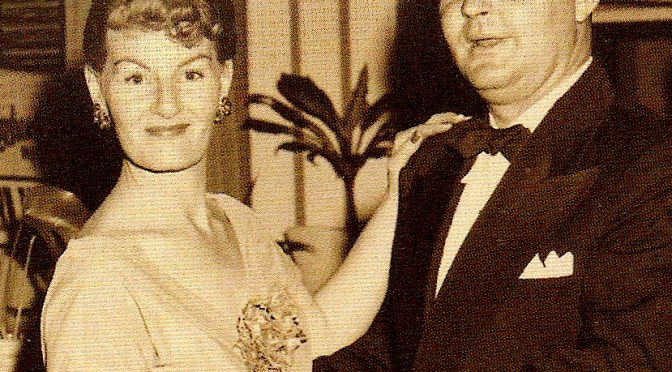
SITTING IN STYLE Beryl Guertner in the 1950s.
SITTING PRETTY Guertner at home.

Life with Beryl

The Warrimoo community remembers Beryl Guertner, Australian magazine pioneer and community woman.

Soon after WWII, residents of sleepy Florabella Street in Warrimoo noticed two women camping on a double block.

Ex-local Bruce Patman recalls: “The two ‘girls’ were befriended by our parents. On seeing them struggling with the elements, they were invited to sleep out on our verandah. There was a spare shed on our property which we cleaned-out. Beryl Guertner and Terri Margetts moved into that while they planned their house. Beryl was a journalist and she travelled to the city to work each day, while Terri (who I believe had garden nursery experience) grew gladioli flowers for market”.

BERYL GUERTNER
COMMUNITY WOMAN Beryl Guertner dancing with a neighbour at a local 21st birthday party, Warrimoo, 1958.

“No doubt as a result of the war, we had a number of women sharing homes in the village whom we regarded as ‘old maids’, Bruce adds. “Beryl and Terri were largely regarded as two girls pooling their resources for a dream of building a sandstone block house. I remember helping out at weekends with stonework in the gardens, and some of the heavy lifting.”

“Beryl got her first job when she settled here in the shed … with New Idea,” long-term local Elizabeth Leven recalls. “Then this opportunity came up to be editor of Australian House and Garden, and she applied for it.”

“I don’t think she was that confident she would get it,” Bruce’s brother Barry Patman reflects.

The new Australian House and Garden magazine opened its doors on Young Street, Sydney, in late 1947. The brainchild of publisher Ken Murray, the popular publication aimed to deliver low-cost décor to the average household, including monthly architects’ plans for small homes. Murray gave Beryl sixteen weeks to create the first edition from scratch.

“They were very excited when Beryl was accepted as the founding editor,” Bruce remembers. “Beryl was very enthusiastic with exciting ideas, and on occasion, she related them to us. She was very clever in her field.”

“I remember painting bottles with Christmas designs and making a lamp stand out of wine bottles as projects for the magazine,” Barry recalls.

AUSTRALIAN STYLE Early cover of Australian House & Garden magazine.

From such humble roots, Beryl Guertner became widely known in the Australian media for spearheading the home design revolution of the 1950s. The continued popularity of home makeover media owes much to the groundbreaking vision of Beryl and her contemporaries.

Born in Sydney in 1917 to Eugene and Maude, Beryl was raised and schooled at Wagga Wagga. By the outbreak of the war she’d returned to the city and embarked on a series of journalism and public relations jobs for companies like The Daily Telegraph and Paramount Pictures.

Beryl’s German father Eugene was interned at Liverpool for most of the war. Whether it was the whole family, or just Beryl, who adopted ‘Guertner’ from ‘Gürtner’ is not clear. It remained her professional name throughout her lengthy career.

Why Beryl chose Warrimoo remains a bit of a mystery. The semi-rural community was the vision of property developer Arthur Rickard, whose advertisements in the Sydney media for his satellite suburbs on the city’s fringe cannot have escaped Beryl’s attention in the 1930s and 40s.

The pressures of putting a new magazine together while commuting seems to have put an end to Beryl and Terri’s vision for a sandstone house. It may also have ended their relationship. “Terri worked very hard on the start of the sandstone house, but then there came a split between them and Terri moved away. We were very sorry for her after all her hard work,” Bruce recalls.

Other locals remember how Beryl met Catherine (‘Kate’) Warmoll, a fellow commuter who worked as an accountant for Cinzano, on the train. The two eventually moved in together and completed the first stage of their home around 1949-50. In the process, Beryl and Kate became integral members of the Warrimoo community.

Elizabeth Leven still lives in Florabella Street – “We used to laugh about Beryl,” she relates. “She had quite a few men under her as editor, and I remember her telling me one day that she used the filthiest language when she was talking to them … because that was the language the men understood. She and Kate used to walk to the station, but they would walk in old shoes and carry their good shoes.”

Bronwyn Kilner grew up at Warrimoo and remembers: “Beryl was very blond, and very pretty, she always wore gorgeous clothes, floral patterned skirts and looked lovely. Kate wore jeans and shirts, and dungarees, but the two of them made a great couple.”

Elizabeth Leven’s daughter Margaret states, with a fond smile, that Beryl was: “Always overdone for Warrimoo.”

Over time Kate and Beryl expanded their home from a one-room cottage to include a second bedroom, garage, stylish ‘crazy paving’ chimney, patios hewn from local stone, a verandah overlooking the valley, and a stone bridge in the front garden.

Their garden in particular left its mark in local memories. “Beryl always reckoned we were in the tropical belt,” Barry Hickey recalls. “She had a map showing the different climatic regions, and she reckoned Warrimoo was a place you could grow almost anything.”

Neighbours to Beryl and Kate since 1958, Barry and Joan Hickey remember how keen the couple were on the red-flowered ‘Coral Trees’, which many believe they introduced to the region.

Warimoo endured regular bushfires in the 1950s and 60s, and Beryl and Kate were members of the bushfire brigade. “It was Beryl who got me into the brigade,” Barry recalls. “She never rode the fire truck of course, but it was important that the community support the brigade.”

Artist and ex-local Donna Hawkins recalls: “Sometime in the late 1960s I had the good fortune to spend an evening in Beryl Guertner’s beautiful home. I went there with my Brownie pack to learn about cake decorating and how to make marzipan fruits. Compared to my simple home on the other side of the railway track, Beryl’s home was quite exotic – the lush entry graced with tree ferns and garden lights, the elegant lamps in the lounge room created a warm atmosphere. Our little group felt welcome and important”.

ICING QUEEN One of Beryl's many books on cake decorating.
ICING QUEEN One of Beryl’s many books on cake decorating.

“We crowded around the table and followed her lead, shaping marzipan into tiny bananas, oranges and apples, then painting them with food colouring. It was an evening of creativity I will never forget … to discover that food could be a work of art was inspiring.”

Bronwyn Kilner remembers her mother asking Beryl’s design advice for their newly completed home. “I recall that the main living area of the house, and the hallway, had very light oyster grey walls, with chartreuse ceilings!” Bronywn says. “There was green ivy-patterned wallpaper in the dining room and the entry foyer. The spare bedroom had grey walls, almost a gun-metal grey, and the ceiling was painted a tomato soup red!”

Beryl and Kate sold their home in the early 1970s to fellow commuter Jack Maddock. Nita Maddock’s first response, when Jack suggested they look at the house, was to say: “I’m not living in Warrimoo!”

However, once she saw Beryl and Kate’s home, she decided they should buy it immediately. “It was just the happiest house,” Nita remembers.

Beryl and Kate retired to the Central Coast, where Beryl continued to write and edit in her field until her cancer-related death in 1981.

I recently visited Beryl and Kate’s home on Florabella Street, the residence of John and Sue Cottee for the past thirteen years. I asked Sue when she became aware of the designer heritage of her home.

“It was a local who said to me one day: ‘You know you’re living in the party house?’” Sue recalls.

When the Hickey’s stroll in from next door, Joan and Barry both recall what sounds like the biggest party of them all – an event for the magazine – possibly the twentieth anniversary in 1968, with “magazine people up from the city,” Joan remembers. An electrician by trade, Barry tells us: “I floodlit the trees for the night.”

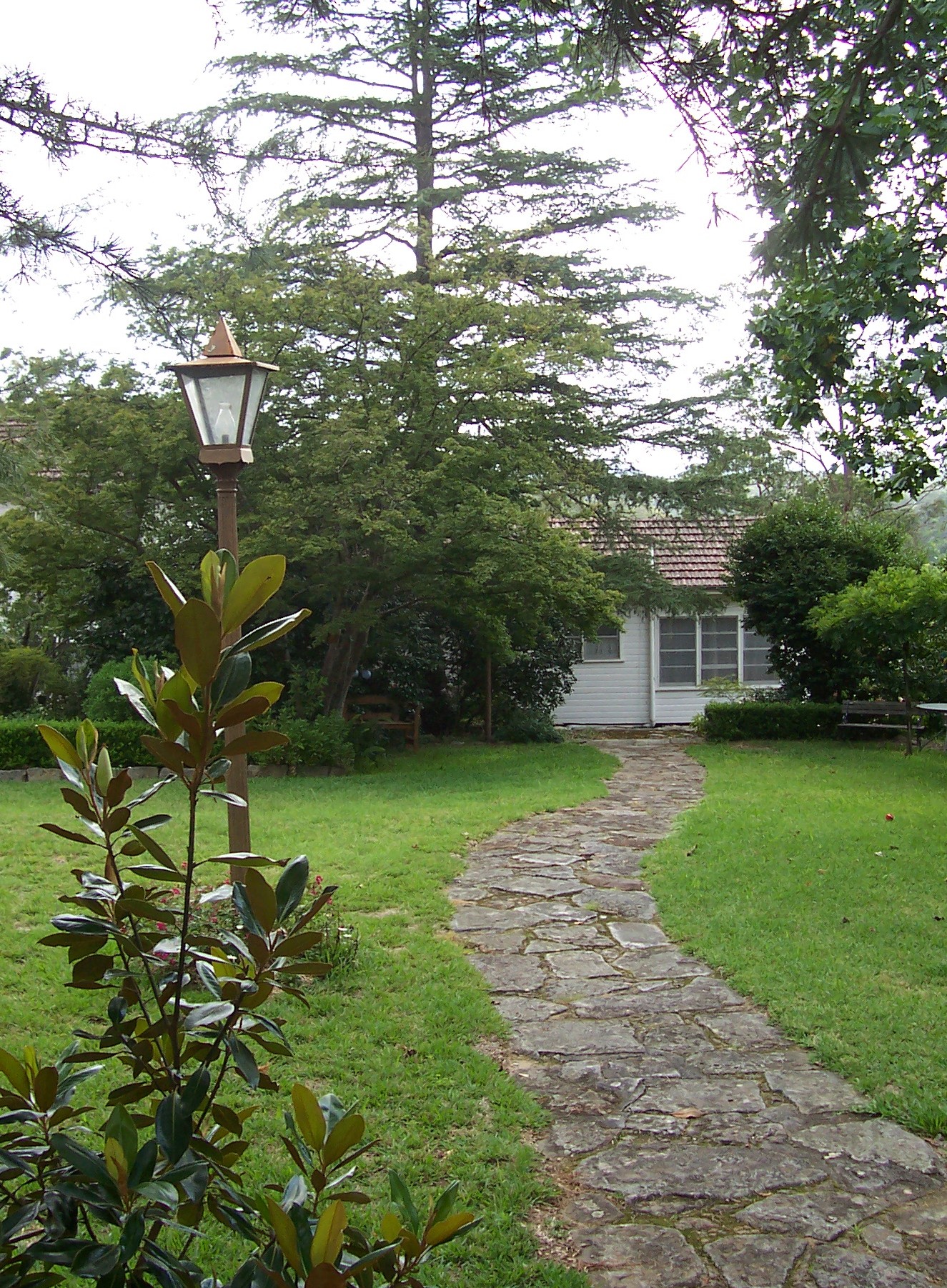
BERYL'S WAY Beryl Guertner's house in Florabella Street, Warrimoo.
BERYL’S WAY Beryl Guertner’s house in Florabella Street, Warrimoo.

The Levens join us in the front garden for coffee, amongst the surviving stonework patios, pathways, bridge and pond designed by Beryl, Kate and Terri.

“There was a time when I was welcome in every home on this street,” Elizabeth Leven recalls, and it’s clear from this gathering of long-term Warrimoo residents that Beryl and Kate were too. “Generous people”, “arty and flamboyant”, “involved in the community” are common terms the locals use when remembering the couple.

John Cottee shares the plan for expanding and renovating the house, which has been altered extensively since Beryl and Kate left.

“We want to preserve the surviving stone work in the garden,” John outlines.

I get the feeling that Beryl would very much approve of the 21st century renovation of a house and garden that has been evolving ever since she came to Warrimoo. After all, it was her life’s work to empower Australians to transform their own homes, and she herself had started life on the same block in nothing but a tent.

pluck-cover
BUY NOW

Thanks to Evelyn Richardson and Kate Matthew of the Warrimoo History Project, and all those who provided memories of Beryl Guertner for this article.

© Michael Burge, all rights reserved.

This article appears in Michael’s eBook Pluck: Exploits of the single-minded


Writing my way out of the closet

GAY MESSIAH Graham Chapman in Monty Python's The Life of Brian.
GAY MESSIAH Graham Chapman in Monty Python’s The Life of Brian.

A Writer finally comes out.

THE late great Monty Python comedian Graham Chapman was the inspiration for my coming out.

In the year that homosexuality was decriminalised in the UK, he famously hosted a party for all his friends, introduced them to his male partner, then got on with his life.

The news didn’t reach our small town until long after my homophobic brother and his poofter-hating mates had come to revere Chapman and his cohorts as the best thing on their TV screens, but it was a great affirmation for me to discover that the Python’s camp humour had its roots in a living, breathing homosexual.

“Stony silence stretched out in many cases to more than a week.”

I wanted to find a similar way to tell everyone myself and thought seriously about hosting a coming out party at my very first house in the town of Katoomba in the Blue Mountains. But it became apparent very quickly that there was no way I’d get everyone I knew and loved in the same place at the same time – they had far too many ‘issues’.

A few very close friends, and my sister Jen, already knew. I’d told them in person after going through much angst.

I have always been much better at expressing myself in writing than any other form of communication anyway, so I embarked on writing to everyone in my life. Not just a few people, but everyone – I drew no line in the sand for my sake, or theirs.

The first step was to find a beautiful book of postcards, and I was attracted to a lovely set by Asian master print-makers. I took my time and wrote that I had come to terms with my sexuality, sharing the good news that this had given me a much-needed dose of personal happiness.

When the writing task was complete, I determined that I’d walk to the local post office, buy enough stamps for well over 100 postcards, and simply post my future out to the world.

It proved to be one of the longest walks in my life.

Katoomba is a very small community, and as luck would have it I met many people I knew along the way, some of them what I’ll call ‘Difficult Cases’ – people for whom my postcard news was going to come as something of a challenge.

I endured their meaningless chit-chat, and just internalised my resolve to keep going to the post box, through which I was convinced freedom from the closet was only days away.

The first phone call came from my cousin, whose instant, unquestioning support spoke volumes of acceptance. Great start.

Two family friends turned up. Over cups of tea this support lessened a little when the inevitable “I already knew” crept into the conversation.

If they already knew, why hadn’t they had enough courage to be inclusive when they’d asked, quite regularly, did I “have a girlfriend?” by adding just three words to that question, “or a boyfriend?”

REACHING OUT Coming to terms with sexuality is an internal journey.
REACHING OUT Coming to terms with sexuality is a journey out of oneself.

Stony silence stretched out in many cases to more than a week, followed by stilted phone conversations in which people forced themselves to utter what they thought they should say.

Some Difficult Cases needed a little encouragement, so I went to see them. One crossed the street when he saw me. One broached the subject with a weird question: “Why do all lesbians hate men?” as though I’d know the answer even if such an ignorant assertion were remotely true. One looked startled when I passed her at the supermarket, her face not altering as I smiled, made eye contact, said “hello,” and kept going, since obviously she had a problem.

One assumed my postcard was a suicide letter. Another misread the words “I am gay,” thinking I’d written “I am angry”. What can you do?

“I am gay too,” was an interesting response, from the married father of two. That was out of the blue!

But it wasn’t all bad or weird: “Got your lovely postcard,” said dear Sal, mentor, friend, superwoman and strong out lesbian who’d long inspired me.

And the phone call from my grandmother, who said that she would help me find a cure, because: “They can fix all kinds of things these days, you know”.

“But I’m not sick grandma, I don’t need a cure,” I replied.

“Oh thank goodness,” she said, quick as a flash, her total belief in the way I felt about myself eclipsed generations of people in her wake.

At her 90th birthday a few months later, she raised her arms in delight when I arrived, enfolded me in a hug as the shouted: “You are so special!” so loudly that it echoed off the ranks of Difficult Cases in the family, standing in maudlin, silent rows. Priceless, unconditional acceptance.

With all the consummate skill of a country woman Grandma had hand-made clothes for my dolls when I was a toddler. She never questioned my behavior, or shamed me, she just joined in the fun and made a safe place for a young gay boy to play.

The overwhelming majority of my postcard’s recipients I never heard from again – close family friends, people I grew up with, people who were welcome in our home and accepted by our family in the face of their own ‘scandals’, people who had cried on my shoulder when I shared the intimate details about our mother, their friend, as she died. People who should have known a lot better by the accepting example that she set.

Some Difficult Cases hung in there for a while, but fell away in the wake of me manifesting my first gay relationship. For many people it’s okay if you’re gay and single (and lonely!) but bringing a partner into their home creates a challenge of “What do we tell the neighbours?” proportions, poor things.

For someone who was sent-off from his community with a mass of support, I certainly came home to a resounding rejection.

But growing up in that community had taught me to help others, so it was with a great sense of validation that I later heard about another coming out.

“I’ve done a Mike,” one young gay family friend said to his loved ones as he got real a few years after I did, at a much earlier stage in his life.

That was all I needed to hear that I’d done exactly the right thing, the Difficult Cases be damned.

To anyone who is closeted, my best advice is to love whoever you want. If anyone has the guts to ask you what your sexual orientation is, reward their courage by telling them your truth. Forget coming-out – it’s just society’s outmoded and unnecessarily pressure-filled way of working out who is ‘normal’ and who is (to quote The Life of Brian) a “very naughty boy”.

© Michael Burge, all rights reserved.