Tag Archives: Pluck

Orry-Kerry – the costume king from Kiama

KING ORRY Australia's first Oscar winning costume designer Orry Kelly (1897-1964).
KING ORRY Australia’s first Oscar-winning costume designer Orry ‘Jack’ Kelly (1897-1964).

JUST about everyone I knew as a kid went to Kiama for the school holidays. Apart from its famous blow-hole, through which the ocean mysteriously forces a geyser-like spray to the delight of tourists, there is nothing extraordinary about this sleepy town which has all the caravan parks, bait shops and holiday rentals of every town on the south coast of NSW.

At the back of my mind on a nostalgic return trip a decade ago was Kiama’s most famous son, the three-time Oscar-winning costume designer, Orry-Kelly.

I half expected to see a worn plaque on an old civic building, or perhaps a statue. After all, it’s not every day an Australian from a small town wins three Academy Awards.

But there was nothing. I joked about the oversight with a lady at the well-stocked charity shop at the town centre, and she looked at me as though I was slightly unhinged.

The facts about Orry-Kelly (1897-1964) are undeniable. In his lifetime he became, like Adrian, a one-name icon of movie couture.

Barely a leading lady worth her salt would grace the screen without passing through his Hollywood fitting room from the 1930s until the 1960s.

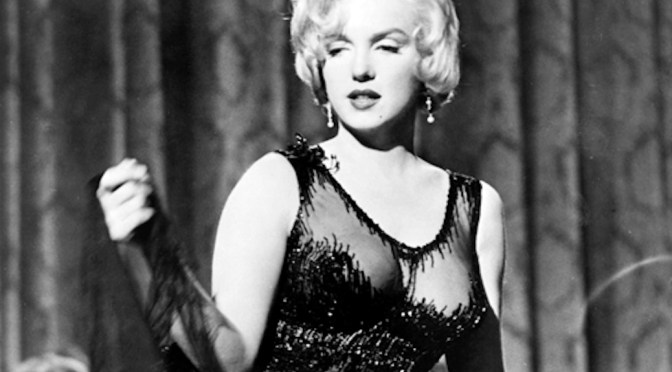
Responsible for some indelible movie outfits, like the fringed black number Marilyn Monroe’s shimmied so effectively in with her ukulele in Billy Wilder’s Some Like it Hot, Orry-Kelly was Hollywood royalty.

LITTLE BLACK NUMBER Designed by Kiama's forgotten son Orry-Kelly for Marilyn Monroe.
LITTLE BLACK NUMBER Designed by Kiama’s forgotten son Orry-Kelly for Marilyn Monroe in Some Like it Hot (1959).

In that era, a result of sodomy laws that were not repealed in California until 1962, Orry, or ‘Jack’ Kelly, as he was known to his friends, sat on one of the worst kept secrets in movies.

He was, like many a ladies’ costumier before and since, gay.

Although Kiama, and Australia, did not forget Orry-Kelly for that reason alone.

Since Australian Lizzy Gardiner won an Oscar for her costumes for The Adventures  of Priscilla, Queen of the Desert, and Catherine Martin broke Orry-Kelly’s fifty-year reign as our Oscar record-holder for her work on The Great Gatsby, in film and design industry circles, Kelly has been well-remembered.

But remembering Orry-Kelly comes with a pretty big Hollywood revelation, one which has undoubtedly contributed to his relative anonymity in the country of his birth, because Kiama’s forgotten son knew another Hollywood icon, loved and lived with him, long before they both made it big on the silver screen.

The young fellow was a British born vaudeville performer called Archie Leach, who Kelly met after leaving Kiama and heading for New York, when Jack was 24 and Archie was just 17.

The two shared an apartment with Charlie Phelps (an “hermaphrodite performer” under the stage name ‘Charlie Spangles’, according to writer W.J. Mann) and lived a rather romantic-sounding existence in the gay subculture of Greenwich Village.

Tall and handsome, Archie quickly got work in Broadway musicals. Jack wanted an acting career too, although his design skills were quickly employed on everything from movie titles to bathrooms.

The two were lovers, until Archie eventually headed for the west coast and changed his name, on the way to becoming one of Hollywood’s most enduring leading men: Cary Grant.

CARY ON Archie Leach, aka Cary Grant (1904-1986).

Jack followed, and reinvented himself as the hyphenated Orry-Kelly, costumier on over 200 movies, winning Oscars for An American in Paris, Les Girls and Some Like it Hot in the 1950s.

Among his truly iconic films was one of cinema’s greats – Casablanca.

The public difference between the two men’s careers remains Grant’s five marriages.

Nevertheless, their friendship remained deep enough for Grant to serve as one of Kelly’s pallbearers after his 1964 cancer-related death, alongside actor Tony Curtis and directors George Cukor and Billy Wilder.

His eulogy was delivered by movie mogul and friend, Jack Warner.

This was admiration indeed, but was it also simply necessary for friends to step-up in the absence of family half a world away in the southern hemisphere?

Despite the distance he put between himself and his home town, connections to Kiama ran deep for Orry-Kelly. Outfitting was in his blood – his father, William Kelly, a tailor from the Isle of Man, was a clothier in the coastal town.

After his father’s death, Orry-Kelly returned to Kiama briefly to his family home, which was above his father’s shop.

And his name was no Hollywood fake – ‘Orry’ was to remember the great Manx King Orry, a name which William Kelly, and Orry’s mother, Sydney-born Florence Purdue, gave not only their son, but also a hybridised Carnation flower.

Orry-Kelly’s life story is on the brink of taking its rightful place in our consciousness with the release of Director Gillian Armstrong’s documentary Women He’s Undressed, and the much-anticipated publication of Kelly’s ‘unpublishable’ autobiography.
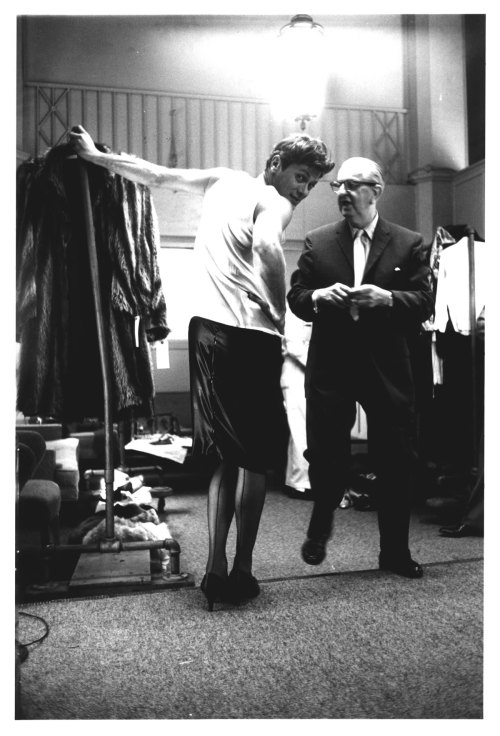
FITTING TRIBUTE The story of Orry-Kelly (pictured here with Tony Curtis in preparation for Some Like it Hot) is the subject of an upcoming Gillian Armstrong documentary.

Although the story of the making of the doco, to be released by Umbrella Entertainment, might prove to be as interesting as the documentary itself.

Telling Orry-Kelly’s story would have been a hollow exercise without his memoir to fill in the gaps between the many myths about his life, but access to it was a slow process for the filmmakers.

Lying uncatalogued in the Warner Brothers’ research library for five decades, the manuscript possibly came into that company’s hands after Kelly’s death, when certain of his personal items – including his three Oscars – were granted to Jack Warner’s wife, Ann.

But due to reported legal concerns expressed by the estate of Cary Grant, who died in 1986, the manuscript languished because it apparently detailed Kelly’s relationship with the screen idol.

Warner Brothers now owns some of Cary Grant’s most famous films, including The Philadelphia Story, one of his breakthrough ‘leading man’ roles.

Only one other copy of Kelly’s memoir came to light, after a long search within his remaining family in NSW, secreted in a pillowcase in Kelly’s great niece’s home in the Hawkesbury region north-west of Sydney.

Gillian Armstrong made light of the coincidental nature of both copies coming to her attention in the same week, during the period when financing the film that will out both Cary Grant and address a lingering omission in Australian history, was looking far from certain.

In Archie Leach’s birthplace, the English city of Bristol, a statue was unveiled in 2001 for the vaudeville performer who became Cary Grant, one of Hollywood’s most beloved idols who regularly features in the top five of ‘favourite movie stars of all time’ lists.

His widow, Barbara James, performed the unveiling.

pluck-cover
BUY NOW

Since my visit to Kiama, an art gallery remembering Orry-Kelly has opened it’s doors, but Kiama never had anything to worry about – their most famous son didn’t pretend to be anything he wasn’t.

This article appears in Michael’s eBook Pluck: Exploits of the single-minded

© Michael Burge, all rights reserved.

The false start we gave Ian Thorpe

SWIM STAR Ian Thorpe with young fans in 2006.

I WASN’T going to write about Ian Thorpe’s coming out. What more can there be to say about this moment in his life, which has huge ramifications for him but should have none for us?

But then I read one article which got me angry, the kind of piece I’d hoped to avoid but which I knew would surface: the ‘Ian Thorpe Lied To Us’-type article.

I also wanted to watch the interview he gave to Michael Parkinson before forming too many thoughts.

The only unexpected moment was when ‘Thorpie’ recalled being asked about his sexuality at the age of 16. Parkinson picked-up on Thorpe’s affront at this and ran with it, creating the sense that 16 was just too young to be asked such a question.

Thorpe then qualified his view: that to ask anyone about their sexuality is unnecessary, but went on to assert that had he not been asked at that young age, he would not have stayed closeted so long.

If it was a nosey journalist who asked him as a 16-year-old, then I agree, it was an affront, but I don’t believe it’s enough to leave this pivotal moment in Australia’s same-sex attracted history at that.

“Still feel like Thorpie shouldn’t have been tempted to lie, or are you starting to ‘get’ the self preservation which drove his denial?”

Let’s look at the world Ian Thorpe inhabited at ‘Sweet Sixteen’. I don’t mean his swimming career – he was well on the ascendant at that age. I want to illustrate the world for a closeted 16-year-old gay man.

On October 13, 1998, Ian Thorpe’s 16th birthday, the age of consent for gay men was 18. Ever since 1984, when the decriminalisation of homosexual acts between men resulted in an age of consent for straight people and lesbians of 16, the law had remained unequal.

That legislation – The Crimes (Amendment) Act 1984 – would not be repealed until another nasty-sounding law – The Crimes Act 1900 – was amended in 2003.

In October 1998, for two men to live together in a de-facto relationship was still a political act. The Property (Relationships) Legislation Amendment Act was not created until the following year, requiring further amendment in 2002, 2008 and 2009 to remove discrimination against same-sex attracted people financially in almost 100 other pieces of state and federal legislation.

There was no form of legal coupling for same-sex attracted people in 1998, a situation which has not altered in NSW, or anywhere in Australia, to the present day.

In 1998, same-sex adoption and surrogacy were illegal and would remain so until 2010.

In 1998, any person who decided to bash, abuse or kill a gay person in NSW would have had the ‘Gay Panic’ defence at their disposal.

This is the most recent piece of law reform for LGBTI people in NSW, having been abolished in May 2014. In Queensland and South Australia, ‘Gay Panic’ remains a legal form of defence.

We know that Thorpie didn’t limit himself to swim-meets on home soil – he competed in places where widespread marginalisation of same-sex attracted people was and remains common, including Japan and Greece.

But the most dangerous destination Thorpe travelled to in his 16th year was Malaysia, where he won four gold medals at the Kuala Lumpur Commonwealth Games, but risked deportation, prison terms, fines and public whippings if he had acted on his same-sex attraction whilst in that Muslim country.

There was some good news for the millions of HIV-AIDS patients in 1998 – many of them were returning to work, despite the often crippling side effects of antiretroviral drugs. No longer the short-term death sentence it had been, there were enormous question marks over the long-term effects and efficacy of combination therapies on the epidemic. Survival time after contracting HIV was simply unknown.

So, asking the 16-year-old Ian Thorpe if he was gay was tantamount to asking him if he was attracted to the proposition of engaging in illegal sex which could never result in a legally recognised relationship with no hope of creating a family unit, including children.

If Thorpie had said yes to the sex, but found himself the victim of homophobic attack, his attacker would likely have gotten off or received a lesser sentence. There was also the fear of contracting HIV-AIDS in the mix.

Is this an attractive proposition, or one which even you, in Thorpie’s position, might deny?

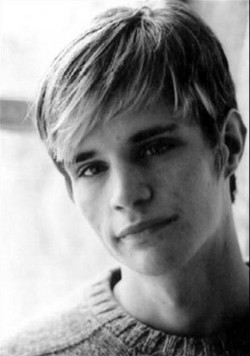
ATTACK VICTIM Matthew Shepard (1976-1998).

Another young man said yes to the sex a week before Thorpie’s 16th birthday. His name was Matthew Shepard.

Taking into account the time difference between the US state of Wyoming (where Shepard was bashed and left to die on a barbed wire fence by a pair of homophobes, later dying of his wounds), and NSW (where the Thorpe family celebrated Ian’s 16th birthday), the two events would have occurred at about the same point in time.

Sexual acts between men had been legal in Wyoming since 1977, and Shepard was over the age of consent at the time of his death. He had it better legally than Thorpie, but Matthew Shepard still ended-up suffering and dying as a result of his sexuality.

Still feel like Thorpie shouldn’t have been tempted to lie, or are you starting to ‘get’ the self preservation which drove his denial?

Laws do not change everyone’s behaviour, of course, but consider the impact of legislation on one of Australia’s highest-profile gay men – Justice Michael Kirby – who did not come out publicly until he was 60 years of age, during the same year as the The Property (Relationships) Legislation Amendment Act NSW (1999).

WHO'S WHO The Hon Justice Michael Kirby.
WHO’S WHO The Hon Justice Michael Kirby.

Kirby had lived with his de-facto spouse Johan van Vloten for thirty years prior, during part of which time they hid their relationship from family, friends and colleagues. Kirby came out by simply listing his partner in Who’s Who once their cohabitation and all its rights and responsibilities were legally protected.

Then there are the ‘unofficial laws’ which encourage same-sex attracted people to remain in the closet – ‘The Laws of Nature’ – as hard for young people to argue against as invisible faith, yet so often cited by homophobes, and so powerful they kept generations of lesbian women closeted in places where there were never laws against homosexual acts between women, and still impact on gay people everywhere.

This issue clearly goes beyond legislation, but could Kirby have risen so far in his profession without being closeted? Could Thorpe? Those of the ‘They Lied To Us’ team could do with answering such questions. Thorpe’s query to Australia in the Parkinson interview challenged us to consider how much we wanted and needed him to lie.

Ever since seeing Ian Thorpe interviewed during the Sydney 2000 Summer Olympics, I have known he was same-sex attracted. It was simply his demeanour, the same way of patting his solar plexus with a bent wrist as I do when using myself to illustrate a point.

It’s a subtle but giveaway gesticulation.

Whenever I witnessed people speculating about Thorpe’s orientation, I challenged their determination to claim him for ‘their team’, because a team is what a male Australian sports legend must declare a position on: he is never his own man, his countrymen feel like they own him.

By the mid-2000s it became painful to watch Thorpe’s slow-motion train wreck, without being able to do, say or write anything to help in the journey every out same-sex attracted person must endure.

Some journalists reached out to him. One open letter by founding editor of DNA magazine Andrew Creagh stood out for me. It was assertive enough to get to the truth, and empathetic enough to express what was needed despite Ian Thorpe’s closeted situation.

A journalist who asks a 16-year-old swimming star of either gender whether they are straight or gay should rightly come away looking like an idiot, not only because it’s a dumb question, but also because these days a 16-year-old (gay, straight or anything else) is considered a self-determining adult as far as sexual orientation is concerned.

Same-sex attracted 16-year-old boys were not considered adults prior to 2003, we were considered a danger to ourselves who needed ‘protection’ from wand-waving homosexuals trying to recruit us onto the ‘wrong’ team.

Such fantasies are laughable now, but in their day they were nails in the closet door.

PLUCK COVER copyCongratulations and best wishes to Ian Thorpe. His coming-out is a far greater achievement than any gold medal. It’s a life-changing validation for teenagers batting for the same team, and their families; and it means that when he manifests the relationship and new career this interview hinted at, at least he won’t have to come out again and again.

© Michael Burge, all rights reserved.

This article appears in Michael’s eBook Pluck: Exploits of the single-minded

Alan Bennett – the mystery boy

KEEPS THEM GUESSING Writer Alan Bennett.

OVER many late nights during my last year of drama school, overworked head full of theatre productions, closeted young body starved of sex, I came across Alan Bennett on the television screen.

Volume down very low so that my grandmother (with whom I lodged) would not be disturbed, I encountered Patricia Routledge, Maggie Smith and Julie Walters in their now iconic episodes of Bennett’s first Talking Heads series.

Bennett remained the cursory sketch of the opening credits until the episode in which he appeared – A Chip in the Sugar.

The tale of the hapless Graham Whittaker living with his ‘Mam’ in Yorkshire drew me into its closeted fold, where I recognised absolutely everything about the character’s world, right down to the old woman sleeping in the room next to mine.

“Alan Bennett keeps explaining what’s behind his writing style, it’s just that no one’s really been listening.”

A month after I was born, the great writer E. M. Forster died publicly closeted despite reaching the era in which homosexuality was decriminalised in England. His gay-themed writing was entrusted to friends and took time to come to light.

He’s rarely comfortable admitting it, but Alan Bennett is something entirely different. Yes, the first thirty-six years of his life were lived under laws against homosexual acts between men, but these days he’s a right here, right now gay writer and actor, infinitely closer to generations of men easing our way out of the closet than Forster ever was.

Although back in the 1980s, nobody seemed to question Bennett’s ability to create characters on a scale E. M. Forster only dreamt of.

The most infamous query came from Ian McKellen, who asked the playwright publicly whether he was gay or bisexual at an event raising funds to fight Thatcher’s homophobic Section 28 regulations in June 1988.

Fifty-four at the time, Bennett’s answer left him rather begrudgingly out of the closet ever since.

But that news didn’t reach Australia, not in my world anyway. It did not need to – I could tell by the ‘takes one to know one’ method that Bennett was not just acting like a gay man in A Chip in the Sugar.

Although that realisation meant that I was going to have to do some clever acting of my own to put people off the scent of the truth.

Writing this now I feel of a kind of rage that a gay drama school student did not feel validated by Bennett’s achievements.

Instead, it left me afraid, with the sense that there was nowhere to hide; that all gay men were bound to the apron strings by the kind of fear which Graham Whittaker manifested as mental illness. It offered little hope for those men who did not stay silent.

Perhaps that’s why I disconnected from Alan Bennett for a decade, during which I lived in England and did my level best to become a theatre and film-maker. ‘Gay’ was kept at arm’s length, and I got certain very specific signs that I needed to keep it there.

The most direct of these came during my year of drama training in Yorkshire (Alan Bennett ‘country’) when I was taken aside by one of the pivotal staff members and told that I needed to curb myself or the work I would get on graduation would be “limited”.

His admonishing tone about my natural demeanour came, as it always seems to, with the “I’m only saying this to you because I know plenty of gay people” lie.

By the time I’d gathered the courage to go home to Australia and come out, six years later, Alan Bennett made another appearance in my life, in the form of his memoir Writing Home.

The book was given to me with an unusual amount of sadness by one of the many male friends I’d made in England who were soon to come tumbling out of the closet in the wake of my own coming out.

Bennett’s book helped me realise that being openly gay would not necessarily be an issue, but it would probably leave me more prickly than ever.

I have paid much closer attention to Alan Bennett ever since, but it’s taken another decade to understand the writer who constantly tells us that he does not want to be understood.

You see, Alan Bennett keeps explaining what’s behind his writing style, it’s just that no one’s really been listening.

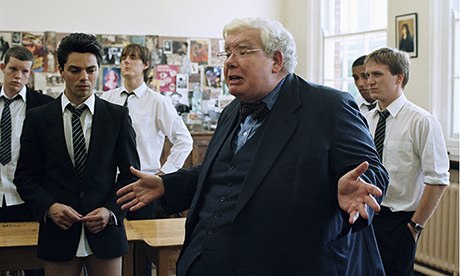
MAKING HISTORY Richard Griffiths headed the cast of Alan Bennett's 'The History Boys'.
MAKING HISTORY Richard Griffiths headed the cast of Alan Bennett’s ‘The History Boys’.

One of his recent plays – The History Boys – is also one of his most popular, regularly featuring at the top of ‘Britain’s Favourite Play’ lists.

The story of a group of school boys preparing for their university entrance examinations, Bennett instilled this play with a major theme in his writing – authenticity versus artifice.

Ever since his own entrance into Oxford in the 1950s, Bennett has employed a writing technique which he used when answering examination questions.

He calls it “taking the wrong end of the stick”, a journalist’s approach to ‘the facts’. In entrance examination answers it can be utilised to impress with a new ‘out there’ angle on a subject that has been ‘done to death’; an attention-grabber, if you like.

This is also the key to the pathos in all Bennett’s work. His characters show pluck in the face of diversity. They laugh when it might be more appropriate to cry. They see obstacles as opportunities.

Good use of pathos is funny, not in the side-splitting sense but in the chuckling one. It’s right up the other end of the stick from turgid, and it totally avoids the branch of melodrama.

It took maturity, and an understanding of pathos,  for me to realise that Gordon Whittaker’s salvation came with his mother’s admission that she had found his hidden gay pornography.

It is the great power shift in A Chip in the Sugar, when Graham’s ‘chip’ is seen as considerably smaller than Mam’s, giving the viewer hope that the result is a more accepting future for Graham.

There is some proof of this in Bennett’s recent writing. In A Life Like Other People’s (published in 2005 as Untold Stories) Bennett let slip that the mental illness he imbued Graham Whittaker with in Talking Heads (1987) was actually that endured by his real-life mother years before.

In the early 1970s, Bennett (‘Graham’) was torn away from a healthy same-sex life in London to care for his mother (‘Mam’) in Yorkshire.

Art stood in for life until Bennett ‘came out’ about the true nature of his family’s struggles with mental illness, thirty years after the fact.

So, ‘Graham Whittaker’ wasn’t in the least bonkers and went on to live a successful life as one of England’s finest playwrights and found love with a man. Phew.

PLUCK COVER copyAlan Bennett has published enough about himself for people to leave him alone about his sexuality, although in recent interviews he’s hinted at posthumous diaries which may come to rival E. M. Forster’s.

He’s also managed to avoid the tag ‘gay playwright’ by taking the wrong end of the stick whenever one is offered.

© Michael Burge, all rights reserved.
This article appears in Michael’s eBook Pluck: Exploits of the single-minded