Tag Archives: Pluck

Katie Webb and the cave girls

THE CAVE GIRLS An image which may include Katie Webb, her sister and mother.

A Writer’s day job leads to an encounter with a legend.

IN late 2008 when I trained as a guide at Jenolan Caves, probably Australia’s best-known cave system, I embarked on a fascinating journey.

Jenolan is a world of its own, with its own folklore, and within the network of caverns resides a collection of intriguing stories.

“I was enveloped in a dreadful skirt that made me look like some disreputable old charwoman.”

For a theatre worker, the task of taking tickets at the door, leading guests on adventures in the dark, retelling stories, playing with light and sound to enhance the experience, in underground chambers of acoustic perfection, often followed by a round of applause, felt like a return to the magic backstage world of a real theatre.

Jenolan guides, when I trained, were given little written material on the history of the place. We needed to glean the legends of the caves from our more experienced peers. I realised very quickly that the men and women who hold Jenolan’s stories were taught the same cycles by their peers, and that I was being given access to a unique oral history with a very immediate link to the past.

The story which intrigued me the most was that of Katie Webb, and her cave exploring sisters, long ago dubbed ‘The Cave Girls’.

This article was published in Blue Mountains Life (Vintage Press) in October-November 2010.

CAVE ART Possibly the earliest surviving image of the Grand Arch of Jenolan Caves, known in 1861 as Fish River Caves.

What Katie Did

The Legend of Katie Webb & Jenolan’s female explorers.

Of his visit to Katie’s Bower in Jenolan’s Left Imperial Cave during the 1880s, Samuel Cook wrote: “Descending 14 steps into the Bower there is a fountain full of lime-water, and a plate suitably inscribed conveys the information that Katie’s Bower was discovered on the 7th February, 1881, by Jeremiah Wilson (guide), C. Webb, H. Fulton, C. West, J. Bright, E. Webb, E. T. Webb, J. Thompson, W. H. Webb, E. Bowman, W. Thompson, J. M’Phillamy, R. Thompson, J. Webb, and S. Webb. The before-mentioned gentlemen were the first to enter the Bower after its discovery”.

Despite the placement given to Jeremiah Wilson, persistent legends credit the second name on the list – ‘C.Webb’ – with the discovery of the chamber.

This person was not a ‘before-mentioned gentleman’, but Catherine, or ‘Katie’ Webb.

For the 170 years that Jenolan has attracted tourists, there has been a hunger for guides to interpret their mysteries, and cave discovery tales rank amongst the most retold.

Years of tradition have made Jenolan’s guiding staff into the keepers of the Caves’ stories.

Rebecca Lewis has been a Jenolan guide since 2006, and has collected information about the first woman credited with the discovery of a Jenolan cave.

“This story is all oral history, and it varies depending on who you talk to,” Beck says.

“I believe Katie and her family were visiting the Left Imperial Cave (the original name of the Chifley) with Jeremiah Wilson, who had discovered the cave the year before. The group was admiring the beauty of the Lucinda Cave, named after Jeremiah’s wife. Jeremiah was about to lead the group out, but Katie, about 19 at the time, decreed that she did not wish to return the way they entered. Instead, she wished to continue down a large and steeply sloping passage that none had yet been down. Jeremiah, who was a curious man himself, decided to lower her down the passageway with a rope tied around her waist. With only a candle to light her way as she slid down the passage into the unknown, she found the largest chamber yet to be discovered in that area.”

Katie Webb was not the first female explorer at Jenolan. Thirty years before, legend tells of the caving exploits of Jane Falls.

“Everything we know about her is basically guesswork from piecing together the signatures she left behind in the caves,” Rebecca explains. “It was common practice for the visitors of her time to sign their names on the cave walls to prove they had been there, like leaving our names in a visitors’ book today”.

“The most talked-about signature of Jane is at a place called ‘Signature Rock’ in the Elder Cave (also referred to as ‘The Plughole’).

“The signature reads ‘J Falls 27th December 1854’,” Beck outlines.

“The interesting fact about this particular signature is that she did not sign her name ‘Jane’. She probably did this because she knew it might not remain on the rock if passing visitors realised it was a woman who wrote it. Writing ‘J. Falls’ leaves the assumption that the writer was a male. We know it is Jane’s signature because we have found her name in other caves and we can match dates and handwriting.”

One appearance of a ‘J. Falls’ signature has challenged the discovery of Jenolan’s popular Lucas Cave.

“A signature of hers remains in the original entrance of the Lucas Cave, known as the ‘Sole of the Boot’. It’s been sighted many times over the years, however, every time we mount an expedition to photograph it we cannot relocate it to do so!” Rebecca says.

According to some guides, the signature is dated 1858, predating the established discovery of the Lucas Cave by Nicholas Irwin and George Whiting by two years.

While researching for newspaper reports of the Lucas Cave’s discovery (which might clear up the mystery), Jenolan guide and historical researcher, David Hay, found that the originals in Sydney’s Mitchell Library have disappeared. “It’s almost as though someone pinched them,” he laughs.

Tantalising myths and very little evidence leaves us to explore the possibilities.
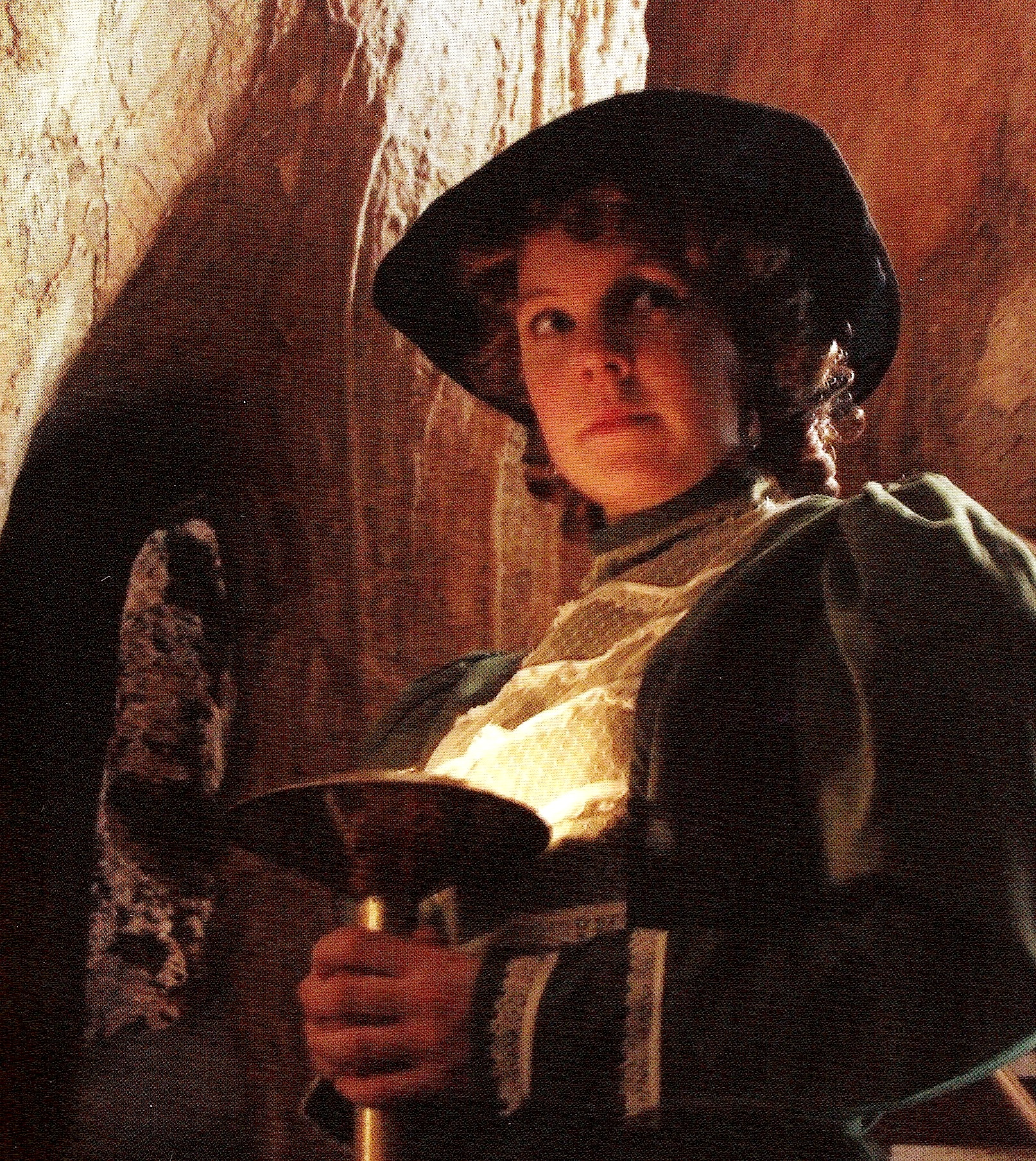
CAVE DISCOVERER Catherine 'Katie' Webb, the woman who discovered Jenolan's Chifley Cave in the 1880s.
CAVE DISCOVERER Rebecca Lewis as Catherine ‘Katie’ Webb, the woman who discovered Jenolan’s Chifley Cave in the 1880s.

“‘The Cave Girls’ is a name that was given to a group of women in an old photo and the name just kind of stuck!” Rebecca explains.

“The thing that we all find interesting is that they are all wearing men’s clothing! We don’t know for certain who any of the women are, but we believe Katie and her sister Selena are amongst them.

They must have been fairly influential women for their time not only to be wearing men’s clothing in the first place, but to also have a photo taken wearing them.”

Comparison with later photographs suggests Katie and Selena (known as Nellie) are the central figures seated on rocks, with their mother (also Selena) standing at the left.

Katie Webb’s father Edmund Webb accompanied his family to Jenolan on the day of Katie’s discovery – his name and those of Katie’s siblings Selena and Edmund Thomas Webb appeared on the plaque seen by Cook.

Webb was a prominent Bathurst businessman and politician, whose empire included the supply of clothing, footwear and millinery to the Central West. The uniform clothing of the three women at the top of the ‘The Cave Girls’ image might indicate they were supplied by Webb specifically for the purposes of cave exploration.

In her often humorous Letters from Samoa (1891-1895) Margaret Stevenson (mother of writer Robert Louis Stevenson) sheds light on how visiting female tourists were attired at Jenolan.

“We had to take off our good dresses and get the loan of dirty old clothes; Miss B- wore a pyjama suit, and made a very nice boy, but I absolutely declined to go to that length of juvenility. In consequence I was enveloped in a dreadful skirt that made me look like some disreputable old charwoman.”

Described as a “dedicated Wesleyan Methodist”, if Edmund Webb was anything like American Wesleyans, the rights of women would have been firmly entrenched in his family principles, enough for his daughter’s name to be forever linked with her discovery in the way Jane Falls’ may not have been.

The plaque observed by Cook in the 1880s is long gone, but a signature which may be Katie’s remains by the steep entranceway to her bower, reading ‘C. J. Webb’.

In what is now known as ‘Upper Katie’s Bower’, someone wrote ‘Katie’s Bower’ and the date matching the plaque. The original floor level below the writing was lowered in the 1920s to allow for a new exit from the cave. Allowing for this alteration, the writing would originally have been about the right height for a young woman to record her own name and the date of her discovery.

Jenolan guides’ oral histories vary on the approach Katie took from Lucinda’s Cave into the bower which still bears her name, with two possible routes.

One is the steep slope with a very deep chasm at the bottom (now followed by the stairs). The other is a hole below what is known as Lucinda’s Column, which requires a significant abseil.

The two dates recorded allow for the possibility that Katie’s discovery over more than one day’s exploration, and that both passageways were attempted.

And what did Katie do next?

Another name on the original plaque was ‘E’ or Ernest Bowman, the man Katie married just over a year after her discovery of Katie’s Bower. The two lived their married life in the Central West, and as Catherine Bowman, Katie was awarded an MBE in 1924 for “her many years of devoted service to the community”. In 1925 she and her daughter were presented to King George V at Buckingham Palace.

The next time a woman was credited with the discovery of a cave at Jenolan was almost 130 years after Katie.

“Deborah Johnson, a member of the Sydney University Speleological Society, discovered a cave in Jenolan’s Southern Limestone in January 2009,” Rebecca explains.

Within Jenolan’s Guides Office an honour board lists long serving guides back to Jeremiah Wilson. Both men and women are identified only by their first initial (the same as most signatures on cave walls), making it hard to identify the first female guides employed in the 1980s.

CAVE GIRLS 2
CAVE GUIDES Rebecca Lewis (top, middle) and a group of long-term female cave guides.

“It wasn’t until 2005 that the number of female and male employees reached equilibrium, with female staff undertaking all the same regular duties as male staff,” recalls Domino Houlbrook-Cove, who started as a guide in 1989 and is now manager of corporate, functions and events.

On occasion, visitors to Jenolan can still experience the courage of Katie Webb, played by Rebecca Lewis on a history tour.

“It’s so much fun! I get a great response from people who even today are amazed at what Katie did, especially for her time,” Beck enthuses. “People love stepping back in time to do a tour with someone from that era. I find I get asked more questions about the women cavers when I’m dressed as Katie than what I do when I’m guiding normally”.

“Jenolan has been a great place to work for a number of reasons. Mainly, though, it keeps you on your toes. It’s never like giving a speech where the words are there in front of you, you have to always be ready to answer any question that comes your way. It means you have to hold a huge store of information ranging from geology to history to everyday guiding and maintenance activities. You’re always learning and updating your information as a guide, not to mention ~the physical side of things.

“Of course the Cave Girls, whoever they were, would have all been great cavers, there is no doubt about that! Women make great cavers, and we have proof of that today.”

pluck-cover
BUY NOW

Thanks to Jenolan guides David Hay (cultural initiatives) and Keith Painter for historical information. Details about Catherine Bowman from ‘Written in Gold: The Story of Gulgong’ by Eileen Maxwell (1978).

© Michael Burge, all rights reserved.

This article appears in Michael’s eBook Pluck: Exploits of the single-minded


Janet Mays – forging Independence

INDEPENDENT THINKER Former Blue Mountains City Councillor, Janet Mays.

A Writer’s encounter with politics.

THE first political piece I ever wrote was also the first scoop I ever got.

I was a resident of the Blue Mountains for thirty years, give or take my years at university and a six-year stint in the United Kingdom.

By the time Blue Mountains City Councillor Janet Mays stood for the NSW State elections in 2011, I was on the bandwagon of change for an area I loved deeply.

It was time for us to cease being a political football, an electorate that churned-out state and federal backbenchers who shored-up the numbers in parliament but stood for very little locally.

Janet burst onto the region’s political scene with a compassionate assertiveness that started to wake people up, the same way voters seem to have become aware of the two-party power shenanigans in the Victorian federal division of Indi, where Independent Cathy McGowan toppled the sitting member for the LNP, Sophie Mirabella, at the federal election in 2013.

She took a fifth of the primary vote from the major parties, and lost the seat in a State intent on nothing but ridding itself of the ALP, but Janet Mays used orange for her Independent campaign colours when Voice for Indi was just a whisper of frustration. It’s a fitting symbol of her link to the groundswell of Independent thinking rising across Australian electorates.

This feature was published in the October-November 2010 edition of Blue Mountains Life.

ORANGE MOUNTAINS For one Summer, the Blue Mountains toyed with changing colour.

The Long Walk to Independence

From cafés and cars to the footwork of politics, meet Janet Mays.  

Janet Mays knows her way across the Blue Mountains better than most. In November 2009, she led the Health, Equity & Access Lobby (‘HEAL’) on a walk covering the fifty kilometres between Katoomba and Nepean Hospitals. The ‘It’s a Bl**dy Long Way to Nepean Hospital’ walk was designed to throw light on declining hospital services at Katoomba, and HEAL ignited a movement which is taking more than footsteps in the region.

“We were frustrated at the way nothing was shifting. We’d gathered a lot of support around bringing primary health services back to Katoomba, but there was very little action,” Janet says. “No one is demanding the government provide open heart surgery at Katoomba, but it’s not too much to expect basic surgery at your local hospital, like an appendectomy.”

In 2007, Janet experienced first hand a hospital system which was simply not functioning. “As someone who’d lived in the Mountains for a few years, I just assumed I could have my appendix removed locally,” she says. “At Nepean I had to wait twenty-seven hours for primary care on two occasions before they diagnosed the problem was simply appendicitis. It was so traumatising at some level, having to come home and then go back again, like Groundhog Day”.

“I knew intuitively that the removal of my appendix could have been done locally, if the will was there.”

Janet’s search for that will saw her take out a full-page letter in the local newspaper, gathering support from a number of groups and individuals concerned about similar issues. From this, HEAL was born.

“I also spent two years visiting council meetings. I listened to the debates and gained an understanding of how it all worked. This cemented a desire to eventually get onto the Blue Mountains City Council, in order to understand and represent the views of the community.”

In 2008, Janet was elected as an Independent Blue Mountains City Councillor. When asked about her first time in the chamber, she recalls: “It was like being let off a leash as a resident, but also very daunting. I knew I had it in me. I’d been involved in plenty of drama and music as I grew up. Part of being a politician is articulating a message in the same manner as a performer does”.

“It is hard as an independent to get support. You have to be very eloquent in prosecuting your case to the other councillors. When I am going to debate, I research the facts so that I gain an understanding of both sides of an issue.

MOUNTAIN VIEWS Janet Mays awoke an Independent movement in the Blue Mountains.

“Ward One might be my patch,” Janet says, “but I am required to vote on issues across our entire region, so I need to get out there and familiarise myself with the issues. As a true independent I don’t believe I have any choice. I don’t have the luxury of party colleagues informing me of anything, so I need to listen to people up and down the Mountains”.

“I sometimes change my mind on issues when I do the research or consult an expert. Being an independent can get lonely sometimes, but it’s also very exciting.”

Born in Melbourne, Janet was raised and schooled in Canberra.

“It does heighten your political interest,” she says, “at least it did then. My Dad was in the public service, and so were friends’ parents. Politics were discussed around the dinner table every night. That was part of the Canberra culture.”

After running her own café for many years, Janet, “stumbled into a career in and around the automotive industry, spanning twenty-four years.”

Like many other Mountain residents, she and partner Jocelyn Street purchased a Mountains weekender which soon became their permanent home in 2003.

“After a very short time we both realised that Sydney is not that far away, so we said ‘bugger the commute’ and settled here. Commuting is tiring,” Janet adds. “We do it for economic reasons, but it can separate you from your community. I work four days a week in the city and I travel up and down every day, which allows me time for my council work.”

The death of her father a short time before the move seems to have been more of a defining moment than Janet is prepared to reveal. “It left me unsettled as a person,” she says of a period when she and Jocelyn also committed to their de-facto relationship. “We have very similar family backgrounds, with many siblings,” Janet outlines. “We’re both from stable homes, with parents who worked hard”.

“I came out in my late thirties,” Janet adds. “I’d been through a marriage, and I suppose the world had shifted since my strong Catholic upbringing. My parents’ reaction to my sexuality was to say ‘as long as you’re happy’.

“With the support of my partner, I have really come into my own as a human being, and I’ve been able to achieve a lot in many different ways.”

As a Blue Mountains City Councillor, Janet has championed Indigenous access by helping set up the First People’s Advisory Committee. “I am particularly proud of that,” she says. “Council now has a way to be advised by Indigenous people on matters directly relating to them.”

Janet’s support of the creation of an Economic Development Working Party aims to broaden the employment base in the Blue Mountains Government Area. “Fifty-eight percent of working adults are forced to commute,” Janet outlines. “This working party aims to create new industries here, and broaden existing ones.”

And the local health system remains high on Janet’s agenda.

LONG WALK Clr Janet Mays and HEAL Vice President Claire Cook cross the Nepean River at Penrith (Photo: Jocelyn Street).

“Day one was a very hot day,” she recalls of the Bl**dy Long Way to Nepean walk. “We were very blessed with a large gathering of people at the start, and more joined us along the way for one or two legs. We ended the day at the Ori in Springwood … it was the best tasting beer,” she smiles.

“On day two the seven core walkers sped up considerably,” Jocelyn (walk support team leader) remembers. “There was an incredible energy on the day, not just from the walkers, but also passing motorists, who seemed to really love the fact that people were getting out there and doing something for the community.”

“Once we crossed the Nepean River our signs really told our story. There was a recognition from Penrith residents that Nepean is their hospital, and they were saying ‘good on you’ because our aim is to take the pressure off Nepean,” Janet says.

“We know HEAL raised an important issue that day,” Janet underlines, “because we brought Phil Koperberg (ALP State Member for Macquarie at the time) and Jillian Skinner (Opposition Health Spokeswoman) together at one moment to demand a shared response on Katoomba Hospital. It’s the first time that has ever happened. The more we do, even though it annoys the Sydney Western Area Health Service, we are representing community views”.

“It’s an ongoing process to bring further change,” Janet says. “Katoomba is blessed with a dedicated hospital staff, operating at their best in a system which does not value them. They are not permitted to deliver services as they are trained to, yet they remain dedicated. Our hospital staff deserve greater support from all levels of government”.

“The Blue Mountains have not been well served in recent years,” Janet adds, before revealing her intention to run as an independent candidate for the Blue Mountains at the March 2011 state election. “The Blue Mountains is a unique area with its own identity and a fragile environment under pressure from all sides,” Janet says. “How do we ensure our voice is heard?” she asks. “It is time for this community to have a member absolutely focussed on local interests, and not party interests”.

pluck-cover
BUY NOW

“It takes courage,” Janet adds. “Independents are not in opposition. Our role is to work collaboratively with the government of the day, to beat the drum and bang the table for our communities. That is the essence of what it is to be independent.”

© Michael Burge, all rights reserved.

This article appears in Michael’s ebook Pluck: Exploits of the single-minded.
Tony and Bern Sutton – equality people

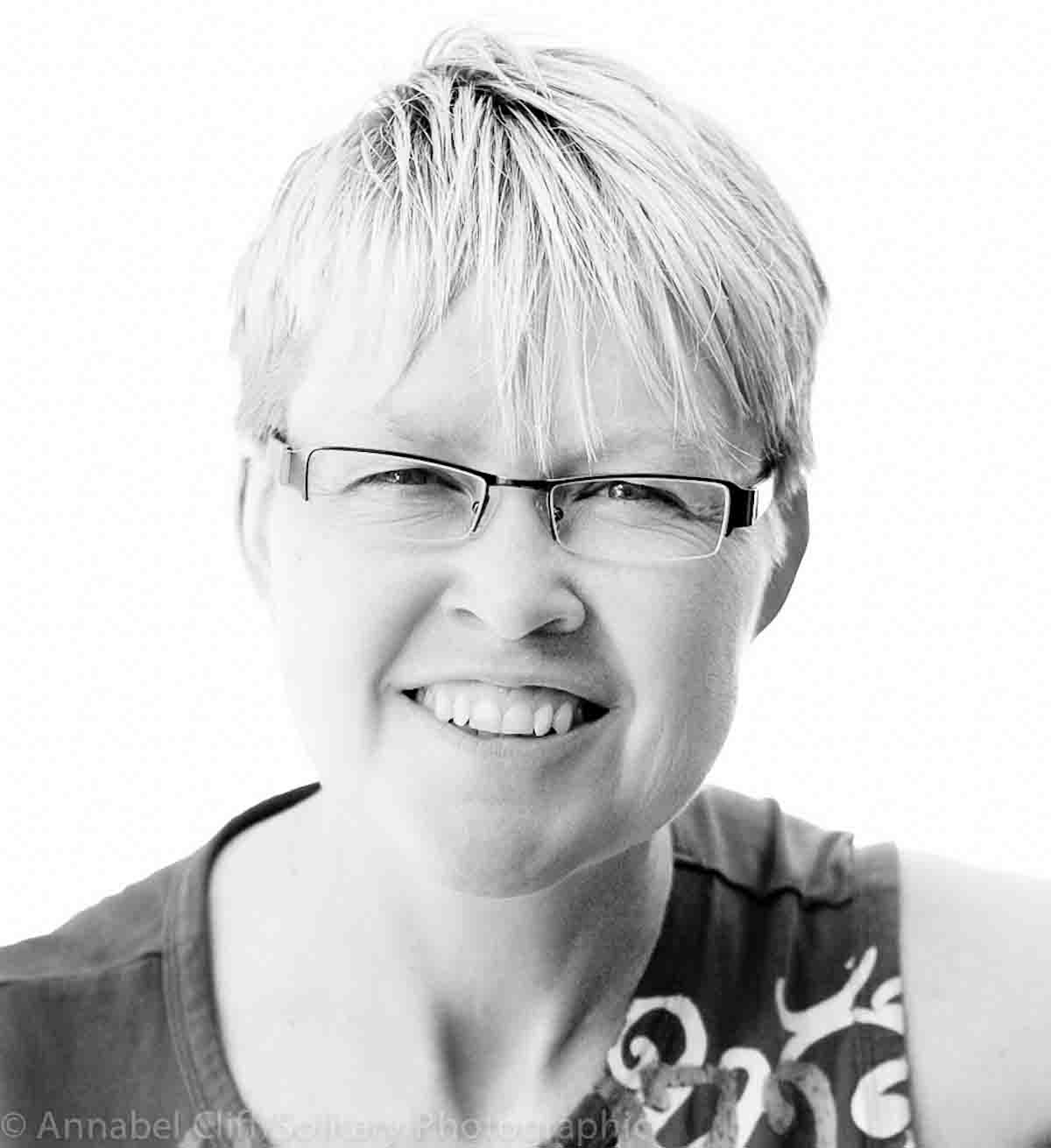
PROUD PARENTS Bernadette and Tony Sutton, of PFLAG Central Tablelands.
PARENTAL PRIDE Bernadette and Tony Sutton, of PFLAG Central Tablelands.

A writer’s encounter with PFLAG.

AS the editor of a regional lifestyle magazine, it’s easy to focus all the content on sumptuous homes and gardens, and interviews with local business icons.

But for me, the job was an opportunity to explore the stories of the district’s many cultural pioneers.

So it was no surprise, when I turned my gaze to LGBTQI heritage, that I came across another groundbreaker – Australia’s first country PFLAG (‘Parents, Families & Friends of Lesbians & Gays’) group, and two of the courageous rural people who were instrumental in starting this much-needed family initiative.

This feature was published in Blue Mountains Life magazine in December 2011.

Out in Bathurst

How one family fosters acceptance in the Central West.

Tony and Bernadette Sutton were brought together by telecommunication – Tony was a telephone technician and Bern worked as a telephonist at a local manual exchange. In 1971, after a five-year courtship, they were married at Coolah’s Sacred Heart Church.

Once settled at Bathurst, the first of their two children, Jeremy, was born in 1972, followed by Anne a decade later. Tony was raised in this proud Central Western community. His father was a local butcher. Bern came to Bathurst from a stock and crop farm near Coolah. Like generations of country families before them, the Sutton’s expectations about family were deeply etched in their history.

“On September 17th 1993, two days after his 21st birthday, our son told his Mum, during a weekend visit home, then returned to Sydney, leaving a letter for me,” Tony recalls of the very moment their lives changed, when Jeremy told them he was gay. “Bernadette held the letter, not being sure how I would take the news. This says volumes about his confidence in his Dad.”

“I read the letter one week later, and though a little numb, I managed it better than Bernadette. I felt terrible about some of the cruel comments I had made in previous years. I was as homophobic as the next bloke.”

Bern particularly had difficulty with questions of faith: “During that first week I would often think ‘I don’t know how I am going to deal with this … what would the family and neighbours say?’,” she recalls. “Gradually I realised I was only thinking of myself and not of Jeremy, who had already been through so much struggle.”

Jeremy Sutton (a Marketing Manager now living in Sydney) recalls his perspective: “Living in Sydney had allowed me to become who I really was, as I never felt like I could do that in Bathurst, so it was time to tell my parents. It was a relief, but it was also a bit like letting the genie out of the bottle. There was no turning back to how things were before. I also felt very guilty – seeing your mother cry is never easy”.

“I thought they would really struggle with it on account of their traditional views and being good Catholics, and I’m sure they did. Deep down I hoped they would find a way to deal with it as they are also incredibly good people. I very quickly received a letter from my father in response to the one I left for him which was very supportive.”

Had anything prepared this family for the challenges that coming out brings?

Tony explains: “We weren’t equipped at all, having been conditioned by society and the official position of our church, and the prejudice promoted by anyone and everyone in authority”.

“We love our boy Jeremy, and told ourselves he was still the same person after telling us, but we were very challenged by community opinion relating to gays and lesbians, but there were some surprising exceptions.

“Luckily for us, our parish priest (being ‘pastoral’) was not constricted by the institutional church. He recommended we speak with another family from out of town who were experiencing the same situation. I clearly remember thinking ‘why would I want to speak to this farming family about this topic?’,” Tony recalls. “How wrong I was!”

“Well, we all leaned on each other, for support, during those first months. It was a relief to find that we were not the only family experiencing such a significant challenge to our beliefs, and the values of what a ‘normal’ family is.

“As we were all Catholic, we used to joke that ‘only Catholics had gay children’. Our initial journey was challenged by Vatican teachings of prejudice and discrimination. Yet in 1994, our local church brought (then Father) Paul O’Shea to Bathurst for World AIDS Day to conduct a workshop in an attempt to counter homophobia.

“As a result of this, and with encouragement from our parish Priest, a meeting on March 14th, 1995, considered the establishment of a support group. Contact was made with PFLAG (‘Parents, Families & Friends of Lesbians & Gays’) in Sydney, and one month later eight people met for the inaugural meeting of PFLAG Bathurst. This was the first rural Australian PFLAG group.”

STANDING TOGETHER Families march under the PFLAG banner the world over.

PFLAG groups worldwide have become the life blood for families and communities seeking to stay together through the coming out process and beyond, but outside cities they often struggle against localised negativity and ignorance.

Tony describes one of he and Bern’s greatest challenges: “To eventually be open with our family and friends, while honouring Jeremy’s trust and privacy”.

“Even now PFLAG is not very prominent in the wider community, especially in rural regions. It began in 1972 in America. Perth, around 1989, had the first PFLAG group in Australia, followed by Melbourne, then Sydney and Brisbane. We are the most westerly group in NSW, though we have tried to get groups going in Dubbo, Broken Hill and Mildura/Dareton.

“Homosexual issues don’t challenge us at all anymore, but we still encounter homophobic comments, even from friends. We are distressed when PFLAG brochures we display in our Catholic cathedral are removed and destroyed by fanatic parishioners, even though we are encouraged to place them there by clergy.

“The wider community are basically ignorant of the true facts about same-sex attraction. They take the lazy path of believing what shock jocks and prejudiced religious literalists promote as ‘gospel’, instead of informing themselves from reliable, accurate and up-to-date material. Jeremy has done us a great service in forcing us to re-evaluate our attitudes to numerous issues in our society. We believe we have become better people as a result.”

Jeremy is very proud of how far his parents have come with PFLAG: “My parents have always liked getting involved, whether it’s the local school, the church, and environmental groups. I even recall going to a peace rally with them once. I think they really like being able to help other parents when they first discover they have a gay child.”

And the journey continues, with all the Suttons getting behind the push for Marriage Equality in Australia.

“We don’t think that ten per cent of society should be denied what the other ninety per cent receive,” Tony says. “They weren’t born gay just so that the ninety per cent majority would have a group to marginalise and allow themselves to feel superior to. They want their committed relationships acknowledged, just like heterosexuals.”

Jeremy agrees: “While a lot of discrimination against gay people has been removed, the fact some still remains gives some people a basis for their prejudices, and gives young gay people another reason to feel inferior or that there is something wrong with being gay. I think everyone knows that one day we will look back at this period with amazement that gay marriage was not legal, the same way we look back at amazement that women once were not allowed to vote.”

Anne Sutton (a primary school teacher living in Victoria) says: “It is ridiculous in such a modern multicultural society that we are still against such a simple thing as two people of the same-sex being joined together in marriage.”

The last of the immediate Sutton family to know about her brother’s sexuality, Anne felt less need for PFLAG. “Since leaving Bathurst I have lived in cities which have had an accepting nature towards gay and lesbian individuals. I think that we have been brought up in a generation which is accepting of homosexuality and has not felt the need for support or to formally offer that support to anyone else.”

From the perspective of his generation, Tony says: “PFLAG is still needed in rural and isolated areas. Communities in these regions can tend to be more conservative, and less tolerant of difference. Rural youth suicide undoubtedly has an element of homosexual despair – no one can ever know to what degree.”

Tony and Bern continue to spread the PFLAG message throughout rural mental health networks, but the results are often frustrating. “Where services are founded on a Christian platform, we often see a typical institutional religious prejudice. The lack of response on this issue can be very disappointing,” Tony says.

“Even when same-sex marriage is approved, PFLAG will still be needed. Parents will experience a range of emotions when they first hear news that their son or daughter is gay or lesbian. Support will still be sought and supplied by PFLAG.

PLUCK COVER copy“During Jeremy’s adolescence relations between him I were rather strained most of the time,” Tony recalls. “Following our acceptance of his sexuality, things have never been better. It’s great!”

PFLAG Central Tablelands (Bathurst) 6331 7267 or 0407 336 020.

© Michael Burge, all rights reserved.

This article appears in Michael’s eBook Pluck: Exploits of the single-minded