All posts by Michael Burge

Journalist, author, artist

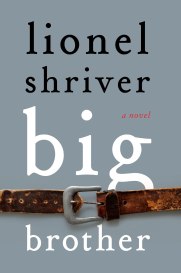
Lionel Shriver weighs her options

A Writer’s review of Lionel Shriver’s Big Brother.

FRESH from witnessing the fuss Lionel Shriver inspired at the 2016 Brisbane Writers Festival, defending the right to use her imagination without being labelled a cultural appropriator, I took to this book with a half-baked plan to test out both sides of the argument.

“Hopeful, insane, self-fulfilling learning curve.”

That failed at the first hurdle, simply because Shriver’s prose is always so darned good it lifts readers high enough off the earth to forget ourselves; but since finishing Big Brother, with its infamous much spoiler-alerted conclusion, it’s easy to see Shriver’s imagination was not heavily taxed in this novel.

It’s a simple set-up: Edison Appaloosa is a failed jazz pianist who comes to stay in Iowa with his successful younger sibling Pandora. She’s turned her back on a catering business but had plenty of luck with her own start-up.

Last time she saw her brother, Edison was every inch the suave New Yorker, and Pandora anticipates being in his slightly louche orbit again; but the monster who appears at the airport is a man she fails to recognise, literally and emotionally, because the inches have piled onto his waistline.

Huge and hyper-sensitive, Edison is hiding the truth beneath the body fat, and his bluster is a challenge to Pandora and her husband Fletcher, nattily portrayed as a calorie-counting fitness junkie. It doesn’t take long for ultimatums to be issued that drive the drama to unexpected places.

Applying some of the plainest fiction I’ve read in a very long time, in Big Brother, Shriver calls to mind her journalism as much as she does any of her novels, lending realism to what might have been a far more clichéd set of characters.

It comes as no surprise that her experience of a chronically overweight brother Greg ‘fed’ both the need to write Big Brother and ‘flesh it out’ with many believable threads that leave the reader in no doubt the author witnessed morbid obesity up close, and shared its impact.

We are ‘stuffed’ with food references, on our screens and in our language, and Shriver’s book serves as an investigation into the Western obsession with consumption. In that regard, this hopeful, insane, self-fulfilling learning curve could have served as a ripping work of non-fiction by simply holding up the mirror.

But even Shriver admits to facing the very paradox she confronts Pandora with – trapped between her loyalty to a brother who has dead-ended his life by becoming grossly overweight, and her comfortable circle of attainment, complete with husband and career.

“As it happened, my brother’s condition abruptly plummeted again, and he died two days later. I never had to face down whether I was kind enough, loving enough, self-sacrificing enough, to take my brother on, to take my brother in. I got out of it,” Shriver wrote in The Financial Times on the book’s release.

When Pandora’s husband demands she make a choice between his fit lifestyle or the fat sibling, she eschews her marriage and embarks on a year-long, weight-loss odyssey that is Shriver’s imagination given free reign and healthy abandon.

Knowing the factual roots of the story only makes Big Brother’s pathos more powerful, because ultimately what Shriver construes is a startling piece of fiction, as unsettling as Tim Winton’s The Riders and every bit as capable of blindsiding readers.

The greatest part of the telling, for me, was not the exploration of weight but the surveillance suggested by the doublespeak of the book’s title, because Pandora’s solution for Edison is as Orwellian as its possible to be.

creating-waves-cover
BUY NOW

Despite being powerfully written in observational first-person, it’s in the minutia between siblings and spouses, unbridgeable even between those who ought to be close, that Big Brother makes the strongest claim on the human heart. See if you can keep it down.

© Michael Burge, all rights reserved.

This article appears in Michael’s eBook Creating Waves: Critical takes on culture and politics.

Marriage Equality in 2019, just you wait and see

MARRIAGE Equality will be legislated in Australia no sooner than 2019. I know many will fly into a rage about that assertion, but let’s get real for a few moments: the current Coalition will never independently instigate a change to the Marriage Act allowing equal access to same-sex couples. Even this week, Malcolm Turnbull told us it’s a plebiscite or nothing, and despite the fact that he has no money for a public vote, he means it.

Before you lose your shit at me, you need to acknowledge that the majority of the Australian LGBTIQ community are okay with that. When the largest ever group of this demographic was recently polled on whether we’d be happy to wait for another government to hold a parliamentary vote instead of a plebiscite almost 60 per cent of us said yes.

We killed the Coalition’s unpopular ‘ask the people’ approach, but history tells us that pioneering same-sex equality law reform in Australia only ever occurs under Labor governments.

From South Australia’s decriminalisation of homosexuality in 1975; the first legislation recognising same-sex de-facto relationships in the Australian Capital Territory in 1994; the first same-sex adoptions in Western Australia in 2002; the federal amendment of 100 pieces of discriminatory federal legislation in 2009; the enabling of any adult to choose to identify as male or female in 2013, and the first same-sex marriages in the ACT in 2014 (overturned by the High Court less than a week later), the ALP can be relied on to get LGBTIQ equality started, eventually.

The notion of “eventually” is the key. We read it often in the media, and I’ve heard a hundred friends and pundits offer it as a panacea to tough times: “Eventually, it’ll happen,” they advise, probably wishing I’d just shut up and stop reminding everyone that we still don’t have federal civil unions for same-sex couples in this country, let alone marriage.

But honestly, I accepted this unwelcome advice years ago. Why would any informed observer not, when we compare our lack of reform with the equality wins of our closest cultural and political allies?

AT LAST Marriage Equality passes in the New Zealand parliament in 2013.

Australia’s decriminalisation of homosexuality lagged thirty years behind the United Kingdom’s and Canada’s, and a decade behind New Zealand’s.

All three of those nations passed civil unions over a decade ago, and same-sex marriage duly passed in all three – Canada in 2005, New Zealand in 2013 and the United Kingdom in 2014.

After you’ve done all the lobbying, it seems what you have to do in Australia to achieve LGBTIQ equality, is wait.

Some commentators bravely attempt to name the date. I’ve often quoted Guardian Australia journalist Gay Alcorn’s courageous prediction that reform would arrive by 2014-2015, but only because her remonstrations about being tired of the debate were delivered ten years after the start of the main game. Sorry you’ve got marriage equality fatigue, Gay, but hopefully you joined the end of the queue and got someone to share a pillow with you.

Waiting stinks, and progressives don’t like it, but when you force a nation to wait, strange things happen.

Waiting hijinks

This week has seen many classic absurdist hijinks that are the result of an immature Coalition putting the brakes on reform.

Aussies are known to imbibe a few rounds at the pub whenever there’s time to kill, and this week the fermented amber beverage was put to good use in ‘that’ corporate video produced by the Bible Society of Australia.

In the absence of anything practical to do about marriage equality during the current political impasse, Coopers beers were raised by two Liberal Party MPs in the name of civil debate, and merry hell was raised across the social media in the fallout.

CIVIL DEBATE MPs Tim Wilson and Andrew Hastie pretending we need more of it.

Many couldn’t see the issue with (yet another) debate on reform that is already supported by the vast majority of Australians in any poll you’d like to pick; but just as many raged at the flippancy of “keeping it light” where delayed civil rights are concerned, and the attempts to fit the whole boring exercise into a hashtag for marketing purposes.

But I can understand why Tim Wilson MP needed some confected progress on marriage equality, because even he, with his enthusiasm and the ear of the PM, cannot get Malcolm Turnbull to pick up any existing bill and vote on it in parliament.

Lobby groups are also coming to terms with the delays.

You only have to look at and/or participate in Mardi Gras to see what fun can be had while we wait for equality, and letting off steam collectively helps many, but the event is no more or less sponsor-soaked than the Bible Society’s video, which is why key LGBTIQ lobby groups aren’t pointing the finger at the Society or the Liberal Party for forging a strategic alliance with Coopers Brewery: the bills have to be paid while the timeline for reform stretches out.

Happy to wait

As a solution to being forced to sit tight, the CEOs of more than thirty companies sent a letter (a letter!) to Mr Turnbull, demanding marriage equality be legislated. That ought to fix the problem, right?

Wrong. It’s yet another distraction in the waiting game. If Turnbull was going to deliver marriage equality as a conservative Prime Minister in the same manner as New Zealand’s John Key and the UK’s David Cameron, he would already have done it.

His hands are not tied, he’s just content to wait. It’s what conservatives do best.

Victim blaming

In the glut of social media after Coopers apologised and supported marriage equality, and the Bible Society pulled its video, plenty of impatient pundits engaged in victim-blaming of equality advocates. It was as eye-opening as always, seeing those who should know a lot better accusing people of shutting down debate if we boycott a commercial brand, or congratulate those who do, but it’s just the confused commentator’s way of dealing with the delays in reform.

They’re sick of twiddling their thumbs and we feel their pain. As worldy-wise, global thinkers, they’re embarrassed Australia is being shown up by a growing list of countries that have no problem legislating for marriage equality, but an astute LGBTIQ community – and our supporters – shouldn’t be blamed because Australian commentators are bored, ashamed, or just don’t get the Coalition’s problem with marriage equality.

creating-waves-cover
BUY NOW

Back in 2004, when John Howard and Mark Latham enthusiastically united Australia’s parliament to alter the Marriage Act and exclude same-sex couples, 2019 seemed an impossibly long way off. These days, this pivotal election year looms larger for Malcolm Turnbull and the Coalition than anyone else in the country. Ironically, I can’t wait.

This article appears in Michael’s eBook Creating Waves: Critical takes on culture and politics.

A place for truth in Titanic’s lifeboat

A Writer’s review of David Dyer’s The Midnight Watch

“This novel grows organically into the rarest of literary adventures: a journey into the very heart of writing and all its private motivations.”

IN the scratchy, indefinite pulses of Marconi transmissions – the standard wireless communication in the era of the great transatlantic ocean liners – first-time Australian author David Dyer rediscovers a story at once indelible and elusive, of human frailty that turned the world order on its head.

This shorthand of ship radio operators, whose brief and highly coded messaging system kept ships in communication and carried telegraphic messages to shore for passengers, crew and commercial interests, was past its infancy when RMS Titanic embarked on its maiden voyage, but it was certainly not a definitive means of delivering clarity under pressure.

Yet the lives of more than 1500 people came to rest upon it.

the_midnight_watch_0

The Midnight Watch holds human communication at its core.

Protagonist John Steadman is a journalist, a newshound the likes of which has all but disappeared in the twenty-first century. He has a keen sense of injustice, having endured grief and loss as a young man, scars that have made him into the industry’s ‘body man’, reporting on untimely, unjust deaths.

By the time of the sinking of the Titanic, this fictional character is so skilled he’s able to navigate his way into what he sees as the real story: the factual mystery of the ‘other’ ship – the Californian – which sat in sight of the Titanic as the latter foundered, firing eight distress rockets, each of which the crew of the Californian witnessed, and did nothing about.

It’s the supreme postmodern maritime mystery, as replete with conspiracy theories as the Shakespeare authorship question, and Dyer tackles it through recreating the players and the dramatic tension that existed before the world knew about the Californian’s failure, taking readers on a compelling journey.

The tale pivots around the inaction of two men: Captain Stanley Lord, who remained in his bed during the two-and-a-half hours the Titanic sank, and his second officer Herbert Stone, who reported what he saw to the captain via a narrow pipe, yet did nothing more when the captain failed to act.

CAPTION
CALIFORNIAN CAPTAIN Stanley Lord.

But in the end, Steadman cannot escape the way the ultimate truths remain fractured and inaccessible, lost in the pulsating radio signals that passed suddenly from workaday passenger telegrams to the desperate calls that were heard only by ships too far away to lend assistance; in the breathy, frustrating exchanges between two starkly different men onboard the Californian, up and down the speaking tubes; and in the explosive, beautiful, but ultimately meaningless sparkles of distress rockets that may as well have been fireworks launched for passengers’ pleasure off the listing deck of an unsinkable ship.

You know exactly what is going to happen, and you know the horrifically short timescale, yet you still want to reach out and lift the hapless victims out of the water you know will be too cold for them to endure.

The fate of the 1500 drowned is universal knowledge by now, but Dyer uses it to place the reader in a vortex of failure, after making the case for the thinnest, most abstract and unexpected of causes for the men who allowed the disaster to happen under their gaze.

The entire Industrial Revolution went down with the shock of it, leaving a century of war and insecurity in its wake that many believe we are yet to recover from.

This novel grows organically into the rarest of literary adventures: a journey into the very heart of writing and all its private motivations. Escapism and fantasy, avoidance, guilt, lust, fear and a pulsating sense of injustice.

I agree with other reviewers who noted the author’s unnecessary use of repetition on occasion – readers never require a retelling of moments we’ve already heard; and at times, during the rising action of the book, I questioned the very set-up of the whole fact-fiction combination.

But where it counts, The Midnight Watch is absolutely gripping and does not fail to deliver.

© Michael Burge, all rights reserved.

This article appears in Michael’s eBook Creating Waves: Critical takes on culture and politics.