A short story by Michael Burge.
JESSIE WANTED TO paint, but she was going to start another load of laundry first.
The day was sunny enough for line drying, and as she soaked in the warm light that belted through the kitchen window, the phone rang.
“Now you’re to tell me everything about yourself. We’ve showered together, so we must know more about each other, to catch up with the intimacy.”
She watched it vibrate, counted the fourth and the fifth rings. One more and the call would connect to the answering machine. She’d hear Helen’s voice saying they can’t get to the phone right now, and she could put on the last load of washing and find her paintbrushes.
But she picked up the phone. ‘Hello,’ the voice said, ‘is Jessica there?’
‘Yes, it’s Jessie speaking.’ It was Terry, dammit.
‘Can you do a shift for me today?’ he said, launching into his shit. Jessie let him speak, picturing the calendar on their kitchen wall, clear of any handwritten scrawl to tell her there was something she had to do more than take another shift.
‘You’ve been to Mrs. Brooks’ before?’ Terry asked.
‘No, I don’t think so,’ Jessie said.
‘She’s fairly memorable. Needs help with a shower, and lunch. I’ve had three carers call in sick today. People are waiting for their showers all over town!’
Jessie could feel the washing machine on spin cycle in the distance. It always shook the house.
‘Okay,’ she said.
‘Great, I’ll text you the address. Get there quickly, okay? I’ll put it on your timesheet.’
‘Is there anything I need to know?’ Jessie asked, but he was gone.
Ten minutes later, she’d put another load of clothes on, slipped a dirty green polo shirt over her head, hung out the washing and was driving up the hill.
The address was slightly wrong. She ended up at the neighbour’s, where a middle-aged woman pointed Jessie across her front yard. Between two magnolia trees was Mrs. Brooks’ side door.
‘She won’t mind if you go in that way,’ the neighbour said, a little white dog at her feet. ‘I often pop in there in the afternoon, just in case she needs something. Say hello to her and tell her I’ll be over later.’
The magnolias were magnificently in flower, candles of fleshy petals reaching up to glimpses of sun through other bare trees. The neighbour watched Jessie, and gave her a little wave of encouragement towards the entrance in the shadows of the house.

She knocked on the wooden frame, but the door was ajar. Inside was dark and the silence gave way to a fluttering sound, like the sputtering of toy car engine. As her eyes adjusted, Jessie saw she was in a dining room, leading on to a bar. One of those Seventies home fantasies, a sunken lounge showing from between brick pillars.
As she moved into the half light, the fluttering grew louder. On the bar she saw the plastic medication cases and the little generator on the floor, a green hose leading up the hallway and into a room from which light spilled onto the brown shag-pile carpet.
Jessie took two steps and someone said: ‘Mind the hose, darlink. Don’t tread on it, will you?’
‘Mrs. Brooks?
‘Yes darlink, come in, but mind the hose, won’t you?’
Jessie trod either side of the snaking line, all the way into the light, where a small woman sat among pillows piled up behind her in a great pyramid, the hose leading up the bed to her face.
Mrs. Brooks looked at Jessie for a moment, adjusting her eyesight.
‘Belinda is ill today? What’s wrong with her?’ the old woman asked.
‘Oh, I don’t know, Mrs. Brooks. They don’t tell us,’ Jessie replied.
‘She’s probably taken her daughter to see that specialist. I told her not to do it, but she doesn’t listen to what I have to say. The girl has pimples. All girls have pimples, am I right? We don’t all have to see specialists about it, do we? We just need to watch how many sweeties we have, am I right?’
‘Yes, Mrs. Brooks.’
‘Call me Baba, please. What is your name, darlink?’
‘Jessie.’
That made Baba frown. She reached for a scrap of paper by her phone, which sat at the edge of the floral bedspread, and wrangled a pair of spectacles.
‘They told me your name is Jessica. Jessie is a boy’s name, am I wrong?’
‘I’ve been Jessie since I was a kid,’ Jessie said.
The old woman tutted. ‘Let me see you, come into the light. Take my hand.’
Jessie was compliant. Baba took her hands, one frail and one with a strong grip, and through her glasses looked deep into Jessie’s eyes.
The older woman’s skin was like tracing paper. Behind thick spectacles, her eyes shot forward with the extreme magnification, pupils darting left and right.
‘You’re only a girl,’ Baba announced. ‘Want to see what I look like?’ she asked, frail hand dropping away and indicating a large framed photograph on the wall by the door. In it, a vibrant woman smiled. She’d been caught in the middle of laughing, eyes glinting and great sweeps of hair falling about her shoulders. In the background, out of focus, Jessie could make out the bar in the other room, glasses and bottles creating a blur of reflections and shadows behind the woman.
‘Hard to believe, no?’ Baba said, letting Jessie go and sinking back into the cushions. Jessie didn’t answer. She went for the green folder she saw poking out from under a pile of magazines.
‘Leave that!’ Baba spat. ‘Always it’s the folder, the folder!’
‘I need to check your care plan.’
‘Forget it! Belinda hasn’t looked at that for six months. That man, that Terry, he always gets it out and talks, talks, talks about the care plan. I need you to call for some lunch, and go collect it. There’s a menu down here. Get me that and forget about the damned care plan!’
‘Yes, Mrs. Brooks,’ Jessie responded, in the manner she’d been trained to.
‘Do I offend you?’
‘No Mrs. Brooks.’
‘Then why do you call me that, when I have already asked you to call me Baba?’
‘Sorry, Baba.’
‘The name my grandchildren call me. I allow you to call me that, and straight away it’s “Mrs. Brooks” again.’
‘Sorry Baba. Where is the menu?’
‘Oh here, down here somewhere. Throw that away!’ she was pointing to the green folder.
Jessie pushed the folder into the narrow space by the bed. A pile of laminated menus spilled out of the jumble.
‘Chinese today,’ Baba said, reaching for one, ‘and you must choose something for yourself.’
‘Oh, I can have my lunch at home.’
‘You don’t like to eat with me, even when I am paying?’
‘Well, we are not supposed-’
‘Terry won’t find out. What do you want?’
The old woman passed Jessie the menu, slowly turning her shrivelled arm as she pushed the cracked plastic across the gap between them. Jessie saw the red and gold dragons, coiled on either side.
Baba’s upturned wrist slid into view, where six numbers were tattooed in an efficient row, slightly raised off the milky whiteness of the taut underarm skin.
As Jessie looked from the numbers into the old woman’s face, Baba was nodding. Nodding for her to choose a meal, or nodding to say, you’ve seen it, yes?
Baba withdrew her arm, bringing its weakness back into the protection of her other hand, faded thumb brushing the concealed numbers, as she said: ‘I want the black bean sauce.’
‘THERE can’t be many of them left,’ Helen said later that night, as they were wrapped around one another in front of the news. ‘She must have been very young, in the concentration camp. Maybe she went there as a child?’
‘Maybe,’ Jessie said.
‘So, do you get that shift every week now?’ Helen asked, with a push behind the question.
Jessie stiffened, smiled, and turned to her girlfriend. ‘I don’t know. It’s up to Terry. It’s always up to Terry.’
‘Have you asked him?’ Helen pushed again.
‘Not yet,’ Jessie answered, wriggling away and going to make the tea. Helen took the rest of the space on the sofa, and as Jessie disappeared into their tiny kitchen, Helen yelled: ‘Two sugars darl,’ but Jessie was still in the door frame, watching Helen flick the channel over to one of those current affairs shows.
‘SHE’S punishing Belinda, for having a day off,’ Terry said on the phone the next morning, ‘and she’s asked for you again …’
Jessie let out a sigh, was about to speak, then sighed again. ‘Belinda’s going to hate me,’ she said after a moment.
‘She’ll be relieved, more than anything, to have another day off, I should think … (put that file on top and get the rest of them out) … sorry Jessica, we’re having some problems here. Can you go again today?’
Jessie scrunched up her mouth, chewed her lip, and said yes.
‘TODAY, I need to clean myself,’ Baba said, and Jessie nodded. At last, something she knew how to do.
‘Don’t tangle the hose, will you?’ Baba demanded, as Jessie helped her stand by the bed, smelling the fear on the other woman, who guarded her lifeline with her one strong arm.
‘Now Baba,’ Jessie asked, ‘how much help do you need in there?’
‘Stay in with me, darlink,’ Baba breathed heavily as they negotiated their way into the ensuite.
As she lowered the older woman into the waiting plastic chair, Baba clutched at Jessie’s arms, only letting go as the warm water coursed over her frame, exhaling with pleasure as she tilted her head back.
‘Wonderful,’ Baba kept saying, swaying her head under the stream, using all her strength to keep her body upright.
Jessie started on her feet and legs, and Baba allowed her to gently clean down there. At the thighs, the one strong hand wrenched the soap from Jessie’s and Baba growled: ‘Look away.’
Jessie waited, getting her knees wet, until Baba said: ‘Please do the back of my neck and finish with my hair.’
The scents of soap, shampoo and moisturiser revived them from their watery struggle. Jessie held a mirror so that Baba could do her own hair, and the steam and toiletries softened her eyes enough for Jessie to see the real woman for the first time, within the glow of cleanliness and comfort.
After a slower journey back to the bed, after which Jessie ran a hand along the hose line, Baba smiled and said: ‘Good girl, my thanks to you,’ and rested back into the pillows. ‘Belinda has gotten into bad habits with the showers. That was wonderful.’
‘Good, Baba.’
‘It’s ugly to be old, no?’
‘Oh …’ Jessie left it hanging.
‘Now you’re to tell me everything about yourself. We’ve showered together, so we must know more about each other, to catch up with the intimacy, no?’
‘Yes, Baba.’
‘You have a ring. What is your husband’s name?’
Jessie was prepared for it, and had already looked away, but straight into Baba’s eyes in the photo, which were even more searching. The moistness in the air left her, and she swallowed.
‘Helen.’
Baba inhaled, was about to speak, but swallowed it.
‘I would like a cup of tea and an egg,’ she said instead.
Jessie nodded, and followed the hose to the kitchen.
By the time the egg was done there was music coming from Baba’s room. Jessie put the meal onto a tray, selected from a stack on a beautiful chiffonier loaded with family photographs. Children. Grandchildren. Husband. Family get-togethers. Baba was the centre of the energy in all of them, drawing everyone to her side, always exhaling with laughter.
The classical music beckoned her back. Baba was upright in bed, leafing through a magazine, and sniffed at the breakfast.
‘Perfect, thank you darlink,’ she said, indicating that Jessie should also sit.
‘I have gotten rid of my husband,’ Baba announced, between mouthfuls, ‘are you shocked?’
Jessie smiled. She’d been thinking about painting when she got home.
‘They’ve taken him away, and now I have this house to myself for the first time ever, but, as luck would have it, I cannot use it as I wish,’ and she flicked the green hose.
‘My neighbour thinks I am off to the nursing home too,’ Baba added, indicating the woman next door with a dismissive wave, ‘but I am going to stay as long as I can. I’ve heard her, talking to my son. She thinks he likes her. Women like him. He’s very good looking. Did you see the photographs? Do you think he is good looking?’
‘Yes, Baba.’
‘But you are camp, no?’
‘Ye-es …’
‘He must be very good looking, if a camp woman thinks he is good looking, no?’
‘I suppose so, Baba.’
‘Camp is not really the right word, is it? But I cannot think of the right word. The word for a camp woman?’
Baba chewed and Jessie span her thumbs around each other.
‘You might have told me, before we showered together. But I’ve decided to like you, you should know. Now tell me what it is you do? None of you girls are really nurses, so what do you do when you’re not showering old women?’
‘I am an artist,’ Jessie said, in the usual tone, positive but not sure.
‘I am an artist also,’ Baba said, with real delight, ‘you see that one behind you? That is one of mine.’
 Jessie turned to look at it. A young woman, head to one side in a pale yellow dress. Not looking at the viewer, but over your shoulder. Over hers, a window and a forest.
‘My sister,’ Baba said, slurping tea.
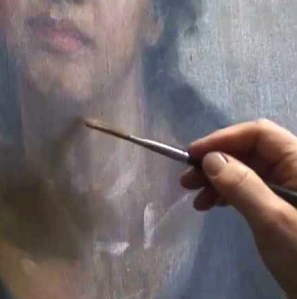
‘It’s beautiful,’ Jessie said, immediately drawn to the brave tracts of paint that told the story of that face. Much of the rest of the image was hastily sketched, as though the speed was designed to capture some distant impression before it disappeared forever.
‘Killed at eighteen. I did it from memory. Ilse was already weak when the train arrived, but I was strong. I carried her body as far as I could. They took her from me, before we went into the showers …’
When Jessie turned back, Baba was playing with the shells of her egg, moving them around the plate. She was lit from the side, like the girl in the picture, eyes glistening.
‘You can have the picture, when I go,’ she said, pushing the tray away.
‘BUTCH,’ Helen blurted from the bathroom, ‘didn’t you think of saying that?’
Of course, Jessie thought.
‘And she’s what? German Jew, or Austrian?’
‘I didn’t ask.’
‘So did Terry say if you’d get that shift from now on?’
Helen’s tone was wheedling. Jess watched her through the frosted glass of the bathroom door, shirt lifting above her full, round thighs.
‘Darl? Did Terry say-’
‘No,’ Jessie said, interrupting, ‘but I’m getting more shifts next month.’
‘Fucking straight boy. Can’t he just sort it out so that you get the shifts they said you were supposed to get when you started? We’re trying to pay a mortgage here …’
I know, Jessie thought, drifting into the living room.
When Helen caught up with her, she slipped her arms around Jessie’s sides and hugged her. ‘Jess, my girl,’ she whispered, kissing the back of Jessie’s neck and swaying her from side to side.
Jessie put her arms over her head and reached for the short hairs on Helen’s neck, running her fingers along one of her favourite places.
‘All we gotta do is get you regular shifts, and I can take you away for a dirty weekend, can’t I?’ Helen whispered.
‘Yeah,’ Jessie said, with the vague hope it could be true.
‘SHE’S asked for you again,’ Terry mumbled, the sound of filing drawers scraping open in the background.
‘What about Belinda?’
‘Belinda’s a permanent. I can reassign. Mrs. Brooks is going into a nursing home as soon as a place can be found. It would just be temporary. Okay with that?’
‘Okay,’ Jessie said, ‘and-’, but he was gone.
Baba was twisted in her sheets with the blind down when Jessie arrived.
‘Did you see the television in the garage?’ Baba croaked, voice hoarse, wiping her eyes as Jessie filled the room with light.
‘No, what’s happened?’
“I didn’t want to make a fuss. Worse things have happened in this world. Much worse.”
‘The police left at five and I have not slept. Thought he could steal my television! Hah! Crept in here, after two. I woke. I can hear a bird land, in my sleep. I knew there was someone in the house. He trod on the hose, all the way up the hallway, and I pulled this,’ she brandished her metal walking stick, still lying across the bed, ‘and turned the light on when I could hear him breathing in the doorway, and I screamed at him that I would kill him if he didn’t go straight away.’
She was shaking the stick, just like she’d done for the police.
‘Dropped the television in the garage. I know who it is. It’s one of Belinda’s nephews, I am sure of it. He knew exactly where to come, and which door to use, and what to look for. She doesn’t have much money, none of them do. Poor people always covet what others have, and I don’t have much. If they’d only asked me I would have given it to them. They didn’t have to come creeping around a poor old woman’s house in the dark. I might have killed him.’
‘I should call Terry,’ Jessie said, remembering her training.
‘Don’t bother him, he’s a busy man. The police have been. She called them,’ Baba said, pointing to the neighbours, ‘I didn’t want to make a fuss. Worse things have happened in this world. Much worse.’
‘A report will need to be made, Baba, that’s all.’
‘No!’ and it was final. ‘Now dear, I need some real food. She’s been bringing me the most dreadful cups of tea from her filthy kitchen. Make me a cup of mine, please. I’ve spent the night shouting. My voice is gone’. She drew on the oxygen like a suckling child, eyes wide.
With tea inside her, Baba went for the menus. She ordered three kinds of rice, and butter chicken.
They ate in silence, Baba coating the insides of her mouth with every mouthful, the excitement of ordering draining from her face.
‘Every day, I taste less and less,’ she said, dejected, ‘I used to make Indian food. Better than this … nonsense,’ she threw the fork away with a clunk. ‘Now, tell me what you paint, Jessica?’
Jessie’s face warmed with the attention. ‘Just about everything,’ she said, ‘but not much lately. More when I was young.’
‘But you are still a child,’ Baba said, patting the bedspread. ‘What do you like to paint?’
‘Well, it sounds weird, but I paint people on the train, when I go to the city. I like to paint them when they don’t realise I am looking at them.’
Baba leant back with a long sigh: ‘Ah, yes. Candid. Mysterious. The real person, no?’
‘Yes.’
‘And you have not done this for many years. You have given it up because you have lost your faith. You have become a woman and you have no confidence in yourself. You have married, or at least given yourself to someone. To this … Helen, and she does not understand that an artist needs to find herself.’
‘Yes,’ Jessie whispered.
‘That was how it went with me and my first husband. Hermann thought he knew everything there was to know about me, until I gave him the slip in Paris. The look on his face,’ Baba said, laughing, ‘when I came back to get my Mother’s photographs! Like a rabbit who thinks it’s a fox. He avoided the camps. Never understood them. He found another woman,’ she shrugged, dismissing the vision of the man forming in Jessie’s mind.
‘Tell me, do you ever think of taking a man? Don’t you ever have any normal feelings?’
Jessie stiffened. She realised her mouth was open, drinking in what Baba had been saying. Now everything was washing out of her again.
‘I’ll clean up,’ she said. She left without saying goodbye. There was nothing in the care plan that said she had to.
‘HOW many shifts am I going to get, Terry? I want you to tell me now and I am going to write them into my diary,’ Jessie said to him across the desk.
‘Um … let me look, Jessica. You’ve been a casual for how long?’ Terry said, fumbling.
‘Six months. I trained with Belinda, and she got regular shifts after three.’
‘Right …’ he trailed off, flicking a pen on the edge of the desk between them. ‘Let me have a quick chat to Barb. Help yourself to a coffee and a bikkie,’ he said, disappearing.
The office sported yellow walls with bright blue trim around the doors, desperate little attempts at nicety in a building squeezed between a funeral home and a brothel by the railway station.
Jessie walked between the tiny offices. One woman on the phone gave her a wave with her little finger, and a younger woman on the computer in the room near the kitchenette gave Jessie a guilty, then a haughty look, before getting back to the pretence of being busy.
The coffee was instant, a tin of it as large as the urn, which had been steaming away unnoticed since lunch. The mugs were yellow with blue flowers. Blue and yellow was the theme of the whole place, denied by the brown brick of the main wall. Jessie made a cup of tea, bags so weak that the milk turned the whole thing hot and pale.
Outside, there was a smokers’ spot in the stairwell. Jessie’s arrival sent the pigeons flapping up to where one of the sex workers was emptying the bins into a skip. She was beautiful. Asian. She waved at Jessie after swearing at herself for missing the bin with a big white plastic bag. Jessie waved back.
‘Thought you might be out here,’ Terry announced, bringing a file under one arm. Jessie offered him a cigarette. He held his hand up like a stop sign, but his eyes went into the pack and had them counted in an instant. He licked his lips and looked at her.
‘I’ll get straight to the point,’ he said, ‘it’s good in a sense that we’re out here, because I can be candid with you. I took your case up with Barb,’ he flicked his hand over his balding head, sweeping the strands of hair back in place, ‘and we talked about you, at length.’
Jessie dragged on her cigarette, looking away. She knew the tone.
She’d heard it ever since high school, from teachers; from Dad, from Mum, from her older brother; from the matron of the training hospital she left after only a month; from the woman at the dole office; from the TAFE college counsellor; from the boss at the gas company she spent eight months with; from the crew leader on the roadwork stint she worked at for over a year; and now it was coming from Terry.
‘You know we’ve been planning to move into more basic client care, transport to and from the shops, or a doctor’s appointment, or just meal preparation and socialisation, etcetera?’
She nodded, watching the brothel windows. The Asian woman was cleaning the inside with a tin of spray and a pink cloth.
‘Well, we feel that you’d be more suited to that kind of work than anything else. Barb looked up your training records, and she saw that you scored the highest in those learning modules. You’re obviously good at it, so if you were willing to wait until we’ve landed some clients in that area, then you’d be the first one we’d be calling up to work.’
He almost convinced himself, and she gave him the moment, gave him hope that she’d say yes, while she stubbed out her cigarette on the brown tiles at their feet.
Then she looked at him, the same look that had labelled her as ‘vacant’ by people in a similar position to Terry, but was just the face of a woman who knew a job had, yet again, been taken from her.
Thinking she didn’t understand, he continued, pitching his voice lower, and speaking slowly.
‘There is some concern about your suitability for personal care with some of our clients. The showering. The dressing. You know what I mean. Most of our clients are women, elderly women of a certain generation. For them, to be helped to shower is an act of great intimacy, you learned that in your training?’
Jessie nodded.
‘What about your male clients?’ she said.
‘Well,’ he said, offended, ‘we hope to be getting more later in the year, but right now, in your area, there are only female clients available for our casuals. I’ll send Belinda to see to Mrs Brooks tomorrow.’
‘Okay Terry,’ Jessie surrendered, ‘catch you …’
‘She’s off to a nursing home soon, so no doubt Belinda will be keen to wish her well on her way,’ Terry said to her back.
But Jessie was already gone. He watched her go, then caught sight of the Asian girl, now trying to clean the outside of the windows, and just making them worse, in his opinion.
JESSIE unconsciously fingered the corners of the new pad of paper she’d bought at the art shop on the way from the office to the railway station.
Inside the first leaf was her sketch of three women sitting at the other end of the carriage on the journey home. Jessie still had the marks of the ochre pastels on her fingertips, and on the edges of her pants pocket.
When Helen got home last night, dinner wasn’t on and Jess was clearing the garage. She’d unpacked all her boxes that had been under the house ever since she’d been living by herself last year.
She knew Helen would be cross but not able to show it, and she knew if she rustled up cheese on toast, Helen would relax with a beer in front of the news and ask no questions, and Jessie had been right.
The morning sun filled one end of the garage with warm potential.
The washing machine was on spin, and would be finished in a few minutes, then Jessie would hang the clothes out and get to Baba’s by nine.
For now, she breathed evenly in the dusty light, rubbing her hand down the door frame. Helen had showered and gone long before.
They’d smiled and kissed on the threshold, and Helen had forgotten to check if the neighbours were watching.
‘TERRY told me Belinda is coming back today, darlink,’ Baba said, lifting herself against the pillows, a little confused at seeing Jessie so early.
‘He must have made a mistake,’ Jessie said, wrangling the oxygen hose.
‘Always making mistakes,’ Baba tutted.
Jessie pulled a face and nodded in agreement.
‘At least you’re early. My son is coming today,’ Baba announced. ‘I want to shower, because he hates smells in the house,’ she added, reaching for Jessie’s arm and launching herself upward.
As she did, Baba noticed the smudges of ochre on Jessie’s hand.
With her angular thumb, Baba drew the last of the pigment across the taught skin of Jessie’s palm, looked into the younger woman’s eyes, and emitted a low chuckle that began as a tremble deep in her frail trunk.
‘Ah-ha, it begins,’ Baba said, wagging a finger, her face stretching into a smile.
And so, they started their silent water dance.
‘Belinda will be back on Monday,’ Jessie assured, as Baba covered herself from neck to knee with towels. Three days ago she’d only covered her waist.
‘I’ll be long gone,’ Baba said, lifting her shoulders impishly as the water started to course over her.
Jessie watched her in the reflection of the mirror, but as the steam rose it made Baba disappear.
It was not an unfitting transition, but Jessie needed more.
As she helped with Baba’s feet, she noted the shapes of the toes, the kinks that gravity had worn into the old woman, and the way her bones still allowed a waist and bust of sorts, but only the barest of both.
As she helped Baba dry her face and hair, Jessie was drinking in composition and form: the Teutonic facial structure, the signs of deep betrayal in the jawline, the traces of pain around the eyes, the pride still visible in the nose, and the coquettish locks of hair, some still black as night, others faded like the last of a summer’s day, soft as haze.
Jessie held the mirror, but knelt on the floor so that she could catch the head from another angle, a portraiture technique she’d teach one day, but didn’t realise in that moment.
‘Do my hands, child,’ Baba whispered, shaking one flexible limb towards the bottle of moisturiser.
Jessie clasped the old woman’s hands between hers, the balm soothing them both.
It was cold, and Baba giggled at the sensation, which quickly gave way to warmth. Jessie worked their fingers together, dragging them back and forward, the whiteness of the balm disappearing until there was nothing between them.
Baba’s head rested on the back of the chair, a rolled white towel supporting her neck, her jaw dropped in deep relaxation.
Jessie turned their hands over to rest palms up in the light. Without thinking, she wiped a dollop of moisturiser that had escaped on Baba’s upper arm, and slid it across the tattooed numbers.
Baba didn’t flinch.
 ‘Helen told me there were lesbians taken to Auschwitz too,’ Jessie whispered.
‘I know, darlink,’ Baba said softly, ‘but we didn’t talk to them. They did all the worst jobs.’
From Closet His, Closet Hers: Collected stories.
© Michael Burge, all rights reserved.


 Where his living, breathing gay protagonists meet allegorical endings in Classical juxtapositions, Forster was simply staying the hand of damnation he witnessed in the shadow of the Oscar Wilde trials, keeping these men safe in another place and time.

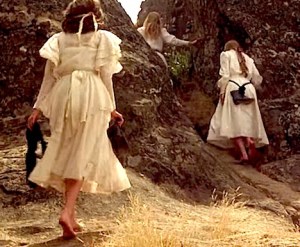
 A biography of Joan Lindsay (1896-1984) is long overdue. The publication of her memoir preceded ‘Picnic’ by five years and she understandably shied away from the tsunami of publicity that rose in the wake of Peter Weir’s 1975 film adaptation of her only successful novel. Much of the unwelcome attention sought a solution to what became of her three fictitious women who disappeared on the monolith on Saint Valentine’s Day, 1900.