ONE of the earliest crimes I ever became aware of took place just a few kilometres from my home. It wasn’t recent and it wasn’t widely discussed between neighbouring farmers. My mother whispered what she knew of the story one afternoon, in between social tennis matches at the Myall Creek courts adjacent to the old tin hall where we gathered for community events.
The 1838 Myall Creek Massacre has haunted and inspired me ever since, in much the same way it has done for generations of grazier families in the uplands between Delungra and Bingara in the Northern Tablelands of New South Wales.
Haunted, because there is justifiable guilt attached to the murder of innocent Aboriginal people. Haunted, too, because white men were hanged for the killings, for the first time in Australia’s history. Inspired, because the massacre memorial has become one of the most enduring actions of reconciliation this country has experienced.
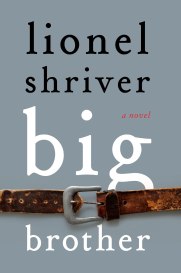
In 2016, two new books, pitched as seminal to an understanding of this hateful crime against innocent Aboriginal people, were published. I read with interest, not only because I am indirectly writing about the massacre, but also because I was part of the great ignorance about this pivotal moment in modern Australia.
The more we read about it, the more we come to understand the inherent racism and inhumanity that fuelled it, the closer we get to shuffling off the fundamental penal colony principles this country still practices when it comes to race relations.
The first is the suggestion that part of the motivation for the killings was the habit of utilising Aboriginal trackers in the recapture of escaped convicts; that the massacre was, in part, justified by the convicts among the killers as payback for Aboriginal participation in Colonial justice. But Smyth doesn’t provide much direct evidence or make an argument for any of this, leaving him wide open to accusations of victim-blaming.
The second is Smyth’s courage in including the oral history about the exact nature of the crimes, as witnessed by an Aboriginal man who was not permitted under Colonial law to give evidence at either of the trials.
Most if not all of the writing on the Myall Creek Massacre stems from a desire to ‘own’ the story, or meet another storytelling agenda, and Smyth’s book adds to a growing list of titles that view the events from one strong angle.
However, by including the description of the crimes themselves – horrid, gutless acts of evil – Smyth has done a great service that far outweighs his focus on his eponymous Denny Day.
As interesting as Day’s story is, it is not the most critical element to the story of the Myall Creek Massacre.
The crimes are the core of that story, and must never play second fiddle to the stories of others. The book that has the courage to begin with the crimes themselves, and not shy away from the scene, will be the definitive Myall Creek Massacre title.
Murder at Myall Creek by Mark Tedeschi (Simon and Schuster) is not that book. It’s an absorbing read but it should probably be re-branded as more of a biography of colonial NSW Attorney General John Plunkett and his impact on the legal system of New South Wales, and less of a broad title on the Myall Creek Massacre.
What it adds to the record are insights into why Plunkett moved for an immediate second trial of some of the massacre perpetrators, and how the risk paid dividends in terms of a generally just outcome.
Tedeschi makes the case for a better understanding of Plunkett’s character and exactly what he added to Australian civil rights. He also argues for why Plunkett has been largely forgotten by a nation whose history he impacted so significantly.
Elucidating the differences between Colonial and modern Australian legal processes is one of the key aspects to Tedeschi’s work, and this focus is essential to a full understanding of the prosecutions, and several unjust outcomes of the trial.
Day’s is a policeman’s story, Plunkett’s an attorney’s. Both their accounts will become crucial resources for whoever creates an unambiguous, mainstream book on this critical episode of modern Australian history, unfiltered by post-colonial perspectives.
A deeper look at the crimes that were the pivot of both men’s contributions will be key to the meaning and scope of that work. It has the potential to make white Australians see where we have for far too long feared to really look.
“I find myself less concerned with extreme ornithological accuracy, and more intent on capturing their character.”
WHEN I was a teenager, long before I realised day jobs were essential for most artists, while my school mates were off working at perfectly good weekend jobs, I was earning a decent income painting and drawing wildlife.
I fell into it, when at the school art show in 1984 I sold my very first painting – a watercolour of a small green frog nestled in an orchid – for sixty dollars.
From then on I regularly entered wildlife paintings and drawings into art shows across the Blue Mountains. I learned to read the mood and spread the risk in order to be in receipt of a sales cheque at the end of each show, which were invariably fundraisers for school committees and charities.
LOOK OF LORI Rainbow Lorikeet by Michael Burge.
I was encouraged to enter my work in the annual and long-running Gould League art award, and took home a couple of gongs in 1985. At the end of that year, a range of my wildlife drawings was printed as stationary to raise funds for a school trip to New Zealand.
Wildlife art was enjoying a major resurgence and people couldn’t get enough of it.
In the Blue Mountains west of Sydney, bird watchers were commonplace because living within what would eventually become a World Heritage wilderness area, bird-life abounded. Some of my schoolteachers were keen amateur ornithologists, and at school camping trips we got to experience the processes of bird banding – the temporary capture of birds in mist nets in order to weigh, tag and record life-cycle details of different species.
The one bird we were warned against ever attempting to capture was a parrot.
With their pincer-like beaks and claws most raptors would be proud of, parrots in all their shapes, sizes and colours (from cockatoos and rosellas to budgerigars) have always been an artist’s delight.
Tagging one even for the most noble of reasons would need to be done with a sturdy heart and welder’s gloves. Even capturing parrots on film remains a challenge.
Depending on which birds and which region, Aboriginal words for parrot include “bilin”, “akala”, “goonang”, “koorungan”, “moolangora” and “poolunka”. Parrots, cockatoos, rosellas and parakeets all make appearances in Aboriginal Dreaming and are totemic across the country.
LAND OF PARROTS look closely below the continent of Africa and you’ll see it! (1564 New World Map: Wikimedia Commons)
Three centuries before Matthew Flinders, Portuguese explorers mooted ‘Psitacorum Regio’ (‘The Land of Parrots’) as a suitable name for the southern land they’d seen was replete with parrot life, and that name appears on the 1564 New World Map by Antwerp cartographer Abraham Ortelius.
BUSH BEAUTY A Crimson Rosella (Photo: Wikimedia Commons)
Everyone has their favourite parrot. After more than three decades living in the Mountains, I fell early for the gentle, bell-like call of the beautiful Crimson Rosella (Platycercus elegans)not least due to its bright defiance of mountain mist and rain. It was also easy to spot whilst walking to and from school and wasn’t particularly shy about being watched.
By the 1990s, wildlife art fell out of fashion, while I went off to design school, followed by a stint chasing dreams in Europe.
One of the saddest sights I encountered was a solo Crimson Rosella in an ornate cage not much larger than its body, hanging above the counter at a pasta restaurant in central Venice in the summer of 1994. It had torn most of its wing and tail feathers out, and when I asked the manager if he knew where his bird came from, he shook his head and shrugged.
I could speak only rudimentary Italian, but I could read I couldn’t care less by the body language. Only someone who’d spent every school day observing these beauties cavorting through the bush could have picked the species of that sad captive.
Well over a decade later, when I moved from the mountains to the subtropics, I knew I’d have to leave the Crimson Rosella behind. It is found in Queensland in a disparate region to the north, but here in the southeast it rarely shows itself at the coast.
PALE BUT PRETTY The Pale-headed Rosella of eastern Australia.
But I started to hear talk of another rosella that frequents this part of the world, one that has become more and more elusive – the Pale-headed Rosella (Platycercus adscitus) somewhat related to its crimson cousin.
After years away from painting birds, it was parrots that drew me back in, when I sat down and captured a row of them in the work I called ‘The Committee’ and quickly sold on new Australian online gallery Bluethumb.
I couldn’t resist including a Crimson Rosella at the centre of that line-up of Australian icons. A Rainbow Lorikeet, Sulphur-crested Cockatoo and a Galah complete the scene, all quite familiar to me even after years away from the easel; although these days I find myself less concerned with extreme ornithological accuracy, and more intent on capturing their character.
But the Pale-headed Rosella still eludes me. Some of my neighbours recall seeing them here on Coochiemudlo Island, but not for a few years, so I decided to closely observe various photographs of this exquisite bird in preparation for encountering one.
Sporting a full spectrum of colours, including a flash of red under its tail, a magnificent pale gold crown, and the finest ultramarine blues across its cheeks, wings and tail, the Pale-headed Rosella managed to avoid definitive taxonomy for close to a century.
SHY NEIGHBOUR Pale-headed Rosella by Michael Burge.
This was undoubtedly because early ornithologists either hadn’t seen more than preserved samples shipped to England, or mistakenly thought they were the first to encounter the bird in the wild. It was surely also because the Pale-headed Rosella had gotten busy interbreeding with very similar species such as the Eastern Rosella and the Yellow Rosella, producing an array of hybrids.
The first European to visit Coochiemudlo Island – explorer Matthew Flinders – saw white and black cockatoos, and a bird he called “the beautiful lay lock [lilac] headed parroquet” here in 1799, but no Pale-headed Rosellas in his short journey through the island’s interior.
As one of the commonest parrots seen by early European settlers in the Brisbane region, the Pale-headed Rosella was known simply as the ‘Moreton Bay Rosella’ or ‘Parakeet’. Prussian explorer and naturalist Ludwig Leichhardt referred to it as such while traversing the region in 1844, and noted in his journal that it was “very numerous”, appearing with the same frequency as the Cockatiel and the White Cockatoo.
‘Pale-headed Parrakeet (sic)’ was the common name applied from 1848 by English ornithologist John Gould, although he was apparently unaware that the Pale-headed Rosella had already been named in 1790 by his predecessor John Latham.
PRETTY PLATY Elizabeth Gould’s illustration of three rosella species identified by her husband John.
The ornithological establishment seems to have hedged its bets and let both men’s identification stand as two subspecies, with Latham’s Platycercus adscitus, a generally bluer-cheeked variety found in the northern zone of Queensland; and Gould’s lesser blue-cheeked Platycercus palliceps found in southeast Queensland.
There’s a problem, however. Gould identified (or thought he had) another ‘Blue-cheeked Parrakeet’ he named Platycercus cyanogenys, but his Platycercus palliceps also bears the common name ‘Blue-cheeked Rosella’.
And having observed the colouring of the bird in order to paint it, for my money there’s simply not enough blue on the cheek of Platycercus palliceps to justify that name.
Looking at another artist’s earlier work might clear matters up. When Elizabeth Gould painted Platycercus pallicepsin husband John’s Birds of Australia in the 1840’s, it appears below two truly blue-cheeked birds – the Yellow Rosella and the Yellow-bellied Parakeet (see image above).
BIRDMAN’S WIFE Elizabeth Gould (1804–1841) holding a Cockatiel (Image: National Library of Australia)
Now emerging from her husband’s shadow thanks to a new novel – The Birdman’s Wife (Affirm Press), Elizabeth Gould’s skills of observation suggest elements of John Gould’s taxonomy may not have passed muster.
Her Platycercus palliceps carries the merest hint of blue on what could only be defined as the very, very lowest margins of the bird’s cheek.
It takes a fellow painter to recognise the palest blue brushstroke that I imagine Elizabeth added a little begrudgingly at John’s insistence, to avoid a blue-cheeked argument.
So I hedged my bets too, and added more blue than I thought necessary, but less than the name required, although I’d love to see a local Pale-headed Rosella to check for sure.
Despite our plethora of walking birds like curlews and plovers, much of the bird life on Coochiemudlo Island, especially where parrots are concerned, lives high above our heads in the old-growth trees.
I’m thinking of investing in a pair of binoculars, and I’ve noticed several well-known Australian artists have added Gould League art award prizes to their online resumes.
I’ll probably do the same. I’ve already earned my plumes, after all.
MARILYN got through her childhood as quickly as she possibly could.
She mastered puberty by filling out her plain school uniform before she was a teenager, and inhabited the body of a middle-aged, overweight woman by the time she reached her twenty-first birthday.
Swapping school plaids for sterile nurses’ uniforms only meant Marilyn had more room to fill.
“The unveiling of her flesh was a physical pleasure she didn’t know how to enjoy.”
She maintained her weighty hourglass beneath a cotton waist belt, her figure diminished by the enormous regulation veils she starched religiously and spent more time on than the other girls and their hours of make-up.
Marilyn sterilised equipment twice as long as the other trainees, and never scowled when rostered on for back-to-back ‘Dirty Nurse’.
It was during one such marathon that Matron noted the size of Marilyn’s stout red hands as she carved paths of cleanliness throughout the wards.
Both women had been trained to polarise cleanliness and dirtiness. Matron simply recognised a sterile girl when she saw one, and knew she had little to teach Marilyn when it came to the simple rules of cleaning up after life’s messes, and doing it without fuss. Not with a minimum of fuss, but with absolutely none…