All posts by Michael Burge

Journalist, author, artist

Dancing around casual homophobia

ONE of the big stories of the week came and went as quickly as a Channel Nine dancer running screaming past the camera.

Breaking late on Tuesday afternoon from the Fairfax stable, what became known as the French Ambassador Incident trended at least twice on Twitter in the following 24 hours, then disappeared.

It’s hard to ascertain exactly what happened. Most media reported that Australia’s Ambassador to France, Stephen Brady, was witnessed shouting at someone on a Paris tarmac before, during or after the arrival of Prime Minister Tony Abbott fresh from Gallipoli late on Anzac Day.

“To many same-sex-attracted people, the stink of casual homophobia is unmistakable.”

The reason – according to eyewitnesses yet to be named – was the directive from the PM’s team for Brady’s partner of more than thirty years, Peter Stephens, to make himself scarce during the PM’s arrival, and wait in the car.

Quickly defined as a ‘hissy fit’ by some media, and a protocol error by others, the story of Brady’s reaction grew so fast that by Wednesday morning, Mr Abbott was forced to face questions about the incident during a doorstop about something else.

Visibly uncomfortable, he clarified that Mr Brady was a good “friend” and defined the conflict as “trivial”.

Neither me or my husband had ever heard of Brady and Stephens, or knew of their groundbreaking position in the international community as an out gay diplomatic couple.

But between us, we vocalised the rush of indignation that resonated on a gut level. To many same-sex attracted people, the stink of casual homophobia is unmistakable.
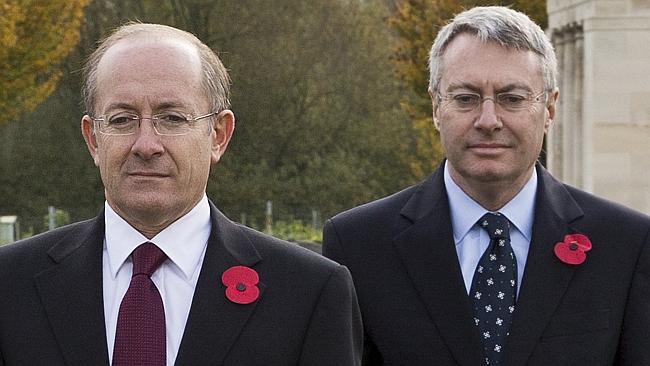
DIPLOMATIC DUO Australia's Ambassador to France Stephen Brady with his partner Peter Stephens. Photo: Ella Pellegrini
DIPLOMATIC DUO Australia’s Ambassador to France Stephen Brady with his partner Peter Stephens. Photo: Ella Pellegrini

LGBTQI people have different homophobia ‘breaking points’, but the trouble with casual homophobia is that it’s usually invisible. A protocol directive is a perfect place to deliver it, because, of course, it’s so diplomatic and neutral it’s all about how the message is taken, not how it’s given.

But as Wendy Harmer said in her tweet as the story grew: “‘Wait in the car’ – everyone understands what that means.”

Casual homophobia can be off-hand, even unintentional, but, by the sounds, it’s exactly what sent a man, who’s made a shining career out of being diplomatic, over the edge.

Speaking as someone who has received his share, the level of alarm and clamour witnessed on the Paris tarmac is the only way to register that casual homophobia has been directed at you. There is almost no use dealing with facts, all that hangs in the air is the intention to disenfranchise you or someone you love.

The PM’s office did not deny the incident took place. Junior staffers were blamed. Nobody offered an apology. The only thing that resulted was a resignation, in the moment, from Stephen Brady.

The last time international audiences were served this kind of open-ended story was the Jeremy Clarkson incident.

For weeks, more than a million Top Gear fans publicly defended Clarkson while an internal BBC investigation got to the truth of his violent physical attack on one of the program’s producers during location shooting. Clarkson spent the time making jokes in the media, but privately tweeting his apologies to his ‘alleged’ victim.

He was eventually sacked from the BBC’s flagship motor program. The voices in his defence have either come to terms with his crime, or silenced themselves.

Whether the French Ambassador Incident goes a similar way, or the facts never come to the surface, the limited, cautious reporting of it shows that, like most discrimination and bad behaviour, the media finds it almost impossible to report accurately on casual homophobia.

That’s possibly because the perpetrators sail so close, in fact beyond, what is legal and socially acceptable, that editors don’t know how to put the story in its correct context. In other words, they’re slow on the uptake when it comes to equality.

The social media is, of course, more of a free-for-all.

On April 24, Daily Telegraph columnist Miranda Devine dropped a casual clanger when she tweeted during the Brumbies vs Highlanders rugby match.

The Brumbies’ David Pocock had just scored his third try, and celebrated in front of the television cameras in a manner which Ms Devine took exception to:

So, Pocock’s vibrant gesticulation was actually the Auslan (Australian Sign Language) sign for applause. ‘Jazz Hands’ is a totally different thing.

Devine had scored a hat trick with her resort to “tosser” – not only was her tweet borderline unsporting, but she’d swiped the deaf, gay and showbiz communities in one try.

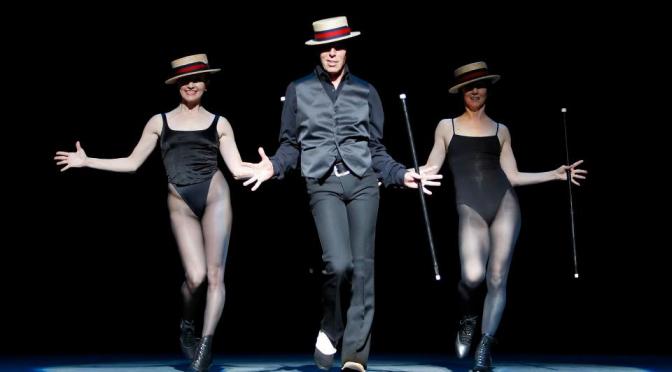
FOSSE'S WAY Classic Bob Fosse 'jazz hands' choreography.
FOSSE’S WAY Classic Bob Fosse ‘jazz hands’ choreography.

Many showbiz folk attribute the dynamic flat-handed open-fingered gesture, often accompanied by hat and cane, to the man who made it his signature move – American choreographer Bob Fosse – although it has deeper roots in centuries-old vaudeville.

Somehow, due to its association with enthusiasm and heightened expression, and probably because it involves articulation of the wrists, Jazz Hands has also come to denote camp behaviour – it’s shorthand for gay.

pluck-cover
BUY NOW

But Pocock wasn’t doing Jazz Hands: “Thanks, Miranda. That’s totally fine,” he replied, “also glad it wasn’t ‘jazz hands’.”

Which sounds like a casual diplomatic dance to me.

© Michael Burge, all rights reserved.

This article appears in Michael’s eBook Creating Waves: Critical takes on culture and politics.
Lest we object

co-postcardHow a century of war gave rise to conscientious objection.

BURIED not far beneath the commemoration of the Anzac Day centenary is a silence into which few voices will respectfully speak.

I join those few not to disrespect the First World War fallen and those who remember them – the slaughter and waste of war is too indelible to play word games with – but to fill a few silences alongside an international movement on a trajectory to one day rival Anzac.

My journey of discovery started where the Anzac legend was handed over by the last servicemen who carried the baton – with Britain and Australia’s oldest living First World War diggers.

“This Anzac centenary, it’s probable we will not hear the words ‘conscientious objector’.”

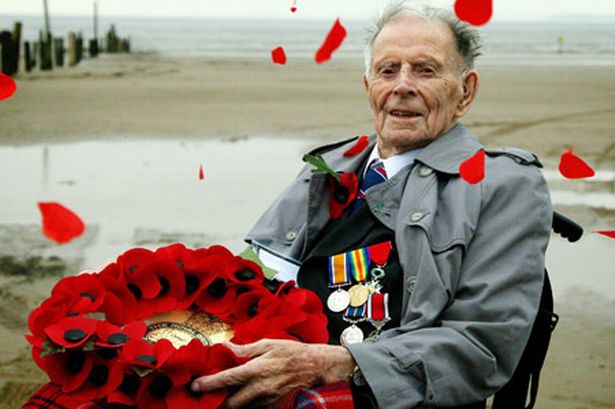
Both Claude Choules, and Harry Patch lived to within a few years of the Gallipoli centenary, long enough to share potent memories and deeply felt convictions about something which barely rates a mention on the day we have loaded with a century of war – they came to make no secret of their pacifism.

For half the time Australians have been rising early on Anzac Day for dawn services, followed by marches, church services and games of two-up at the pub, Claude ‘Chuckles’ Choules refused to join the remembrance.

If anyone had a right to march, it was Claude. After lying about his age to get into the armed forces, he served in Britain’s Royal Navy in the wake of two brothers’ service at, and survival of, Gallipoli.

He subsequently served with the Royal Australian Navy during the Second World War, settled here, and, after fifty years of service, took up fishing and ballroom dancing.

It was left to his children to articulate his feelings about armed conflict, not long before his death in 2011.

“He used to say that while he was serving in the war he was trained to hate the enemy, but later he really grew to understand that they were just young blokes who were the same as him,” Claude’s son, Adrian Choules, said.

“He said wars were planned by old men and fought by young men and that they were a stupid waste of time and energy.”

Harry Patch used much stronger language. “War is organised murder, and nothing else” this British tommy (or ‘digger’) asserted to former British prime minister Tony Blair in a BBC television documentary.

FIGHTING PACIFIST Lance Corporal Harry Patch.

In the thick of the Western Front for months, Lance Corporal Patch saw his comrades torn apart, times he waited almost a century to recount when working on his book The Last Fighting Tommy, published shortly before his death in 2009.

Both Patch and Choules broke ranks publicly about the realities of combat only when enough time had passed that they must have wondered what the point of their service had been in a world still intent on waging war.

But there were many others who did not stay silent so long.

This Anzac centenary, it’s probable we will not hear the words ‘conscientious objector’ uttered much in the mainstream coverage.

Those who declared their disagreement with government war policy – often known as ‘C.Os’ or ‘conchies’ – faced imprisonment, torture, hard labour, capital punishment, and widespread public shaming throughout the wars of the twentieth century.

Often refusing active service on religious grounds, conchie stories are often limited to shadowy characters in war dramas, opening anonymous envelopes to white feathers, labelling the recipient a coward.

BEARING WITHOUT HARM Stretcher bearers on the Western Front, 1917.

The mythmaking masked a variety of reasons men would not willingly succumb to war recruitment. Many went to war but bore stretchers instead of arms, or worked in field hospitals, where it was not always possible to escape the labels.

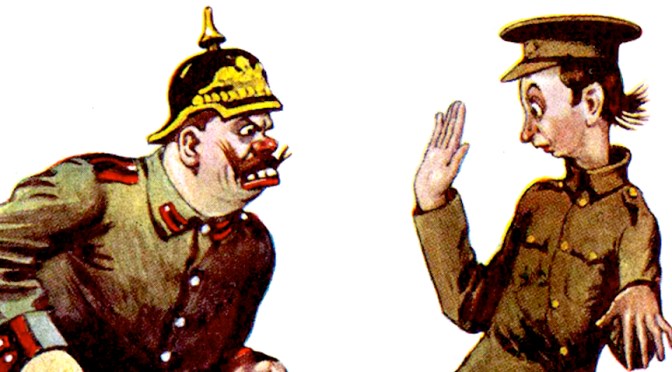
Governments with conscription legislation during the First World War, such as Britain and New Zealand, pilloried conchies with a level of desperation. The limp-wristed charicatures in the propaganda made little secret of the homosexual aspersions cast on men who refused to fight.

This, despite the many gay men who willingly served in theatres of war.

For those who agreed to fight but eventually abandoned their posts, the death penalty was a stronger disincentive, although Australia’s anti-conscription stance (despite two closely fought referenda under Prime Minister Billy Hughes) meant Australia’s voluntary forces were not subject to being shot for desertion, like hundreds of British and five New Zealanders.

Instead, Australian deserters’ names were published in the newspapers.

Despite the efforts to stamp out the conscientious objection movement, it became so potent after another war that the world slowly started to wake up to the concept of pacifism as a choice.

It took the definition of what constituted a war crime. At the Nuremberg Trials of 1945-6, carried out by the International Law Commission of the United Nations, a much firmer legal entity was defined for the refusal to participate in conscripted killing.

By the Vietnam War, conchies began a serious coming out process. The most famous of this era was Muhammad Ali, who said of his resistance to being drafted: “I ain’t got no quarrel with them Viet Cong, no Viet Cong ever called me Nigger.”

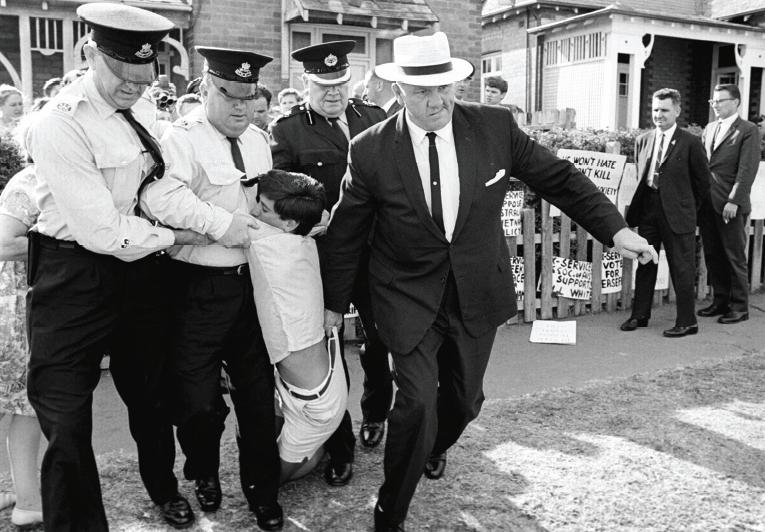
Australian teacher and conscientious objector William White made a stand in Sydney in 1966 when he refused to report for military service under Australian conscription laws.

OBJECTION OVERRULED William White's arrest in Sydney, 1966.
OBJECTION OVERRULED William White’s arrest in Sydney, 1966. (Photo: John Fairfax)

“I am opposed to a state’s right to conscript a person,” White said. “I believe very strongly in democracy and democratic ideals, and I believe that it is in the area of the state’s right over the life of the individual that the difference lies between totalitarian and democratic government.

“My opposition to conscription, of course, is intensified greatly when the conscription is for military purposes. In fact the National Service Act is the embodiment of what I consider to be morally wrong and, no matter what the consequences, I will never fulfill the terms of the act.”

White’s voice added fuel to the Moratorium Protests that swept across Australia in May 1970, when an estimated 200,000 people marched to end the Vietnam War.

His image, being dragged by a pack of police from his home, caused embarrassment to authorities but embedded a greater sense of resistance in ‘the conchie’ than the cartoons disseminated fifty years prior.

Thirty years after White’s imprisonment, conscientious objection was ratified in a United Nations Commission on Human Rights resolution, which was subsequently extended to include those already serving in military forces who “may develop conscientious objections.”

On May 15, the annual commemoration of the world’s conscientious objectors will take place. It’s an international grassroots movement allied to other twentieth century groundswells in racial, gender and gay rights.

Many Australians have a conchie in the family, and it is fitting we remember them too.

But it’s Anzac Day first, a day on which it’s only fair to leave the last word to someone who was able to join the dots between fighting and objecting – Harry Patch.

creating-waves-cover
BUY NOW

“Politicians who took us to war should have been given the guns and told to settle their differences themselves.”

© Michael Burge, all rights reserved.

This article appears in Michael’s eBook Creating Waves: Critical takes on culture and politics.
Ballerinas, blue poles and budget week

CREATIVE ACCOUNTING Image from
CREATIVE INCOME Image from Frieze magazine.

A Writer on creative accounting.

I HAVE never paid much attention to the fallout of budget week, simply because the Arts are always sufficiently financially knocked-around long before the Treasurer makes our economic disenfranchisement official.

If a body like The Arts Council or Screen Australia were to be closed, that would register. Hearing they’ve had cuts only blends into the usual budget week white noise.

“Somehow, the Arts seem to exist outside of the economy.”

Many artists subsist on a combination of incomes derived from our arts practice and our day jobs, spreading the risk between catering and painting, or admin and acting, like artist friends of mine; or journalism and writing, as I do. This means we can absorb multiple knocks and bonuses across our income. We can generally survive in good times and bad.

It’s always a lottery, and the media is usually slow to report the impact. Often artists will find out about budgetary changes weeks or months after the fact.

Treasurer Joe Hockey’s first budget last year had the Arts buried beneath the Attorney-General’s department budgetary top-line, with ballerinas leaping above it, because the only headline news for artists was that the Australian Ballet School in Melbourne will get new student digs.

FAME
REACHING FOR FAME Scene from the 1980 movie.

This was excellent news. The only person I know who went to the Australian Ballet School, in the late 1970s, was left to his own devices with other teenagers in shared suburban accommodation. The experience sounded like a mix of Number 96 and Fame, without a shred of government funding in sight.

A new accommodation block sounds a little boring by comparison, but the key to interpreting the use of this ‘dance move’ of the Abbott Government’s is that it will be a building, which will employ people to build it.

An architect will ideally get a gig, and an interior designer or two, and hopefully other building industry-related creatives, but the overwhelming majority of people who will financially benefit from this pledge of one million dollars will not be artists, they will be from the construction industry.

Major Arts bodies took big hits last budget – $87 million was stripped from the industry at large – but I know of only a few practising artists who have ever been able to secure government funding of any kind, so this news won’t impact on your ‘average’ artist.

We’ll call ‘the average artist’ someone who is courageous enough to work outside the nine-to-five paradigm as a result of some inner need to express themselves creatively.

“Governments are not all bad news for artists.”

Whoops, I slipped into subjective, indefinable territory, sorry. I don’t know which column of the budget the ‘average artist’ should go in, which only proves my point about not really caring about the fuss on budget week, because it only applies to us if it’s a broad measure such as a medicare co-payment, in which case the ‘starving artist’ should be concerned.

Speaking of starving, let’s look at the latest figures on artist incomes, albeit over a decade old. The Australia Council for the Arts’ report Don’t give up your day job says it all – artists just don’t earn enough to see us impacted by things like debt levies and Paid Parental Leave salary caps.

Yet we earn little enough that medicare co-payments will make a difference.

But artists have inured ourselves to the lingering feeling of numbness about what funding opportunities may or may not be around in financial years to come. I’ll take a wild guess: under this government, they’ll be lean.

Another indirect effect will be that the ‘average’ art buyer will, no doubt, have less disposable cash after this budget to buy our art, if we can get buyers out to a group show sometime during the year. That’s a worry, but then again, that’s always a worry.

I have seen group exhibitions rake in money during tough times, and I have seen empty theatre seats during good times. Somehow, the Arts seem to exist outside of the economy, constantly taunting and baffling the number crunchers.

Proof: some paint splashed across a board by some American was sold to the Australian people under the personal leadership of Gough Whitlam for A$1.3 million, and is now worth anywhere between 20 and 100 million dollars.

But governments are not all bad news for artists. One of the kindest changes a government made for creatives came under John Howard, after we were permitted to present our taxable incomes by combining day jobs and artist incomes … and something to do with deductions.

I am simply not going into detail in case it gives someone within the ATO a crazy idea about changing it back to the way it was for decades. Just know that it’s a little help at tax time.

Readers should also not confuse artists with artsworkers, who reap a large share of Arts funding in the Australian economy.

Occupying salaried positions from federal through to local government, the nation’s artsworkers are perhaps the ones to ask how Mr Hockey’s Great Big Surprise New No Excuses Budget Emergency Measures will impact on the Arts, because they are now in the frontline of job cuts.

All I really know about the Arts right now is that I completed my writing schedule this week, the bargain I have with my artist self to create despite Mr Hockey.

Therein lies the powerlessness, and the power, of the artist. Try putting a dollar value on it.

© Michael Burge, all rights reserved.