All posts by Michael Burge

Journalist, author, artist

Touring with Vivien Leigh’s black dog

LINDEMAN’S LEIGH Australian actress Susie Lindeman as Vivien Leigh in ‘Letter to Larry’.

A Writer’s review.

BRITISH actress Vivien Leigh (1913-1967) may have felt rather independent when she toured to Australia in 1961 with the Old Vic theatre company.

Divorce from Sir Laurence (‘Larry’) Olivier the year before had seen her separated from the theatrical powerhouse she was one half of – the international stage and screen duo known as ‘The Oliviers’.

Australian actress Susie Lindeman recently returned home with her production of Letter to Larry, a play by Donald Macdonald which captures Vivien Leigh in this pivotal moment of her life and career, and has already been acclaimed in London, Paris and Los Angeles.

“I was attracted by the role, and Donald Macdonald’s script,” Susie says. “We knew we had something special from the response to the first reading – here and in London”.

“We always wanted to present the show during Vivien Leigh’s centenary year. The early London performances were previews, and then we created a new version as the world premiere season for Paris in 2013.

“From that we received interest from New York. It was our intention to play in places significant to Vivien, so I also performed as part of the 100th celebrations in London and took it to Hollywood.”

One of those places of significance in the life of Vivien Leigh is Sydney’s Independent Theatre, a venue she played in the late 1940s and in 1961 (recreated in the bookends of Macdonald’s play), and the venue where Letter to Larry played on February 23, 2014.

“It’s the sole surviving Sydney theatre that Vivien herself knew. She and Laurence Olivier used to dodge the press and send a decoy somewhere so they could enjoy seeing shows at the Independent. This was when Olivier was also scouting Australia for talent – actors whom he felt could form Australia’s first national theatre.
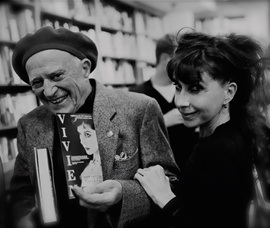
TREADING THE BOARDS Actor Trader Faulkner with Susie Lindeman.

“When Tyrone Guthrie, the legendary London director, came to scout also, he went to the Independent to see a show, and he discovered young Aussie actor, Trader Faulkner.

“Trader went on to work with John Gielgud and the Oliviers and many more, he was not only a co-star but also a friend to Vivien, and he will be with me sharing this performance.

“He is the show’s special guest and will stand again upon the stage of his 1947 triumph. He is a legend himself – he was a protégé of Peter Finch and wow, he has some great stories!”

Considering her acting career in mainstream theatre and film in Australia and Europe, I am keen to ask Susie how she approached the role of producer.

“I’m just an actress taking roles and opportunities when they present themselves,” she says. 

“As an Australian, social media has allowed me to retain my identity here as I work in other places. It’s all on a page, the whole world, we could be everywhere and anywhere.”

“However, when I think about it, I suppose that I also became an independent artist when I met Yasmina Reza, the great French writer, and through this personal and independent encounter, she entrusted me with the world rights for her play, Hammerklavier.

“Performing it internationally meant I performed independently; here, London, Edinburgh, Paris and even a performance in Singapore. Now, I guess I’m lucky enough to be asked to perform independently by several theatres themselves, rather than theatre companies as such.

“The decision was simply to be all I can be, to play Yasmina seemed a wonderful chance, and to make it happen I simply had to create it independently.”

What part does the social media play when independently producing a piece of theatre?

“It’s actually how I started using Facebook, I mean really using it, and for this show, we started to tweet,” Susie says. “But I think Letter To Larry having its own Facebook page is great to spread the word. Sometimes 600 people will like a status, which is wonderful, especially being such an indie creation”.

“As an Australian, social media has allowed me to retain my identity here as I work in other places. It’s all on a page, the whole world, we could be everywhere and anywhere.”

So where to from here for Letter to Larry?

“We want to have the Australian premiere season soon,” Susie says, “but I think because I’ve worked a lot in London and Paris, it seemed easier to get a theatre in those cities, so we do have the London premiere in the pipeline, a hoped-for season in New York, and a return to Hollywood”.

“But of course we’d love the chance to do an Australian season and tour, especially as the play opens and closes in the setting of Vivien’s 1961 Old Vic tour to Australia.”

I am interested in knowing how audiences respond to Susie’s interpretation of one of the world’s most beloved movie stars.

PLAYING PASSION Vivien Leigh as Blanche DuBois in A Streetcar Names Desire (1951).

“I was absolutely astonished at the love Parisians have for Vivien. I mean, I knew that in London we would have an audience, but I was swept off my feet by the passion of the public, and the press, for this show,” she recalls. “Every night after the show there would be people waiting to tell me their thoughts and memories of Vivien, and they truly lit up when speaking of her. That’s why its such a pleasure to play her, she has a magic and spirit which is still tangible in the world.”

In the five decades since Vivien Leigh’s death, a result of chronic tuberculosis, public attitudes to mental health have changed enough that her now widely known about manic depression, explored in Macdonald’s play, can emerge from the shadows. I ask Susie about this aspect of her interpretation of Leigh.

“Vivien was passionate and often cast in passionate roles, whether mad for her loss of Lord Nelson as Lady Hamilton, as Ophelia, or most searingly as Blanche DuBois in A Streetcar Named Desire,” Susie explains. “She never performed ‘madness’, she just felt so deeply the emotions and passion and loss”.

“Gielgud said: ‘The extremity of Vivien’s performance was extraordinary, and frightening. She elevated the text and the emotional intentions’ .

“It’s true that Vivien suffered with un-diagnosed bi-polar, and that her infinite energy and passion for life grew into manic phases,” Susie says. “In Letter to Larry I play Vivien from deep in her soul and heart, feelings magnified by her loss of Larry”.

“I believe there’s a fine line between insanity and inspiration. Vivien, as so many who knew her have told me, was such a free spirit, but also spiritual, so she was in touch with the source of sorrows as well. Someone said Vivien didn’t break down as much as stand up and fight back.”
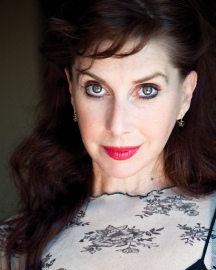
INDEPENDENT ARTIST Actress, producer and director Susie Lindeman.

And what does Susie think are the main challenges for performing artists working in Australia?

“I think funding, and the swiftly sinking press coverage, oh and sometimes the celebrity culture, which means sometimes actors who are so right for a part don’t even get a chance to read.

“I know theatre is a risky business, so theatres need to be careful,” Susie says, “but being careful has never been a way to create.”

With a nod to one of Vivien Leigh’s most memorable roles, Susie says: “Art isn’t intrinsically commercial anyway, and knowing that after a show, so often the audience will buy you a drink, so if you’re not paid properly, there’s always the kindness of strangers!”
creating-waves-cover
BUY NOW

For further information follow the show on Twitter @LetterToLarry or check out the Facebook Page.

© Michael Burge, all rights reserved.

This article appears in Michael’s eBook Creating Waves: Critical takes on culture and politics.
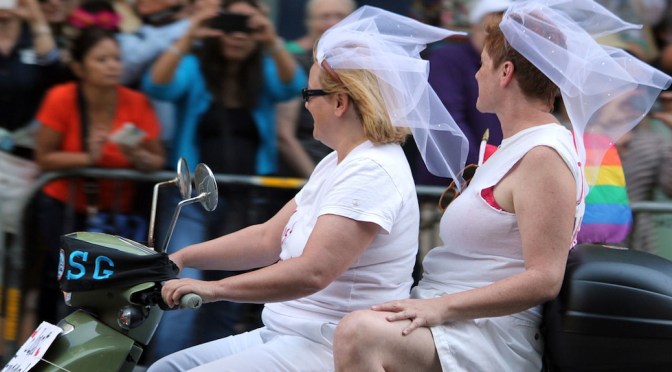
It’s too late for marriage equality in Australia

A Writer calls-out a political stalemate.

IN April 2013 journalist Gay Alcorn declared the culture war was over for marriage equality and confidently asserted that after “a year or two” LGBTQI couples would bask in the same connubial rights as straight Australians.

She declared the debate “interminably dull” and credited lobby group Australian Marriage Equality’s (AME) latest pitch for support – via the small business benefits of allowing same-sex marriage – with triggering her boredom threshold.

Because I didn’t think Alcorn’s angle helped the debate, I began a long analysis of the foot-dragging this political football has endured in Australia. Here we are eighteen months since Alcorn’s boredom levels peaked, and only one thing has changed: support for marriage equality in this country has skyrocketed since Alcorn reported a 54 per cent assent, to a whopping 72pc.

This is a world record – even in countries which have already passed marriage equality legislation, community support for same-sex marriage is nowhere near that high.

So, with apologies to Gay and anyone else who’s asleep on marriage equality, here’s why it’s already too late for anyone in the current political spectrum to bring full civil rights to lesbian and gay Australians.

Tony Abbott will never take the free kick

After promising his cabinet would be free to raise the issue of marriage equality “after the election”, nobody in the Coalition party room seems keen to take up the challenge.

“In order to lead Australia to marriage equality, our primary leader, our Prime Minister Tony Abbott, needs someone in his party to lead him to the debate.”

I have an undeniable gut feeling that twelve months “after the election”, if he was ever going to back marriage equality, Tony Abbott already would have done.

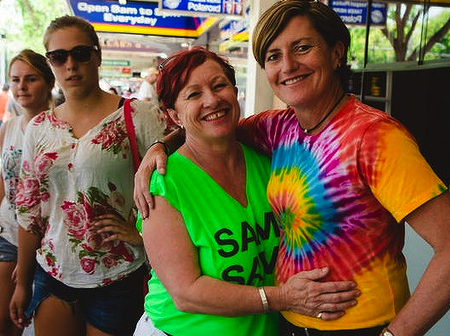
His sister Christine Forster and her partner Virginia Edwards announced their engagement after the election. I imagine they’re getting quite impatient to tie the knot on home soil, and it’s Christine we have to thank for the latest news about her brother’s leadership on the issue, when she spoke at a Parents and Friends of Lesbians and Gays (PFLAG) event in Brisbane last month.

“I have been married, I am a gay woman, a lesbian, but I was married for 20 years,” Forster said, “so I know the significance of marriage and how that speaks to your community, friends and family and what it says about the special relationship you have with your partner”.

THEY'RE WAITING Christine Forster (right) with her partner Virginia Edwards. (Photo: James Boddington)
THEY’RE WAITING Christine Forster (right) with her partner Virginia Edwards. (Photo: James Boddington)

“My brother is a very good Liberal and a very good leader of the party and if that’s what the party tells him that’s what he will accept,” Forster said.

You read it right: in order to lead Australia to marriage equality, our primary leader, our Prime Minister Tony Abbott needs someone in his party to lead him to the debate.

Even if this somehow qualifies as leadership, even if by some miracle a Coalition minister has the guts a week, a month, a year from now, Tony Abbott will never escape the taint that he left it too long.

Too late, Tone. Far, far too late.

Laboring on equality despite Plibersek’s evolution

Australian LGBTIQ must look elsewhere for our civil rights champion.

The Labor Party’s Tanya Plibersek has come a very long way on same-sex marriage, from towing the line against full LGBTIQ equality under Kevin Rudd’s leadership in 2007 (while proudly championing Labor’s record on equality), to challenging the government to provide a co-sponsor to her 2014 private members bill for marriage equality.

But both of Plibersek’s public gauntlet throws to the Coalition occurred while she was in opposition, and seemed designed to highlight the shortcomings of an incumbent government, because that’s the only impact they had.

Labor supports marriage equality without a binding ‘yes’ vote for their MPs, a situation which will not change unless the ALP national conference in 2015 agrees to it, and will not change anything for LGBTQI.

The last time any government had the numbers to do anything unilaterally was under Kevin Rudd’s first suck of the sauce bottle between 2007 and 2010, but the ALP didn’t do anything about marriage equality.

Not as late as some, but still too late, Tanya.

The sky did not fall down

Marriage equality arrived in Australia for a brief time when the ACT passed the Marriage Equality (Same Sex) Act 2013.

Alan Wright and Joel Player became the first Australian same-sex couple to marry under the fledgling legislation on December 7, 2013.

MARRIED AT MIDNIGHT Joel Player and Alan Wright who were due to marry in Canberra at 12.01am. (Photo: Melissa Adams)

Fledging Attorney-General George Brandis couldn’t wait to put the territory law to a high court challenge, which handed down its findings on December 12, 2013, when six judges unanimously decided the ACT law was “inconsistent” with the federal Marriage Act.

After decades of inconsistency between state, territory and federal legislation on everything from homosexual criminality, de-facto recognition, superannuation, adoption and a host of other issues, the High Court suddenly demanded consistency.

Too late, judiciary. Way, way too late.

Sharman Stone likes her fruit different

Australian LGBTIQ got an awkward glimpse of backbencher Dr Sharman Stone’s conscience last month when she replied to a constituent’s letter asking her why she’d voted against marriage equality in 2012.

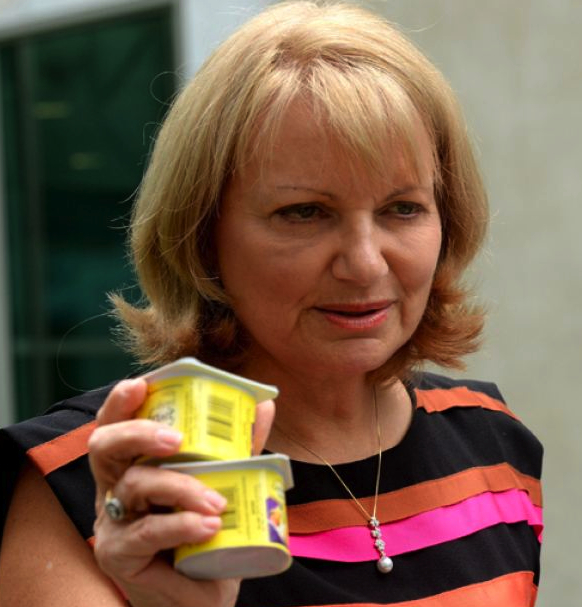
STONE'S FRUIT Sharman Stone MP, federal member for Murray.
STONE’S FRUIT Sharman Stone MP, federal member for Murray. (Photo: ABC)

I knew of this Victorian MP, federal member for Murray, because of the many voluntary sub-editing hours I gave in support of SPC Ardmona, the fruit canning company in Stone’e electorate, during the wave of No Fibs articles filed during the  2014 #SPCsunday campaign.

When she told the nation on the ABC that Tony Abbott and Joe Hockey were a pair of liars, Stone’s stance was the first eye-opening chink in the Coalition’s armour. I paid attention because I could see someone taking a risk.

According to Stone, the imminent closure of SPC Ardmona was an unfolding tragedy: “I do not intend to speak in the media about the suicides and attempted suicides now occurring particularly among the orchardists, and for the sake of the families I will not talk about them publicly,” she said in an email.

“But believe me the loss of the last Australian fruit processor would be a human as well as a regional economic and national tragedy.”

But Stone had little such empathy for her correspondent Tilly Rose Goldsmith’s situation, replying that her conscience did not extend to upholding marriage as an option for Australian LGBTIQ.

“The family implications of a marriage are totally different to the outcomes possible in a same-sex marriage i.e. not inferior but DIFFERENT” (Dr Stone’s capitalisation).

Stone’s response fell into the argument-breaking trap which invalidates childless heterosexual marriages, and it ignored how prone young LGBTIQ are to suicide as a result of bullying, a subject Goldsmith had raised in her letter to the minister.

I took a small stand on Twitter after reading Stone’s letter. As far as I am concerned, overseas canned fruit is no longer inferior, it’s just DIFFERENT. Food for thought for SPC Ardmona workers when it comes to election time.

Too late to question my support for Stone’s cause. More fool me for not checking her marriage equality record.

David Leyonhjelm truly liberal on LGBTIQ equality

Some good news came after July 1, 2014, when a swag of new Senators joined the debate and NSW Liberal Democrat Senator David Leyonhjelm spoke with the most clarity marriage equality advocates had witnessed since Kevin Rudd’s ‘road to Damascus’ essay in 2013.

Defining Australian LGBT as “second-class citizens” until we have full marriage equality, Leyonhjelm’s announcement that he would bring on a marriage equality bill nevertheless contained some big qualifiers – he would not bring a bill forward until there was a conscience vote across the parliament, encouraging Coalition senators to tow the line and warning that, with six years as a Senator, he would see his “libertarian” bill through.

“There seems no urgency in Leyonhjelm’s stance on marriage equality.”

The Senate got a glimpse of Leyonhjelm’s courage last week when he threatened to bring a disallowance motion against agricultural sector levy increases, a controversial issue which is dividing rural Australia, where compulsory industry levies on primary producers are seen by many as crippling taxes.

When it came to crunch time, Senator Leyonhjelm pulled his punch and postponed the motion. With another six years of his Senate term ahead of us, there seems no urgency in Leyonhjelm’s stance on marriage equality.

Six years could be far too late, Dave. Bring it on.

Pink dollar last link to marriage equality?

Although Gay Alcorn seemed to be chortling to herself at AME’s idea that marriage inequality was hitting the back pocket of Australia’s wedding industry, there is some merit in looking at boycotts as a way to lever the Australian parliament into legislating for same-sex marriage.

SPIRIT OF AUSTRALIA LGBT-friendly Qantas.

AME has a regularly updated list of Australian businesses which uphold the validity of Australian gay and lesbian de-facto relationships and overseas same-sex marriages and civil unions amongst their staff and customer base. The list includes Rupert Murdoch’s News Corp, an inclusion which puts paid to some of the claims about that company’s influence on Australia’s political landscape.

Major sponsor Qantas put corporate pressure on the Australian Opera until it sacked homophobic singer Tamar Iveri. Qantas also upholds the next of kin status of its staff and customers in same-sex relationships.

Corporate Australia has been acting on marriage equality for over 5 years. It’s getting very late, parliament.

Australian Christians ‘preying’ on same-sex community

Right now, Christian groups are disseminating timely news lists about progressive moves for LGBTQI equality in Australia.

At the lighter end, these news gathering services ask prayer groups to add LGBTQI advances to their prayer lists. At the heavier end, the content should probably be unpublishable in the public domain.

Fact is, there are widespread ‘faith boycotts’ encouraged by anti-gay advocates across the world, and Australia is no exception.

Before you write off the idea of the LGBTQI community boycotting anyone, name a single civil rights movement which succeeded without using the only language that moves postmodern communities into action: money.

For the LGBTQI community, their families and friends, those who constitute the 72pc of Australians who support marriage equality, the question is this: is it too late for you to boycott companies that do not support marriage equality?

© Michael Burge, all rights reserved.


Free-range free-for-all

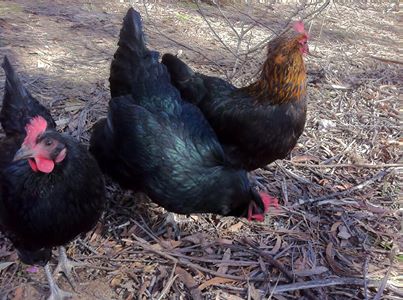
FREE AND EASY My own chooks.

A Writer makes an omelette out of egg politics.

WHAT is it about free-range eggs that ruffles so many feathers, sets governments against corporations, farmers against consumers, and treats ethical producers as the lowest member of the economic pecking order?

Every year there is another squabble in the mainstream media, blaming one sector of the egg industry for upsetting the economic balance of the whole, followed by another crow for clear production standards regulated fairly by government.

Last year, freshly-laid Agriculture Minister, Barnaby Joyce, expressed his fears about bird flu destroying the egg industry, all supposedly because of free-range chicken flocks!

Understandably, free-range egg producers are crying ‘fowl’…

It’s probably wildly inappropriate to make light of the issue, especially while animals are suffering as we fail to overcome the obstacles; it’s just that the politics of egg production match the terminology of the chicken coop so well.

The facts at the moment are this: if you buy eggs labelled “free-range” at a supermarket, you’ll be paying a premium, and there seems no way of telling, whilst standing at the overwhelming display of product, whether the eggs are truly free-range, or the expensive result of bending the rules.

If you really want free-range eggs, it’s probably best to have your own chooks. Most Australians live in areas where produce stores will sell you everything you need to set-up and maintain a backyard flock, including the birds themselves.

You’ll have to feed, nurture and care for your birds extremely vigilantly, and wait a while before you get eggs; but when they come, you’ll soon have enough to feed your household and the neighbours’. The eggs will be delicious.

“Open the egg carton before you pop it in your trolley.”

By that stage, you might be left feeling like you put a lot of time, energy, and pricy chook feed into the venture, and may come to understand why paying more for truly free-range eggs is completely justifiable for the producers who do it within the voluntary ethical codes of practice.

If building (or buying) a predator-proof chicken house, and allowing the birds to roam a bit every day, is not for you, the next best thing you can do is to find a local free-range egg producer.

Your fruit and veg shop probably stocks their products. The best way to check their free-range credentials is to pay them a visit. If they’re a bit cagey (sorry), then they may be using the term “free-range” a little loosely.

But there is also the growing phenomenon of the farm-gate, akin to the cellar-door movement amongst wineries, allowing consumers to see what we’re getting for our dollar.Farmers in Australia are getting increasingly wary of visitors. It’s a combination of activist intrusions, on top of the traditional “Get orf moi land!” emotions.

You might only be exposed to the friendly face of the farming operations, not the behind-the-scenes realities, but a farm visit will give you an idea of the people and the practices you are paying for.

For me, the best way to cut through the marketing spin of “free to roam” (yes, with 20 birds per square metre, PR people), and “barn laid” (give me a break), is to open the egg carton before you pop it in your trolley.

The sight of a range of slightly different eggs – some a little misshapen, some with a patina of the farmyard, even a trace of chook poo and feather – will see me place that carton very carefully where the milk cannot crush it, because I know my $7.00 is going towards birds who are truly liberated.

I have been an egg producer in my own backyard, and I can spot a real free-range egg from a fake.

© Michael Burge, all rights reserved.