All posts by Michael Burge

Journalist, author, artist

Voyage to the new news world – part one

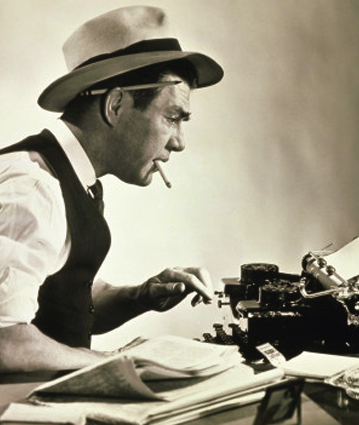
ON THE JOB reporting the news cycle like an old school journo.

A WEEK after the 2013 federal election I was driving to my casual sub-editing job on a Fairfax weekly newspaper when I let a brilliant photo opportunity go.

During the campaign I’d had to pass a vast billboard of our electorate’s returned sitting member, Andrew Laming, along that route.

But on that day, Laming’s face was burning into black ash as a farmer torched his latest crop’s stubble. It was one of those moments when your mind takes the shot, writes the story and formulates the headline in a flash.

‘Laming wins, Redland City loses’ was my angle, with the remnant of that smiling, burning face front and centre, while Redlanders settled in for another stint of terrible representation because our federal member had no currency in Canberra.

Laming’s team, the Coalition, had won the election, but after representing the people of Bowman, Queensland, for almost ten years, he’d sent inappropriate tweets that put us on the map for all the wrong reasons. Word was he wouldn’t be getting a promotion in the Abbott Government.

“Having an opinion is not reporting. Reporting is getting off your bum, taking a few risks and meeting people.”

It was a scorching week. Parts of the nation were ablaze. At work there were half-hearted jokes about not mentioning the D-word – drought – for fear of scaring-off advertisers.

Up to my ears sub-editing, I sorely missed my stint as a citizen journalist for No Fibs.

I stumbled into No Fibs following a Twitter conversation on the Peter Slipper fallout and was immediately drawn to its fresh interface.

The election was just weeks away and my gut told me marriage equality would be a hot issue, but when I tried to find the subject on the site I came up with nothing.

I mentioned that to editor Margo Kingston and she immediately suggested I write it.

NOT SHORT of an opinion: Mia Freedman of Mamamia (Photo: Anthony Johnson).

My opinion piece was published the week that tweeters were bitching about lack of pay for online journalists.

Mia Freedman of Mamamia was praised for finally paying some of her contributors, but slammed for suggesting most of what she published was opinion so shouldn’t attract a high dollar value.

I tended to agree. Having an opinion is not reporting. Reporting is getting off your bum, taking a few risks and meeting people in order to flush out the truth. But it was clear a generation of hungry media graduates blogging in their pyjamas expected their musings to garner a living wage.

“Can’t pay the rent with a by-line,” one tweep fired-off.

“That’s where the day job kicks in,” I fired back.

My young tweep admitted she had a day job that kept her in the flow of human experience that will never be replaced by the internet, but wanted to blast down the doorways of media companies to create entry-level positions.

What would she have found if she had?

At my workplace she’d have felt the fear of cutbacks, amalgamations and redundancies, like standing on the deck of a ship when a list starts to show, and someone’s just noticed there are not enough lifeboats.

It was an extremely bleak landscape for journalists. No wonder a reporting stint on the No Fibs election project was so attractive to me.

It didn’t matter that Bowman was safe Coalition territory. I wanted to meet the candidates and decide where my preference votes should go. I also wanted to flex my journalistic muscles.

HE WINS WE LOSE Andrew Laming and family.

Not for me the ease of press conferences. Here in Bowman, otherwise known as Redland City, politicians need flushing-out.

Most Australians don’t know where the region is and many locals like it that way. It’s a blind spot perfect for parachuting any political aspirant into.

I lined-up interviews with candidates from the Palmer United PartyLabor and The Greens and netted thousands of words of material in three hours’ work, knowing none of it was going to make an ounce of difference to sitting member Andrew Laming’s 10.4 per cent margin.

As I published, a few savvy heads popped up on Twitter – critical thinkers dotted across greater Brisbane, grateful for more than the coverage in the local paper, The Bayside Bulletin.

Andrew Laming said he’d talk to me once the election was called, then reneged. Knowing that nothing I’d offered him was different to what every other candidate had agreed to, I got despondent, wrote my wrap-up piece and sat back to watch the reporting on the neighbouring divisions.

One day later, a breaking story on campaign cheating landed in my lap, with a great editorial photograph (taken not by a journo, but one of the candidates), and a social media audience urging me to file it with No Fibs, so I did!

A week later I read The Bayside Bulletin was hosting a candidates’ forum. No one could recall if they’d been held before, but the perception was they were ineffective.

So I called the editor, Brian Hurst. Before I’d finished saying “No Fibs” I got put through to him. He’d read my work, heard Margo interviewed, and was more than happy for me to tweet from the event.

“We made a tiny scratch on the surface of the area’s democratic future.”

I sat up the back, all thumbs on my phone while The Bayside Bulletin’s journos had luxurious tablets, but I got as many tweets out to my audience, who were glad I was providing a less-constrained voice on Bowman’s newly minted hashtag #bowmanpol.

Brian generously gave No Fibs permission to publish his paper’s photographs with my article on the event.

The election came and went and I struggled to settle back into sub-editing and blogging, because I acknowledged to myself I should have taken that photograph of Laming’s poster burning – it’s just in my nature to report.

I’d been part of nudging the mainstream media (MSM) into a brief communion with the social media, and we made a tiny scratch on the surface of the area’s democratic future.

But a scratch can become the infected wound which brings down a sizeable political animal like Sophie Mirabella, a process that was unfolding at the other end of the country in the division of Indi.

The No Fibs election project had excellent, strong rowers, skilled navigators who knew the currents, and the courage of explorers charting new territory. I just couldn’t let it go, so I decided to take a risk and stay on the lifeboat.
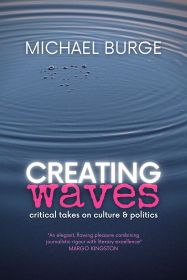
creating-waves-cover
BUY NOW

It felt buoyant enough for a journo wanting to join the great reader migration to the new news world.

This article appears in Michael’s eBook Creating Waves: Critical takes on culture and politics.

© Michael Burge, all rights reserved.

Breaking heartland in August: Osage County

BROKEN HEARTS Julia Roberts and Meryl Streep.

A Writer’s review.

SIX decades ago, great American playwrights like Arthur Miller, Eugene O’Neill and Tennessee Williams only ever alluded to addiction, sexual diversity, mental health and suicide, or portrayed them in the hands of villains who always ‘got it’ at the end.

These days, there’s a growing number of storytellers courageous enough to begin where their antecedents left-off, helped by more relaxed censorship laws and a broader understanding of the human condition.

Tracy Letts’ play, and now screenplay, August: Osage County, is one of those, and has already become a benchmark in 21st century storytelling.

There are no spoilers in revealing that Violet Weston (played by Meryl Streep) opens this film with a frank revelation of her pill popping and her mental maladies in the kind of scene Eugene O’Neill could only have dreamt about including in Long Day’s Journey into Night (published in 1956).

Streep marks out a battlefield within a crumbling, overheated Oklahoma country house, and proceeds to destroy every member of the family who steps inside it in the wake of the disappearance of her husband (played by Sam Sheppard).

With a sister, three daughters, their partners, a Native American housekeeper and a granddaughter, she has plenty of adversaries, and she goads them until they all bite ferociously back.

Just who takes it up to her, and why, is the story of this film, revealing the life changing consequences of staring-down and surviving addiction.

It’s a bitter conflict, with violence, assault, and enabling wrapped into every scene. Letts’ greatest achievement is that not one character, not even Streep’s, could be described as either purely hero or villain.

“This is Roberts’ most controlled, and most out of control performance.”

They are all as bad, and as good, as one another, an unthinkable concept in 20th century drama, where every protagonist had to battle with their equivalent antagonist, so that the audience knew who to barrack for, and who won or lost.

On this score, it’s hard to know if August: Osage County is a comedy or a tragedy.

Streep has never climbed higher in an entirely convincing portrayal, a tribute to her risk taking. It will be hard to topple this performance, which spills off the screen like vomit.

Yet Violet has grace. She has you hating her and sympathising with her in turns, never revealing anything ultimately honest, yet claiming to be the “truth teller” of the family. Nothing about Streep’s Weston is absolute, apart from her total inability to be saved.

Julia Roberts as Violet’s eldest daughter Barbara wears the family angst as a barely concealed boxing glove which she is not afraid to wield. There is little that can be said about the role and the performance which will not reveal the plot, just know this is Robert’s most controlled, and most out of control performance.

In the midst of the family intrigue, it’s easy to forget the isolation and hardship of the American heartland (and remote communities everywhere), but Letts reminds us now and again that we are not in the city, we are in dangerous country, stolen from Native Americans, fought over by settlers, and reminisced in the poetry of Violet’s husband.

This is a universally rural story about the experiences of country souls, those that escaped and those who got left behind. In the final scene, with Julia Roberts caught at an emotional crossroads, this reality becomes a painful reminder of what can go wrong when great, unsustainable dreams are created in farming regions.

CREATING WAVESAugust: Osage County is a heartbreaking elegy to all broken heartlands and the souls they failed to nurture.

This review first appeared on NoFibs.

© Michael Burge, all rights reserved.

This article appears in Michael’s eBook Creating Waves: Critical takes on culture and politics.


Pitching practice for writers

SERVED UP Making a meal of your hard writing work.

WHEN I was a teenager with a head full of writing dreams and acres of my very own fantasy novels in my wake,  one of my favourite pastimes was designing the covers of my latest books, long before I’d even written a word.

Despite the fun of emulating the great cover designs of the day, this process was a handy short-term distraction from the long-term graft of capturing ideas and writing them into shape.

When I returned to fiction writing five years ago, I was determined to avoid this salacious trap and eschewed all musings on titles, covers, blurbs and similar ego-massaging pastimes.

I just wrote, and wrote, and wrote. Then I read, and read, and read.

When I eventually began making submissions to publishers, who asked me to describe, define and sell my work to them, I reached the point of forming what’s known as a pitch.

Time for a little dreaming, then. Here’s what I learned …

Titles always change

Manuscripts need to have a file name on your computer, so you (and anyone you submit them to) doesn’t lose them, but that’s all they need. Nailing that one great title for our work is a great way to inspire us to create a whole pitch-ready work, but don’t get precious about what it’s called if a publisher or agent has other ideas. Jane Austen’s working title for Pride and Prejudice was, simply, First.

Blurbs are best

The sales tool used by publishers on the back cover of printed books, traditionally known as a blurb, is the benchmark for pitching language. Strike a balance between the raw courage of “it’s Jurassic Park meets Star Wars” and the blandness of “this is the best novel written about dinosaurs in space”. Go back to the storytelling strategy of your plot and work that into your blurb, with all its tensions, turning points and battles.

Give away the ending

Publishers and agents know good storytelling, but don’t expect them to suspend their disbelief about yours. The main difference between your pitch and the eventual blurb of your work is that you must let the publisher/agent into its secret. This takes courage, because when we reveal our work’s one big secret, the thing we feel will make people love it, it feels like giving away all our power. Be brave and let it go, because your plot’s turning point may be the key to keeping your work out of the slush pile.

Keep images to yourself

One heartening and inspiring tool I make use of is imagery. I like to find one strong image which I imagine would work on a book cover. It evolves through the writing process, of course, but sometimes I find images so arresting they end up informing the story and characters. I never submit these images as part of my pitch, but I work with them,  keeping them in mind whenever I am asked what my story is about.

Have an answer ready

Family and friends love to know what we’ve been spending our writing time doing, and they’re  a great test audience for verbal pitches. Most writers squirm when asked about their work, but a little preparation and practice helps to have an answer ready when someone asks: “So, what’s your book about?” As with the blurb, go back to your plot. If you can’t answer this question to a friendly audience, you are probably not ready to pitch it to a publisher.

There are only seven great stories

The great Arthur Quiller-Couch was one of the first modern writers to maintain there are a limited number of story archetypes embedded in human existence. Other thinkers have fleshed-out his approach, but the basic premise has not altered. What you are writing will be found in one of those story brackets. It’s your job to stretch the medium into new territory. That’s possibly what being original means.

What’s it like?

Publishers and agents often ask for a few examples of existing titles our work is similar to. Don’t snap straight to “it’s entirely original”, have a look at the marketplace, both the new titles and the classics. There will be echoes of your work in there. Use them to define what you’re writing. See what major genres the publishing industry has divided the book trade into, and work out where you fit. If you don’t know, publishers probably won’t waste their time working it out for you.

Break the rules, a little

WRITE REGARDLESSCreating and sending multiple pitches can get very boring. Have some fun and break the rules a little. I recently sent a pitch to a publisher who said “no unsolicited material”, and they looked at it! Doing this each and every time is probably not a great way to get a book published, but now and again, mix it up. There is really nothing to lose when you think about the crazy odds of the publishing trade.

An extract from Write, Regardless!

© Michael Burge, all rights reserved.