All posts by Michael Burge

Journalist, author, artist

I have a man here who won’t take off his hat

HATS OFF or else, in some parts of the world.

A Writer’s encounter with the Catholic faith.

FROM the shade of Bodhi yum-cha restaurant we could see the steeples of St Mary’s Cathedral rising above the bustling lunchtime streets of Sydney.

It was Richard’s birthday, so it was up to him where we spent our city day trip. He’d expressed an interest in going to the Australian Museum, just along the road, but the thought of the cool air inside the cathedral beckoned us both.

I’d also wanted to show Richard the reproduction marble of Michelangelo’s heartfelt Pietà sculpture of Mary and the dead Jesus in her lap, which I’d last seen on a school excursion.

That idea sealed the deal, so we paid for our meal and ascended the steps in the heat of a late summer Sydney day.

“I slid onto the cool marble floor and put my hands together.”

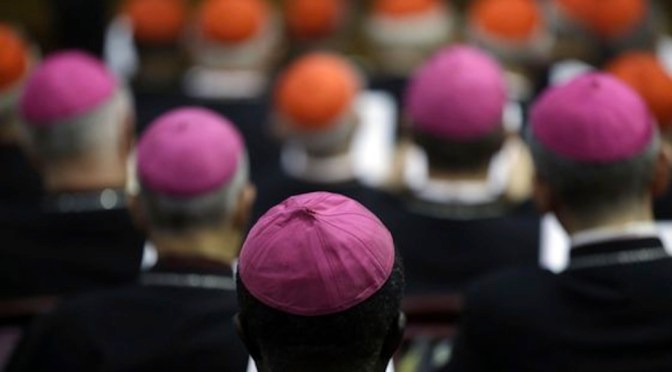
I spotted the ‘no photography’ sign at the last-minute, and the memory of numerous cathedral visits in Europe made me think of removing my hat. But there was no sign, and a flock of tourists in hats beyond the threshold, so I shrugged and left my cap on.

The darkness and temperature drop was immediate, as was the sense of calm away from the traffic and crowds. Richard disappeared towards a set of stunning brass gates, as we started our respectful, slow search for the sculpture.

We were soon separated by another crowd of tourists, and I waited in the half-dark by the gates until they passed.

By a door on the eastern side of the nave, I saw a sad sight: an old man, slumped pitifully against a pew, wisps of hair lifted by the breeze. A homeless man, perhaps, or someone so down on his luck that only time in this place of worship could restore him?

His demeanour was so compelling that I turned away, because looking seemed an imposition.

But as I went to move, a sudden jabbing drove into my shoulder from behind.

I turned in shock as a security guard said to me, breaking the calm: “Remove your hat!”

CATHOLIC GROUND Interior of St Mary's Cathedral, Sydney.
CATHOLIC GROUND Interior of St Mary’s Cathedral, Sydney.

In a bit of shock, I paused, looked at the tourists near me, some of whom had heard the guard, and said: “I will, in a moment,” and turned to find my husband.

“You will remove it now,” the guard said, loudly, “hats are not allowed in the cathedral!”

I turned, looked at the be-hatted tourists, and said: “I will remove my hat, when you ask them to remove theirs.”

I moved off quickly and heard him muttering at my heels. Adrenalin rushed through me, the result of the sudden physical attack on my shoulder, and something about the guard’s attitude towards me in particular.

When I caught up with Richard, his hat in his hand, I ascertained that the original request had been made to him. The guard caught up with us and repeated his demand.

I refused, and repeated my request for hat-removal equality in the cathedral, adding that I would be more than happy to remove my head covering when the same demand had been made of all the visitors.

“Women are allowed,” he snapped, thinking he’d snookered me.

I looked at the group again. Women and men, many of both, wearing hats, a point which I assertively made to the guard, before I turned away and determined to find the Michelangelo reproduction.

His unmistakable footsteps came after me, so I did the first thing that came into my head. Inspired by George Emerson in E. M. Forster’s A Room with a View, who, when harassed in Santa Croce, slumped to his knees in a position of prayer, I slid onto the cool marble floor and put my hands together.

Richard chortled.

The guard stopped, tutted, and waited. I could see him out of the corner of my eye. We were in a waiting game I’d need to play to its end if I was going to stay prone, so I took my time, finished my ‘prayer’ and stood, before calmly resuming my search.

“I’d impersonated a devout catholic, so fair cop that he did his best impersonation of what he thought I was.”

My tactic got him off my back, although he kept his distance and tried a new one of his own. He reached for his mobile phone and punched numbers into it as clumsily and implausibly as a comedian would, and said: “Hello? Is that the police? Yes, I have a man here who won’t take off his hat!”

Suppressing laughter, I told him I’d give him a Logie for that performance, and we did a dance of barely controlled energy all the way back to where Richard and I had arrived, my hat firmly in place all the way.

As I left, I turned and saw the guard attempt a dreadful impersonation of a poof. Limp wrist, hand on hip, and a lisped farewell: “Bye-bye, see you laytaaa!”

I laughed. I’d impersonated a devout catholic, so fair cop that he did his best impersonation of what he thought I was, but when I told my husband outside, Richard stormed back in and demanded the guy’s name.

Holding his hand over his badge, he began a tirade that did not end until we were both ejected through the door onto the steps, the place where thousands, perhaps millions of those in need had sought help from the church: at their door.

Adding to the surrealism of the moment, the poor soul I’d taken pity on by the eastern door came over and joined in the very loud rant about respect, hats, and who gets to wear one and who doesn’t on hallowed catholic ground, saying we could do what we liked in the world, but in the cathedral, it’s their rules. All of it avoided the reality that surrounded us: many men with covered heads, going into the church unmolested.

We were spat out, rejected and thoroughly repelled, but none of it was really about my hat.

As we descended the steps, the Museum in our sights, I asked Richard if he still wanted to go there.

“No, I’ve had enough of antiquities for one day.”

Touché.

We went shopping instead, and within minutes I’d worked out why the incident had happened.

Sydney’s Gay and Lesbian Mardi Gras, which has taken place annually on the doorstep of St Mary’s Cathedral in Sydney’s gay heartland – Darlinghurst – was in its final days.

I’d read years before that LGBTIQ catholics from around the world make a point of visiting the cathedral and visibly asking for confession and communion as a form of protest.

Thus the security guards, who, I hasten to add, have very delicate gaydar sensor settings indeed. Richard and I had not held hands or been in remotely close proximity while in the cathedral, but, like most gay men, we have a kind of ‘uniform’ when it comes to clothing.

creating-waves-cover
BUY NOW

We wear hats because we’re both rather bald, but the classic baseball cap (as opposed to the truckers’) is probably a bit of a giveaway for security in a Darlinghurst cathedral.

I’ve never been so quickly labelled as gay without opening my mouth.

And I’ve never so mistakenly labelled a soul in ‘need’.

This article appears in Michael’s eBook Creating Waves: Critical takes on culture and politics

A dingo took the story

DESERT CHAMELEON Meryl Streep as Lindy Chamberlain in 'A Cry in the Dark' (Photograph by Vivian Zink).
‘DINGO BABY’ Meryl Streep as Lindy Chamberlain in ‘A Cry in the Dark’ (Photos by Vivian Zink).

Can a real-life story be plotted into a dramatic arc?

THE hardest form of plotting is the real-life story. Remember when James Cameron made you forget the Titanic was going to sink? Like or love his movie, Cameron’s masterstroke of ‘real-life’ storytelling created a new benchmark, but his love story also bent the ‘real life rule’ quite a bit by using fictitious characters within a real-life story.

The reason real life is the hardest form of fiction should be obvious – life does not slot easily into a three- or five-act dramatic arc. Producers and publishers don’t like real life – it’s never fast or entertaining enough to put bums on seats, it’s way too random, and it usually needs a bit of tweaking.

Even reality television only feels real – it’s been fictionalised ever since the quiz show hit the small screen.

One of the finest examples of a real-life dramatic arc is Fred Schepisi and Robert Caswell’s adaptation of John Bryson’s long-form work of journalism, Evil Angels, the story of the Chamberlain ‘dingo baby’ case, otherwise known as A Cry in the Dark.

Let’s put the plot through its paces… beware, there are spoilers (yeah I know, you know how the story ends… or do you?).

Exposition – “A dingo’s got the baby”

The exposition must introduce us to the characters and show who is the protagonist (the hero) and the antagonist (the anti-hero, or ‘villain’); and the protagonist must be called to action, posing a question so interesting that we are gripped.

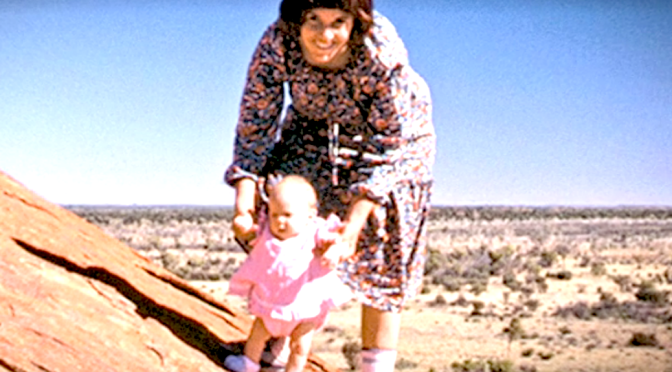
Lindy and Michael Chamberlain (the protagonists) are at their Seventh Day Adventist church in Mount Isa for the christening of their daughter, Azaria, when passing truckers gossip about Adventists over their radios, and the family portrait is showered by their dust, revealing the Australian public’s (the antagonists) wariness of anyone they don’t understand. Michael (Sam Neill) and Lindy (Meryl Streep) leave for a holiday to Uluru (Ayers Rock), and settle in for a barbecue dinner. Lindy puts Azaria to sleep in their tent, and after she returns to the barbecue, another camper, Sally Lowe, hears the baby cry. When Lindy goes to check, she sees a dingo emerge from the tent, finds Azaria missing, and shouts the now infamous line.

Rising Action – “A lie goes around the world while the truth is still putting its boots on”

The rising actions are those the antagonist uses to thwart the protagonist and show us who both of them really are.

The Chamberlains wake to news that Azaria’s body has not been found. The media soon picks-up on the disappearance and stories spread across the Australian public’s TV screens, with an edge of eeriness and mystery. The Chamberlains return home to rebuild their lives, but the media continues its push for information, and Lindy attempts to tell her story, but it backfires as the media disseminates rumours about the family. The Australian public starts its own dialogue about the case, mainly convinced of Lindy’s guilt and the dingo’s innocence. An inquest, which clears the Chamberlains of all guilt in Azaria’s death, seems to resolve the case.

MIKL CURDLER Meryl Streep's portrayal of Lindy Chamberlain saw her on the receiving end of similar hatred.
NUT CRACKER Meryl Streep’s portrayal of Lindy Chamberlain saw her on the receiving end of similar hatred.

Climax – “A face that could crack walnuts”

The climax must be the start of a battle between the protagonist and the antagonist, and a turning point after which there is no going back for either.

Disgruntled Northern Territory police consult forensic experts, who find enough evidence to re-open the case. The Chamberlain’s home is raided and items taken for testing. Witnesses are simultaneously interviewed. The media breaks the story and the Australian public devours the new information with hysteria, focussed on perceptions of Lindy’s demeanour. Lindy is heavily pregnant as the ‘trial of the century’ begins in Darwin. The jury, representatives of the Australian public, ultimately ignores eyewitness accounts in favour of forensic evidence and finds Lindy Chamberlain guilty of murder and her husband Michael an accessory. Lindy is sentenced to life imprisonment. The Australian public celebrates.

Falling Action – “I will not have another dinner party ruined by those people” 

The falling action must play out the battle between the protagonist and the antagonist, allowing one of them to win. The winner defines the piece as a comedy or a tragedy.

Lindy is separated from her family in prison, where she gives birth to a daughter whom she is quickly forced to hand over to Michael, and she disappears from the Australian public’s consciousness while the Chamberlain’s legal team begins the long process of appealing her sentence. Despite the Australian public’s deeply-held conviction that she is guilty, cracks start to appear in the wall of opposition to Lindy. When the unexpected death of a tourist at Uluru leads to the chance discovery of Azaria’s matinee jacket (evidence the prosecutors used to paint Lindy as a liar), Lindy’s is swiftly released from prison after three years. She returns home, a stranger to her new daughter Khalia.

Dénouement – “How important innocence is to innocent people”

The dénouement (‘to untie’) must unravel all the conflict and bring everything to a sense of resolution. In a comedy, the protagonist is better off than when they started. In a tragedy, this is reversed. The big question posed in the exposition must be left answered.

At their church, the Chamberlains are welcomed by a cheering crowd of Adventists, and Lindy speaks about the family’s patience and endurance while the truth about Azaria’s disappearance was eventually revealed. During the applause, Khalia comes to her mother’s side, and the family group which was ripped apart is restored, albeit changed. Outside, a media pack launches itself at the Chamberlains, suggesting that their journey to exoneration is far from over, and Michael underlines the importance of the concept do innocence to innocent people.

WITCH HUNT The Chamberlains pursued into Darwin Court by a media pack.
WITCH HUNT The Chamberlains portrayed by Neill and Streep pursued into Darwin Court by a media pack.

The Verdict

The screenwriters’ decision to portray the entire Australian public as the antagonist was not only genius, it was based on the truth of the Chamberlain’s story, and helped rank the movie amongst the American Film Institute’s best courtroom dramas.

The dramatic arc of A Cry in the Dark hits all the right moments, the most subtle of which is the antagonist’s (the public’s) slow realisation that an error of judgement has been made. In the end, they are defeated by the evidence.

But this win for Lindy Chamberlain cannot be defined as a comedy. This is another reason why producers often avoid real-life stories: they’re hard to define and therefore hard to sell.

In 1988, when this film was released, twenty-four years were yet to pass before the true antagonist of the Chamberlain’s story – the dingo who took Azaria – was acknowledged by the Northern Territory legal system. Before this factual milestone was reached, which acknowledged the reason no body was ever found (Azaria having been consumed by dingoes), the screenwriters of A Cry in the Dark acknowledged that the dingo took not only the baby, but also her story.

WRITE REGARDLESSThat the filmmakers found a way to capture this true tale long before it was over makes A Cry in the Dark one of the best lessons in real-life storytelling.

© Michael Burge, all rights reserved.

An extract from Write, Regardless!

The huge heart of horrible Hannay

HANNAY'S WAY David Hannay and Mary Moody.
HANNAY’S WAY David Hannay and Mary Moody.

A Writer remembers a great man.

The Hannay-Moodys first came into my family’s life because of human caring.

Our mum was an old-school nurse who ‘specialed’ Mary Moody and David Hannay’s youngest son Ethan at Katoomba Hospital when he was a very sick baby one night.

Soon after, mum was invited to their rambling home in Victoria Street, Leura, for a party, which she enthused about later as a wild thrill.

Mary was dressed as Dame Edna and there had been a cake in the shape of a funnel-web spider!

We were a family in the wake of divorce, which had left us a bit shamed in a country town, and the multi-generational, blended Hannay-Moody clan was a throng of fun and acceptance. In the late 1970s and early 1980s, the Blue Mountains was replete with such families, and usually one or both parents was a practising artist.

David was often away working, but in the mid-1980s he brought his filmmaking juggernaut to the Blue Mountains, which served as a backdrop for two period films.

I recall one afternoon when word got around about a film crew in an old house down the road in Wentworth Falls, and there was a film star in town.

We all got on our bikes and raced around to see what we could see. The crew was not remote or high-and-mighty. They let a bunch of enthusiastic local kids glimpse a bit of magic on our doorstep.

The film was one of Hannay’s rarely seen classics, Emma’s War, and the star was about as Hollywood as it gets – Lee Remick – who our generation had all seen in the first Omen movie, rented from the brand new video shop in town.

040718050006_lWe didn’t get to see her, but we saw Hannay on the set, and we were sure that if we were standing in the wrong place he’d just start booming at us. Then, he waved. That was Hannay.

I went off to NIDA and trained in production design, and at the end of my third year I needed to find myself an internship. There were two films being shot in Sydney in late 1991. Strictly Ballroom already had a whole costume rack of design department interns, so I wrote to Hannay and asked if I could help on the crew of Shotgun Wedding.

It was no easy gig for me to land. I needed to apply for an interview with the production designer, state my case for inclusion, and wait for the call.

I didn’t see Hannay until we were on location in Warriewood in Sydney’s north, and he came by the production design office on the afternoon I was tasked with bottling and labelling crates of 1970s beer bottles for the shoot.

Seeing me hard at work on solid production detail, Hannay nodded, got on with his job, and left me to mine.

At the end of my first week, I was surprised to receive a pay cheque, which happened at the end of every week I was on the film. Payment wasn’t part of the deal, but I felt very valued by that gesture. That was Hannay.

Barely more than a month later our mum died at home in her own bed, as Hannay did this week. The Hannay-Moodys made good on their promise to her that they would bring a slab of beer to her wake.

I was sitting on the sidelines, in a state of shock, but the ripple of warmth and reality that arrived with that gesture was truly life enlarging.

They didn’t stop at that. I was booked on a flight to England to take up a scholarship at film school, but I had a burning secret: having taken two months to care for mum at home, I didn’t have quite enough money to go.

Mary and David went into action with a bunch of other locals and produced a fundraiser at Katoomba’s Clarendon Theatre, which served two purposes. Firstly, it raised me enough funds to complete the course, but it also provided a focus for a grieving community.

Hannay oversaw the night’s auction, the most memorable moment of which came when he held up a pair of white y-fronts and shook them around like an old-time music hall emcee, announcing they had been worn by Aden Young, “The New Mel Gibson!”.

Many of the guests choked on their dessert. That was Hannay.

By the time I got back to Australia, years later, I got to know Hannay as an adult.

Who can ever forget a conversation with the greatest raconteur who ever walked amongst us? All who survived one of his name-dropping, Hemingway-styled rants came away with new ideas walloped like capsules of truth into our consciousness.

He was a rabid conversationalist, David Hannay, and he knew his stuff.

A few weeks ago I spoke to him for what was to be the last time, and I was amazed at the robustness of his voice after months of chemotherapy, and told him so.

This, of course, led to all manner of topics, from his enduring bitter hatred of Whitlam over the Balibo Five (how on earth did we get onto that… that was Hannay!) to the state of the nation under Abbott. Then came a Hannayesque moment like no other.

He paused, and thanked me, open-heartedly, for speaking with him on the phone for so long. “You have made my day,” he said. I scoffed. “No, you really have. Here I was, feeling like shit, and you’ve come along and helped me forget my troubles.”

In the light of his very public, courage-redefining attempt to beat back death, this floored me, and I told him how glad I was to find a way to repay his emotional presence in my life.

When I was a kid, everyone seemed frightened of dads who boomed and railed, but, having escaped a sullen and remote father of my own, ‘horrible Hannay’ and his thundering presence was an education in how conversations are give and take. Despite all his bravado, he wanted us to answer back.

Injustice got Hannay’s attention, every time. It’s the thread which runs through his work. Years after one of your life’s unfair turns, Hannay would remind you he was still feeling the rage with you.

When I think about how much his heart was put to use on others’ behalf, it’s amazing that it kept him going for so long.

creating-waves-cover
BUY NOW

The silence, now, is going to be profound.

Thanks to Mary, Miriam, Tony, Aaron, Ethan, and all Hannay’s family for sharing him with the rest of us.

He will be impossible to forget. We’re just going to have to keep the conversation going regardless.

© Michael Burge, all rights reserved.