All posts by Michael Burge

Journalist, author, artist

Me and my crazy

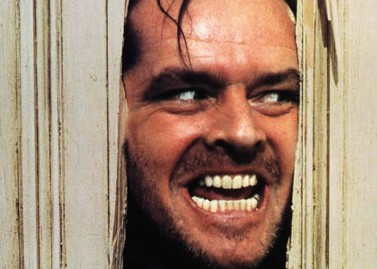
HERE'S JOHNNY! Crazymakers are skilled break-in-artists.
HERE’S JOHNNY! Crazymakers are skilled break-in-artists.

IF Writers got medals for creative courage, I’d have received one this week, for surviving my summer with a crazymaker.

It was the author of The Artist’s Way, Julia Cameron, who introduced me to the playful poison of crazymakers.

These are the chaotic spirits who swan into town and demand three nights on your sofa bed, just as you’re starting that dream job and need calm nights at home with your loved ones to be at your best.

Or the drama queens who recruit you into their grand schemes, but won’t answer the call to action when you suggest they lead the way.

My latest crazymaker arrived on the scene just as I was ascending the Everest of playwriting – executing the latest draft of a ten-year project.

It had been years since I’d had a crazy around my neck, and I didn’t see it coming. Time for a reminder about how to spot ’em.

Crazymaking clue: If someone asks for too much information at first meeting, they’re a crazymaker.

We met through writing, theirs so beautifully expressed that I decided the person behind it was worth meeting. Apart from the slightest scent of networking at our first meeting on neutral territory, and their propensity for over-apologetic texts, all seemed well.

We staffed the same project from different territories, me and my latest crazymaker. I’d started a lot earlier, enjoyed the exploration and the calm group achievement, but when they began, so too did the turbulence.

Crazymaking writers can present as brilliant communicators, until they meet their equals.

Then, despite a lifetime working with words, they profess a sudden inability to interpret emails when they just don’t like their contents.

Next, they command that phone calls and meetings are the only way to have dealings with them, yet they’ll rarely pick up the phone and instigate a conversation.

Prolific use of “I did this” manifests in their expression of group projects, leaving others to amend to the truth of: “We”.

They have no time for a project’s first draft, but want to change everything once it’s done.

And they demand to be paid, even when everyone else is volunteering.

My role was suddenly called off. It was the crazymaker who informed me. They’d swung the drama in another direction which benefited them.

Crazymaking clue: If someone on equal footing tells you what the status quo of your contribution is, they’re a crazymaker.

I write to a very strict schedule, every weekday. The world of my characters and their stories is my solace when turbulence hits in the ‘real world’ of group projects, day jobs and financial survival.

I have one foot in the economy, and one foot in art, so it’s a delight to dive into my creative space: an old desk on a breezy enclosed verandah, down a quiet street at one end of an invisible island.

Here, I can lose myself in a world I have spent many years making. Through loss, difficult choices, honesty with loved ones, ignoring bad advice and relying on my gut feelings, I have earned my creative space. Creative cards very close to my chest, I use my space wisely, and I protect it well.

Crazymaking clue: If they follow you into your creative space, they’re a crazymaker.

POOR PUSS Wants in, but don't be fooled!
POOR PUSS Wants in, but don’t be fooled!

Retreating into your creative space can trigger a crazymaker’s attack.

Like a cat at the door, my crazymaker yowled for creative shelter and soul food, and worked on my sympathy buttons with well-rehearsed moves.

But I kept my head down and wrote, despite the storm brewing outside.

With sudden, pesky emails, harping on about work already done, the crazy cat tried to claw a hole through. I stomped and boarded up the breach.

A few days later, it returned and professed angrily that a phrase I had published caused the world pain, and, caring fool that I am, I bought the lie.

I hit ‘pause’ on my climb, and opened the door. Like a bear woken from hibernation, I growled: “Show me, where is this pain of yours?”

The cat mewed that it had none. I cross-examined it for signs of suffering, but there were no wounds offered for healing, and no grievances uttered for salvation.

Puss dodged solutions to its imaginary issues left and right, and made a crazy offer: now that it had disturbed me, this crazymaker wanted us to work together, and they would take care of everything.

Call me crazy, but I said: “Yes, I’ll collaborate with you, pussycat.”

My lie bought me peace.

Thank you.

I returned to the summit. I’ve walked that country so often I could get there blindfolded. At base camp, I was concerned the conditions up on the mountain were not as good as they had been before I came down, but I bravely set off.

I declined that easy, feline yowl of failure that I had at my disposal if I too were tempted to self destruct, and on a beautiful island day, later than planned, I reached the summit.

Crazymaking clue: If they start your association with an apologetic tone, which is gradually replaced by a suggestion that you need to apologise, they’re a crazymaker.

I deserve my medal because I’ve fought-off crazymakers before, but it’s taken years to have the strength of character to name one and hold it to account so speedily.

Far from my island, the crazymaker went silent (as they do); built boundaries of their own (about time); broke them with high drama (go figure); told the world that I’d destroyed them (so schoolyard); and sent me an email as though nothing had ever happened (seriously?).

Crazymaking clue: If you come to realise you’ve allowed a crazymaker into your life, you’ve been a bit crazy too.

I’ve grown.

© Michael Burge, all rights reserved.
Mary Moody – growing like Topsy

MARY'S Mary Moody with some of Glenray Park's geese.
MARY’S WAY Mary Moody with some of Glenray Park’s geese.

Another encounter with a great gardener.

MARY Moody told her friends she’d never dig another perennial garden bed.

After a decade presenting the ABC’s popular Gardening Australia series, the penning of respected gardening titles, and with horticultural credentials ranking amongst the country’s greenest, it seemed as though Mary didn’t have time to garden anymore.

Geography had a lot to do with it.

Mary had fallen in love with the way of life in south-west France, and relocated there for a good portion of every year.

Her family also moved its Australian base from the Blue Mountains to Yetholme (nestled in the ranges east of Bathurst) and took-on the degraded Glenray Park farm.

But, it seems, you can’t keep a good gardener down … this article was published in Blue Mountains Life (Sep-Jan 2012).

The constant gardener

Mary Moody’s been letting her garden grow … again.

“The garden in Leura had become a millstone around my neck,” Mary remembers. “I’d created what I’d call a collector’s garden, and I was absolutely besotted with alpine perennials. It was a constant job just keeping on top of everything, not to mention expensive.”

Glenray Park attracted Mary with its century-old homestead, complete with great bones for a classic Australian home yard, but, on moving in, Mary’s love of gardening had to be left fallow. With her writing expanding into best-selling memoirs; her media appearances focussing more on Mary’s life than her gardening pursuits; and time in France and Nepal leading tour groups, the verdant lawns of Glenray Park got mown, and veggies were grown, but that was about it.

When asked if there was a tipping-point that got her back into her ‘nice’ gardening gloves, Mary laughs: “It was insidious. I created a small garden bed off our verandah, for a few of my favourite plants, and they just started to self-seed. It grew like topsy, and eventually I needed to create wider beds to accommodate everything”.

“I have to admit that nothing I’ve done since in the garden was very difficult – it just can’t be. I mulched the beds very deeply to keep the weeds down while I was away, and when I came home I returned to my weeding duties quite naturally.”

THE GROWING KIND Gardener and writer Mary Moody with some of her grandkids.

In the lead-up to Bathurst’s annual Spring Spectacular, a weekend of the district’s finest show gardens, Mary leads me though the gate near her now much-expanded ‘new’ garden.

Covered by the fallen pink petals of a flowering cherry, the plantings occupy a sunny strip between the house replete with euphorbias, cat mint, bulbs and classic country favourites like pansies and Dutch irises, and plenty of dominant roses.

“I did have a moment when I thought ‘you are mad, you’re going to have 1000 people look at your gardening mess’.

“But there’s nothing like a deadline. My son Ethan has been helping me one day a week, and we’re almost ready,” Mary says.

Mary’s ‘new’ garden is a natural extension of the house itself, with a beautiful, uncomplicated structure, and everywhere you look you’re reminded that Glenray Park is a working farm.

Fences and gates give way to fields and enclosures for chickens, goats, geese and alpaca, meaning that Mary’s garden is a home yard indeed – if it extended any further most of it would end up as feed for the animals.

A new project – a classic potager – has been developed with garden designer Nicole Clout and is situated behind a sturdy fence in sight of the chickens. Mary is hosting gardening workshops for kids this weekend, and her garden has already been tested by regular visits from her swag of grandchildren.

This part of her ‘new’ garden is a clue to what got Mary into gardening in the first place – creating organic produce for the family table. It’s been just over three decades since Mary and her filmmaker husband David Hannay took their young family away from the city, enough time for her gardening fame to bury the basic truth that gardening was always a means to a gourmet end for Mary.

GREAT GARDEN BONES Glenray Park, Yetholme, a home yard with garden potential.

But at Glenray Park, Mary has plans reaching way beyond her farm garden.

“I’m starting to plan something we’re calling ‘Sustainable Bathurst’ as a working title,” Mary reveals.

“This region was one of the first food producing districts in modern Australia, but over time crop  and stock production has become predominant. We are hoping to bring the market gardens back.”

And Mary’s decade in France has inspired the creation of a network of ferme auberge (‘farm restaurants’). “The whole idea of eating local food in season, grown here and prepared in the home, is very inspiring. I recently had a go at making sheep milk brie and goat feta.”

With a network of four other local farms already on board, the gourmet potential of Glenray Park seems about to burst. But this new direction has been built on solid organic principles, and not just in the garden.

“When we arrived, the farm was overgrown. After years of stock getting into the waterways, everything was fairly degraded. Ethan’s worked hard on the environmental farm management of Glenray Park, with the creation of a wildlife corridor and contained stock fields. He’s my back-up for the farm.

“Our creek is called Frying Pan Creek, because travellers from Lithgow would stop here for the night where a frying pan was literally nailed to a tree for everyone to use. Over time willows were planted, and they sucked the creek dry, but we have removed it all. There were once platypus here and we hope to have them back one day.

“Ethan reminds me that the ornamental garden must not enroach on the natural environment beyond the fence,” Mary says. “As long as the plants don’t jump the fence, everything will be in balance.”

© Michael Burge, all rights reserved.

Human rights of reply

FIGHTING DISCRIMINATION Andreas Ohm and Jim Woulfe, Michelle McCormack and Lynne Martin with son Tom, Michael Burge, Maria Vidal and Susan Everingham with daughter Antonia, and Jiro Takamisawa. (Photo: Sahlan Hayes).
FIGHTING DISCRIMINATION Andreas Ohm and Jim Woulfe, Michelle McCormack and Lynne Martin with son Tom, Michael Burge, Maria Vidal and Susan Everingham with daughter Antonia, and Jiro Takamisawa.
(Photo: Sahlan Hayes)

A Writer discovers his voice.

SOMEONE once said: “Don’t get mad, get even”, which must have been on my counsellor’s mind when he suggested something towards the end of my two years of grief counselling after the death of my partner, Jono.

The Australian Human Rights and Equal Opportunity Commission (HREOC), now the Human Rights Commission, were looking for people to make submissions to illustrate various aspects of their Same Sex: Same Entitlements investigation into financial discrimination against same-sex couples in Australia.

“Why not think about writing your experiences?” he put to me.

I said I’d think about it, although my first thought was that my experiences were somehow not relevant. Then I thought deeper.

The death of my partner, with whom I cohabited, ran a business, and had joint financial affairs, had cost me dearly emotionally, but it had also cost me economically.

Unlike straight people in my situation, Centrelink did not recognise the validity of my relationship in any way. I was unable to claim any kind of support linked to my grief or my monetary losses when I had to move house three times in one year, and take time off work.

Centrelink staff had been quite defensive about their organisation’s shortcomings, and told me to apply for Newstart (Newspeak for ‘the dole’) which came with the requirement to be seen to be seeking work and attending mind-numbing ‘how to write a resume’ courses.

I’d taken things into my own hands and gotten a part-time job in aged care, which I happily did for a few months until my car blew a gasket, and needed thousands of dollars for a new engine. I sold it as scrap, had to quit my job (for which I needed a car), and proceeded to hunker down in my cheap accommodation, a granny flat, until I had to move because the property was sold.

I headed back to Sydney and city rent, and tried to speed up my application for Jono’s superannuation, which was slowed by the machinations of his family. They threatened to apply for it in its entirety, then didn’t apply for it at all. None of them were in any way financially dependent on Jono when he died, so none of them were eligible.

I was, but, thanks to all the unwelcome nonsense, it was months before Jono’s super fund could simply do what the law required of them and send me a cheque.

I endured financial discrimination because my country had nothing for me by way of support. What was slightly galling was that certain demographics – straight divorcees over the age of 50, for example – were allowed to access the ‘widow’s pension’ automatically. No job-seeking or resume classes for them.

Me, a genuine widow, could get nothing.

ACTU-Worksite-Australian-Human-Rights-Commission

I didn’t feel like entering into a sob story, but when I contacted HREOC, they encouraged me to submit a written document on these experiences, because they had not received any accounts of people in my particular position, and many of the unequal laws applied to the circumstances of being widowed.

Like my affidavit to the Supreme Court of NSW, my submission to HREOC was easy to put together. They have strict guidelines, I couldn’t just cry: “It wasn’t fair!” and let them sort it out, I had to show where I fell between the cracks because I had lived in a same-sex de-facto relationship.

Part of the deal was the delivery of a live submission to the Commission, and a willingness to submit to media interviews afterwards. I agreed without thinking, because, when the day came, I had a plan to follow the contents of my written submission, but completely overlooked the possibility that emotions would take over.

I watched as other gay and lesbian people expressed their experiences, and, when my turn came, I forced my story out from beneath an aching heart.

Expressing the inexpressible about death is one thing. Defining negative behaviour by other people around that death is another. I struggled my way through my submission, masking hurt with the kind of plosives that hit the microphone with the cut-glass anger that is entirely suitable for such occasions.

As I exited the hearing I forgot about the media, and had more microphones shoved in my face to elaborate further. The interviews went live at midday, and many of my family and friends, and my counsellor, heard me explain the disenfranchisement to a State that finally seemed to be listening.

report_cover

Adele Horin, formerly of Fairfax Media, interviewed me at length on the phone after my HREOC submission, for an article which appeared in the Sydney Morning Herald.

It took her a few attempts to fully understand my position, and with hindsight I understood her difficulty was the same obstacle that many people encountered when coming to terms with my experience, because they simply could not understand why Jono’s mother and brother would do what they did, it was such an aberration.

In the end, I suggested she ask them directly for their reasons, to secure the ultimate right of reply, although I suggested she’d need to be tactful – their son and brother had died, after all, and the illegal actions they’d taken made them vulnerable to heavy fines and/or jail terms, had anyone really wanted to “get even”.

Somewhere in her research, Horin came to realise that my experience went way beyond financial discrimination and spoke to one of the final frontiers of same-sex equality in this country: marriage.

The last twelve months of the Howard government needed to pass before anyone in power was willing to read the Same Sex: Same Entitlements report.

So it was with great delight that many in the LGBTI community watched 11 years of conservative government swept away by KevinO7 and the ALP, who’d made the implementation of the Same Sex: Same Entitlements recommendations an election promise, and finally altered almost 100 pieces of discriminatory federal legislation in 2009.

The fight for full equality continues.

Michael’s story is published as Questionable Deeds.

© Michael Burge, all rights reserved.