
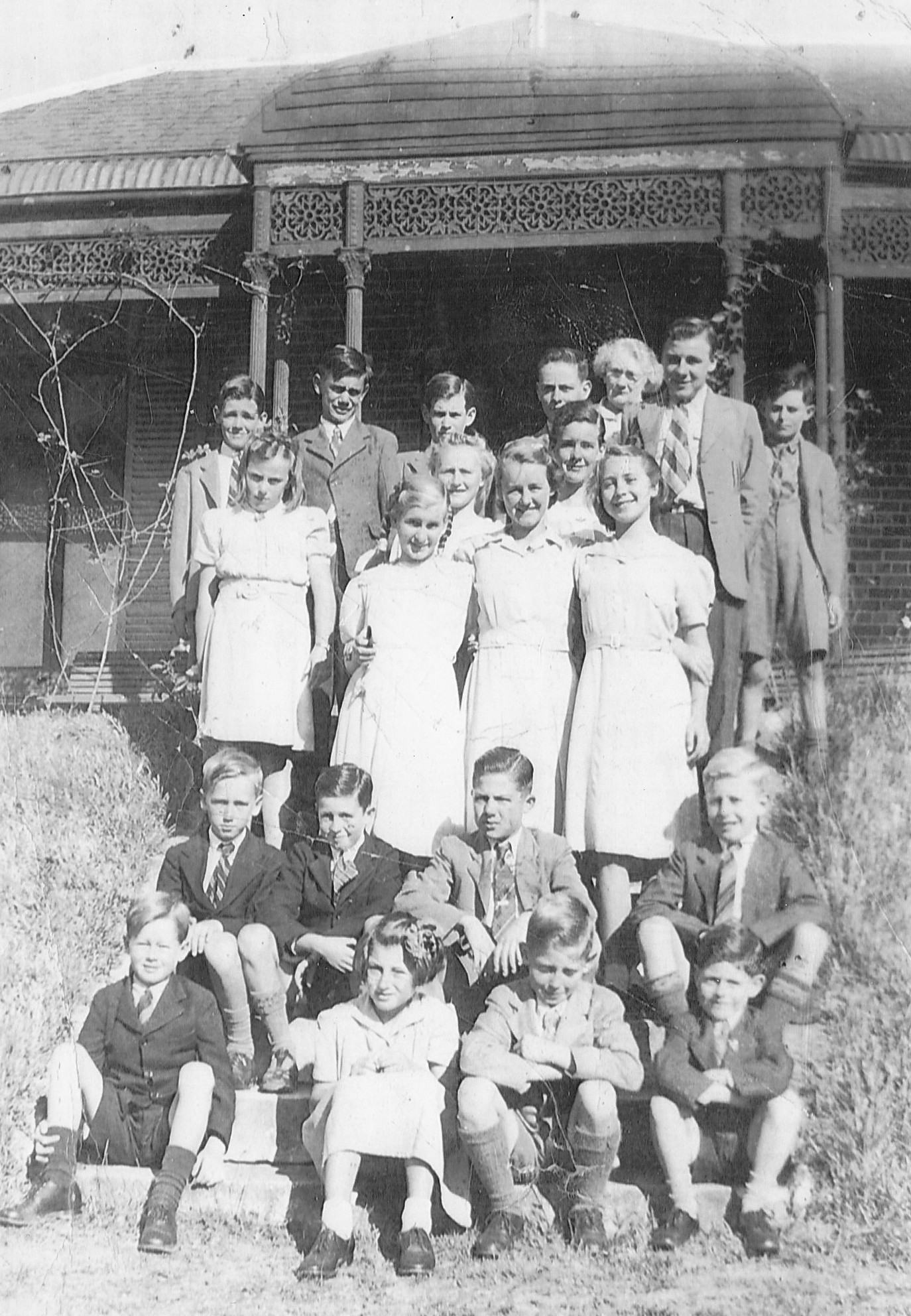
Two Writers collaborate on a hidden story.
THE years of research I’d undertaken on the historic home Coorah in Wentworth Falls took an interesting turn in 1995 when I was contacted by the current owner of the house, the Blue Mountains Grammar School, about a visitor who’d returned to Coorah after fifty years.
Yvonne Waters lived at Coorah during WWII, after it was gifted to the Bush Church Aid Society by the estate of the home’s original owner, Robert Pitt. In these years, Coorah served as a children’s home, a period of the building’s history only previously recorded in Bush Church Aid Society records, which related rather saccharine stories about the ‘happy days’ of the residents.
Because of its personal nature, it took many years of ruminating to bring Yvonne’s story to a wider audience. Inspired by the journey to justice started by the national apologies to the Stolen Generations and the Forgotten Australians, Yvonne’s account of her time at Coorah, as told to me during a searching interview, was published in Blue Mountains Life magazine in 2011, and related a very different story to the church records.
It is published here with Yvonne’s permission, inspired by the honesty of those who are beginning to tell their stories to the Royal Commission into Institutional Responses to Child Sexual Abuse.
Family, Interrupted
Yvonne Waters on her time at a Blue Mountains childrens’ home.
During World War Two many of Sydney’s children were evacuated to the Blue Mountains in the wake of the 1942 Japanese attack, but writer Yvonne Waters and her brothers found themselves in a Wentworth Falls children’s home in the winter of 1942 in the midst of a different kind of war.
“As we set out to walk to school – I was eleven, my brothers eight and five – suddenly our dad, whom we hadn’t seen since he’d left home five months previously, darted from behind a corner,” Yvonne recalls.
“Herded into the back of dad’s car, we were driven to our paternal nana’s house. Later that afternoon mum arrived. She had been to work, and on finding us not at home with our great aunt she had guessed what had happened. After numerous court cases, the court had cowardly decreed that if dad could manage to take us from our mother, he could keep us. I will never forget my last glimpse of our mother crying, after being told she would never see us again.”
Yvonne’s parents had separated at a time when public interest in divorce resulted in a family’s trauma being played out in the tabloid media, and since both had settled with new partners, neither was granted custody of the children.
After being moved between the Central Coast and western Sydney, Yvonne says, “Dad informed us he had found vacancies in a children’s home. With tremendous relief he pointed out how lucky we were, as all the other homes were full.”
Recalling their arrival soon after, she says, “The pines in rows like soldiers guarded the red gravel driveway which curved suddenly, revealing a Victorian two-storey building. Dad pulled over to the entrance, and motioned for us to get out”.

“He urged us up the nine stone steps to the verandah of the forbidding, silent building. Rattling the brass knocker on the huge oak door, he then turned to avoid seeing our stricken faces.
“Heavy footsteps on the other side signaled time was running out. A key turned in the lock. The door swung open to reveal a large, severe, grey-haired woman, dressed completely in black. She smiled, but the smile didn’t reach her eyes.
“‘Kiss your father goodbye!’ the woman we later knew as Matron ordered. The door was shut swiftly behind us and we were locked away from those we loved.”
The young trio had arrived at Coorah, an imposing home by the highway at Wentworth Falls. Once home to the Pitt family, the property was held by the Union Trustee Company after the death of Robert Pitt in 1935, with a stipulation that it be charitably gifted for the benefit of children.
The house was eventually given to the Bush Church Aid Society, an Anglican organisation which ran a number of children’s hostels, with a remit to provide accommodation for children living away from home for their education.
Just how three children in custody limbo (whose mother had no idea of their whereabouts) ended up at Coorah remains a mystery. Whatever the case, the shutting of the door changed Yvonne and her sibling’s lives forever.
Separated from her brothers on arrival, and forbidden to speak to them, even at meal times, Yvonne remembers, “We girls were allotted the job of kitchen chores and washing up after twenty-four children. The dining room floor would have to be scrubbed on hands and knees, and no girl would ever finish that mighty chore without reddened and bruised knees”.
“Twenty-four lunches had to be made before breakfast and Matron would stand behind me when it was my turn. Woe betide you if you tried giving anyone any extra.
“I think the teachers at the local school were aware of the conditions we lived in, as the headmaster asked me privately if we had enough food to eat.
“He’d witnessed one of our boys eating scraps from the school rubbish bin.”
Power struggles amongst resident children routinely resulted in abuse. “One frightening incident will never be erased from my mind,” Yvonne recalls. “An older boy in the home attempted to molest me. When I appealed to Matron for help, her answer shocked and hurt me.”
“‘You are a child of sin. You come from divorced parents. I would never believe your wicked lies!’ Today, I can still smell that boy’s dirty hands pressed against my mouth to stifle my screams. Only for the protection of a sympathetic older boy, I shudder to think what would have happened to me.
“I remember one boy was whipped with the buckle end of the strap, accused of laughing when saying grace. We were all still kneeling and I was opposite one of my brothers. Matron stood behind him and her temper seemed to be out of control. My look must have deterred her, so she moved on to the next victim.
“The feeling was high that evening. We all inspected the boy’s welted back. We were hurt and so angry.
“One girl and I retaliated to the cruelty by going on ‘strike’ and not doing the washing up. I’m amazed that we had the courage, for we were very afraid of the woman who controlled our lives. Arm-in-arm we ambled through the long grass to the edge of the paddock near the train line. We talked about the unfairness of everything and how we couldn’t wait to grow up and tell everyone about the treatment. Before we knew it, dusk was upon us! When we arrived at the back door, Matron had locked us out.
“Matron baffled and hurt us when she accused us of being with the boys. Her face was contorted with fury, and she was not at all interested in the truth.”
Yvonne believes the issue of boys and girls being housed together led to her eventual release from Coorah after eighteen months, when sent to an all-girl home in the Southern Highlands. Despite trying to write to them at Coorah, she lost touch with her brothers.
“I finally met them again before I was sixteen,” Yvonne recalls. “We smiled shyly at one another, but had nothing to say. It was a meeting between strangers.”
Fifty years after leaving Coorah, Yvonne was on a day trip to the Blue Mountains with her writing teacher, who encouraged her to pay a visit. The property had been owned by the Blue Mountains Grammar School since the 1950s.
“Not wanting to repeat the horrors recalled at that front door, I found a side door. A pleasant lady called Sandra answered my tentative knock. I suddenly couldn’t wait to look through my old dormitory window. The stairs were carpeted now and at the top we entered a room with computers and some workers.
“Everyone moved aside as I walked to where my bed had been. Standing in front of that window, I was eleven years old again, waiting for the sight of an occasional train and praying for my mother to find me. Those brightly lit carriages appeared to carry toy figures to their homes, and conjured up mine being a little closer to me.
“My thoughts raced back to a freezing day when a girl called up the stairs, ‘Yvonne, your Mother is here.’ I’d thought how cruel she was to joke.
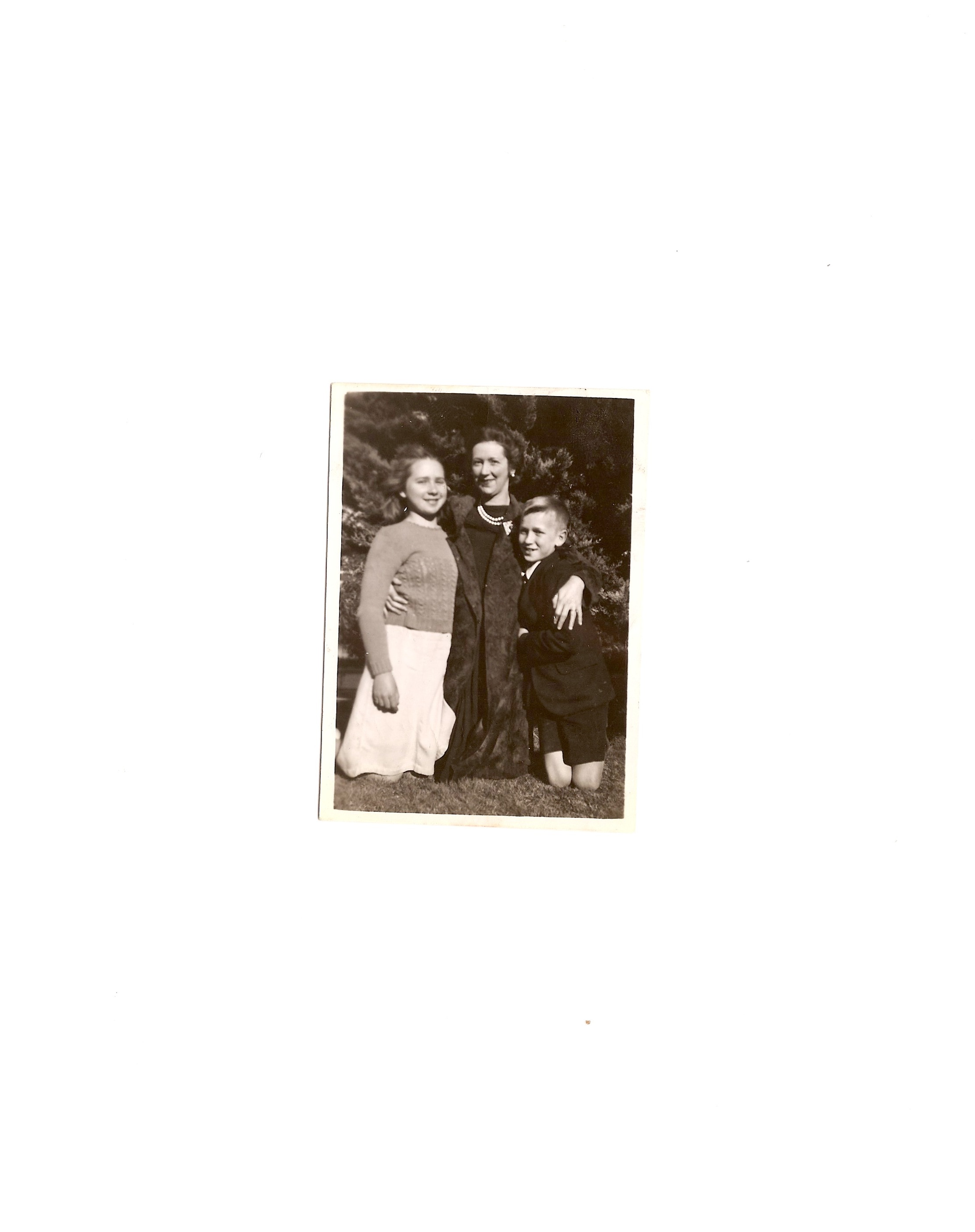
“The ground was heavily carpeted with snow. There, at the side of the building, was my Mother. She smiled and held out her arms to me. I tried to reach her, but my feet sank in the mush and I collapsed. My frozen body was lifted, and she held me close inside her warm coat.
“Nearly blinded by tears, I turned to face the people in my room of memories. They were gathered silently in a corner, some wiping their eyes. I felt as though I had been released from a lifelong jail sentence.”
At a distance of seventeen years since she first revisited Coorah, Yvonne is philosophical about what happened to her family. Writing about the journey has helped lay some ghosts to rest, and also the recent acknowledgement of similar separations wrought on the Stolen Generations and Forgotten Australians. “I can really feel their hurt,” she explains.
“My story is not to seek anyone’s sympathy,” she adds, “only to tell the truth of what actually happened under the cloak of religion. Today we live in a more enlightened age. Thanks to the Family Law Act, no blame is attached to either party in a divorce case”.
“I believe I had to go through so much to learn, and I have been able to help people when they’ve been unable to talk about bad things that have happened in their lives.
“Returning to the ‘scene of the crime’ helped to release my pain,” Yvonne adds.
Yvonne’s recollection of her time at Coorah has links to other elements of the property’s story, particularly the acres of daffodils around the house, planted by the original owner Robert Matcham Pitt (1849-1935).
© Michael Burge, all rights reserved.




 And I gave one young audience member a day he’ll never forget!
 Michael Burge Media