Category Archives: Artists

O Come all ye Forceful

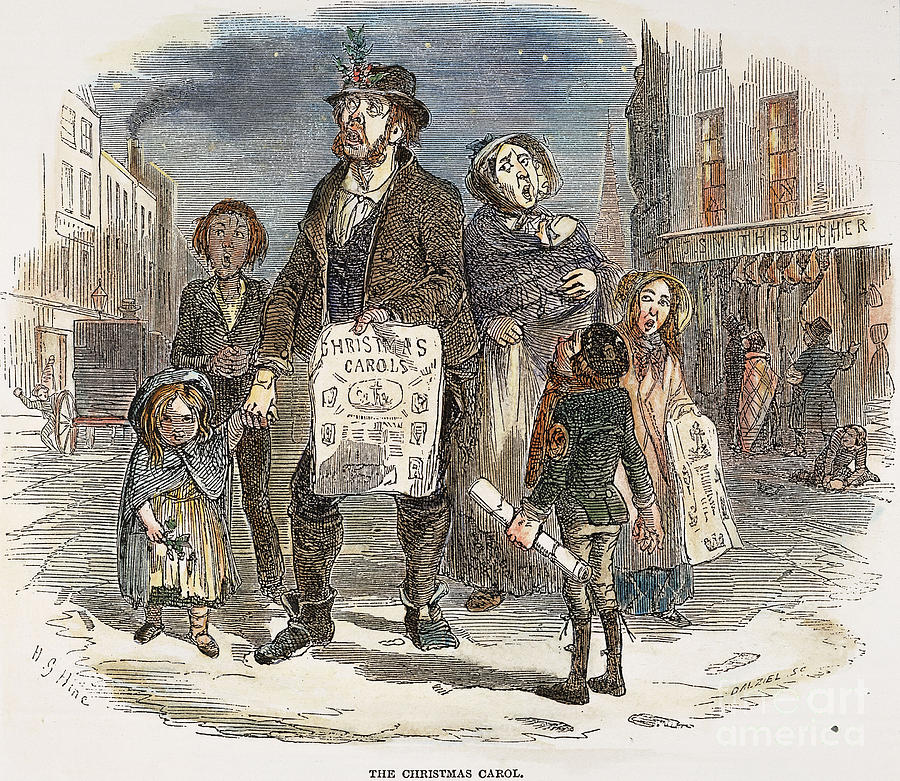
GIVE A LITTLE Christmas carols come from a long tradition of protest.

A Writer on protest Christmas carols.

DURING the silly season, when you catch a strain of yuletide song at your local shopping centre, know that what you’re listening to (or doing your best to avoid) probably started its life as a protest song.

Well, perhaps not technically a protest song, but a Protestant song, which once meant the same thing.

When Martin Luther reformed the church establishment in the 16th century, he brought song into the churches and placed it in the mouths of the faithful.

A songwriter in addition to being a reformer, Luther was keen for men and women to sing in their own language, instead of listening to male choirs performing in languages most congregations barely understood.

Crowds of people have been singing back at the pulpit ever since. Heck, I’m going to credit Martin Luther with the creation of popular music!

“Here’s my Christmas present to you: check out the video clip to our generation’s protest Christmas carol.”

The celebration of Carols by Candlelight in the Australian summer, and the tradition of wassailers walking from house to house singing carols in the northern hemisphere winter holiday, grew from this egalitarian sharing of messages of hope and forgiveness.

Good King Wenceslas”, a staple of carolers across the Western world, tells the tale of a privileged man who reached out to a needy one. Sung on the doorstep of the wealthy, it’s a call to share. Sung on the street to the homeless, it calls for us to have no shame in asking for alms.

A carol is free speech, shared by a community, often embedded with messages of hope and reminders of humility, and not necessarily owned by anyone. Admit it or not, you probably could reel-off a few if you were forced to, just like at school, and they’ve been popping up in popular culture for some time.

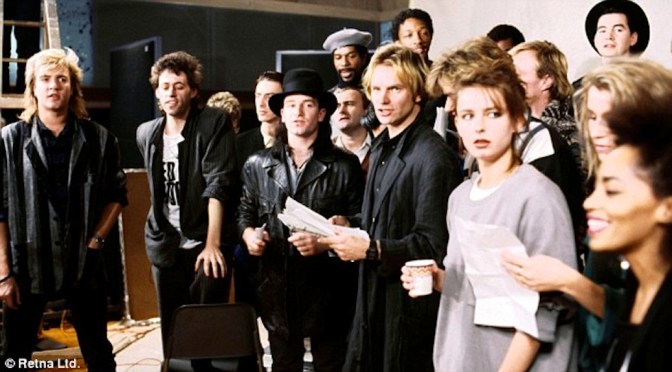
Ironic because its message of giving emerged in the midst of the decade since labelled the ‘greedy’ Eighties, Bob Geldof and Midge Ure’s “Do They Know it’s Christmas?”, recorded by the Band Aid charity ‘supergroup’, utilised star power to raise millions of dollars to aid people suffering in the Ethiopian famine.

The song has had resonance for the three decades since its first recording, but neither the 1989, 2004 or 2014 reboots, or the recent cover by the cast of American teen musical television series Glee, saw the same amount of money or interest raised by the 1984 version, which remains one of the most enduring examples of a disparate group of pop stars overcoming egos and geographic barriers to simply lend a hand.

PROTEST SONG John and Yoko's 1971 effort.
PROTEST SONG John and Yoko’s 1971 effort.

Like John Lennon and Yoko Ono’s “Happy Christmas (War is Over)”, written as an anti-Vietnam War anthem, “Do They Know It’s Christmas?” has begun a cultural transformation into a Christmas carol.

The song and the movement behind it has faced harsh critics since its release.

Lambasted for perceived creative shortcomings, and the subject of ongoing speculation about large portions of the funds being creamed-off by Ethiopian warlords, co-writer Bob Geldof has often been moved to blast the media about its coverage of criticism of the Band Aid movement.

As a 14-year-old I witnessed the release of the video and the single of “Do They Know It’s Christmas?” The song was on everybody’s lips for a summer, and the subsequent international Live Aid in July 1985, also organised by Geldof and Ure, was the concert ticket of the decade.

Watching the video now, the pathos of the moment, and what’s happened in the world since, makes me well-up.

There’s Boy George, voice like a clear bell, before it all went wrong; and Paula Yates and her kids, waving in the throng. There’s George Michael, a paragon of talent, long before he was outed; and a soaring Bono, practising being a global awareness raiser.

There are the stars, and the bands (and their hairdos) who didn’t know they were already on the wane, and those who have survived to become icons: the superstars of my youth in all their self-conscious glory turned-up when they were needed.

I’m proud of my generation for this song, which essentially belongs to the people of Ethiopia.

But, almost thirty years on, the original version of “Do They Know It’s Christmas?” is hard to come by. Only the array of cover versions is available on iTunes.

The lyric in the finale of the song – “Feed the world” – has lost its original context. The Glee cast video makes no reference to starving children in Ethiopia, it’s a call to feed the needy, everywhere.
So, if you’re my age and older, here’s my Christmas present to you: check out the video clip to our generation’s protest Christmas carol and tell me, has anything recorded since had the same impact?

Don’t forget to sing along, you know the words!

This article first appeared on NoFibs.

© Michael Burge, all rights reserved.

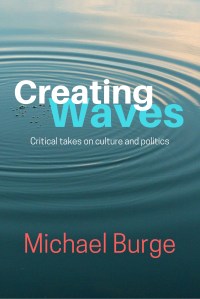
This article appears in Michael’s eBook Creating Waves: Critical takes on culture and politics.
Orry-Kerry – the costume king from Kiama

KING ORRY Australia's first Oscar winning costume designer Orry Kelly (1897-1964).
KING ORRY Australia’s first Oscar-winning costume designer Orry ‘Jack’ Kelly (1897-1964).

JUST about everyone I knew as a kid went to Kiama for the school holidays. Apart from its famous blow-hole, through which the ocean mysteriously forces a geyser-like spray to the delight of tourists, there is nothing extraordinary about this sleepy town which has all the caravan parks, bait shops and holiday rentals of every town on the south coast of NSW.

At the back of my mind on a nostalgic return trip a decade ago was Kiama’s most famous son, the three-time Oscar-winning costume designer, Orry-Kelly.

I half expected to see a worn plaque on an old civic building, or perhaps a statue. After all, it’s not every day an Australian from a small town wins three Academy Awards.

But there was nothing. I joked about the oversight with a lady at the well-stocked charity shop at the town centre, and she looked at me as though I was slightly unhinged.

The facts about Orry-Kelly (1897-1964) are undeniable. In his lifetime he became, like Adrian, a one-name icon of movie couture.

Barely a leading lady worth her salt would grace the screen without passing through his Hollywood fitting room from the 1930s until the 1960s.

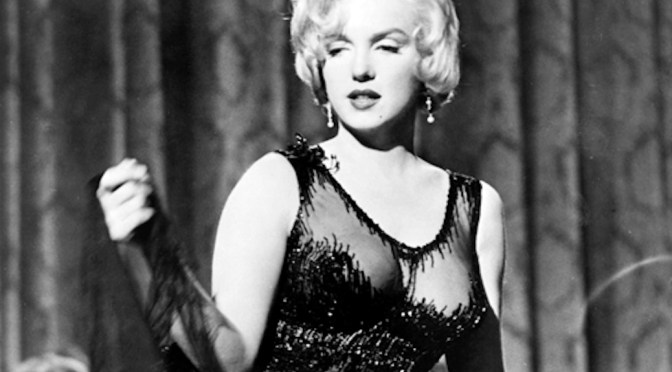
Responsible for some indelible movie outfits, like the fringed black number Marilyn Monroe’s shimmied so effectively in with her ukulele in Billy Wilder’s Some Like it Hot, Orry-Kelly was Hollywood royalty.

LITTLE BLACK NUMBER Designed by Kiama's forgotten son Orry-Kelly for Marilyn Monroe.
LITTLE BLACK NUMBER Designed by Kiama’s forgotten son Orry-Kelly for Marilyn Monroe in Some Like it Hot (1959).

In that era, a result of sodomy laws that were not repealed in California until 1962, Orry, or ‘Jack’ Kelly, as he was known to his friends, sat on one of the worst kept secrets in movies.

He was, like many a ladies’ costumier before and since, gay.

Although Kiama, and Australia, did not forget Orry-Kelly for that reason alone.

Since Australian Lizzy Gardiner won an Oscar for her costumes for The Adventures  of Priscilla, Queen of the Desert, and Catherine Martin broke Orry-Kelly’s fifty-year reign as our Oscar record-holder for her work on The Great Gatsby, in film and design industry circles, Kelly has been well-remembered.

But remembering Orry-Kelly comes with a pretty big Hollywood revelation, one which has undoubtedly contributed to his relative anonymity in the country of his birth, because Kiama’s forgotten son knew another Hollywood icon, loved and lived with him, long before they both made it big on the silver screen.

The young fellow was a British born vaudeville performer called Archie Leach, who Kelly met after leaving Kiama and heading for New York, when Jack was 24 and Archie was just 17.

The two shared an apartment with Charlie Phelps (an “hermaphrodite performer” under the stage name ‘Charlie Spangles’, according to writer W.J. Mann) and lived a rather romantic-sounding existence in the gay subculture of Greenwich Village.

Tall and handsome, Archie quickly got work in Broadway musicals. Jack wanted an acting career too, although his design skills were quickly employed on everything from movie titles to bathrooms.

The two were lovers, until Archie eventually headed for the west coast and changed his name, on the way to becoming one of Hollywood’s most enduring leading men: Cary Grant.

CARY ON Archie Leach, aka Cary Grant (1904-1986).

Jack followed, and reinvented himself as the hyphenated Orry-Kelly, costumier on over 200 movies, winning Oscars for An American in Paris, Les Girls and Some Like it Hot in the 1950s.

Among his truly iconic films was one of cinema’s greats – Casablanca.

The public difference between the two men’s careers remains Grant’s five marriages.

Nevertheless, their friendship remained deep enough for Grant to serve as one of Kelly’s pallbearers after his 1964 cancer-related death, alongside actor Tony Curtis and directors George Cukor and Billy Wilder.

His eulogy was delivered by movie mogul and friend, Jack Warner.

This was admiration indeed, but was it also simply necessary for friends to step-up in the absence of family half a world away in the southern hemisphere?

Despite the distance he put between himself and his home town, connections to Kiama ran deep for Orry-Kelly. Outfitting was in his blood – his father, William Kelly, a tailor from the Isle of Man, was a clothier in the coastal town.

After his father’s death, Orry-Kelly returned to Kiama briefly to his family home, which was above his father’s shop.

And his name was no Hollywood fake – ‘Orry’ was to remember the great Manx King Orry, a name which William Kelly, and Orry’s mother, Sydney-born Florence Purdue, gave not only their son, but also a hybridised Carnation flower.

Orry-Kelly’s life story is on the brink of taking its rightful place in our consciousness with the release of Director Gillian Armstrong’s documentary Women He’s Undressed, and the much-anticipated publication of Kelly’s ‘unpublishable’ autobiography.

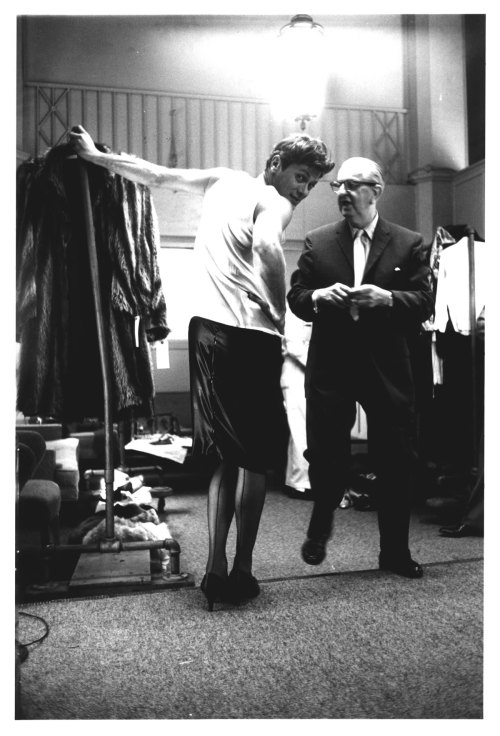
FITTING TRIBUTE The story of Orry-Kelly (pictured here with Tony Curtis in preparation for Some Like it Hot) is the subject of an upcoming Gillian Armstrong documentary.

Although the story of the making of the doco, to be released by Umbrella Entertainment, might prove to be as interesting as the documentary itself.

Telling Orry-Kelly’s story would have been a hollow exercise without his memoir to fill in the gaps between the many myths about his life, but access to it was a slow process for the filmmakers.

Lying uncatalogued in the Warner Brothers’ research library for five decades, the manuscript possibly came into that company’s hands after Kelly’s death, when certain of his personal items – including his three Oscars – were granted to Jack Warner’s wife, Ann.

But due to reported legal concerns expressed by the estate of Cary Grant, who died in 1986, the manuscript languished because it apparently detailed Kelly’s relationship with the screen idol.

Warner Brothers now owns some of Cary Grant’s most famous films, including The Philadelphia Story, one of his breakthrough ‘leading man’ roles.

Only one other copy of Kelly’s memoir came to light, after a long search within his remaining family in NSW, secreted in a pillowcase in Kelly’s great niece’s home in the Hawkesbury region north-west of Sydney.

Gillian Armstrong made light of the coincidental nature of both copies coming to her attention in the same week, during the period when financing the film that will out both Cary Grant and address a lingering omission in Australian history, was looking far from certain.

In Archie Leach’s birthplace, the English city of Bristol, a statue was unveiled in 2001 for the vaudeville performer who became Cary Grant, one of Hollywood’s most beloved idols who regularly features in the top five of ‘favourite movie stars of all time’ lists.

His widow, Barbara James, performed the unveiling.

pluck-cover
BUY NOW

Since my visit to Kiama, an art gallery remembering Orry-Kelly has opened it’s doors, but Kiama never had anything to worry about – their most famous son didn’t pretend to be anything he wasn’t.

This article appears in Michael’s eBook Pluck: Exploits of the single-minded

© Michael Burge, all rights reserved.

Boldly going nowhere: the inequality of Sci-Fi

SPACE PHENOMENON Patsy Trench (left) as Cadet Tina Culbrick in Phoenix Five.

A Writer explores the limits of the universe’s acceptance.

“WHEN I was nine years old Star Trek came on,” actress Whoopi Goldberg told Gene Roddenberry, creator of Star Trek, at a casting session for the show’s reboot in the early 1990s.

“I looked at it and I went screaming through the house: ‘Come here, mum, everybody, come quick, come quick, there’s a black lady on television and she ain’t no maid!’ I knew right then and there I could be anything I wanted to be, and I want to be on Star Trek.”

That ‘black lady’ was African-American actor Nichelle Nichols, in the role of Lieutenant Uhura, a character who inspired even Dr. Martin Luther King to follow the voyages of the Starship Enterprise.

Goldberg’s moment of validation and inspiration is now half a century behind us. In fifty years from now, will stories emerge about children today who saw themselves in the current crop of mainstream science fiction titles, or has Sci-Fi lost its edge within today’s asteroid belt of conservatism?

A bit of time travel might unearth some answers.

When George Lucas relaunched the Star Wars franchise in the late 1990s, he created a character whose name still draws ire across the geek chat rooms: Jar Jar Binks.

Designed to appeal to younger audiences in a similar manner to the Ewoks of Return of the Jedi, Jar Jar, a Gungan from the planet Naboo, with his exaggerated mannerisms and flamboyant voice, seemed to have the opposite effect, and he was subsequently toned down and written into the sidelines of two further prequels.

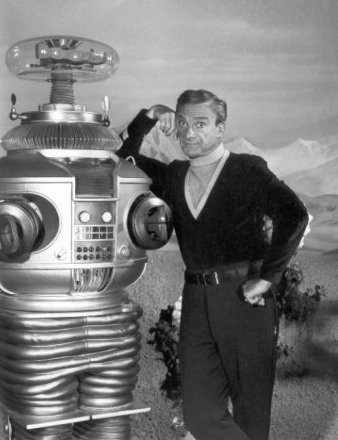
The fear of flamboyant space travellers and aliens was not always so keen. Doctor Zachary Smith in Lost in Space (played by Jonathan Harris) camped and shrieked his way through the series, defying any notion of being sidelined.

BUMBLING BOOBY! Jonathan Harris as Dr Smith in Lost in Space.

That he was a comically selfish villain, opportunistic in his attempts to get back to Earth, leaving the Robinson family behind, didn’t seem to matter. Flamboyant was fine, as long as you were the bad guy.

More recently the Doctor Who franchise (and its spin-off, Torchwood) experimented with alternate sexuality in the form of the bisexual Captain Jack Harkness (played by John Barrowman), but his intergalactic promiscuity, and the untimely death of his longest love, ensured audiences never had to countenance this high-profile non-heterosexual character in a relationship as progressive as a commonplace same-sex marriage.

Sci-Fi lesbianism is even more marginal, offering only a handful of onscreen same-sex kisses and a whole universe of subtext in everything from Alien: Resurrection to Xena Warrior Princess.

Here in Australia, TV producers were quick to jump on the bandwagon of popular TV series set in the future, with a crop of titles on our small screens by the end of the 1960s.

One of these was Phoenix Five produced by the Australian Broadcasting Corporation from 1968-69.

Amongst the show’s stars was Patsy Trench (now a London theatre guide) in the role of Cadet Tina Culbrick, the only female in a crew of three on the galactic space patrol ship of the show’s title, tasked with protecting the known universe from an evil humanoid and a rebel scientist in the year 2500.

“It was certainly not a progressive series, not in any sense,” Patsy said. “It made no social statements, it was just a series of adventures featuring three humans versus a number of weird aliens”.

“As for gender equality, the characters were all pretty well asexual. We wore identical clothing – a yellow tunic-type top (very cliché Sci-Fi) and very unflattering black ski pant-type trousers. There was absolutely no sense of sexual tension between the three of us and no sense of gender – equality or otherwise. Tina may have objected from time to time to being patronised by her male crew members, but that’s about as far as it went.

HIS AND HERS The key cast of Phoenix Five.
HIS AND HERS The key cast of Phoenix Five in their gender-neutral tunics (Clippings courtesy of Patsy Trench).

“Every single episode I had to say ‘space phenomenon ahead’, whatever that was supposed to mean.

“It became a running joke. I remember pressing a series of buttons without having a clue what they were or what I was supposed to be doing.

“Nowadays a director and actor might pay a bit of attention to that kind of detail, but not then.”

I asked Trench whether she believes Australia was capable in the 1960s of imagining a future that had racial/sexual equality?

“Probably not,” she said. “When I was living there in the late Sixties I did not get the impression the Aboriginal people featured much in people’s consciences, certainly not as they do now. I’m not sure when they were given full voting rights, but I think it was around that time, and I had no idea it had taken so long – the issue was never discussed.”

Does Trench think Sci-Fi has a role to play in imagining a more equal future?

“Of course, because the limits are as huge as our imaginations,” she said.

Territory upon which only the boldest equality explorers tread is one which has long been a source of some of Science Fiction’s most renowned characters: disability.

Few children of the Seventies will have missed the blind, wheelchair-bound Davros who first appeared in the 1975 Doctor Who ‘Genesis of the Daleks’ episodes, probably the most prominent example of a physically disabled humanoid character ever to feature on television screens in our living rooms at prime time.

In her enlightening feature ‘Disability in an alternative universe’ for the ABC’s Ramp Up disability discussion forum, Leah Hobson gets right to the point: “As a fan of science fiction and fantasy – genres which most often ask ‘what if?’ in more playful and profound ways – I notice the dearth of ‘good’ stories about disability”.

“If a character is portrayed with any sort of disability,” Hobson wrote, “a realistic depiction means you’re typically male, and you’re typically either bound to a bitter and/or evil existence with a good dose of sexual openness thrown in just to really show you’re evil.”

Exploring whether there is any positive purpose to depictions of Transhumanism (the human condition enhanced by technology) in Sci-Fi, Hobson found more questions than answers.

I started to enjoy Doctor Who when River Song (played by Alex Kingston) became a regular character, and, in geeky conversations at work about the future of the show, I threw in my view that the show’s producers might be grooming River Song to be the series’ first female Doctor.

And why not? She was riveting, charismatic, intelligent and kept taunting viewers on her backstory with her cheeky warning: “Spoilers, sweetie”.

During 11th Doctor Matt Smith’s unsuccessful regeneration in ‘The Impossible Astronaut’ episode, I hoped to see River’s signature curls emerge from the amniotic glow to be reborn as his replacement. Sure, she was standing right there watching, but this is Sci-Fi, anything could happen, right?

But The Doctor was killed (to tell you more would be a spoiler), along with all my hopes for River Song, who joined Amy, Rose, Martha, Tegan and Sarah Jane, playing second fiddle through time and space.

Dr King made a resounding point when he learnt that Nichelle Nichols wanted to leave the cast of Star Trek. As she recalled, he said: “Gene Roddenberry has opened a door for the world to see us. If you leave, that door can be closed, because, you see, your role is not a black role, and it’s not a female role, he can fill it with anything, including an alien.”

Until mainstream science fiction producers start opening a few more doors, and opening them wider than Roddenberry ever did, equality in Sci-Fi will remain far, far away.

This article appears in Michael’s eBook Creating Waves: Critical takes on culture and politics.
© Michael Burge, all rights reserved.