Category Archives: LGBTIQ Equality

Orry-Kerry – the costume king from Kiama

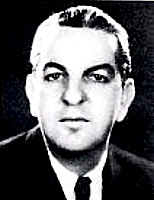
KING ORRY Australia's first Oscar winning costume designer Orry Kelly (1897-1964).
KING ORRY Australia’s first Oscar-winning costume designer Orry ‘Jack’ Kelly (1897-1964).

JUST about everyone I knew as a kid went to Kiama for the school holidays. Apart from its famous blow-hole, through which the ocean mysteriously forces a geyser-like spray to the delight of tourists, there is nothing extraordinary about this sleepy town which has all the caravan parks, bait shops and holiday rentals of every town on the south coast of NSW.

At the back of my mind on a nostalgic return trip a decade ago was Kiama’s most famous son, the three-time Oscar-winning costume designer, Orry-Kelly.

I half expected to see a worn plaque on an old civic building, or perhaps a statue. After all, it’s not every day an Australian from a small town wins three Academy Awards.

But there was nothing. I joked about the oversight with a lady at the well-stocked charity shop at the town centre, and she looked at me as though I was slightly unhinged.

The facts about Orry-Kelly (1897-1964) are undeniable. In his lifetime he became, like Adrian, a one-name icon of movie couture.

Barely a leading lady worth her salt would grace the screen without passing through his Hollywood fitting room from the 1930s until the 1960s.

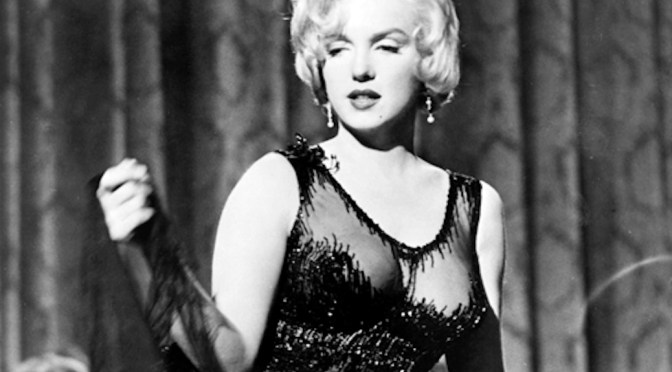
Responsible for some indelible movie outfits, like the fringed black number Marilyn Monroe’s shimmied so effectively in with her ukulele in Billy Wilder’s Some Like it Hot, Orry-Kelly was Hollywood royalty.

LITTLE BLACK NUMBER Designed by Kiama's forgotten son Orry-Kelly for Marilyn Monroe.
LITTLE BLACK NUMBER Designed by Kiama’s forgotten son Orry-Kelly for Marilyn Monroe in Some Like it Hot (1959).

In that era, a result of sodomy laws that were not repealed in California until 1962, Orry, or ‘Jack’ Kelly, as he was known to his friends, sat on one of the worst kept secrets in movies.

He was, like many a ladies’ costumier before and since, gay.

Although Kiama, and Australia, did not forget Orry-Kelly for that reason alone.

Since Australian Lizzy Gardiner won an Oscar for her costumes for The Adventures  of Priscilla, Queen of the Desert, and Catherine Martin broke Orry-Kelly’s fifty-year reign as our Oscar record-holder for her work on The Great Gatsby, in film and design industry circles, Kelly has been well-remembered.

But remembering Orry-Kelly comes with a pretty big Hollywood revelation, one which has undoubtedly contributed to his relative anonymity in the country of his birth, because Kiama’s forgotten son knew another Hollywood icon, loved and lived with him, long before they both made it big on the silver screen.

The young fellow was a British born vaudeville performer called Archie Leach, who Kelly met after leaving Kiama and heading for New York, when Jack was 24 and Archie was just 17.

The two shared an apartment with Charlie Phelps (an “hermaphrodite performer” under the stage name ‘Charlie Spangles’, according to writer W.J. Mann) and lived a rather romantic-sounding existence in the gay subculture of Greenwich Village.

Tall and handsome, Archie quickly got work in Broadway musicals. Jack wanted an acting career too, although his design skills were quickly employed on everything from movie titles to bathrooms.

The two were lovers, until Archie eventually headed for the west coast and changed his name, on the way to becoming one of Hollywood’s most enduring leading men: Cary Grant.

CARY ON Archie Leach, aka Cary Grant (1904-1986).

Jack followed, and reinvented himself as the hyphenated Orry-Kelly, costumier on over 200 movies, winning Oscars for An American in Paris, Les Girls and Some Like it Hot in the 1950s.

Among his truly iconic films was one of cinema’s greats – Casablanca.

The public difference between the two men’s careers remains Grant’s five marriages.

Nevertheless, their friendship remained deep enough for Grant to serve as one of Kelly’s pallbearers after his 1964 cancer-related death, alongside actor Tony Curtis and directors George Cukor and Billy Wilder.

His eulogy was delivered by movie mogul and friend, Jack Warner.

This was admiration indeed, but was it also simply necessary for friends to step-up in the absence of family half a world away in the southern hemisphere?

Despite the distance he put between himself and his home town, connections to Kiama ran deep for Orry-Kelly. Outfitting was in his blood – his father, William Kelly, a tailor from the Isle of Man, was a clothier in the coastal town.

After his father’s death, Orry-Kelly returned to Kiama briefly to his family home, which was above his father’s shop.

And his name was no Hollywood fake – ‘Orry’ was to remember the great Manx King Orry, a name which William Kelly, and Orry’s mother, Sydney-born Florence Purdue, gave not only their son, but also a hybridised Carnation flower.

Orry-Kelly’s life story is on the brink of taking its rightful place in our consciousness with the release of Director Gillian Armstrong’s documentary Women He’s Undressed, and the much-anticipated publication of Kelly’s ‘unpublishable’ autobiography.

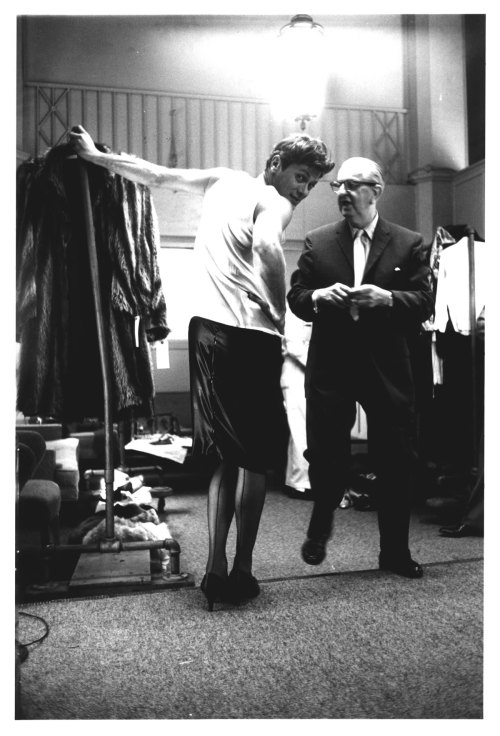
FITTING TRIBUTE The story of Orry-Kelly (pictured here with Tony Curtis in preparation for Some Like it Hot) is the subject of an upcoming Gillian Armstrong documentary.

Although the story of the making of the doco, to be released by Umbrella Entertainment, might prove to be as interesting as the documentary itself.

Telling Orry-Kelly’s story would have been a hollow exercise without his memoir to fill in the gaps between the many myths about his life, but access to it was a slow process for the filmmakers.

Lying uncatalogued in the Warner Brothers’ research library for five decades, the manuscript possibly came into that company’s hands after Kelly’s death, when certain of his personal items – including his three Oscars – were granted to Jack Warner’s wife, Ann.

But due to reported legal concerns expressed by the estate of Cary Grant, who died in 1986, the manuscript languished because it apparently detailed Kelly’s relationship with the screen idol.

Warner Brothers now owns some of Cary Grant’s most famous films, including The Philadelphia Story, one of his breakthrough ‘leading man’ roles.

Only one other copy of Kelly’s memoir came to light, after a long search within his remaining family in NSW, secreted in a pillowcase in Kelly’s great niece’s home in the Hawkesbury region north-west of Sydney.

Gillian Armstrong made light of the coincidental nature of both copies coming to her attention in the same week, during the period when financing the film that will out both Cary Grant and address a lingering omission in Australian history, was looking far from certain.

In Archie Leach’s birthplace, the English city of Bristol, a statue was unveiled in 2001 for the vaudeville performer who became Cary Grant, one of Hollywood’s most beloved idols who regularly features in the top five of ‘favourite movie stars of all time’ lists.

His widow, Barbara James, performed the unveiling.

pluck-cover
BUY NOW

Since my visit to Kiama, an art gallery remembering Orry-Kelly has opened it’s doors, but Kiama never had anything to worry about – their most famous son didn’t pretend to be anything he wasn’t.

This article appears in Michael’s eBook Pluck: Exploits of the single-minded

© Michael Burge, all rights reserved.

It’s too late for marriage equality in Australia

A Writer calls-out a political stalemate.

IN April 2013 journalist Gay Alcorn declared the culture war was over for marriage equality and confidently asserted that after “a year or two” LGBTQI couples would bask in the same connubial rights as straight Australians.

She declared the debate “interminably dull” and credited lobby group Australian Marriage Equality’s (AME) latest pitch for support – via the small business benefits of allowing same-sex marriage – with triggering her boredom threshold.

Because I didn’t think Alcorn’s angle helped the debate, I began a long analysis of the foot-dragging this political football has endured in Australia. Here we are eighteen months since Alcorn’s boredom levels peaked, and only one thing has changed: support for marriage equality in this country has skyrocketed since Alcorn reported a 54 per cent assent, to a whopping 72pc.

This is a world record – even in countries which have already passed marriage equality legislation, community support for same-sex marriage is nowhere near that high.

So, with apologies to Gay and anyone else who’s asleep on marriage equality, here’s why it’s already too late for anyone in the current political spectrum to bring full civil rights to lesbian and gay Australians.

Tony Abbott will never take the free kick

After promising his cabinet would be free to raise the issue of marriage equality “after the election”, nobody in the Coalition party room seems keen to take up the challenge.

“In order to lead Australia to marriage equality, our primary leader, our Prime Minister Tony Abbott, needs someone in his party to lead him to the debate.”

I have an undeniable gut feeling that twelve months “after the election”, if he was ever going to back marriage equality, Tony Abbott already would have done.

His sister Christine Forster and her partner Virginia Edwards announced their engagement after the election. I imagine they’re getting quite impatient to tie the knot on home soil, and it’s Christine we have to thank for the latest news about her brother’s leadership on the issue, when she spoke at a Parents and Friends of Lesbians and Gays (PFLAG) event in Brisbane last month.

“I have been married, I am a gay woman, a lesbian, but I was married for 20 years,” Forster said, “so I know the significance of marriage and how that speaks to your community, friends and family and what it says about the special relationship you have with your partner”.

THEY'RE WAITING Christine Forster (right) with her partner Virginia Edwards. (Photo: James Boddington)
THEY’RE WAITING Christine Forster (right) with her partner Virginia Edwards. (Photo: James Boddington)

“My brother is a very good Liberal and a very good leader of the party and if that’s what the party tells him that’s what he will accept,” Forster said.

You read it right: in order to lead Australia to marriage equality, our primary leader, our Prime Minister Tony Abbott needs someone in his party to lead him to the debate.

Even if this somehow qualifies as leadership, even if by some miracle a Coalition minister has the guts a week, a month, a year from now, Tony Abbott will never escape the taint that he left it too long.

Too late, Tone. Far, far too late.

Laboring on equality despite Plibersek’s evolution

Australian LGBTIQ must look elsewhere for our civil rights champion.

The Labor Party’s Tanya Plibersek has come a very long way on same-sex marriage, from towing the line against full LGBTIQ equality under Kevin Rudd’s leadership in 2007 (while proudly championing Labor’s record on equality), to challenging the government to provide a co-sponsor to her 2014 private members bill for marriage equality.

But both of Plibersek’s public gauntlet throws to the Coalition occurred while she was in opposition, and seemed designed to highlight the shortcomings of an incumbent government, because that’s the only impact they had.

Labor supports marriage equality without a binding ‘yes’ vote for their MPs, a situation which will not change unless the ALP national conference in 2015 agrees to it, and will not change anything for LGBTQI.

The last time any government had the numbers to do anything unilaterally was under Kevin Rudd’s first suck of the sauce bottle between 2007 and 2010, but the ALP didn’t do anything about marriage equality.

Not as late as some, but still too late, Tanya.

The sky did not fall down

Marriage equality arrived in Australia for a brief time when the ACT passed the Marriage Equality (Same Sex) Act 2013.

Alan Wright and Joel Player became the first Australian same-sex couple to marry under the fledgling legislation on December 7, 2013.

MARRIED AT MIDNIGHT Joel Player and Alan Wright who were due to marry in Canberra at 12.01am. (Photo: Melissa Adams)

Fledging Attorney-General George Brandis couldn’t wait to put the territory law to a high court challenge, which handed down its findings on December 12, 2013, when six judges unanimously decided the ACT law was “inconsistent” with the federal Marriage Act.

After decades of inconsistency between state, territory and federal legislation on everything from homosexual criminality, de-facto recognition, superannuation, adoption and a host of other issues, the High Court suddenly demanded consistency.

Too late, judiciary. Way, way too late.

Sharman Stone likes her fruit different

Australian LGBTIQ got an awkward glimpse of backbencher Dr Sharman Stone’s conscience last month when she replied to a constituent’s letter asking her why she’d voted against marriage equality in 2012.

STONE'S FRUIT Sharman Stone MP, federal member for Murray.
STONE’S FRUIT Sharman Stone MP, federal member for Murray. (Photo: ABC)

I knew of this Victorian MP, federal member for Murray, because of the many voluntary sub-editing hours I gave in support of SPC Ardmona, the fruit canning company in Stone’e electorate, during the wave of No Fibs articles filed during the  2014 #SPCsunday campaign.

When she told the nation on the ABC that Tony Abbott and Joe Hockey were a pair of liars, Stone’s stance was the first eye-opening chink in the Coalition’s armour. I paid attention because I could see someone taking a risk.

According to Stone, the imminent closure of SPC Ardmona was an unfolding tragedy: “I do not intend to speak in the media about the suicides and attempted suicides now occurring particularly among the orchardists, and for the sake of the families I will not talk about them publicly,” she said in an email.

“But believe me the loss of the last Australian fruit processor would be a human as well as a regional economic and national tragedy.”

But Stone had little such empathy for her correspondent Tilly Rose Goldsmith’s situation, replying that her conscience did not extend to upholding marriage as an option for Australian LGBTIQ.

“The family implications of a marriage are totally different to the outcomes possible in a same-sex marriage i.e. not inferior but DIFFERENT” (Dr Stone’s capitalisation).

Stone’s response fell into the argument-breaking trap which invalidates childless heterosexual marriages, and it ignored how prone young LGBTIQ are to suicide as a result of bullying, a subject Goldsmith had raised in her letter to the minister.

I took a small stand on Twitter after reading Stone’s letter. As far as I am concerned, overseas canned fruit is no longer inferior, it’s just DIFFERENT. Food for thought for SPC Ardmona workers when it comes to election time.

Too late to question my support for Stone’s cause. More fool me for not checking her marriage equality record.

David Leyonhjelm truly liberal on LGBTIQ equality

Some good news came after July 1, 2014, when a swag of new Senators joined the debate and NSW Liberal Democrat Senator David Leyonhjelm spoke with the most clarity marriage equality advocates had witnessed since Kevin Rudd’s ‘road to Damascus’ essay in 2013.

Defining Australian LGBT as “second-class citizens” until we have full marriage equality, Leyonhjelm’s announcement that he would bring on a marriage equality bill nevertheless contained some big qualifiers – he would not bring a bill forward until there was a conscience vote across the parliament, encouraging Coalition senators to tow the line and warning that, with six years as a Senator, he would see his “libertarian” bill through.

“There seems no urgency in Leyonhjelm’s stance on marriage equality.”

The Senate got a glimpse of Leyonhjelm’s courage last week when he threatened to bring a disallowance motion against agricultural sector levy increases, a controversial issue which is dividing rural Australia, where compulsory industry levies on primary producers are seen by many as crippling taxes.

When it came to crunch time, Senator Leyonhjelm pulled his punch and postponed the motion. With another six years of his Senate term ahead of us, there seems no urgency in Leyonhjelm’s stance on marriage equality.

Six years could be far too late, Dave. Bring it on.

Pink dollar last link to marriage equality?

Although Gay Alcorn seemed to be chortling to herself at AME’s idea that marriage inequality was hitting the back pocket of Australia’s wedding industry, there is some merit in looking at boycotts as a way to lever the Australian parliament into legislating for same-sex marriage.

SPIRIT OF AUSTRALIA LGBT-friendly Qantas.

AME has a regularly updated list of Australian businesses which uphold the validity of Australian gay and lesbian de-facto relationships and overseas same-sex marriages and civil unions amongst their staff and customer base. The list includes Rupert Murdoch’s News Corp, an inclusion which puts paid to some of the claims about that company’s influence on Australia’s political landscape.

Major sponsor Qantas put corporate pressure on the Australian Opera until it sacked homophobic singer Tamar Iveri. Qantas also upholds the next of kin status of its staff and customers in same-sex relationships.

Corporate Australia has been acting on marriage equality for over 5 years. It’s getting very late, parliament.

Australian Christians ‘preying’ on same-sex community

Right now, Christian groups are disseminating timely news lists about progressive moves for LGBTQI equality in Australia.

At the lighter end, these news gathering services ask prayer groups to add LGBTQI advances to their prayer lists. At the heavier end, the content should probably be unpublishable in the public domain.

Fact is, there are widespread ‘faith boycotts’ encouraged by anti-gay advocates across the world, and Australia is no exception.

Before you write off the idea of the LGBTQI community boycotting anyone, name a single civil rights movement which succeeded without using the only language that moves postmodern communities into action: money.

For the LGBTQI community, their families and friends, those who constitute the 72pc of Australians who support marriage equality, the question is this: is it too late for you to boycott companies that do not support marriage equality?

© Michael Burge, all rights reserved.


Australia is so gay about marriage equality

A Writer reaches ranting point.

I’VE written a lot about LGBTQI equality in the past 18 months. It’s no wonder – the marriage equality issue has reached boiling point in Australia, and many are wondering if this country is mature enough to leapfrog civil unions (which were an essential step in UK and NZ legislation a decade ago) and go ‘straight’ to full marriage laws.

Some days I think so, some days I waver, although I do have a three-way bet with some friends in New Zealand about when same-sex marriage will arrive on our shores. My odds are about middling, I suspect.

Meanwhile, I write. This poetic rant first appeared on LGBTicons.

SIBLING RIVALRY Christine Forster and her brother, Australia's Prime Minister Tony Abbott.
SIBLING RIVALRY Christine Forster and her brother, Australia’s Prime Minister Tony Abbott.

I’m starting to lose it with Australia.

THEY say that I have only two choices here in my homeland: I must either love this place or leave it.

I did try, like many of my brothers and sisters before me, when I took myself to the other side of the world, believing that distance would disguise my self disgust.

But there, in the fold of loneliness, the gay man still showed himself in the mirror when I stopped to look, and so I brought him home.

Oh, the endless fuss that still rumbles from my coming-out homecoming. The silences and  the judgements that are held against me behind the smiles.

They wanted me to lie, now they want to punish me for being a liar, but I will not wear it.

No-one asks if you’re gay when you take out a home loan with your same-sex partner.

No-one asks if you feel equal when they tax you at the same rate as those who are free to express their love through marriage.

No-one asks if you’re gay when the bushfires lick every stick in the valley below the rows of precious lives, they only demand, quite rightly, that you help.

And we help. Yet that is never quite enough.

I see the dykes like patient, weathered stones, waiting for this people to realise their help is solid, unflinching and safe.

I see the poofs in caring generations that do not waver, they only want to play when it’s time to play.

I’ve watched us earn our equality. Our stripes are bright and they have nothing left to prove.

But the people elected a man who told them to be very, very afraid of difference.

He has a dyke sister who, we hope, is starting to get very, very angry, the way dykes sometimes can, and while their edge begins to scare you, you know you’re in very good hands, if you’re on their side.

I hope she rips ten colours of rainbow out of him this Christmas, as another year closes on the country he leads, the same country, and the same man, that prevent her marrying her fiancée.

I hope he hides, for even just a moment, in retreat, and has a long hard look at himself in the ensuite bathroom mirror, before he wipes that leering smile back onto his face, and puts on another show for the only people he truly represents: his family.

No more platitudes. No more promises. No more big Aussie smiles to cover our shame.

I am not going to leave this place, until none of its children must leave it in fear.

© Michael Burge, all rights reserved.