Category Archives: My Story

Keywords don’t tell my story, and scans fail me

SCANNING NOW But not by a person.

A Writer’s encounter with unemployment.

FOR three months I’d been applying for jobs like a mad thing, sending my details to agencies, job sites, networks, and written whole novels responding to advertisements. Yet in 70 applications I’d completely failed to secure a job.

Advice columns advised: “Don’t take it personally”, but that was getting harder to cop as I endured a shame spiral. I was a highly employable, qualified, and experienced media worker, with a resume spanning 16 years and three continents. I couldn’t see what made me so unattractive to employers.

Counselling from a fellow jobseeker gave me a clue. I was under the illusion that I was communicating with the gatekeepers of the land of the employed – agents, human resources staff – people, basically. But my friend enlightened me about the software used to scan many job applications.

I felt complete shock. All that time I’d been blocked by a computer? What did they want? Keywords, apparently. Like passwords in fairy tales, they hang in the air magically bestowing access to an income – if only I could name them.

I did some footwork and found whole websites devoted to keywords and sample resumes which made sample applicants sound like Orwellian robots.

The software had been around since my career began. A decade ago it was the tool of Fortune 500 companies wanting to filter top applicants from time wasters. Now no one is keen to admit how prevalent its use is.

Sympathetic friends suggested I cold-call companies. It became apparent that this once tried-and-true technique is now used by agencies seeking jobs for their clients and commissions from employers. Human resources departments don’t take calls or give out contact details much anymore. They don’t need to if their agency is seeking candidates for them.

The online resume forms for employment agencies smacked of the software, so I tried a few keywords I’d seen suggested in advice columns. Mirroring the vocabulary of the selection criteria, I just regurgitated the kind of words found in annual reports and mission statements. I was dumbing myself down to a degree I’d never experienced.

FILL THE FORM If there's a form to fill, that is.
FILL THE FORM If there’s a form to fill, that is.

I yearned for the good old days, when a job application letter and resume was acknowledged with at least a written response.

Now the average job application takes days to complete and months for companies to process. By the time you’ve responded to all the ‘essential’ criteria, the ‘desirable’ criteria loom on the horizon like the second half of a marathon. If you still apply knowing you don’t possess all these wish-list skills (could any candidate on earth match them all?) you must then relate a demonstrated ability or some proven skills in all of them, and keep the application short. It still baffles me how it’s possible to demonstrate or prove anything using words alone and remain succinct.

If you’re lucky you’ll hear the outcome of all this work. Invariably you’ll hear nothing.

One of the few replies I received was a rejection letter for a job I didn’t even apply for. Wonderful to open a letter from a real person, but pitiful they were letting me know the outcome of my non-application and my non-addressing of the selection criteria.

I have no problem admitting there are a few challenged in employing me. I live a two-hour commute from the city. I have some anomalies in my resume resulting from a bereavement period and a temporary illness. I have a mainstream career pathway in media, but also worked in sales, hospitality and aged care at times to get by.

Does this not exhibit tenacity, lateral thinking and honesty? If the software didn’t value such keywords, then I was going to need a bit of self-help.

I started doing Julia Cameron’s The Artist’s Way. Working through much anger to unearth what I enjoy doing, I realised that in all those job applications, I was seeking validation, an answer to that most judgmental of social questions – “so, what do you do Mike?”. When I can’t answer that, I feel a deep sense of shame.

Not securing that validation this time around could be the best thing that ever happened to me. I have dusted off my writing and illustrating skills, converted the shed into a studio, downsized my finances, applied for local jobs, and started telling people I’m using skills which I love.

It feels frightening at times, but I am forging ahead regardless.

I don’t want my epiphany to let employers off the hook. A wish list of what is required in an employee deserves to be met, and the candidates thrown up by the software might meet all the criteria and more, but isn’t that just a system being cleverly played?

Whatever – you won’t ever know me if you just scan me.

Published in the Weekend Australian 2008.

© Michael Burge, all rights reserved.

Me and my crazy

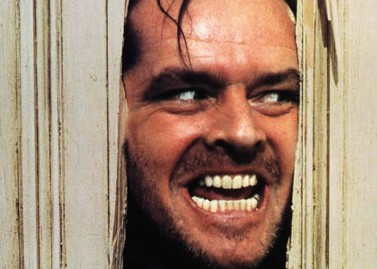
HERE'S JOHNNY! Crazymakers are skilled break-in-artists.
HERE’S JOHNNY! Crazymakers are skilled break-in-artists.

IF Writers got medals for creative courage, I’d have received one this week, for surviving my summer with a crazymaker.

It was the author of The Artist’s Way, Julia Cameron, who introduced me to the playful poison of crazymakers.

These are the chaotic spirits who swan into town and demand three nights on your sofa bed, just as you’re starting that dream job and need calm nights at home with your loved ones to be at your best.

Or the drama queens who recruit you into their grand schemes, but won’t answer the call to action when you suggest they lead the way.

My latest crazymaker arrived on the scene just as I was ascending the Everest of playwriting – executing the latest draft of a ten-year project.

It had been years since I’d had a crazy around my neck, and I didn’t see it coming. Time for a reminder about how to spot ’em.

Crazymaking clue: If someone asks for too much information at first meeting, they’re a crazymaker.

We met through writing, theirs so beautifully expressed that I decided the person behind it was worth meeting. Apart from the slightest scent of networking at our first meeting on neutral territory, and their propensity for over-apologetic texts, all seemed well.

We staffed the same project from different territories, me and my latest crazymaker. I’d started a lot earlier, enjoyed the exploration and the calm group achievement, but when they began, so too did the turbulence.

Crazymaking writers can present as brilliant communicators, until they meet their equals.

Then, despite a lifetime working with words, they profess a sudden inability to interpret emails when they just don’t like their contents.

Next, they command that phone calls and meetings are the only way to have dealings with them, yet they’ll rarely pick up the phone and instigate a conversation.

Prolific use of “I did this” manifests in their expression of group projects, leaving others to amend to the truth of: “We”.

They have no time for a project’s first draft, but want to change everything once it’s done.

And they demand to be paid, even when everyone else is volunteering.

My role was suddenly called off. It was the crazymaker who informed me. They’d swung the drama in another direction which benefited them.

Crazymaking clue: If someone on equal footing tells you what the status quo of your contribution is, they’re a crazymaker.

I write to a very strict schedule, every weekday. The world of my characters and their stories is my solace when turbulence hits in the ‘real world’ of group projects, day jobs and financial survival.

I have one foot in the economy, and one foot in art, so it’s a delight to dive into my creative space: an old desk on a breezy enclosed verandah, down a quiet street at one end of an invisible island.

Here, I can lose myself in a world I have spent many years making. Through loss, difficult choices, honesty with loved ones, ignoring bad advice and relying on my gut feelings, I have earned my creative space. Creative cards very close to my chest, I use my space wisely, and I protect it well.

Crazymaking clue: If they follow you into your creative space, they’re a crazymaker.

POOR PUSS Wants in, but don't be fooled!
POOR PUSS Wants in, but don’t be fooled!

Retreating into your creative space can trigger a crazymaker’s attack.

Like a cat at the door, my crazymaker yowled for creative shelter and soul food, and worked on my sympathy buttons with well-rehearsed moves.

But I kept my head down and wrote, despite the storm brewing outside.

With sudden, pesky emails, harping on about work already done, the crazy cat tried to claw a hole through. I stomped and boarded up the breach.

A few days later, it returned and professed angrily that a phrase I had published caused the world pain, and, caring fool that I am, I bought the lie.

I hit ‘pause’ on my climb, and opened the door. Like a bear woken from hibernation, I growled: “Show me, where is this pain of yours?”

The cat mewed that it had none. I cross-examined it for signs of suffering, but there were no wounds offered for healing, and no grievances uttered for salvation.

Puss dodged solutions to its imaginary issues left and right, and made a crazy offer: now that it had disturbed me, this crazymaker wanted us to work together, and they would take care of everything.

Call me crazy, but I said: “Yes, I’ll collaborate with you, pussycat.”

My lie bought me peace.

Thank you.

I returned to the summit. I’ve walked that country so often I could get there blindfolded. At base camp, I was concerned the conditions up on the mountain were not as good as they had been before I came down, but I bravely set off.

I declined that easy, feline yowl of failure that I had at my disposal if I too were tempted to self destruct, and on a beautiful island day, later than planned, I reached the summit.

Crazymaking clue: If they start your association with an apologetic tone, which is gradually replaced by a suggestion that you need to apologise, they’re a crazymaker.

I deserve my medal because I’ve fought-off crazymakers before, but it’s taken years to have the strength of character to name one and hold it to account so speedily.

Far from my island, the crazymaker went silent (as they do); built boundaries of their own (about time); broke them with high drama (go figure); told the world that I’d destroyed them (so schoolyard); and sent me an email as though nothing had ever happened (seriously?).

Crazymaking clue: If you come to realise you’ve allowed a crazymaker into your life, you’ve been a bit crazy too.

I’ve grown.

© Michael Burge, all rights reserved.

Human rights of reply

FIGHTING DISCRIMINATION Andreas Ohm and Jim Woulfe, Michelle McCormack and Lynne Martin with son Tom, Michael Burge, Maria Vidal and Susan Everingham with daughter Antonia, and Jiro Takamisawa. (Photo: Sahlan Hayes).
FIGHTING DISCRIMINATION Andreas Ohm and Jim Woulfe, Michelle McCormack and Lynne Martin with son Tom, Michael Burge, Maria Vidal and Susan Everingham with daughter Antonia, and Jiro Takamisawa.
(Photo: Sahlan Hayes)

A Writer discovers his voice.

SOMEONE once said: “Don’t get mad, get even”, which must have been on my counsellor’s mind when he suggested something towards the end of my two years of grief counselling after the death of my partner, Jono.

The Australian Human Rights and Equal Opportunity Commission (HREOC), now the Human Rights Commission, were looking for people to make submissions to illustrate various aspects of their Same Sex: Same Entitlements investigation into financial discrimination against same-sex couples in Australia.

“Why not think about writing your experiences?” he put to me.

I said I’d think about it, although my first thought was that my experiences were somehow not relevant. Then I thought deeper.

The death of my partner, with whom I cohabited, ran a business, and had joint financial affairs, had cost me dearly emotionally, but it had also cost me economically.

Unlike straight people in my situation, Centrelink did not recognise the validity of my relationship in any way. I was unable to claim any kind of support linked to my grief or my monetary losses when I had to move house three times in one year, and take time off work.

Centrelink staff had been quite defensive about their organisation’s shortcomings, and told me to apply for Newstart (Newspeak for ‘the dole’) which came with the requirement to be seen to be seeking work and attending mind-numbing ‘how to write a resume’ courses.

I’d taken things into my own hands and gotten a part-time job in aged care, which I happily did for a few months until my car blew a gasket, and needed thousands of dollars for a new engine. I sold it as scrap, had to quit my job (for which I needed a car), and proceeded to hunker down in my cheap accommodation, a granny flat, until I had to move because the property was sold.

I headed back to Sydney and city rent, and tried to speed up my application for Jono’s superannuation, which was slowed by the machinations of his family. They threatened to apply for it in its entirety, then didn’t apply for it at all. None of them were in any way financially dependent on Jono when he died, so none of them were eligible.

I was, but, thanks to all the unwelcome nonsense, it was months before Jono’s super fund could simply do what the law required of them and send me a cheque.

I endured financial discrimination because my country had nothing for me by way of support. What was slightly galling was that certain demographics – straight divorcees over the age of 50, for example – were allowed to access the ‘widow’s pension’ automatically. No job-seeking or resume classes for them.

Me, a genuine widow, could get nothing.

ACTU-Worksite-Australian-Human-Rights-Commission

I didn’t feel like entering into a sob story, but when I contacted HREOC, they encouraged me to submit a written document on these experiences, because they had not received any accounts of people in my particular position, and many of the unequal laws applied to the circumstances of being widowed.

Like my affidavit to the Supreme Court of NSW, my submission to HREOC was easy to put together. They have strict guidelines, I couldn’t just cry: “It wasn’t fair!” and let them sort it out, I had to show where I fell between the cracks because I had lived in a same-sex de-facto relationship.

Part of the deal was the delivery of a live submission to the Commission, and a willingness to submit to media interviews afterwards. I agreed without thinking, because, when the day came, I had a plan to follow the contents of my written submission, but completely overlooked the possibility that emotions would take over.

I watched as other gay and lesbian people expressed their experiences, and, when my turn came, I forced my story out from beneath an aching heart.

Expressing the inexpressible about death is one thing. Defining negative behaviour by other people around that death is another. I struggled my way through my submission, masking hurt with the kind of plosives that hit the microphone with the cut-glass anger that is entirely suitable for such occasions.

As I exited the hearing I forgot about the media, and had more microphones shoved in my face to elaborate further. The interviews went live at midday, and many of my family and friends, and my counsellor, heard me explain the disenfranchisement to a State that finally seemed to be listening.

report_cover

Adele Horin, formerly of Fairfax Media, interviewed me at length on the phone after my HREOC submission, for an article which appeared in the Sydney Morning Herald.

It took her a few attempts to fully understand my position, and with hindsight I understood her difficulty was the same obstacle that many people encountered when coming to terms with my experience, because they simply could not understand why Jono’s mother and brother would do what they did, it was such an aberration.

In the end, I suggested she ask them directly for their reasons, to secure the ultimate right of reply, although I suggested she’d need to be tactful – their son and brother had died, after all, and the illegal actions they’d taken made them vulnerable to heavy fines and/or jail terms, had anyone really wanted to “get even”.

Somewhere in her research, Horin came to realise that my experience went way beyond financial discrimination and spoke to one of the final frontiers of same-sex equality in this country: marriage.

The last twelve months of the Howard government needed to pass before anyone in power was willing to read the Same Sex: Same Entitlements report.

So it was with great delight that many in the LGBTI community watched 11 years of conservative government swept away by KevinO7 and the ALP, who’d made the implementation of the Same Sex: Same Entitlements recommendations an election promise, and finally altered almost 100 pieces of discriminatory federal legislation in 2009.

The fight for full equality continues.

Michael’s story is published as Questionable Deeds.

© Michael Burge, all rights reserved.